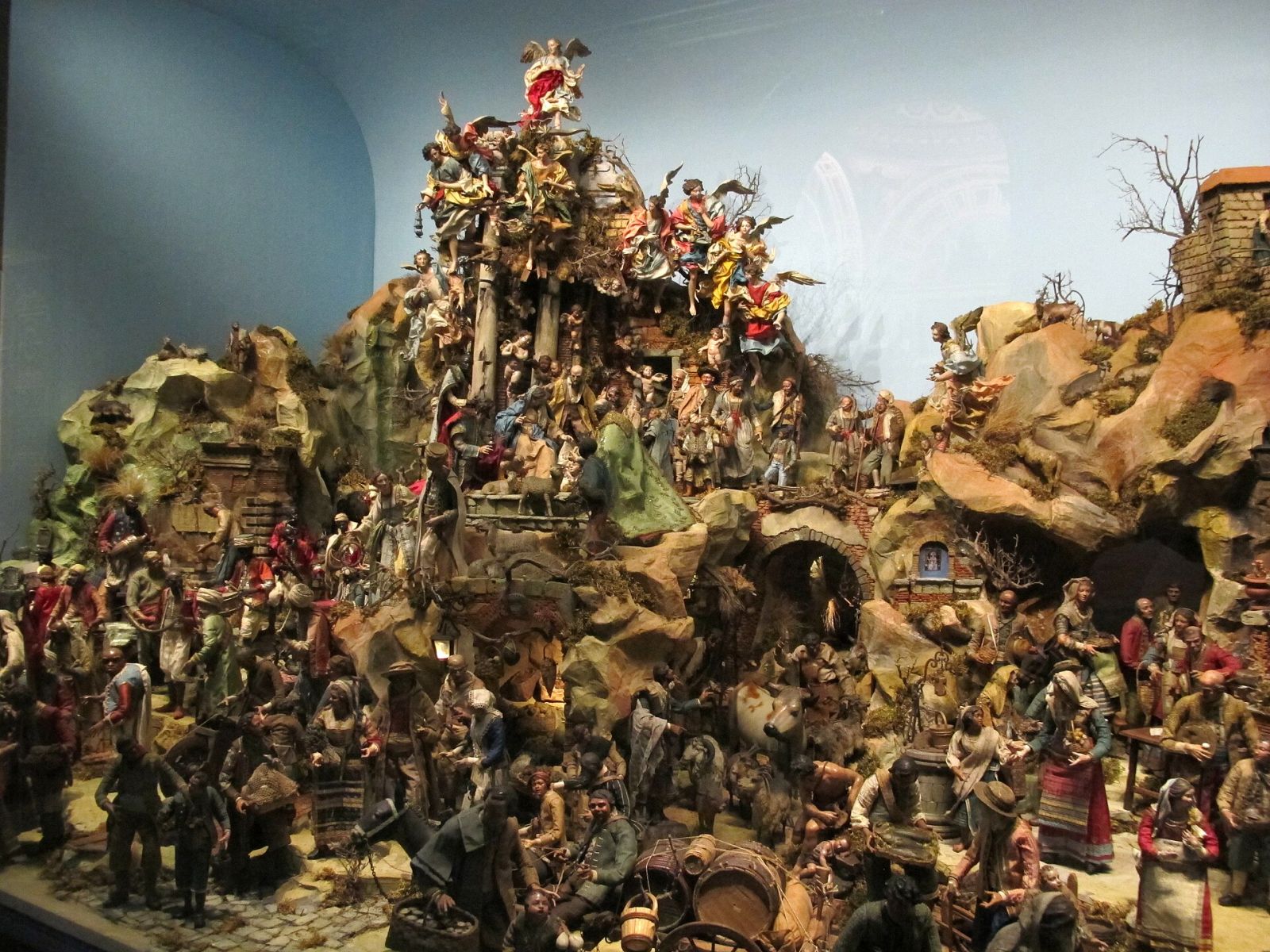


On Naples' Via San Gregorio Armeno nativity figures are on sale all year round, and next to the shepherds and the Magi the shelves hold Maradona, Napoli footballers and whichever politicians dominated the news that autumn. The craftsmen refresh this line-up every year, so a nativity scene here is a sacred object and a newspaper cartoon at the same time. That mix explains a lot about Christmas in Italy: serious faith, a generous table and a sense of humour, over a season that runs from 8 December to 6 January.
Naples: the street where nativity scenes are made by hand
The Italian nativity scene, the presepe, outgrew the stable and manger in Naples long ago. Since the 18th century craftsmen here have modelled entire street scenes: a tavern full of guests, a butcher, a fishmonger, a pizzaiolo at his oven, and the sleeping shepherd Benino, who according to legend is dreaming the whole nativity. The figures are made of terracotta and dressed in real fabric, while tiny baskets and jugs are produced separately. Workshops line San Gregorio Armeno one after another, some are open to visitors, and you can watch faces the size of a fingernail being painted.
On December weekends the street is so packed that you simply move with the crowd, so come on a weekday morning. To see a masterpiece and not just souvenir shelves, head up to the San Martino museum on the Vomero hill, where the Presepe Cuciniello is on display, a vast scene with hundreds of figures.
Matera: a living nativity in the stone Sassi
Matera in the southern region of Basilicata already looks like a stage set: its old Sassi districts are carved into the rock, and since 1993 they have been on the UNESCO World Heritage List. This is the setting for one of Italy's best-known living nativities: spectators walk through stone alleys and stairways while hundreds of costumed participants act out crafts, a market, Roman soldiers and finally the Holy Family. Last season, the fifteenth, ran from 5 December 2025 to 4 January 2026 on weekends only, with tickets around 12 euros booked in advance.
At the end of October the organisers had not yet announced whether the event will take place in 2026 or on which days, so keep an eye on the calendar as December approaches. If it follows the usual pattern, plan for a Saturday or Sunday, warm clothes and good shoes: the route climbs up and down slippery stone, and evenings in the Sassi are cold.
Christmas Eve: fish, a ten o'clock mass and no meat
On 24 December, a Thursday, Italians skip meat. The Vigilia dinner is meatless but hardly modest: in the south there is baccalà, fried fish, spaghetti alle vongole, and in Naples fried capitone eel. Nearly everyone has heard of the "Feast of the Seven Fishes", although the name is far more common among Italian Americans; in Italy the meal is usually just the cenone della Vigilia, and the number of dishes varies from family to family.
The Pope celebrates the Christmas Night Mass in St Peter's Basilica, and in 2025 Leo XIV restored its traditional time, 22:00. Free tickets are issued in advance by the Prefecture of the Papal Household, and without one you can follow the mass on screens in the square. At noon on 25 December, a Friday, the Pope gives the Urbi et Orbi blessing from the loggia. On the 25th and on the 26th, St Stephen's Day, most shops and museums are closed, but churches with nativity scenes stay open, and in Rome you can tour them until evening.
Christmas trees: the Vatican, Piazza Venezia and poor Spelacchio
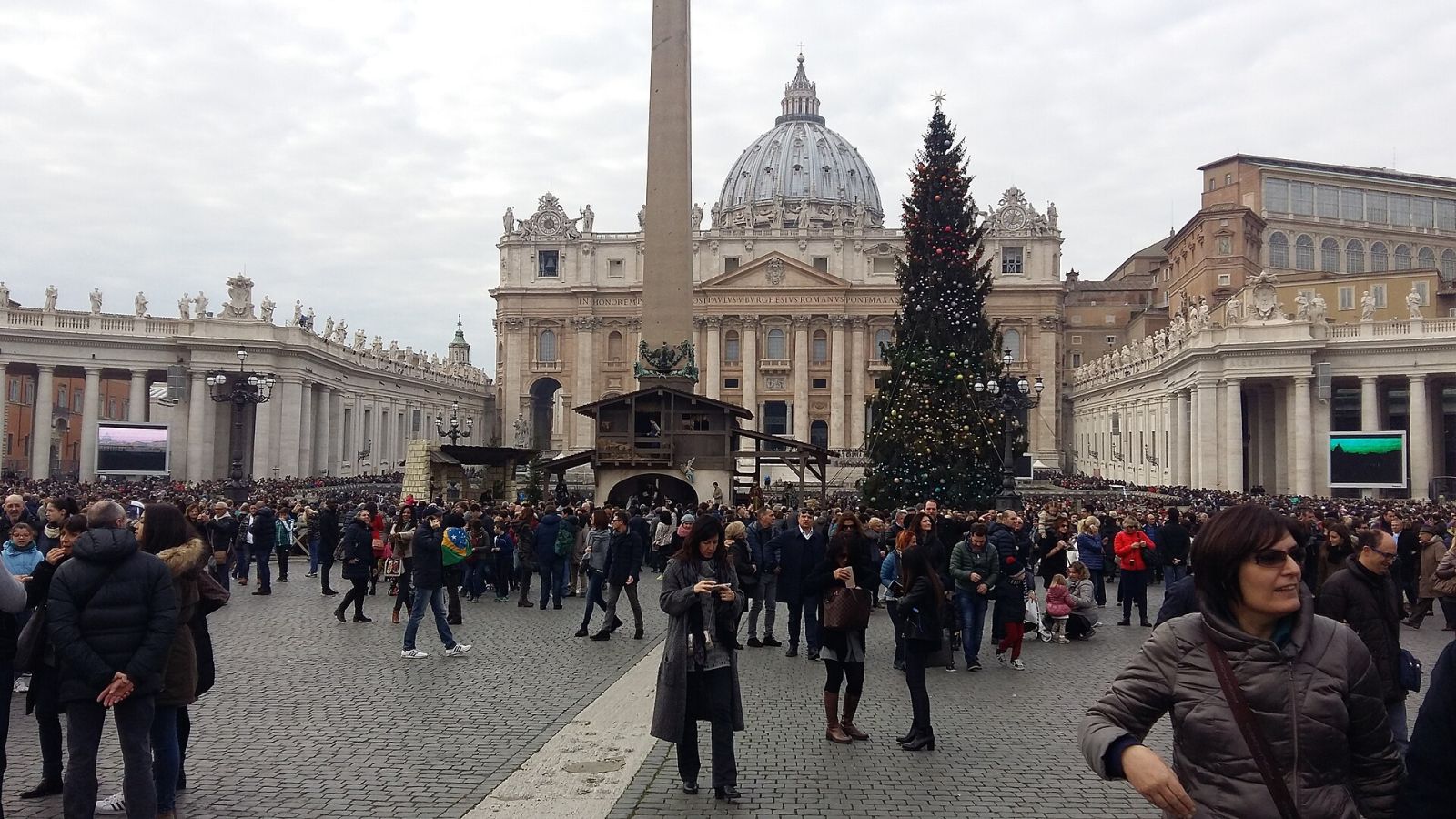
The tree in St Peter's Square is donated each year by an Italian region or another country, a large nativity scene is set up beside it, and both are lit in the first half of December. In 2025 it was a 25-metre spruce from the Ultimo valley in South Tyrol, lit on 15 December. The Vatican announces in November where the 2026 tree comes from and when it will be lit.
Rome's city tree stands on Piazza Venezia, in front of the monument to Victor Emmanuel II. Romans still remember 2017, when a balding, needle-shedding fir arrived and the city nicknamed it Spelacchio, "mangy". The whole country laughed, the tree got its own social media pages, and City Hall learned a lesson it has not forgotten. The tree season opens on 8 December, the Feast of the Immaculate Conception, a Tuesday this year, when Italians traditionally decorate their homes.
Panettone versus pandoro: an argument nobody wins
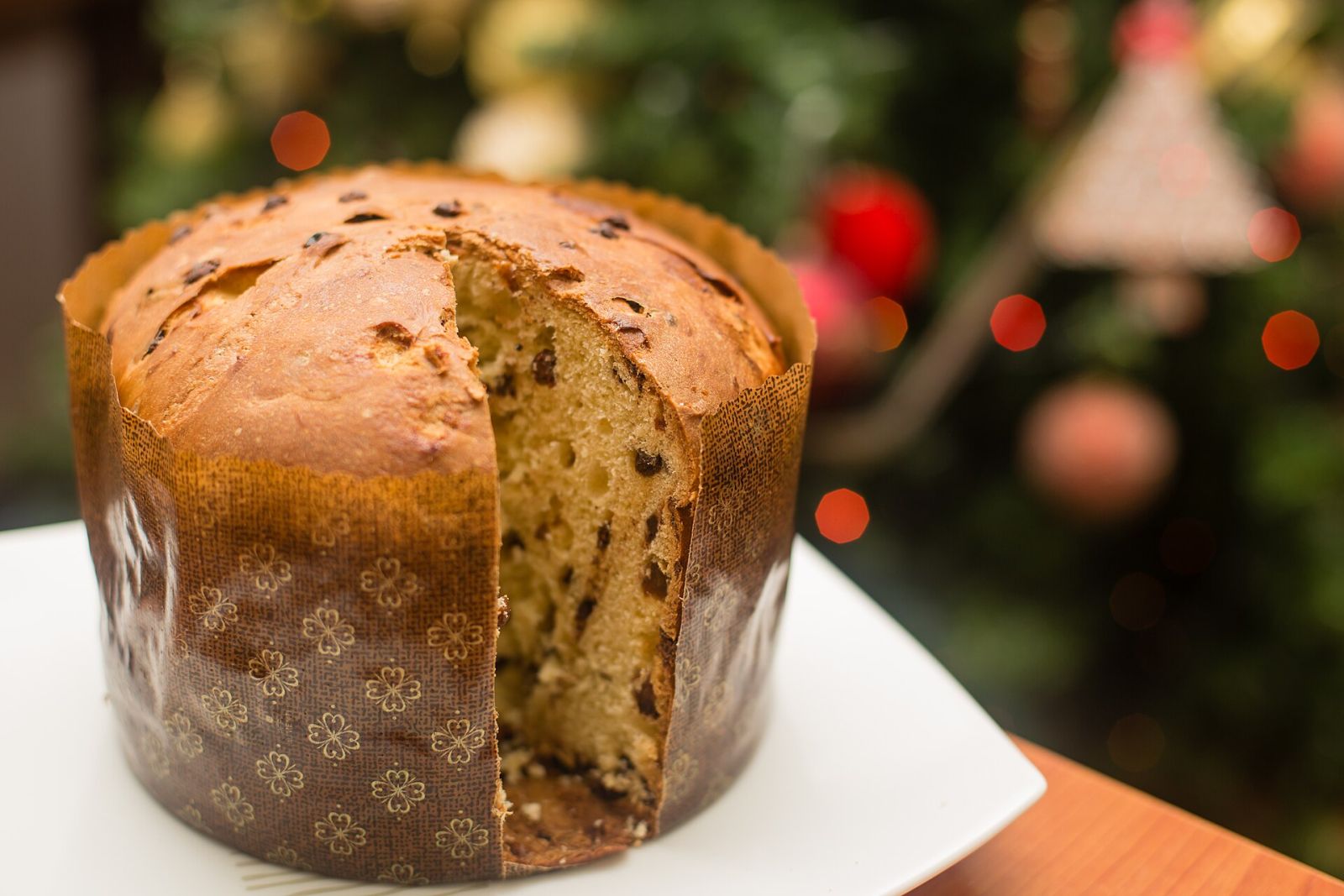
In December Italian supermarkets are stacked to the ceiling with tall boxes, and every family has its side. Panettone from Milan is tall and domed, with raisins and candied peel. Pandoro from Verona is star-shaped and plain inside, and the box comes with a sachet of icing sugar: you pour it into the bag, shake the cake in it and pull out a snow-covered star. Pandoro fans complain about the candied peel, panettone fans call pandoro mere sponge. A supermarket one costs a few euros, an artisan one from a bakery several times more, and you will taste the difference with the first slice.
Capodanno: lentils, red underwear and a wary eye on firecrackers
On 31 December, a Thursday, the main dish of the night is lentils with cotechino or zampone, a pork sausage or a stuffed trotter. Each lentil looks like a little coin, so the more you eat, the more money the new year brings. Red underwear is worn for luck, and in December every market sells it. Naples once had a habit of throwing old things out of the window; that has nearly disappeared, but the firecrackers have not, and every New Year's night sends people to hospital. At midnight keep your distance from anyone setting off home-made "botti". For other ideas on where to see in the year, try our guide on where to go for New Year.
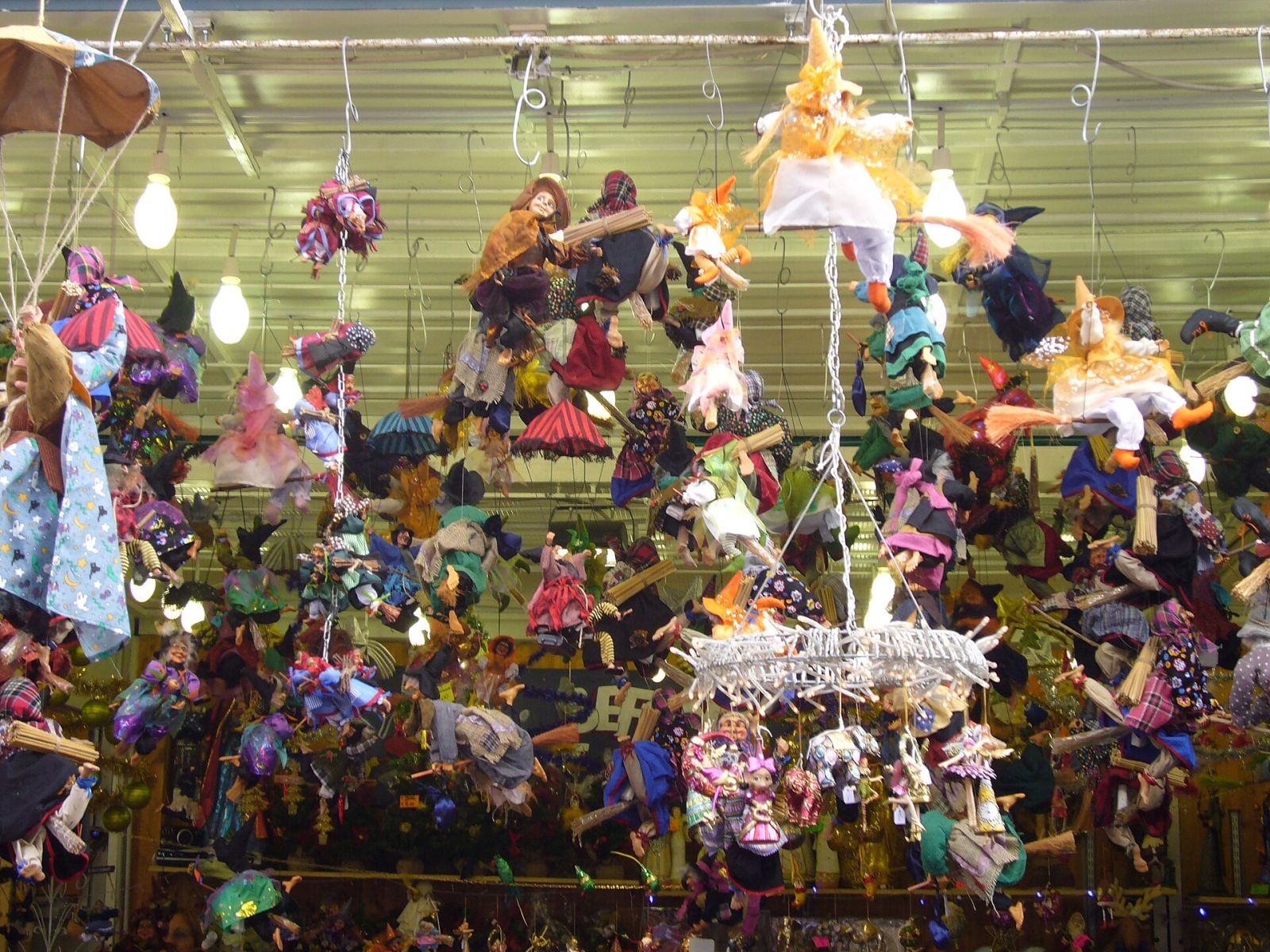
La Befana: the witch with sweets and coal
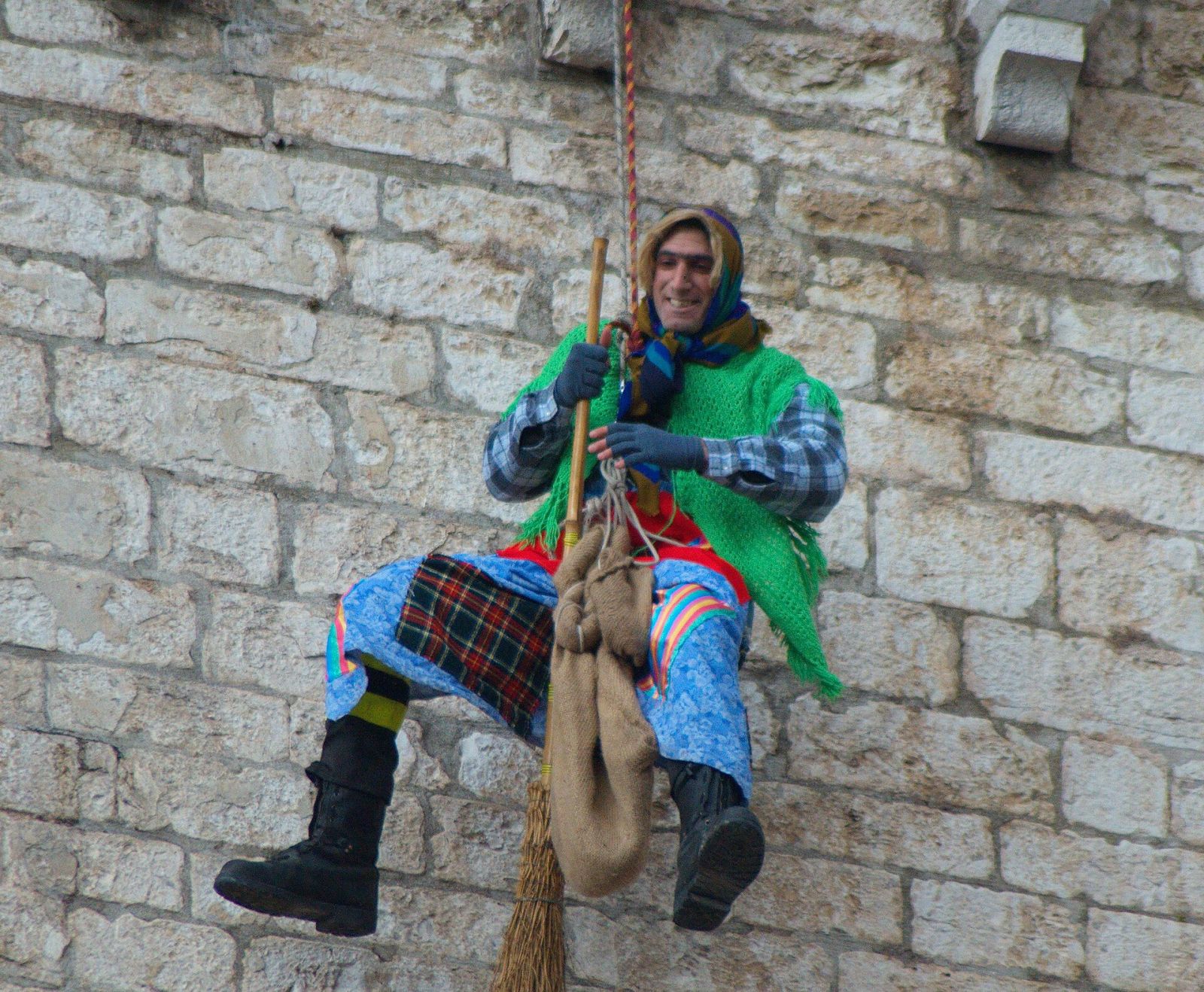
On 6 January, a Wednesday, La Befana comes to Italy, a kindly old witch on a broomstick in patched clothes. At night she slips down the chimney and fills the stockings children hung up the evening before: sweets for the good ones, "coal" for the naughty, a black sugar candy sold in every pastry shop. Adults give it to each other too, with a wink. In Rome the Piazza Navona market runs until 6 January, and there are more Befanas than Father Christmases on its stalls. In Venice, rowers in skirts and headscarves race along the Grand Canal that day in the Regata delle Befane. Italians say Epiphany carries all the holidays away with it, and it does: on 7 January the country goes back to work.
The national holiday calendar, seasonal events and nativity scenes by region are easiest to browse on Italy's official tourism portal.
Table: Christmas in Italy 2026/27
| Date | Day | Event | Where to see it |
|---|---|---|---|
| 8 December | Tuesday | Immaculate Conception, season opens | trees and lights across the country |
| first half of December | date to be announced | Vatican tree and nativity lighting | St Peter's Square |
| December weekends | 2026 calendar not yet announced | living nativity | Sassi, Matera |
| all December | daily, weekends busiest | presepe workshops | San Gregorio Armeno, Naples |
| 24 December | Thursday | Vigilia, fish dinner, mass at 22:00 | St Peter's Basilica, Rome |
| 25 December | Friday | Christmas Day, Urbi et Orbi at noon | St Peter's Square |
| 26 December | Saturday | St Stephen's Day, holiday | church nativity scenes |
| 31 December | Thursday | Capodanno, lentils and red underwear | town squares |
| 6 January | Wednesday | La Befana, Epiphany | Piazza Navona, Regata delle Befane in Venice |
We checked this information at the end of October 2026. Dates for the Vatican ceremony and the Matera living nativity will be published later, so look at the organisers' sites before booking. The rest of the calendar has held steady for decades: the first trees on 8 December, fish on the 24th, and on 6 January the Befana and the end of the holidays.