

Here is how to claim tax free in plain terms: you ask for a special form at the shop, get a customs stamp when you leave the country, and then receive part of the VAT you paid, either as cash or back on your card. What comes back is the tax, not the full price, and after the operator's fee you typically pocket around 8-15% of the item's value, not the flat 20% many people expect.
This is a scheme for tourists who buy something in one country and carry it home to another. The state refunds VAT because the goods will be used outside the country where they were bought. It sounds like free money, but the whole payoff hangs on a single stamp, and that stamp is exactly where most people lose it.
What tax free is and who actually qualifies
Tax free (a VAT refund for tourists) is for people who are not residents of the country or union where they shop. Classic case, a Ukrainian buys a bag in Italy. Italian VAT is baked into the price, and that is the portion refunded when the goods leave the EU.
Partner links: booking through them supports the blog at no extra cost to you.
The core conditions are nearly identical everywhere:
- you live outside the country or union of purchase (for the EU, outside the Union);
- you carry the goods out yourself, in hand luggage or checked baggage, within a reasonable window (usually by the end of the third month after purchase);
- the purchase clears the minimum spend for that country;
- the item is new and unused, tags on, not something you consumed on the spot.
That last point trips people up. Meals you ate, hotel nights, car rental, restaurants, none of it qualifies for tax free. It applies only to goods that physically cross the border with you.
Where it works and where it does not
The best known zone is the European Union. But the scheme also runs in the UK (with post-Brexit quirks), Switzerland, Norway, Turkey, the UAE, Singapore, Japan, South Korea and dozens more. Rules differ everywhere, from the minimum spend to the refund percentage.
A few reference points for the minimum single purchase (check the current figures before you travel, these thresholds shift):
| Country | Minimum purchase (approx.) | VAT rate |
|---|---|---|
| Italy | around 70 EUR | 22% |
| France | around 100 EUR | 20% |
| Germany | around 50 EUR | 19% |
| Spain | no minimum | 21% |
| Turkey | low threshold | ~18-20% |
Keep in mind, the VAT rate and the amount you actually get back are two different numbers. The operator takes a fee out of that nominal 20%, so the real refund is noticeably smaller. More on that below.
How to claim tax free in the shop?
It all starts at the till, and there is no second chance here. Walk out without a properly issued form, and clawing the VAT back afterwards is almost hopeless.
The steps:
- before you pay, say you want tax free. Not every shop is in the system, so look for a Global Blue, Planet or other operator sticker on the door;
- show your foreign passport. Your details go on the form, and foreign citizenship is the whole basis of the refund;
- you get two documents, the ordinary receipt and a separate Tax Free Form with your details and the tax amount;
- check that the surname and passport number match the ones you will travel out on. A single wrong letter can void the whole claim.
Some chains will put several same-day purchases on one form, others will not. If you are buying a lot, ask up front, or you may fall short of the minimum on each separate receipt.
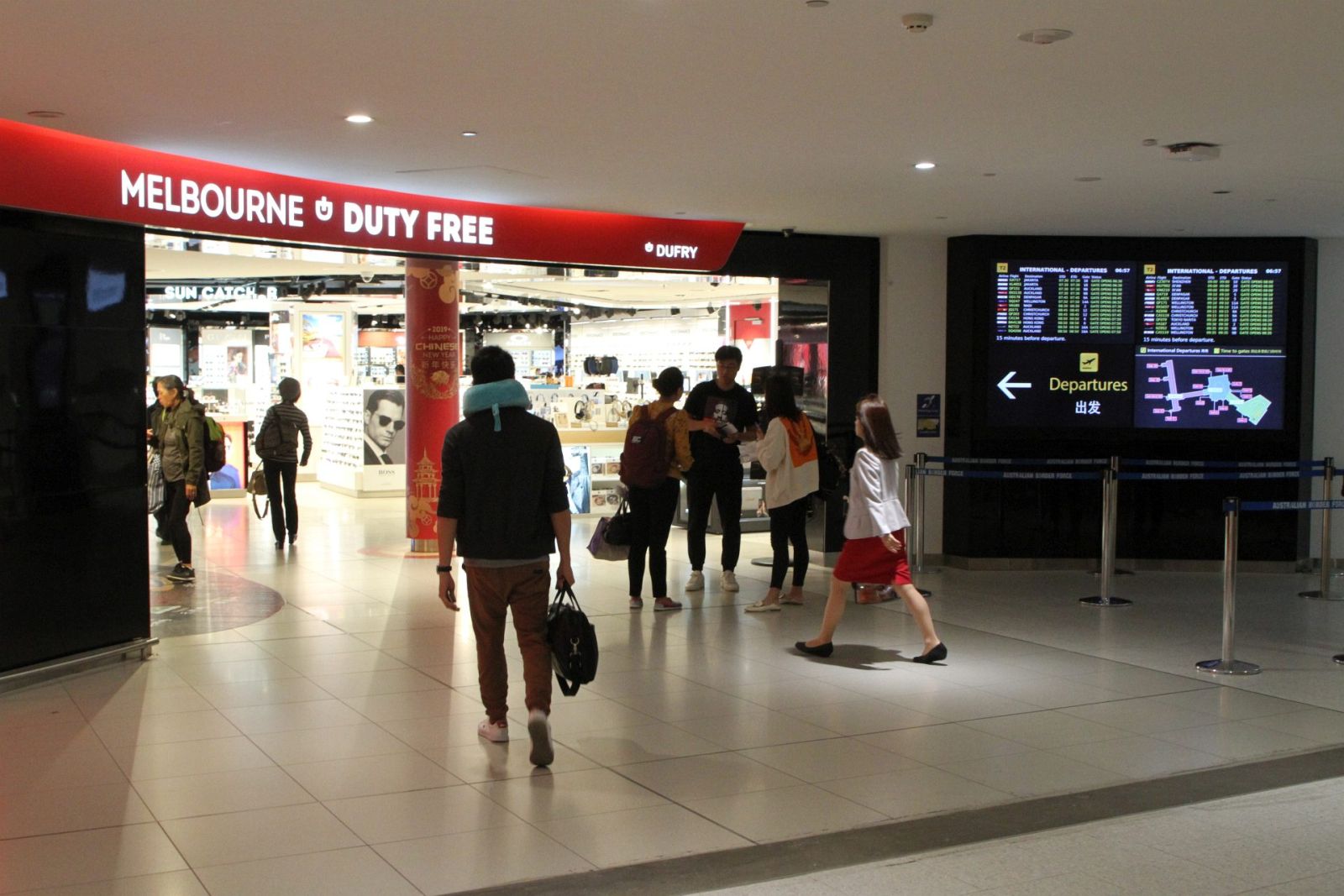
The customs stamp on departure, the step that matters
Without the customs stamp, a Tax Free Form is just paper. The stamp proves the goods physically left the country or union, and it is what triggers the payout.
What to do at the airport (budget an extra hour for it):
- arrive early. The customs queue for tax free can run longer than check-in;
- keep the goods with you and do not check them until you have the stamp. The officer may ask to see the item, and you cannot pull a new purchase out of a suitcase that has already gone down the belt;
- get the stamp in the country where you finally leave the EU. Flying Rome, Paris, Kyiv with a change in Paris, the stamp goes in Paris, your last stop before exiting the Union;
- many airports now have self-service kiosks (DIVA, Zappler and the like). You scan the form, and if the system approves it, no physical stamp is needed. If the kiosk sends you to a desk, go see the officer.
The rule is simple, no stamp (or electronic approval), no refund. This is the single point where tourists fail most.
Where and how you get the money?
After the stamp there are two main routes, each with its own trade-off between speed and value.
Cash on the spot at the airport
The departure area usually has a Global Blue, Planet or partner-bank desk. Show the stamped form and take cash right there. Fast, but the exchange rate and the instant-payout fee work against you, they keep more.
Refund to your card
You write your card details on the form, get it stamped, and drop the documents in the operator's dedicated box at the airport (or post them in an envelope). The money lands on the card a few weeks later. Better rate, smaller fee, but you wait and you trust the envelope arrived.

| Method | Speed | What you lose |
|---|---|---|
| Cash at the airport | immediate | more (instant-payout fee) |
| To your card | 2-6 weeks | less, better rate |
How much really comes back. Out of a notional 22% Italian VAT, you often end up with roughly 12-15% of the item's price, the rest goes to the operator's fee. So the line about getting a fifth of the price back is too rosy, brace for less.
How long it takes and what the fees are
Timing depends on the method. Cash, instant. Card, usually anywhere from two weeks to a couple of months, cross-border transfers are slow and the operator has to process the form too. If nothing shows up after two months, message the operator's support with your form number, they track it by barcode.
The fee is not fixed. As a percentage it climbs on small purchases and eases a little on big ones. So on a 70 EUR item you get back relatively less than on a 700 EUR one. For small sums, tax free is sometimes just not worth the customs queue.
Common mistakes that kill the refund
- Forgetting the customs stamp. The most frequent one. Without it the form is dead, and getting it stamped after the fact, once you are home, is next to impossible;
- checking the goods into the hold before stamping, so the officer could not see them;
- missing the deadline (the item must be carried out and stamped within the allowed window, often by the end of the third month);
- a mistake in the passport details on the form, surname or number that does not match;
- dropping the goods box for a card refund but forgetting to enclose the form itself, or enclosing it unstamped;
- counting on the full VAT figure and feeling cheated by the fee. That is not a procedural error, just inflated expectations.
One more wrinkle. If you live in one EU country and buy in another EU country, tax free does not apply, you are a resident of the Union. The scheme is only for people taking goods across the external border.
The short version
The mechanics are simple but demand discipline. Ask for the form at the till with your passport, keep the goods on you, get the stamp as you exit the Union, choose cash or card. The real refund is roughly 8-15% of the price, not twenty. The volatile parts, minimum spends, thresholds and percentages, change often, so check the current figures on your country's operator website before you go. Do it in order, and the money comes back without the stress.