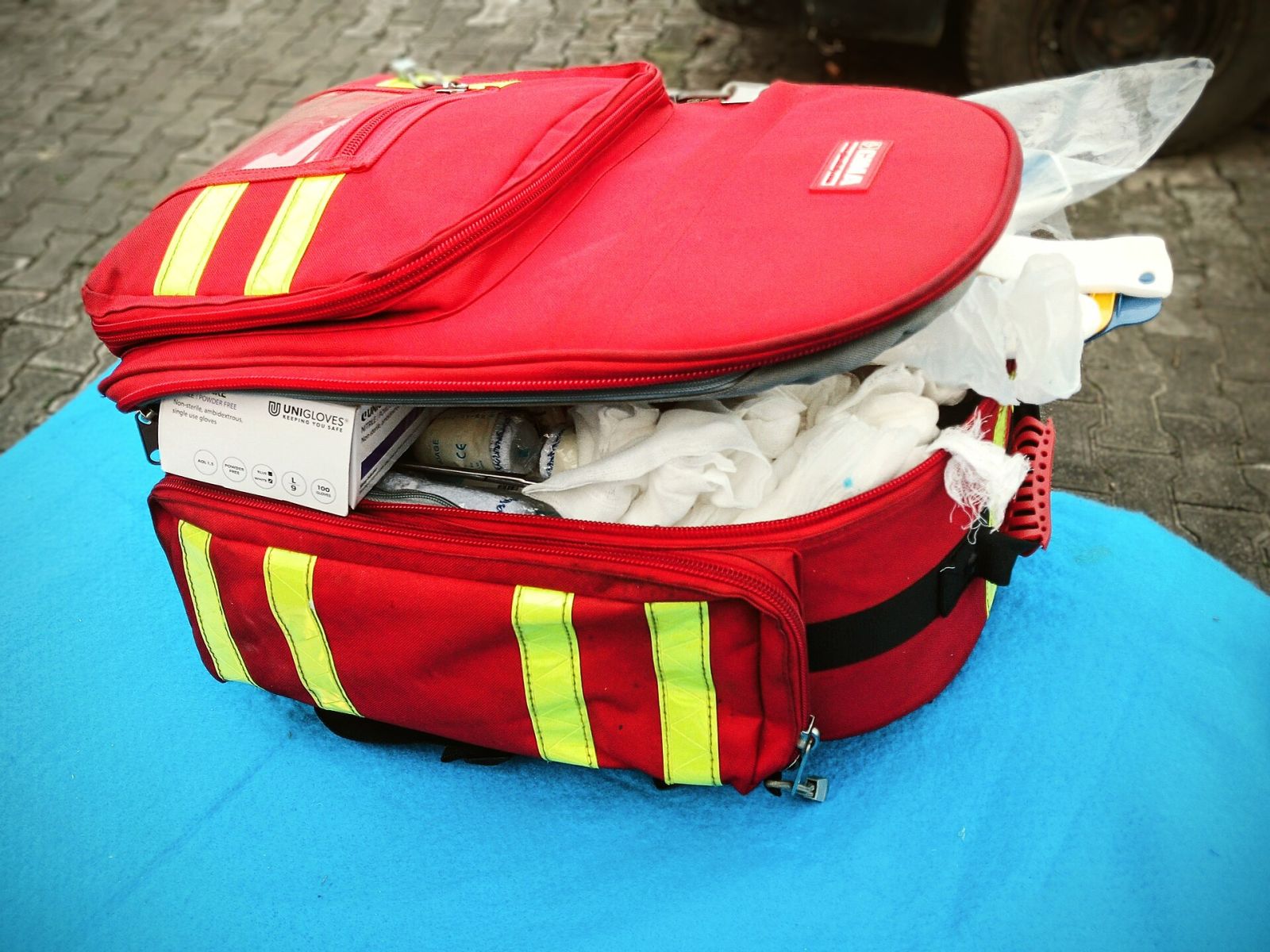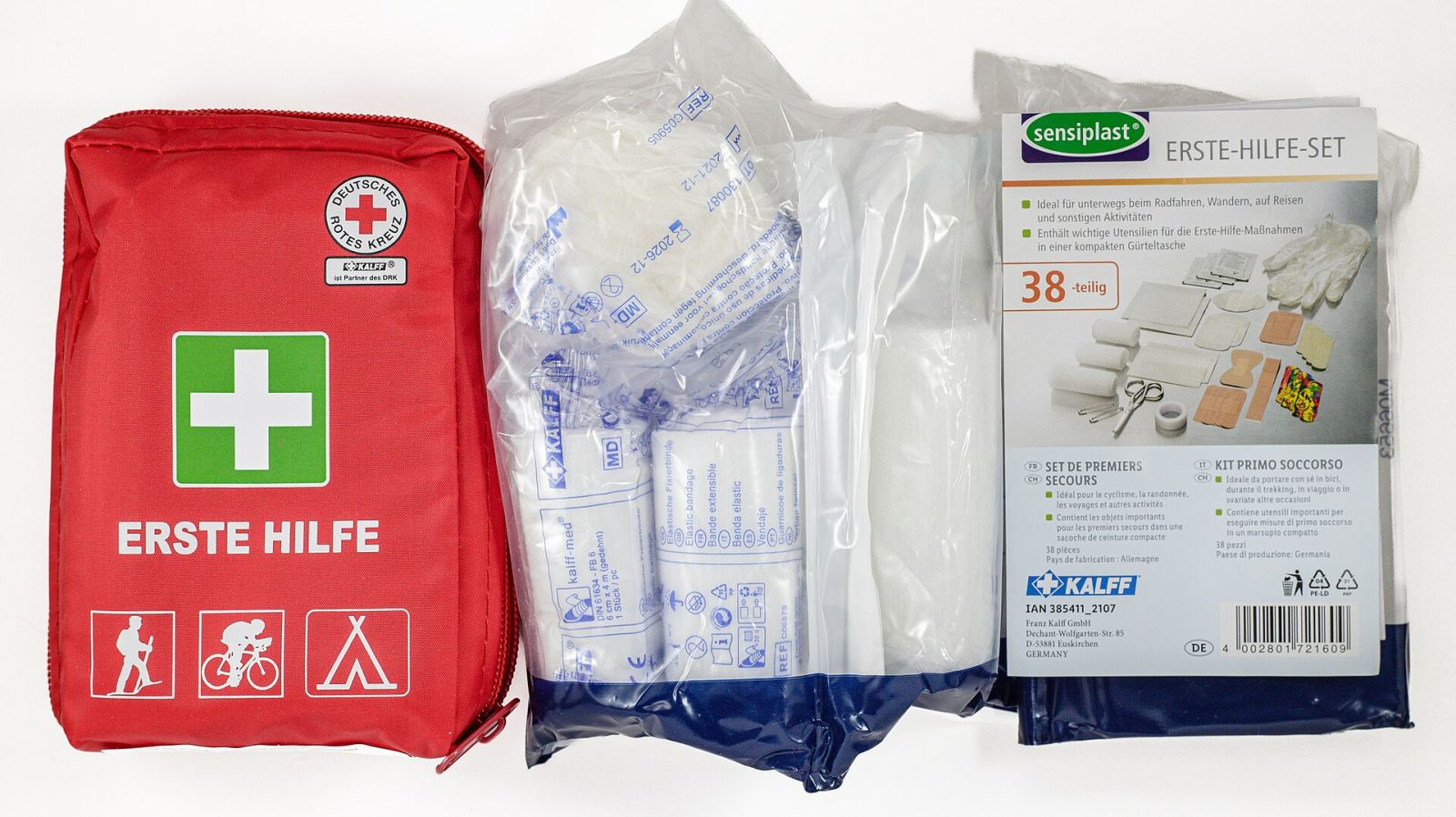


A well-packed travel first aid kit weighs 300-500 grams and handles roughly nine out of ten problems on the road: stomach trouble, colds, allergies, blisters and small cuts. Everything else is a job for travel insurance and a local doctor, not your suitcase. One important caveat up front: this is not medical advice. Check doses and drug interactions with a doctor or pharmacist, and for anything serious, a fever lasting more than two days, blood, severe pain, get help where you are. That is exactly what travel insurance exists for.
The core kit: what goes on every trip
You assemble the core once and then just top it up. The logic is simple: pack what you might need urgently, or what would be hard to explain to a pharmacist in a foreign language at 10 p.m.
- Painkiller and fever reducer: paracetamol or ibuprofen. Covers headaches, fever, period pain and a toothache until you reach a dentist.
- Plasters in several sizes, plus dedicated blister plasters. The hydrocolloid kind costs more than regular ones but earns every cent in a city paved with cobblestones.
- Antiseptic: chlorhexidine in a small bottle or alcohol wipes. Wipes are handier, they cannot leak and sail through carry-on screening.
- A bandage or sterile gauze pads, one pack. Rarely needed, but badly needed when they are.
- A thermometer, digital, not mercury or glass. Without it, "I think I have a fever" stays a guess.
- Your regular medications with a few days' extra supply beyond the trip length, in case of flight delays.
- Personal extras: eye drops if you wear contacts, earplugs, motion sickness tablets if mountain roads or ferries are on the itinerary.
Stomach trouble: the most common issue on the road
New water, new food and a broken routine hit digestion more often than everything else combined. The minimum block looks like this: a sorbent (activated charcoal or a modern equivalent), an anti-diarrheal such as loperamide, oral rehydration salts in sachets and something for heartburn. Rehydration salts are the most underrated item on the list, yet they are what protects you from dehydration, the real danger in any food poisoning.
A key caveat about loperamide: it stops the symptom, not the cause, and it should not be taken when diarrhea comes with fever or blood. Those cases need a doctor, not a tablet. Second point: if diarrhea lasts beyond two days, that is a reason to call your insurance assistance line, not to raise the dose.
Colds and sore throats
Hotel and airplane air conditioning does its work reliably. For that scenario: a throat spray or lozenges, decongestant nose drops (flying with a blocked nose is miserable, your ears will thank you during climb), saline rinse and your favorite combination cold powder. That is enough to ride out a couple of bad days without hunting for a pharmacy while feverish.
Allergies: even if you "don't have any"
A second-generation antihistamine, cetirizine or loratadine, goes in the kit every time. New cuisine, unfamiliar fruit, insect bites, some exotic plant in bloom: allergies love to make their debut on holiday. Add a gel for insect bites and hydrocortisone cream for skin irritation. Anyone with a diagnosed serious allergy needs a proper pre-trip conversation with their doctor, up to and including an epinephrine auto-injector and a letter to accompany it.
Prescription drugs and the rules for carrying them
This is where mistakes cost the most. The general rules:
- Carry prescription medication in its original packaging with the leaflet, at least for the flight, rather than decanted into pill organizers.
- For anything you take regularly, bring a prescription or doctor's letter, ideally in English, listing the international name of the active substance. Brand names differ between countries, the active ingredient does not.
- Opioid painkillers, sleeping pills, some sedatives and pseudoephedrine products are banned or tightly restricted in a number of countries. Japan, the UAE and Singapore are the best-known strict examples. Check the destination's rules on its embassy website before flying.
- Medication always travels in your carry-on, never checked luggage: bags get lost, and liquid medicines over 100 ml are allowed in the cabin as long as you declare them at security.
- Insulin, syringes and auto-injectors are legal to carry, but a doctor's letter turns twenty questions at screening into zero.
A good habit: photograph every prescription and letter and keep copies in the cloud. Paper gets lost, phones usually do not.
The tropical add-on kit
For Southeast Asia, Africa and Latin America the core list grows. The key additions:
| Item | Why |
|---|---|
| Repellent with 30-50% DEET | Mosquitoes there carry dengue and malaria, this is about safety, not comfort |
| Sunscreen SPF 50+ | Equatorial sun burns in 20-30 minutes even under clouds |
| Panthenol or aloe gel | For when the line above gets ignored |
| Double stock of rehydration salts and sorbents | Gut infections are far more common in the tropics |
| Hand sanitizer | Tap water is not for drinking and often not for washing fruit |
| Antifungal cream | Humid heat plus swimming pools do their thing |
Malaria prophylaxis and vaccinations (yellow fever, typhoid, hepatitis A) are a conversation with a travel medicine specialist 4-6 weeks before departure, since some vaccines need lead time. Country-by-country requirements are easy to check on the CDC Travelers' Health site or on Fit for Travel by the NHS: both are official and continuously updated.
What you can safely buy at the destination
There is no point hauling a suitcase full of medicine. In any country with a decent pharmacy network you can easily buy locally: sunscreen, repellents (local ones often work better, they are formulated for local insects), plasters, cotton wool, antiseptics, throat lozenges, hygiene items. Across Europe pharmacists almost universally speak English and are allowed to recommend over-the-counter remedies, so with simple symptoms you can walk into a pharmacy instead of packing a field hospital at home.
The exception: countries where pharmacies are scarce or drug quality is unpredictable, parts of Africa, remote islands, rural Asia. For those, travel with the full kit, including sterile-packed syringes for a worst-case scenario.
How to pack it all
A toiletry bag with two compartments or a clear zip bag labeled with a marker. Blister strips take less space than boxes, but keep the leaflets, and leave prescription items untouched. Before every trip, spend five minutes checking expiry dates: expired loperamide at the critical moment is a double disappointment. And finally: the kit rides in your carry-on, next to your documents. Your suitcase may take another flight, your stomach always travels with you.