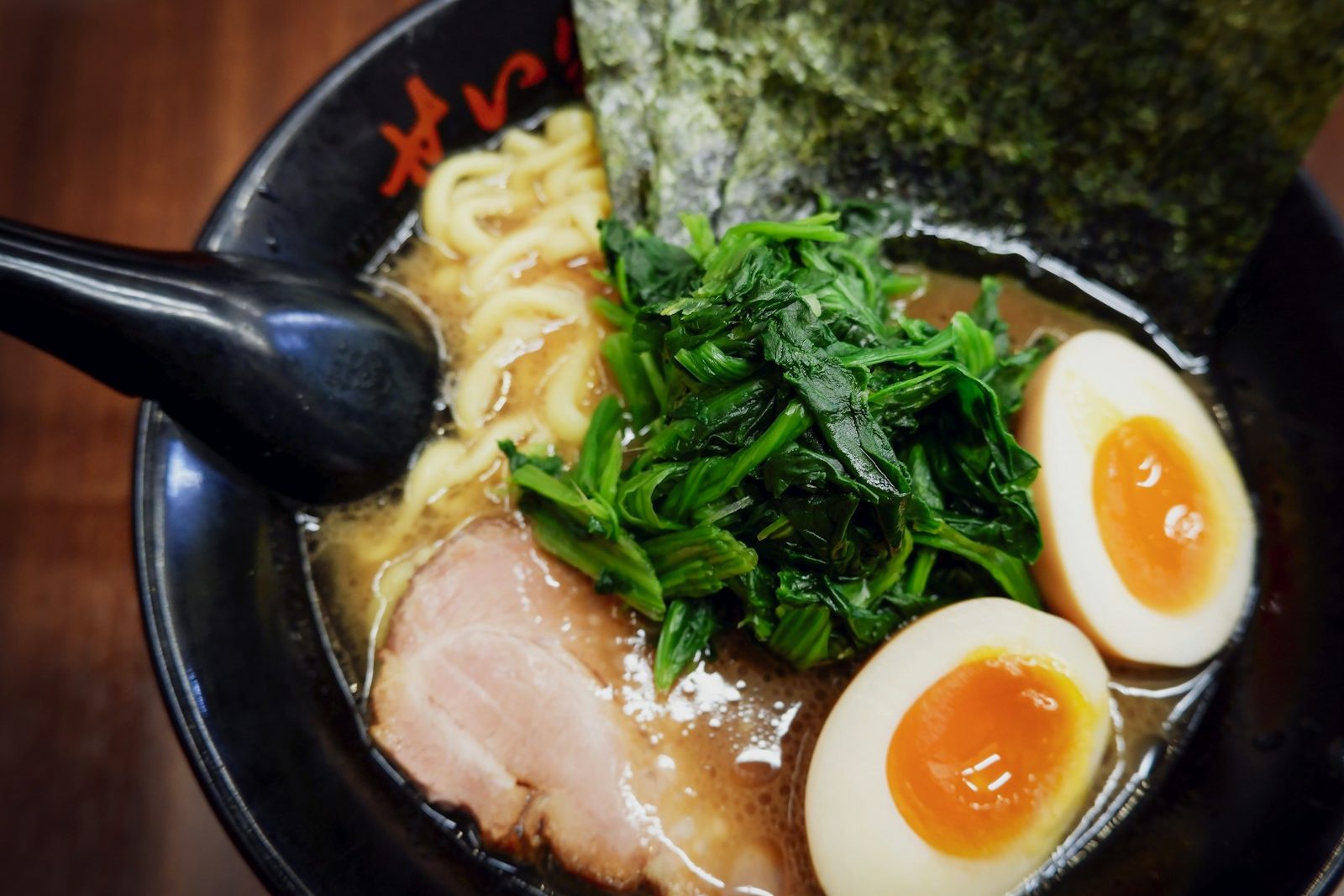


Sushi and rolls are the tip of the iceberg, not the whole cuisine. Everyday food in Japan is built around hot bowls of noodles, fried batter, street griddle cakes, and the shelves of round-the-clock stores. A tourist who eats nothing but raw fish is missing the bigger, cheaper part of the country's food scene.
Below is a breakdown dish by dish: what it is, where to find it, roughly what it costs, and how not to embarrass yourself at the table. Prices are given in yen as of 2026, so double-check the current ones before you travel, because rice and logistics have grown pricier in Japan and menus get repriced often.
What to eat in Japan besides sushi?
The short answer: ramen, udon and soba (three different noodles), tempura, okonomiyaki, izakaya plates to go with your beer, and konbini food. This is the backbone of what Japanese people eat day to day, and it, not the premium sushi bars, shows best what the country actually lives on.
Partner links: booking through them supports the blog at no extra cost to you.
Each category gets its own section below, because within them there are regional schools that argue with each other just as fiercely as fans of different kinds of borscht.
How do the types of ramen differ?
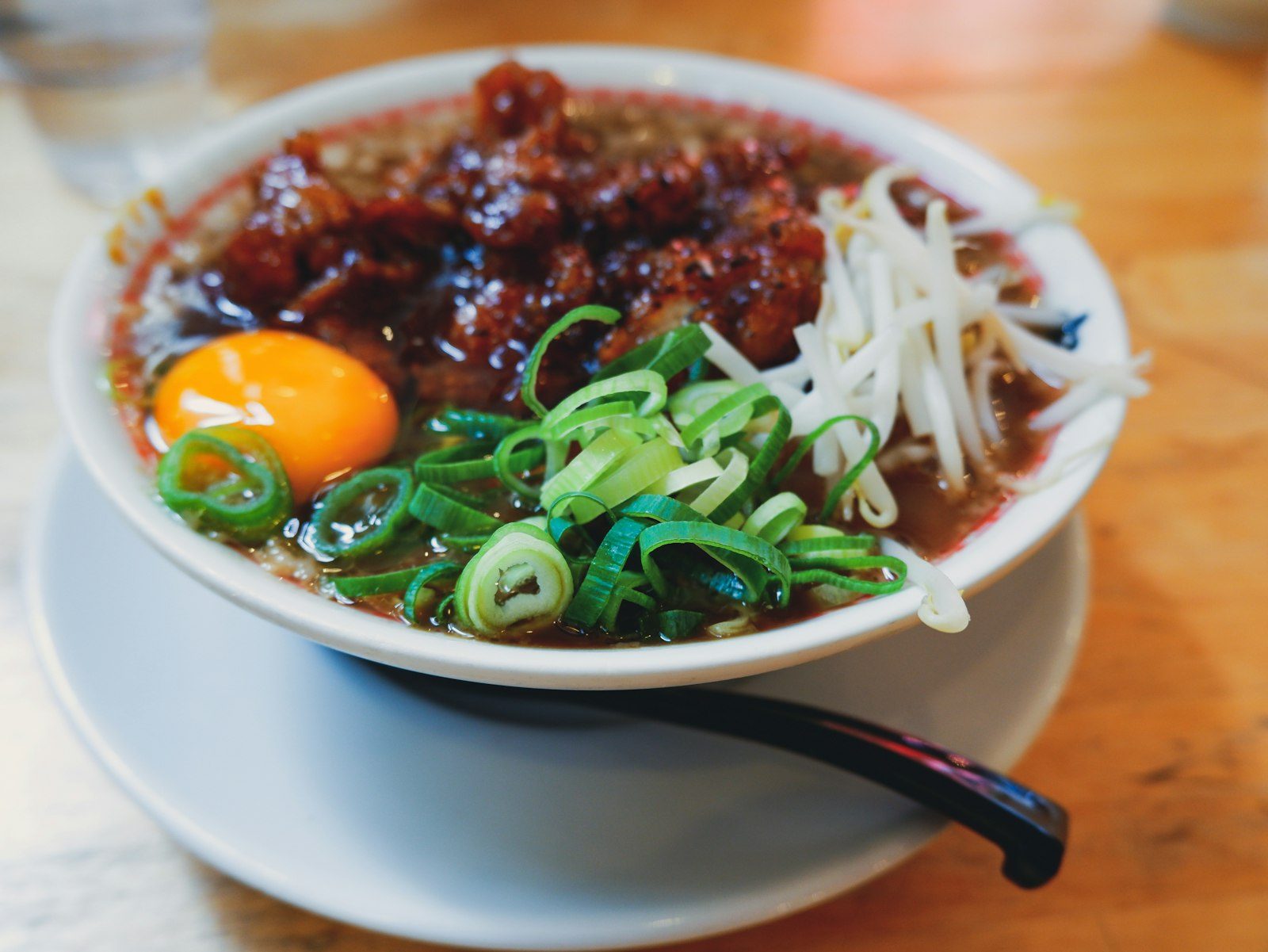
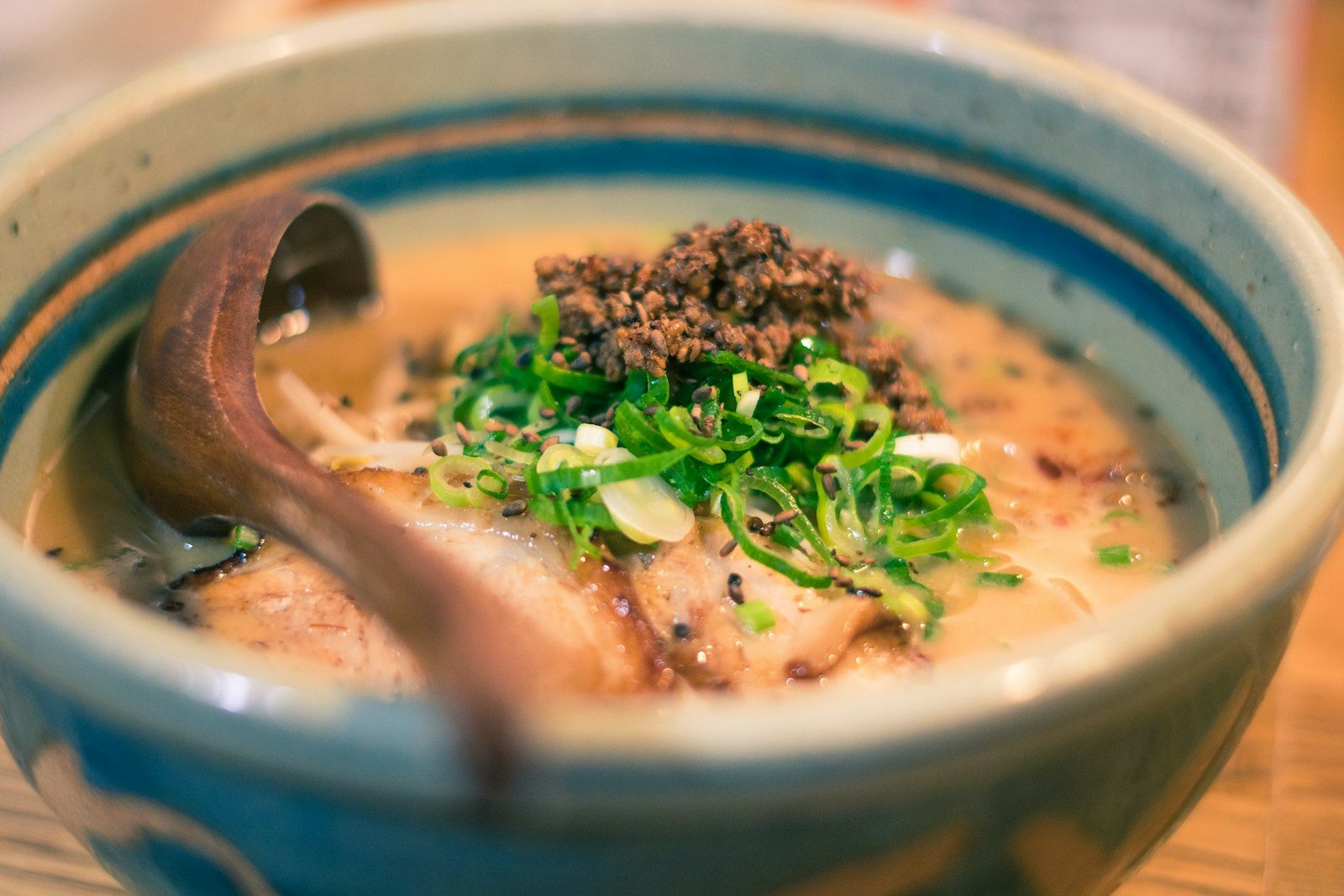
Ramen is not one dish but a whole family. The confusion is that the names describe different things: some refer to the broth base, others to the salt seasoning (tare). Tonkotsu is about the broth, made from pork bones simmered for hours until it turns milky and thick. Shoyu, miso and shio, on the other hand, describe the seasoning itself: soy sauce, fermented miso paste, or plain salt.
Because of this, one shop might serve shoyu ramen on a chicken broth while another serves tonkotsu ramen with a shoyu seasoning. The easiest way to make sense of it is by region, because every big city has grown its own style.
| Style | Base and character | Where it was born |
|---|---|---|
| Tonkotsu | Thick, creamy pork-bone broth, rich and hearty | Hakata (Fukuoka), Kyushu island |
| Shoyu | Clear amber broth on soy sauce, well balanced | Tokyo and eastern Japan |
| Miso | Dense, sweet and savory, often with corn and butter | Sapporo, Hokkaido |
| Shio | The lightest, almost clear, with a delicate salt flavor | Hakodate, Hokkaido |
A practical tip: if a city has a local style, order that. In Sapporo it makes sense to get miso with corn and butter, in Fukuoka to look for a rich tonkotsu with thin noodles and kikurage mushrooms. Chain ramen bars across the country hold their price at roughly 800 to 1200 yen a bowl, while artisan shops run pricier.
Udon, soba and tempura: where to start
Udon is a thick wheat noodle, soft or springy depending on the region. The benchmark for springiness is Sanuki udon from Kagawa prefecture on Shikoku island. It is made with a high-moisture dough, salt, and a long resting time, which gives it that particular elastic bounce the Japanese call koshi. The broth there is different too: instead of the usual bonito stock, they use dried iriko fish. Kagawa is half-jokingly called the "udon prefecture," because it has more shops per capita than anywhere else.
Soba is a buckwheat noodle, thinner and with a nutty flavor. It is eaten both hot in broth and cold with a dipping sauce (zaru soba), especially in summer.
Tempura is seafood and vegetables in a light, crisp batter. Interestingly, the dish is not originally Japanese: the technique of frying in batter was brought over by Portuguese missionaries back in the 16th century, and the Japanese perfected it. Good tempura shows in its color: the batter should be pale and almost translucent, not golden brown. Order it right after it is cooked, because ten minutes later the crispness is gone for good.
What is okonomiyaki, and why do Osaka and Hiroshima argue over it?
Okonomiyaki is a thick savory pancake cooked on a hot griddle, often translated as "Japanese pizza," though the two have little in common. The name means something like "grill what you like." And this is where the main dividing line between two cities runs.
In the Osaka (Kansai) style, all the ingredients, cabbage, batter, egg, meat, are mixed together in one bowl and fried as a single thick omelette-cake. On top usually go mayonnaise, a dark sauce, and tuna flakes.
The Hiroshima style is more elaborate: the ingredients are not mixed but layered. First a thin crepe, then a mountain of cabbage, then noodles (soba or udon) and a fried egg on top, and only then is the whole thing flipped. The portion comes out taller and more filling. Both versions are worth trying, and the locals will happily explain why theirs is the right one.
How does an evening at an izakaya work?
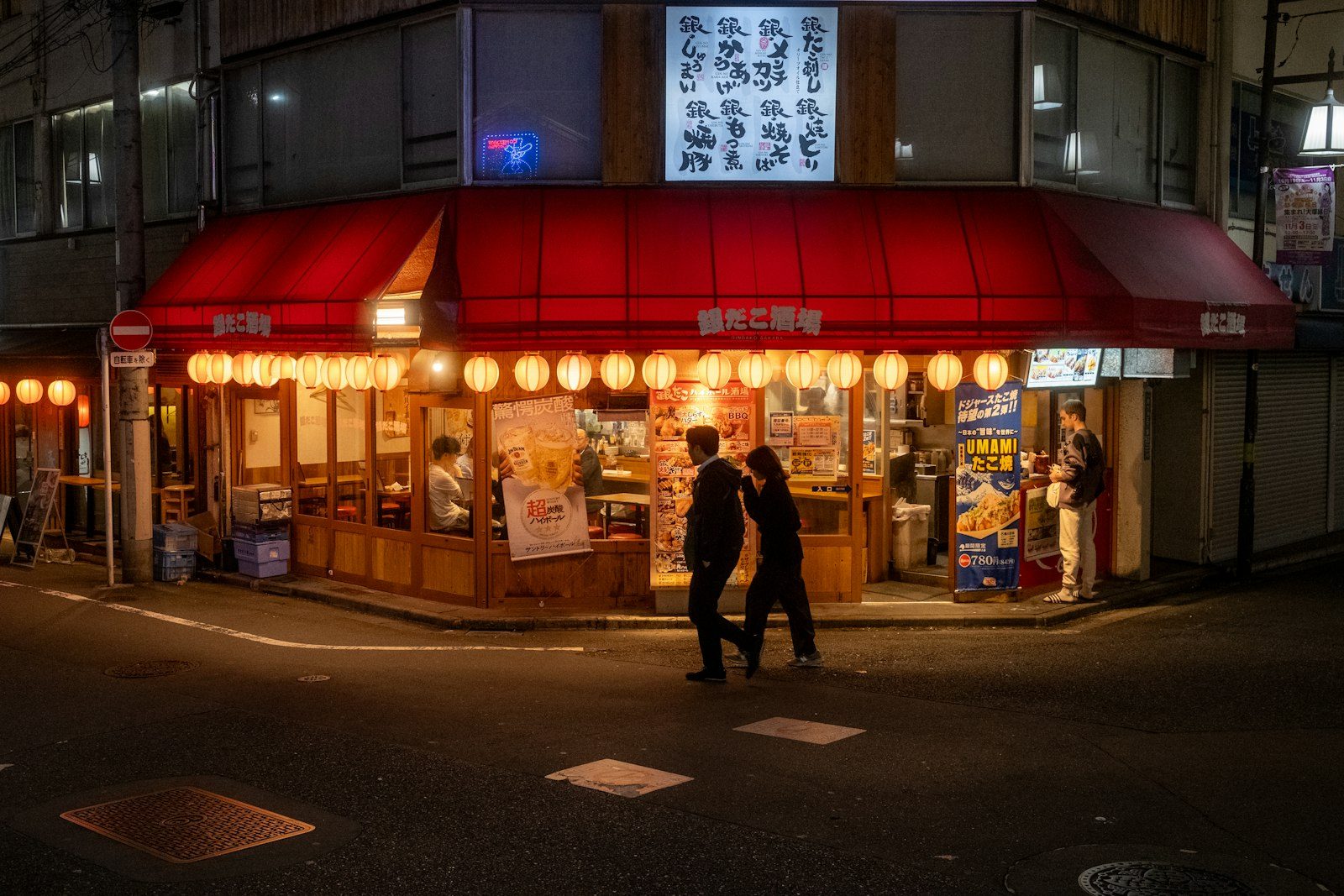
An izakaya is the Japanese answer to a pub, where people drink and snack on small plates over the course of several hours. You go there not to fill up on one dish but to order a little of everything: fried chicken yakitori, tempura, edamame, fish, potatoes. It is the cheapest way to taste a lot of different things in one evening.
There is one detail that catches newcomers off guard. As soon as you sit down and order a drink, they bring a small snack you never asked for: pickles or something stewed. This is otoshi, effectively a table charge, roughly 300 to 600 yen per person. It is not a scam or a waiter's mistake but standard practice across the country. So do not be surprised by the extra line on your bill.
Can you actually eat a proper meal at a konbini?
Yes, and it is one of the pleasant surprises for visitors to the country. Konbini (the round-the-clock 7-Eleven, Lawson, and FamilyMart stores) in Japan are not gas-station stalls with stale pastries but full-fledged food stops with fresh dishes delivered several times a day. Onigiri (rice triangles with a filling), bento, sandwiches, hot microwave meals, machine coffee at a decent price.
| What to grab | Rough price (2026) | The catch |
|---|---|---|
| Onigiri | 130-200 yen | Rice prices are being revised upward right now |
| Bento (ready-made meal) | 500-700 yen | They heat it up right at the register |
| Tamago sandwich (with egg) | 200-300 yen | A classic many people start the morning with |
| Hot item by the register | 150-250 yen | Oden, chicken pieces, filled buns |
A day of eating mostly from konbini works out to roughly 1900 to 3000 yen, and it is an honest budget option if you are counting the money for your trip. Check the prices on the spot: in 2026 some chains raised the cost of rice-based items, while a few formats went the other way and cut onigiri down to a hundred yen.
What you can and cannot do at the table?
Japanese dining etiquette has a few iron-clad taboos tied to funeral rites, and a few things tourists wrongly assume are rude. The loudest of these is slurping. Loudly pulling in your noodles is not just allowed, it is practically a compliment to the cook and a way to cool a hot dish down a little. Eating your ramen in silence would look stranger than slurping.
| Common mistake | The right way |
|---|---|
| Sticking your chopsticks upright in the rice | Rest them on a holder or across the bowl: upright chopsticks are a funeral symbol |
| Passing food chopstick to chopstick | Move the food onto a plate and take it from there: a direct hand-off is also linked to funerals |
| Leaving a tip | Leave nothing: there is no tipping culture, and money on the table will only puzzle people |
| Being shy about slurping noodles | Slurp away, it is normal and even polite |
| Pointing chopsticks at people or dishes | Do not gesture with your chopsticks or rub disposable ones against each other |
One more thing: most places will hand you a damp towel, oshibori, right away for your hands, not your face or neck. And almost everywhere you pay after the meal at the entrance or the register, rather than leaving money on the table.
If you are going to Japan for the first time, keep your first food day simple: a bowl of ramen for lunch, an izakaya with a few small plates in the evening, and grab breakfast and snacks at a konbini. If you have been before and want to go deeper, hunt down the regional versions: Sanuki udon on Shikoku, Hiroshima okonomiyaki, miso ramen on Hokkaido. It is in these local differences that the real food in Japan hides, the kind you will not see on the menus of sushi bars outside the country.