

Renting a car abroad rarely comes down to your licence. For Ukrainians and most international drivers, the paperwork is the easy part; the money on your card is what trips people up. The rental desk will freeze a deposit of several hundred euros before you ever touch the keys, and that hold, not the daily rate, is what usually sours the mood at pickup.
Here is everything that actually hits your wallet and your nerves: documents, the deposit, insurance with its excess, driver age, fuel policy, the walk-around inspection, and toll roads. Figures are ballpark, because they swing with season and city. Verify the exact numbers on the specific rental company's site before you travel.
What licence do you need?
Plenty of myths float around here. A modern Ukrainian licence (the plastic card with Latin lettering) works across the EU, in the UK, Turkey, Georgia, and Montenegro. An International Driving Permit (IDP) is not demanded as a separate document there, though some agents still ask about it out of habit.
Partner links: booking through them supports the blog at no extra cost to you.
Where the IDP genuinely matters:
- The United States and Canada, if your licence lacks Latin script or an officer wants to match a translation.
- Parts of Asia: Thailand, Indonesia, the UAE, Japan (which has its own recognition rules entirely).
- Some island destinations where local police simply cannot read Cyrillic.
An IDP costs almost nothing and is issued quickly. The rule is simple: Europe is fine without it, but for a trip across the ocean or somewhere exotic, take one. And remember, an IDP is void without your regular plastic licence beside it. It supplements, it does not replace.
The deposit: why they hold so much
The biggest trap is not the daily rate. The company holds a deposit on your card as a guarantee that you will not return the car with a fresh dent or vanish with an unpaid fine. The amount tracks the car class.
| Car class | Typical deposit |
|---|---|
| Economy (Polo, Corsa) | around 300-600 € |
| Mid-size / crossover | 700-1200 € |
| Premium, minivan, sports | 1500 € and up |
The key detail: you need an actual credit card in the driver's name, one where funds are held rather than charged. Many companies will not accept a debit card at all, because you cannot freeze a sum on it without a real withdrawal. If they do hold from debit, that money vanishes from your balance and creeps back over weeks. Keep the deposit amount on top of your trip budget, or the desk becomes an unpleasant surprise.
Insurance and excess: where you pay twice
The base price usually already includes CDW (Collision Damage Waiver) and theft protection. Reassuring, until you read the fine print. CDW does not cover damage in full; it only caps your liability at the excess amount.
The excess is the slice you pay before insurance kicks in. On economy cars it often sits somewhere between five hundred and fifteen hundred euros. Scuff a bumper in a car park and, even though you technically "have insurance," they will deduct the repair from your deposit up to that excess.
Hence the upsell for a zero excess (Full Coverage, Super CDW). It runs roughly 8-20 € a day depending on country and car. The math is straightforward: for a short weekend in a familiar city, paying for zero rarely pays off. For a two-week road trip on unfamiliar mountain switchbacks, that peace of mind earns its keep.
One more catch: insurance frequently excludes glass, tyres, the underbody, and the roof. Those are the classic grey zones you get billed for later. If you buy the extended package, ask outright whether wheels and the windscreen are covered.
How old does the driver have to be?
The industry standard is a minimum of 21 and at least a year of driving history. But there is a gap between "they will let you drive" and "they will let you drive without a surcharge."
- Drivers under 25 almost everywhere face a young driver fee, roughly 10-35 € a day.
- Some categories (sports cars, large SUVs) are off limits until 25 or even 27.
- There is an upper edge too: certain companies ask for a note or extra cover for drivers over 70.
Add the second driver at the desk right away. If someone not on the contract is behind the wheel during a crash, insurance can refuse entirely. Sometimes the extra driver is free, sometimes it is a couple of euros a day, but that beats risking the whole deposit.
Fuel policy: take "full to full"
This is the detail rentals profit from most quietly. There are several options, but only one that makes sense for a human.
| Policy | What it means | Who it suits |
|---|---|---|
| Full to full | Collect it full, return it full | Almost everyone, the fairest deal |
| Full to empty | Pay for a tank upfront at their rate, return it however | Practically no one; fuel costs more and what you do not burn is money gone |
Choose full to full and top up to the brim a couple of kilometres before drop-off, keeping the receipt. The "full to empty" scheme almost always means you pay for petrol at an inflated rate and gift the company whatever you did not manage to use.
Inspection: photograph everything before you drive off
This step saves the most money and gets skipped most often when people are rushing. Before you leave the lot, walk around the car and photograph every scratch, chip, kerbed wheel, and windscreen crack. With date and time in the frame.
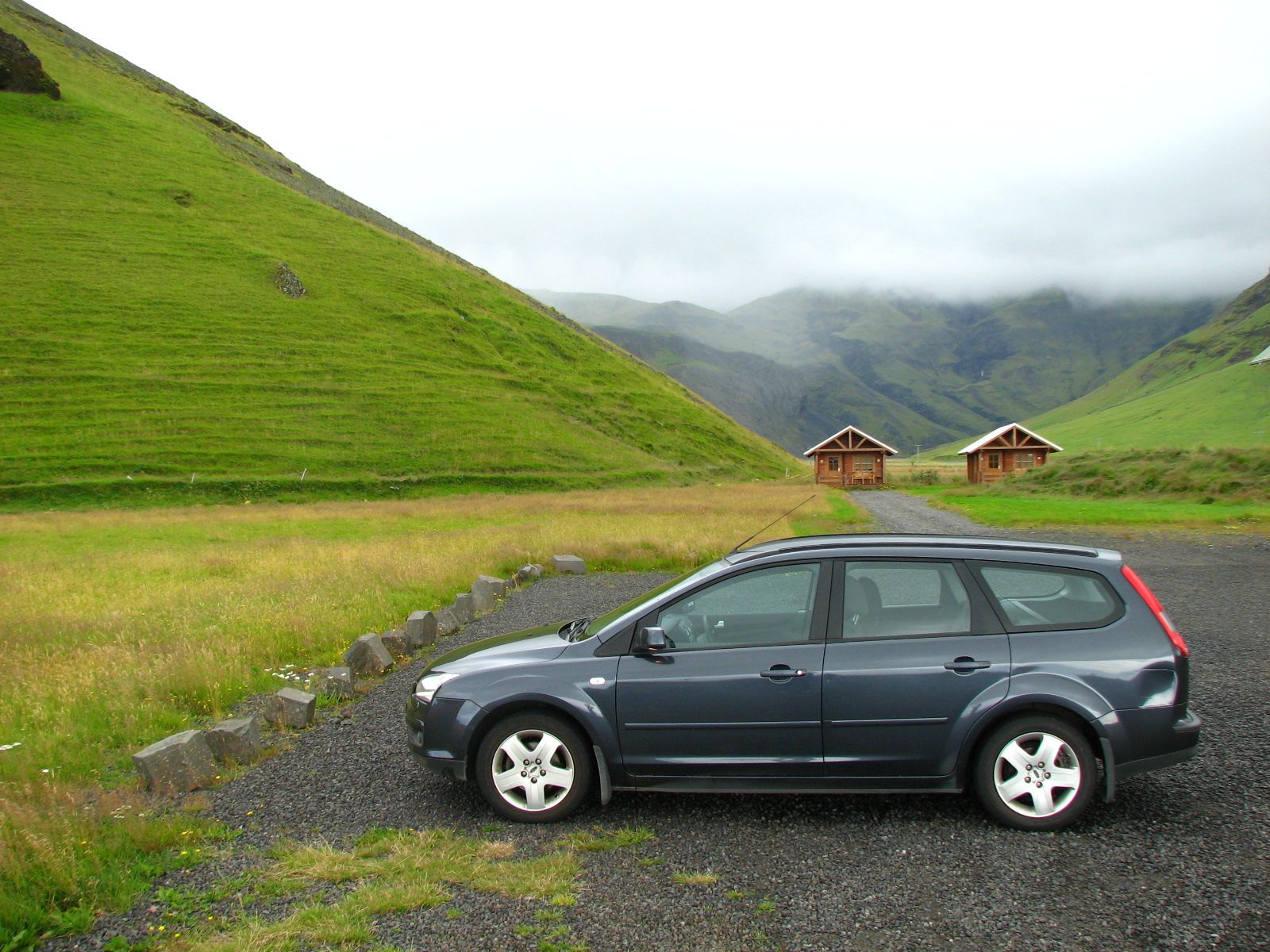
What to capture without fail:
- All four sides and the roof from several angles.
- Wheels and the lower lip of the bumpers, where kerb scrapes hide.
- The windscreen against the light.
- The fuel gauge and the odometer reading.
- The interior, if there are stains or burn marks.
Anything not marked on the handover sheet, insist they note it by hand on the spot. Without those photos, a "that was already there" dispute becomes your word against theirs, and the company wins. Shoot the car again at return, that is your proof you brought it back intact.
Toll roads and vignettes
People think of this last, and the fines arrive later by post at home. Payment systems differ from country to country, and not knowing does not save you.
- Vignette (a sticker or electronic): Austria, Switzerland, Czechia, Slovakia, Hungary, Slovenia. Bought in advance for a period; driving without one is a hefty fine.
- Barrier toll motorways: France, Italy, Spain, Croatia. Take a ticket on entry, pay on exit by card or cash.
- Post-payment and cameras: Portugal and stretches with no barrier, where the bill is generated automatically.
Ask at the desk directly: does the car have a valid vignette, and is electronic tolling linked. Sometimes the rental adds a processing fee per toll on top of the road charge itself. Check each country's current rules before you set off, because rates and boundaries change every year.
The short version
Renting a car abroad turns predictable once you are ready for the deposit, understand your excess, and are not too lazy to photograph the car. A European trip needs no extra licence for a Ukrainian; add an IDP for anything across the ocean, bring a credit card with headroom, keep fuel "full to full," and check roads for vignettes. The rest is just the route and the pleasure of driving it.