

In a city full of superlatives, the latest addition to Dubai's long list of "biggest" and "tallest" attractions is getting ready to claim its spot in the record books.
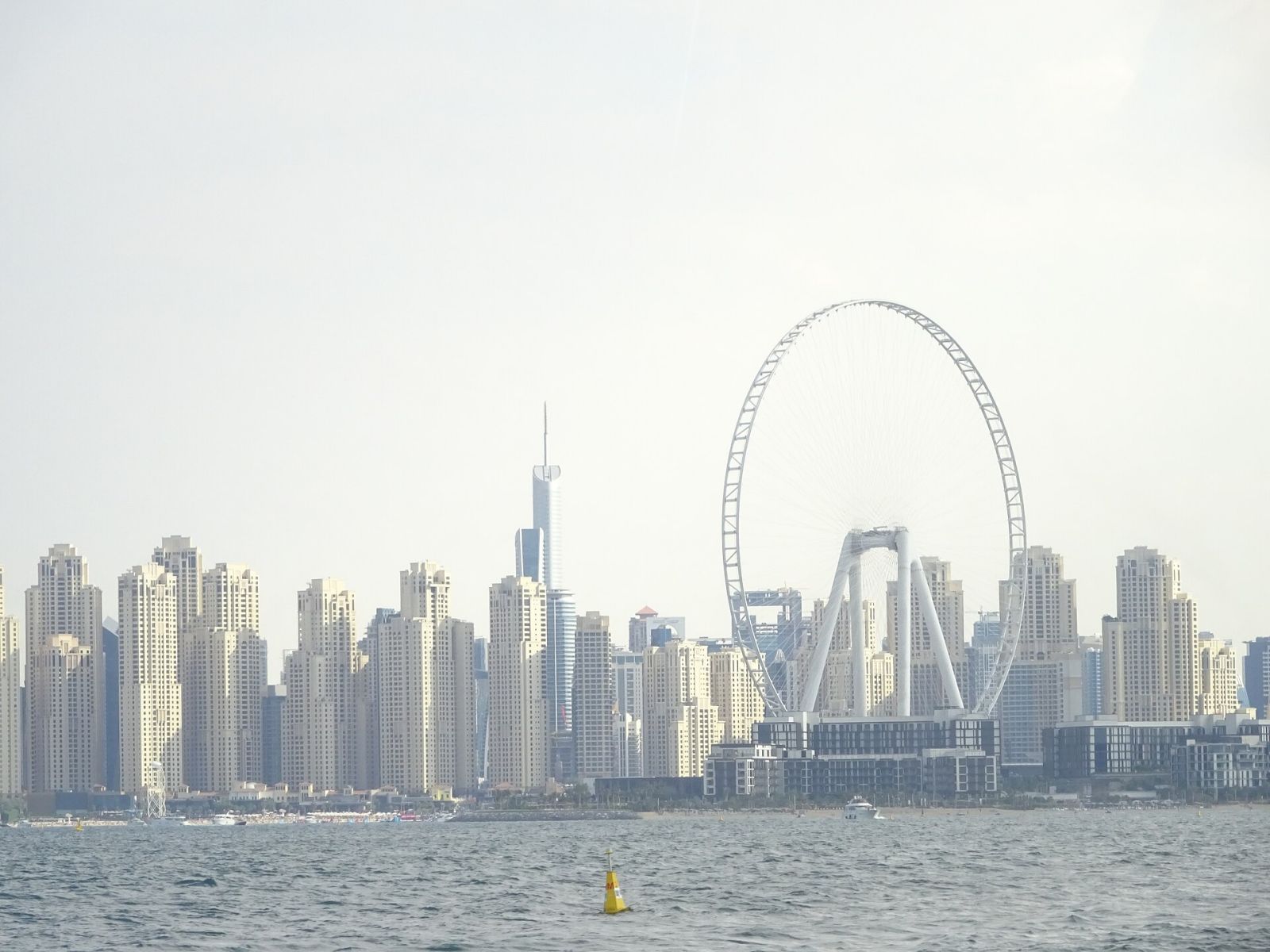
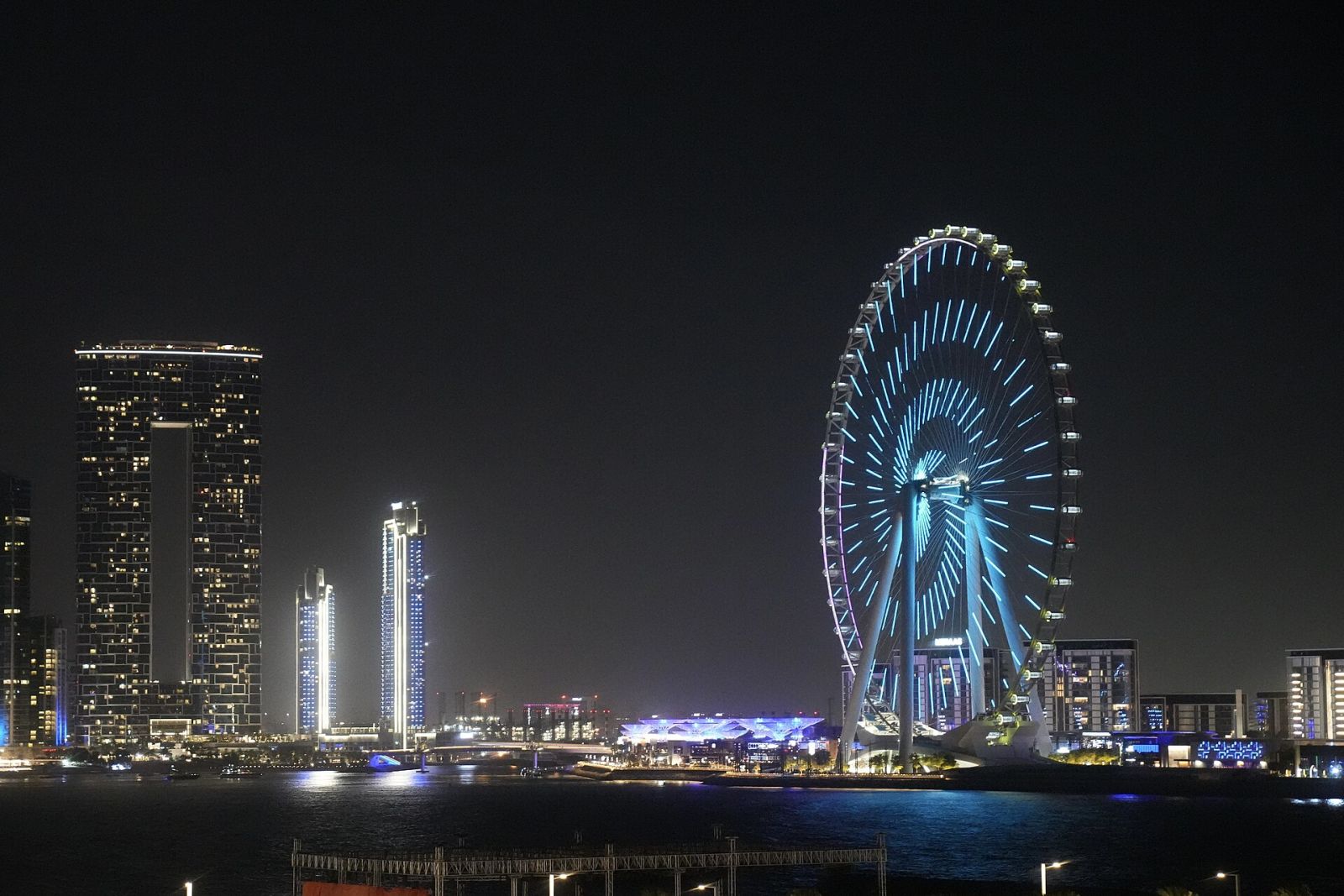
Ain Dubai, the giant observation wheel that has been taking shape at the Bluewaters Island entertainment complex for more than six years, opens on October 21, 2021, becoming the largest observation wheel in the world. But it hasn't simply edged out the competition; it has left them completely in the shade.
Standing more than 250 meters tall, Ain Dubai is 82 meters higher than the current tallest operating observation wheel in the world, the High Roller in Las Vegas. It is almost twice the size of London's London Eye, which rises 135 meters above the River Thames.
Partner links: booking through them supports the blog at no extra cost to you.
Dubai, a city that never does anything by halves, is simply adding one more achievement to its ever-growing list of engineering feats that fill the pages of the Guinness Book of Records. Dubai is also home to the world's tallest tower (the Burj Khalifa), the world's highest restaurant, the world's highest infinity pool, the world's largest fountain show, the world's fastest roller coaster, the world's biggest indoor theme park and... you get the idea.
First announced in February 2013, Ain Dubai was more than eight years in the making. Construction began in May 2015 with an expected completion date of early to mid-2019. That date was later pushed back to October 20, 2020, and then delayed by another year when Expo 2020 was postponed by a year due to the pandemic.
While there were rumors about the reasons for the delays, the team behind Ain Dubai says that on any construction project of this scale, delays are inevitable.
Room for 1,750 visitors
Darren Brook, senior technical director at WSP (the lead consultant on Ain Dubai and architect of record, who essentially designed the wheel), explained that his team was "constantly raising the bar".
"[It's] four times the area of a standard wheel, [so] we had to put a lot more thought into the design, making sure the design approach was as refined as it could possibly be while still staying within the design standards. But so much of it is in the fine-tuning, to actually arrive at an efficient, economical design."
And the numbers behind that design are staggering.
The structure used 11,200 tons of steel, roughly 33% more than the amount used to build the Eiffel Tower. The maximum jacking force needed to erect the wheel came to 2,500 tons. The structure's hub and spindle weigh 1,805 tons, the equivalent of four A380 aircraft, while the total weight of the rim and 48 passenger capsules is 7,500 tons. If the 192 spokes that hold the wheel in place, each made up of 107 individual wires 9 mm thick, were laid end to end, they would stretch from Dubai to Cairo. Each of the 48 capsules is designed for 40 people, which means up to 1,750 people can ride Ain Dubai at the same time.
And given that Bluewaters is an island created from land reclaimed from the sea, the piles had to be drilled down to bedrock to support the weight of the structure.
A global effort
As for the passenger experience, given that this is Dubai, it is naturally a cut above your standard observation-wheel ride.
There are three different types of capsule for the 38-minute rotation: observation capsules (the standard option), social capsules (this is the "VIP" option, with a bar in the center of the pod) and private capsules, which can be booked for special occasions and include the option of a private three-course dinner over the course of two rotations of the wheel.
Making all of this happen required experts from every corner of the globe: consultants from the UAE, South Korea, Germany, the UK, the Netherlands, France and Italy all contributed to key aspects of the design.
But perhaps their biggest coup was bringing Kevin Dyer on board as operations director of Ain Dubai. Dyer is the former technical director of the London Eye.
Although Ain Dubai is designed for 300,000 cycles, or 60 years of operation, in line with strict design and safety codes, steps were taken to extend that service life.
Experts from the Polytechnic University of Milan, who also worked on the London Eye, handled the analysis of the structure's cables and stress cycles, Brook said, to try to make them as durable as possible.
In doing so, they managed to "double the life of the cables" by studying the stress cycles and the real-world loads on each of the London Eye's cables, rather than the predicted loads, Brook said.
"The force that each of these cables carries is a peak load of 300 tons. Each of these 192 cables feeds into these spindles, or into this hub. So you have an enormous concentration of force."
Several of the cables were also fitted with accelerometers to provide real-time data on each of the stress cycles, which will be analyzed and used to extend the life of the cables, and therefore of the whole structure as a whole.
Earthquakes and storms
But the temporary works involved in building the wheel were every bit as ambitious as the wheel itself.
A 135-meter-tall frame structure, built from crane mast sections, was used to install the wheel's supports. A 300-ton truss was built to secure eight sections of the rim. A special jacking system then pushed each rim segment 100 meters into the air, where it was fixed to the spindle, rotated, and the next segment attached.
During this construction process, the structure was dogged by rumors of structural flaws that had contributed to the delayed opening date, from jammed bearings that had to be replaced to sound problems in the capsules that meant they had to be redesigned.
Brook, however, firmly rejects these claims.
"I haven't heard a single rumor that was based on any facts. I've heard rumors that the foundation is sinking, for instance," he says.
"Ain Dubai is the safest place in Dubai. And I mean that for two fundamental reasons. First, it's designed for an earthquake that happens once every 2,475 years. The only other place designed that way is a hospital. It's also designed for 100-mile-an-hour storms, that's a force 12 hurricane on the Beaufort scale."
An Ain Dubai spokesperson echoed the sentiment: "What we've designed and developed here is incredibly complex; it's never been done before on this scale, so a lot of what we did was groundbreaking."
"That, of course, means that along the way things don't always go according to plan. We ran into challenges, but in the spirit of Dubai we adapted, found solutions, and we're confident that what we're creating with Ain Dubai outshines everything that came before it."
Tickets are already on sale at aindubai.com. Prices start from 130 dirhams (around 35 dollars).