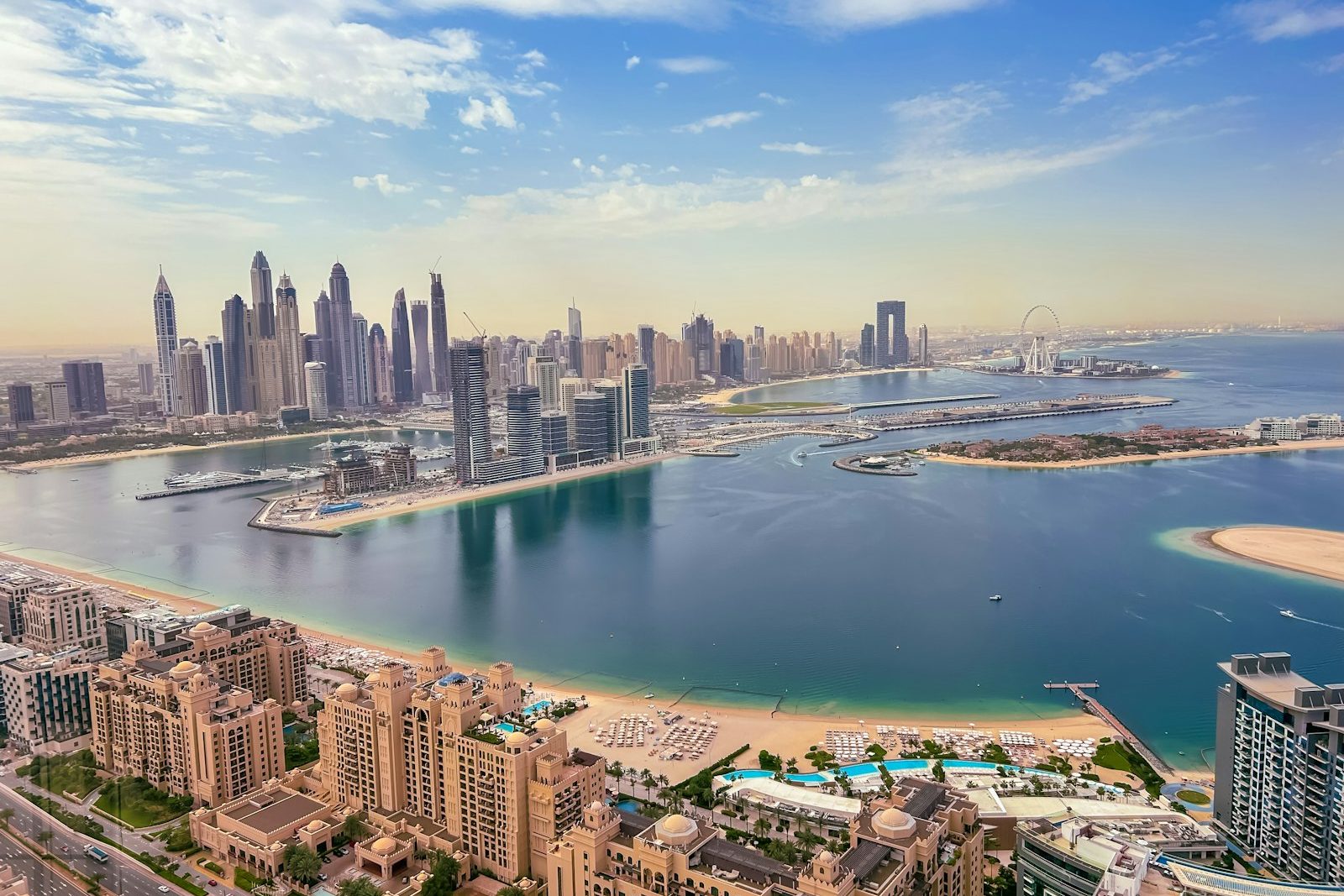


The best time for a trip to the Emirates runs from November through March: around 24-28°C during the day, dropping humidity, and a sea that still holds its warmth. July and August, on the other hand, are best crossed off the list, and not because of prices but because of physics. Daytime heat here regularly climbs past 40°C, some days hit 48-50°C, and the humid air tacks on a few more degrees to how it actually feels. So the real question of when to visit the UAE comes down not to the calendar of discounts but to whether you can even step out of your hotel at midday.
Why is summer in the UAE the worst choice for a holiday?
The Emirates sit on the edge of the Arabian Desert, and from May through September a combination kicks in that not even the sea can save you from. Average daytime highs in summer stay in the 38-41°C range, but those are just averages. At the peak of July and August the thermometer easily reads 45°C, and weather-service records have topped 48°C.
The real trap isn't even the number on the thermometer. It's the humid heat. Humidity at the height of summer swings from 50 to 80 percent, and it gets toughest in the back half of the season, closer to August and September. On days like these the heat index (how your body actually experiences the temperature) climbs well above the reading in the shade. A walk from the mall entrance to a taxi turns into a trial.
Partner links: booking through them supports the blog at no extra cost to you.
The city is built for this: air conditioning everywhere, from the bus stop to the metro station. But that's exactly the point. In summer, Dubai and Abu Dhabi live indoors, and the whole outdoor side of a holiday, the beach, the desert, the promenades, the old quarters, becomes almost off-limits during the day.
What is the weather like in the Emirates by month?
So you don't have to guess, here is how the year looks across the key parameters. The figures are approximate and any given week can swing off them, so check the forecast before your trip.
| Month | Air, daytime | Sea | Prices and crowds |
|---|---|---|---|
| November | 28-32°C, easing | 26-29°C, warm | Season kicks off, prices rising |
| December | 24-27°C | 24-26°C | Peak, holidays, top prices |
| January | 24-26°C | 22-24°C, fresh | Peak, pricey, lots of people |
| February | 25-27°C | 21-23°C, coolest | Still high season |
| March | 28-32°C, warming up | 23-25°C | End of the comfortable window |
| April | 32-36°C | 25-27°C | Heat returns, prices drop |
| May-September | 38-45°C and up | 30-33°C, hot | Low season, discounts, but rough |
| October | 33-36°C, still hot | 28-30°C | Transition, prices still low |
The most even balance comes from December, January and February: dry, sunny, moderately warm. March and November are the compromise, when the days are either already or still hot, but there are fewer people than at the Christmas peak.
When is the sea in the Emirates pleasant, and when isn't it?
Here lies a detail that many people underrate. In summer you can technically swim, but the water warms up to 30-33°C. That's a temperature at which the sea doesn't refresh you at all, closer to a warm bath, and afterward your body doesn't cool down.
In winter it's the opposite. In January and February the water drops to 21-23°C, the coolest stretch of the year. For some that's bracing and just fine, for others it's already too cool for a long swim, especially in the evening. So if the main goal of the trip is the beach and the sea, the ideal windows aren't deep winter but late spring and early autumn: April-May and October-November, when the water holds around 26-29°C. The trade-off is that the air in these months is either already or still hot, so you get to pick what matters more to you, comfortable water or comfortable walks.
The desert, tours and activities beyond the beach
For a desert safari, viewing decks, the old Al Fahidi district, strolls along the promenades and through the markets, a simple feedback rule with the thermometer applies: the cooler the air, the better. Winter wins hands down here. An evening safari in December means a pleasant 20-something degrees on the sand; the same safari in July is a walk into a blazing furnace.
How much does peak season cost, and where do you catch lower prices?
Comfortable weather comes at a price, and the difference is dramatic. In peak season, meaning December and January with the holidays and New Year break, hotel prices jump 200-300 percent over the low season. New Year's nights at luxury hotels have run into several thousand dirhams a night.
In summer it's the reverse. From June through August hotels slash prices by 40-50 percent, and deals pop up on entry tickets and restaurants. That's exactly why summer packages to the Emirates look so tempting in the ads: you pay noticeably less for the room and the flight. The only catch is that you'll spend half the daylight hours hiding from the sun.
The smart compromise for anyone watching their budget is the edges of the season. Late October, the first half of November, the second half of March and April. The weather is already bearable, and prices haven't yet shot up to Christmas levels. The exact figures depend on the year, the exchange rate and the specific hotel, so check the cost before you book.
Do you need a visa for the UAE?
No. Ukrainian citizens don't need a visa arranged in advance for a tourist trip. It's visa-free entry for 30 days: on arrival at any airport in the Emirates, they stamp your passport for free with a 30-day entry stamp. If you need to stay longer, you can extend it once for an additional period for a separate fee by contacting the immigration service on the spot.
There's one technical requirement worth keeping in mind: your passport must be valid for at least 6 months on the date of entry. The rules are occasionally adjusted, so verify the current conditions on official sources before departure, including the portal of Ukraine's Ministry of Foreign Affairs at mfa.gov.ua.
What about Ramadan, and does it spoil the trip?
Ramadan falls right in the comfortable season and shifts back by about two weeks each year. In 2026 it ran roughly from mid-February to mid-March; in 2027 it's expected earlier, around February 8. The exact dates are set by the local committee based on the sighting of the moon, so it's worth confirming them before your trip.
For a tourist this isn't a ban but a set of nuances. During the day some cafes operate on a limited schedule, loud music and parties are toned down, and eating or drinking in public on the street isn't the done thing. In the evenings, though, the city comes alive, restaurants open after sunset, and the atmosphere becomes calmer and cheaper than the Christmas peak. Some people deliberately avoid these weeks, others go precisely for the quiet.
So when should you actually go?
If it's your first time and you want the classic picture (skyscrapers, desert, comfortable walks without sweat on your brow), take December or February and budget more. If the beach and the sea are the main thing, aim for April-May or October-November, when the water is at its nicest. If money matters more than comfort and you're ready to live by the air conditioner's schedule, summer will give you the lowest prices, but that's a choice for enthusiasts.
The only period that's hard to recommend to anyone with a holiday in mind is July and August. The heat, the humidity and the hot sea cancel out everything people come here for. So the short answer to the question of when to visit the UAE goes like this: in the cooler half of the year, and pick the specific month within it to match whatever is your priority.