

Here is the short version of what to see in Mukachevo: Palanok Castle on an extinct volcano, the town hall with its clock tower, Myru Street with pastel facades, and a tiny bronze chimney sweep perched on a cornice that you have to spot for yourself. The town itself fills one full day, and the castle deserves a separate two to three hours, because this is not a token ruin but a living three-tiered fortress with a panorama over the whole valley. Mukachevo is compact, flat and free of any steep climbs in the centre, so your feet will thank you.
Travellers often confuse it with Uzhhorod and skip it on the way to the mountains. That is a mistake. Palanok is one of the best-preserved castles in the country, and the centre, with its town hall and cafes, has its own slightly Hungarian character. Nobody hurries here, and it rubs off on you.
Palanok Castle: why it is worth the trip
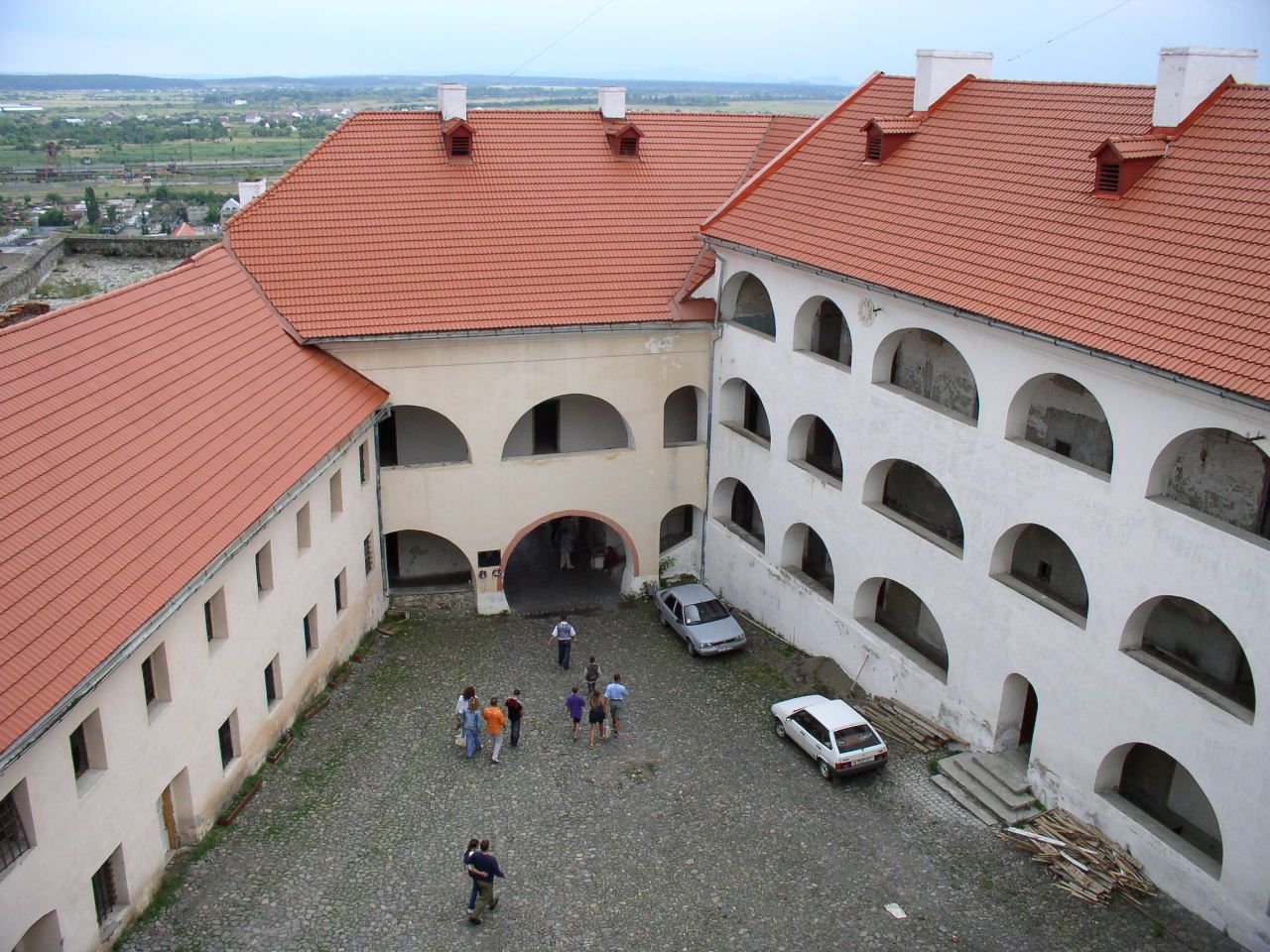
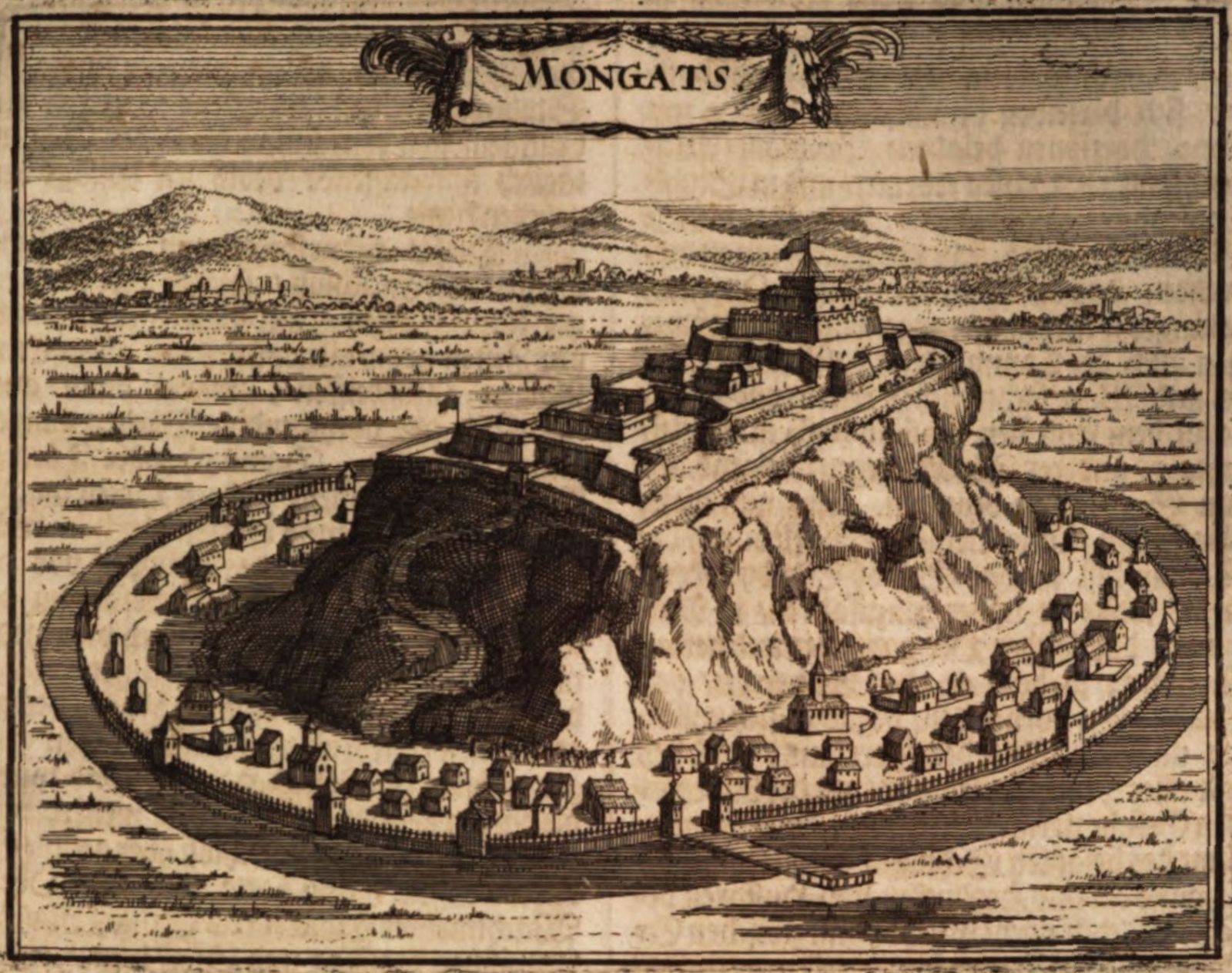
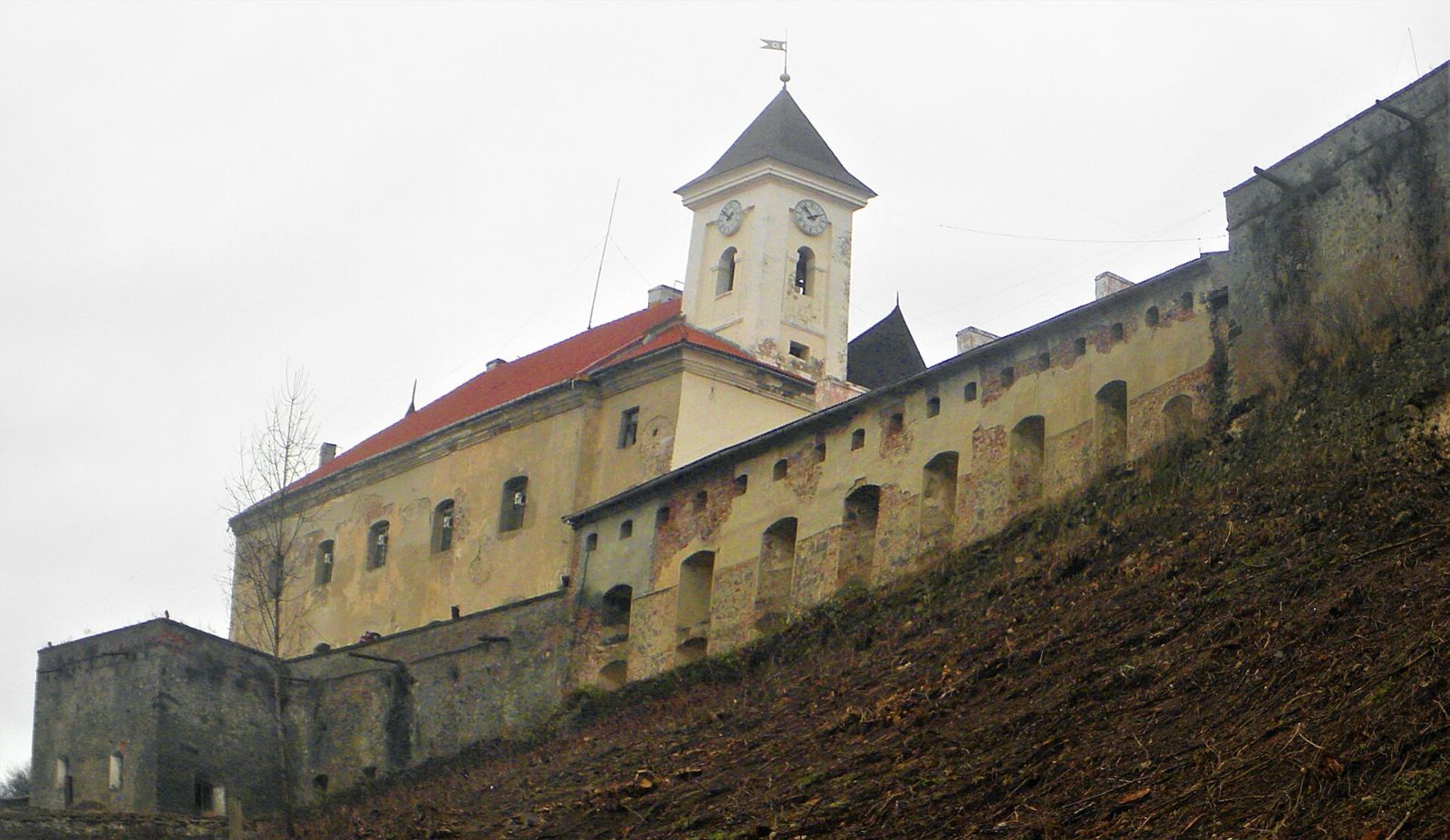
Palanok sits on a lone hill more than sixty metres high, and this is no ordinary mound but the remnant of an ancient volcano rising out of a flat valley. That is exactly why the fortress was so hard to take: the open plain around it could be swept by fire from every side, while the walls climbed in three separate tiers. The castle was never stormed successfully in its entire military history, and standing in the upper courtyard you understand why.
Three-tiered defence is the whole point of Palanok. The lower castle, the middle and the upper rise by staircases one above the other, each with its own gates, moats and bastions. The upper courtyard is the oldest part, where the fortress began back in the 14th century. The best panorama opens from the upper ramparts: the town below spread out at your feet, and the blue ribbon of the Carpathians in the distance.
What to catch inside
- The courtyards of all three tiers. Walk them in order, from the bottom up, and the logic of the defence reads itself: to reach the upper castle an enemy had to take every level in turn.
- The history museum. The halls hold weapons, old maps, regional crafts and a room dedicated to Princess Ilona Zrinyi, who held out through a long siege here in the late 17th century.
- The well and the devil legend. A deep well in the courtyard comes with a tale of being dug with the help of an evil spirit. It is a story for the willing, but children love it.
- The viewing terraces. Do not skip a full loop of the ramparts, the panorama shifts on every side.
Opening hours and ticket prices change from time to time, so check the museum's official pages before you go. Allow at least two hours for the castle, or all three if you like to take it slowly and see the museum.
What to see in the town itself?
After the castle, head down into the centre, where everything is close together and level. The heart of the town is Myru Square with its town hall, and old streets fan out from it, lined with Austro-Hungarian and Hungarian buildings.
The town hall and clock tower
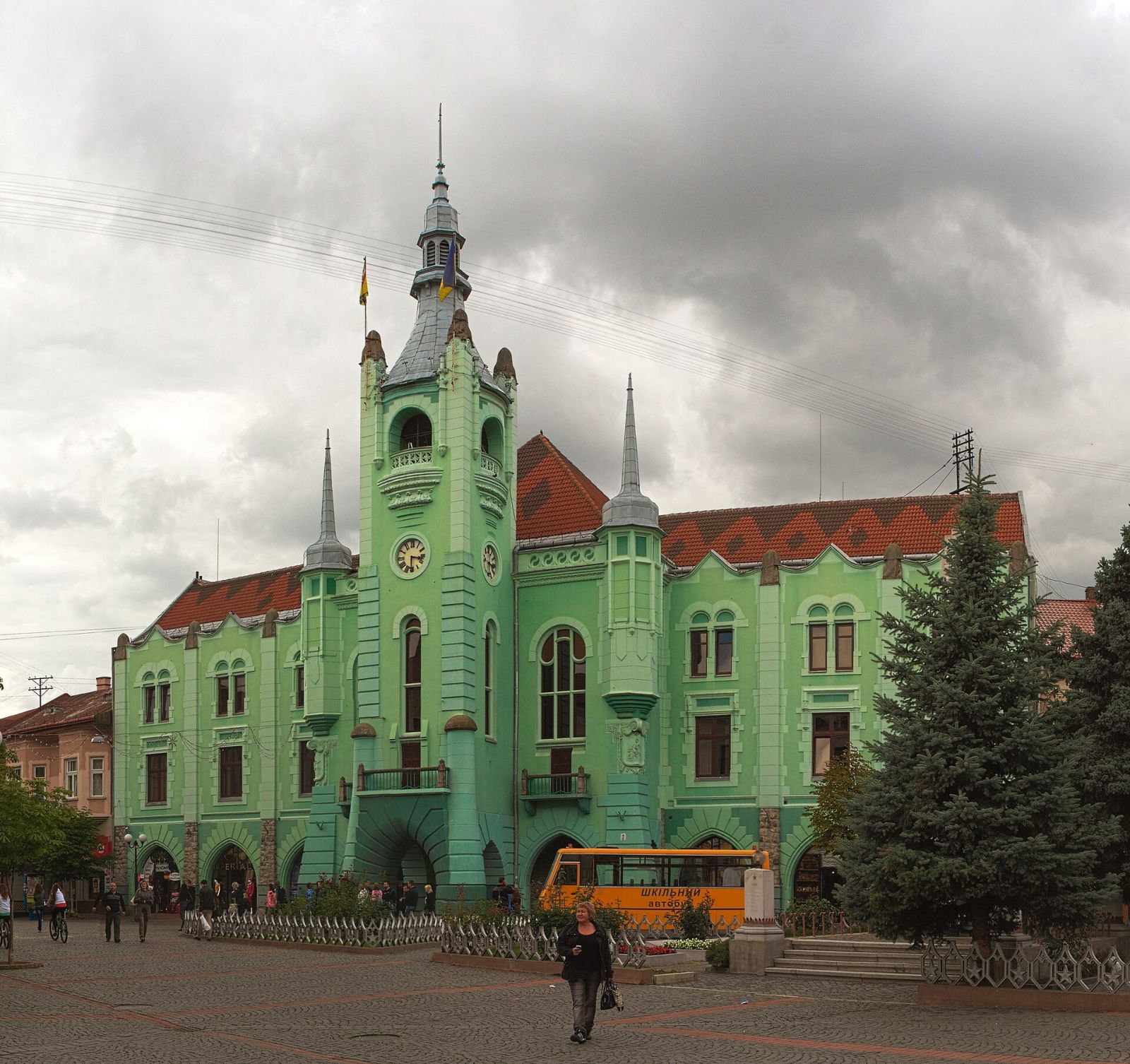
Mukachevo's town hall, built in the early 20th century in the Secession style, is the architectural gem of the centre. The tall clock tower is visible from afar, and the mechanism still marks the hours. The building was long a symbol of civic self-government, and even if you do not go inside, it is hard to walk past without a second look. The densest cluster of cafes and confectioners sits right around it.
The chimney sweep monument
And now for the town's most-loved detail. On the cornice of a building near the town hall crouches a small bronze figure of a chimney sweep. It is nicknamed Bertalon after a real Mukachevo sweep, Bertalon Toth, though you will also hear the name Szent Mihaly in town. The sculpture is tiny, so tip your head back and look: local lore says you simply must rub the sweep's button for luck. Hunting for this figure turns an ordinary stroll into a small quest, especially if you have children with you.
Myru Street and the pedestrian centre
Myru Street and the lanes around it are the part of Mukachevo where people simply walk, study the facades and drink coffee. Pastel one and two-storey houses, wrought-iron balconies, old shop signs. There is no single must-see object here, but the atmosphere itself is the attraction. While you are at it, look in on the St Nicholas Monastery on Chernecha Hora hill, which offers another good view, about twenty minutes on foot from the centre.
Where else to walk beyond the main sights
- St Nicholas Monastery. A working convent on Chernecha Hora with a long history, a quiet spot with a panorama of the town and the castle facing it.
- St Martin's Church. A Gothic Catholic church in the centre, with an old 14th-century chapel beside it, one of the oldest structures in town.
- The White Rakoczi Palace. A former residence of a noble family in the centre, now an educational institution, though the facade is worth a look.
- Town sculptures and fountains. Beyond the chimney sweep, small monuments and cosy squares are scattered across the centre, good places to rest between walks.
What is nearby? Berehove and the thermal pools
If you have a second day, do not stay put in the town. Half an hour south lies Berehove, the most Hungarian town in Zakarpattia and the main reason people come here in winter and the off-season: thermal pools. Hot mineral water rises here from deep underground, and soaking in it in the open air when the surroundings are cool is a pleasure of its own.
| Place | What it is | Who it suits |
|---|---|---|
| Berehove thermal pool | A classic open-air pool with hot water | Those after a simple, budget option |
| Kosyno (on the way) | A thermal complex with several basins and a rest area | Those coming for a full day or an overnight stay |
| Vynohradiv and around | Wine country, tastings of local varieties | Those who want to pair the water with wine |
The water in the thermal pools stays warm all year round, so the season here effectively never ends, and they are at their best precisely in cool weather. Check opening times and prices before you set off, as they change, and weekends can get crowded.
How to get there?
Mukachevo lies in the west of Zakarpattia, and although it is closer to the centre of the country than Uzhhorod, the trip is still not a fast one thanks to the Carpathians.
| From | How | Roughly in transit |
|---|---|---|
| Kyiv | Train (the overnight is easiest) | About 11-12 hours |
| Lviv | Train or bus over the mountains | 4-5 hours |
| Uzhhorod | Local train / bus / car | About an hour |
The most convenient option from Kyiv is the overnight train: lie down in the evening and wake up already in Zakarpattia. The railway station sits a little away from the centre, but local transport or a taxi covers the gap in ten minutes. Mukachevo is often paired with Uzhhorod, an hour apart, so it makes sense to see both towns on one trip. Check schedules and ticket prices before you travel, as they change.
How much time to set aside
Mukachevo itself is enough for one full day: the morning for Palanok Castle before the tour groups roll in, and the second half for the centre with its town hall, chimney sweep and coffee. Add Berehove and the thermal pools and you are into a second day, ideally with an overnight, because after the hot water you will not want to rush anywhere. As for food, do not miss bograch, a thick Hungarian goulash soup rich with paprika. They know how to make it here, so look for plain local canteens rather than fancy restaurants, the places where people eat it every day.