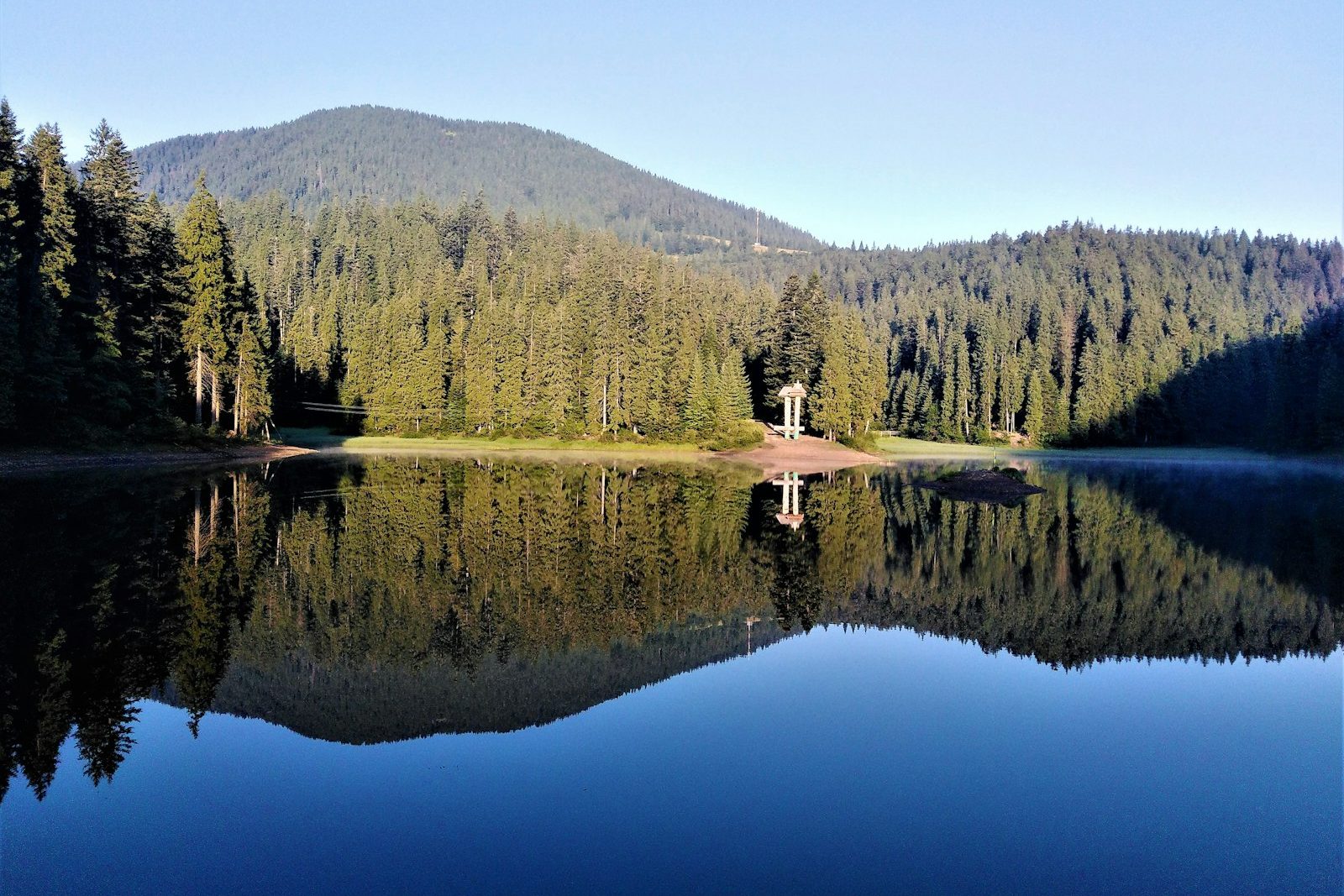


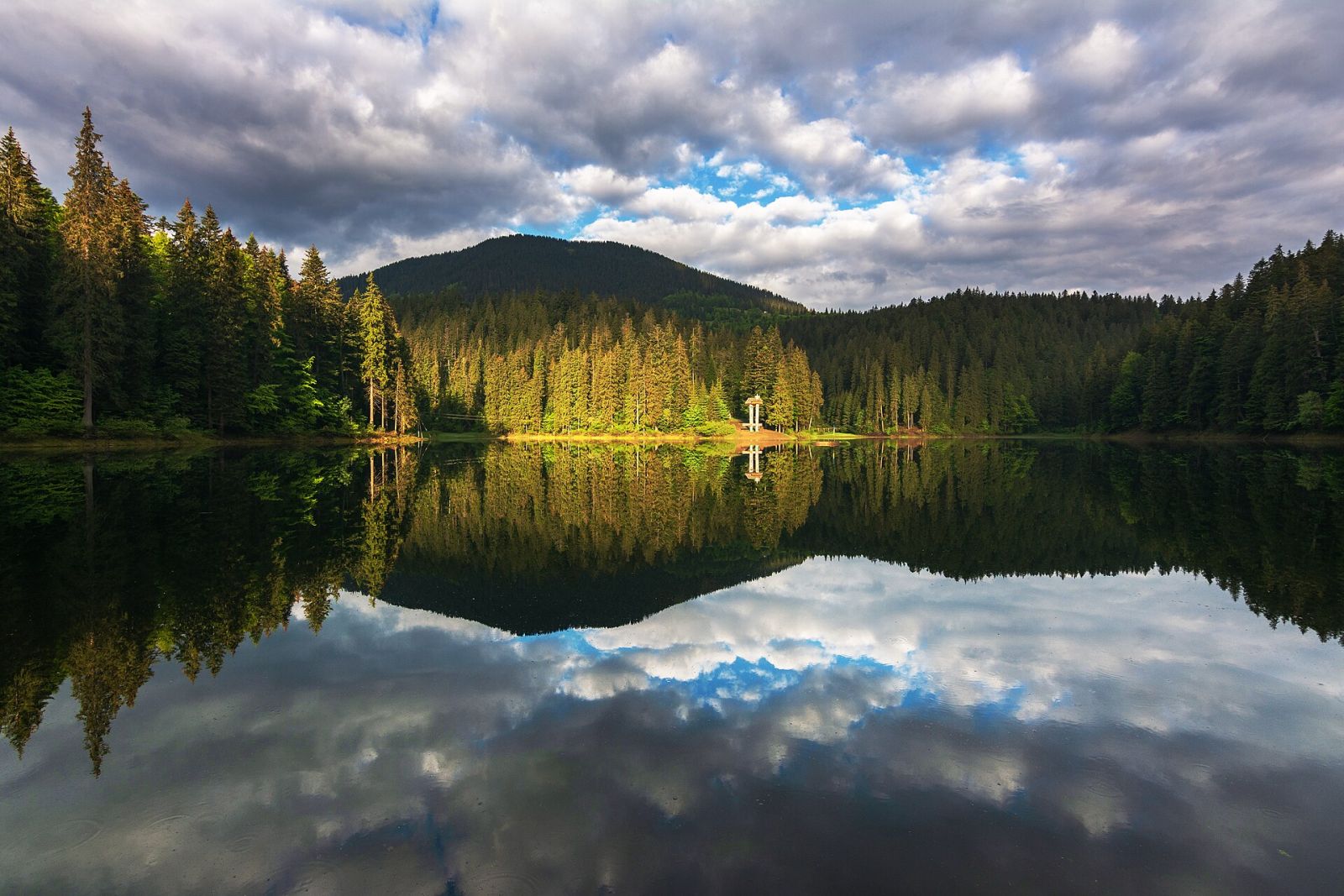
Synevyr is the largest and deepest mountain lake in the Ukrainian Carpathians: a bowl the size of several football pitches sits at an altitude of about 989 metres in Zakarpattia, and even in the July heat the water never warms above 10-13 degrees. People come here not to swim but to see the mountains' "Sea Eye" and, right beside it, one of Europe's largest sanctuaries for rescued brown bears.
In short, for planning: Lake Synevyr and the national park of the same name lie in the upper Tereblia valley, the nearest landmarks being the village of Synevyrska Poliana and the town of Mizhhiria. The drive from Mizhhiria takes about 40 minutes by car, entry to the grounds is paid but inexpensive, and the most convenient season runs from May to October. Below we break down every point: how much it costs, how to get there, when to go and what to fit into a single day.
What Synevyr is and why they call it the "Sea Eye"
The lake is a landslide-dammed one by origin. About ten thousand years ago an earthquake shifted a slope, rock masses blocked the stream bed, and the hollow gradually filled with spring and rain water. That is how a body of water some 4-5 hectares in area formed, with a maximum depth of up to 22-24 metres (different measurements give slightly different figures, because the water level fluctuates by several metres depending on the season and rainfall).
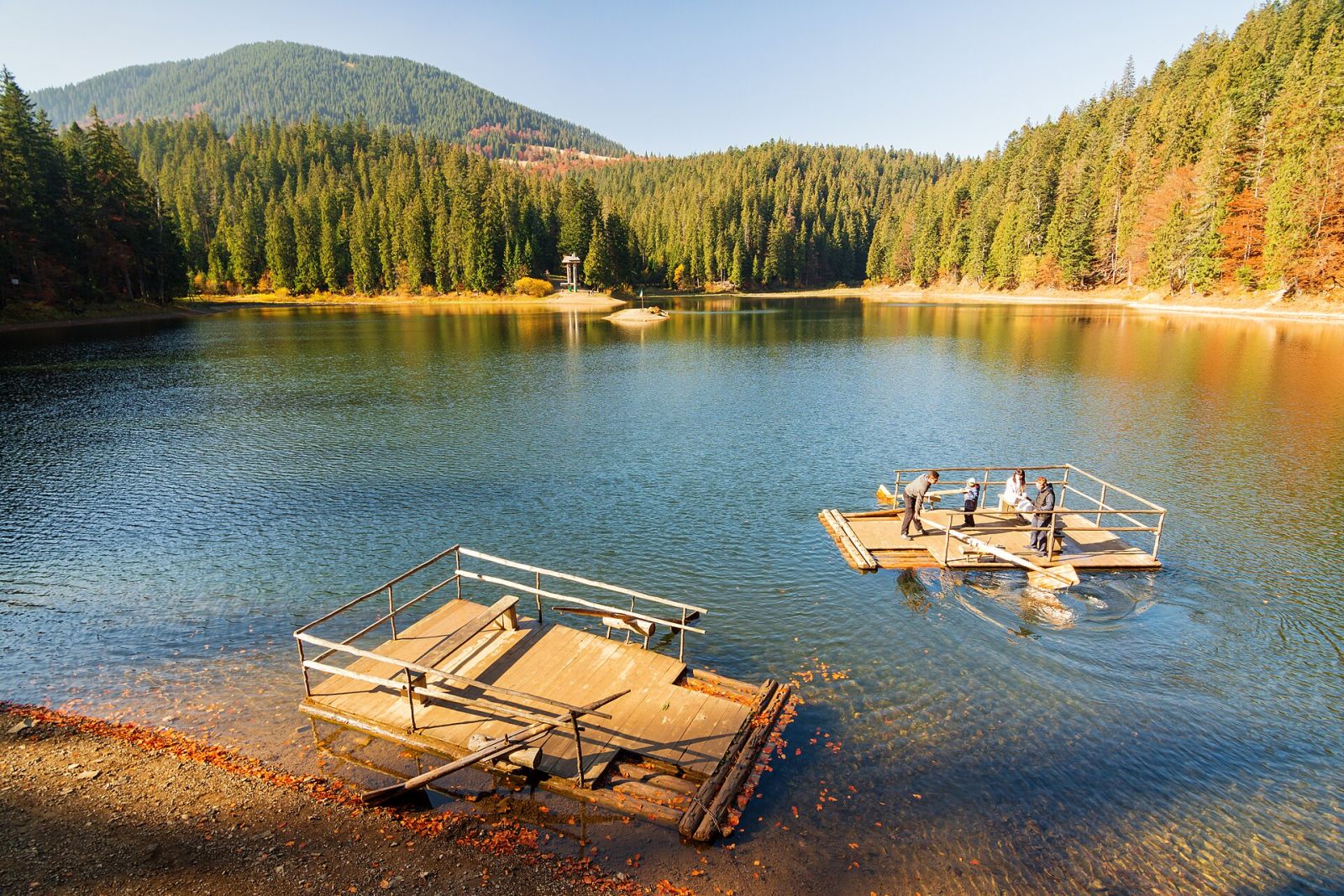
It earned the nickname "Sea Eye" for its colour and shape. From the viewing platform above the shore the blue-green surface ringed by spruce forest really does resemble a pupil. Lake trout live in the clear cold water, and the fish need cleanliness and a low temperature, so their presence is a natural indicator of the lake's condition. Swimming here is forbidden and physically unpleasant: few dare to plunge into 12 degrees.
An important detail for your expectations. Synevyr is striking but small: you can stroll around it unhurried in about half an hour. Anyone coming for "a whole day of wow from the lake alone" often leaves disappointed. That is why Synevyr is always taken as a set with the bears, the waterfall and the surrounding mountains.
How much entry costs and what the park includes
The grounds belong to the Synevyr National Nature Park, established back in 1989, more than 40 thousand hectares of Carpathian forests, highland meadows and bogs in the Khust district of Zakarpattia. The fee for entry to the lake and, separately, to the bear centre is symbolic, but the prices change, so we give a ballpark range and advise you to check the amount at the ticket office before your trip.
| Site | Approximate fee | What it gives |
|---|---|---|
| Entry to Lake Synevyr | a small entrance ticket, discounts for children and pensioners | viewing platform, trail around the bowl, wooden sculpture of the lovers |
| Bear rehabilitation centre | a separate ticket, cheaper for schoolchildren and students | a walk along the enclosures, viewing platforms |
| Car parking | a separate fee by the lake and by the centre | a car park, a few minutes on foot uphill from it to the lake |
| Museum of Forest and Rafting | a separate entrance in Synevyrska Poliana | the story of raftsmanship and log floating on wooden rafts |
Cash bails you out more reliably than a card here: terminals in the mountains work every other time, and the signal sometimes drops out. Bring small notes for tickets and parking.
The legend of Syn and Vyr: where the name comes from
Local lore explains the name through an unhappy love. A count's daughter named Syn fell in love with Vyr, a simple highland shepherd. Her father would not tolerate the mismatch and ordered the young man dealt with: according to the legend, he was crushed with a stone. The girl wept so long and so bitterly on that spot that a lake formed from her tears. The two parts of the name, Syn and Vyr, joined into a single word.
The legend does not trouble itself with science, and geographers see a landslide and a dam, but it is the story that makes the lake memorable. Wooden sculptures stand here in honour of the lovers, and almost everyone who reaches the viewing platform has their photo taken beside them.
The brown bear rehabilitation centre, the main reason to come
A few kilometres from the lake, in Synevyrska Poliana, sits a brown bear rehabilitation centre that opened in 2011. It is not a zoo or a circus: animals are brought here after being seized from smugglers, from roadside "photo attractions", closed bait-training stations and bankrupt menageries. The centre is considered one of the largest of its kind in Ukraine and Europe.
The bears live on about 12 hectares of forest behind tall electric fences, in spacious enclosures with pools and dens. Around thirty individuals are here at any one time, and the exact figure changes: some are released into the wild, some new ones are taken in. In winter part of the bears go into hibernation and are almost impossible to see, so the best months for watching run from late spring to early autumn, when the animals are active.
Feeding and calling the animals is forbidden, and that is a matter of principle. The centre's goal is to return the animals' wild behaviour to them, not to turn them into beggars at the fence. Come with the understanding that a bear may simply be sleeping deep in its enclosure; no one here guarantees a "show".
How to get to Synevyr
The lake lies off the major highways, so the road is a separate part of the adventure. The easiest start is from Mizhhiria, from where it is about 30 kilometres to the lake along the mountain road T0720, roughly 40 minutes by car. General landmarks for a longer approach are Khust, Mukachevo and Uzhhorod: from the regional centre the journey takes several hours through the switchbacks.
- Your own car. The most convenient option: you drive almost right up to the lake and leave the car in a paid car park. In winter you need winter tyres and caution on the passes.
- Bus and on foot. Transport runs from Mizhhiria towards Synevyrska Poliana, and from the stop it is still about 5 kilometres uphill to the lake, which you will have to walk or arrange with a local driver.
- Taxi and transfer. In Mizhhiria it is easy to find drivers who take tourists to the lake and the bear centre and wait for the trip back.
- Organised excursion. Day tours from Lviv and the towns of Zakarpattia handle the logistics and usually add the Shypit waterfall and the cable car, which is handy if you would rather not steer through the switchbacks yourself.
Estimate your time honestly: a mountain "hour on the map" is not an hour in real traffic. Allow extra for the switchbacks, narrow bridges and road repairs, especially at peak season, when tailbacks of buses build up on the approaches.
When to go to Synevyr
The lake is open all year, but the impressions differ greatly by season. The main rule: "warmest" and "smartest" do not coincide here, and at the peak of summer the finest weather comes paired with crowds and queues for the car park.
| Season | What you get | What to keep in mind |
|---|---|---|
| Spring (May) | full streams, fresh greenery, active bears, fewer people | the mountains are still cool and damp, waterproof footwear needed |
| Summer (June-August) | the warmest weather, all sites open, comfortable walking trails | peak crowds and accommodation prices, car parks full at weekends |
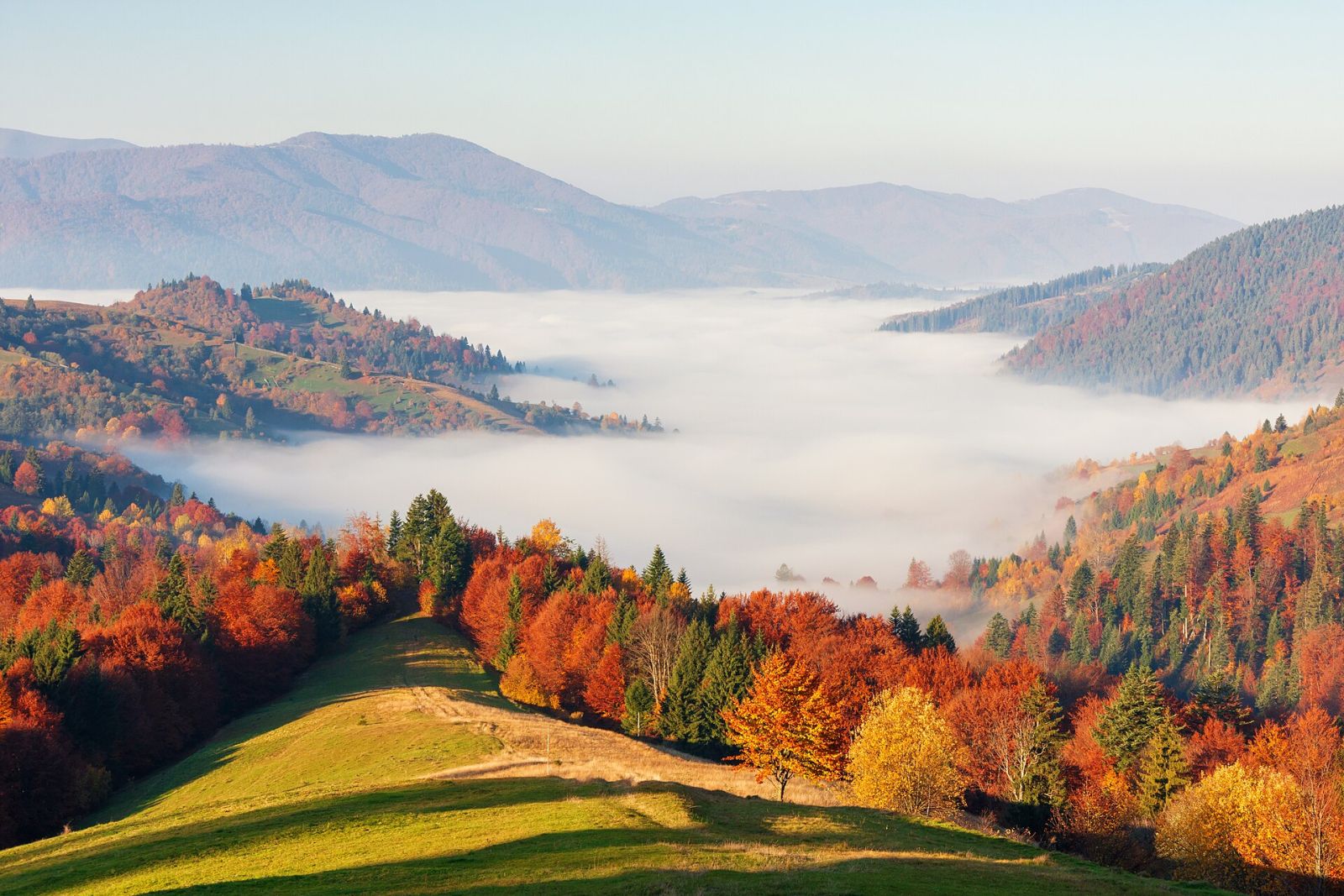
| Autumn (September-October) | golden forest around the bowl, quiet, the best photos | shorter daylight, the bears getting ready to hibernate |
| Winter | a snowy fairy tale, fewer tourists | the bears sleep, the roads are slippery, some services are closed |
If the goal is to see active bears and full waterfalls, aim for late spring. If quiet and the picture matter, take a weekday in the golden autumn. Avoid weekends at the height of summer, as that is precisely when queues, not nature, spoil the impression.
What to see nearby on the same day
Synevyr is rarely visited on its own, and rightly so. Within the national park and close by there are several more sites that logically thread onto a single route.
- Dyke Lake (Ozirtse) on the slope of Mount Gropa: a small body of water just over a hectare with a floating islet that never sinks. It is harder to reach, you have to go on foot, so only a few make it.
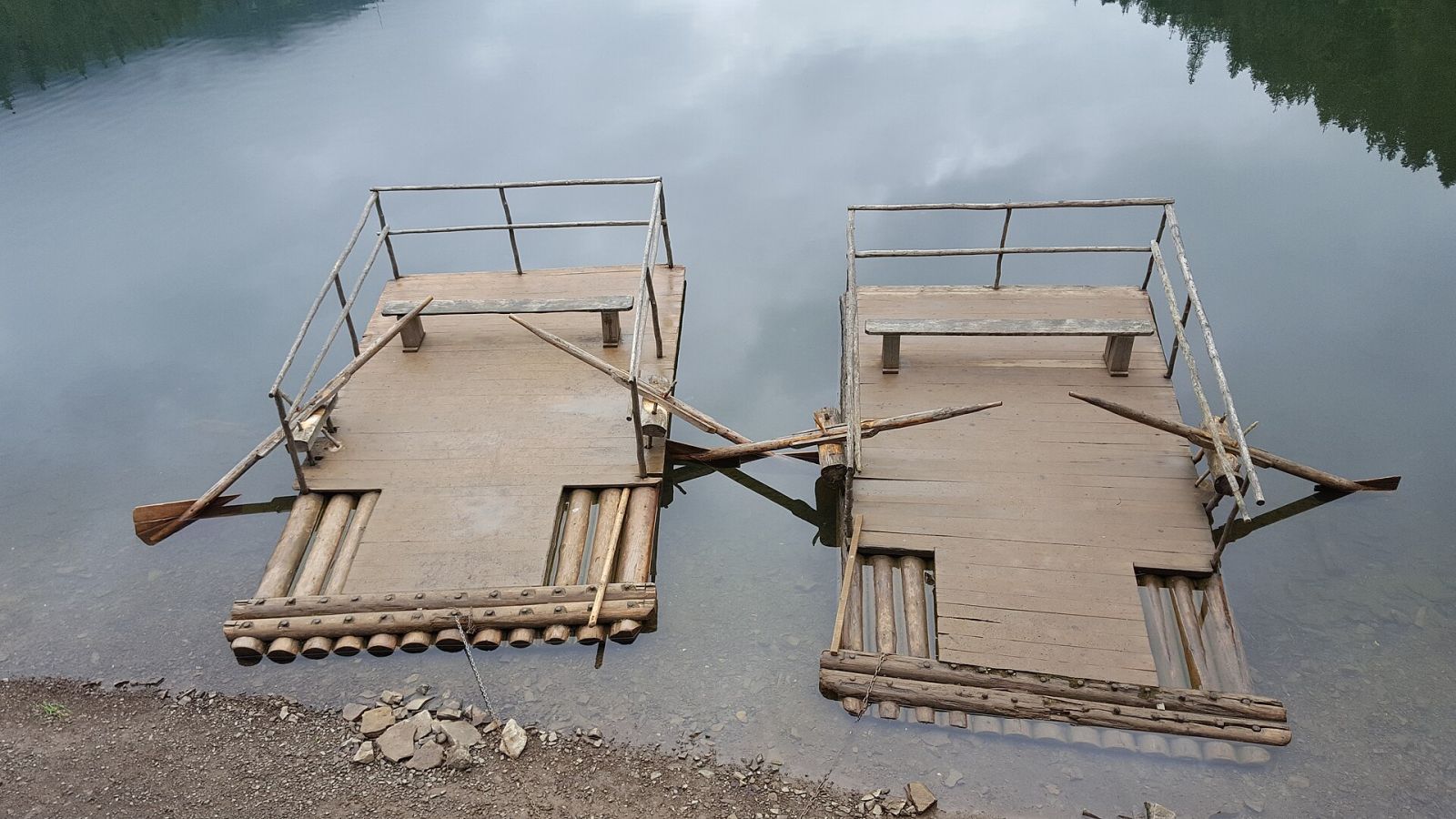
- The Museum of Forest and Rafting in Synevyrska Poliana tells of the raftsmen who floated timber down mountain rivers on wooden rafts, a craft that fed this land for centuries.
- The Shypit waterfall on the slopes of Borzhava, the classic partner of Synevyr on day tours, though it sits in a different valley.
- The surrounding highland meadows for those who stay overnight: hiking routes to the ridges start from here.
If you are planning your first visit, take the classic pairing of the lake plus the bear centre for one day of daylight and do not chase everything at once. If you have been here before and want to go deeper, plan an overnight stay in Synevyrska Poliana, walk to Dyke Lake and leave time for the highland meadows, for it is there that the Carpathian calm people come for is hidden.