

Denmark beyond Copenhagen is the half of the country most visitors never see, even though the distances are laughably small: three hours by train from the capital to Aarhus, the second city, and just over an hour by car to the chalk cliffs of Møn. A counterintuitive fact to start with: the highest point of "flat" Denmark barely tops 170 meters, yet the country hides 128-meter white cliffs above turquoise water, a migrating dune that swallows up to 15 meters of land a year, and a headland where two seas visibly collide. Here are six destinations worth leaving the capital for.
Aarhus: a young city with a rainbow on the roof
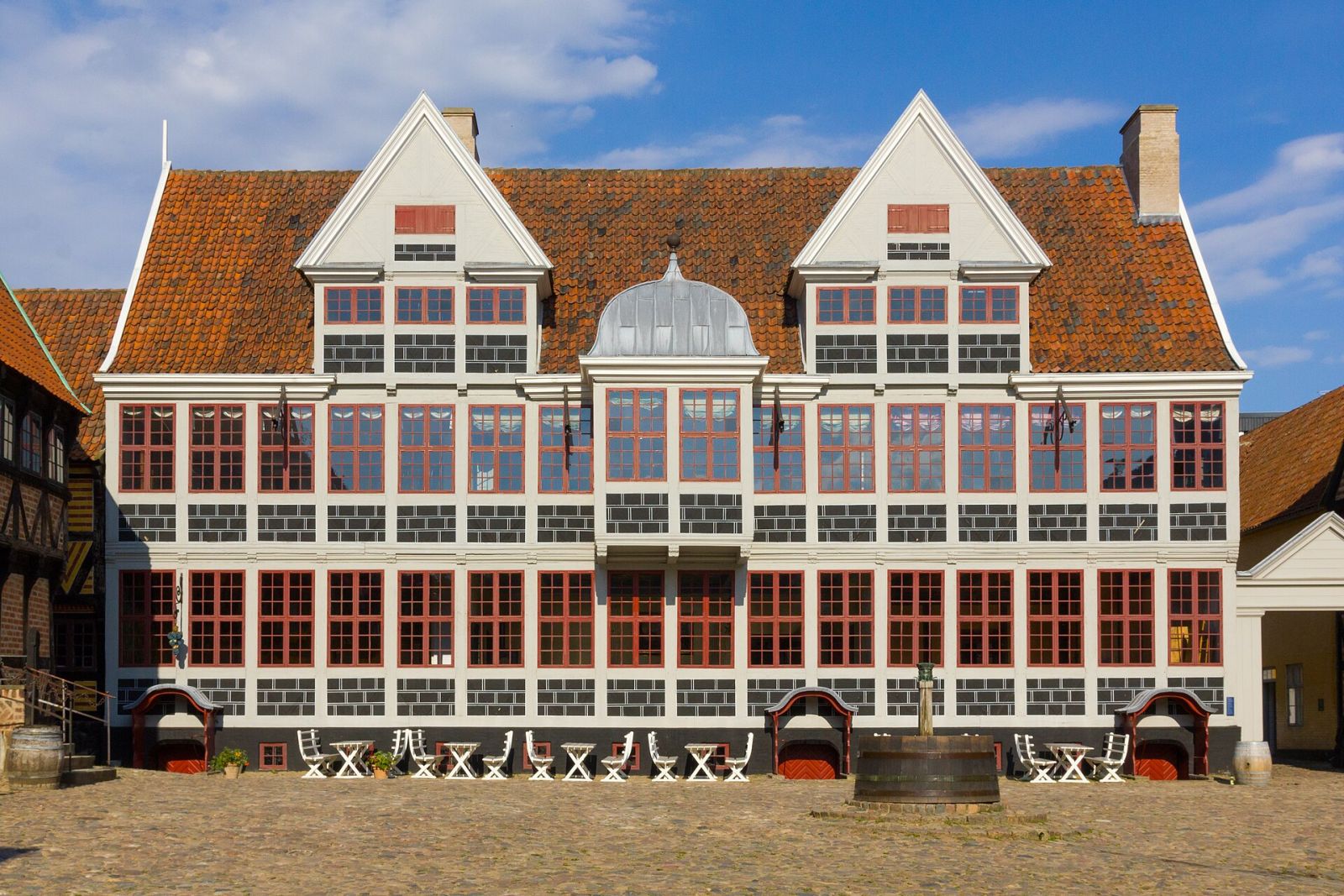
Aarhus, the main city of Jutland, runs on student energy (one resident in five is enrolled somewhere) and holds two must-sees. First, the ARoS art museum with "Your rainbow panorama", a circular glass walkway in every color of the rainbow mounted on the roof: the city seen through it looks like a photo series shot through filters, and it is the most recognizable art piece in the country. Second, Den Gamle By, "The Old Town", an open-air museum of 75 genuine relocated buildings from the 16th to 20th centuries, complete with shops, a bakery and whole neighborhoods staged as 1927 and 1974, apartment interiors included.
A bonus for archaeology fans: 10 km from the center stands the Moesgaard Museum with the bog body of Grauballe Man, more than two thousand years old. An honest caveat about Aarhus: one packed day or two relaxed ones cover the city, planning a week here makes little sense.
Odense: the city where Andersen was born
Odense on the island of Funen means, above all, Hans Christian Andersen. In 2021 a new museum, H.C. Andersens Hus, opened around the yellow cottage of his birth, designed by Japanese architect Kengo Kuma: gardens flowing into underground halls, sound, light and the fairy tales themselves instead of glass cases. This is no children's attraction but a serious attempt to show Andersen's world from the inside, and adults often get more out of it than kids do.
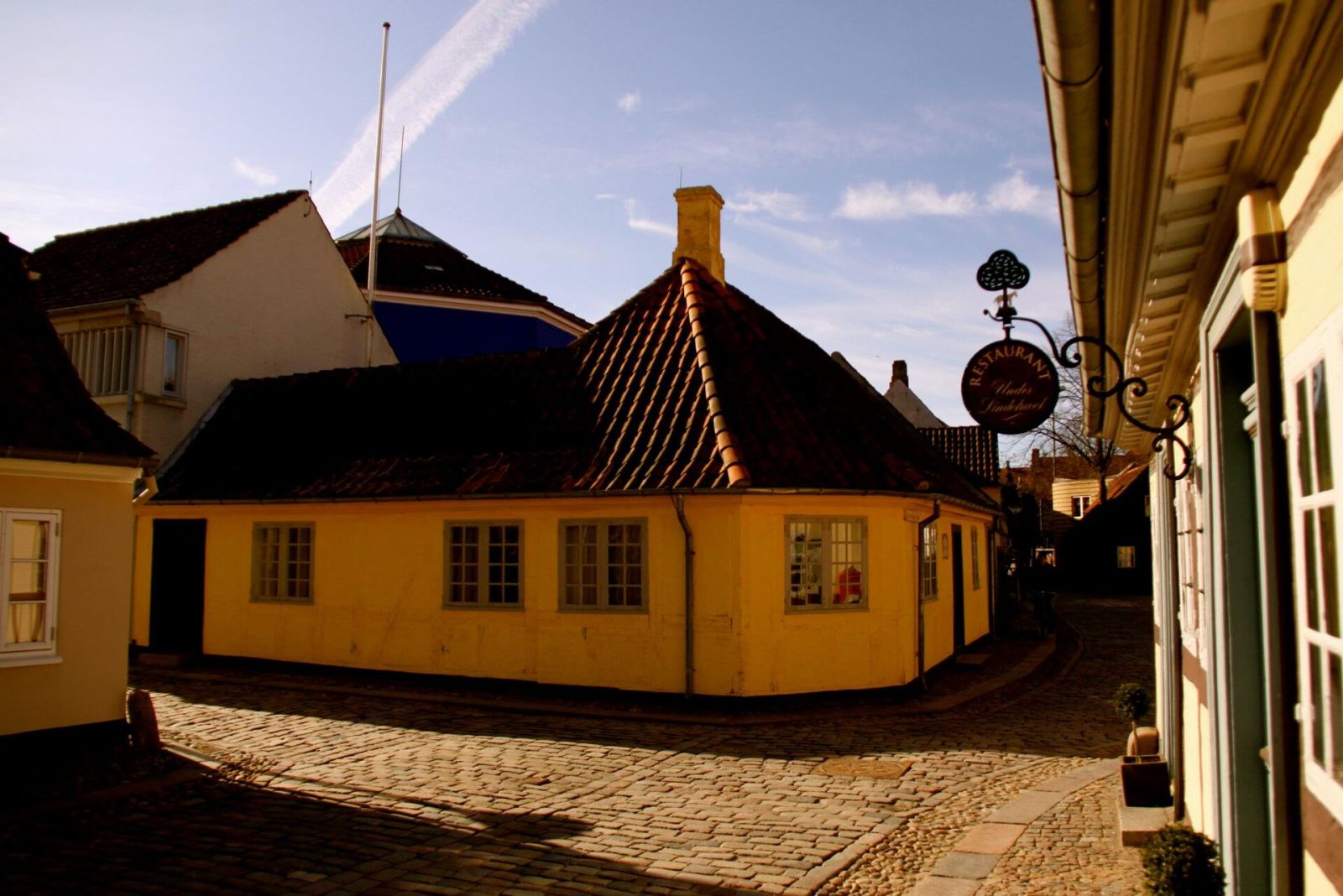
Odense itself is pleasantly underrated: the half-timbered lanes of Møntergården, St. Canute's Cathedral holding the relics of a sainted king, a river dotted with pedal boats. It is an hour forty by train from Copenhagen, which makes the city a natural stopover on the way to Jutland, and that is exactly how it works best.
Skagen: the meeting of two seas and sand that swallows churches
Denmark's northernmost tip is a world of its own. At Grenen, the sandbar near Skagen, the North Sea and the Kattegat strait physically collide: two sets of waves crash into each other on the spit, and the boundary is visible to the naked eye. You can stand in two seas at once, but swimming is strictly forbidden, the currents here are genuinely dangerous. Skagen's soft northern light drew a colony of painters as early as the late 19th century, and their canvases hang in the local museum.
Half an hour south lie two proofs that sand rules this coast. Råbjerg Mile, a migrating dune a kilometer across, crawls eastward at up to 15 meters a year and looks like a slice of Sahara dropped onto the Danish plains. And the Sand-Covered Church (Den Tilsandede Kirke) stands buried to its tower: dunes overwhelmed the parish back in the 18th century, leaving only the white spire above the sand.

Roskilde: a cathedral of kings and real Viking ships
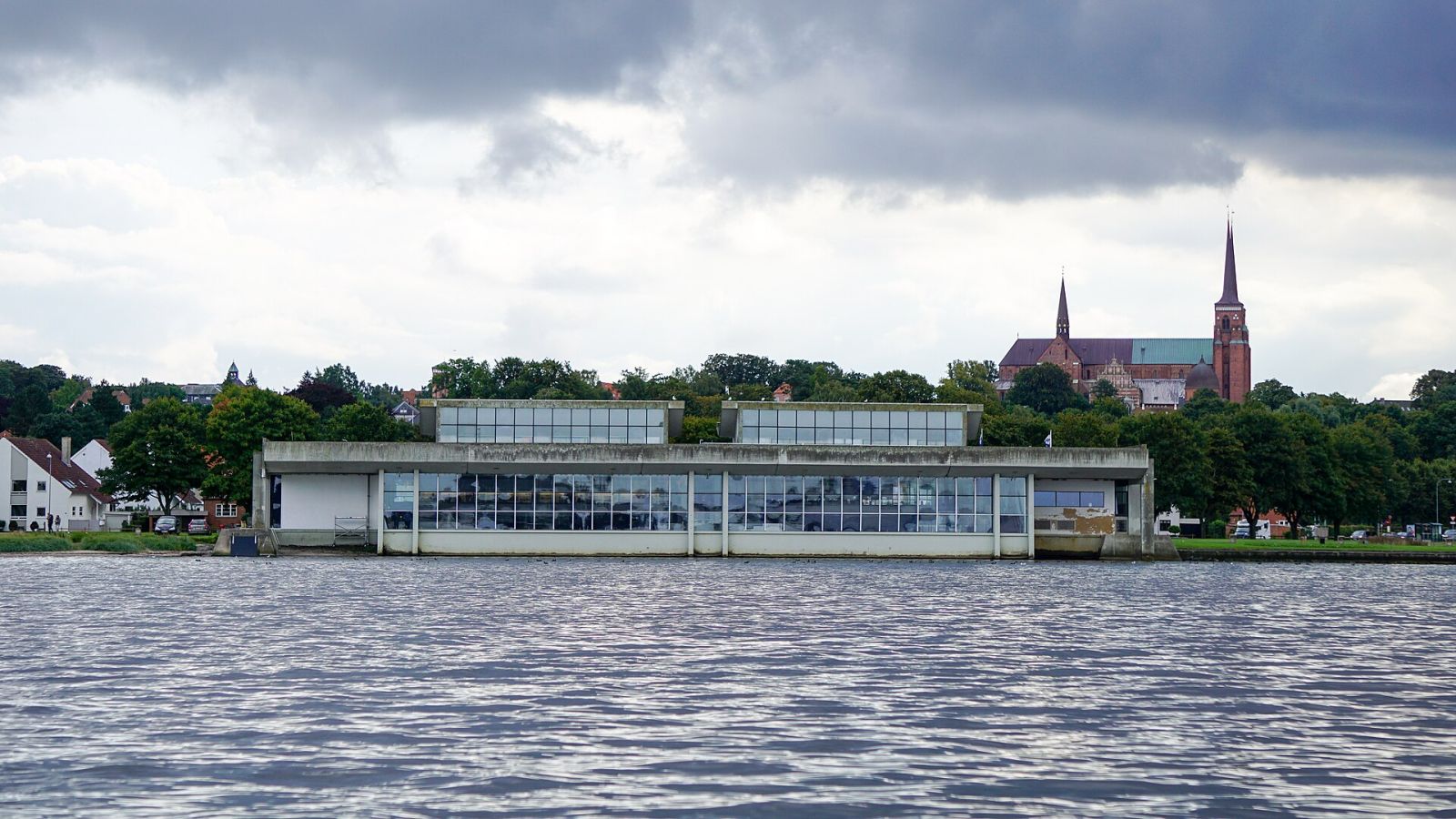
Half an hour by train from Copenhagen sits the city that was the capital before Copenhagen. The brick Roskilde Cathedral, a UNESCO site, is the mausoleum of the Danish monarchy: some 40 kings and queens, from medieval sarcophagi to the spot prepared for the current generation of the royal family. The second magnet is the Viking Ship Museum with five genuine 11th-century vessels raised from the fjord bottom, where they were once scuttled as a barrier. In summer the museum's shipyard builds replicas using period methods, and some of them take visitors out rowing on the fjord.
If your trip lands in late June or early July, be warned: Roskilde Festival, one of Europe's largest, fills every hotel within 30 km for a week.
Møn: white cliffs over turquoise water
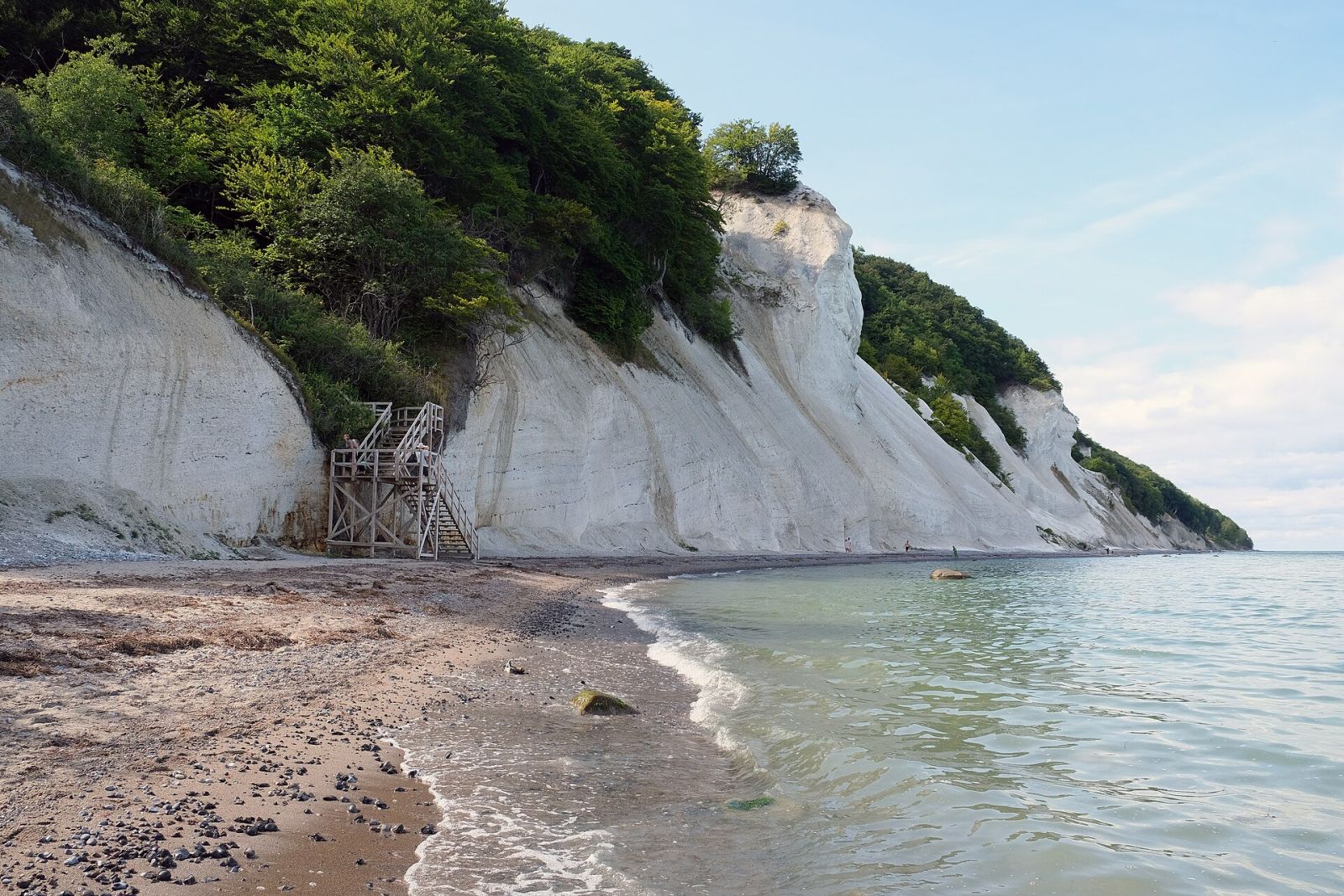
The island of Møn in the southeast holds Denmark's most dramatic scenery: the chalk cliffs of Møns Klint drop into the sea from up to 128 meters, and the water at their base glows turquoise from suspended chalk, like a stray piece of the Adriatic. About 500 wooden steps lead down, the beach yields 70-million-year-old fossils, and the GeoCenter on top runs an exhibition on the Cretaceous period. The sky is special too: Møn was Scandinavia's first certified Dark Sky park, and on a cloudless night the Milky Way is visible to the naked eye.
Honest logistics: public transport gets you there (train plus connecting buses), but a car saves hours. Møn pairs well in a single day with the white manor of Liselund on the same island.
Billund: the LEGO House in the town where the brick was invented
Billund, a small Jutland town, is the world capital of LEGO: the company was born here in the carpentry workshop of Ole Kirk Christiansen, and its headquarters still stands here. The centerpiece is LEGO House by the architects of Bjarke Ingels Group: 25 million bricks, color-coded creative zones, a Tree of Creativity the height of a building and a collection of iconic sets. Keep the distinction clear: LEGO House is a museum-workshop in the town center, while Legoland, the amusement park with its miniature cities, is a separate site. With children you can realistically spend a day on both; book tickets ahead on the official site.
Putting it together: logistics and order
| Destination | Time from Copenhagen | Minimum stay | Highlights |
|---|---|---|---|
| Roskilde | 25-30 min by train | half a day | UNESCO cathedral, Viking ships |
| Møns Klint | 1.5-2 h by car | half a day to a day | Chalk cliffs, turquoise water, dark sky |
| Odense | 1 h 40 min by train | half a day to a day | Andersen museum, half-timbered center |
| Aarhus | 3 h by train | 1-2 days | ARoS, Den Gamle By, Moesgaard |
| Billund | 3-3.5 h (train+bus) | a day | LEGO House, Legoland |
| Skagen | 5+ h, better overnight | 1-2 days | Grenen, the dune, the buried church |
Trains run by the state operator DSB are comfortable and punctual, and fixed-date Orange tickets cost noticeably less than standard fares, so buy 2-4 weeks ahead. The most logical 5-7 day route: Copenhagen as a base with day trips to Roskilde and Møn, then west by train through Odense to Aarhus, and from there Billund or Skagen depending on who is traveling. Danish prices are high, but the museum quality matches them; verify current opening hours and fees before your trip, with the official VisitDenmark portal as a convenient entry point.
Denmark beyond Copenhagen rewards exactly those who break out of the capital's sightseeing ring: the queues vanish, prices ease slightly, and the landscapes turn unexpectedly sharp, from turquoise cliffs to sands that swallow churches. For a country this size, that is a remarkably dense program.