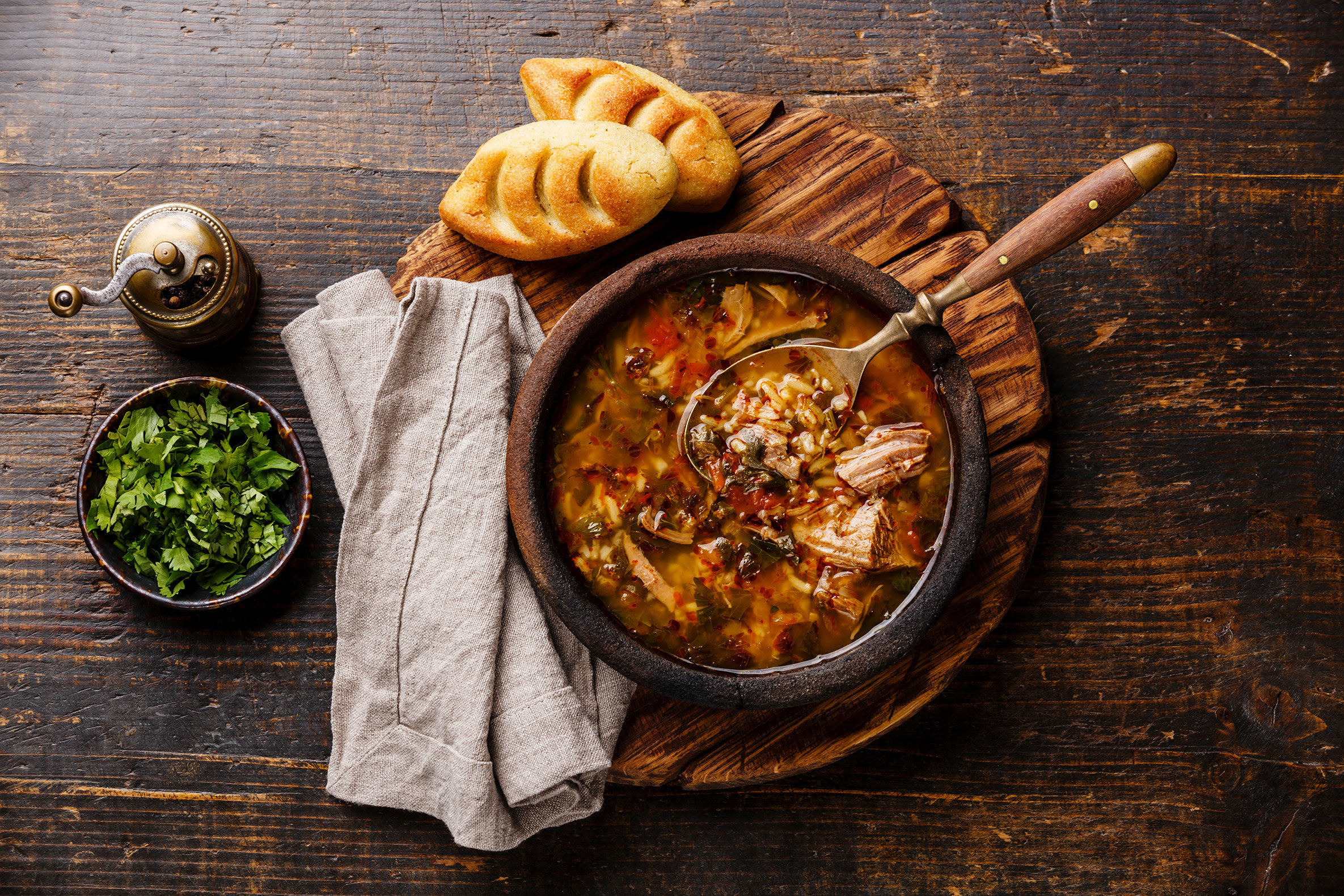


People are devouring dumplings in Portland, Oregon, and in Berlin.
They are dipping crusts of bread into pools of melted cheese in Manhattan and Warsaw, and savoring slices of eggplant stuffed with ground walnuts in Washington and London. Georgian food and wine, long prized for their character, exoticism and sheer brilliance, are now earning a rightful place on tables around the world. The greatest gastronomic secret has finally been let out.
Meanwhile in Tbilisi, the Georgian capital, a culinary revolution is underway. Chefs are rethinking the very idea of Georgian cuisine in terms of flavor, technique and refinement.
Partner links: booking through them supports the blog at no extra cost to you.
Driven by closer contact with the rest of the world, this movement is also a revival of old culinary traditions. There has never been a more exciting time to dine in Georgia.
Here are the dishes you simply have to try.
Khinkali
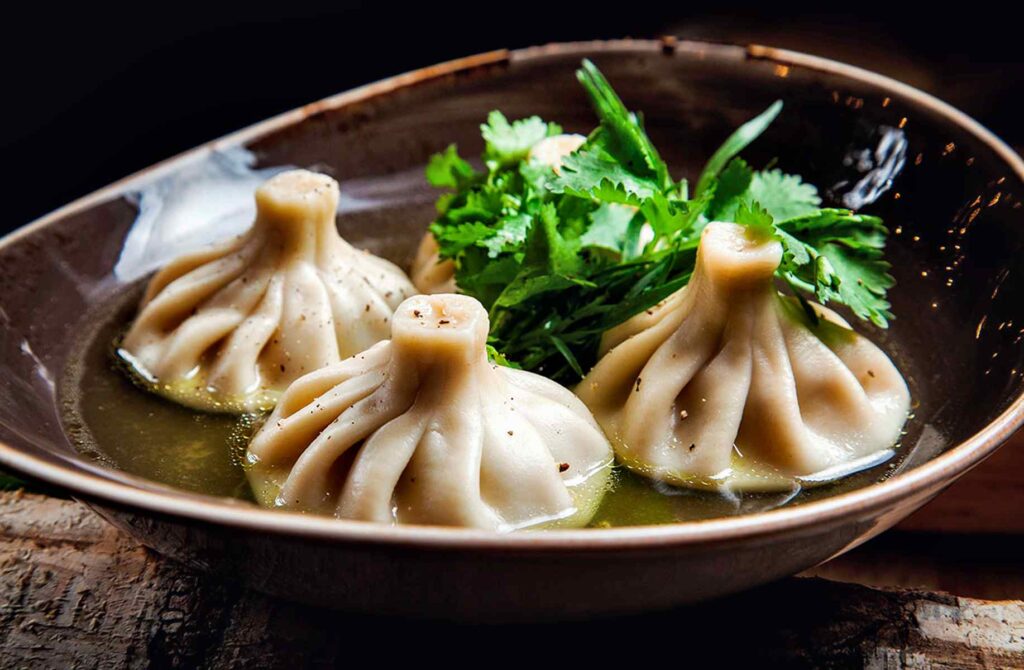
The best way to get to know Georgian food is to start with the classics, and no dish speaks of Georgia quite like khinkali. This boiled dumpling hails from the high Caucasus, where it is traditionally filled with lamb, though on the lowlands cooks more often reach for a spiced blend of ground beef and pork.
Because a rich broth pools inside the dumpling, you have to bite a small hole and sip the broth before swallowing the khinkali. Do not even think about reaching for a knife and fork.
Khinkali is served in hundreds of restaurants, and everyone has a favorite. Yet only a handful knead the dough by hand, which makes it more tender and sticky as it soaks up the juices. Sioni 13, a new spot in the Old Town, serves excellent Khevsureti khinkali of beef and pork, made by a native of the highlands, while Zakhar Zakharich (3 Sanapiro Street), tucked beneath the Dry Bridge in Tbilisi, offers delicious mushroom and classic versions.
Khachapuri and Acharuli
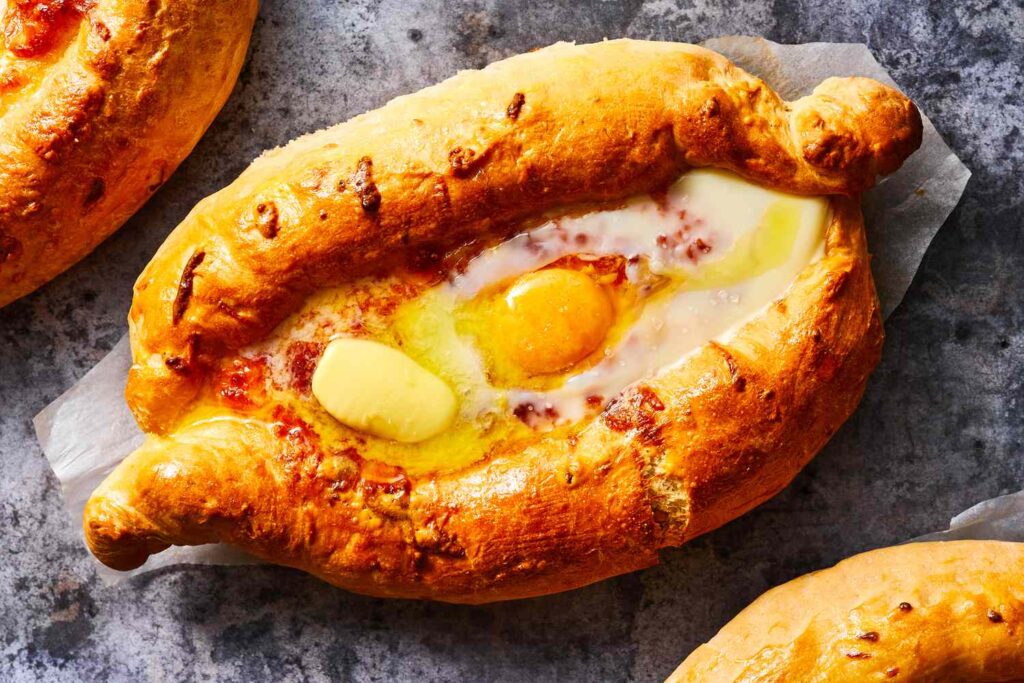
In Georgian, the word "khacho" means cheese and "puri" means bread. Put the two together and you get the legendary cheese bread that comes in all sorts of shapes, sizes and variations. (It is no longer khachapuri, however, once the bread is stuffed with beans, meat or potato.)
Type "khachapuri" into Google and the iconic acharuli inevitably pops up, because, frankly, there is nothing else quite like it in the world. Named after the Black Sea region of Adjara it comes from, the pie is literally a boat of stretchy leavened dough piled with gooey cheese, crowned with a raw egg yolk and a knob of butter.
This is the mother of all comfort foods, eaten with your hands, tearing off pieces of crust and dipping them into the artery-threatening fondue.
Real acharuli can only be found in an Adjarian grandmother's kitchen, in a few Batumi restaurants, or at Cafe Retro in Tbilisi, where Gia Agirba, a native of Batumi, bakes it in his own oven.
Mtsvadi
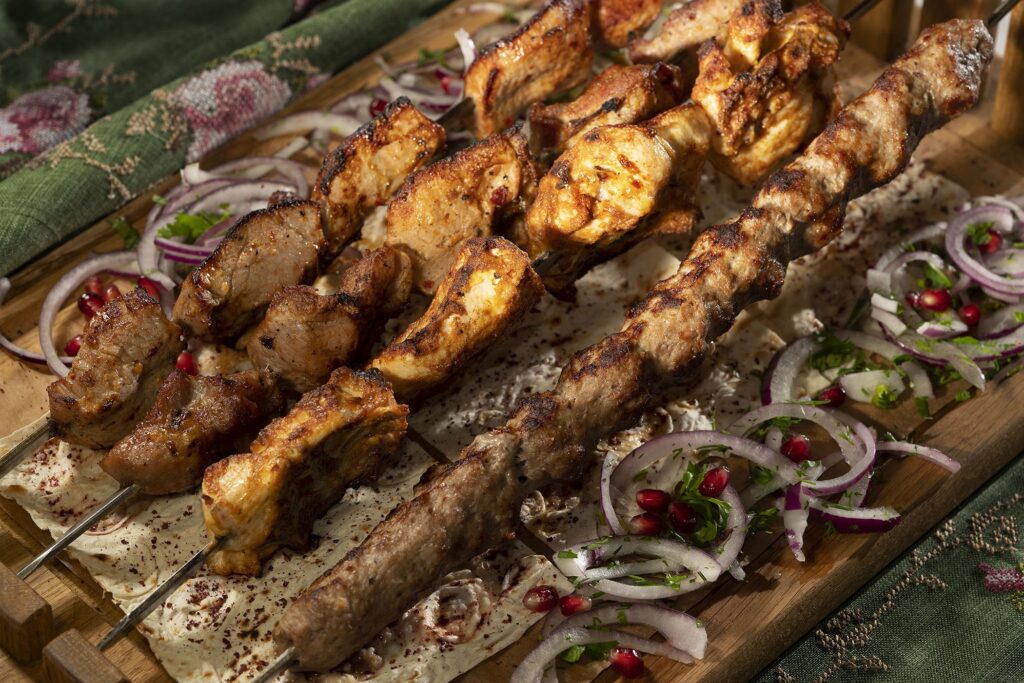
Take chunks of meat, thread them onto skewers and grill them over coals: this is probably the most primal meat dish there is. Yet Georgians have somehow perfected this basic way of cooking meat, especially in the eastern region of Kakheti, where mtsvadi is grilled over coals made from grapevine trimmings that burn fast and hot.
Usually made with pork, the dish appears on the menu of most traditional restaurants in Tbilisi. Not all of them, though, choose prime cuts, cooked and seasoned to perfection, especially those whose target audience is tourists.
On the edge of the city, far from the tourists, sits the restaurant Kakhelebi, which raises the bar for Kakhetian cooking by using the freshest ingredients and preparing traditional dishes most restaurants overlook, such as a nettle salad or its signature dish of oyster mushrooms roasted with tarragon. Their mtsvadi of pork, veal and goat is simply unrivaled.
Shkmeruli
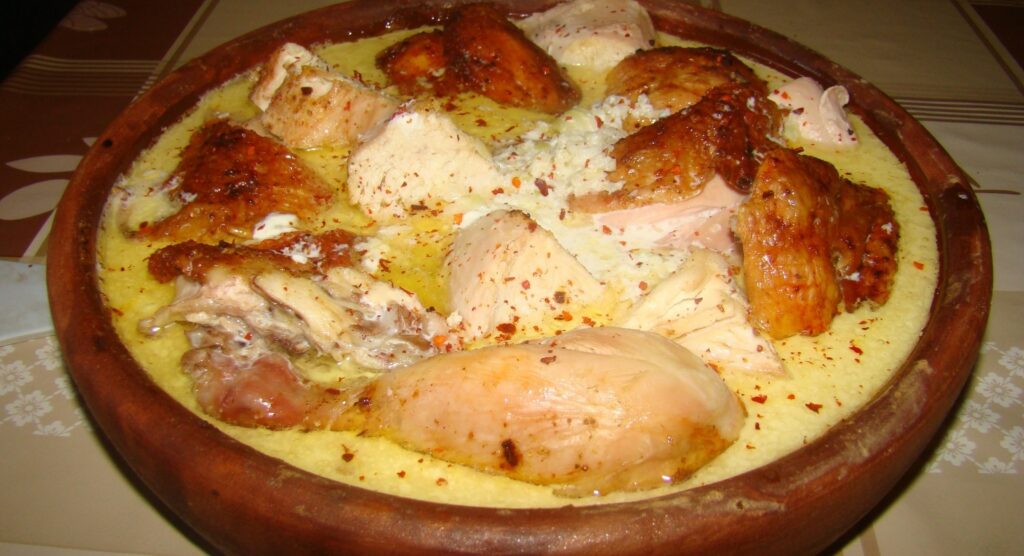
The mountainous region of Racha is sometimes called "the land of pigs and wine," famous for its smoked pork and semi-sweet Khvanchkara wine. It is also the birthplace of a monumental garlic chicken dish: shkmeruli.
Fried in a raw clay dish with milk and enough garlic to ward off a battalion of vampires, shkmeruli is not a dish for the faint of heart. It is always wise to order fried potatoes to mop up the sauce once the bones have been picked clean, though bread works too. A great place to eat like a hungry vampire hunter is Rachis Ubani, in Tbilisi's ethnographic park overlooking the city.
Kharcho with Ghomi
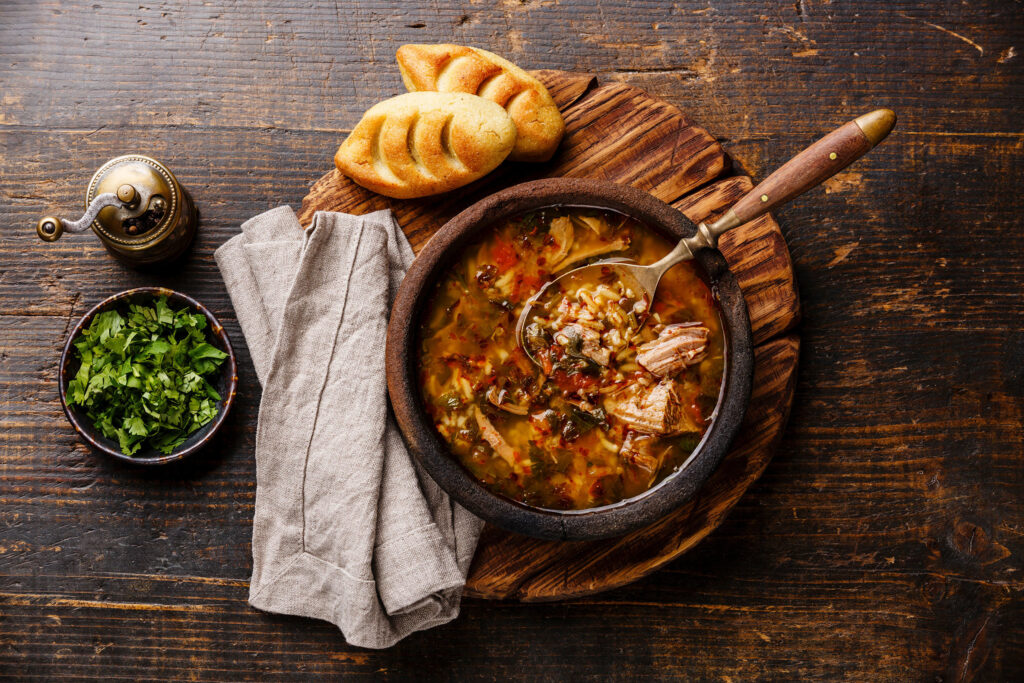
Walnuts are used widely in Georgian cuisine: they are ground and added to cucumber and tomato salads, folded into a vegetable pate called pkhali, or crushed into a festive dessert, gozinaki.
They are also used to thicken stews, such as western Georgian kharcho, a punchy combination of veal, tomatoes, garlic and a host of spices.
Kharcho pairs beautifully with ghomi, a Georgian porridge. Before Georgians had corn, they made ghomi from local millet, a fact that has almost been forgotten. One Tbilisi cook, Giorgi Iosava, makes a wonderfully thick kharcho, which he serves with millet ghomi at his cozy, bohemian basement restaurant Salobie Bia.
Chakapuli and Mussel Chakapuli
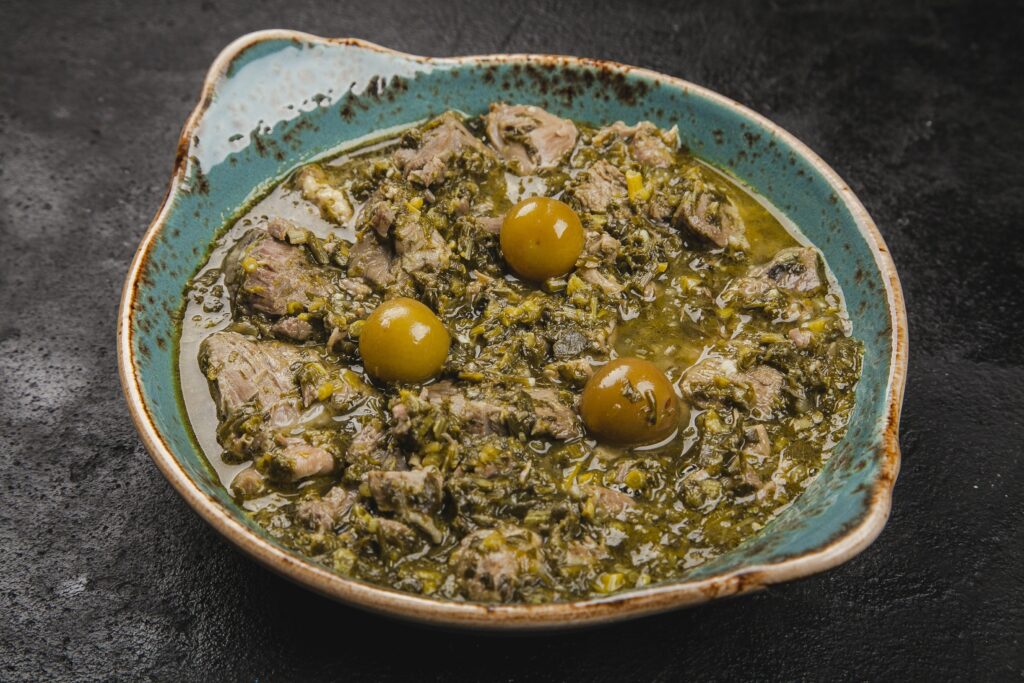
Tekuna Gachechiladze is called the queen of Georgian fusion, a nickname she disdains, insisting that all Georgian cuisine is fusion, shaped by centuries of contact with Silk Road travelers and outright conquerors.
Even so, she was the first chef to boldly experiment with traditional recipes and, in doing so, set new trends in the local kitchen. Some of her recipes are now used in restaurants around the world.
One of the most famous is mussel chakapuli, a recipe that outraged many traditionalists with its gastronomic blasphemy.
Chakapuli is a stew of lamb (or veal), sour plums, white wine and a heroic bundle of fresh tarragon, a seasonal dish served on Easter Sunday. Gachechiladze simply swapped the meat for mussels to create this unusual, tangy, stunning seafood dish, which she serves at Cafe Littera, an idyllic restaurant in the lush garden of David Sarajishvili's early 20th-century mansion. There is no lovelier place in the city for a summer meal.