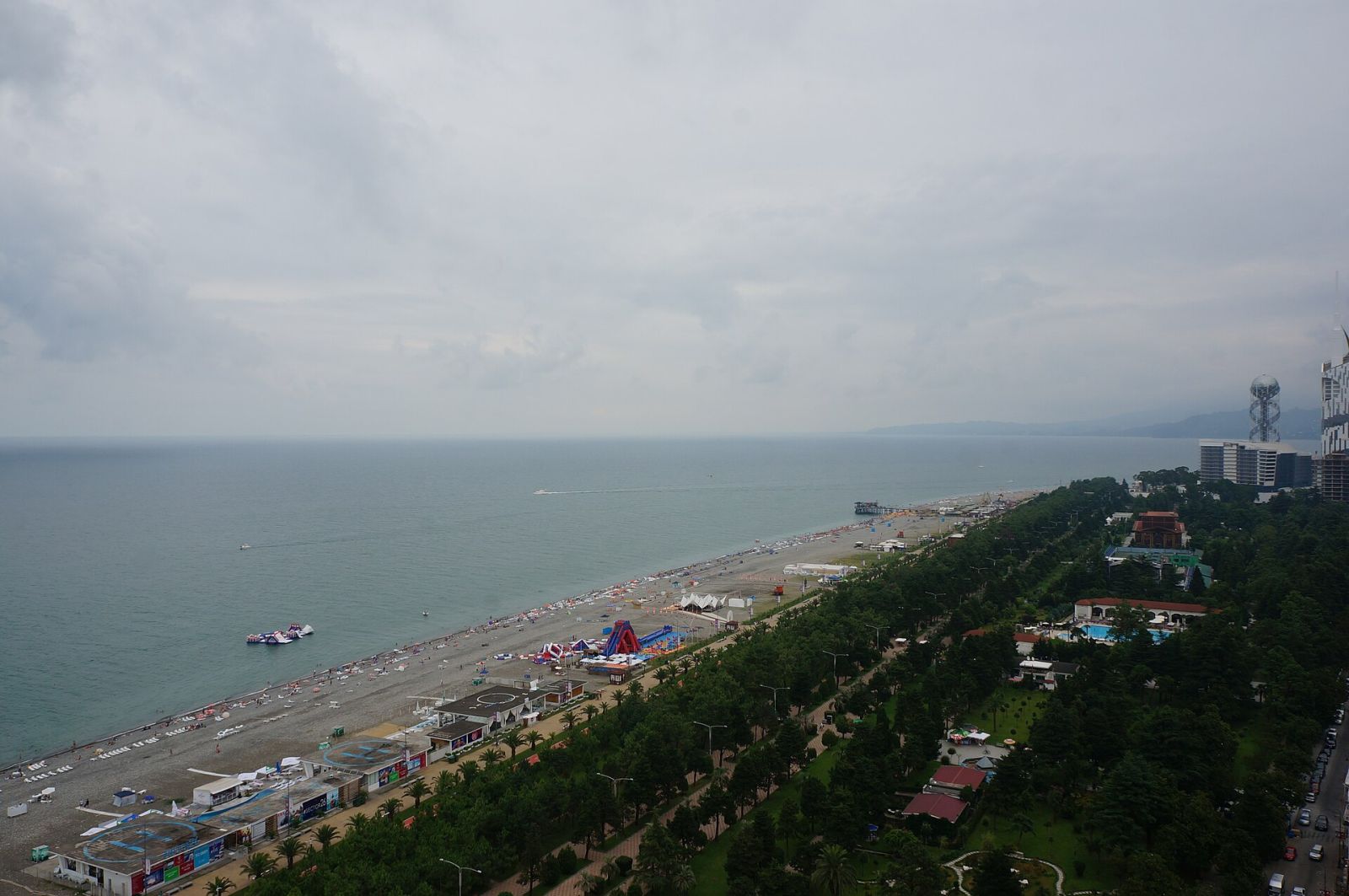
The key thing to know when deciding what to see in Batumi: most of the good stuff lines the seafront and can be covered on foot in one long day. This is Georgia's Black Sea resort with the ambitions of a small Dubai, where skyscrapers grew up right next to a pebble beach while the old town stayed low and cosy. So the city oddly combines two things at once, a beach holiday and a dense city walk.
What follows is the honest version. What is a must, what is optional, when to come for warm sea, how to get there from Ukraine, and the one real drawback of this resort that the glossy brochures tend to skip.
The seaside boulevard: the city's main axis
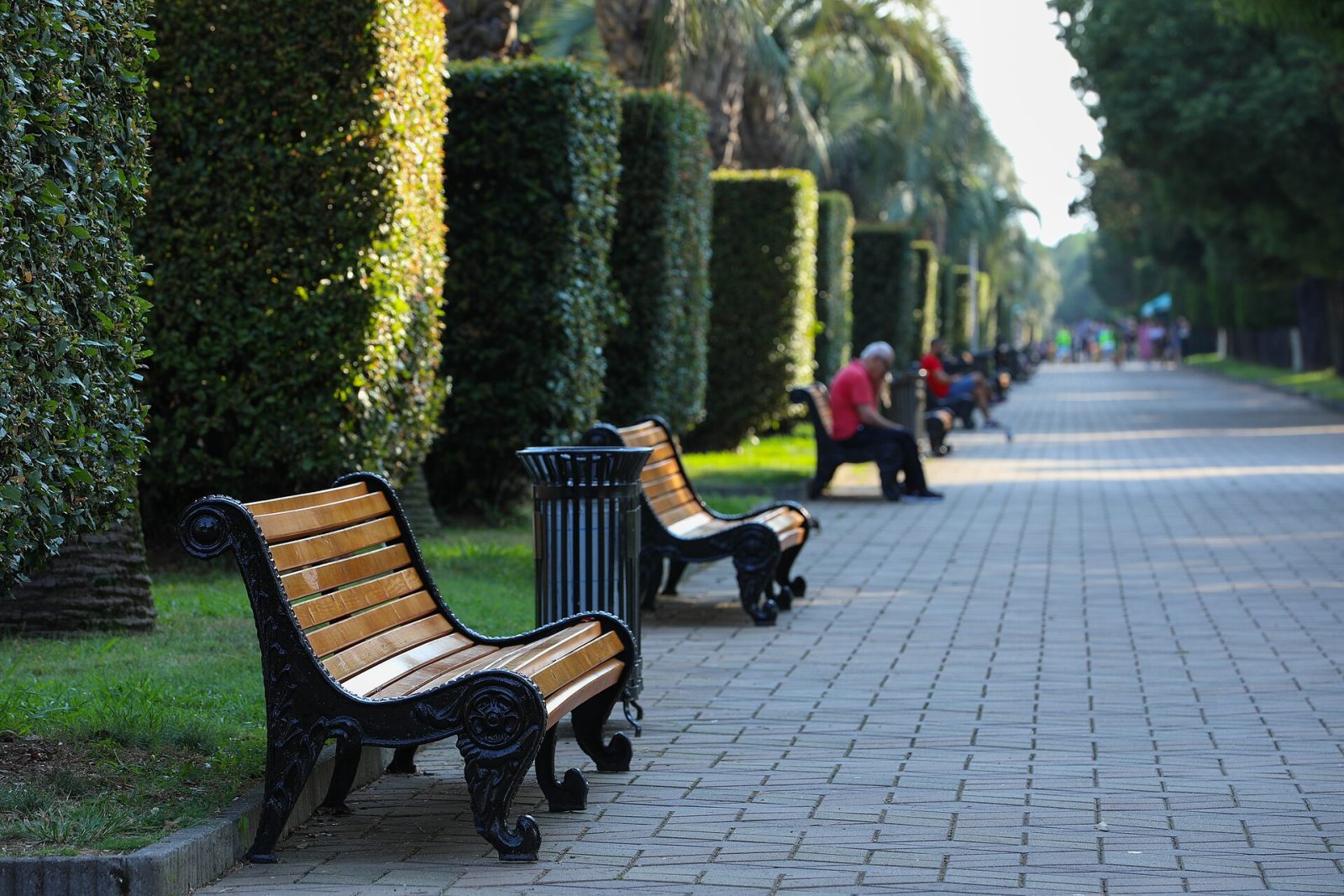
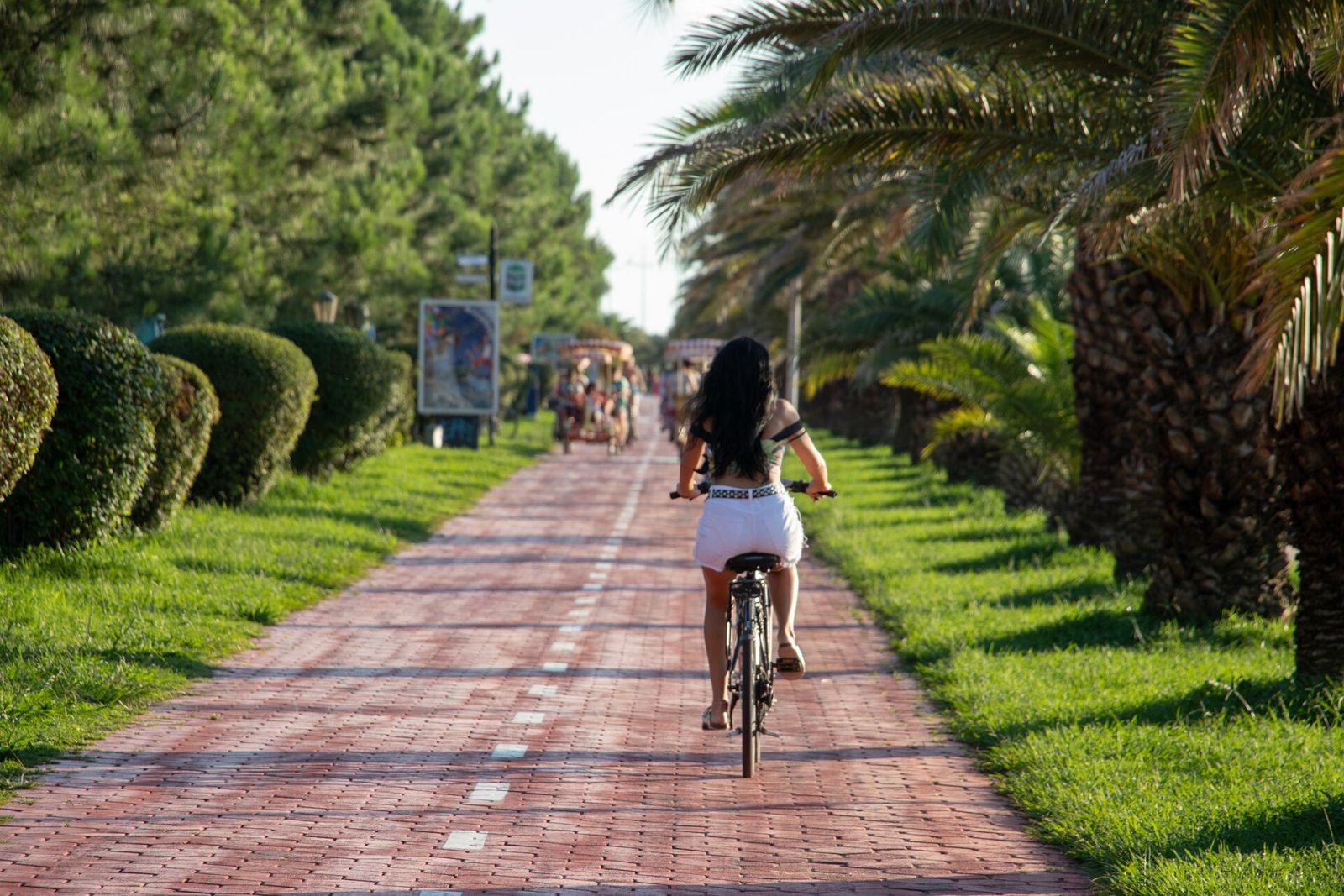
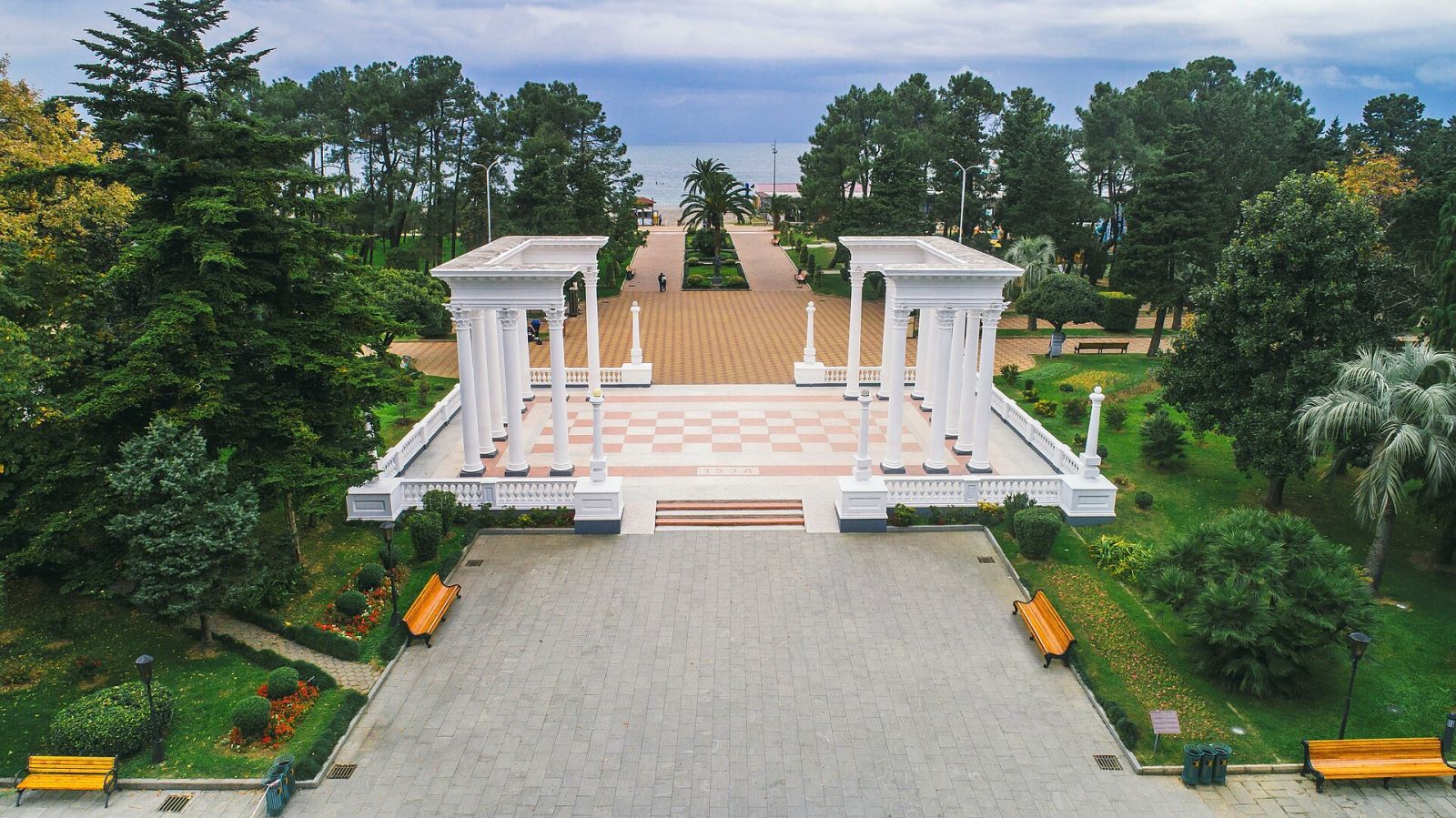
If you only have a couple of hours, head to Batumi Boulevard. It is a promenade about seven kilometres long, planted with palms, magnolias and bamboo, with a cycle path, fountains and dozens of sculptures. Almost everything worth seeing is strung along it, so the boulevard doubles as a ready-made route: you follow the sea and pass every key sight in turn.
Towards evening the place comes alive. Local families, street musicians, vendors selling corn and churchkhela, lit-up fountains. The mood is resort-like in the best sense, without any showy gloss. Allow at least a couple of hours for an unhurried walk from the centre to the "Ali and Nino" statue, and a full three if you stop for coffee and photos.
The moving "Ali and Nino" statue: catch it in motion
Batumi's most famous sculpture is a pair of seven-metre metal figures, a man and a woman, built from stacked steel bands. The work is officially titled "Man and Woman", but everyone knows it as "Ali and Nino", after the lovers from a well-known novel about a couple from two different worlds. The trick is that the statue moves: every few minutes the two figures slowly slide towards each other, pass straight through one another, then part again. They meet, merge, separate.
The best time to watch is near sunset, when the metal catches warm light and the sea glows behind it. The motion is slow, so do not rush. Stand for a few minutes and wait for a full cycle, or the whole point of the piece will pass you by. This is that rare case where a modern city sculpture is not decoration but a small story told without a single word.
Where to climb: the Argo cable car and the Alphabet Tower
To grasp the scale of the city, you need to get above it. The Argo cable car carries cabins from a lower station near the port up Mount Feria, roughly 250 metres up. The ride takes about ten minutes each way, and the top opens onto a panorama: the dense centre, the long arc of the boulevard, sea to the horizon and green mountains on the other side. There is a viewing terrace and a cafe at the upper station, so you can stretch the visit out.
The second high point is the Alphabet Tower, around 130 metres tall. Its frame is wrapped in a DNA-style ribbon carrying the letters of the Georgian alphabet, one of the few unique alphabets in the world. A glass viewing capsule sits at the top. It opens unevenly and is sometimes closed, so check the status before your trip. Even if you cannot go up, the tower is beautifully lit at night and looks great from below.
What else to see in central Batumi
Beyond the promenade, a few spots hold the walk together. Here are the main ones.
- Europe Square. An elegant plaza with a fountain and a statue of Medea holding the Golden Fleece, a nod to the ancient myth of the Argonauts. Colourful European-style facades surround it. One of the most photogenic corners of the city, especially at night with the lights on.
- Piazza. A small Italian-style square with mosaics, a clock tower and restaurants around the edge. Staged and touristy, but pleasant for an evening coffee.
- The Old Town. A quarter of low, balconied houses where you feel the real Batumi rather than the glossy one. A mosque, a synagogue and churches stand close together here, a vivid reminder of how long the city was a crossroads of cultures.
- The Botanical Garden. More on this below, since it is no longer the centre but a proper half-day trip.
The Batumi Botanical Garden: why it deserves half a day
A few kilometres north of the city, on Green Cape, lies one of the largest botanical gardens in the former Soviet space. It was founded back in the early 20th century, and today it covers more than a hundred hectares on slopes above the sea, divided into zones by world region: East Asia, North America, the Himalayas, the Mediterranean, Mexico. The subtropical climate lets bamboo, magnolias, eucalyptus and palms grow here in the open air.
The main reason to go, even if plants leave you cold, is the views. Paths wind along cliffs right above the water, and many points open onto the sea and the curve of the coast. Walking the whole garden takes a long time and is fairly tiring thanks to the changes in elevation, so budget at least half a day and comfortable shoes. You can get there by minibus or taxi, and an internal shuttle runs inside for those who would rather not walk every kilometre.
Beaches, nightlife and casinos
Batumi is above all a seaside resort, so the beach is the central summer story. And here is the honest catch: the beaches are pebble, not sand. For some that is a plus, since the water near the shore stays clear and does not cloud up as it does over sand. For others it is a minus, because walking on pebbles hurts and it is easier to enter the water in special shoes. The seabed drops off sharply in places, so be more careful with small children.
In the evening the city shifts into another gear. Batumi has a reputation as Georgia's Las Vegas for its concentration of casinos, which operate legally and draw guests from neighbouring countries where gambling is banned. Bars, clubs and restaurants with live music sit alongside them. The resort does not sleep until morning, and that sets it apart from Georgia's quieter towns. If you are after calm, book somewhere away from the central streets.
What to eat: Georgian food in its seaside version
Food is a reason to love Batumi on its own. Adjara, the region the city is capital of, gave the world Adjarian khachapuri: a boat of dough filled with molten cheese, topped with an egg and a knob of butter. You tear it apart with your hands, dipping the edge into the hot centre. A single serving easily stands in for a full meal, so do not order one each unless you are sure of your appetite.
Beside it are khinkali, juicy meat dumplings that you also eat by hand, leaving the "tail" behind. And thanks to the sea there is plenty of fresh fish and mussels here, which you will not find in mountain Georgia. Add local wine, homemade lemonade and coffee, and it becomes clear why the food keeps visitors in town just as firmly as the beach.
When to come for the sea?
The swimming season in Batumi is short and clear-cut. The sea warms up to a comfortable temperature by around mid-June and holds the heat until September, sometimes into early October. The peak is July and August: the warmest water, but also the biggest crowds and the highest prices. Check current figures and prices before your trip, as they shift every year.
| Season | Weather and sea | Best for |
|---|---|---|
| June | Warm, sea already swimmable, fresh greenery | Those wanting the sea without peak crowds |
| July, August | Warmest water, heat, most people and highest prices | Classic beach holiday, nightlife |
| September | Water still warm, softer air, fewer tourists | The best balance for most people |
| October, May | Too cool to swim, but the city is calm | Walks, the garden, food without the beach |
How to get there from Ukraine?
There are no direct flights from Ukraine right now because of the closed airspace, so the route almost always comes in several legs. Check current options and entry rules before your trip, as they change.
- Fly with a connection. The most common way is to fly out of a neighbouring country (Poland, Moldova, Romania) to Tbilisi or straight to Batumi. Batumi itself has an international airport a few kilometres from the centre.
- Via Tbilisi. Once in the capital, you can reach Batumi by train (a few hours on a comfortable daytime express) or a domestic transfer. Handy if you also want to see central Georgia.
- Overland. Bus and minibus services link Georgia with its neighbours, but the ride is long. This is more for those who will not fly on principle.
Ukrainian citizens get a long visa-free stay, and Georgians are traditionally warm towards Ukrainians, so the everyday side rarely causes trouble. English and Russian will get you understood across the tourist zone.
The honest drawback: what to know in advance
To keep the trip from disappointing, a few things are best accepted up front. The beaches are pebble and that will not change, so pack water shoes and do not expect a sandy shore. The coastal weather is humid and unpredictable: even at the height of summer the rain can settle in for half a day, and Batumi is one of the wettest places in Georgia overall. An umbrella or a raincoat in the suitcase is not wasted even in August.
And a word on the city's character. Batumi runs on contrasts: a half-ruined courtyard can hide behind a gleaming tower, and one block is all that separates the polished promenade from ordinary life. Some find that rawness off-putting, others find it adds life. The point is to come not for a perfect picture but for the mix of sea, mountains, food and a slightly adventurous resort mood. In that frame of mind, the city will almost certainly win you over.