The short answer to the question of what to see in Jerusalem is that almost everything essential fits inside the old walls, on an area smaller than a single square kilometre. That is not a figure of speech, it is geography: the Western Wall, the Church of the Holy Sepulchre, the start of the Via Dolorosa and the Dome of the Rock all stand within a ten minute walk of one another. The city can move a visitor of any belief, because three religions pray here side by side and every stone carries thousands of years of history.
What follows is the practical detail without the grand tone. What is a must, where you can enter and where you cannot, how to dress so you offend no one and are not turned away at the gate, when to go and how to get there. And, separately, an honest safety warning that in this region you should never skip.
The Old City: four quarters behind one wall
The heart of Jerusalem is the Old City, ringed by a sturdy 16th century wall with eight gates. Inside it splits into four historic quarters: Jewish, Christian, Muslim and Armenian. The borders are not drawn on any map, you simply feel them: the signs change, the language of the traders, the smells from the shops, the character of the lanes. In five minutes you can walk from a synagogue to a church to a mosque, and that is the whole point of this city.
The lanes here are narrow, often covered, full of stone steps and endless bazaars. Getting lost is easy and pleasant, but to keep your bearings, remember the main gates. The most convenient entrances for a visitor are the Jaffa Gate from the new city and the Damascus Gate from the Arab quarters. Set aside at least a full day for the Old City alone, ideally two, because you will see nothing here at a run.
The Western Wall: the holiest site of Judaism
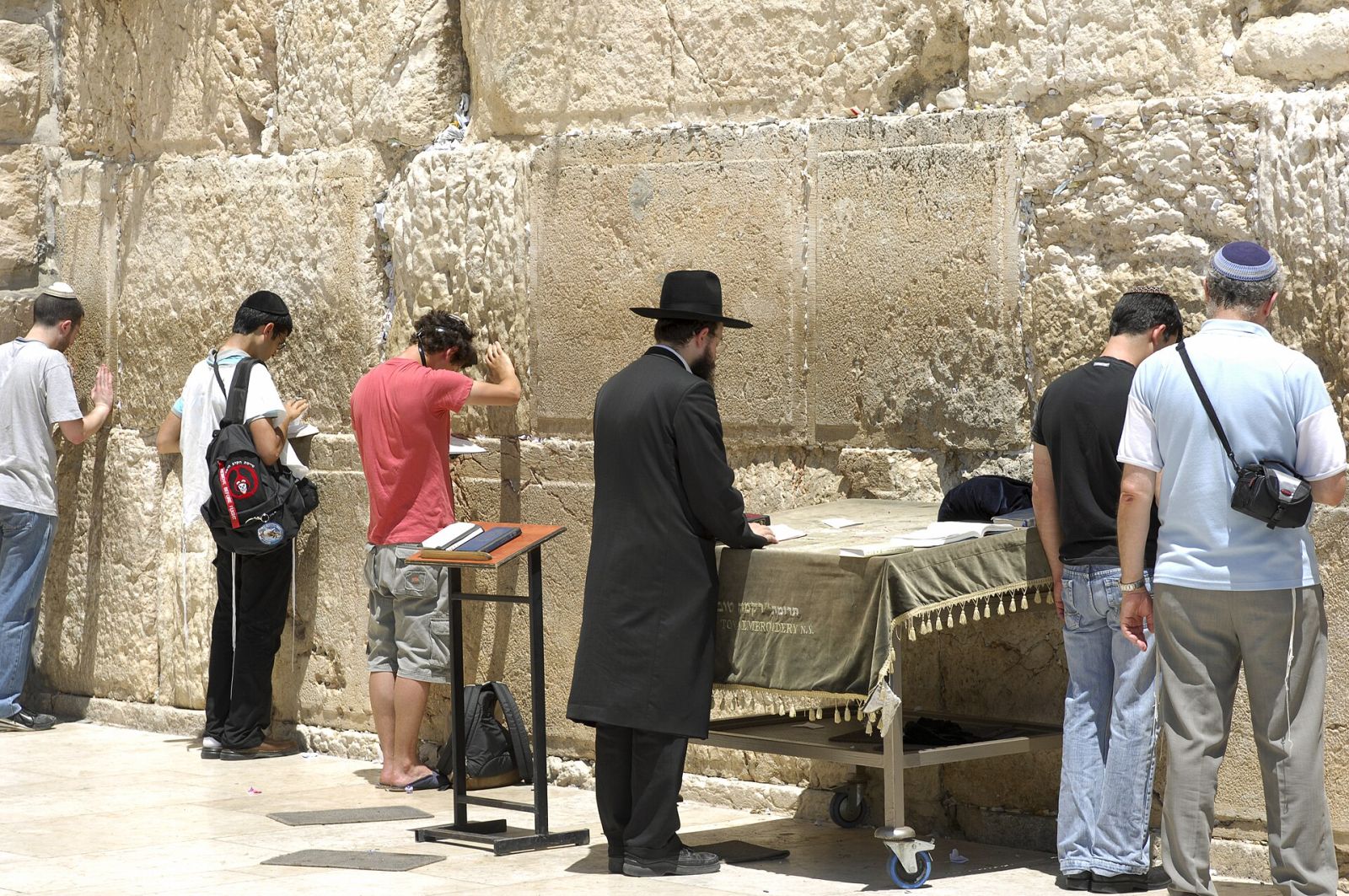
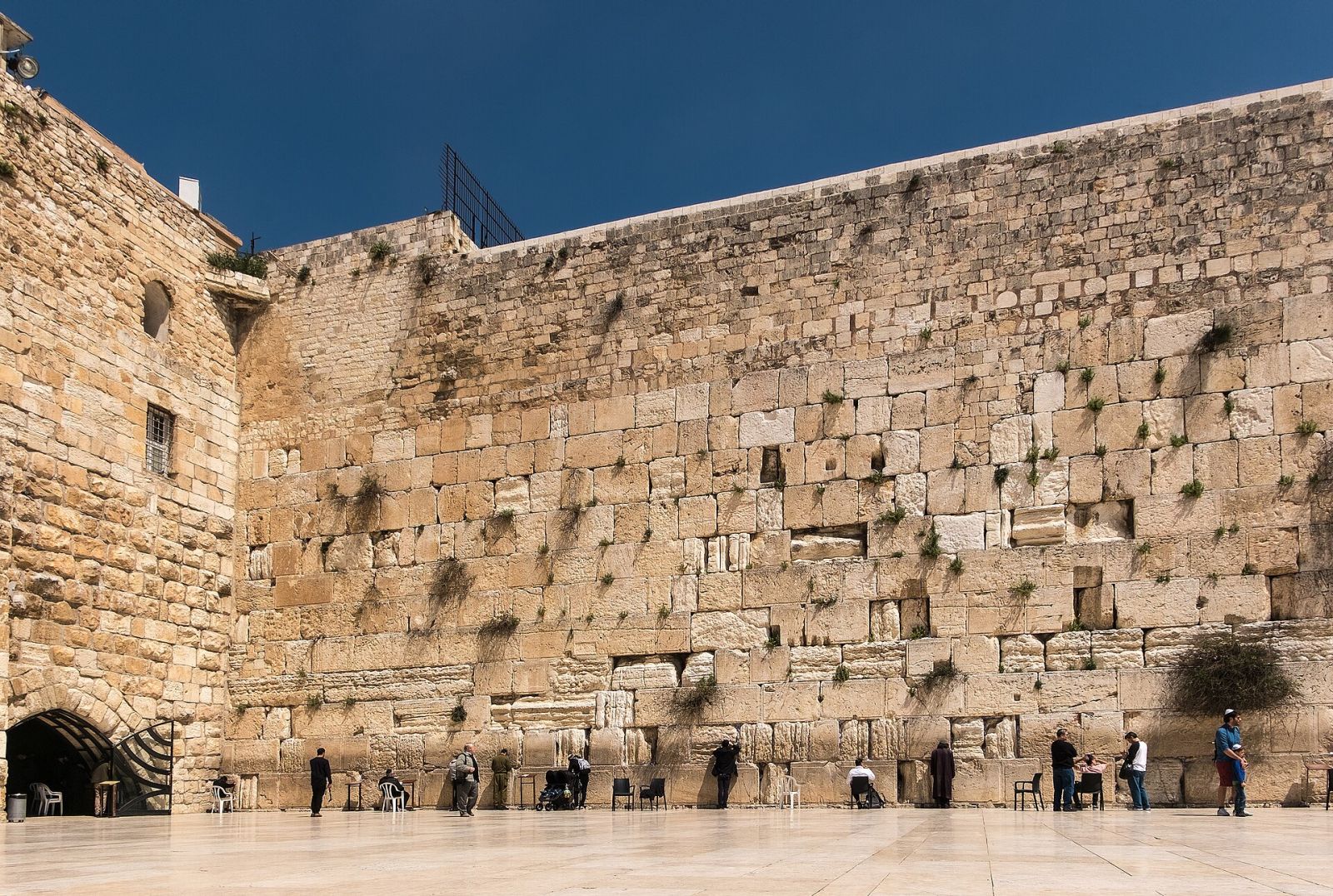
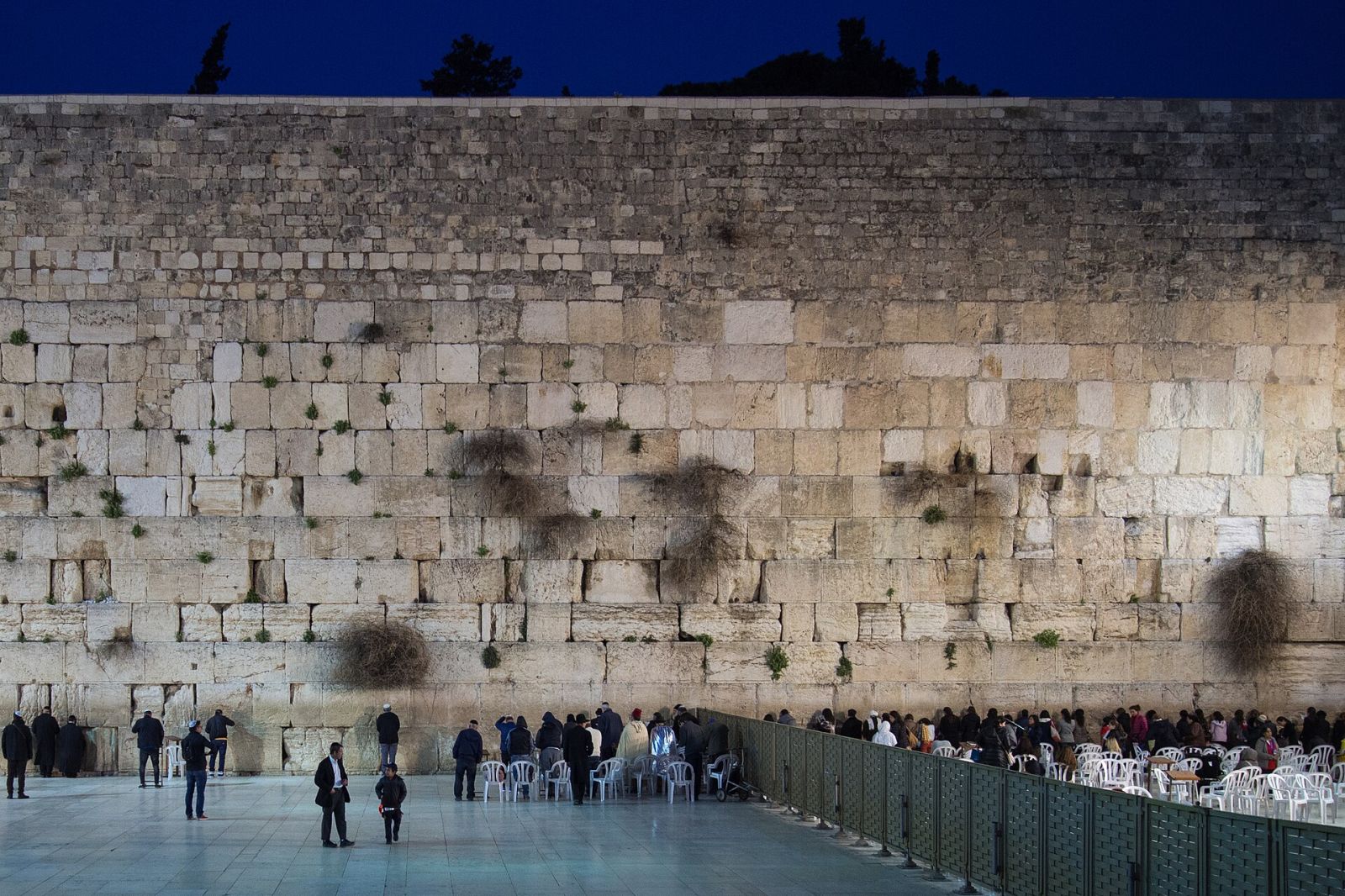
The Western Wall, known worldwide as the Wailing Wall, is a surviving fragment of the retaining wall around the former Temple, destroyed by the Romans. For Jews this is the holiest place, drawing worshippers from across the globe. The plaza in front of the wall is open around the clock and free, and entry is open to anyone regardless of faith. The men's and women's sections are separated, and at the entrance men are handed a paper kippah if they have none of their own.
One custom worth knowing in advance: people tuck folded notes with prayers into the cracks between the stones. A visitor may do the same, and no one will look askance. Stay calm and quiet, do not turn your back on the wall as you leave, and do not photograph worshippers up close. On Shabbat, from sunset on Friday to Saturday evening, no photos are taken here at all, as it is seen as breaking the peace of the holy day. This is one of those moments where respect costs you nothing and means a great deal to the people around you.
The Church of the Holy Sepulchre: where confessions meet
A few minutes' walk from the wall, in the Christian Quarter, stands the Church of the Holy Sepulchre. For Christians this is the foremost shrine in the world, the place where tradition holds the crucifixion, burial and resurrection of Christ took place. Several confessions share one roof here: Greek Orthodox, Catholics, Armenians, Copts, Syriacs and Ethiopians. Each is responsible for its own part of the church, and that fragile balance has held for centuries.
Inside it is dark, cramped and crowded, thick with the smell of incense and wax. The key spots are the Stone of Anointing just inside the entrance, which pilgrims kiss, and the Edicule, a small chapel at the centre of the rotunda over the Tomb itself. A long queue often forms there, sometimes an hour or more. Entry is free, and the dress code is the usual one for a church: covered shoulders and knees. A curious detail: for more than eight centuries the key to the church doors has been kept by a single Muslim family, so that the Christian confessions do not quarrel over the right to unlock it.
The Temple Mount and Dome of the Rock: the strictest rules
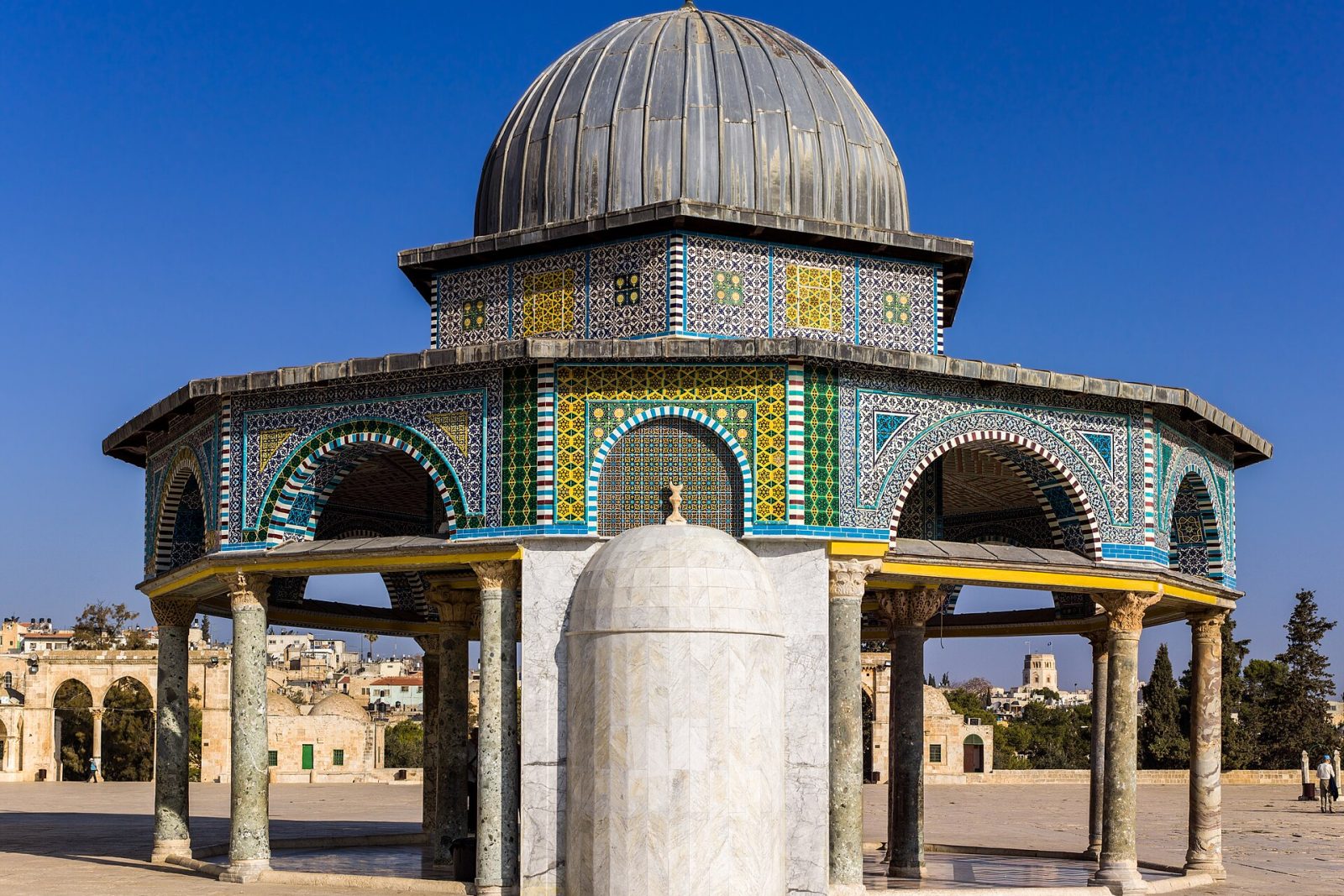
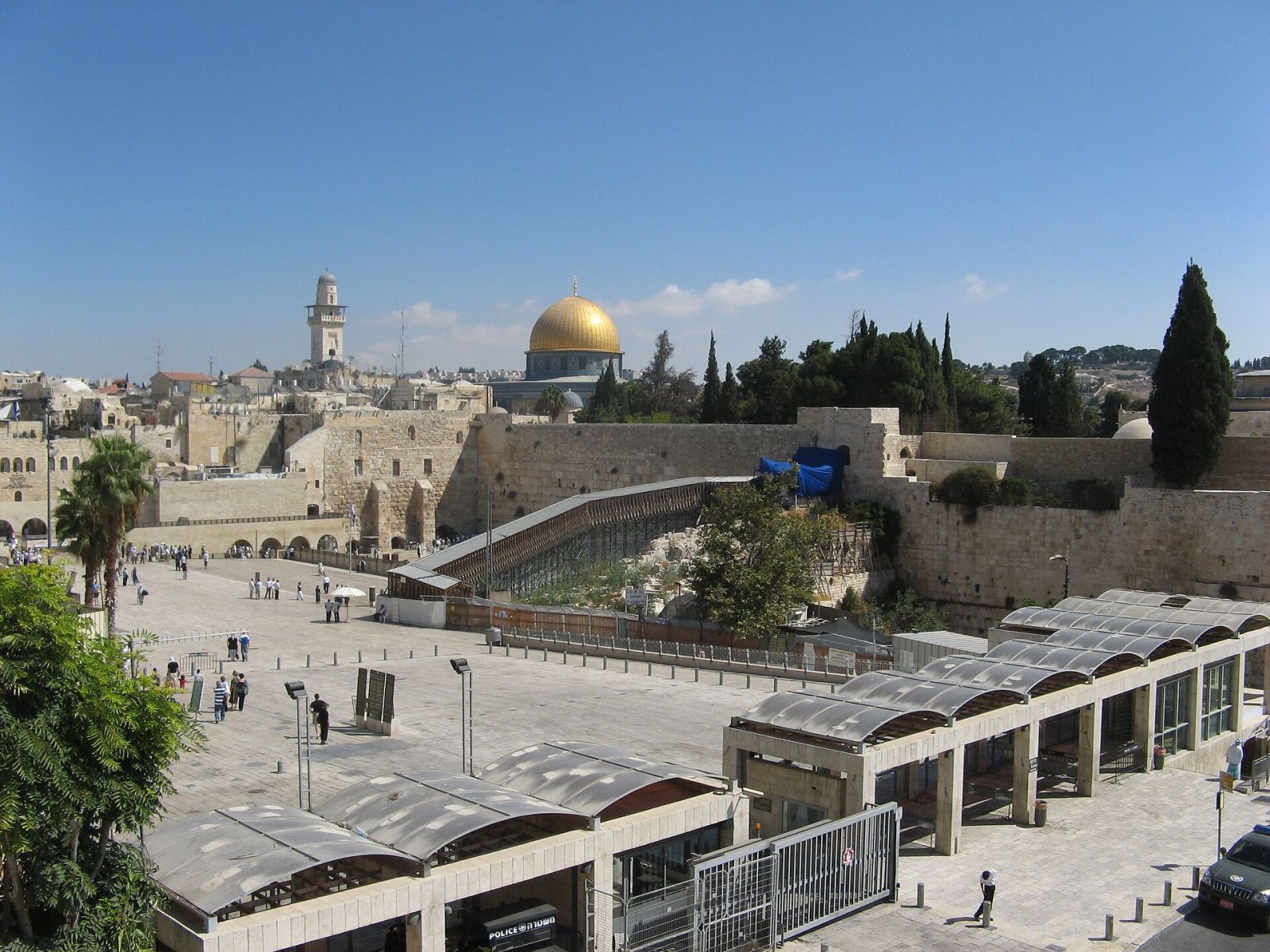
Above the Western Wall rises the Temple Mount, a site sacred to both Judaism and Islam at once. Here stand two key Muslim monuments: the golden Dome of the Rock, the one you see on every postcard of Jerusalem, and the Al-Aqsa Mosque. For Muslims this is the third holiest site of Islam after Mecca and Medina. That is exactly why the visiting rules here are the strictest in the whole city, and you need to know them beforehand.
- Access for tourists is limited to a few windows in the morning and afternoon, kept apart from prayer times. The exact schedule shifts and depends on the religious calendar, so check the current one before you travel.
- Non-Muslims enter through one passage only, a wooden bridge by the Western Wall. The other gates admit only Muslim worshippers.
- Non-Muslims are not allowed inside the Dome of the Rock or Al-Aqsa Mosque. You can admire them only from outside, but the esplanade is vast and the views from it are superb.
- The dress code is the harshest here. Covered shoulders and knees are required, and women are often advised to carry a scarf. Non-religious books and objects of other faiths are not allowed in.
The entry queue can be long, and the passage may close without warning depending on the security situation. That is normal practice for this place, so do not pin a rigid time slot to it.
The Via Dolorosa: the pilgrims' path
The Via Dolorosa, or Way of Sorrows, is the route through the Old City along which, by tradition, Christ was led to the crucifixion. It consists of fourteen stops, the Stations of the Cross, from the place of condemnation to the Tomb itself inside the Church of the Holy Sepulchre. Each station is marked on a wall, some modestly, some with chapels. The last five stations lie within the church.
You can walk the whole path on your own with a map in an hour, but the point is not speed. Every Friday a Franciscan procession moves along the Via Dolorosa, and anyone may join it. The route runs through the busy Muslim Quarter, so pilgrims pass right by stalls of spices, sweets and souvenirs. It is a strange but very Jerusalem combination: deep prayer and a loud bazaar in the same corridor.
The Mount of Olives: the panorama and the oldest cemetery
To see the Old City whole, climb the Mount of Olives opposite, across the Kidron Valley. From its summit opens the classic panorama of Jerusalem, the one printed on book covers: the golden Dome of the Rock, the walls, the domes of the churches and a slope covered in white gravestones. This is the oldest active Jewish cemetery in the world, a place of continuous burial for more than three thousand years.
The slope is scattered with Christian shrines. Here are the Garden of Gethsemane with its thousand year old olive trees, the Church of All Nations, the Chapel of the Ascension, the Church of Mary Magdalene with its golden domes. A steep road leads down to the Old City, so it is easier to take a taxi up and walk back down, stopping at the churches along the way. The best light for a panoramic shot here is early morning, when the sun lights the walls from the viewer's side.
Dress code at the holy sites: the essentials
Jerusalem is a city of three religions, and here clothing is not a trifle but a sign of respect. The general rule is simple: covered shoulders and knees at any religious site, for men and women alike. The details differ, though, so here is a guide.
| Site | What is required | Note |
|---|---|---|
| Western Wall | Shoulders and knees covered, kippah for men | On Shabbat no photos or phone use |
| Church of the Holy Sepulchre | Shoulders and knees covered | Quiet inside, the queue to the Tomb can be long |
| Temple Mount, Dome of the Rock | Strictest: shoulders, knees, often a scarf for women | Non-Muslims not allowed inside the shrines |
| Armenian and other churches | Shoulders and knees covered | Men are sometimes asked to remove hats |
A practical tip: carry a light scarf or shawl. It doubles as a shoulder cover and a head covering, and it weighs next to nothing. In the heat you will want open clothing, but at the entrance to a shrine you will simply be turned away, so plan for it ahead.
When to go?
Jerusalem sits in the hills, so the climate here feels noticeably different from the coast. Summer is dry and hot, but thanks to the altitude the heat is easier to bear than in Tel Aviv, and evenings can turn cool. Winter is short and rainy, occasionally with rare snow. The best time to travel is spring and autumn, when it neither bakes nor pours.
- March to May. Mild warmth, greenery, comfortable for long walks on foot. The best balance for most.
- June to August. Dry and hot by day, but clear. Plan your sightseeing for morning and evening, and take to the shade midday.
- September to November. The heat eases, fewer tourists, still warm. A very good season.
- December to February. Cool and at times rainy, but atmospheric and uncrowded. Dress warmer than you would expect of the Middle East.
Keep the religious holidays in mind separately. On Jewish, Christian or Muslim dates the city overflows with pilgrims, prices rise, and some venues keep special hours. On Shabbat, from Friday evening to Saturday evening, much of the Jewish city goes quiet: no public transport runs, and shops and restaurants in Jewish areas are closed. Factor this into your planning.
How to get there?
There are no direct flights from Ukraine at the moment, so the route almost always comes together from connections through neighbouring countries. Check the current flight options and entry rules before you travel, because they change and the region is sensitive to the situation. Here is the general logic.
- Fly to Tel Aviv. The country's main air gateway is Ben Gurion Airport near Tel Aviv. From there it is about 60 kilometres to Jerusalem.
- Then by train or bus. A fast train runs from the airport to Jerusalem, taking under half an hour to the central station. Buses and shared sherut vans run too.
- Inside the Old City, on foot only. There is nowhere for a car to pass, so stay near the gates and count on walking.
An honest word on safety
There is no way around this subject, and pretending everything is as usual would be dishonest. Israel, and Jerusalem in particular, is a region with an unstable security situation that can change quickly. There are periods of complete calm, when the city lives its tourist life, and there are flare-ups, when access to certain places is closed and travel is advised against entirely. So one piece of advice here outweighs all the rest: before you plan, check the current situation in official sources and in your foreign ministry's advisories.
If you travel in a calm period, stick to simple rules. Follow the news and local authority notices, do not ignore closed passages or instructions from security staff, and stay out of areas you are advised to avoid. At the entrances to holy sites there is screening with metal detectors everywhere, which is routine rather than cause for alarm. Take the heavier presence of security forces in stride as well. Jerusalem knows how to be welcoming and to move you deeply, but it is a city you visit with your head switched on, not blindly.