

Israel is smaller than Kyiv Oblast, and that alone gives the question of what to see in Israel an unexpected answer: nearly all the essentials fit into a few-day corridor between the Mediterranean and the lowest point on land. It's about 70 kilometers from Tel Aviv's beaches to the Western Wall in Jerusalem, and from there just over an hour more to the Dead Sea. You can genuinely feel the country without overnight transfers or domestic flights, and that's the main reason to visit for the first time exactly this way, on a compact route.
Here, specifically, is what to see in Israel on a short trip: three anchor points that cover what most travelers are after, plus a few places worth adding another day or two for.
Jerusalem's Old City packs three religions into less than a square kilometer
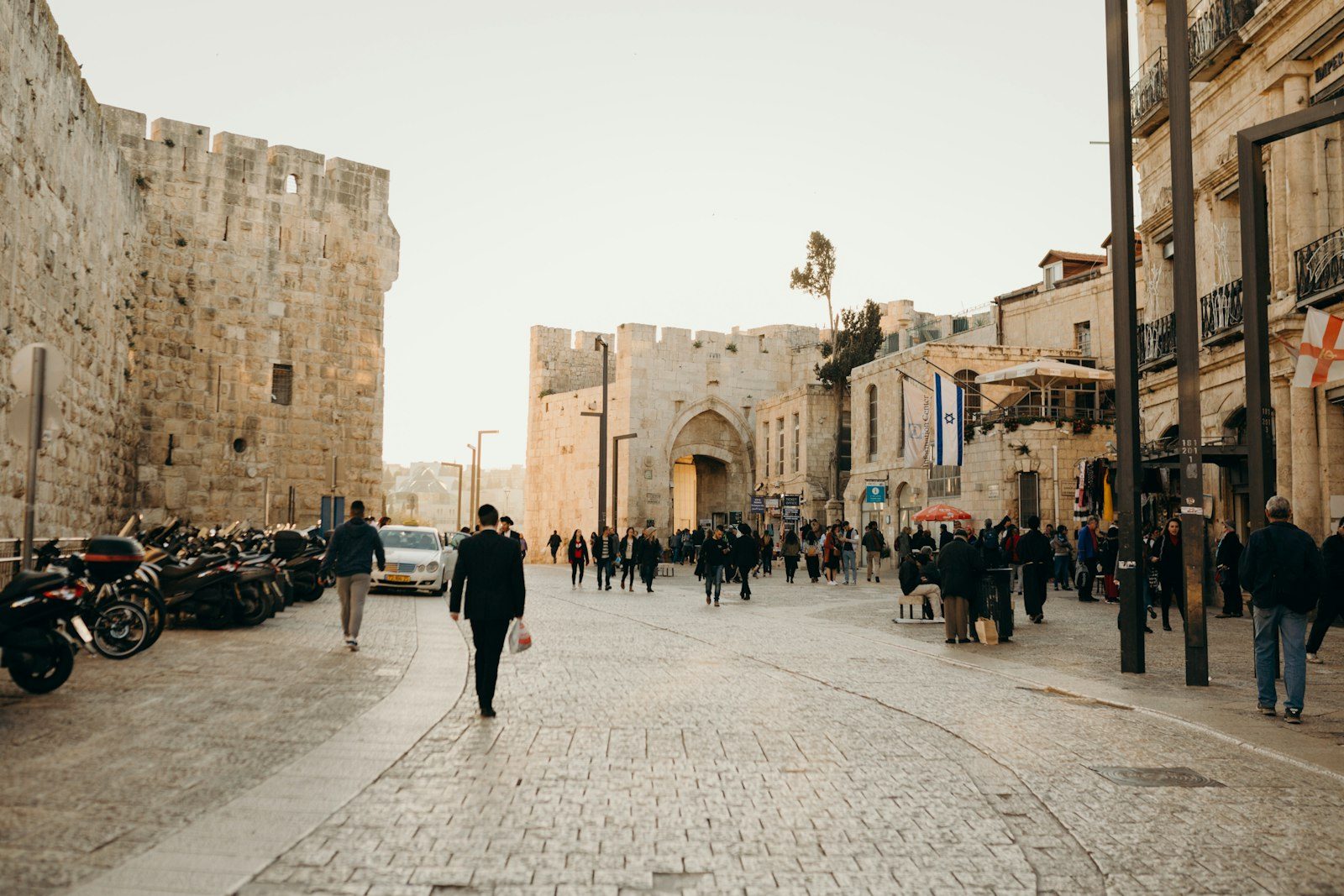
The Old City spans just 0.9 km² inside its fortress walls, and it's precisely this density that makes it like nowhere else. The space is split into four quarters: Muslim in the northeast, Christian in the northwest, Armenian in the southwest, and Jewish in the southeast. You can walk from one to another in ten minutes, yet every step changes the language on the signs, the smell of spices, and the sound of prayer.
Partner links: booking through them supports the blog at no extra cost to you.
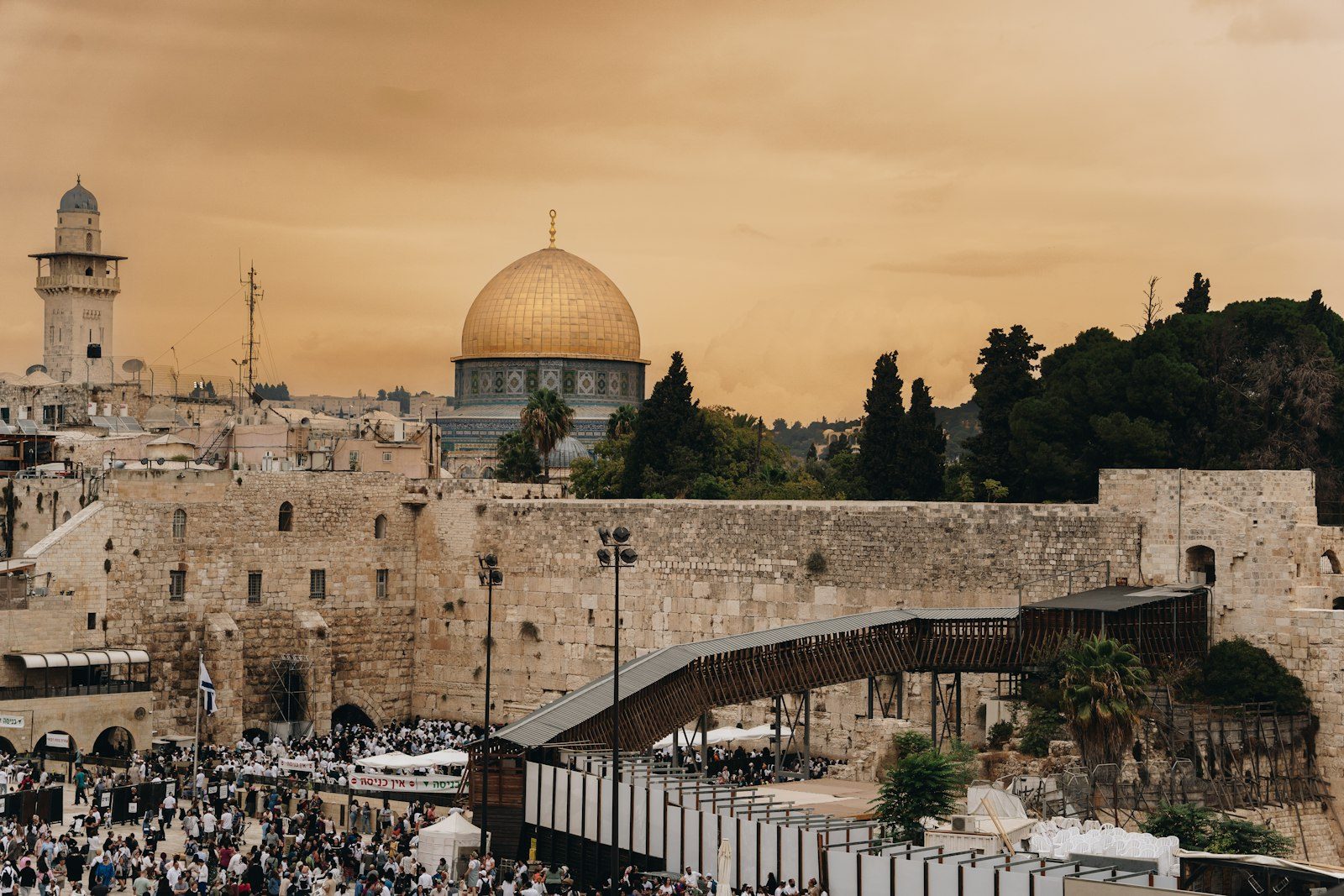
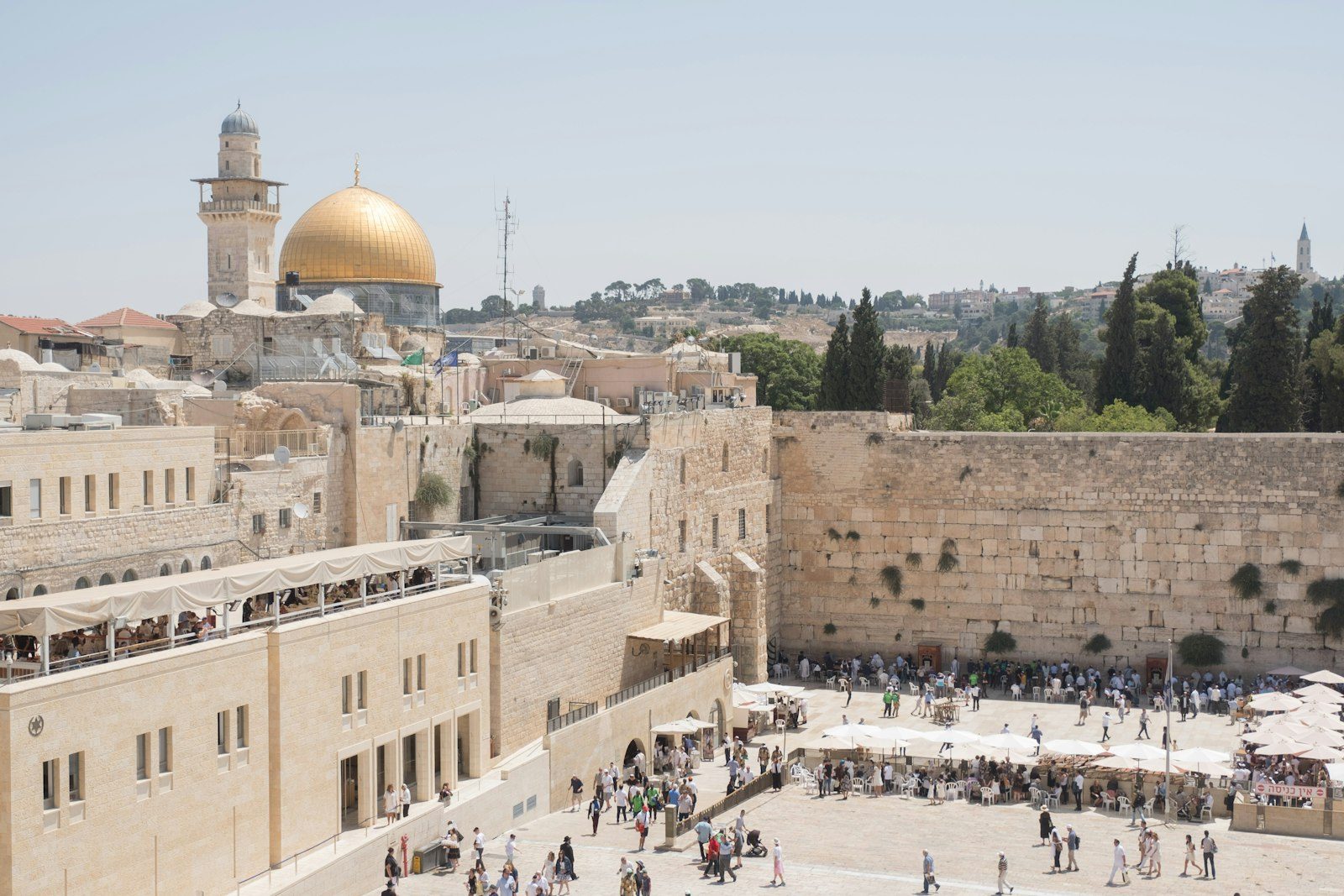
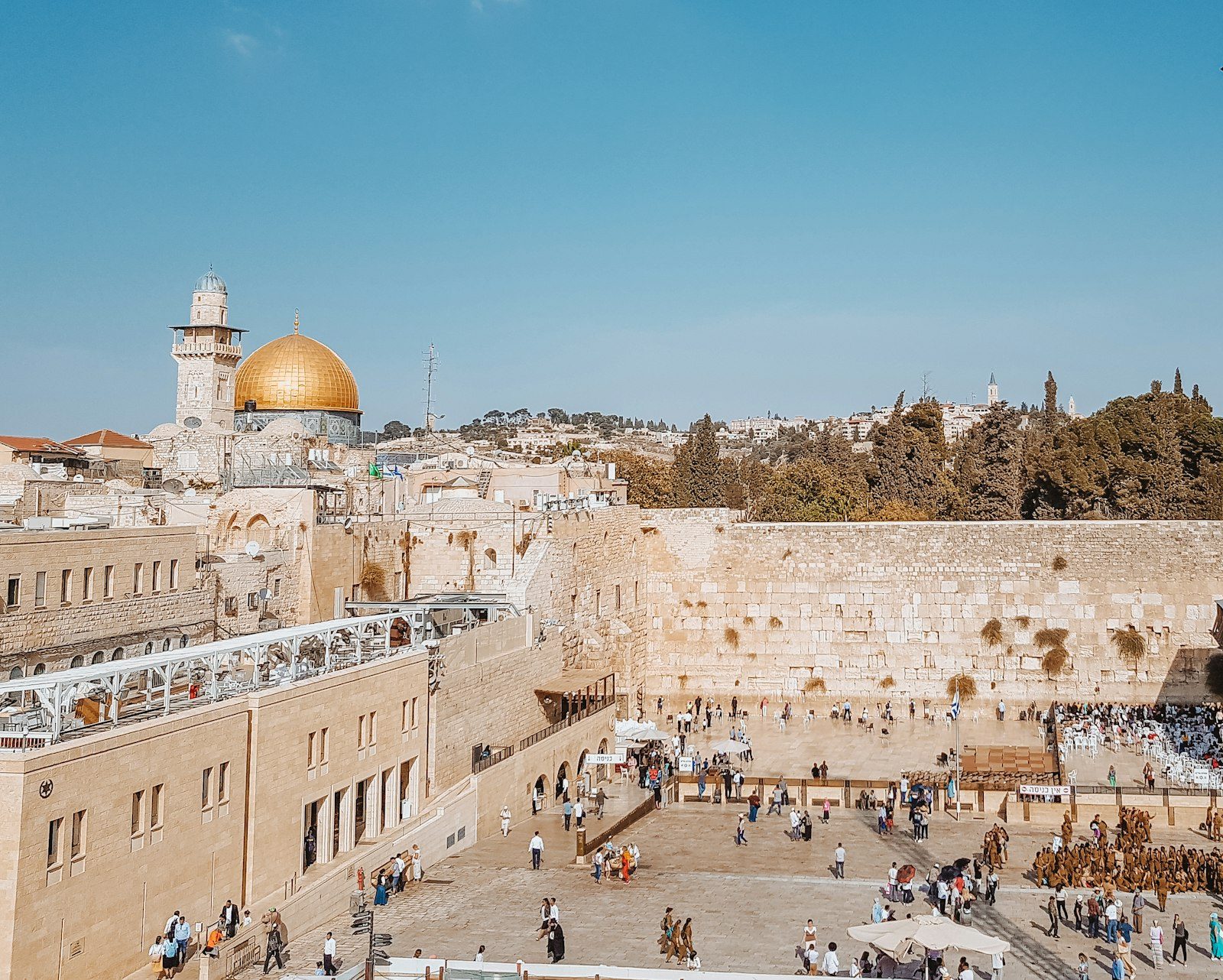
The Western Wall (the Kotel), the only surviving fragment of the retaining wall of the Temple Mount, is Judaism's holiest site. Access is free and around the clock, with separate entrances for men and women, and it's best to cover your head. Above it, on the Temple Mount itself, stand the Dome of the Rock and the Al-Aqsa Mosque, Islam's third holiest site; non-Muslims are admitted only during narrow hours and not every day, so check the schedule on the spot.
A few minutes' walk away, in the Christian Quarter, stands the Church of the Holy Sepulchre, built over the place of Jesus's crucifixion and burial according to Christian tradition. Inside, representatives of six denominations pray at the same time, and for centuries a Muslim family has kept the keys to the church so that the Christians don't quarrel over the right to open it. That's not a story for tourists but a working arrangement to this day.
An honest downside: the Old City is narrow, stepped, and utterly unsuited to strollers or suitcases. Wear comfortable shoes, go early, and for Friday afternoon and Saturday, plan on part of the Jewish Quarter and the kosher establishments being closed for Shabbat.
Tel Aviv is the opposite of Jerusalem, and that's the whole point
If Jerusalem is about stone and faith, Tel Aviv is about the sea, coffee, and a morning run along the promenade. The city is secular, liberal, and alive around the clock, Shabbat included, when the rest of the country puts its transport on pause.
The main free draw is a dozen kilometers of city beaches with lifeguards, showers, and cafes right on the sand. The water is warm from May through November. Running parallel to the promenade is the former Arab town of Jaffa (Yafo), one of the world's oldest ports: stone alleys, a flea market, galleries, and a view over the panorama of the new city from the spot where ships were once unloaded.
A separate reason for architecture lovers is the White City. In the 1930s, architects who had fled Europe arrived here and built up the center in the Bauhaus style: about four thousand buildings with clean lines, ribbon balconies, and rounded corners. In 2003, UNESCO added the ensemble to the World Heritage list as the largest collection of Bauhaus on the planet. It's best seen on foot around Rothschild Boulevard.
The Dead Sea gives you a buoyancy you'll find nowhere else
It's no metaphor: in the Dead Sea you can't drown in the usual sense, because the dense salt water pushes the body up to the surface on its own. The salinity here is around 34 percent, roughly ten times that of the ocean, so you lie on the water as if in an armchair and read a book. Don't go under headfirst: the water stings your eyes and cuts, and a swallow is genuinely dangerous.
The second reason to come is the altitude, or rather the lack of it. The shore of the Dead Sea is the lowest point on land on the planet, about 440 meters below sea level, and the level drops by nearly another meter each year through evaporation and water drawn from the Jordan. Because of this, the potent minerals, the black therapeutic mud, and the local cosmetics have become an industry of their own; tubes of Dead Sea minerals are carried home as souvenirs on par with fridge magnets.
A practical detail the postcards stay quiet about: the descent to the water is often long, the bottom can be covered with sharp salt crystals, and the sun at this altitude strikes deceptively gently, so it's easy to burn even in cloudy weather. Bring water shoes and don't shave the day before.
Masada turns a single rock into an entire story of resistance
Half an hour from the Dead Sea's beaches rises Masada, a mesa-like rock topped with the ruins of King Herod's palace-fortress. The place is known not for its architecture but for its finale: according to Roman sources, nearly a thousand Jewish rebels withstood a siege here and chose death over capture. In 2001, Masada was granted UNESCO heritage status.
There are two ways up. The cable car carries you to the top in a few minutes. The Snake Path on the eastern side takes about an hour of steep climbing, so people take it at dawn before the heat sets in. At the top, a view opens over the desert and a gray-turquoise strip of the sea, and it's this contrast that stays with you more than the ruins themselves.
Haifa and the Bahai Gardens give you vertical relief instead of flat heat
The country's third-largest city is spread across the slopes of Mount Carmel, and its main calling card is the Bahai Gardens: nineteen terraces cascading down in a flawless green staircase to the golden Shrine of the Bab. The symmetry here is worked out to pharmacy-grade precision, and entry to most of the gardens is free, though it runs on a tour schedule.
In 2008, UNESCO added the Bahai holy places in Haifa and neighboring Acre to the World Heritage list, the first recognition of a site tied to a relatively young religion. The panorama itself is best caught from the viewing terrace on Yefe Nof Street at the top, not from below.
Galilee is the green, cool Israel you don't expect
North of Haifa, the country suddenly turns hilly and green. The Sea of Galilee (Lake Kinneret) is Israel's largest freshwater lake and, according to the Gospels, the setting for many events in the life of Jesus; around it cluster Christian pilgrimage sites such as Capernaum and the Mount of Beatitudes. Nearby are the Golan Heights with their vineyards and waterfalls, and in summer people come here for the cool air when the south is melting.
In fairness: Galilee is hard to explore without a car, public transport here is sparse, and the most interesting spots are scattered among the villages. It's more of a third or fourth day on the route than a first.
Where to go by mood: a quick map of the regions
| Region / city | What to see there | A detail worth knowing |
|---|---|---|
| Jerusalem, Old City | Western Wall, Church of the Holy Sepulchre, Temple Mount, four quarters | Modest dress; parts closed on Shabbat and religious holidays |
| Tel Aviv and Jaffa | Beaches, Bauhaus, the old port, nightlife | The only city that stays alive on Shabbat; pricey hotels |
| Dead Sea | Buoyancy, mud, spa, cosmetics | Water shoes essential; don't dunk your head |
| Masada | Herod's fortress, the siege story, desert views | Climb on foot only in the morning; summer heat over 40 °C |
| Haifa | Bahai Gardens, Mount Carmel, bay panorama | Gardens on a tour schedule, entry to the upper part is free |
| Galilee and the Golan | Lake Kinneret, pilgrimage sites, greenery and wine | Really only convenient with a car |
Shabbat shuts down transport, and you have to build that into the route in advance
Israel's main logistical trap isn't the heat or safety, it's Shabbat. From late Friday (transport starts stopping a few hours before sunset) until Saturday evening, intercity buses and trains don't run in most of the country, and many businesses and shops are closed. The exception is secular Tel Aviv and Haifa, where there are limited sherut minibuses and weekend buses, and taxis operate everywhere, though at a higher fare.
In practice this means one thing: plan intercity transfers for weekdays or Sunday, and spend Saturday wherever you managed to get to ahead of time, ideally in Tel Aviv or by the Dead Sea at your hotel. Check the schedule before you set out, because the time of sunset, and therefore the start of Shabbat, shifts every week.
The climate says come in spring or autumn, not summer
Israel is stretched between sea, mountains, and desert, so the weather depends on exactly where you're headed that day. Summer, June through September, is dry and hot: Tel Aviv is humid and stifling, while by the Dead Sea and at Masada the thermometer easily passes 40 °C, and daytime walks become an ordeal. Winter is mild, but Jerusalem, which sits at an altitude of about 750 meters, can turn cold and rainy, occasionally even with snow.
The best windows are April to May and October to November: a warm sea, bearable sun over the desert, and greenery in the north. Swimming in the Mediterranean is comfortable roughly from May through November, while at the Dead Sea and the Red Sea in Eilat the swimming season is effectively year-round.
Where to start, for you specifically
The answer to the question of what to see in Israel depends on whether it's your first time here. If you're going for the first time and have three or four days, take the classic triangle: two days for Jerusalem with the Old City, a day for Tel Aviv with Jaffa, and one trip out to the Dead Sea with a climb up Masada along the way. That's enough to feel the country from stone to salt water.
If you've already seen the highlights, next time head north: Haifa with the Bahai Gardens, green Galilee, and the Golan vineyards will show you a completely different, cool and rural Israel. And for those who also want a sea without the choking salt, there's Eilat on the Red Sea with its coral reefs, but that's a separate story.
One last practical point for 2026: Ukrainian citizens don't need a visa for Israel (up to 90 days within any six-month period), but as of January 2025 an electronic ETA-IL authorization became mandatory, arranged online in advance. Before your trip, check the current rules on the official portal, because things like this change the fastest.
Planning a broader route around the region? Take a look, too, at our guides to neighboring Middle East and Mediterranean destinations to put together a trip without unnecessary transfers.