

Wondering what to see in Naples: the city itself fits into one packed day or two relaxed ones, and nearly everyone gives the third day to Pompeii or Vesuvius, half an hour away by commuter train. Naples is loud, scuffed and alive in a way no other Italian city manages: laundry hangs above street shrines, scooters use the sidewalks, and a 5-7 euro pizza justifies the entire flight. Below is a 1-3 day itinerary with honest notes on queues and safety.
Day one: the historic center and Spaccanapoli
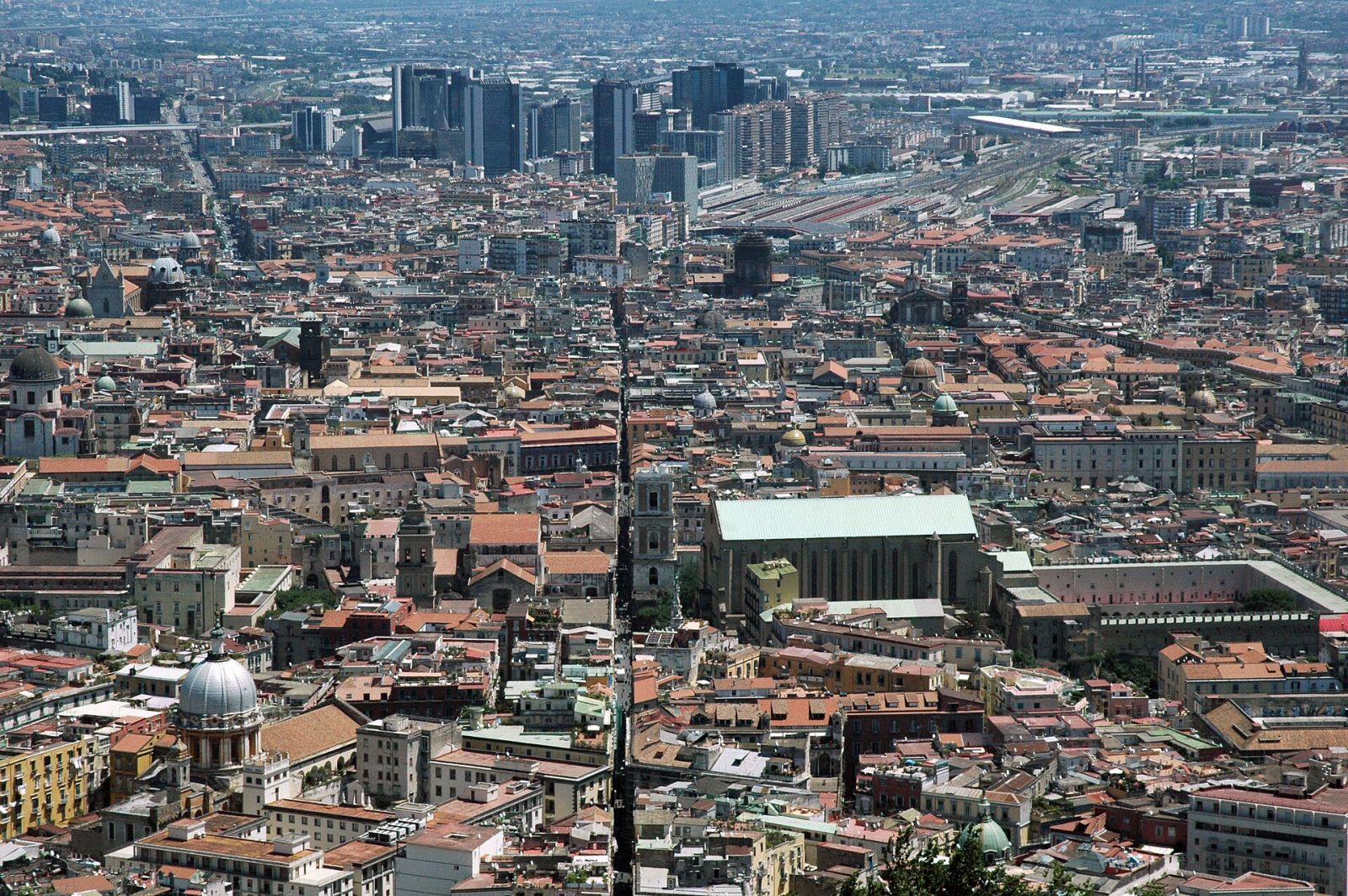
Spaccanapoli is not a single street but an arrow-straight line of several lanes slicing the historic center in half; the name literally means "the one that splits Naples". It looks best from above, from Vomero hill by Castel Sant'Elmo, and at street level you simply walk it, heading east from Piazza del Gesù Nuovo. Along the way:
- Santa Chiara: a Gothic basilica with a cloister tiled in majolica. The cloister charges around 6-7 euros and earns it, this is the quietest spot in the center.
- Cappella Sansevero with the Veiled Christ, a marble sculpture people travel to Naples specifically to see. Tickets are online only and sell out days ahead in season; you will not get one at the door.
- Via San Gregorio Armeno: the street of nativity scene workshops, busy all year round. Figurines of Maradona and politicians stand next to the holy families, and Neapolitans see no contradiction whatsoever.
- The Duomo with the chapel of San Gennaro, the city's patron saint, whose vial of blood "liquefies" three times a year in front of a crowd.
Give the center a full unhurried day. It is not a museum but a living neighborhood: half the impressions come not from monuments but from balconies, courtyards and raised-voice exchanges that are, in fact, just conversations.
Underground Naples: the city beneath the city
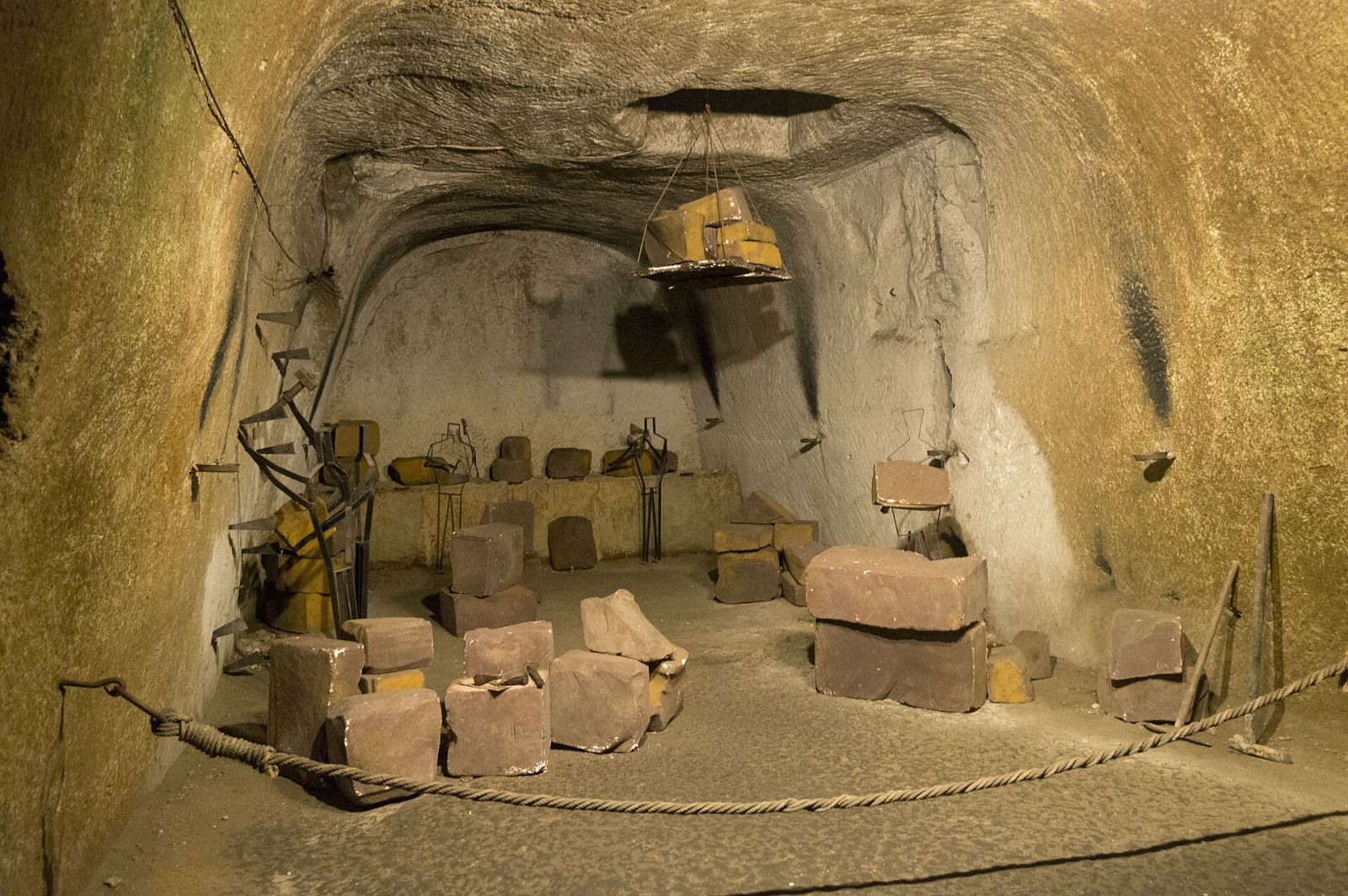
Up to 40 meters below the historic center lies a second city: Greek quarries, Roman aqueducts and a theater, World War II bomb shelters. The Napoli Sotterranea tour from Piazza San Gaetano runs about an hour and a half and partly follows narrow corridors with a candle in hand; anyone claustrophobic can skip that stretch, guides announce it upfront. It stays around 15 degrees down there in any season, so bring a layer. The alternative is Galleria Borbonica near the waterfront: a tunnel a king commissioned as an escape route from his palace, now also home to abandoned cars from the 1940s-60s. Both tours run in English, and booking online is the safer bet.
Castel dell'Ovo and the waterfront
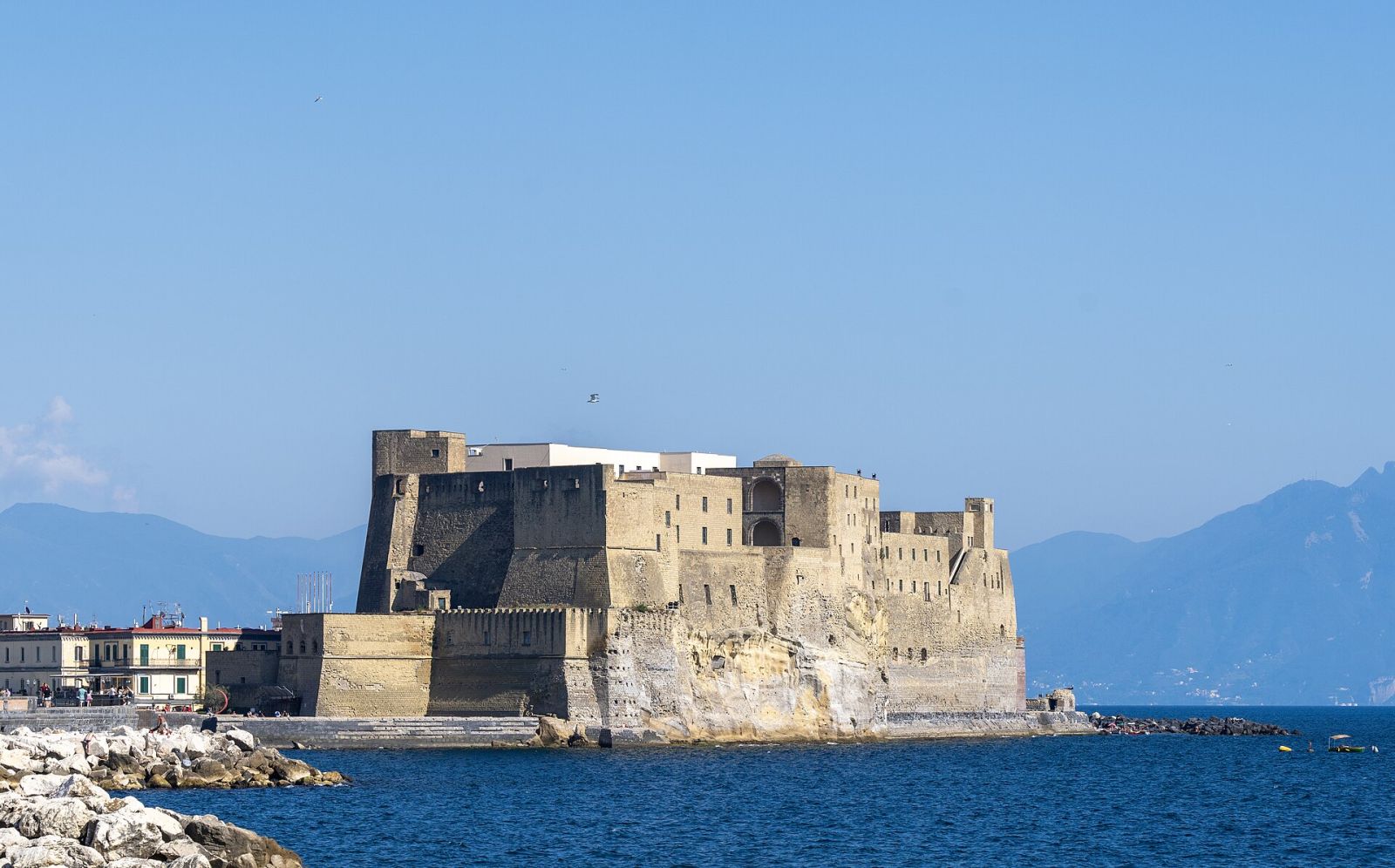
Castel dell'Ovo, the "Egg Castle", is the oldest fortress in Naples, sitting on the islet of Megaride joined to the promenade by a causeway. Legend says Virgil hid an egg in the foundations, and as long as it stays whole, the city stands. The castle's real prize is not the interiors but the terraces: a wraparound view of the bay, Vesuvius and Capri on the horizon. Entry has traditionally been free, though the castle periodically closes for restoration work, so check its status before visiting. Around the islet is the fishing harbor of Borgo Marinari with its restaurants, and the Lungomare promenade itself is pedestrianized: the city's best evening walk, from the castle toward Mergellina.
Pizza at Da Michele: the honest version
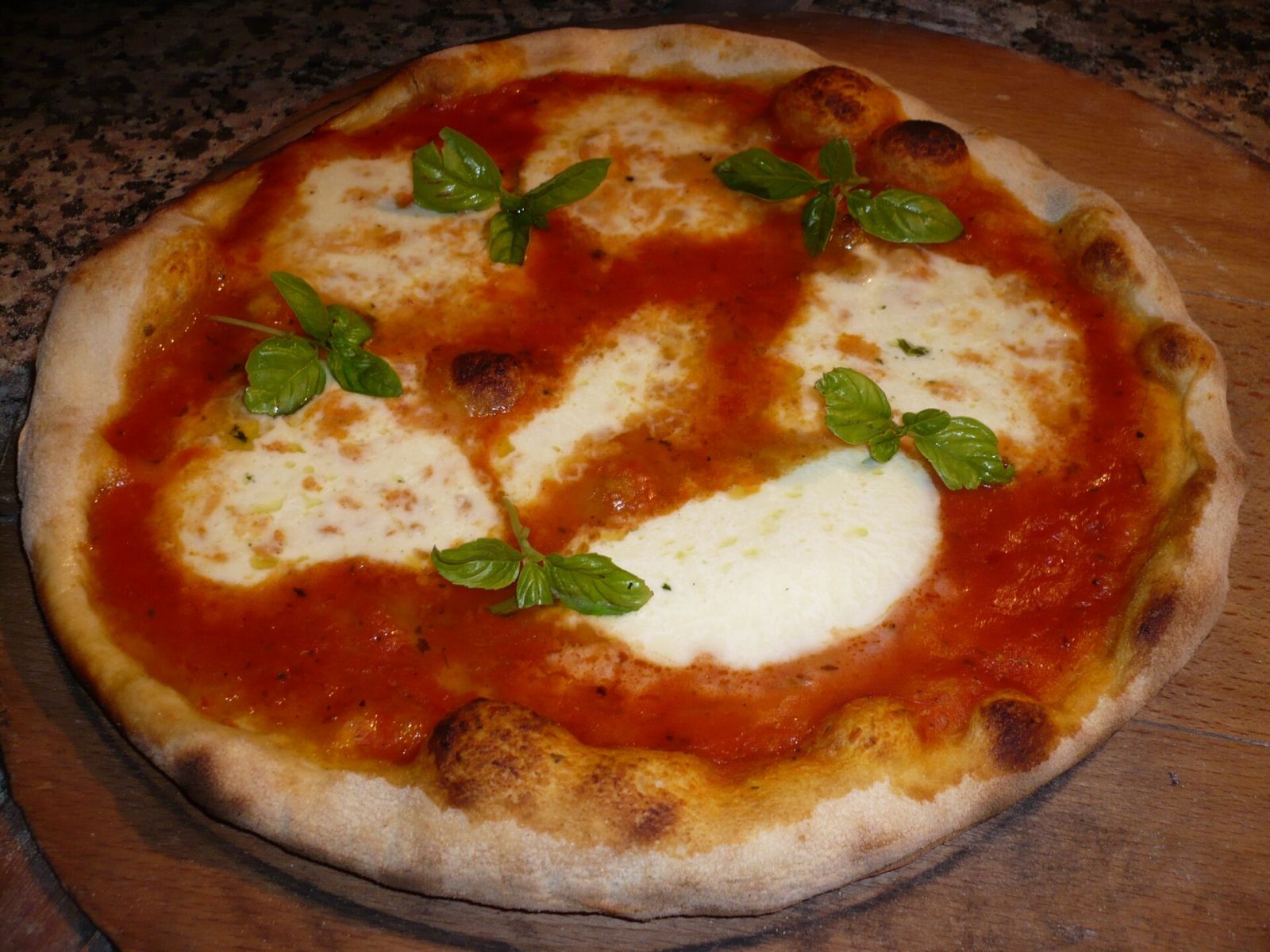
L'Antica Pizzeria da Michele has been open since 1870, keeps only margherita and marinara on the menu and became a global pilgrimage after "Eat Pray Love". The pizza genuinely is outstanding, and it still costs 5-6 euros. Now the honest part: at lunch and dinner the wait runs from 40 minutes to two hours. The system: take a number, wait in the street, listen for it to be shouted. Tables are shared, the interior is spartan, lingering is not the custom.
What to do about it. Either arrive at the 11:00 opening or in the dead hours after 15:30, or calmly go elsewhere: Sorbillo on Via dei Tribunali, Di Matteo, Starita in the Materdei district. The baseline in Naples is so high that a random corner pizzeria will almost certainly beat anything you have eaten at home. Da Michele is an experience and a legend, but not the only summit.
Pompeii and Vesuvius: day three
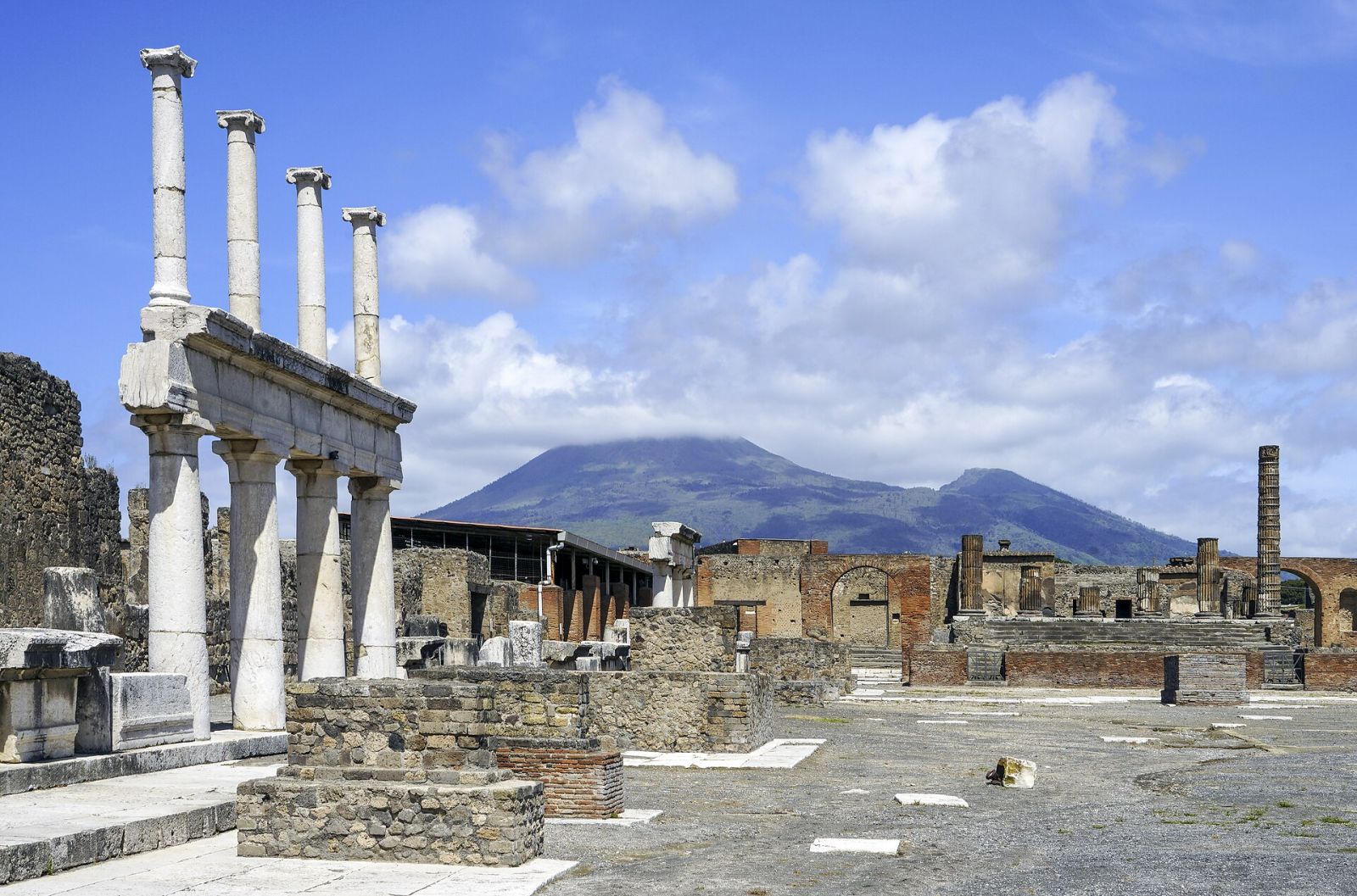
From Napoli Garibaldi station the Circumvesuviana commuter train reaches Pompei Scavi station, right by the excavation entrance, in 35-40 minutes. A Pompeii ticket costs around 18-22 euros; check current prices and the month's free Sundays on the park's official website. The key rules: arrive by nine, before the cruise groups roll in, carry water and a hat since the ruins offer almost no shade, and budget at least four hours. The city is large, and half a day realistically covers the forum, the baths, the House of the Faun, the Lupanar and the amphitheater.
For Vesuvius, a bus from Pompeii climbs to a car park at about a thousand meters, then it is a 30-40 minute walk up a gravel path to the crater. Crater tickets are online only, with timed slots. Combining Pompeii and Vesuvius in one day is possible but it is a marathon: wiser to pick one, or start at eight sharp. Herculaneum, Pompeii's smaller and better-preserved neighbor, makes an excellent alternative for a second visit; it is more compact and nearly crowd-free.
How safe is Naples, really
The city's reputation is worse than the reality. In tourist areas the main risk is the same as in Rome or Barcelona: pickpockets in crowds and on public transport. The usual rules apply: phone out of the back pocket, bag zipped and worn in front on the metro, and on narrow streets keep your phone on the building side, scooter snatch-thefts happen, though rarely. The Quartieri Spagnoli are perfectly fine and full of character by day; at night, avoid deserted alleys in any district, same as anywhere. And do not judge the city by its rubbish bins: behind the scuffed facades hides Baroque that Florence could only dream of.
How to split 1-3 days
| Format | Plan |
|---|---|
| 1 day | Spaccanapoli and the center in the morning, Cappella Sansevero on a pre-booked ticket, pizza lunch, underground Naples in the afternoon, evening on the Lungomare by Castel dell'Ovo |
| 2 days | + The Archaeological Museum (Pompeii's mosaics and frescoes are kept here), Vomero hill by funicular, Castel Sant'Elmo, dinner in Chiaia |
| 3 days | + Pompeii with an early start, optionally Vesuvius or Herculaneum |
One last thing: the Archaeological Museum is not the optional extra it appears to be. Everything most valuable from Pompeii, from the Alexander battle mosaic to the frescoes, was moved precisely here, so the ruins and the museum are two halves of one story. With two days available, see the museum after Pompeii: that order completes the picture.