The shortest answer to what to see in Madrid: the Prado museum, the Royal Palace, the two central squares Plaza Mayor and Puerta del Sol, Retiro park, and the small Egyptian Temple of Debod at sunset. All of it fits into two or three days on foot, because the historic core of the Spanish capital is compact and almost flat. The real catch is different: Madrid is not a coastal or a postcard city, its beauty lives in atmosphere and museums rather than in one signature shot.
Below is the practical version, no fluff. What is essential, where to catch free entry, when not to come because of the heat, and the honest downside of the city that guidebooks rarely mention.
The Prado: the main reason to come
If you visit only one museum in Madrid, make it the Prado. It holds one of the strongest collections of European painting in the world: Velázquez with his "Las Meninas", more than a hundred works by Goya including his eerie "black paintings", El Greco, and Bosch's "The Garden of Earthly Delights". This is not a museum you rush through in an hour. Set aside at least half a day, and a full one if painting genuinely moves you.
Now the practical part worth the paragraph. The Prado has free hours: the last two hours before closing are free for everyone. This usually means the evening on weekdays and a slightly earlier window on Sunday, but check the current schedule before your trip, because the museum adjusts it from time to time. The catch is obvious: a queue builds during those hours and the halls get crowded, so two hours barely cover the key rooms. If you want to look in peace, buy a regular daytime ticket.
The Royal Palace and the Temple of Debod
The Royal Palace (Palacio Real) is the largest working royal residence in Europe by floor area, with almost two and a half thousand rooms. The king does not live here, the building is used for ceremonies, and visitors are let inside. You can tour the throne room, the royal pharmacy, the armoury and the state apartments with their frescoes and chandeliers. The Almudena Cathedral stands right next to it, so it makes sense to combine both into one walk.
A couple of blocks to the west hides a completely different story. The Temple of Debod is a genuine Egyptian temple from the 2nd century BC, which Egypt gave to Spain in the 1960s in gratitude for help saving monuments during the building of the Aswan Dam. It was taken apart, shipped over and reassembled in a park on a hill. Come here at sunset: the temple reflects in the pools of water while the sun goes down behind the city. It is one of the few truly postcard shots in Madrid, and locals know it too, so evenings get busy.
The two main squares: Plaza Mayor and Puerta del Sol
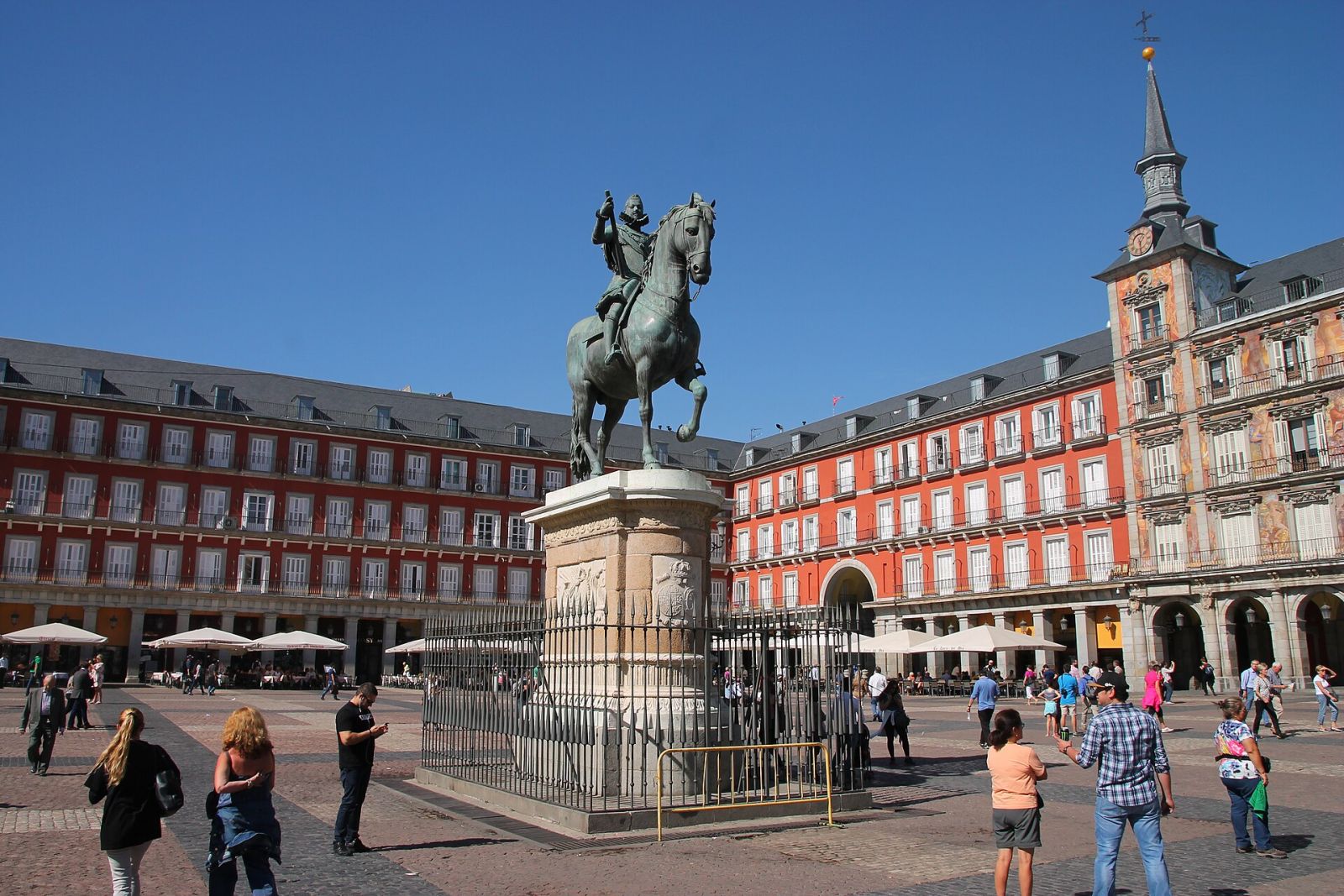
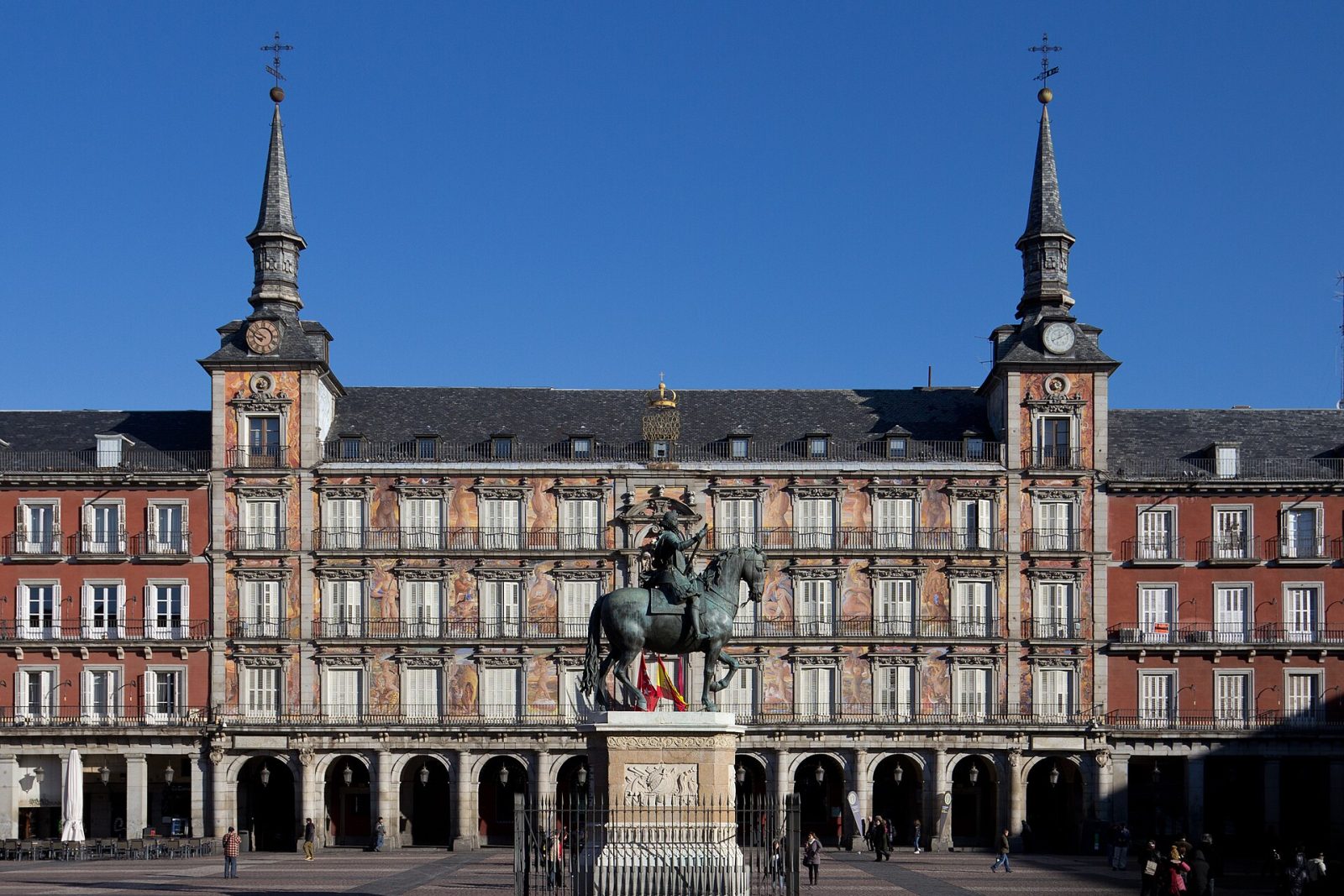
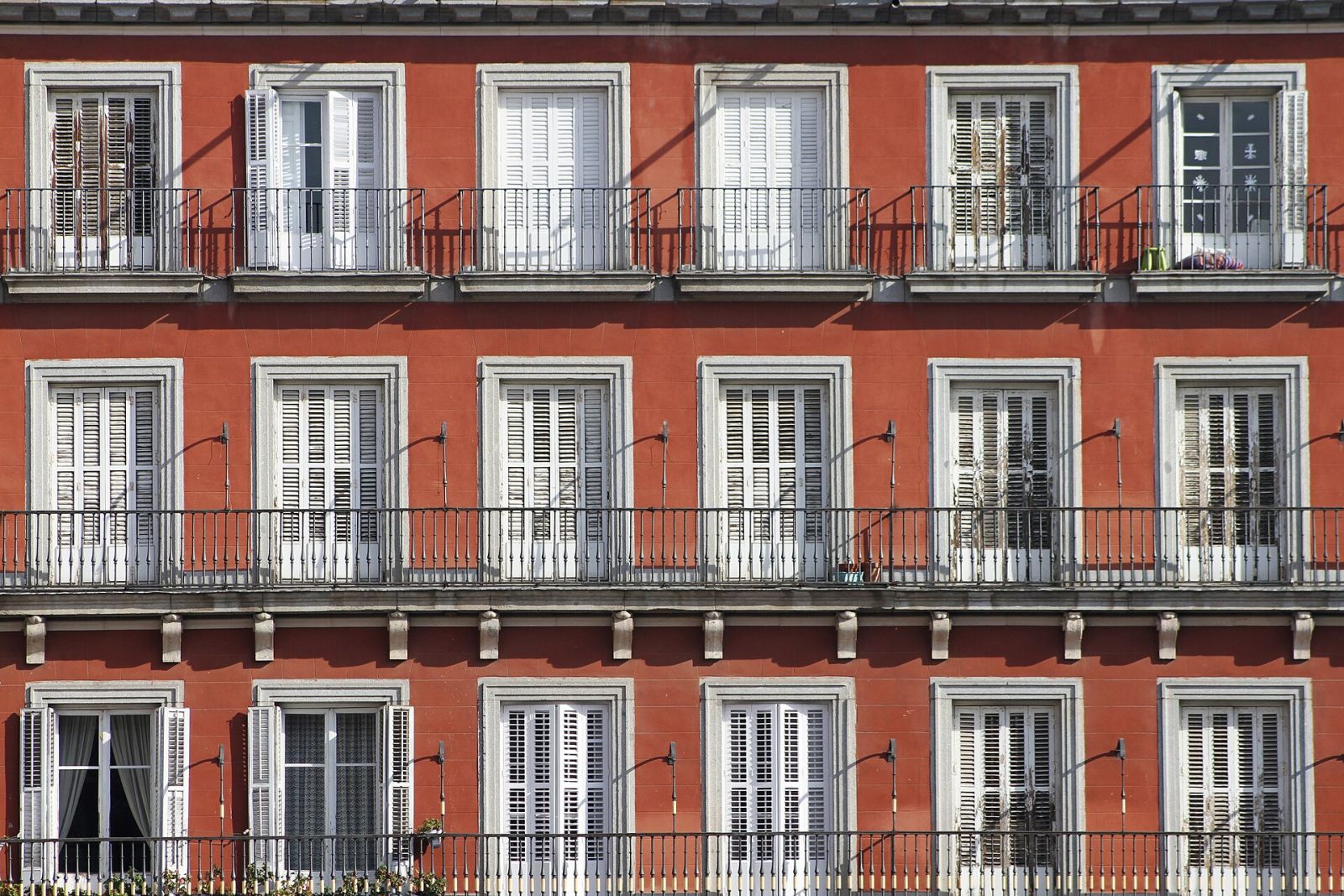
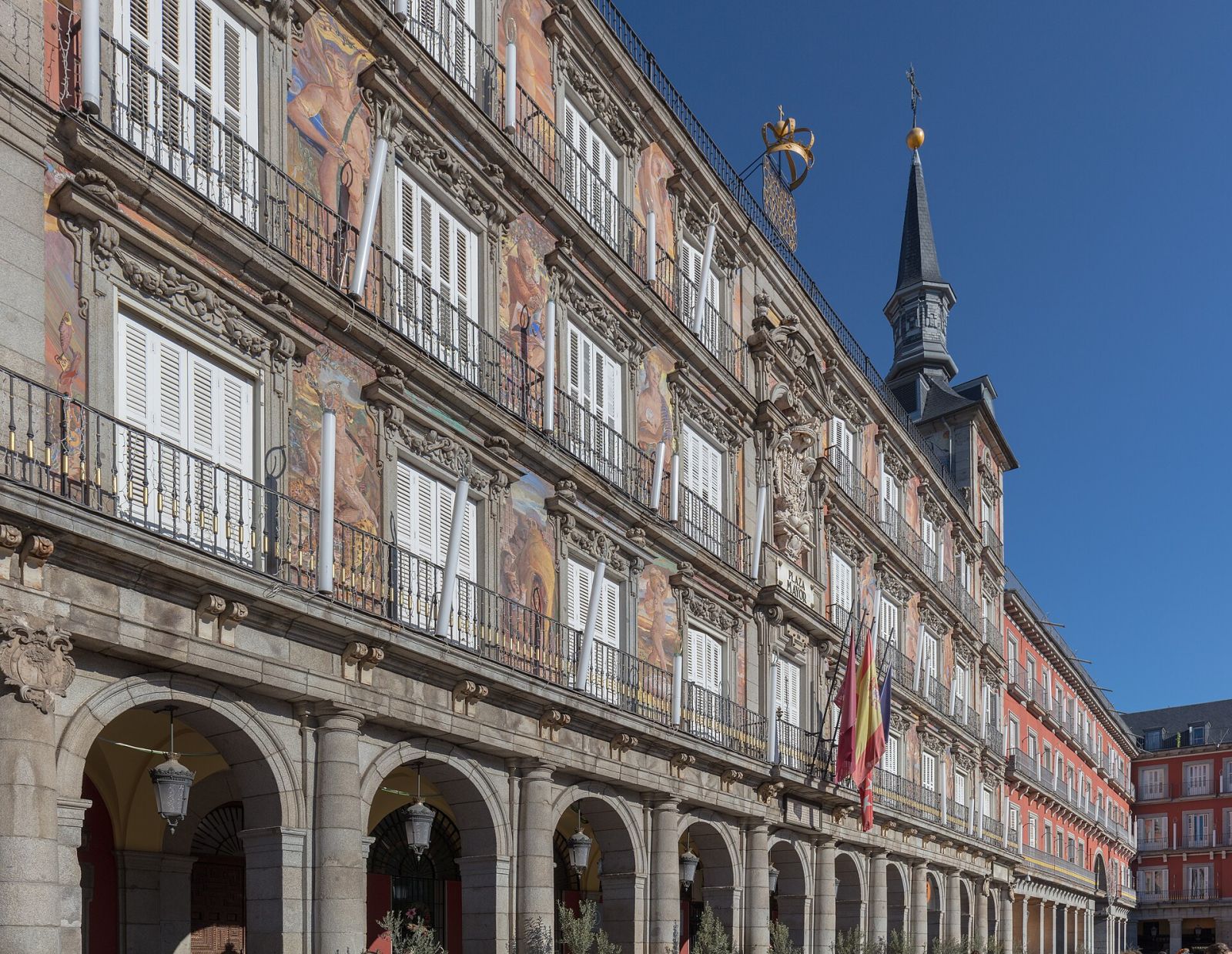
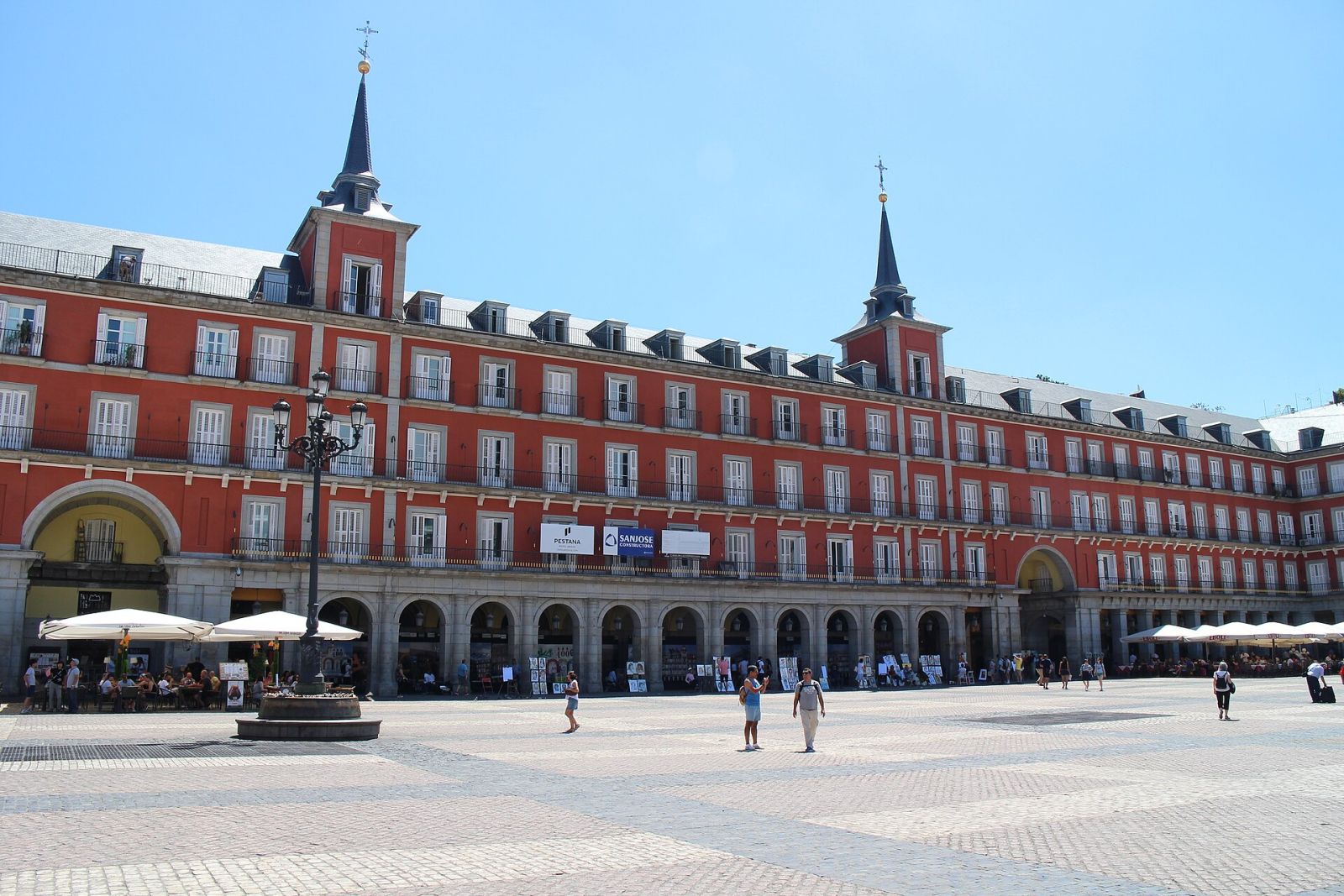
The heart of old Madrid is two squares a five-minute walk apart. Plaza Mayor is a closed 17th-century rectangle with arcades around the edge, red façades and an equestrian statue of Philip III in the middle. Royal celebrations, bullfights and even Inquisition trials once happened here, and today cafés work under the arches with the odd market rolling through. Coffee on the square itself costs noticeably more than around the corner, so take your photos here and drink one street over.
Puerta del Sol is no longer a historic set piece but a living hub of the city. This is where the "kilometre zero" marker stands, the point from which distances along every Spanish road are measured, along with the statue of a bear and a strawberry tree, the symbol of Madrid. On this square Madrileños welcome the New Year and eat twelve grapes as the clock strikes. By day it is simply a noisy junction of shopping streets, handy for getting your bearings but not a place to linger.
Retiro park: where to escape the city
When the centre wears you out, head to Retiro. It is a large former royal park east of the museum quarter, almost a hundred and fifty hectares of avenues, lawns and fountains, where Madrileños come to run, read and row boats on a big artificial pond. On weekends street musicians and fortune-tellers set up, and the mood is easy and unhurried.
The park's main jewel is the Crystal Palace (Palacio de Cristal), a delicate structure of glass and metal built in the 19th century as a greenhouse. Today it hosts temporary contemporary-art shows, and the building itself, mirrored in the pond in front of it, is one of the prettiest spots in Madrid. Entry is usually free. Pair a Retiro walk with the Prado: they sit next to each other, and together they make a logical museum-and-park day.
Where to eat: San Miguel market and tapas
Food is a separate reason to love Madrid, and the San Miguel market next to Plaza Mayor is a good start. It is a historic early-20th-century hall of iron and glass, and inside is not an ordinary market but dozens of gourmet stalls: jamón, oysters, croquettes, olives, bite-sized tapas, wine by the glass. The format is simple: you grab a few different portions at different counters and eat standing at tall tables.
An honest caveat right away. San Miguel is touristy and not cheap, prices here run above the city average, and in the evening there is barely room to move. As a gastronomic introduction it is excellent, but for a real tapas night locals suggest walking a bit further, into the La Latina or Huertas neighbourhoods, where the same snacks cost less and the crowd is mostly homegrown. And remember the Spanish rhythm: dinner here is late, classically after nine, so do not be surprised by half-empty restaurants at seven.
How to get around the city?
The historic centre is best covered on foot: from the Royal Palace to Retiro makes a pleasant walk through all the main squares. For longer hops Madrid has one of the most convenient metro systems in Europe, extensive, clean and cheap. Tickets come as single or multi-ride, and the better-value option is a rechargeable transport card loaded with several journeys. Check the current fares before your trip, they change.
- On foot. Ideal for the centre. Distances are short, the streets are flat, transport makes no sense.
- Metro. The main way to move between districts and out to the airport. Runs until late.
- Buses. Good for seeing the city, but slower than the metro at rush hour.
- Taxis and apps. Reasonably priced by European standards, useful late in the evening.
When to go, and what to watch for in summer?
The most important thing about the season: summer in Madrid gets genuinely hot. The city sits in the centre of the country on a plateau, far from the sea, and in July and August the daytime temperature often climbs past thirty-five, while the city empties out as the Madrileños themselves leave for the coast. You can still tour museums at that time, but walking around by day is hard. So the best months for a trip are spring and autumn.
| Season | Weather | Best for |
|---|---|---|
| April, May | Warm, comfortable, everything green and in bloom | The best balance for walking |
| June, September | Warm, sometimes hot but bearable | Those who do not mind the sun |
| July, August | Serious heat, the city half-empty | Only worth it for museums and low hotel prices |
| October, March | Cooler, fewer tourists | Quiet museum trips without the crowds |
The honest downside: what to know in advance
So the city does not disappoint, one thing is better accepted upfront. Madrid does not deliver a love-at-first-sight "wow" the way coastal Barcelona or Lisbon do. There is no sea, almost no landmark modernist architecture, and the centre is plain and grey in places. Its strength is not in a single frame but in the accumulation: world-class museums, the evening hum of the squares, the food, the way the city lives late and cheerfully. So come here for the atmosphere and the art, not for a postcard. In that frame of mind Madrid almost always wins, whereas chasing a photogenic façade is an easy way to leave disappointed.