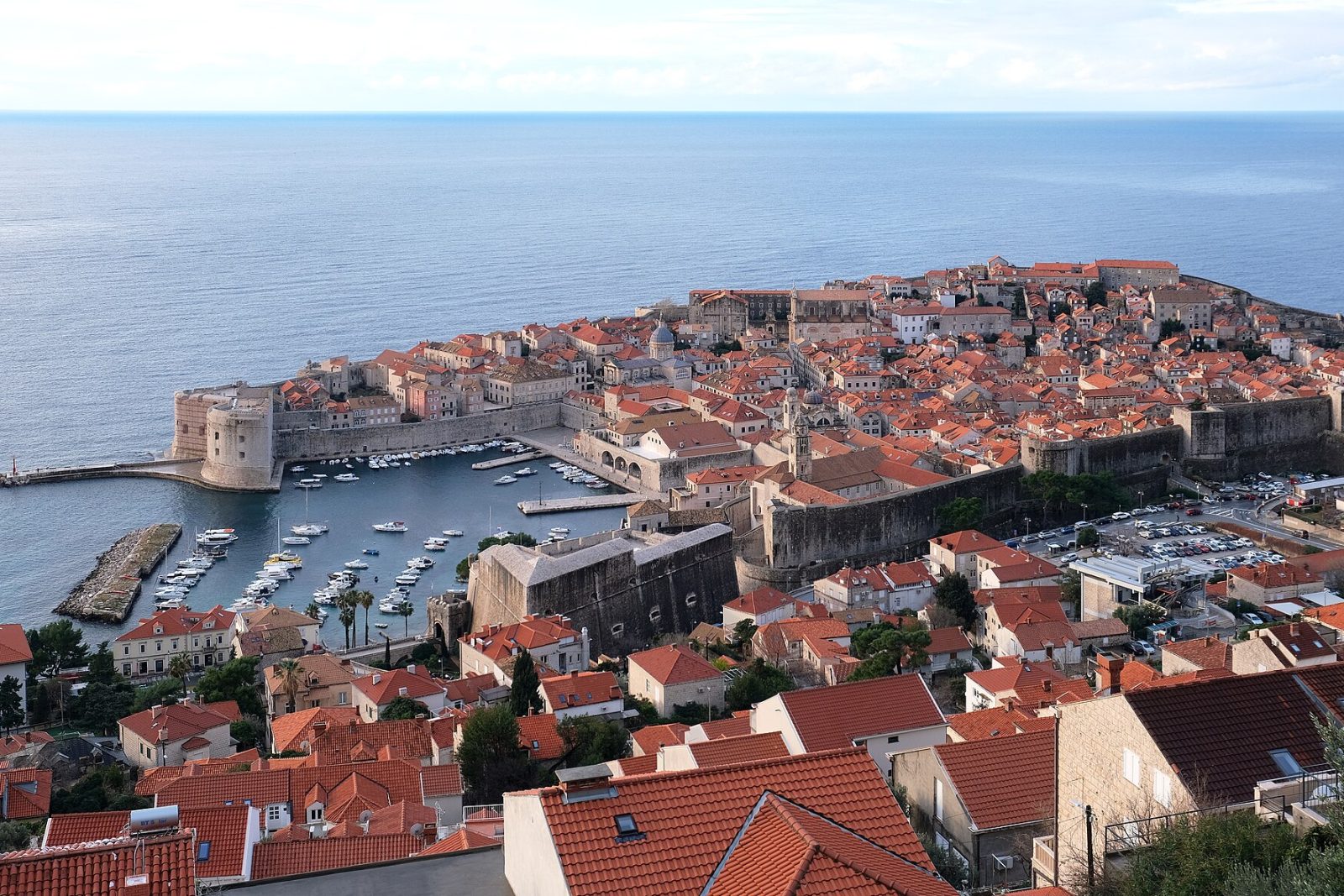
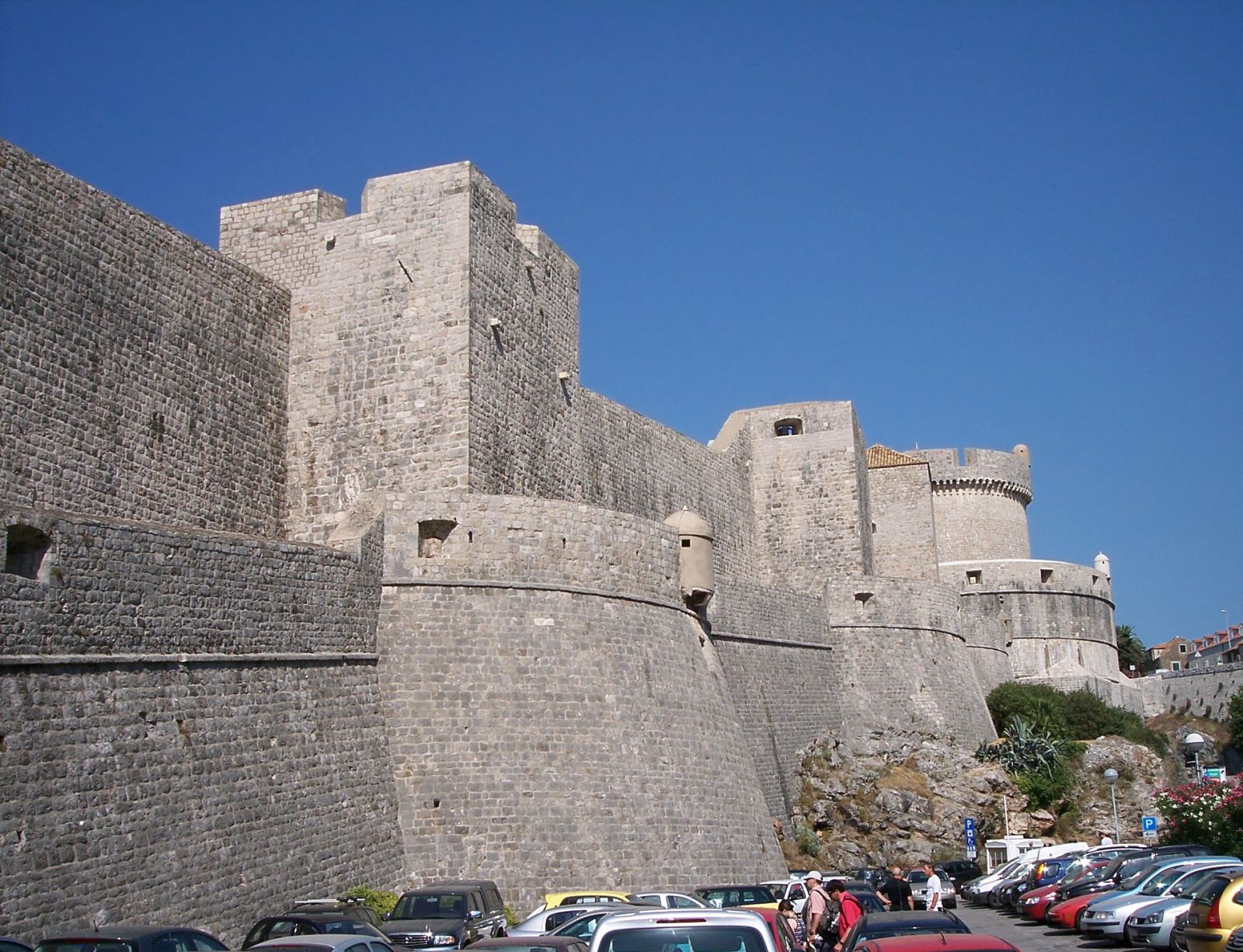
If you strip it down to one thing, what to see in Dubrovnik comes down to this: the medieval city walls, which you can walk in a full loop above the rooftops and the sea. That's roughly two kilometres of rampart rising up to 25 metres, and it's the reason millions come here every year. Everything else, the Old Town with its marble street, the fortress over the water, the mountain viewpoint and the island across the bay, winds around that core over a day or two.
Here's the honest, no-frills version. What's essential, what's optional, how to dodge the cruise-ship crowds, when to go, and the one real downside nobody puts in the brochures.
The city walls: the main reason to come
Walking the walls of Dubrovnik isn't just a box to tick, it's the whole point of the trip. The ramparts wrap the Old Town in one unbroken ring, and from up top you get exactly what you came for: a rolling sea of terracotta rooftops in a single shade, narrow lanes below, bell towers, and on the other side an Adriatic so blue it looks staged. The full loop takes about an hour to ninety minutes at a relaxed pace, longer with photo stops.
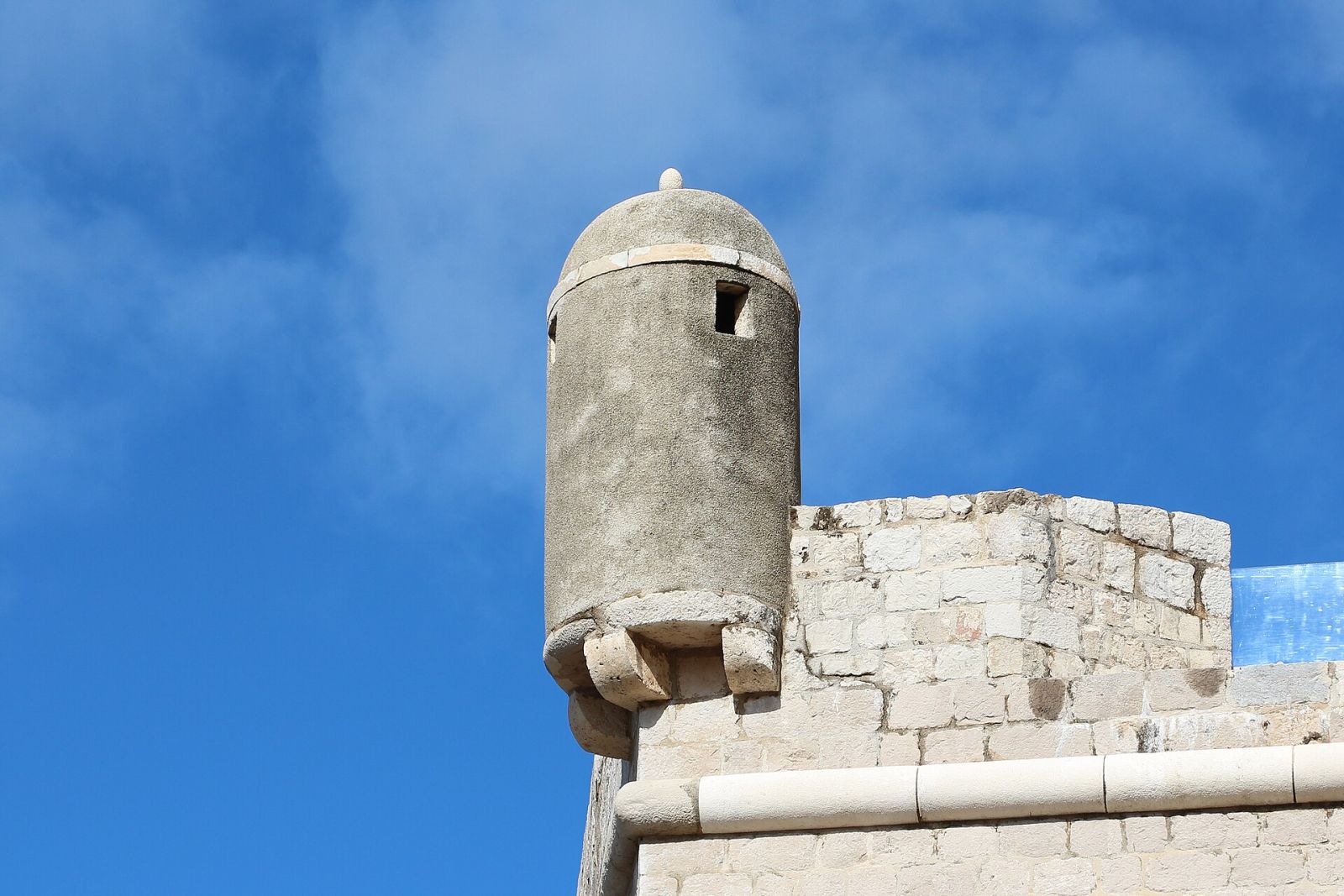
A few practical things worth knowing in advance. The ticket is paid and not cheap, and it usually comes bundled with Lovrijenac Fortress, so budget for two sites at once. The route along the wall runs one way, so you won't have to double back. There's almost no shade up there, which in high summer is a real ordeal, so water, a hat and sunscreen are non-negotiable. Check the current price and opening hours before you go, as they shift each season.
The Old Town and Stradun: a UNESCO-listed heart
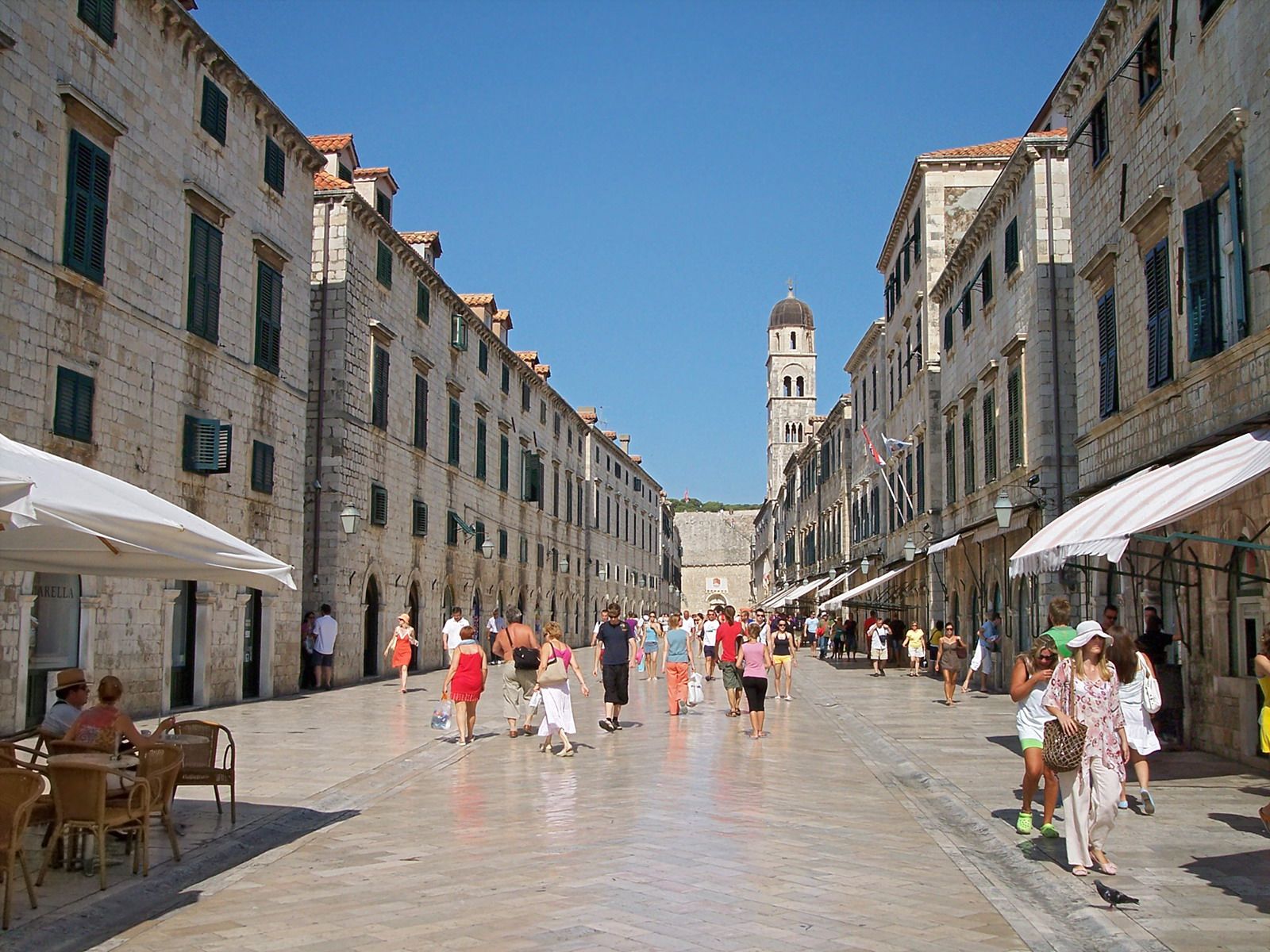
Inside the walls lies the Old Town, a pedestrian maze on the UNESCO World Heritage list. Its main axis is the Stradun, a broad street paved in limestone that centuries of footsteps have polished to a mirror shine. Early in the morning, before the tour groups roll in, you can walk it almost alone, and it feels like a completely different city than it does at noon.
Along the Stradun and its side lanes sits nearly everything worth seeing on foot. Here's the core of it.
- Onofrio's Fountain. A large round 15th-century fountain by the Pile Gate entrance, part of the old water-supply system. The classic place to start a walk.
- Sponza Palace and the Rector's Palace. Two showcases of local architecture where Gothic meets Renaissance, witnesses to the days when Dubrovnik was a wealthy maritime republic.
- The Cathedral and St Blaise's Church. Blaise, the city's patron saint, is everywhere here, from statues to souvenirs, so his name sticks fast.
- The Franciscan Monastery. Inside is one of the oldest working pharmacies in Europe, founded back in the early 14th century.
The main tip for the Old Town is simple: step off the Stradun. The best bits hide in the steep side-stairways climbing uphill, strung with laundry, cats and tiny bars squeezed onto two or three steps. That's where the living Dubrovnik shows itself, not the postcard set.
Lovrijenac Fortress and the view from Mount Srđ
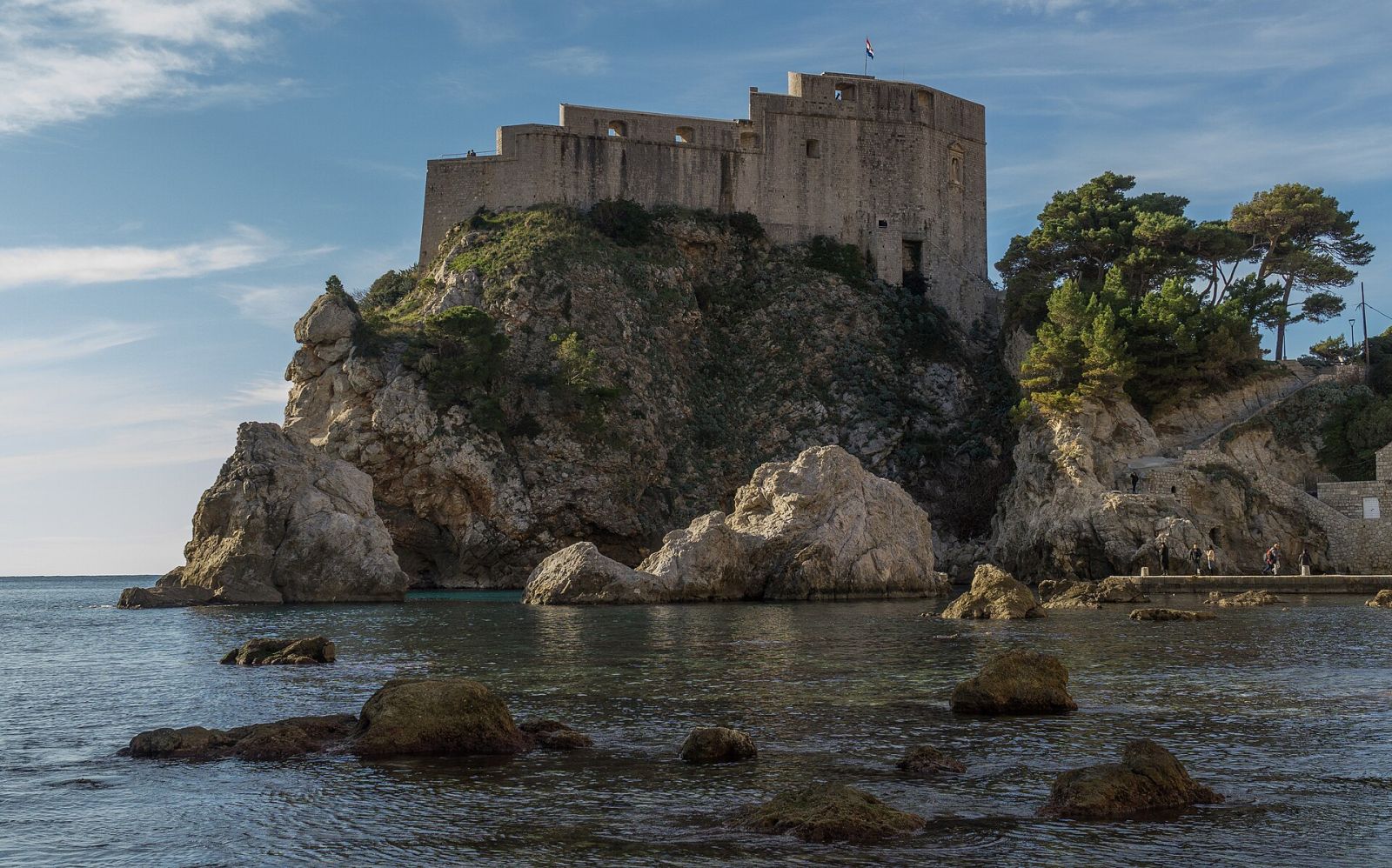
To grasp the scale of the city you have to get above it, and there are two high points for that. The first is Lovrijenac Fortress, nicknamed the "Dubrovnik Gibraltar". It stands on a 37-metre rock beside the walls, separate from the Old Town, and once guarded it from sea and land at once. The climb up is steep, but the reward at the top is the best angle on the walls themselves and the city framed by water. The wall ticket usually already covers Lovrijenac, so don't pay twice.
The second point is grander. Mount Srđ looms over Dubrovnik at more than 400 metres, and a cable car runs up to it from the upper edge of the Old Town. The ride takes just a few minutes, and the top opens onto one of the finest panoramas on the Adriatic: the whole Old Town in miniature, Lokrum Island and a chain of islands on the horizon. Up there you'll find a viewing terrace, a café and a museum about the war of independence. You can also walk the same route up the switchbacks, but it's hard going and only worth it early in the morning, before the heat hits.
Dubrovnik and Game of Thrones: where King's Landing was filmed
For millions of viewers, Dubrovnik is King's Landing, capital of the Seven Kingdoms. The city really was the main filming location for the show, and fans will recognise the sets at every turn. A "walk the locations" outing is its own popular format here, and even without a tour ticket you can find the big ones yourself.
| Location | On screen | What it actually is |
|---|---|---|
| Lovrijenac Fortress | The Red Keep | A clifftop defensive fortress beside the walls |
| Steps of St Ignatius (Jesuit) Church | Cersei's "walk of shame" | A Baroque staircase deep in the Old Town |
| Fort Bokar and the city walls | King's Landing defences and streets | Stretches of the seafront fortifications |
| Lokrum Island | Qarth (garden scenes) | A green island 15 minutes away by boat |
Honestly, even if you've never watched a single episode, these places are worth it in their own right. Fans, though, are better off taking a themed tour: the guide lines up the exact camera angles and shares behind-the-scenes details you'd never guess on your own.
Beaches and Lokrum Island: where to escape the heat
An honest caveat first: beaches in Dubrovnik are mostly pebble and rock, with almost no sand. The best-known city beach is Banje, just outside the walls, with that classic postcard view of the Old Town behind it. It's pretty, but crowded and partly paid for the loungers. For quieter, nicer swimming, look a little further from the centre or on the Lapad peninsula, where the shore is greener and calmer.
The best escape from the city heat is Lokrum Island. It sits literally across from the Old Town, and the boat over takes about fifteen minutes. The island is thick with subtropical greenery, with a botanical garden, an old monastery, a salt lake called the "Dead Sea" for a dip, and half-wild peacocks strutting the paths. There are no cars and fewer crowds than in town, so give Lokrum at least half a day. The last boat back leaves early in the evening, so check the schedule before you go, since staying overnight on the island isn't allowed.
How to get there and how much time to allow?
Dubrovnik has its own international airport about 20 kilometres south of the city, with shuttle buses and taxis into the centre. There are no direct flights from Ukraine right now, so the route almost always means a connection through a neighbouring country, and you should check current options before you go. Ukrainian citizens travel visa-free to Croatia within the Schengen framework.
One detail matters for planning: cars are banned inside the Old Town itself, which is a fully pedestrian zone of steep stairs, so comfortable shoes beat everything else. Allow at least a full day for the city, ideally two: one for the walls and the lanes, another for Srđ, Lokrum and the beach. On a single cruise stop you'll manage the main axis at best, and you'll be elbowing through the crowd the whole time.
When to go so you don't drown in the crowds?
Dubrovnik's real challenge isn't the heat or even the prices, it's people. The city is small and the tourist flow is enormous, and at peak season the narrow lanes turn into one solid human traffic jam. The main source of the crush is the cruise ships: when several giants dock at once, thousands of passengers pour into the Old Town for a few hours. So the strategy is simple, see the city early in the morning or in the evening, when the cruisers head back on board.
| Season | Weather and crowds | Who it suits |
|---|---|---|
| May, June | Warm, the sea's swimmable, crowds still moderate | The best balance of weather and calm |
| July, August | Heat above 30, peak crowds and highest prices | Those set on a warm sea above all |
| September | Water still warm, softer air, the flow eases | The optimal choice for most people |
| October, April | Too cool to swim, but the city breathes freely | Walks, walls and photos without the crush |
If the timing is yours to pick, aim for late May, early June or September. The sea is already, or still, warm, while the cruise and beach peak eases off a little, and the city gets its human scale back.
The honest downside: what to know in advance
To keep the trip from disappointing, a few things are better accepted up front. First and foremost: Dubrovnik is expensive. It's one of the priciest destinations in Croatia, and that touches everything, from lodging inside the walls to a coffee with a view to the ticket for every single site. Lunch in the Old Town easily costs what dinner would elsewhere, so pad the budget generously.
Second is the heat and the crowds, which in summer work as a team. The stone of the walls and streets bakes so hard that a midday walk on the ramparts becomes an ordeal, with almost nowhere to duck into the shade. Add thousands of people off the cruise ships, and the romantic postcard image dims fast. So don't try to see Dubrovnik in a rushed midday visit in August. Give the city two mornings, start both before the ticket booths open, and then what people actually come for finally reveals itself.