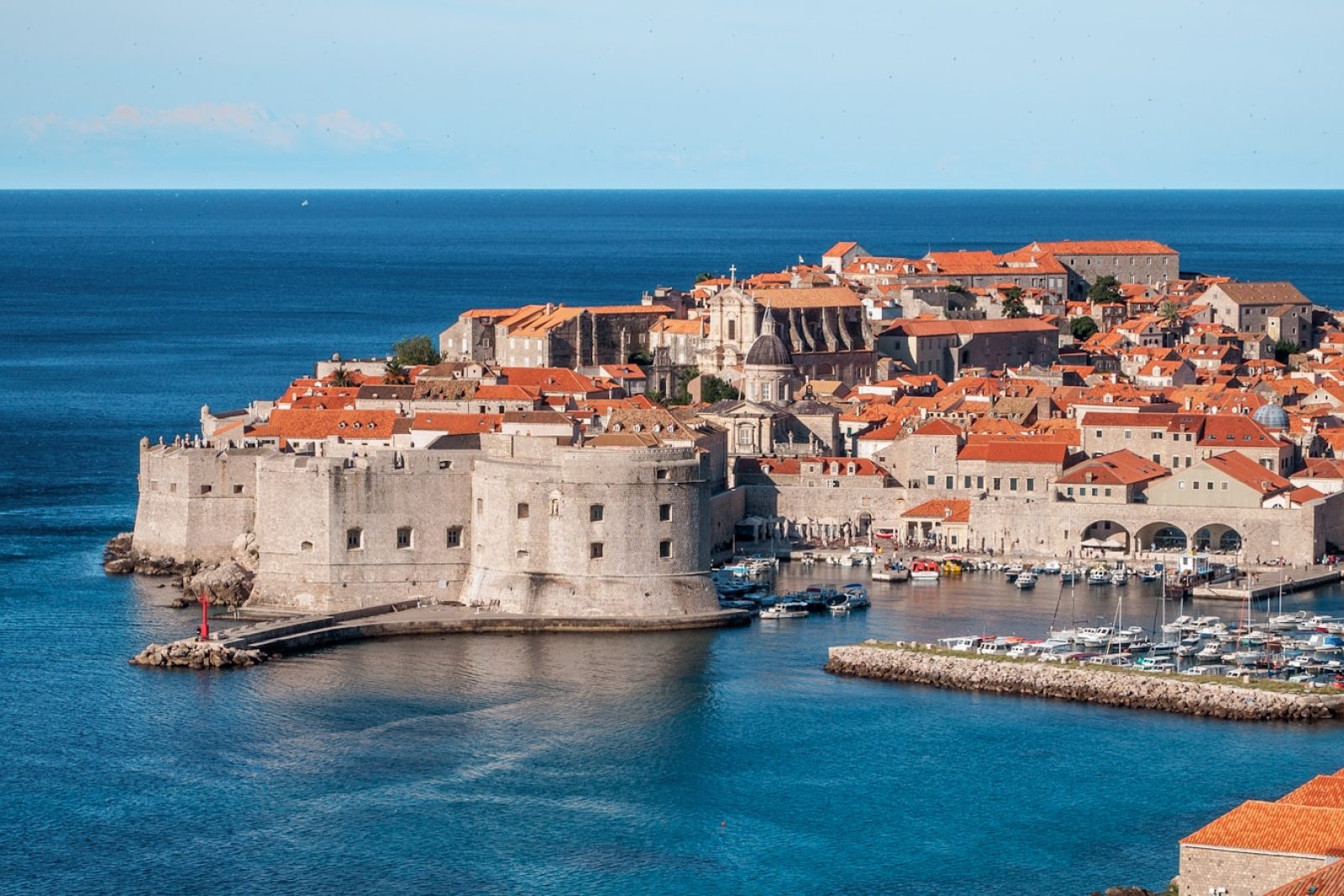


Croatia usually gets boiled down to Dubrovnik, and Dubrovnik down to a single photo of the city walls. In reality, the strongest impression is often left not by the walls but by a national park three hours away and a ferry out to an island. What follows is not a checklist but a guide to what to see in Croatia along the coast and inland, when to go, and where the crowds are waiting, the kind you are better off preparing for in advance. Since 2023 the country has been in the Schengen zone and on the euro, so the logistics for Ukrainians are simpler here than they might seem.
Dubrovnik amazes from the walls, but not at noon
The old town of Dubrovnik is a fortress above the sea, and it looks its best from the walls themselves. The walk along them runs roughly two kilometres in a full loop, in places up to 25 metres high, and this is where those red rooftops open up, the ones you have seen on every postcard. In 2026 a wall ticket costs around 40 euros for an adult, making it the most expensive attraction in the country, so go up deliberately, not just in passing. The same price includes Fort Lovrijenac on the rock nearby, and that one is worth not skipping.
The main problem in Dubrovnik is not the price but the crowd. For years the city has topped European overcrowding rankings: at peak there are up to 27 tourists per resident, and the city has already capped cruise ships at two per day. There is only one practical takeaway. Do the walls either at the eight in the morning opening or toward evening, when the heat and the ships thin out. At midday in summer you will cover those same two kilometres in a queue, in full sun, without a scrap of shade.
Partner links: booking through them supports the blog at no extra cost to you.
Dubrovnik as King's Landing
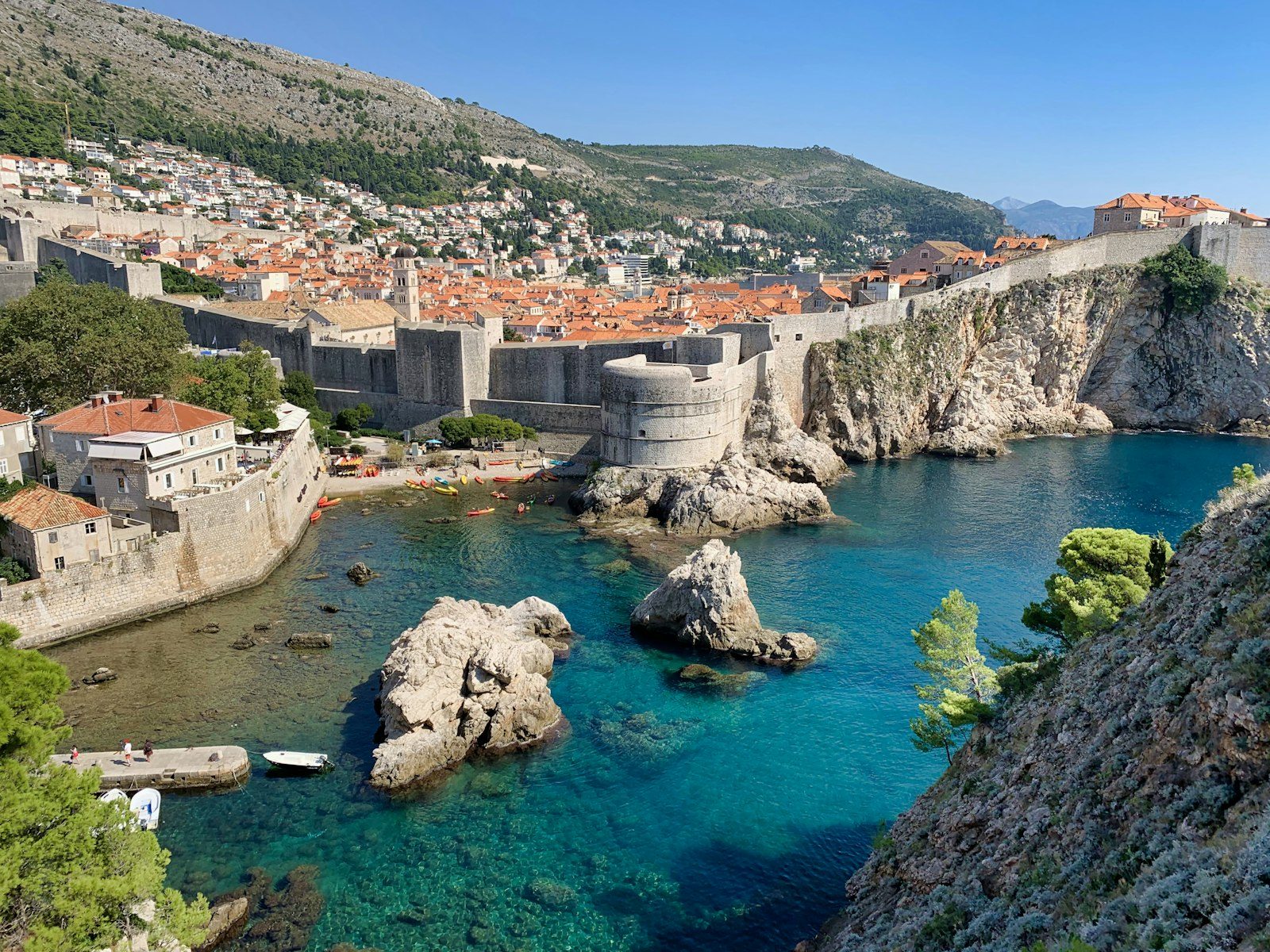
If you have watched Game of Thrones, you will recognise half the city without a guide. Dubrovnik played King's Landing from the second season on: Fort Lovrijenac was the Red Keep, the Jesuit Stairs by Gundulic Square were the very same “walk of shame,” and the capital's gardens were filmed in the Trsteno Arboretum, half an hour to the north. Lokrum Island, across from the old town, appeared in the series as the city of Qarth, and a small boat runs there. Game of Thrones tours are sold on every corner, but you can easily do this route yourself with a map.
Split lives inside a Roman palace
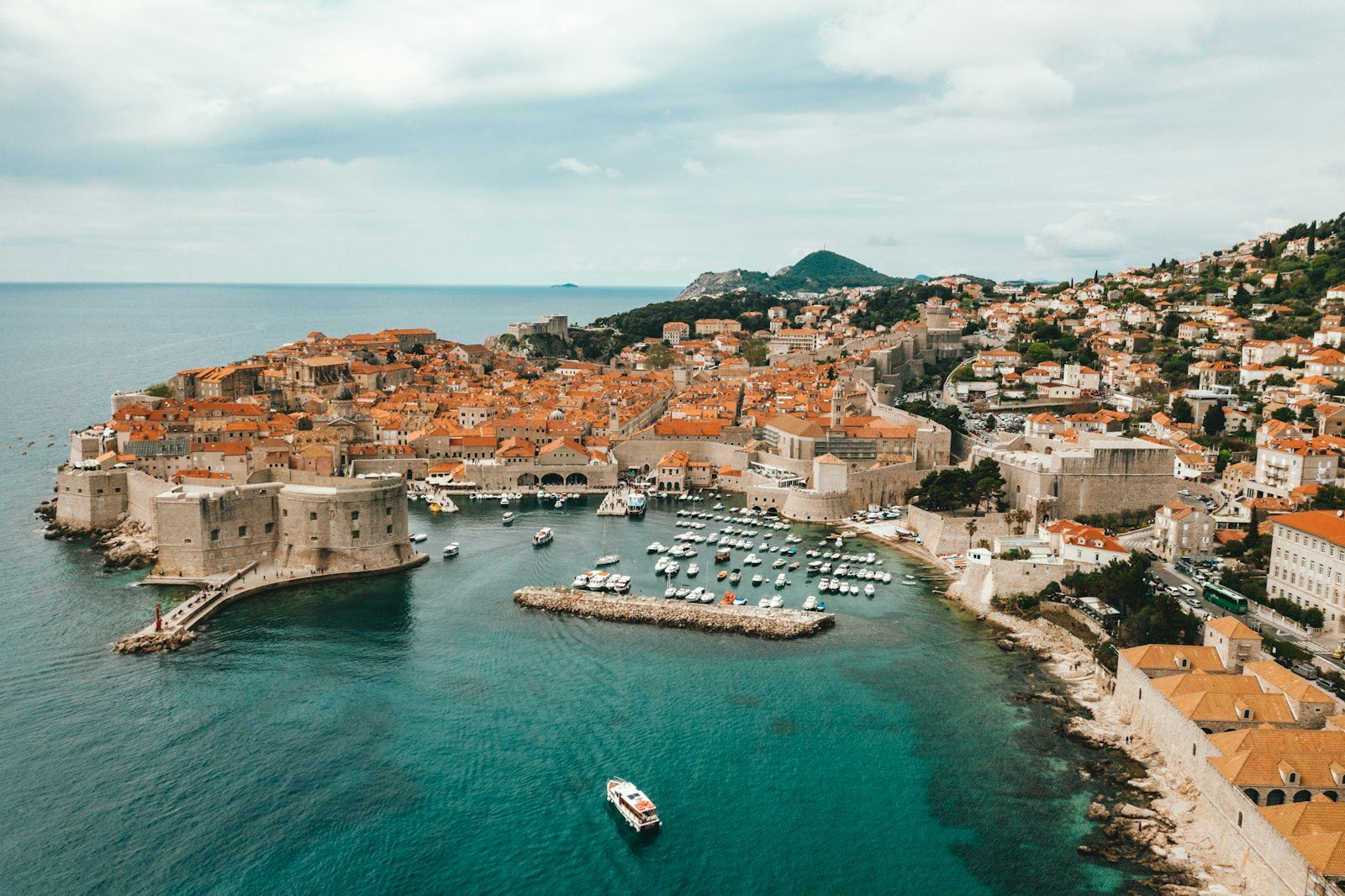
Split is that rare case where antiquity is not fenced off behind a museum but right under your feet. At the heart of the city stands Diocletian's Palace, which the Roman emperor built for his old age around the year 305. This is no ruin behind a rope: people still live inside the walls of the complex, which covers about 30 thousand square metres, cafes, shops and a market are at work there, and the palace itself makes up half of the old town. UNESCO added historic Split to its list in 1979, and in seventeen centuries the quarter has never once stood empty. Wandering the palace lanes is free; only certain sites inside, such as the cathedral and the cellars, charge admission. Come here in the evening, once the day tours have driven off, and the colonnaded courtyard sounds entirely different.
The Plitvice Lakes: when to go and why the ticket “floats”
The Plitvice Lakes are the main reason to leave the coast and head inland. This is Croatia's oldest national park, founded back in 1949, and a UNESCO site since 1979: sixteen lakes of varying colour, linked by cascades that keep building themselves out of limestone tufa. The park's tallest waterfall, Veliki Slap, stands at 78 metres and is the highest in the country.
The ticket price here is not fixed but depends on the season, and the difference is enormous. In summer, from June through September, an adult ticket costs around 40 euros; in the shoulder season (April, May, October) around 23; and in winter around 10. At peak times a daily discount applies: entry after 4 p.m. is noticeably cheaper. The ticket already covers the electric boat across Lake Kozjak and the panoramic train, with no extra charge for either.
The thing that wrecks the plans of the unprepared: in season the park admits a limited number of people each hour, and the morning slots sell out days ahead. Buy your ticket online in advance and take the earliest entry, otherwise you will either not get in at all or shuffle along the wooden walkways in a solid stream of people. And one more honest warning: you cannot swim in the lakes themselves, this is a nature reserve, not a beach.
Krka, if you want water and fewer crowds
Krka National Park is often taken as a substitute for Plitvice, since it sits closer to the coast and to Split. Its calling card is the Skradinski Buk waterfall, a wide cascade that people once travelled to specifically to bathe under the streams. Here is where outdated advice hides a trap: swimming near Skradinski Buk was banned back in 2021 in order to protect those same tufa terraces. You can still swim in the park, but only in a few designated spots (Roski Slap, Stinice, Pisak) and only from June through September. So if your plans include “a swim under the waterfall at Krka,” you will have to update them.
The islands begin with a ferry
Croatia's coast counts more than a thousand islands, and the most popular ones are served by ferries and high-speed catamarans run by the Jadrolinija company. It is worth understanding the difference in advance. A car ferry carries your vehicle but runs slower and does not always dock right in town. A catamaran takes passengers only, moves faster and drops you straight in the centre: the Hvar line, for example, delivers you to the old town, and for a foot passenger a ticket from Split costs around 6 euros.
Hvar is the sunniest and loudest of the large islands: a Venetian square, a fortress above the harbour, and a nightlife the neighbouring islands do not have. If you want quiet, take Vis or Korcula. In summer the morning catamarans can draw a queue, and car ferry places sell out at peak, so plan your trip to the islands rather than heading off on a whim.
Istria and Rovinj are a different Croatia
The northern Istria peninsula feels more like Italy than the Balkans, and that is no accident: Venice held sway here for centuries. Rovinj, the region's signature postcard, is an old town on a headland with the Church of Saint Euphemia on the hill, narrow lanes and a sunset over the Adriatic. Unlike Dubrovnik, the cruise giants barely call here, so the crowd is a different one. Istria is also a food region: they harvest truffles, press olive oil and make wine here, and dinner is often more interesting than the sight itself. Let us dispel a myth right away: Game of Thrones was not filmed in Rovinj, that is a common mix-up, so come here for the calm and the food, not for the series.
What and where to see: a short map
| Place | What to see | The catch |
|---|---|---|
| Dubrovnik | City walls, old town, Game of Thrones locations | Wall ticket around 40 euros; go in the morning or evening |
| Split | Diocletian's Palace, the Riva waterfront | Wandering the quarter is free, only the cathedral and cellars charge |
| Plitvice Lakes | 16 lakes and cascades, Veliki Slap 78 m | Book online in advance, morning slot; no swimming allowed |
| Krka | Skradinski Buk waterfall | Swimming only in permitted spots and only in summer |
| Hvar and the islands | Beaches, Venetian towns, nightlife | The Jadrolinija catamaran is faster than the car ferry |
| Rovinj, Istria | Old town, Church of St. Euphemia, truffles | Fewer crowds and great food; the series was not filmed here |
A coastal route and a little practical detail
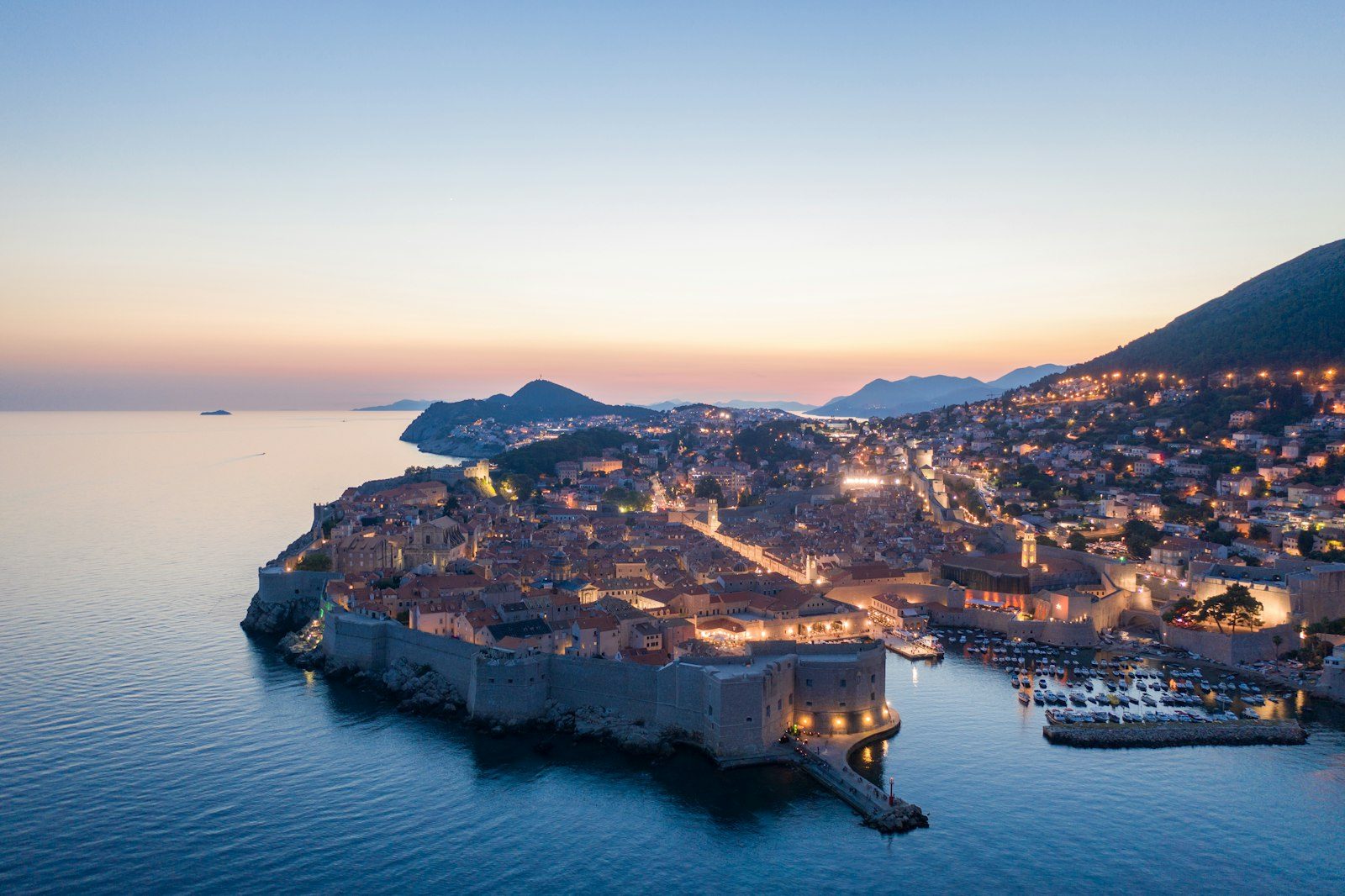
Croatia is convenient because almost everything is strung along one road that follows the sea, so a route is built from north to south or the other way round. A workable backbone for a week looks like this:
- Istria and Rovinj at the start, if you fly in via Zagreb or Pula.
- The Plitvice Lakes as a stop between the mainland and the sea.
- Split as a base for the palace and the islands (Hvar, Vis, Korcula).
- Dubrovnik at the finish, with a day trip to Krka along the way.
A few practical points. Since 2023 Croatia has been in the Schengen zone and on the euro, so citizens of Ukraine with a biometric passport do not need a separate visa within 90 days, just as in the rest of the zone, and everything is paid in euros. The easiest way to get around is a rental car, because the coast is stretched out and public transport between the small towns is sparse. Peak season is July and August: the warmest sea, but also the highest prices, the longest queues and sun-baked stone instead of shade. The smartest window is late May, June and September, when the sea is already or still warm and the crowds are noticeably thinner.
Where to begin, specifically for you
If you are going to Croatia for the first time, do not try to cover the whole coast in a week: take Split with the islands plus one national park and do not rush. If you have already seen Dubrovnik and Plitvice, next time turn off toward Istria and the smaller islands, where the country is quieter and tastier than its showpiece version. And one thing holds for any option: everything worth seeing here happens either early in the morning or late in the evening, because between those two windows the shores belong to the cruises and the midday heat.