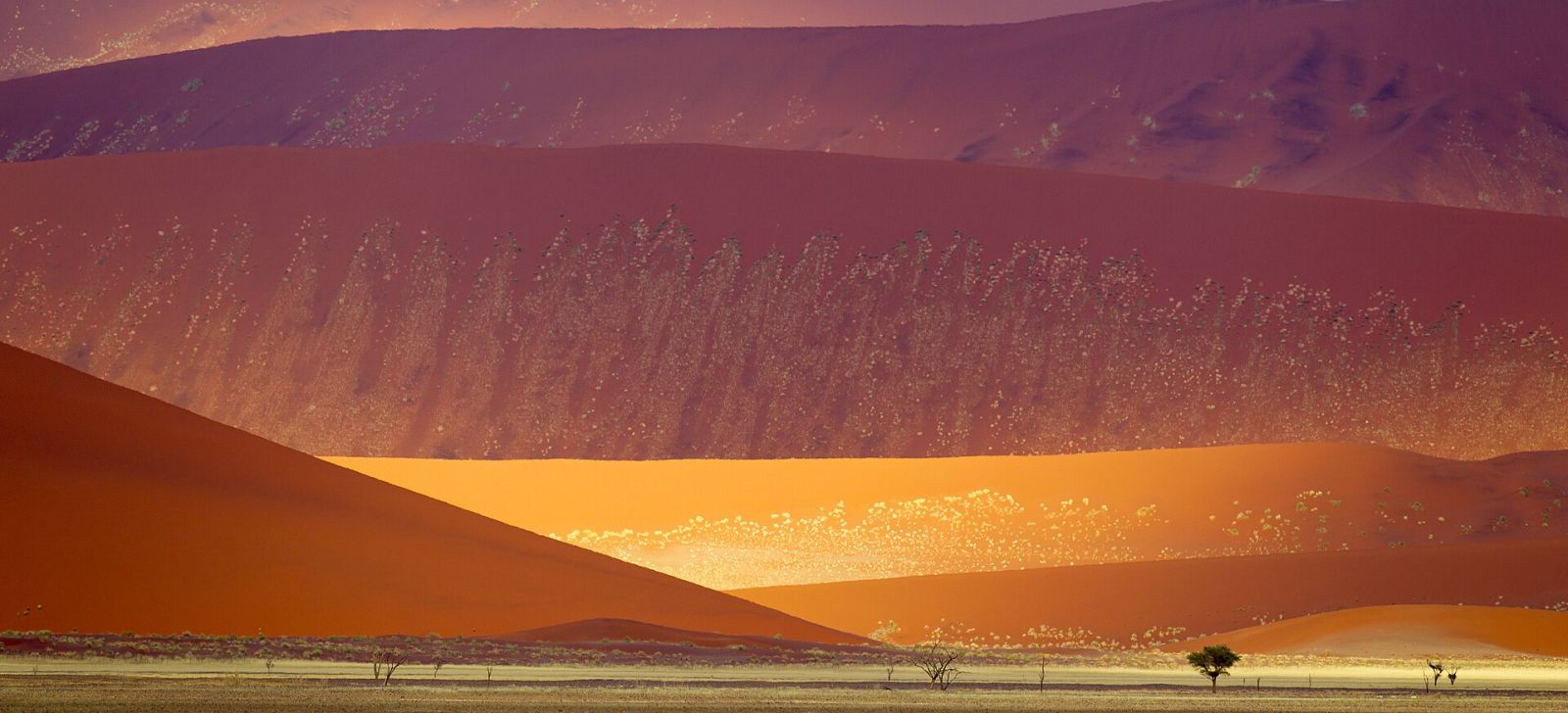
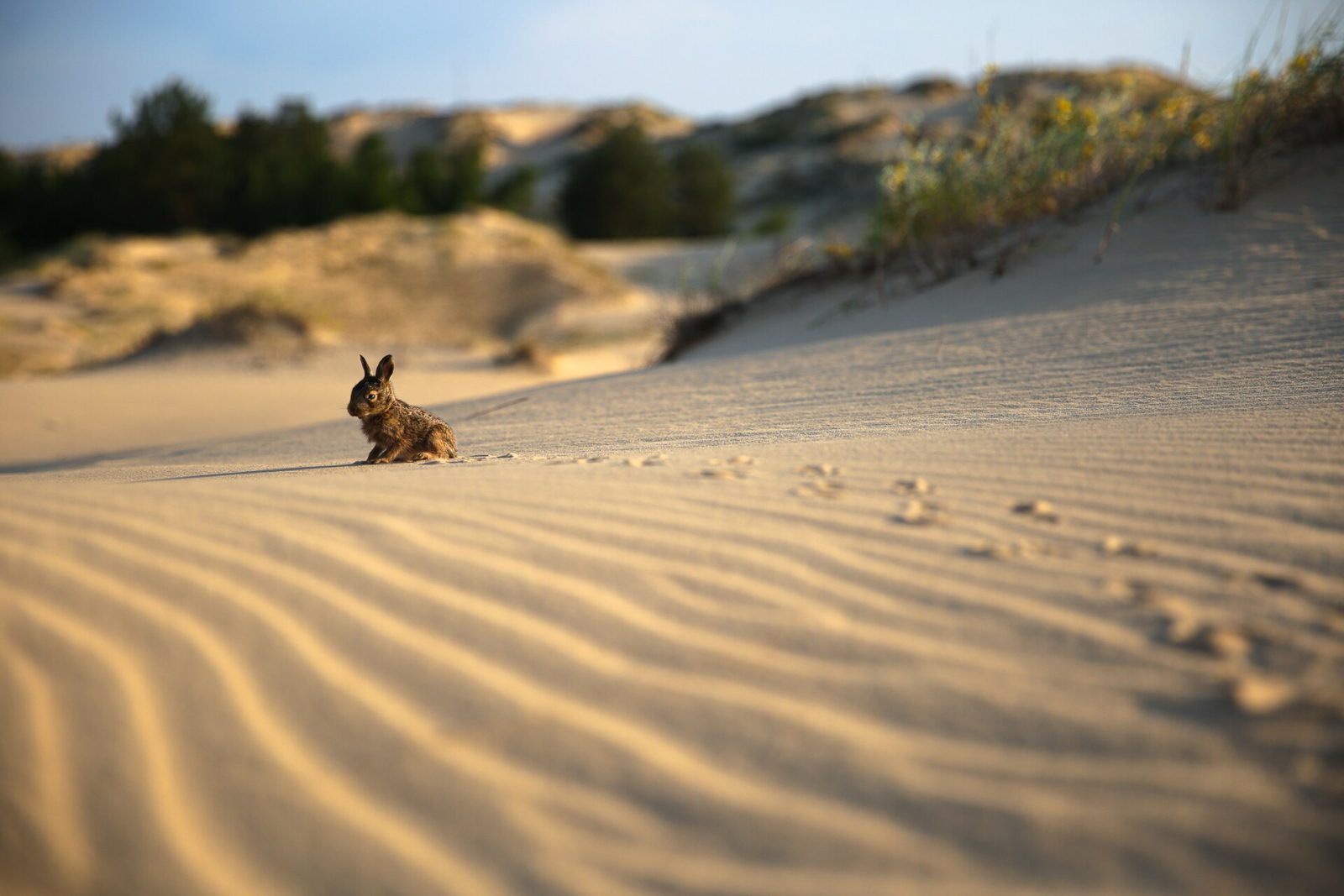
The Oleshky Sands are a field of sand dunes in Ukraine's Kherson region, spanning roughly 160 square kilometres and counting as one of the largest deserts in Europe. The twist is that it is almost man-made: a century ago forest grew here and flocks grazed, and the dunes, some as tall as a two-storey house, piled up only after people stripped the sand of its green skin.
Locals sometimes call this place Arabia on the Dnipro, and on a scorching August noon the comparison feels fair. The sand is the real thing here, loose, hot, rippled into crests that the wind redraws every single day.
What kind of desert is this, and why is it here?
Geologically the sand sits on an ancient Dnipro terrace, sediment left by the river and glaciers thousands of years ago. For a long time vegetation held it in place: steppe grasses first, then a pine forest. The sand never went anywhere. It was simply buttoned down by roots.
Those buttons came undone in the 18th and 19th centuries. As settlers developed the region, the forests were felled for building and firewood, and the steppe was turned over to grazing. Fine-fleece sheep, kept here by the tens of thousands, cropped the grass down to bare ground. After that, simple physics did the rest: wind picked up the exposed sand and began sculpting dunes. That is how the Oleshky Sands grew on former pastureland into what we see today.
In the 20th century people tried to tame the desert by reversing the cause, planting pines again. Those belts held back part of the field, so open dunes now alternate with man-made pine stands. But the core stayed bare.
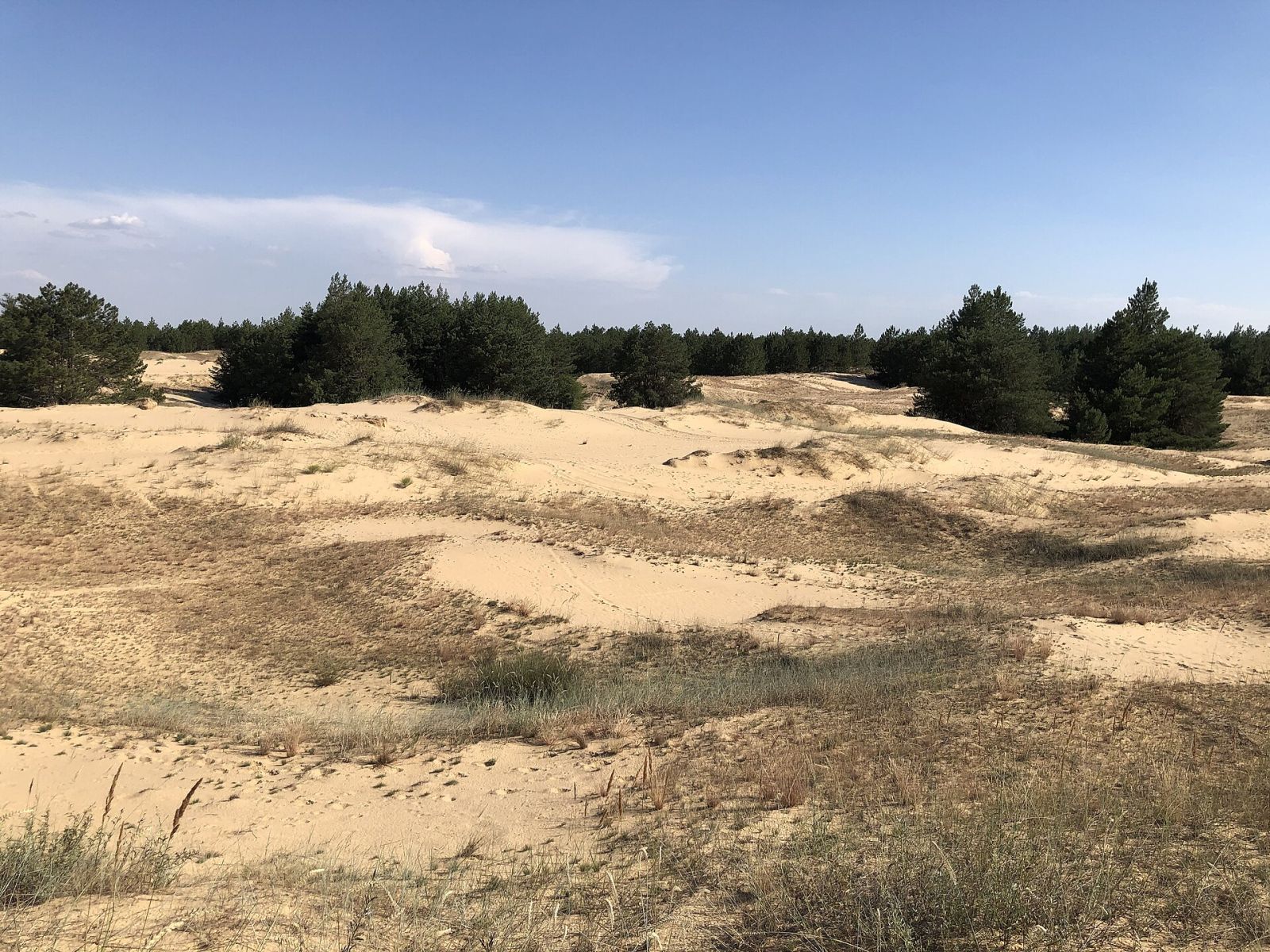
What the dunes look like up close
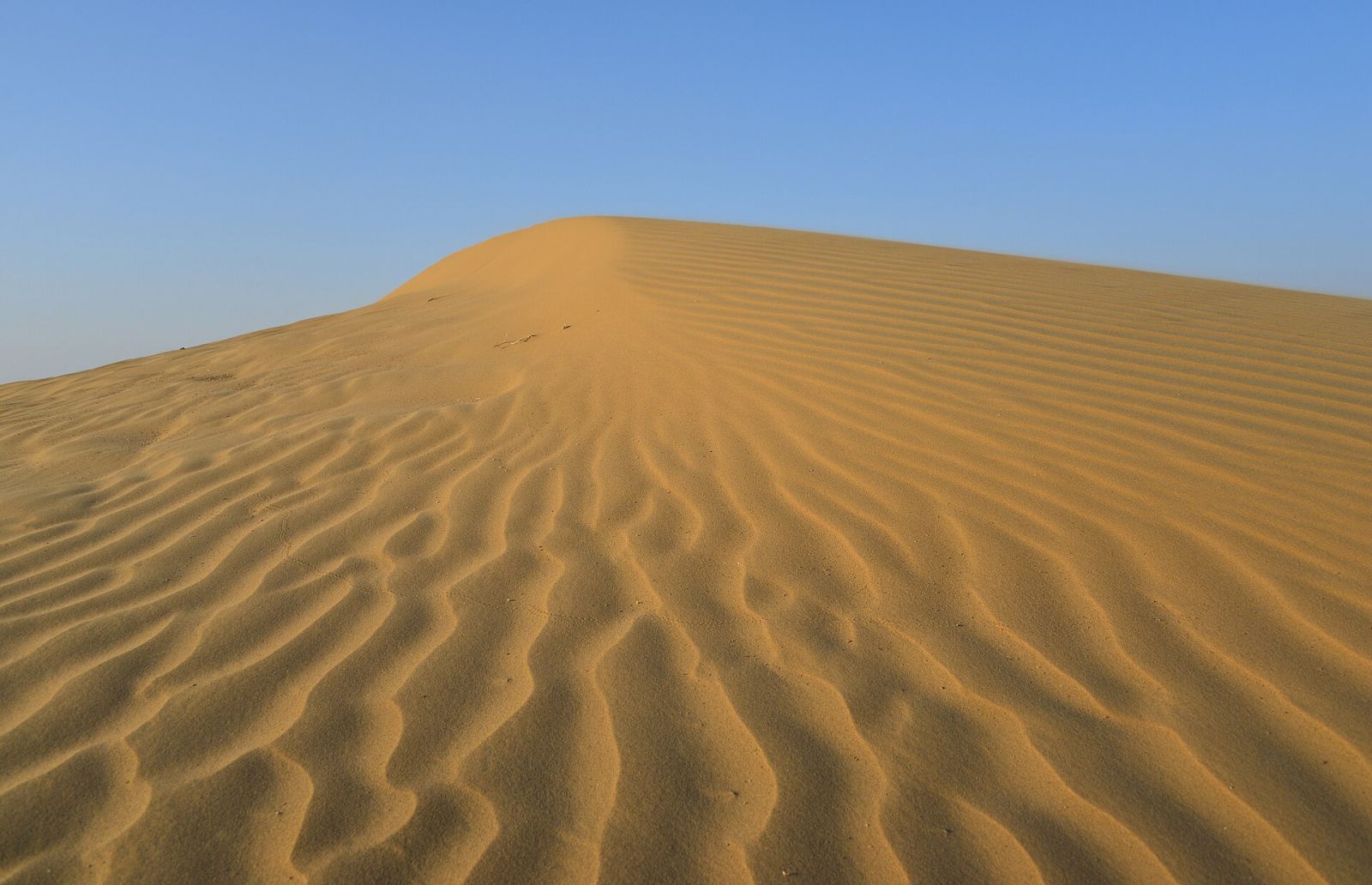
The tallest dunes rise about 5 metres, and some ridges climb higher still. The wind builds textbook crescent barchans, with a gentle windward slope and a steep leeward face, exactly like the diagram in a geography book. After a strong blow the crests turn knife-sharp and the surface fills with fine ripples.
The colour of the sand shifts through the day. In the morning it reads pale yellow, almost grey, and at sunset it deepens into honey-orange. That is why photographers aim for the golden hour here, when long shadows pick out every ripple.
The microclimate deserves its own note. The sand heats up more than the surrounding steppe, so in summer a visible shimmer hangs over the dunes, and the gap between day and night temperatures runs wider than elsewhere in the region. Rain soaks straight into the sand, which is why you won't find puddles even after a downpour.
Is it a real desert, or just a photo op?
Here it pays to be honest. The Oleshky Sands are not the Sahara with an endless sea of dunes to the horizon. The field is split into several patches, with pine groves, islands of grass and, in places, human traces between them. Botanists even argue over whether desert is the right word at all, since rainfall here is higher than in a classic desert and vegetation holds part of the area.
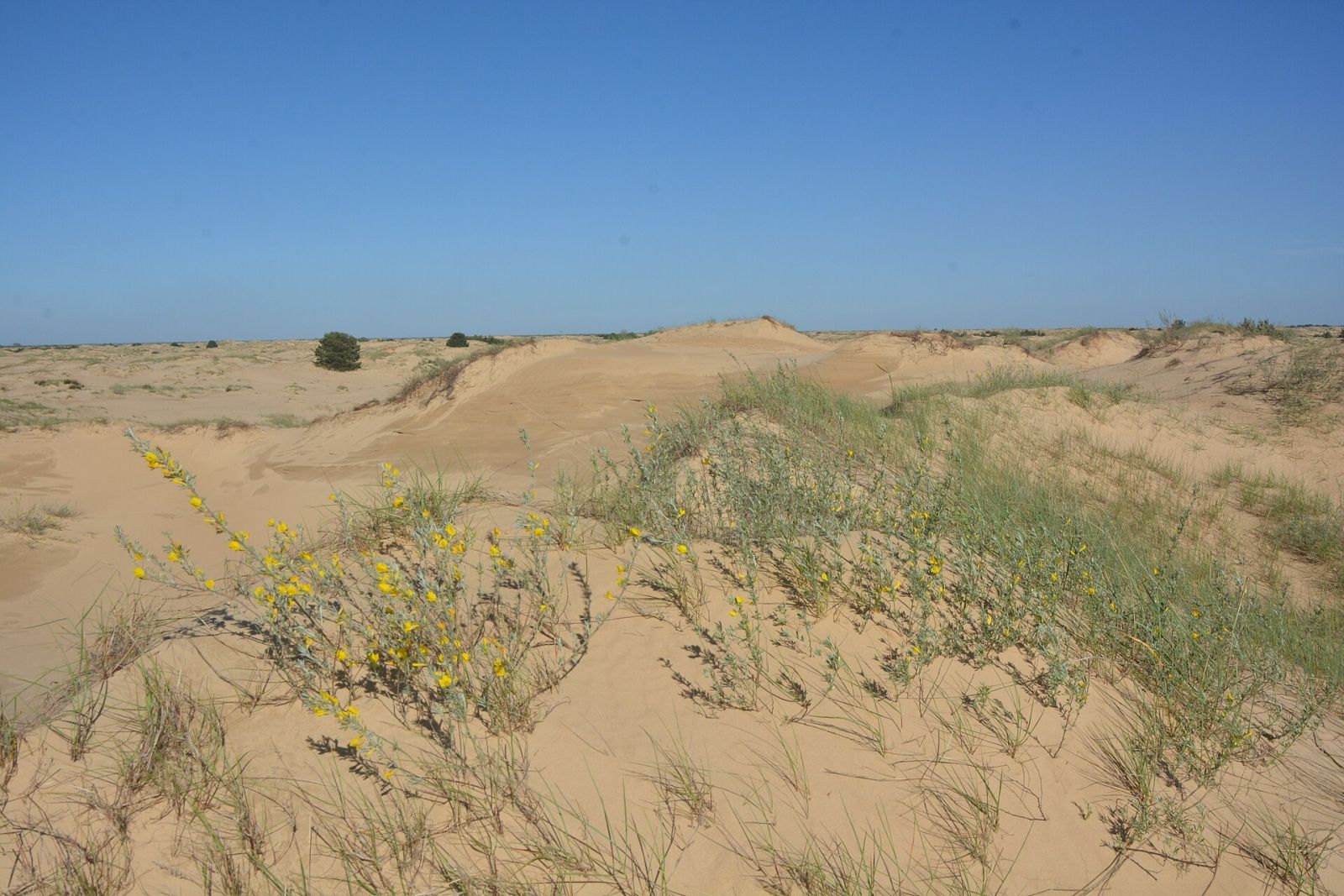
And yet the feeling is genuine. When you stand in the middle of an open dune with nothing but sand, wind and not a single tree for hundreds of metres around, your brain reports honestly: this is a desert. Just a European one, compact and green at the edges.
The national park and the access question
A large share of the field lies within the Oleshky Sands national nature park, created to preserve this unusual landscape and the creatures in it. And there is surprisingly much life for supposedly dead sand: lizards, snakes and heat-adapted insects, with birds nesting along the margins.
Now the important, less pleasant part. Historically part of the desert overlapped with a military training ground, so access was never fully open and certain zones were closed as a matter of principle. And since the start of the full-scale war, the Kherson region has been a combat area, which makes safety the first question here, not sightseeing.
So read the situation realistically. When you plan a trip, always check the region's current safety and access status against official sources and local authorities. What follows describes the peacetime way of visiting, which the region will hopefully return to.
How to visit: on your own or with a tour?
In calmer times most people reached the sands with an organised group, and there are good reasons for that. The field is large, landmarks inside are few, the tracks are sandy, and the most striking dunes are nowhere near the paved road. On top of that, a guide who knows the route handles the access question for the restricted zones more easily.
| Option | Best for | Notes |
|---|---|---|
| Day sightseeing tour | First-timers without their own transport | The guide handles logistics, photo spots and access |
| Jeep tour across the dunes | Anyone wanting a thrill and a deeper run into the field | A 4x4 crosses sand where a regular car would bog down |
| Independently | Experienced travellers with their own logistics | A regular car won't get far in, so bring water, GPS and spare fuel |
If you do go on your own, leave the car on firm ground at the edge of the field and walk in from there. Driving an ordinary sedan into the sand is a near-guaranteed way to get stuck.
When to go?
The most comfortable season is late spring and early autumn. In May and September the sand isn't yet, or no longer, a frying pan, the air is warm and the sun is far less vicious. That is when the landscape works at full strength and the walk doesn't drain you.
| Season | Weather | Verdict |
|---|---|---|
| Spring (Apr-May) | Warm, green edges still vivid | One of the best choices |
| Summer (Jun-Aug) | Blistering, sand red-hot, heat haze | Only early morning or at sunset |
| Autumn (Sep-Oct) | Soft sun, pleasant shadows | Ideal for photos and walking |
| Winter | Windy, cold, bare | Atmospheric but uncomfortable |
In summer the only sensible window is the first hours after sunrise and the last hour before sunset. At midday an open dune under direct sun is a serious strain on the body, and there is no shade to duck into.
What to bring
- More water than you think you need. The desert dries you out fast, and there are no sources inside.
- A hat and sunscreen, it's easy to burn here even when it isn't especially hot.
- Closed shoes, hot sand scorches bare feet and fine grains work their way into trainers.
- Sunglasses, on a windy day the sand flies straight at your face.
- A charged phone with an offline map, since there are few landmarks inside.
An honest wrap-up
The Oleshky Sands are a case where nature and people together made something unexpected: a genuine desert a couple of hours from the Black Sea. Yes, it is smaller and more domestic than the Asian giants, and access right now is a safety issue rather than a tourist one. But once the Kherson region returns to peaceful life, these dunes will remain one of the strangest landscapes you can see anywhere in Ukraine. Aim for the cool shoulder seasons, pack extra water, and always check the current situation before you set off.