The thing to know about the most beautiful waterfalls in the world comes from a calendar, not a photo: the same cascade roars as a wall of water in its right month and shrinks to thin trickles in the wrong one. And here's the fact that trips people up: the tallest waterfall on the planet and the most powerful one are completely different places on different continents. Below are seven genuine waterfalls, each with its own hook: where it is, what makes it special, when to go for full water, how to reach it, and the honest catch, because none of them is flawless.
The list is deliberately varied. A vast arc of more than two hundred cascades, a single ribbon of water nearly a kilometre tall, a tidy Icelandic wonder an hour from the capital. One thing ties them together: each has its correct season, and getting that wrong means seeing an entirely different waterfall.
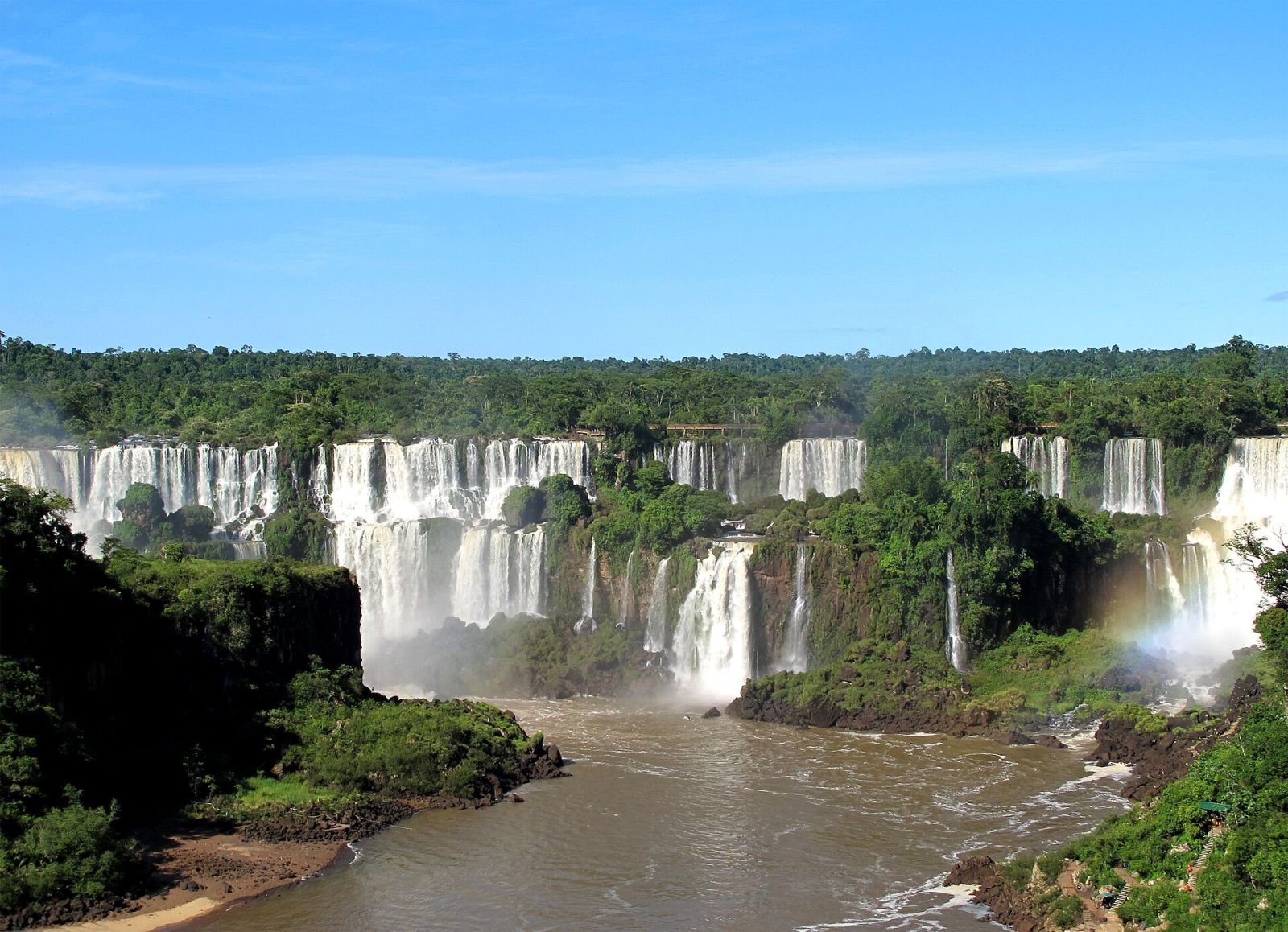
Iguazu, Argentina and Brazil: not one waterfall but nearly three hundred
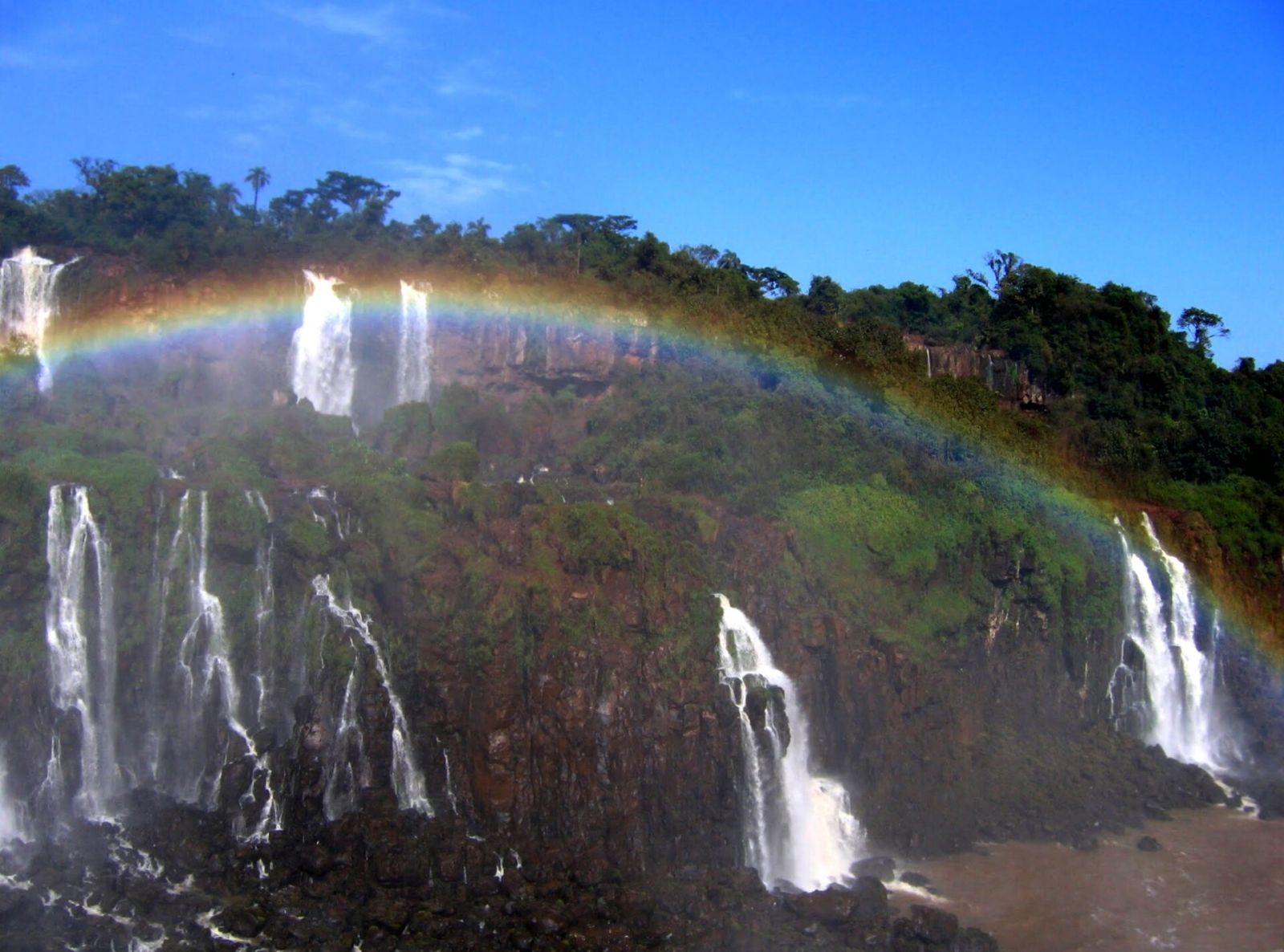
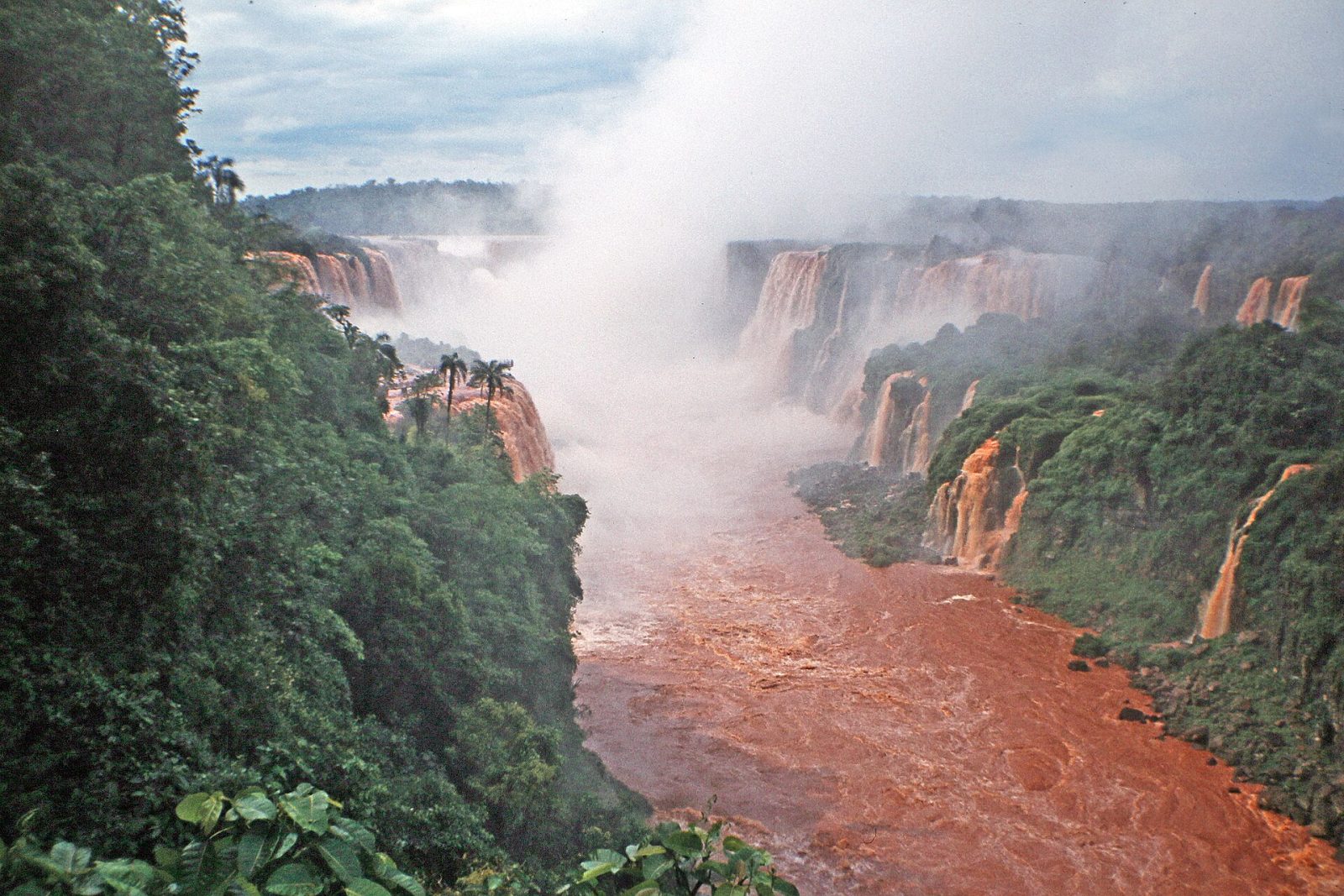
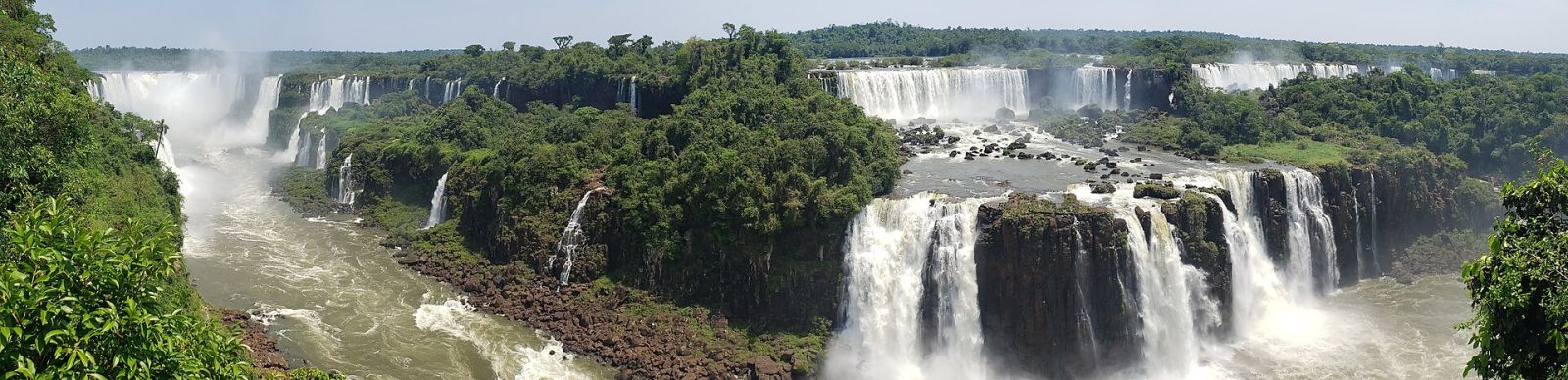
This isn't a single sheet of water but a whole system of roughly two hundred and seventy separate cascades strung out over almost three kilometres along the border of two countries. The heart of Iguazu is the Devil's Throat (Garganta del Diablo), a horseshoe chasm where the water crashes down with such force that a permanent cloud of spray and a rainbow hang above it. You need to see it from both sides in turn: the Argentine side gives you closeness, with metal walkways that push you almost into the water, while the Brazilian side gives you the panorama of the whole arc. You get there via Puerto Iguazú (Argentina) or Foz do Iguaçu (Brazil) airports. Full water runs November to March, the local summer. Honest catch is double: covering both banks takes at least two days and effectively a border crossing, and at peak season the walkways move in one solid stream of people.
Victoria Falls, Zambia and Zimbabwe: the largest sheet of falling water
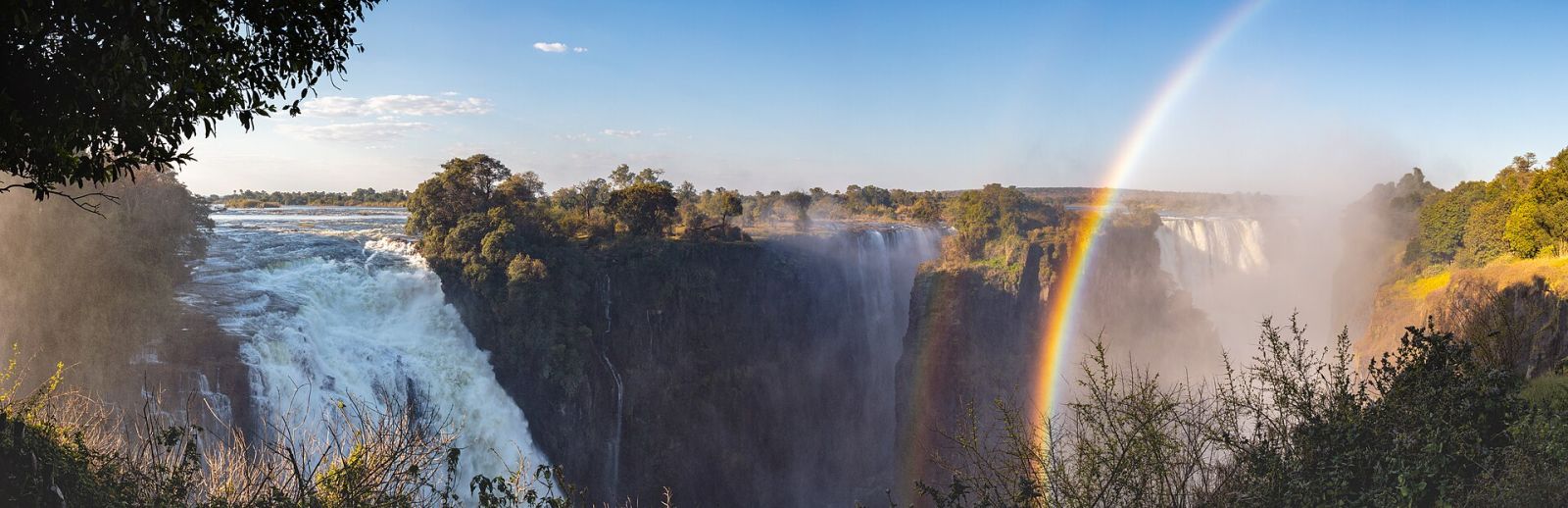
The local name Mosi-oa-Tunya translates as "the smoke that thunders," and that's an exact description: a solid wall of water about a kilometre and a half wide drops off a hundred-metre ledge, and the column of spray is visible from many kilometres away. By single sheet of falling water, Victoria has no rival. The subtlety is that "more water" doesn't mean "better views" here. During the flood after the rainy season, roughly February to May, the spray rises so thick that the falls themselves vanish into a white haze and you're more likely to get soaked than to see anything. In low water, though, around September to December, the riverbed is exposed and on the Zambian side the Devil's Pool opens, a natural stone bath right on the lip of the cliff. You reach it from Livingstone (Zambia) or Victoria Falls town (Zimbabwe). Honest catch: there is no perfect month, you have to choose between power and visibility.
Niagara Falls, Canada and USA: short, but deafening
Niagara is modest in height, barely over fifty metres, which is exactly why it gets underrated. The secret is volume: a colossal mass of water passes over the Horseshoe Falls every second, and the low rumble makes everything around it vibrate. The best view is the Canadian side, where you can see the whole arc, and a tour boat pushes right up to the base, where the falls drench you in mist from head to toe. It works year-round: in summer they light it at night and set off fireworks, in winter the edges take on strange ice sculptures. It's easy to fly in via Toronto or Buffalo. The catch is predictable: the town around it has been turned into one long amusement strip with casinos and neon, so don't expect wilderness, this is the most touristy waterfall on the list.
Angel Falls, Venezuela: the tallest waterfall on the planet
Here's the record holder, almost nine hundred and eighty metres tall, a ribbon of water plunging off the flat top of the Auyán-tepui table mountain in Canaima National Park. It falls for so long that around the two-thirds mark the water has already dispersed into mist, which the wind carries off to the side, so what reaches the base is more of a drizzle than a torrent. It's named after the pilot Jimmie Angel, who spotted it from his plane in the 1930s. And here the water decides everything: in the dry season the ribbon can almost disappear, so you have to go in the rains, roughly June to November, when the rivers are full. The logistics are the hardest on the list: first a flight to Canaima, then several hours by motorboat up a river (navigable only in high water), plus a hike through the jungle. The honest catch isn't only the journey: travel to Venezuela needs careful planning because of the unstable situation in the country, so check current conditions and safety before you go, without fail.
Gullfoss, Iceland: two drops and a canyon
The "Golden Falls" on the Hvítá river is that rare case where beauty asks nothing of your logistics. The river tumbles over two wide steps set at an angle to each other and vanishes into a narrow canyon, so from a distance it looks as if the water is simply falling into the ground. Gullfoss is a classic stop on the Golden Circle, the country's most popular route, so you can reach it in a rental car in a little over an hour from Reykjavik. It works year-round: in summer a rainbow almost always hangs over it, in winter ice grips the edges and the whole scene changes. The catch is double: because it's so accessible it's always busy, and the canyon throws icy wind and spray at you, so warm waterproof clothing is a must even in summer, and the paths can be slippery in winter.
Kaieteur Falls, Guyana: a single leap as tall as a skyscraper
The least known hero on this list and, at the same time, one of the most striking. Kaieteur drops in a single unbroken plunge of about two hundred and twenty metres, and for its combination of height and volume it's one of the most powerful single-drop waterfalls on the planet. It stands in the heart of Guyana's untouched rainforest, on the Potaro river, without the souvenir stalls and crowds that ring Niagara or Gullfoss. That wildness is exactly why you'd go. It runs full during the rainy seasons, roughly May to August and November to January. The catch is obvious: it's hard and expensive to reach, and practically the only realistic option is a chartered small-plane flight from Georgetown for the day, because the overland route takes many days through jungle. There's almost no infrastructure at the falls.
Plitvice Lakes, Croatia: not a waterfall but a cascade of sixteen lakes
This isn't one waterfall but a whole system: sixteen turquoise lakes joined by hundreds of large and small cascades that spill from one into the next down a limestone valley. The water takes on unbelievable shades from emerald to azure thanks to minerals and underwater algae, and the tallest cascade, Veliki Slap, drops from nearly eighty metres. You walk here on wooden boardwalks right above the water, through the forest, so the park is equally good in spring at full water and in autumn under golden leaves. It's easy to reach: about two hours by car or bus from Zagreb, Zadar or Split. There are two catches. First, in summer it's genuinely packed, entry tickets are timed, and the narrow boardwalks seize up in queues. Second, swimming in the lakes is strictly forbidden, it's a UNESCO reserve, so there's no cooling off in the heat.
When to go for full water: a quick comparison
The main thing to take away: waterfalls have no universal "best month," and what works for one will ruin the impression of another. In some places the flood reveals all the power, in others it hides the falls in spray. Here's a table so you don't have to scroll back through the text.
| Waterfall | Country | What makes it special | Water season |
|---|---|---|---|
| Iguazu | Argentina / Brazil | About 270 cascades, the Devil's Throat, views from two countries | November–March |
| Victoria Falls | Zambia / Zimbabwe | Largest sheet of falling water, Devil's Pool on the edge | February–May (power) / September–December (visibility) |
| Niagara Falls | Canada / USA | Short but colossal volume; lit up at night | Year-round |
| Angel Falls | Venezuela | Tallest waterfall on Earth (≈979 m) off a table mountain | June–November |
| Gullfoss | Iceland | Two drops into a canyon, a Golden Circle stop | Year-round |
| Kaieteur Falls | Guyana | One unbroken leap ≈226 m in wild rainforest | May–August, November–January |
| Plitvice Lakes | Croatia | 16 turquoise lakes and hundreds of cascades, boardwalks over water | April–June, September–October |
What these waterfalls share, and how not to waste the trip
Spotted the pattern? The most beautiful waterfalls in the world run on their own schedule, and water level decides more here than weather or crowds. Turning up at Angel Falls in a dry month, or at Kaieteur in low water, means seeing the shadow of the waterfall you flew halfway around the world for. So plan from the season first, and only then from the tickets.
- Water first, dates second. For Angel and Kaieteur aim for the rains, for Iguazu the local summer, while for Victoria you'll have to choose between power and visibility, because at full flood the falls hide inside their own spray.
- Budget extra transfers. The wildest waterfalls on the list, Angel and Kaieteur, are reachable essentially only by small aircraft and boat, so count both your budget and your travel time with a margin.
- Pack waterproofs. Around big water you always get wet, whether it's mist off the boat at Niagara or icy wind out of the Gullfoss canyon. Clothing and a phone case are not a minor detail.
In short, there's no single "waterfall number one," and the choice here is about the character of the trip rather than height in metres. Want a grand spectacle with minimal effort, head for Iguazu or Niagara. Drawn to raw wilderness without the crowds, your pick is Kaieteur and Angel. Dreaming of a beautiful scene an hour from civilisation, look toward Gullfoss and the Plitvice Lakes. The main thing is to pick one waterfall as the goal of the trip and tune your dates to its water, rather than trying to collect the whole list in a single holiday.