

Sadly, in this thing we call life, miracles don't come around often, but if watching a sea turtle nest hatch doesn't make you a believer, precious little else will.
Projeto Tamar, the Brazilian organization devoted to the fate of the country's sea turtles, usually tries to keep nest hatchings on the Fernando de Noronha archipelago under wraps.
Luckily, I have inside intel on this pristine slice of protected paradise in the Atlantic, sitting 326 miles off Brazil's northeastern coast.
Partner links: booking through them supports the blog at no extra cost to you.
My wife has worked in ecotourism at Brazil's best-kept secret for nearly two decades. She often gets word when a nest is about to open here, one of the few things I like to call a tropical Christmas.
Green sea turtle nests line the golden sands of Praia do Leão and the island's inland beaches from December through June. Tamar's biologists slowly ease their hands into the sun-baked sand (turtle nests sit about 1.5 feet down), as if unwrapping a delicate gift bundled in tissue paper.
After an incubation that involves dodging lizards, who consider the eggs a lovely snack, along with other natural enemies, hatchlings emerge no bigger than a poker chip. And that's when the magic begins!
One by one, these little reptilian soldiers battle the wind and the waves (not to mention the seabirds diving from above!), instinctively making for the ocean roughly 150 feet away. The wind slams into them like trailers in a hurricane, and the waves knock them off course and sweep them back to the start, as though they were trivial obstacles.
Win or lose, this parade of willpower, how on earth do they know how to do it, is one of the coolest things on Earth I've ever witnessed, even if only one or two out of a thousand make it into the water.
A Watery Eden
If you're not lucky enough to catch the spectacle of a turtle nest, don't worry. Waking up in Brazil's watery Eden, a postcard-perfect blend of sea and sand, deserted and undeniably gorgeous, is a privilege in itself.
Noronha is an expensive, hard-to-reach, and tightly restricted destination. Tourism here is capped at an average of 700 visitors a day.
Having visited the island more than a dozen times over the years, my favorite place to unwind is the eco-friendly Ecopousada Teju-Açu (Estrada da Alamoa, Boldró; doubles from $715).
There's no sea view here, a rarity on Noronha thanks to strict building limits. But the hotel's understated bungalows, clad in rich, sustainable hardwood and gathered around an intimate pool area ringed by lush jungle, leave no doubt that you've landed in a tropical utopia.
Visitors to Noronha typically take two must-do excursions in their first few days:
- A full-day buggy tour of the island to get your bearings and discover many of its 16 flawless beaches.
- A half-day boat trip in search of dolphins (Noronha and Oahu, Hawaii, are the only two places in the world where these dolphins live).
If you're anything like me, once you've figured out the lay of the land, you'll want to head straight back to one of the most idyllic beaches on the planet, the incomparable Praia do Sancho.
This crescent-shaped beach, tucked into a setting of Atlantic rainforest, can only be reached by a claustrophobic staircase that drops 230 feet down a volcanic cliff. That should tell you everything you need to know about how tough the trek is!
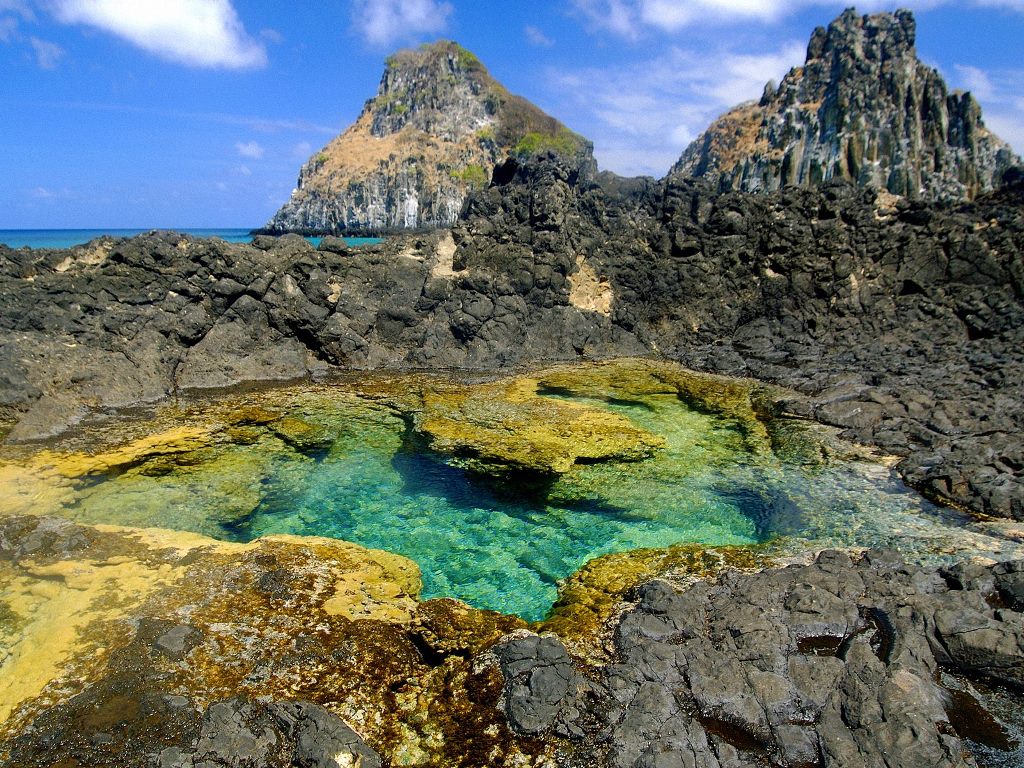
Spending a morning here, soaking up the sand, cooling off in the jade-colored cove, and hiking to a hidden waterfall (of course there's a hidden waterfall, but only in the rainy season), is pure bliss.
For lunch, I love the hilltop open-air restaurant Mergulhão (Praia do Porto; mains $26-56), overlooking the harbor on the other side of the island (Noronha's main road runs just 4.3 miles long).
The Mediterranean-Brazilian menu is one of the most inventive on Noronha, and the crispy fish stuffed with shrimp, hearts of palm, and coalho cheese is the perfect match for the view. And the cloth-filtered coffee with doce de leite? Another little miracle.
An Untouched Paradise
In the 18th century, the island of Fernando de Noronha was used as a penal colony. When it was decommissioned in 1988 as a former Brazilian military base, Brazil's environmental agency and UNESCO swept in, determined to preserve one of the last untouched islands on Earth.
Roughly 75% of the island has been declared a national park. Entering its boundaries, which is practically impossible to avoid while you're here, costs $62 for foreigners with a 10-day pass. The daily conservation tax starts at about $22 per person per day and rises after 14 days, to discourage longer stays. So paradise doesn't come cheap.
As I hop from beach to beach through the day, with Baía dos Porcos and Praia do Leão topping the list after Praia do Sancho, the absence of crowds is simply staggering.
Where is everyone? They're sipping caipirinhas and admiring one of Brazil's most beautiful sunsets from an improvised lookout at Forte Boldró, that's where.
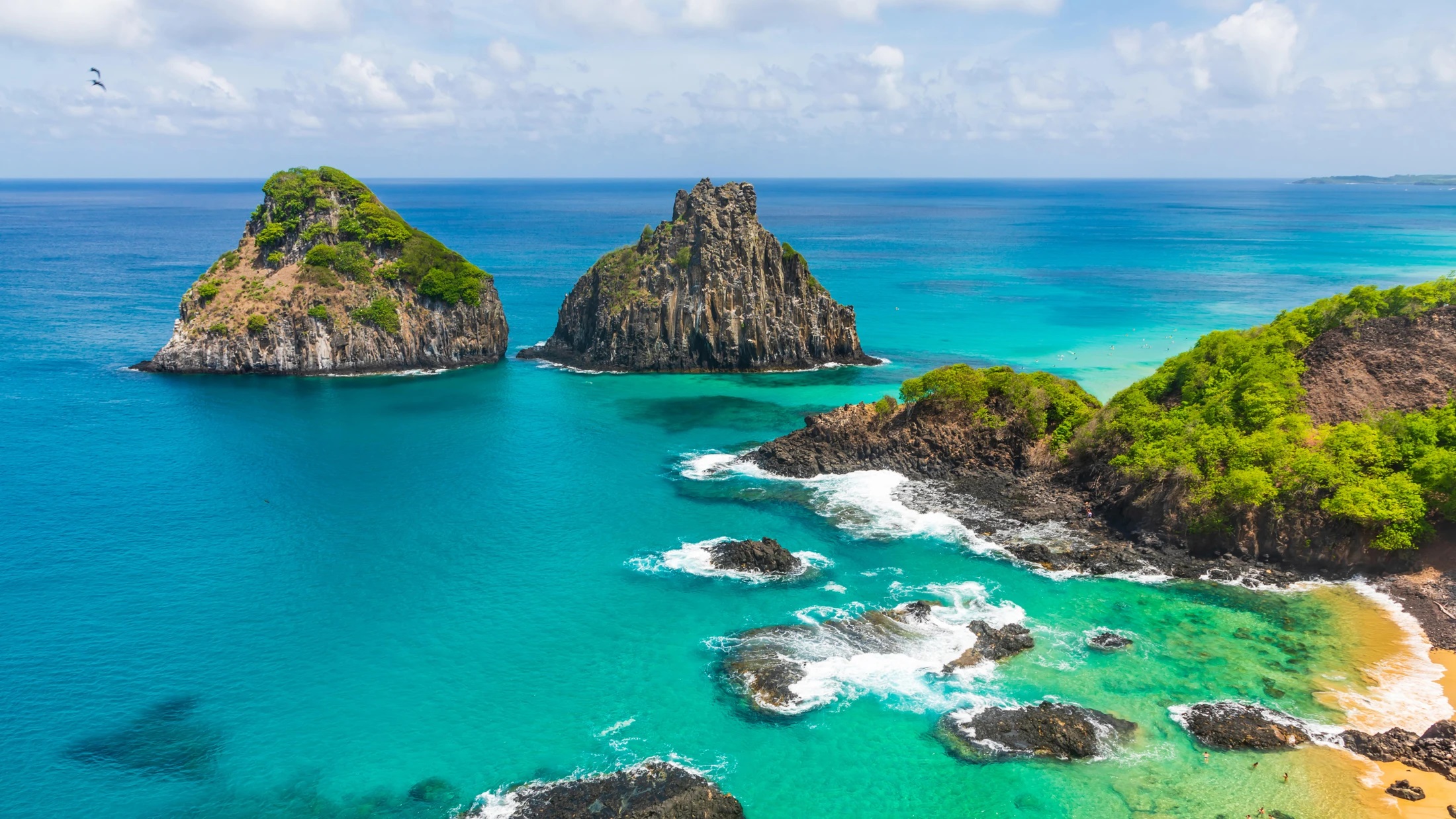
From here you get a view of Noronha's iconic volcanic formation Dois Irmãos ("Two Brothers"), twin volcanoes that rise from the sea like angelic sentinels in front of Baía dos Porcos. It's one of the island's most dazzling sights.
The nightlife is the one aspect of Noronha that leaves something to be desired. There are a handful of bars and open-air spots for a drink, but this is no place for after-dark revelry.
Instead, I prefer to focus on the food. Because of fishing restrictions, most of the seafood is brought in from the mainland, but that's hardly a consolation prize.
At the bistro Cacimba (Vila dos Remédios; mains $21-33), in the island's main village, chef Aurisélio Romão prepares Noronha's finest culinary creation: shrimp with okra and wild saffron over jackfruit rice. His fish and shrimp moqueca, a traditional seafood stew, is another showstopper.
Since Brazil has spent most of the past few years mired in recession and political turmoil, Noronha simply keeps doing what it does best: delivering, on the island of Noronha, one day in paradise after another.
Brazilians equate the island with paradise. It's the one thing all 207 million of them can agree on these days.