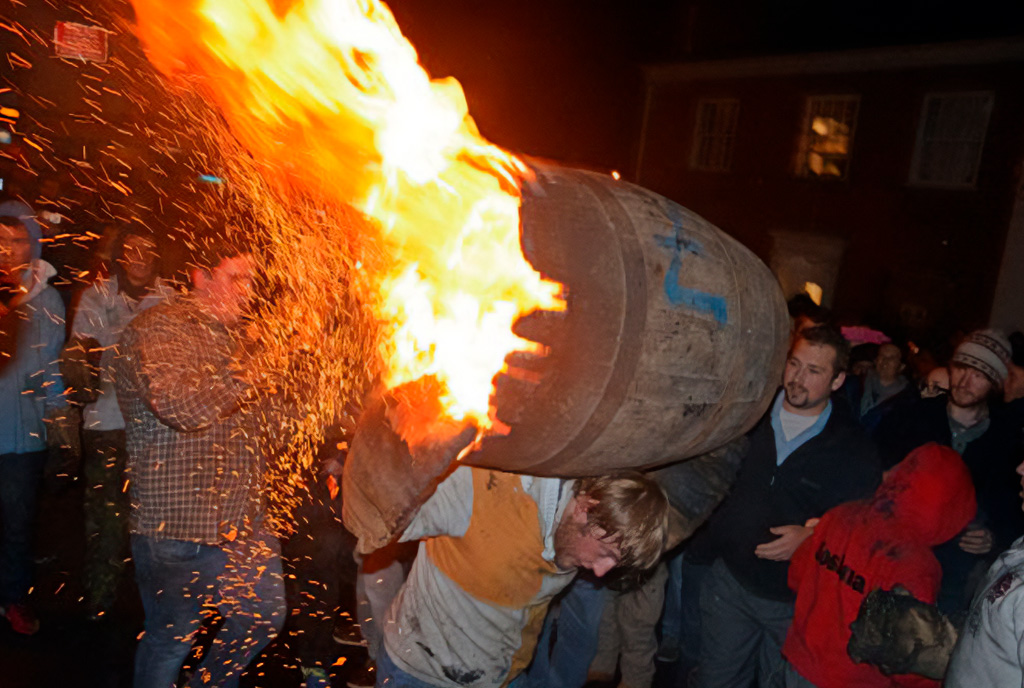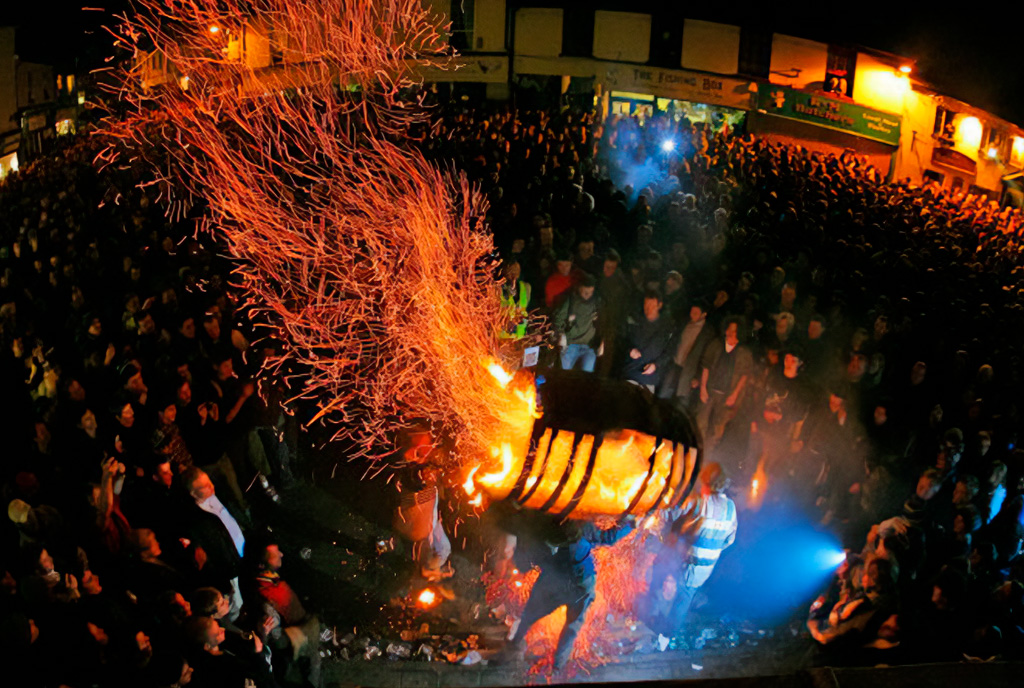


The heaving crowd in front of me, which only seconds earlier had been surging forward to catch a glimpse of a tar-soaked barrel wrapped in flames, suddenly parts.
It doesn't take long to work out why.
Charging straight at me, like a bull on fire, is a young man with a roaring blaze on his shoulders.
Partner links: booking through them supports the blog at no extra cost to you.
I duck and weave, hunting for a gap in the crowd to escape through, but there isn't one.
Then, without warning, the flaming figure spins on the spot and switches direction.
I join the chase as the crowd, regrouped, forgets its fear once again and pours after the barrel carrier, a fiery hunger burning in their eyes.
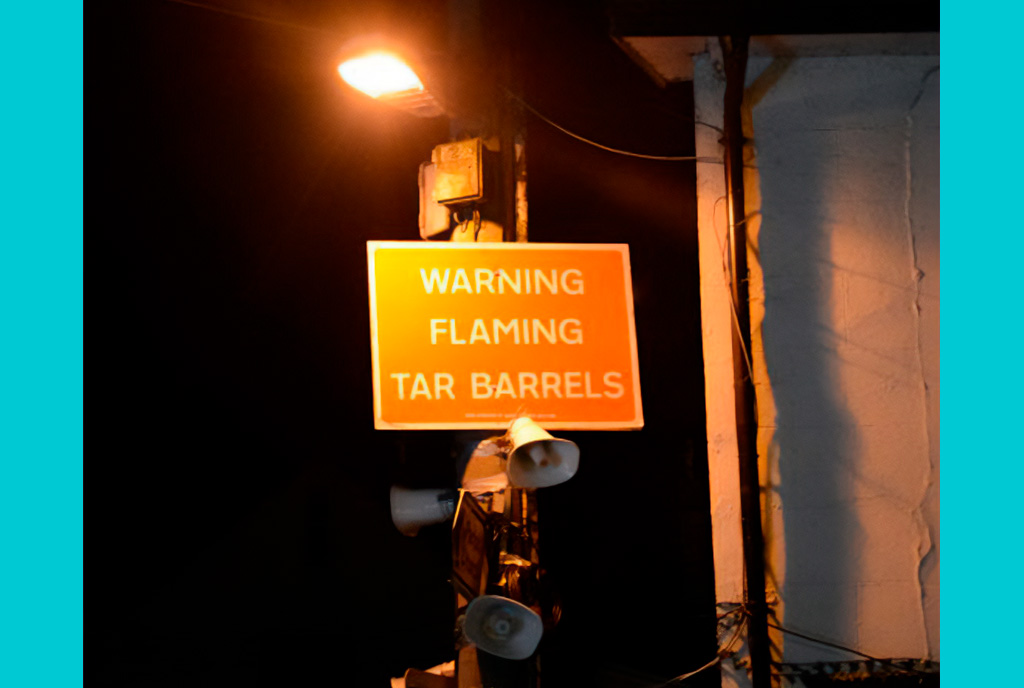
I'm in Ottery St Mary, an ordinarily sleepy little town in the Devon region of south-west England.
Across the country in November, most communities mark Bonfire Night, a fiery celebration of the foiled attempt to blow up London's Parliament back in 1605.
Here, they do it by tearing up and down the streets with blazing tar barrels held high above their heads.
It's the maddest thing I have ever seen.
The Gunpowder Plot
This safety-defying tradition goes back at least a couple of centuries.
Although its exact origins have long since gone up in smoke, it's thought to be tied to the Gunpowder Plot of 1605.
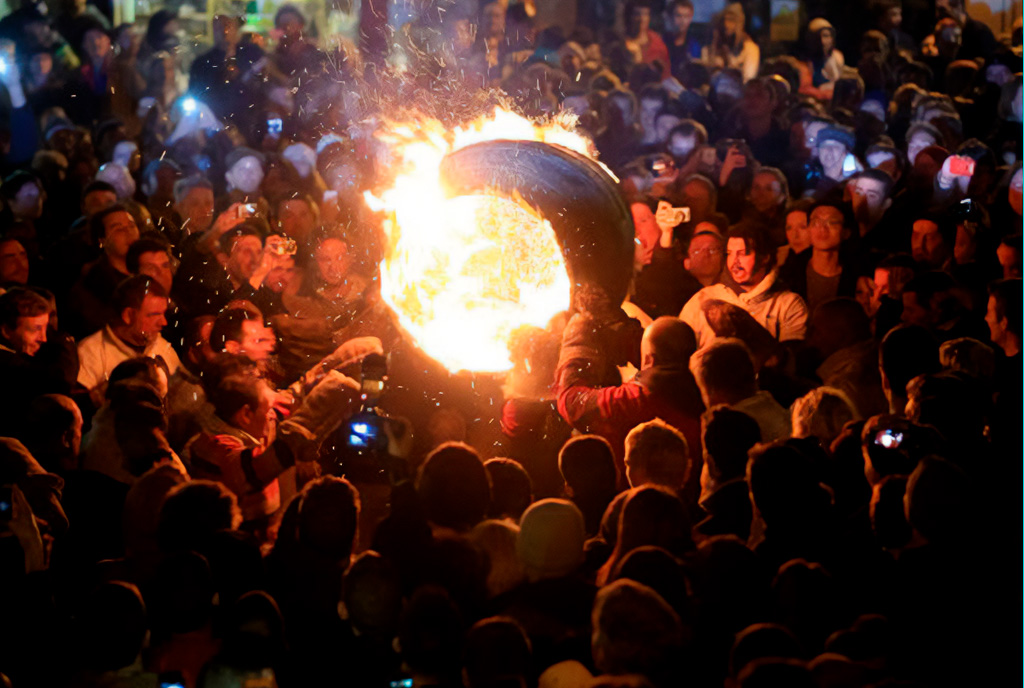
Andy Wade, who has taken part in the event for 30 years now, has served on the 80-strong organising committee for the past 22 years and is now its lifetime president. He explains that many places across south-west England once held festivals with rolling flaming barrels.
"But one day, long ago, some bright spark in Ottery clearly decided it would be far more fun if the barrel was picked up," Wade says. "And that's how our very own tradition was born."
Seen through an expert's eyes, the festival is far more controlled than it first appears.
For one thing, people can't simply turn up, grab a burning barrel and run off with it through the crowd.
"The runners are extremely experienced," Wade explains.
"They come up through the ranks, starting with the children's barrels when they're eight years old, then moving on to the intermediate barrels. And after that, if they're big and strong enough, they graduate to the men's barrels."
For Wade, it's all about carrying on a proud tradition.
"A lot of these lads come from families whose connection to the event goes back generations," he says. "The fathers, grandfathers and great-grandfathers of these lads all carried barrels."
Earlier in the evening, I watched a new generation of boys and girls being initiated with barrels of their own.
The barrel is a touch smaller for the children's event, but the principle is exactly the same: hoist the flaming thing onto your shoulders and run like mad, without dropping it, until someone else claims it.
A Dance with Fire
There's no competitive element here. The aim is to hold on to the barrel for as long as possible and keep the flames going.
That explains the pirouettes, which feed extra oxygen to the barrel.
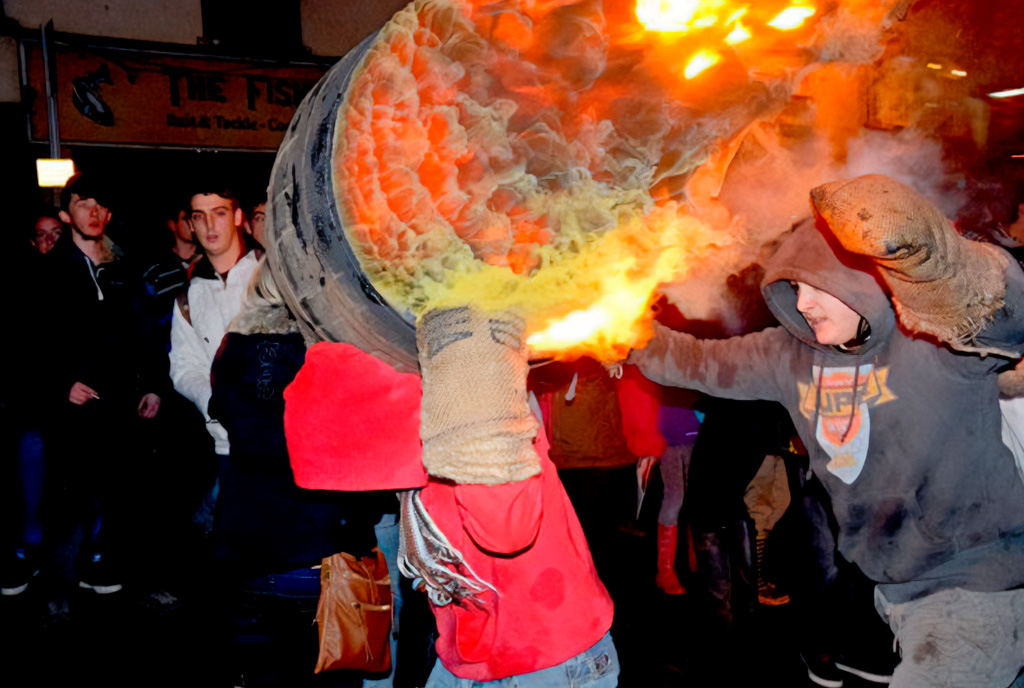
In all, 17 barrels are coated in tar over the course of the year and then set alight on the evening of 5 November, beginning with the children, then the women and intermediates, and finally the men.
Traditionally, each barrel is sponsored by a pub.
Although only four of the original pubs are left in town, the memory of those that have closed lives on in the names of the barrels.
By the time the men get going, the streets of Ottery are packed with spectators streaming into town.
Around 15,000 people are thought to come and watch the event when it falls on a school night, and up to 20,000 gather when 5 November lands on a weekend.
Safety Concerns? Well...
Inevitably, every year brings complaints from people who reckon the event is dangerous.
Wade's message to them is simple: "The mood is light-hearted, but the barrels really are carried through the streets. If that's not for you, please step back.
"And don't touch or interfere with the barrels, the lads really don't like that.
"Visitors need to remember they're getting a free show. We don't make a penny from it. The collections taken during the evening barely cover the costs.
"Getting insurance is a headache every year. Of course there are injuries, but most of them are caused by things other than the barrels, like people drinking too much and falling over."
These days, the runners aren't allowed to drink until they've finished.
But that doesn't stop the crowd from making up for it on the cider-drinking front, and the later the night gets, the rowdier the atmosphere becomes.
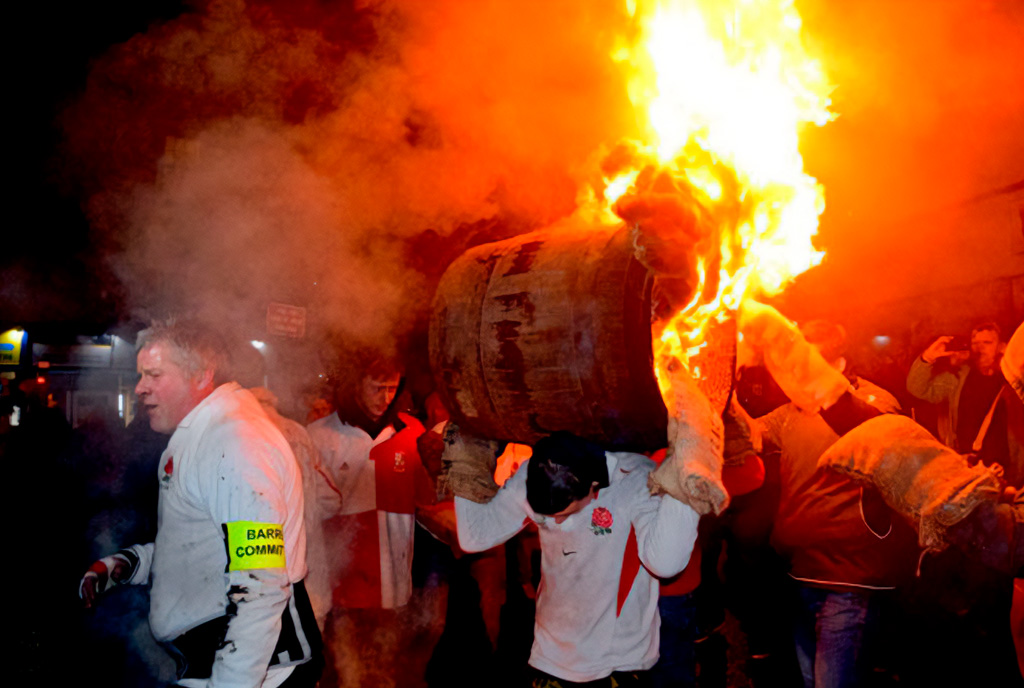
If the critics think the event is wild now, it's just as well they weren't here a few years back, before health and safety became such a big deal.
"When I was young, it was absolute chaos," Wade recalls fondly. "People got drunk on cider, and there were plenty of scraps over the barrels. Scores got settled on 5 November."
More at www.otterytarbarrels.co.uk
Bonfire Night in Lewes
Ottery St Mary isn't the only town in Britain that turns fire celebrations into extraordinary spectacles.
The biggest 5 November event in the world takes place in Lewes, in the southern English region of East Sussex.
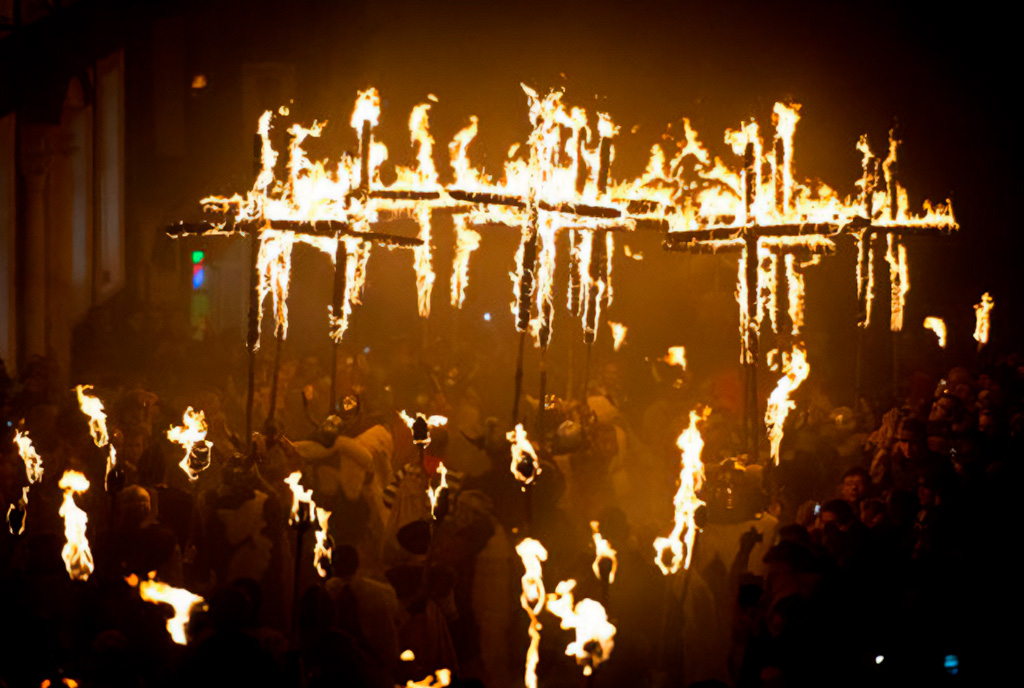
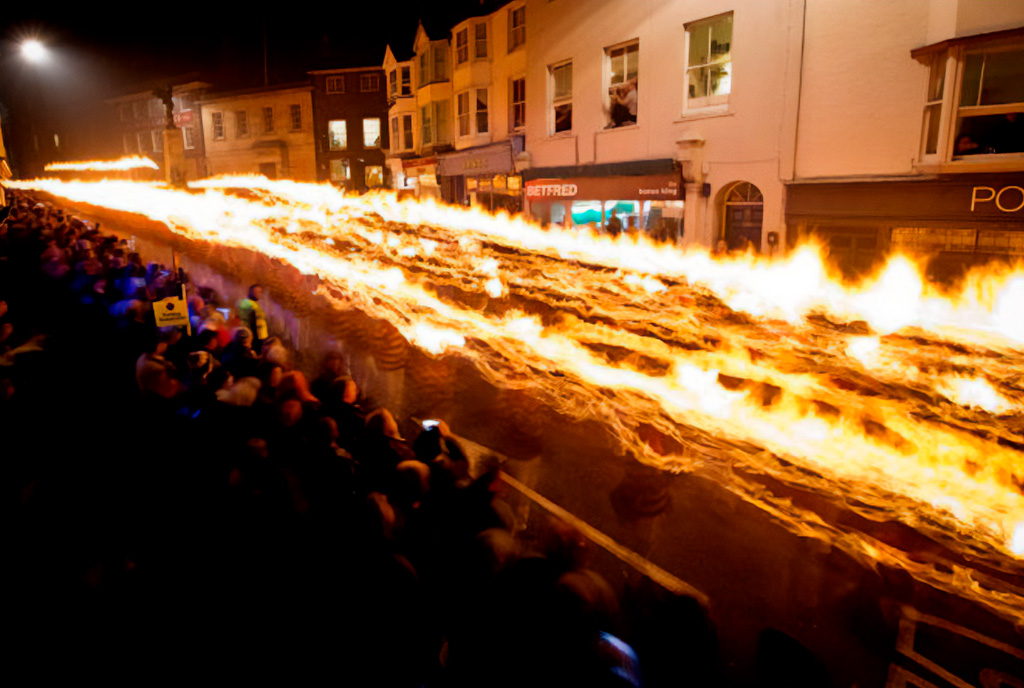
The whole town blazes into life every year as up to 80,000 people come to watch six "bonfire societies" march through the streets, dressed as smugglers, carrying flaming crosses and (sometimes controversial) effigies, before lighting various bonfires and setting off fireworks.
Blazing tar barrels feature here too, but they're rolled rather than carried.
The event marks both the uncovering of the 1605 Gunpowder Plot and the burning at the stake of 17 local Protestant "martyrs".
Up Helly Aa
Until the 1880s, Scotland's Shetland Islands had a great winter tradition of rolling tar barrels, when local men would drag flaming barrels through the town of Lerwick on sledges, causing plenty of high-spirited mayhem along the way.
When that was banned, they began celebrating Up Helly Aa, a fire festival held on the last Tuesday of January.
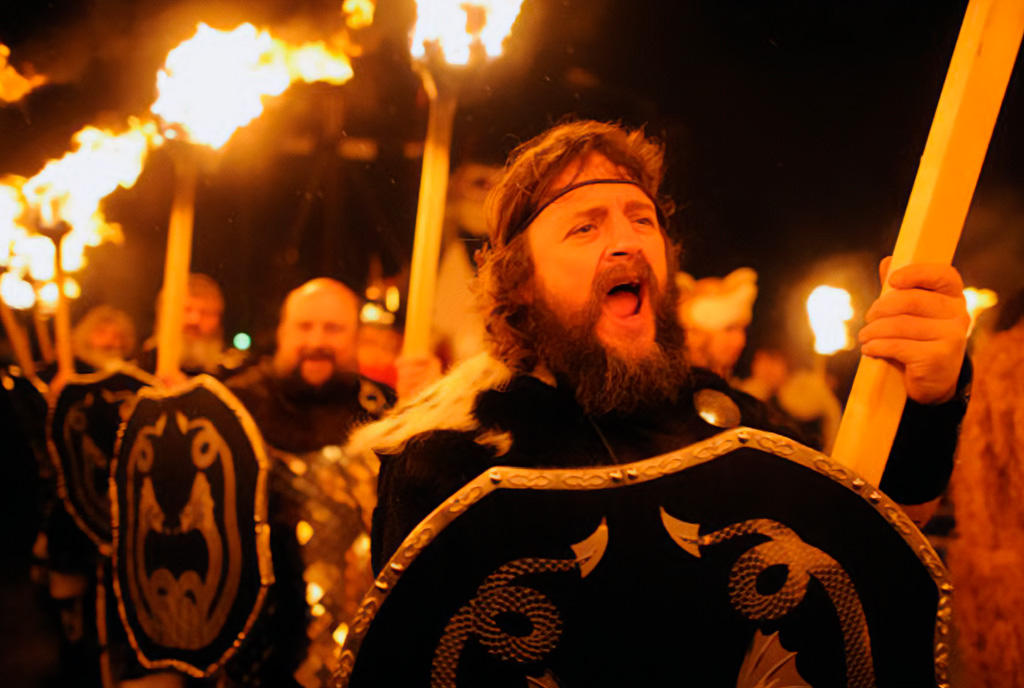
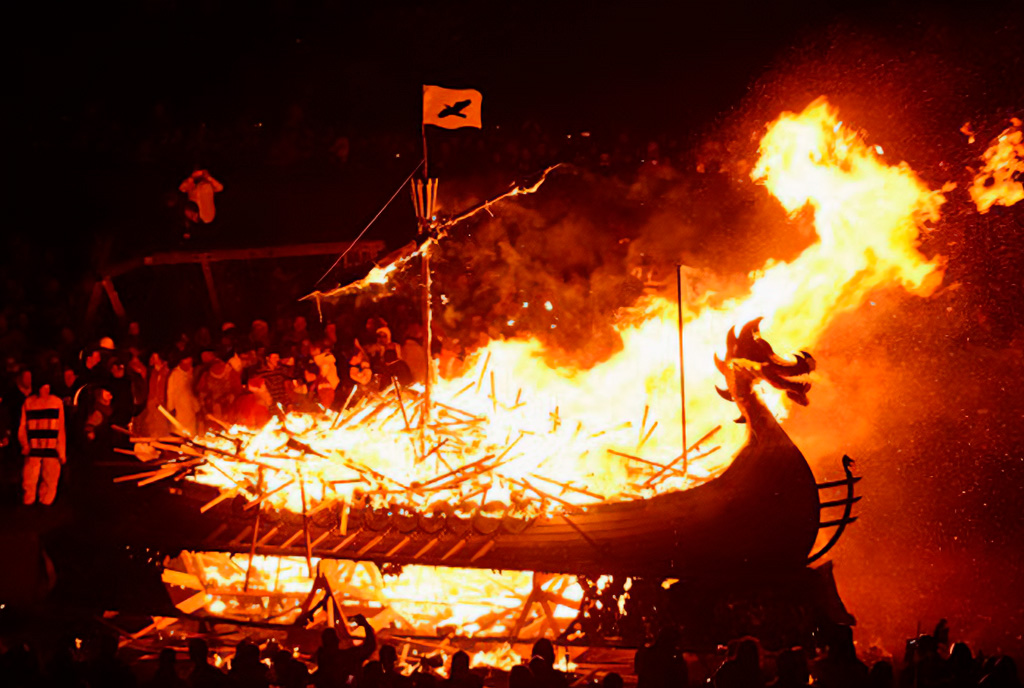
The event features a torchlit procession of people dressed as Vikings, and it culminates in the dramatic burning of a Viking-style ship.