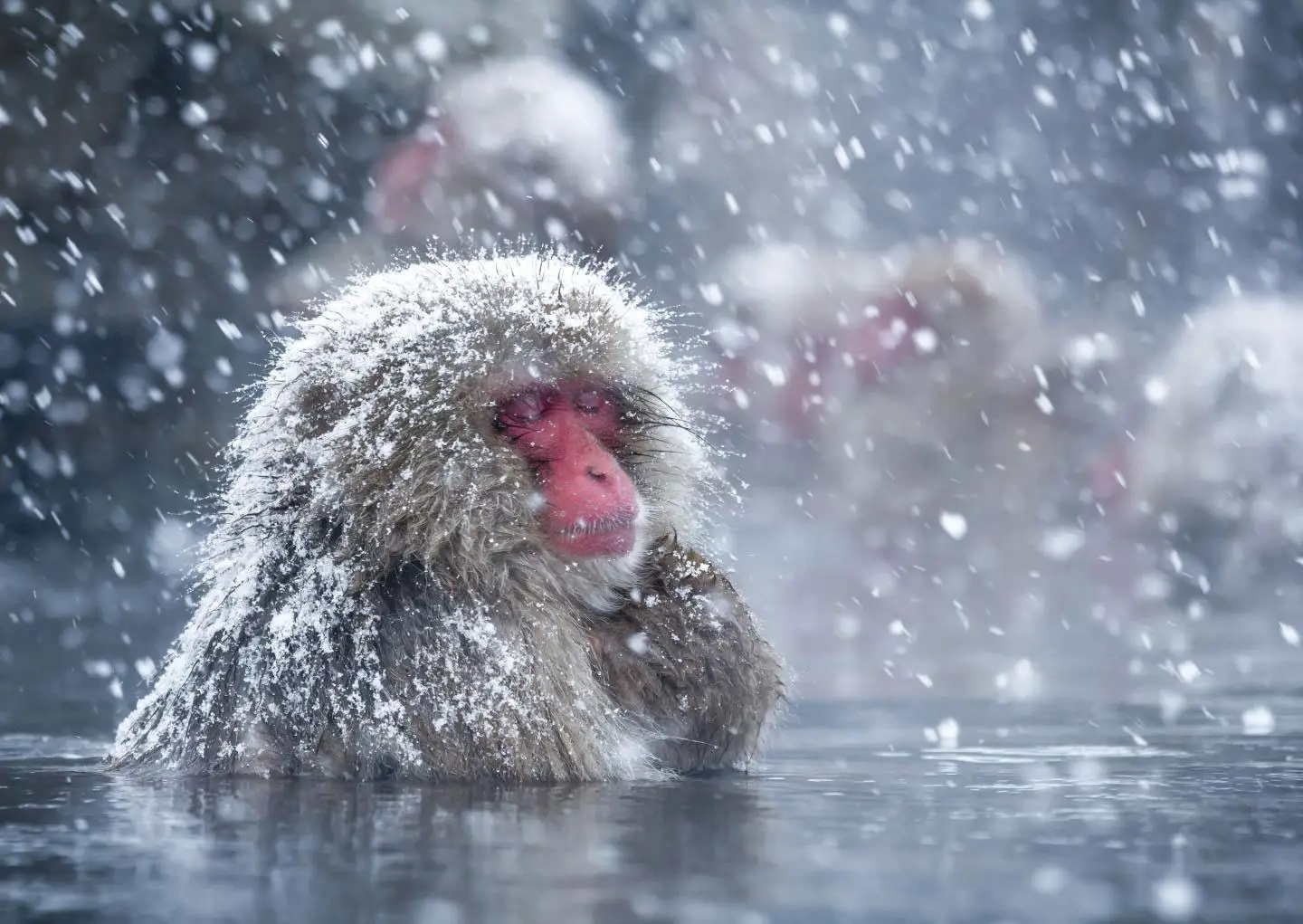


At the Jigokudani Monkey Park, Japanese macaques begin most days with a relaxing dip in their very own hot bath.
Tucked inside Joshinetsu Kogen National Park in Japan's Nagano Prefecture, this primates-only onsen is famous around the world as the monkeys' favorite hot spring.
But life hasn't always been so easy for the snow monkeys of Jigokudani ("Hell's Valley," named for its natural hot springs). Back in the 1950s, they were pushed out of their habitat as nearby ski resorts expanded.
Partner links: booking through them supports the blog at no extra cost to you.
As a result, they moved into the surrounding towns and quickly found trouble, raiding fruit from local farmers' orchards. The farmers petitioned the government and won the right to hunt the animals.
Legend has it that in 1957 the manager of the Korakukan, a nearby ryokan (traditional Japanese inn), began feeding the animals. Working with the Primate Research Institute at Kyoto University, the innkeeper drew researchers' attention to the monkeys, along with a Nagano railway company employee and local nature lover, Sogo Hara.
Hara and his group visited the ryokan, which had an onsen open for the enjoyment of guests. One day in 1961, as the story goes, an apple fell into the human onsen. A young monkey tasted the steaming water and climbed out with the apple. But it didn't leave the water right away, and plenty of monkeys watched their friend calmly enjoy the soak.
Before long, other young monkeys started to copy the water lover's behavior.
Within a few months, all the female monkeys had begun bathing in the hot springs.
Soon after, thanks to the efforts of many interested parties, the Jigokudani Monkey Park was established in 1964. Today it's home to the snow monkeys, who bathe freely and peacefully in hot springs set aside just for them.
Damage from Typhoon No. 19 affected the water level and temperature at the spring, but restoration work is now underway and the park is open to visitors.
Jigokudani's Facebook page posts daily updates on the restoration work and the presence of the monkeys.
A Relaxing Soak
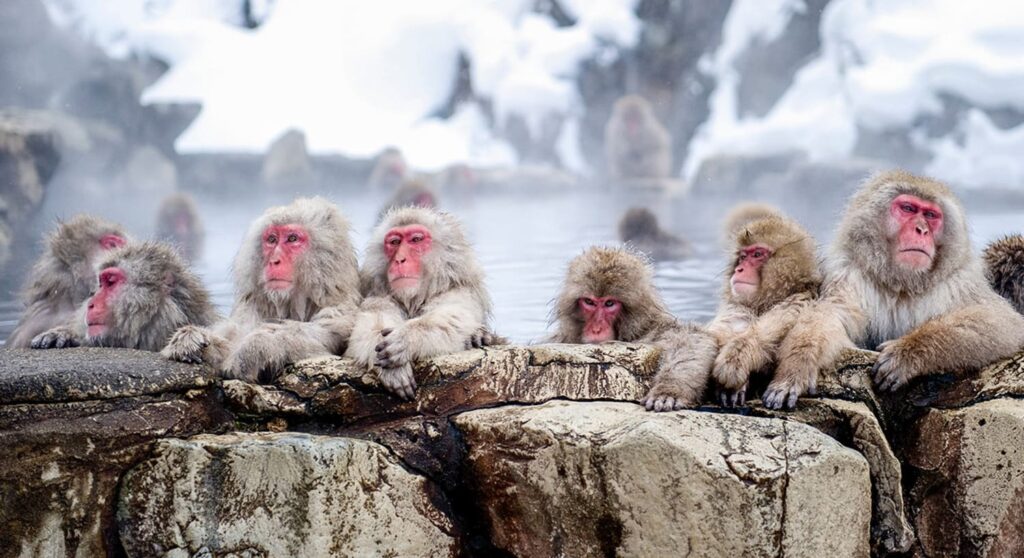
The snow monkeys don't visit the onsen just to warm up or snack on apples. Like the Japanese and their guests, they seem to value the onsen for its stress-relieving powers.
Since the macaques' thick fur keeps them warm, and since they bathe even when no apples are in sight, the researchers who have studied the monkeys at Jigokudani believe the hot springs mainly help them relieve tension.
Park staff encourage the macaques to visit the onsen by offering them a steady diet of soybeans, barley and, of course, apples.
Researchers have also found the monkeys indifferent to the roughly 500 visitors who come to the park each day. In other words, their stress hormones didn't rise as the number of visitors grew.
Even during the busy tourist season, the monkeys wander the park without a care, climbing in and out of the hot spring while people take photos and gasp in delight.
Unlike some other Japanese parks with free-roaming animals, such as Nara's deer park, touching or feeding the monkeys is strictly forbidden. But that rule doesn't take away the pleasure of sitting by the pool and watching the macaques play leapfrog.
Meeting the Monkeys
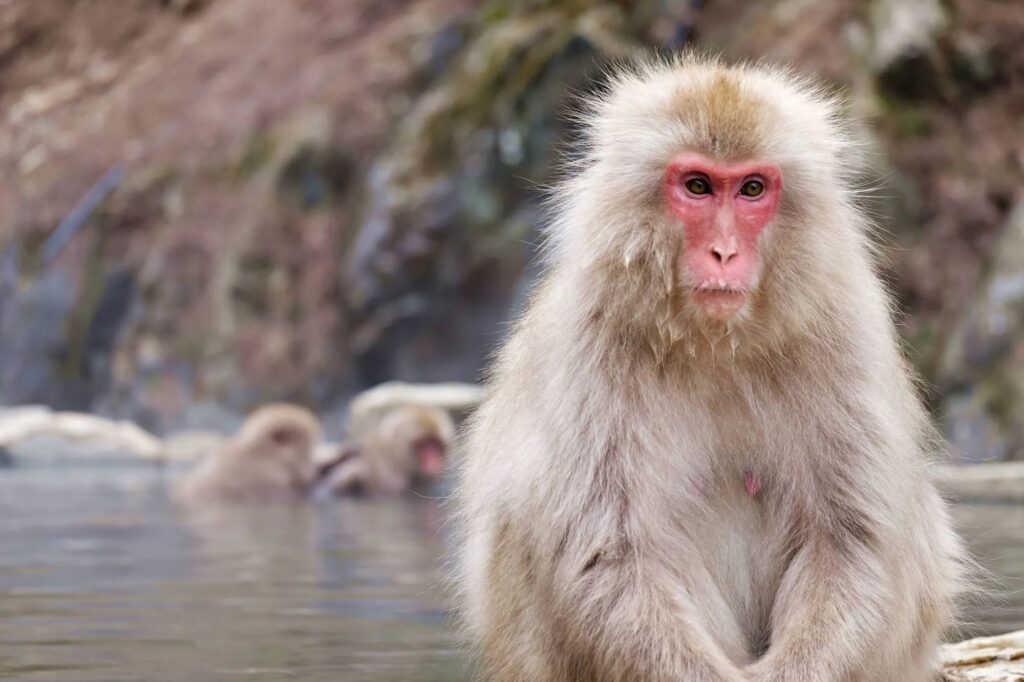
Since the monkeys don't bathe every day (despite their warm coats, they seem to prefer the hot springs on cold days), visitors should plan accordingly before heading north to the park.
It's best to keep your itinerary flexible, and January and February are the finest months to visit. Fresh snow is ideal: the monkeys feel right at home and are perhaps at their most playful in a snowy climate. If you're lucky, you might even catch the baby monkeys wrestling and making snowballs.
The time of day matters just as much when planning: the Jigokudani Monkey Park calls for an overnight stay if you want to catch the monkeys' early morning routine. While it can be visited as a day trip from Tokyo, even catching an early train means arriving at the park later, just as the tourist crowds peak, and that's if everything goes smoothly. If you miss seeing the monkeys, you'll wish you had set aside more time.
The park opens at 9 a.m. and closes at 4 p.m. daily, extending its hours to 8:30 a.m. through 5 p.m. in peak season.
It's better to arrive at the park the evening before you plan to visit. Stay at a ryokan, enjoy its onsen, and set out for the park in the morning. If you can, leave time to explore the onsen beyond your own ryokan, because at the foot of the mountain leading up to the park runs a main street with nine unique onsen for weary travelers.
Each one is meant to treat a particular ailment, and the onsen invite visitors to stroll the charming street in a yukata (a light kimono) and wooden sandals, collecting stamps in a towel passport from every bathhouse. This is said to ward off evil spirits and bring divine favor. Along the narrow strip of street there's no shortage of little restaurants happy to share their homemade takes on Japanese dishes.
How to Get There
Most of these hotels offer a free morning shuttle to the Jigokudani Monkey Information Center. To avoid the crowds, early risers can hike the scenic trail themselves for some quiet time with the monkeys.
From the information center, the only way to reach the monkey onsen is along a one-mile trail through the forest, about 30 minutes each way. Unfortunately, the Jigokudani Monkey Park isn't wheelchair accessible, since the final stretch consists of narrow winding paths and steep stairs.
The Jigokudani Monkey Park offers a wonderful view of this one-of-a-kind behavior. Relaxing in the company of calm macaques makes for a perfect excursion from Japan's big cities.
To reach the Jigokudani Monkey Park from Tokyo, take the shinkansen (bullet train) for an hour and a half to Nagano, then a local train for 50 minutes to Yudanaka Station in Yamanouchi, where the park is located. The Jigokudani Monkey Park Information Center sits two miles from the railway station.
Winter sports fans can explore nearby Shiga Kogen, the largest ski resort in Asia, which is less than an hour away by bus.