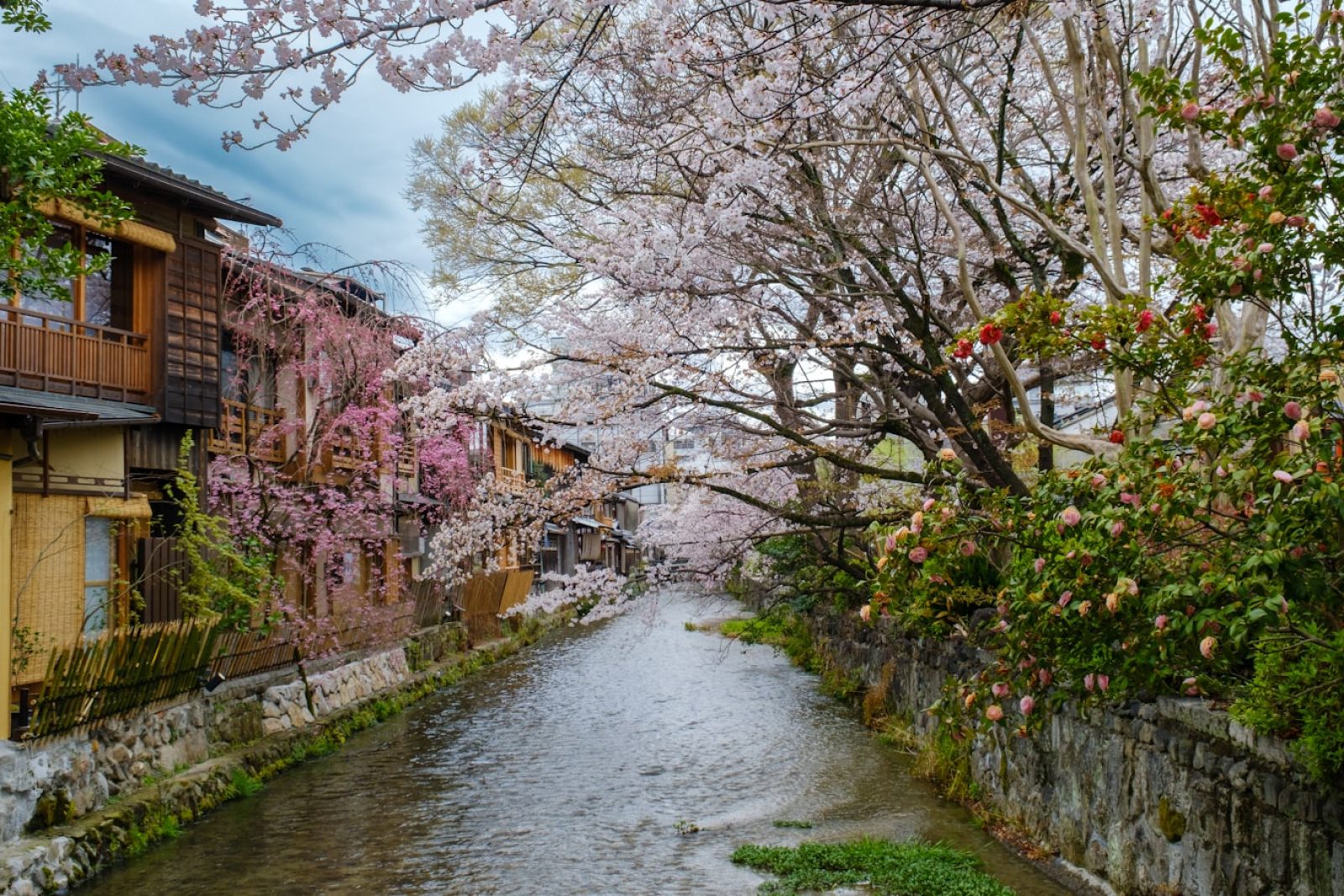


Two windows in Japan are worth a ticket all their own: late March into early April, when the cherry blossoms open, and November, when the maples in Kyoto turn red. Everything else comes down to your goal. So the real question, when is the best time to visit Japan, is more honestly framed not as "where is it warmest" but as "what are you flying for": the blossoms, the autumn leaves, snow in the mountains, or simply cheaper flights without the crowds.
And one piece of anti-advice up front: first-time visitors should skip July and August. Not because of the rain, but because of the suffocating humidity that turns a simple walk into an ordeal.
The short answer: pick a season by your goal
If you're short on time, use the table. Below it, each option is spelled out with its honest drawbacks.
Partner links: booking through them supports the blog at no extra cost to you.
| Reason for the trip | Best months | The main catch |
|---|---|---|
| Cherry blossoms, hanami (Tokyo, Kyoto, Osaka) | late March to early April | Peak bloom lasts only about a week, prices and crowds at their highest |
| Autumn leaves, momiji | November | In Kyoto the peak comes closer to late November; the season shifts with the weather |
| Pleasant weather without the peak | October, second half of May | Warm and dry, fewer tourists than during cherry season |
| Skiing, snow (Hokkaido, Nagano) | January to February | The best powder, but also the coldest stretch of the year |
| Budget trip | June, early December | Cheaper and quieter, but June is rainy and December is already chilly |
Cherry blossoms: why the window is so narrow and how to catch it
The main trap with cherry blossoms is that full bloom lasts only a handful of days. On average, about a week passes between the first flowers opening and full bloom, and a strong wind or a downpour can strip the petals in a couple of days. So "going for the cherry blossoms" means betting on a specific window, not on the whole month.
The bloom rolls across the country from south to north. Southern Kyushu opens first, in late March, then the center, while Tohoku and Hokkaido only reach full bloom in the second half of April, sometimes even early May. In other words, if you miss Kyoto, there's still a chance up north.
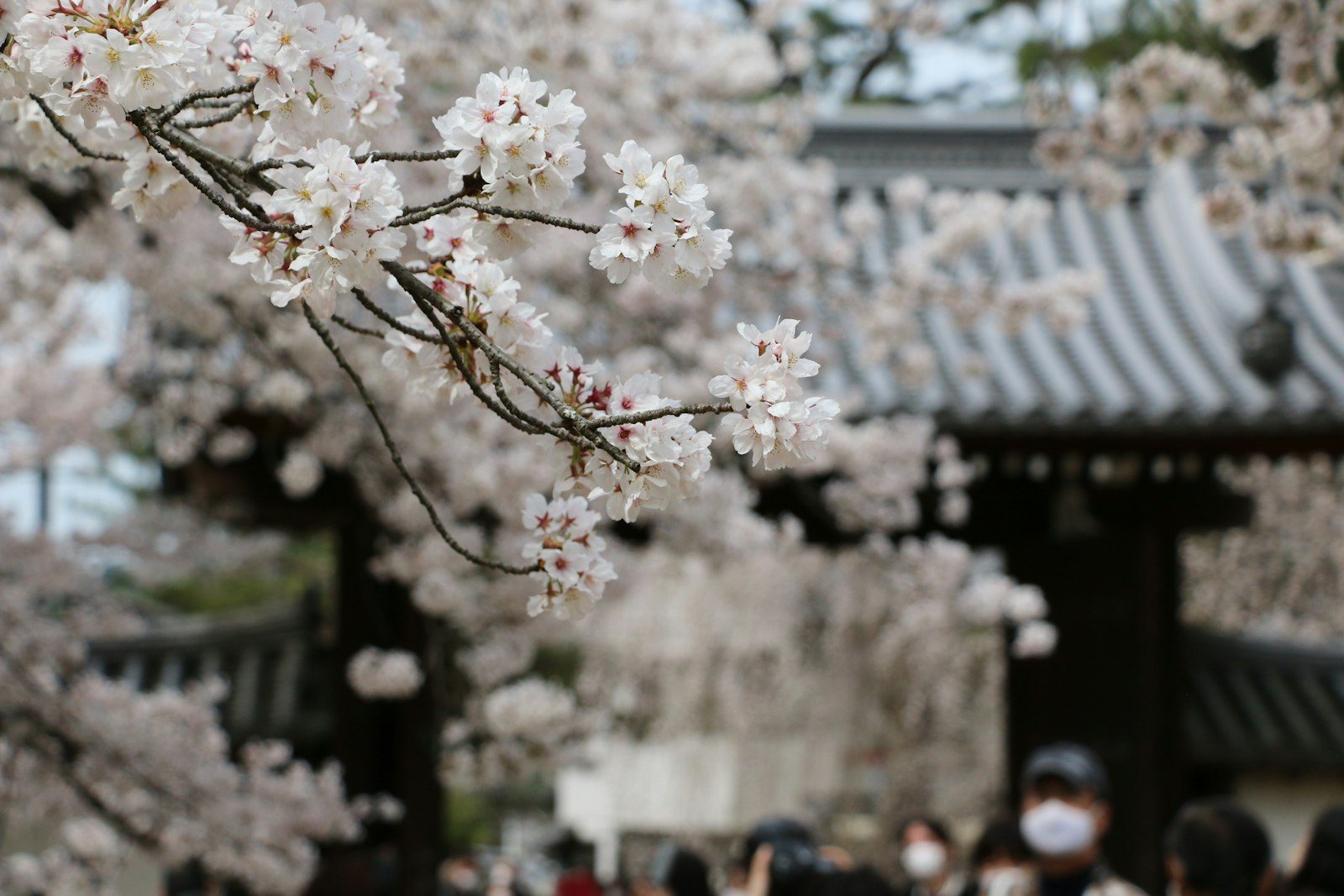
The 2026 forecast expects the bloom a little earlier than usual. Rough dates: in Tokyo the first flowers around 19 March, full bloom around 26 March; in Kyoto opening around 23 March with the peak around 1 April. A universal window that covers full bloom in Tokyo, Kyoto and Osaka at once runs roughly from 29 March to 7 April. These are forecast dates, so double-check before you travel: individual trees and districts bloom a few days apart.
A practical move for a first trip: base yourself in Kyoto or Osaka and build in a buffer of four or five days around the forecast peak. That way, even if the bloom shifts, you'll catch it either in the city or in a neighboring region an hour away by bullet train.
Momiji: autumn moves in the opposite direction
The autumn leaves, momiji, are for many an underrated alternative to the cherry blossoms: the same temples, the same maples, but twice as calm and often cheaper. And the season runs the other way, from north to south. In Hokkaido the colors catch fire as early as late October, while the wave reaches Tokyo, Kyoto and Osaka in November.
In Kyoto the peak of the red maples usually falls in late November, and in warm years it slips into early December. In 2025, for example, forecasters predicted a slightly later start because of a long summer heatwave, with peaks in the capital region expected in late November and carrying into the first ten days of December. That's normal behavior for the season: it drifts even more than the cherry blossoms do.
The honest downside of autumn: the weather is less predictable than in spring, and the mountains are already chilly. On the other hand, Kyoto's temple gardens in autumn deliver perhaps the strongest picture of the entire Japanese year, and you can enjoy it without the flower frenzy of April.
Why summer is the hardest season for a tourist in Japan
Summer here isn't about heat in its pure form, it's about humidity. First comes the rainy season, tsuyu: in 2026 it covered most of the country from around the start of June and held on until roughly mid-July. It's not a tropical downpour every day, but a grayish sky and high moisture, the kind where clothes never quite dry.
After the rains, the real inferno kicks in. In July and August, Tokyo, Osaka and Fukuoka regularly hit up to 35 °C at 78-83 percent humidity, which makes it feel hotter than the thermometer says: a 32-degree day feels more like 38. Heatstroke warnings go out, and in places the mercury pushes past 40 °C. Walking the city all day in those conditions is exhausting, and no temple makes up for it.
The second reason not to plan late summer blindly: from late August through September the typhoon season hits its peak. That's no reason to cancel a trip, but a flight or a domestic train can slip by a day, so a tight itinerary with back-to-back connections is best avoided in this period.
What a hanami trip costs
The act of enjoying the blossoms itself, hanami, is free in Japan: people simply spread a mat in the park under the trees. What you pay for here isn't the flowers, it's the peak of the season itself. Late March and early April are one of the two most expensive windows of the year for flights and lodging, alongside the New Year holidays.
A second price surge follows right after the cherry blossoms. In late April and early May Japan has a week of public holidays, Golden Week, when the entire country is on the move: hotels get pricier, trains are packed, and popular spots are overrun. If saving money is the goal, this window is worth avoiding too.
A few money benchmarks worth budgeting for (double-check every figure before your trip, since prices and exchange rates keep moving):
- Entry to most city parks with cherry blossoms is free; some private gardens and evening light-ups charge a token fee, usually a few hundred yen.
- Lodging spikes noticeably at the cherry-blossom peak, especially in Kyoto, where rooms are scarce and demand is global. Book several months ahead.
- A JR Pass only makes sense if you genuinely travel a lot between cities; for a single base in Kyoto with day trips, it often doesn't pay off. Do the math for your own route.
The season month by month: a quick guide
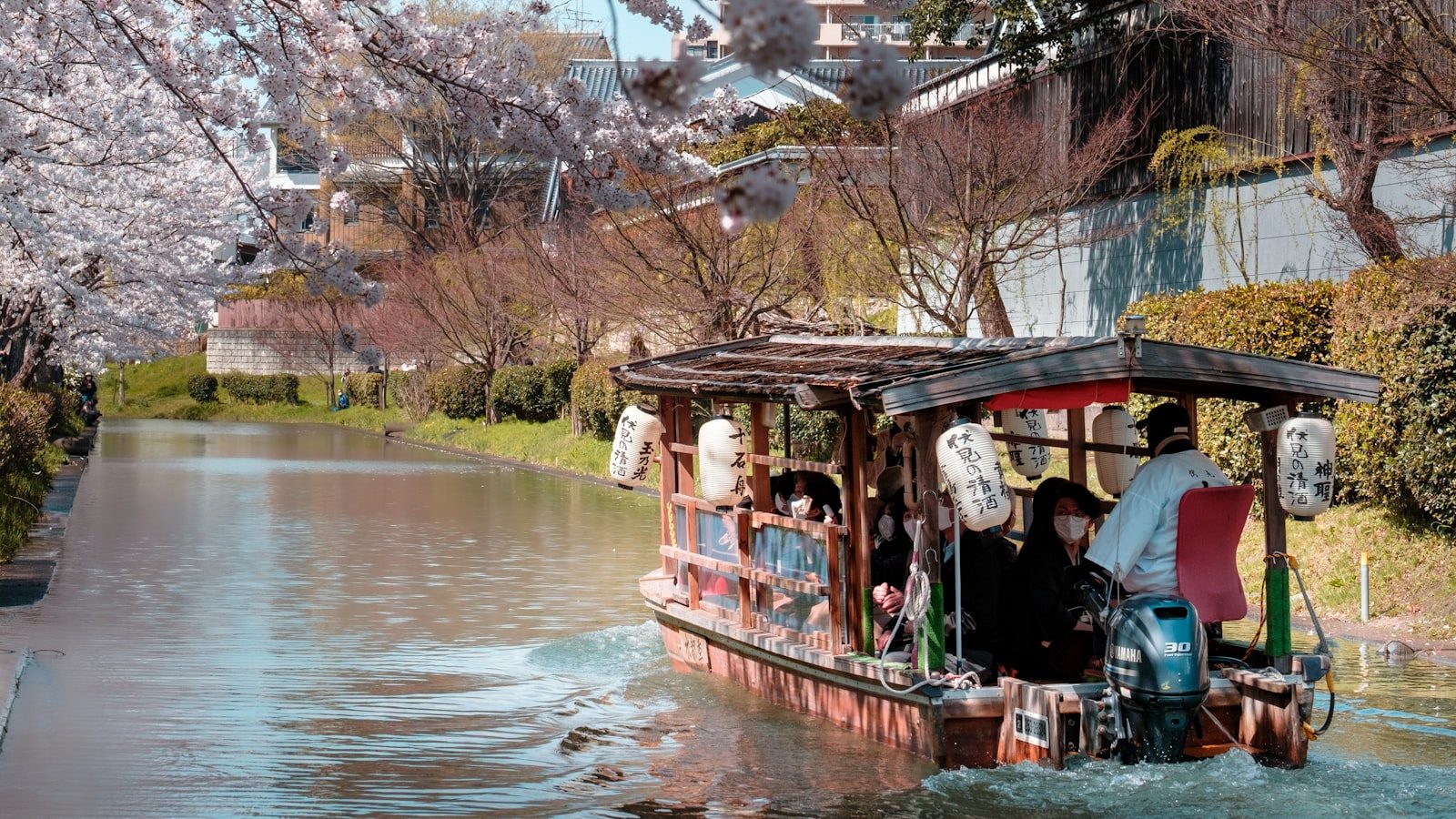
Here's the big picture, so you can match your goal against the realities of the year.
| Month | What works best | What to keep in mind |
|---|---|---|
| January to February | Skiing, powder snow, onsen in the snow | The coldest stretch; dry and clear on the plains, serious winter in the mountains |
| March | Cherry blossoms start in the south and center | Peak bloom at the end of the month, prices climbing |
| April | Cherry blossoms in the center, then the north | The priciest and busiest window; Golden Week starts at the end |
| May | Warm without the heat, greenery, fewer tourists | The first week (Golden Week) is packed and expensive |
| June | Cheaper, hydrangeas, few lines | The tsuyu rainy season, gray skies and moisture |
| July to August | Fireworks, festivals, the mountains and Hokkaido | Heat up to 35 °C and stifling cities, past 40 °C in places |
| September | The heat eases, fewer people | Peak typhoons, flights may shift |
| October | Comfortable weather, momiji starts in the north | One of the most even-keeled months for the cities |
| November | Autumn leaves in Kyoto, Tokyo, Osaka | The peak drifts; chilly by evening |
| December | Illuminations, ski season opens, lower prices early on | The end of the month, with New Year, gets expensive again |
The formality that's easy to underestimate: the visa
Here Japan differs from many Asian destinations. As of 2026, Ukrainian citizens need a visa for a short-term tourist trip: Ukraine isn't on Japan's visa-free entry list. What's more, the Japanese embassy in Ukraine currently doesn't accept applications for short-term tourist visas, so they're processed at Japanese missions in neighboring countries such as Poland, Slovakia, Hungary, Romania or Moldova.
There's an easing for higher-income applicants: a multiple-entry visa valid for up to five years, with stays of up to 90 days per visit. The conditions, the list of documents and the application procedure itself are best verified on the official portal of Ukraine's Ministry of Foreign Affairs and the Japanese embassy's website right before your trip, not from last year's articles, because this part changes most often. Allow plenty of lead time for processing.
Where to go from here
If you're flying for the first time and want the picture-postcard scene, take late March and bet on the cherry blossoms in Kyoto with a buffer of a few days, and set aside the money and the nerves for the peak of the season. If you value quiet and want to save a little, November is your month: the same temples in red maples, but without the flower frenzy. And if Japan appeals to you for the mountains and snow rather than the blossoms, plan for January or February, and that's an entirely different trip. One smart takeaway for every case: when is the best time to visit Japan is decided not by the weather in general, but by which Japan you want to bring home.