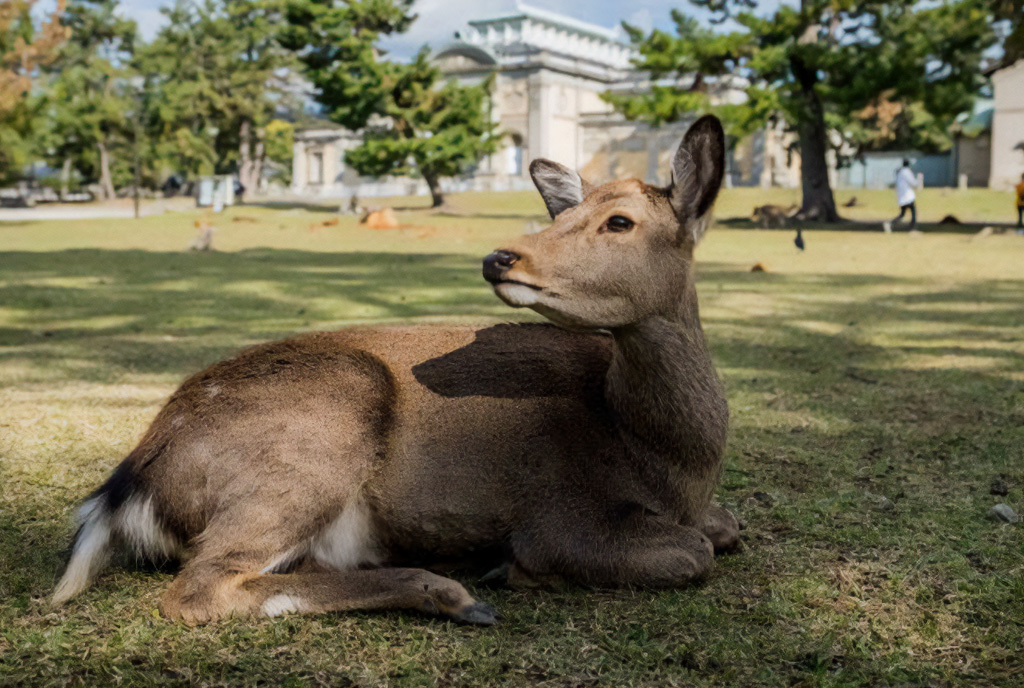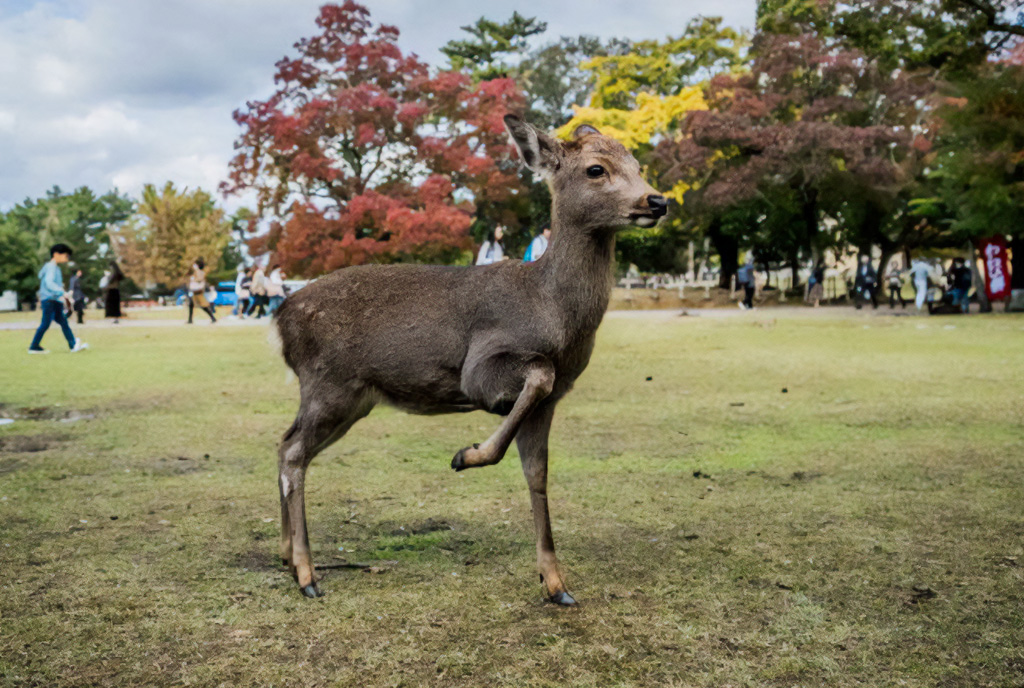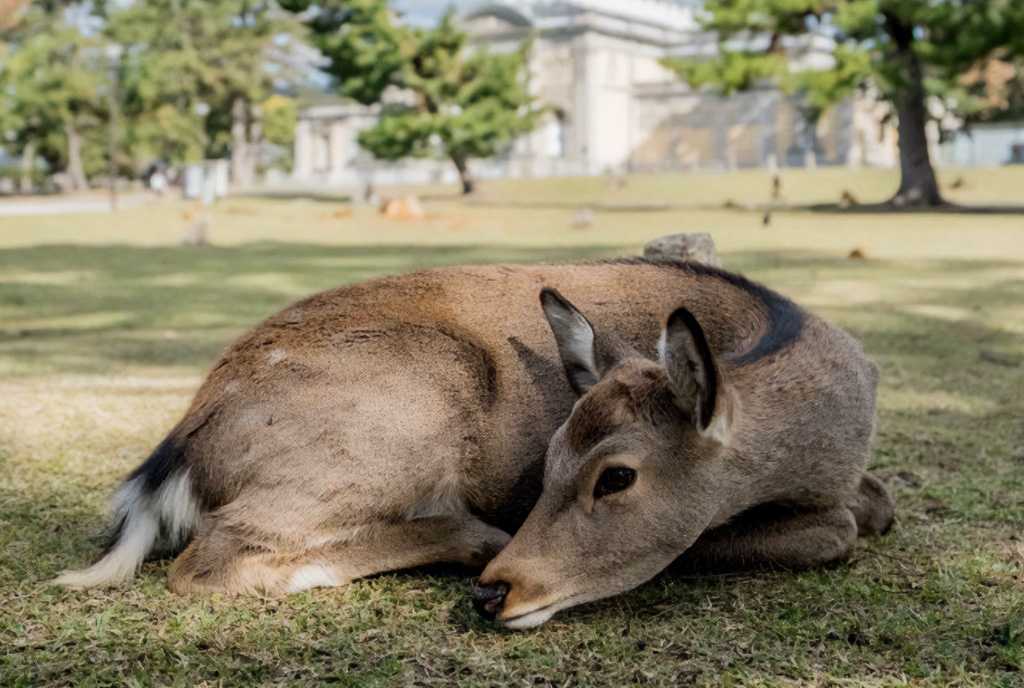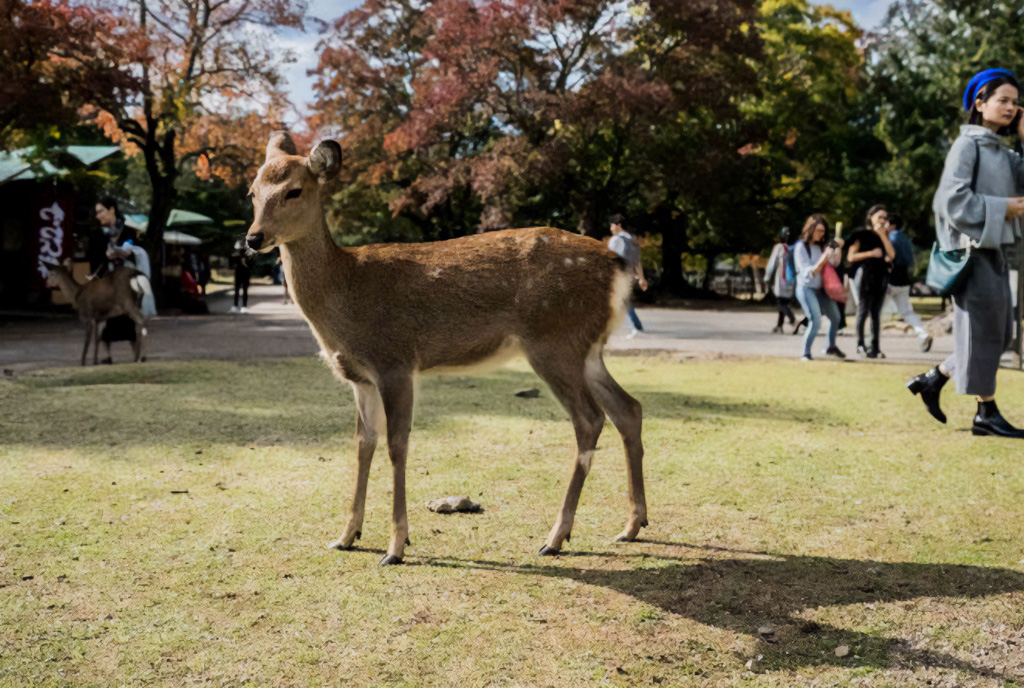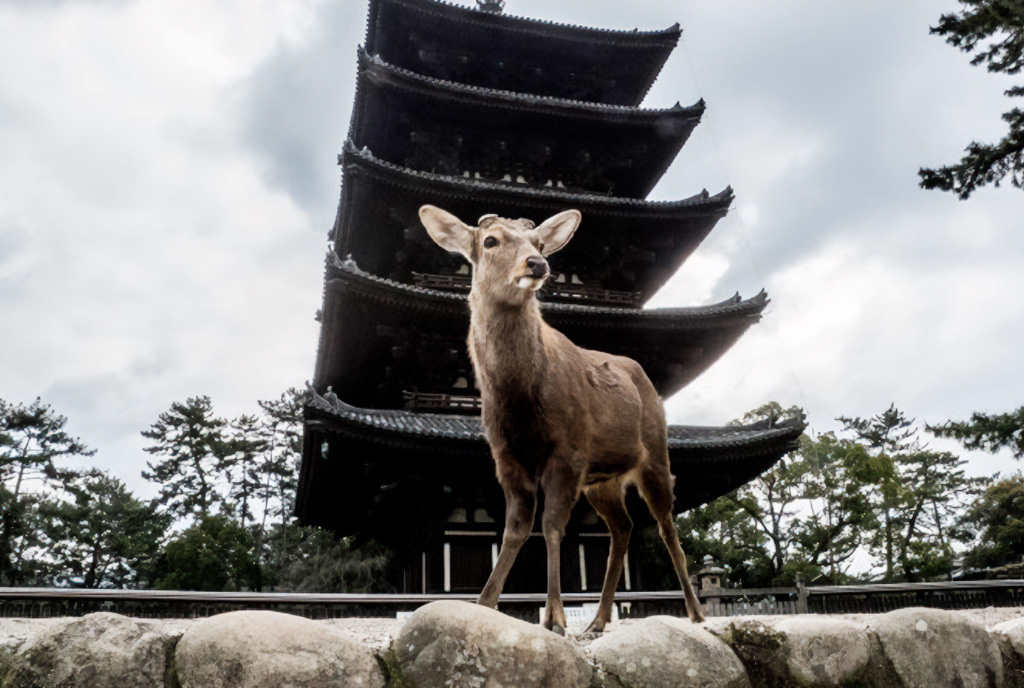


Just 45 minutes south of Kyoto by train sits the famous Nara Park, home to more than 1,000 sacred deer that have learned to bow for a treat.
The free-roaming animals are officially recognized as a national natural treasure. While the traditional Shinto religion regards them as messengers of the gods, they have recently made headlines for some rather unruly behavior.
The deer, wild and out in the open across the park, are used to being fed by tourists, most of whom come to Nara for exactly that reason. Usually they take what they can get and move on, but lately some deer have turned aggressive, going so far as to nip the very hands that feed them.
Partner links: booking through them supports the blog at no extra cost to you.
This news should not put visitors off, though, because for many foreigners a trip to Nara is a highlight of any journey to Japan. After all, how often does anyone get the chance to interact with dozens of animals roaming freely across an open, unfenced area?
You only need to follow a few simple rules to enjoy a visit to the popular park without getting bitten.
The Train to Nara
Visitors to Japan often plan a day trip to Nara, though the area can also make a wonderful base if you are looking for a quiet retreat after time in Kyoto or Osaka.
Stepping off the train, first-time guests to Nara are immediately greeted by artwork surrounding the station that depicts deer, along with two mascots: Shikamaro-kun, a cute cartoon deer, and Sento-kun, a baby with deer antlers who represents the city. Even the local vending machines are decorated with deer designs.

Founded in 1880, Nara Park is one of the oldest parks in Japan. Besides its famous deer, the park is home to Kofukuji, the family temple of the most powerful clan at the height of Nara's influence.
Within the park grounds stands Todaiji Temple, the largest wooden structure in the world and a UNESCO World Heritage Site. Nearby is the National Treasure Museum, known for its collection of Buddhist art.
This is also where you will find Japan's second-tallest five-story pagoda, originally built more than a thousand years ago, but there is no question that the deer are the main attraction.
A Brief Dive into History
The deer of Nara have historically enjoyed friendly relations with the people of the area.
In 1177, Kujo Kanezane, a nobleman visiting the area with his family, encountered a herd of deer along with his traveling party. Seeing the deer approach, a small boy stepped out of his carriage and bowed to them.
Then, in 1189, Kanezane, head of the Fujiwara clan, was inspecting the restoration of a temple on the site when a deer appeared inside the main hall. In his diary he wrote: "I was briefly bewildered, then joined my hands and bowed to the deer." From that time on, the deer came to be seen as a lucky sign.

By the 1500s, thousands of deer roamed the town unchecked and were revered. In this era, hunting a deer was punishable by death. Anyone who broke the decree had their property confiscated and their family line cut off.
Although this sentence has not been officially enforced since 1637, penalties remain. In 2010, a 40-year-old man was sentenced to 10 months in prison for killing a deer in the park with a crossbow.
A One-of-a-Kind Petting Zoo

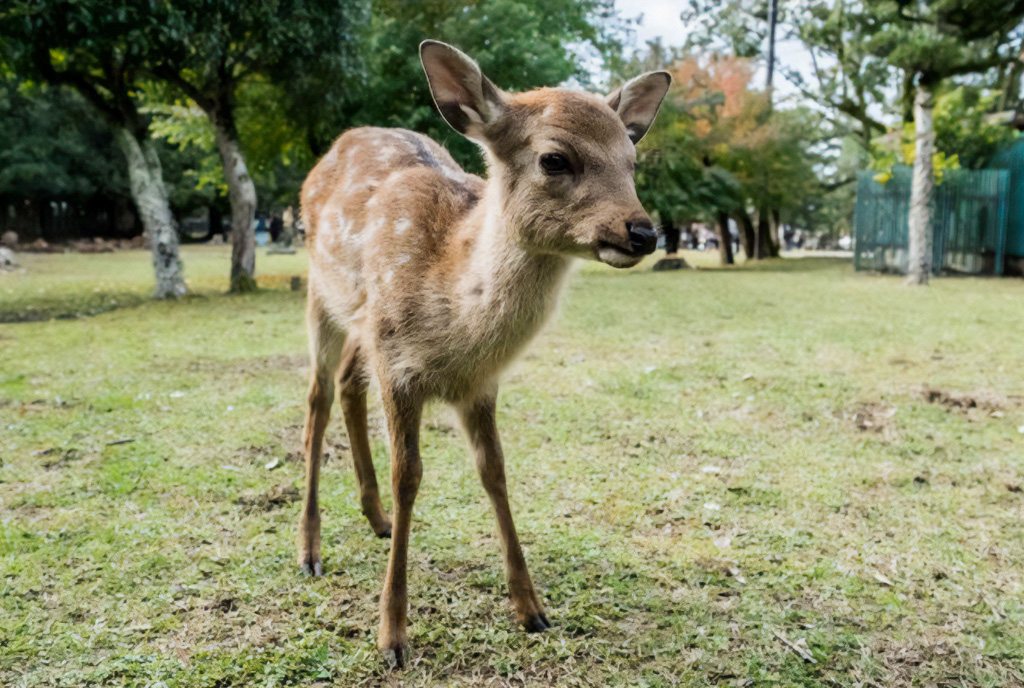
Today the deer are generally peaceful, and their impressive bows are a wonderful sight. Adorable little fawns frolic across the open park, and even the larger bucks enjoy a good pat.
Synonymous with the city of Nara, these divine creatures are also very much in charge. This is their home, and people are simply passing through.
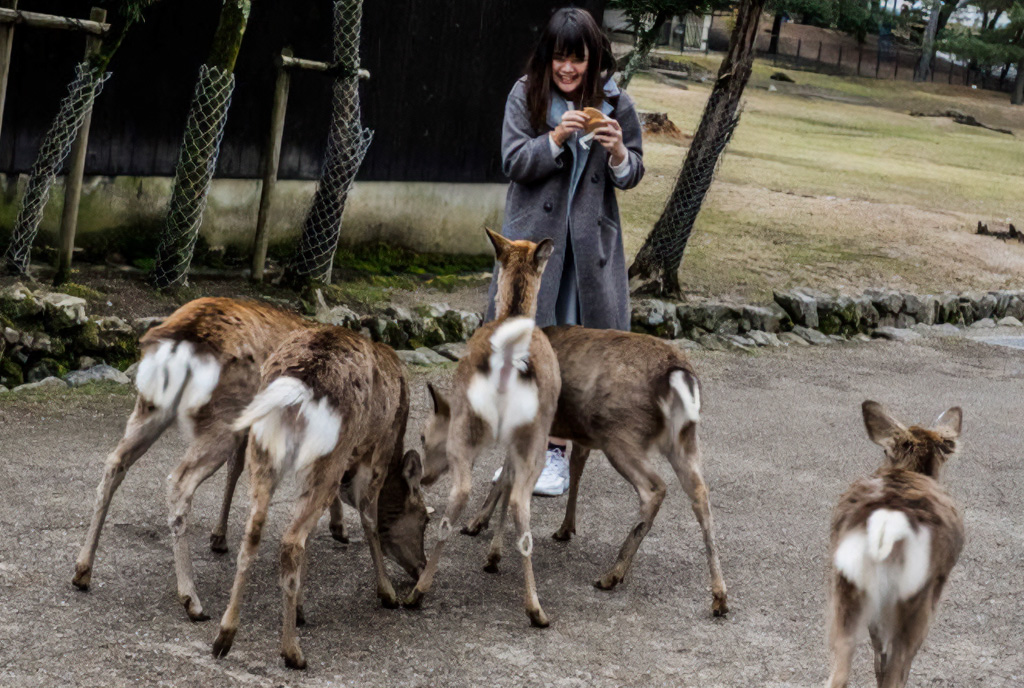
In search of treats, the animals confidently approach visitors.
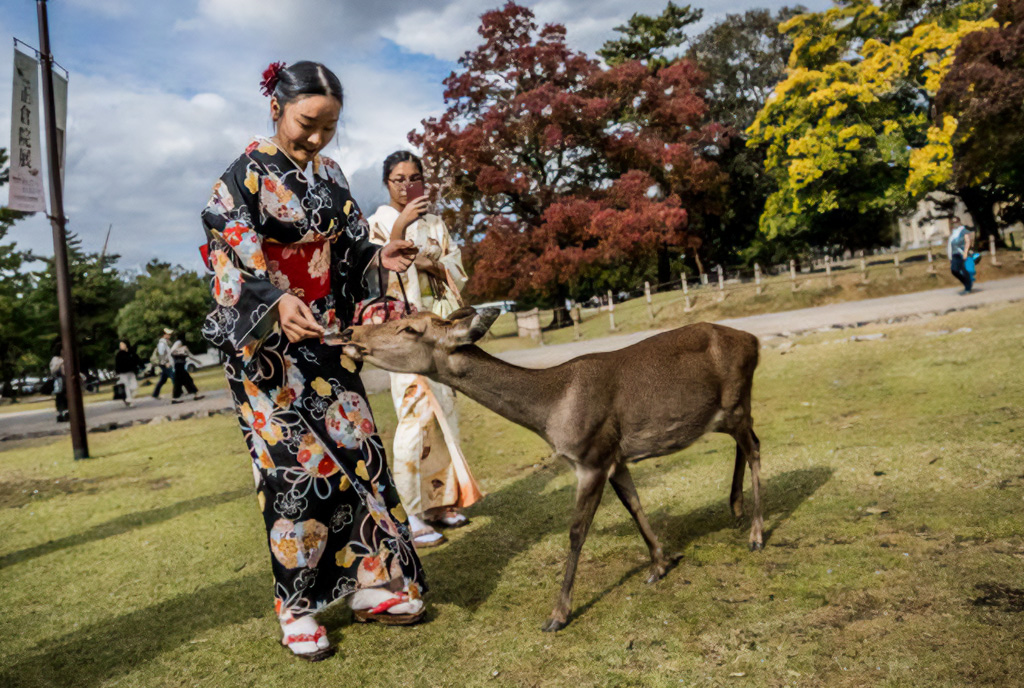
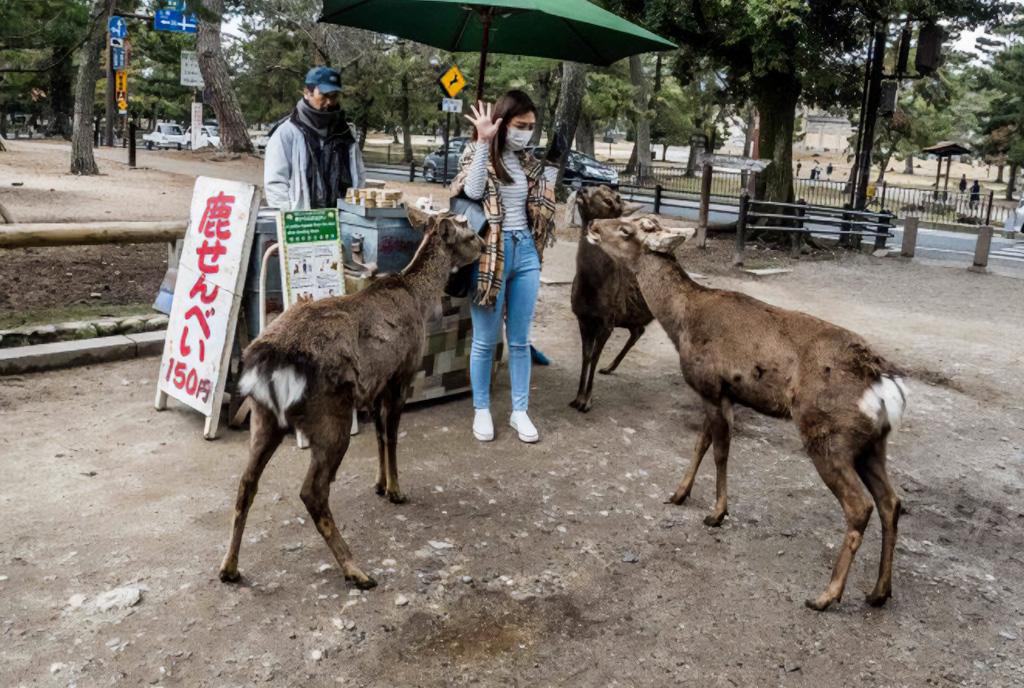
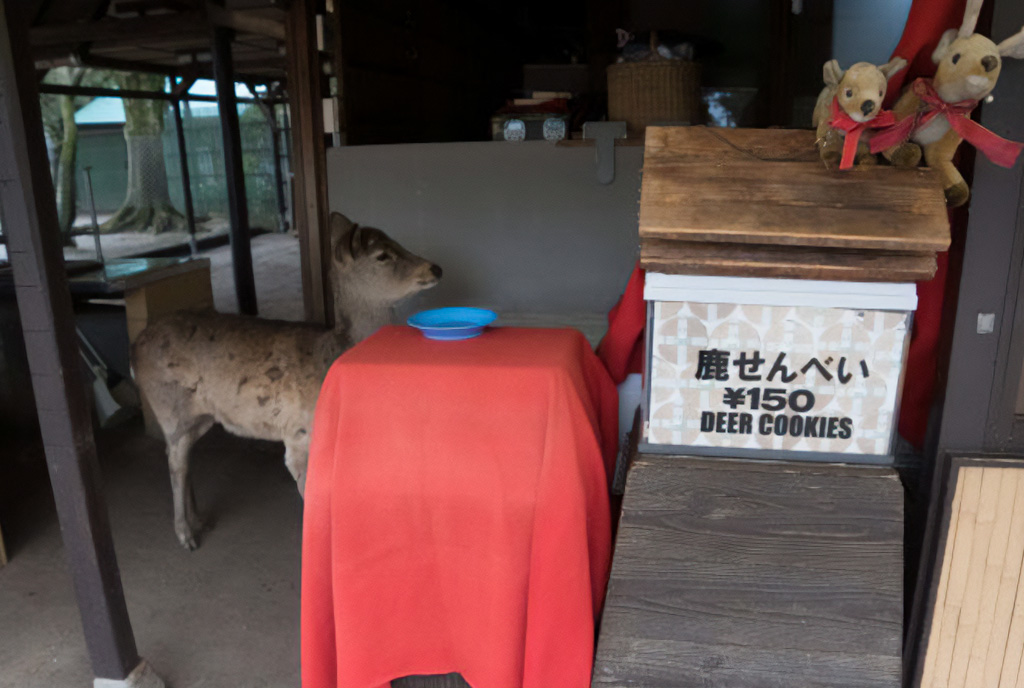
Over the years they have learned to trade a bow for shika-senbei (special rice crackers for deer, available from vendors in the park). The deer often crowd around the vendors, knowing the source of their favorite snacks.
These interactions have produced countless funny and heartwarming photos and videos for tourists eager to capture their time in Nara.

The deer do not just imitate bows, and many even wait alongside people at the crossings between sections of the park, waiting for the pedestrian signals to change.
The craftiest ones, on the hunt for extra treats, make their way to the entrances near the temples and distract tourists, keeping them from venturing too far into the grounds. Posing majestically in front of the temples, anticipating the flow of visitors into that section, they have somehow figured out that by offering themselves up for the perfect Instagram shot, they earn plenty of attention and rice treats.

When you wave "bye-bye," the deer leave. Some understand deer sign language better than others, who can grow insistent as visitors start to back away. Watch out for nudges toward your pockets and prods from behind.
Recent Conflicts
Although the deer are almost always remarkably obedient and friendly toward visitors, a recent surge of travelers has created tension in the tradition of these usually gentle creatures.

Foreign visitors to the park increased nearly tenfold between 2012 and 2017. As the crowds grow, so does the number of reported injuries, including broken bones.
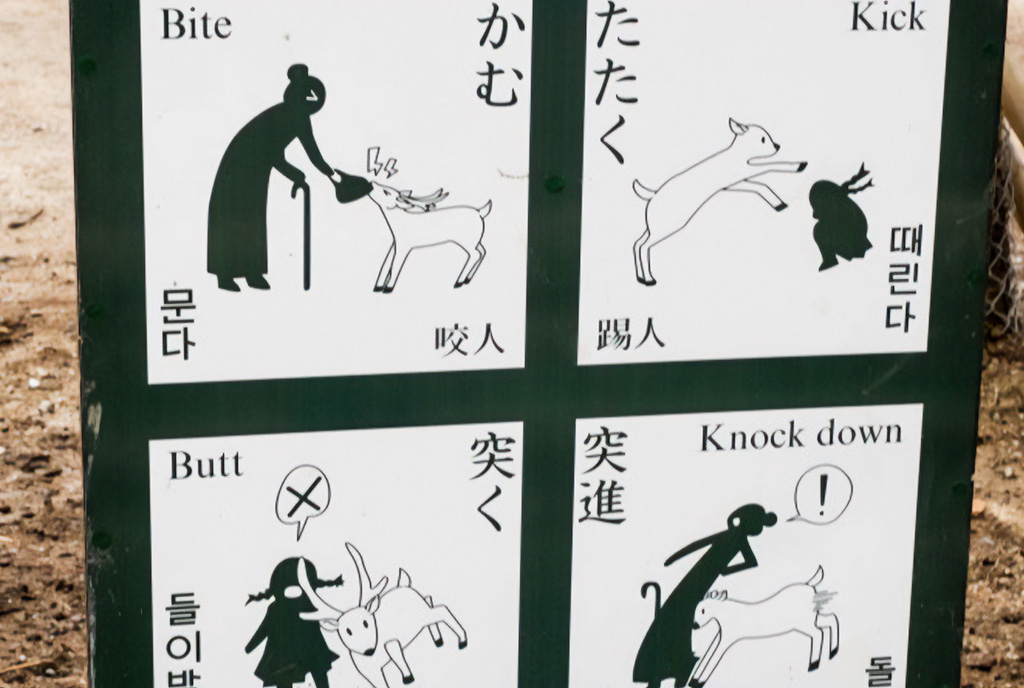
Aware of these issues, the Nara prefectural government has installed updated safety signs across the grounds, explaining how to behave around the deer.
Much of it comes down to common sense: do not hold back snacks; do not tease the deer; do not deny them a snack after they have offered a proper bow. They are complex creatures too, and letting them perform for you without giving the expected reward can cause confusion, and sometimes anger and aggression.
Know Before You Go
After a lull in tourism, a surge of visitors can lead to some very enthusiastic animals.
From September through November, the risk comes from bucks chasing females during the rutting season. From mid-May to July, the females will aggressively protect their fawns. Even so, the park stays open and welcoming to visitors during these periods.
Keep a close eye on your belongings, and know that in their pursuit of shika-senbei the deer will happily rummage through bags, wallets, even strollers. For this reason, you should not display loose food or eat snacks in front of the deer. Use your best judgment when it comes to little ones.
It is essential to stay aware of your surroundings. While one animal enjoys a treat, others are sure to notice and start crowding in. It is not ideal to find yourself surrounded by a herd of hungry deer once you have run out of shika-senbei.
It is better to feed them one at a time, and when others join in and you have run out of snacks, that is when you know it is time to wave goodbye.