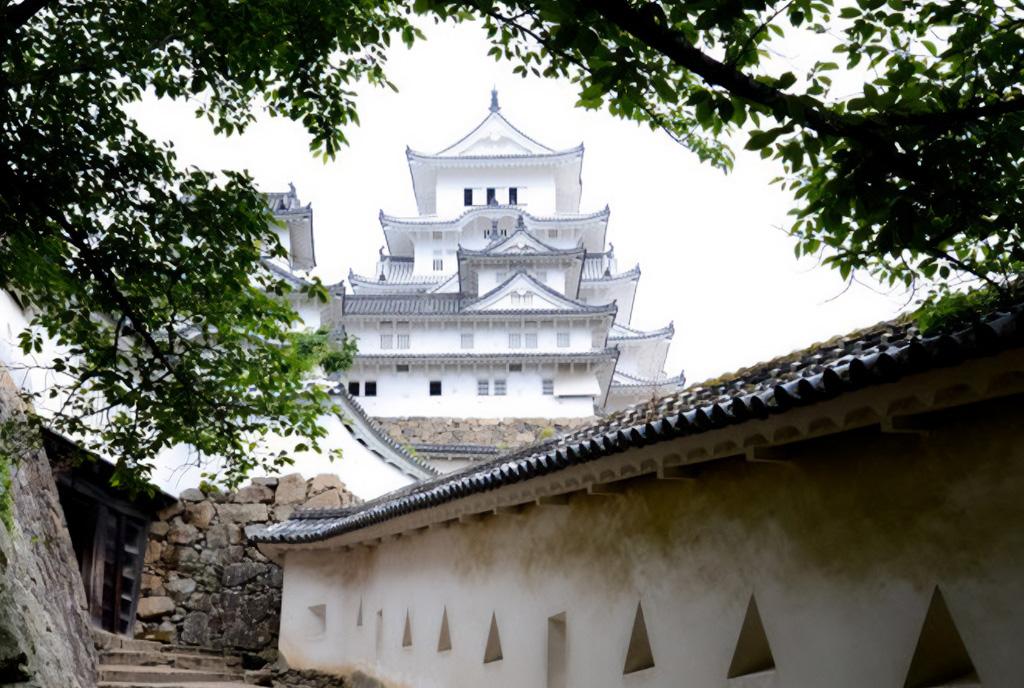


Wandering the grounds of Hikone Castle beside Lake Biwa in central Japan, the scene looks like something lifted straight off a postcard.
Known as the "Water Castle," the complex features tall stone walls, romantic cherry blossoms, cunning doors designed to confuse the enemy and steep staircases leading up to wooden keeps, where travelers pause to take in sweeping views of the lake below.
But there is far more to this story than pretty scenery.
Partner links: booking through them supports the blog at no extra cost to you.
In her new book, "Samurai Castles," author Dr. Jennifer Mitchelhill and photographer David Green spent more than three years documenting 24 castles from Japan's samurai era.
The goal? To understand the aesthetic details, cultural values and historical events surrounding these architectural marvels.
Mitchelhill, an architectural historian at the University of Melbourne, Australia, has been traveling to Japan for the past 30 years on research projects and teaching assignments.
"One of those research projects was documenting the reconstruction of Kanazawa Castle," Mitchelhill recalls.
"The lack of accurate information about Japanese castles in English became obvious, so I decided to visit, photograph and document as many castles as I could over the following three years."
That led to her first book, "Samurai Castles: Power and Beauty," also with Green, in 2003. Over the next 15 years, during her postgraduate research, Mitchelhill focused on Japanese design.
Here, the scholar reveals everything you could ever want to know about Japan's ancient samurai castles, so you can plan a visit of your own.
What inspired you to work on this book?

"My initial interest in Japanese castles was tied to the architecture. I was intrigued by how a military structure could be strong and impregnable, yet at the same time refined and finely detailed," says Mitchelhill.
"So the main focus of our first book was the architectural detail. However, the individual stories of each castle still needed to be told: how they came about, why they sit where they do and why a particular lord built a castle but did not stay there for long."
What's important to understand about the samurai?
"The samurai were warriors. The period in which the castles described in this book were built spanned the end of the Warring States period in the late 16th century to the early years of the Tokugawa shogunate, or Edo era (1600-1868)," says Mitchelhill.
"This was a feudal age with a strict class system. The shogun was the supreme military leader, the daimyo was the lord of a region and the samurai were the daimyo's vassals or army.
"But the samurai were not only warriors. They were also castle builders, politicians and local leaders with a fine aesthetic sense."
How many castles are there in Japan altogether?

"The number of castles has varied enormously over the past 500 years," says Mitchelhill. "During the Warring States period in the 15th and early 16th centuries, thousands of fortifications were built to defend a warrior's territory."
"By the end of that period, as Japan was being unified by three powerful daimyo, hundreds of larger and stronger castles with stone walls were built.
"Most of them, though, were ordered demolished once the Tokugawa achieved absolute power in 1615, leaving around 180 'modern' castles (built between 1575 and 1620) featured in this book."
What has happened since then?
"Many castle buildings have been reconstructed, at first in concrete," says Mitchelhill. "Over the past 20 years there has been a shift toward reconstruction using traditional materials and traditional building techniques."
"The castles in this book are the most intact or most significant castles to have survived to the present day. Even so, you can still find the remains of hundreds of castles across Japan."
Who originally designed these castles?

"The castles were designed by the samurai or their lords," says Mitchelhill. "Two of the most famous castle designers were the daimyo Todo Takatora and Kato Kiyomasa."
"Todo Takatora is believed to have designed around 20 castles, the largest and most important of which was Edo Castle.
"Todo's other castles included Wakayama, Uwajima, Imabari, Iga Ueno and Sasayama."
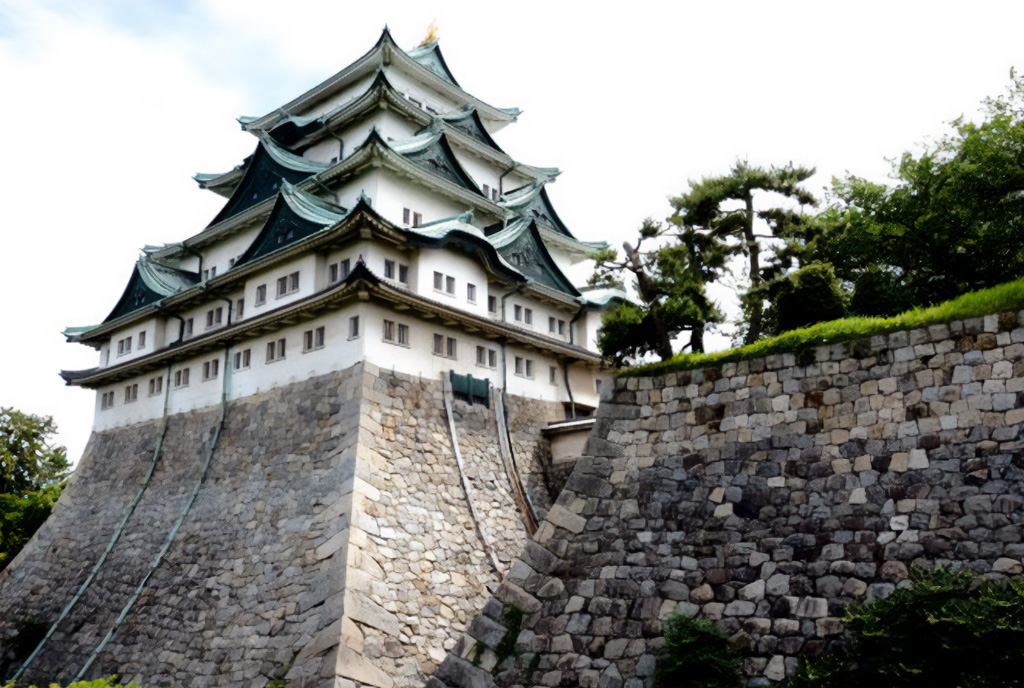
"Kato Kiyomasa designed Kumamoto and Nagoya castles. He was known for his skill in building sheer stone walls. One of the walls of Nagoya Castle contains an enormous stone dedicated to him, called the Kiyomasa Stone."
What surprised you while documenting the architecture?
"Although samurai castles are architecturally similar in terms of their stone walls, moats and wooden keeps, they differ greatly in size, layout and specific aesthetic features," says Mitchelhill.
"Each castle had to be unique for defensive purposes, to confuse an invading enemy. On top of that, enormous castles were built in just a couple of years using local manual labor.
"On the daimyo's orders, peasants built stone walls up to 30 meters high, dug moats as deep as eight meters, hauled the huge boulders that were placed by important entrances and constructed countless wooden, clay and plaster buildings."
Which castles have the most interesting defensive strategies?
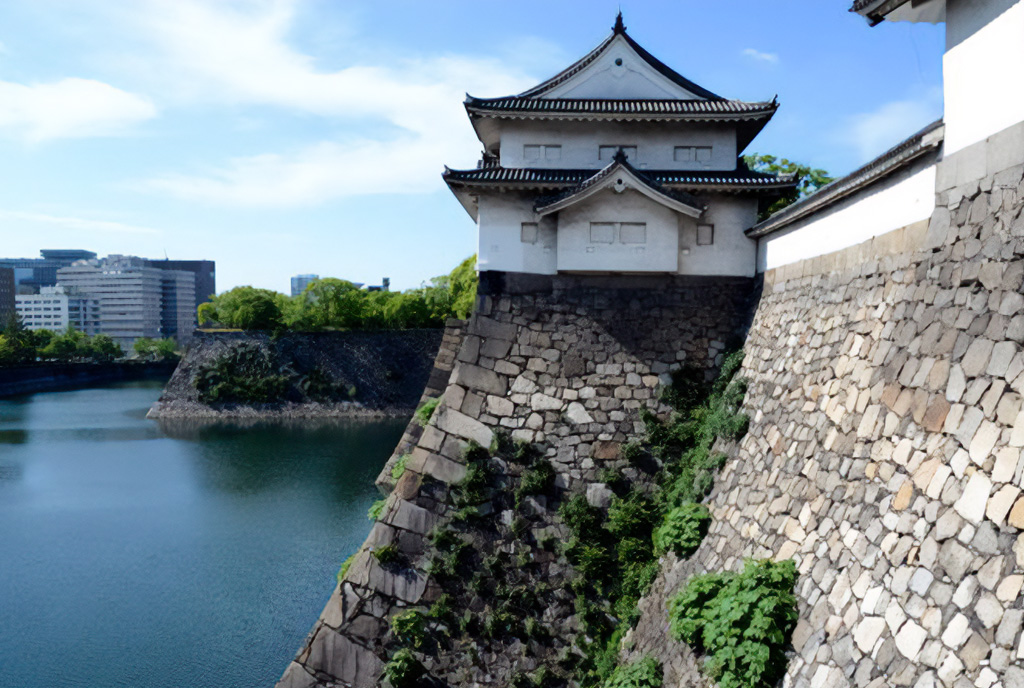
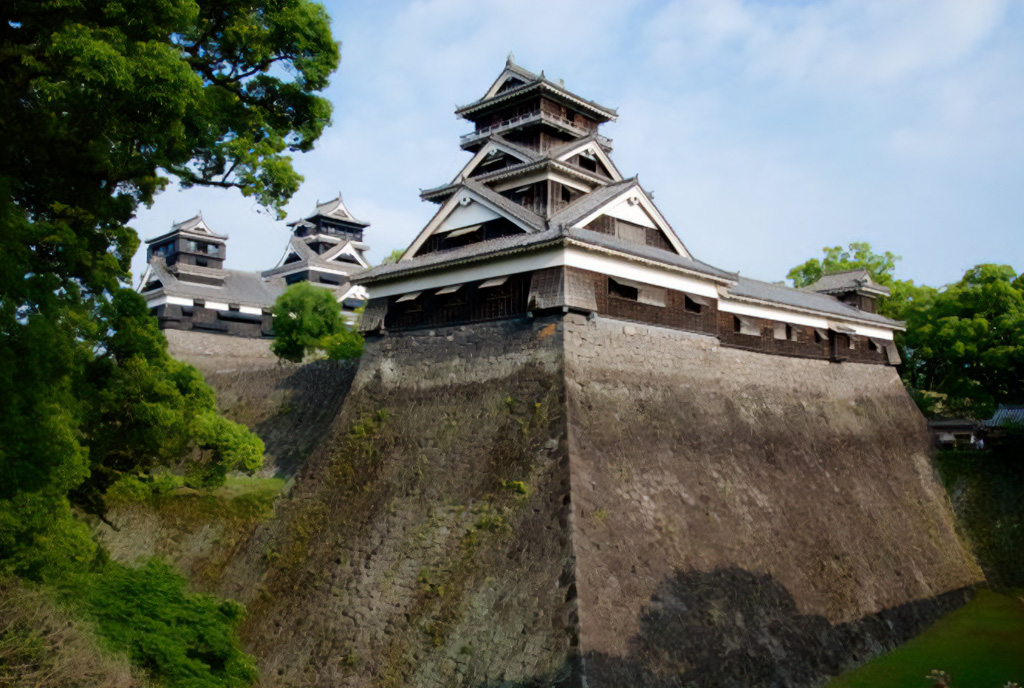
"Nagoya, Osaka and Kumamoto castles have massive sheer stone walls that curve inward.
"The stones in these walls are fitted tightly together to eliminate any foothold for attackers trying to scale them," Mitchelhill explains.
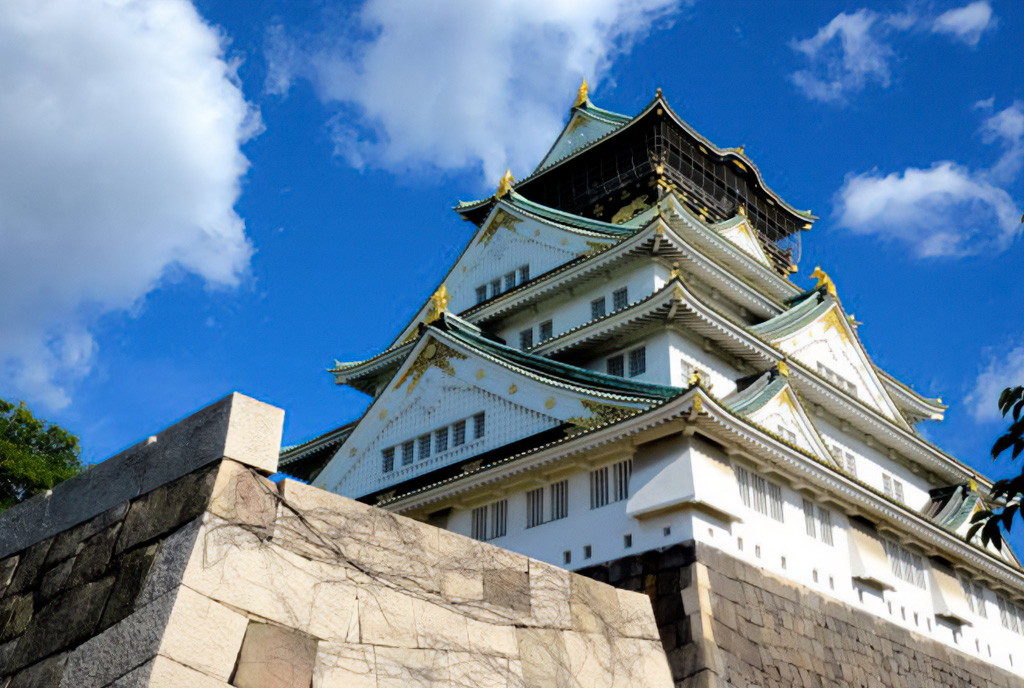
"The walls of Osaka, rising from the moats, resemble an open fan, with every fold or corner protected by a tower. The castle's defenders could fire on invaders through openings and stone-dropping windows in these towers.
"Meanwhile, the walls of Kumamoto Castle earned the nickname nezumi-ishi (mouse walls), because it was believed that not even a mouse could get past them," says Mitchelhill.
"Sadly, the 2016 earthquake destabilized many of Kumamoto Castle's walls and buildings. Their repair is expected to take many years."
Of all the castles you visited, which is the most beautiful?

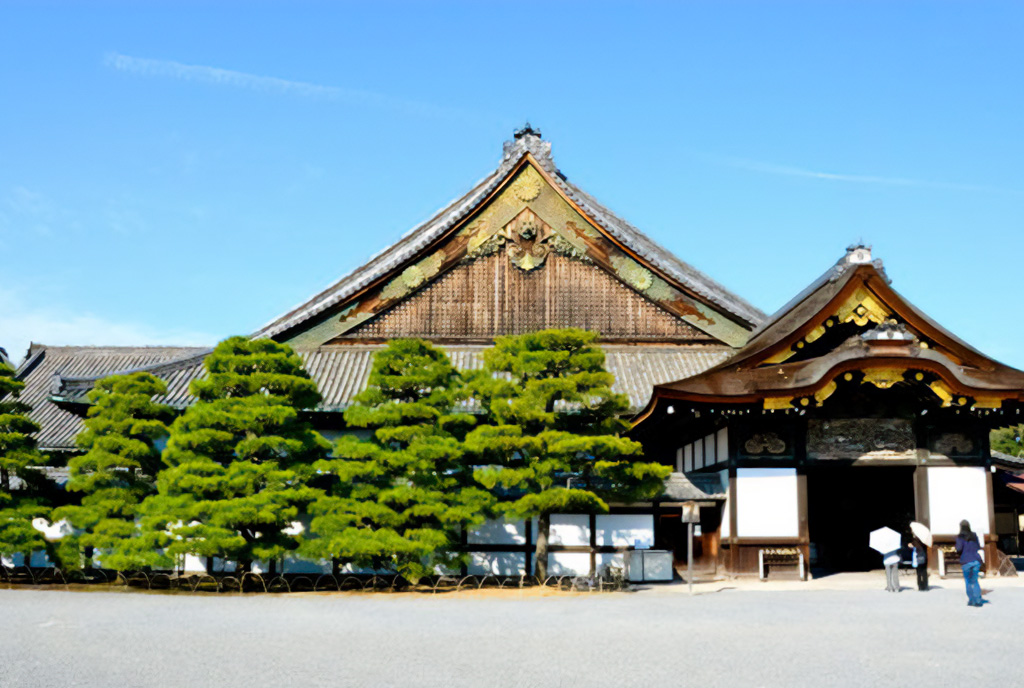
"The palace at Nijo Castle in Kyoto is extraordinarily beautiful. It is the oldest surviving castle palace, more than 400 years old," says Mitchelhill.
"Built by Tokugawa Ieyasu (the founder and shogun of the Tokugawa shogunate) during the Edo era (1600-1868), Ieyasu hired the most skilled craftsmen of the day to adorn the palace walls and screens with exquisite paintings and carvings.
"Thanks to this opulence, Ieyasu could impress visitors to the palace with his power."
Did you come across any astonishing stories along the way?
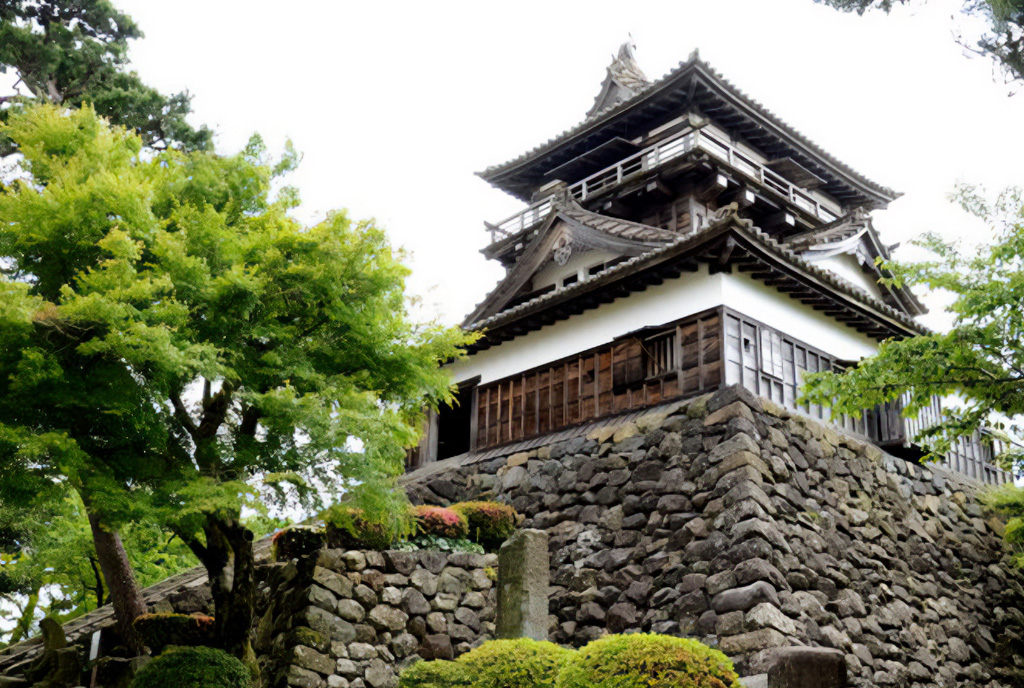
"Maruoka Castle has a 'human pillar' (called a hitobashira) sealed into its stone foundation.
"During the castle's construction in 1576, there were problems stabilizing the stone walls. It was decided that a human sacrifice was needed to appease the gods," says Mitchelhill.
"A blind peasant woman named Oshizu volunteered to become the hitobashira in exchange for her son being accepted by the lord of the castle and made a samurai.
"Sadly, the lord was unable to keep his promise, as he was transferred to another castle soon afterward.
"When the moat flooded, as it often did in years past, it was said to be Oshizu's tears."
Which castle is considered the most famous?

"Himeji Castle is the most famous castle in Japan today. It is the largest original surviving castle, with vast grounds, a huge tenshu (main keep) and a number of original outer buildings and gates," says Mitchelhill.
"It is beautiful, impressive and easy to reach by train from Osaka and Kyoto (in Hyogo Prefecture)."
And is there an underrated gem you would recommend?
"Kochi Castle is one of several outstanding castles on the island of Shikoku (southwest of Kyoto) worth visiting alongside Marugame, Iyo-Matsuyama and Uwajima castles," says Mitchelhill.
"These make up four of the 12 castles remaining in Japan with their original tenshu.
"Kochi Castle has a number of intriguing features: the arrangement of the buildings within the innermost enclosure is unique, with the lord's reception rooms adjoining the main keep. These buildings were usually placed in a lower or outer compound.
"Latticed windows in the low, clay-plastered walls surrounding the inner compound allowed the samurai to keep watch; iron spikes line the top of the tenshu's stone base to deter would-be invaders; and 'trap gates' were used to capture an invading army."
Which one is the most remote?

"Hagi Castle, on Japan's southwestern coast, is one of the more remote castles."
"It is not very well known, and it is hard to get to, requiring various forms of public transport. Even so, it is absolutely worth the trip," says Mitchelhill.
"The samurai districts surrounding the inner castle enclosures are very well preserved and give a sense of an Edo-era castle town. Hagi Castle itself has an interesting layout, with a fortified lookout at the summit of Mount Shizuki and a tenshu ringed by a moat at the foot of the mountain."
"The mountain sits on a peninsula that juts out into the sea. It is a fine example of using topography to create an impregnable fortress."
Is there a story attached to it?
"Yes, and it is fascinating: Mori Terumoto was one of the wealthiest and most powerful daimyo in Japan.
"But after backing the losing side at the Battle of Sekigahara in 1600, he was stripped of his land in Hiroshima and exiled to the remote town of Hagi," says Mitchelhill.
"The Mori never came to terms with their exile, and the region became a hotbed of dissent against the Tokugawa shogunate. It was from Hagi that many of the instigators of the Tokugawa's downfall in the 1860s emerged."
Of all the castles, do you have a personal favorite?

"One of my favorite castles is Hikone, which has a number of unique, original buildings on its extensive grounds," says Mitchelhill. "There is a stunning stroll garden with a lake, a teahouse and a small palace-style residence at the foot of the hill where Hikone's main keep stands."
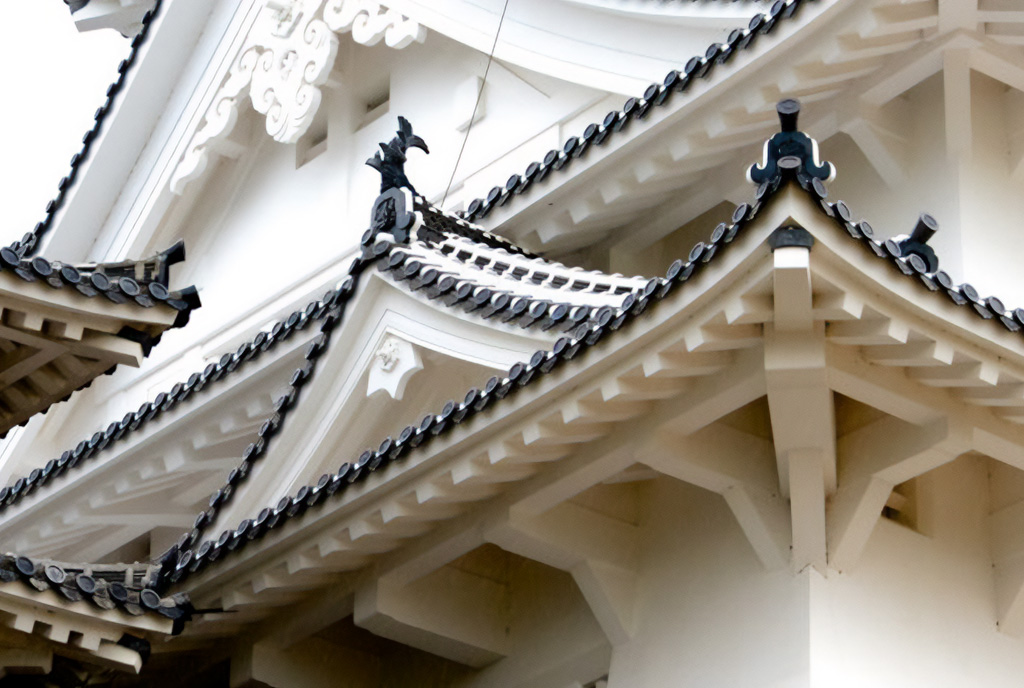
"The main keep is small but beautifully proportioned, with elegant black-and-gold decoration, black wooden bell-shaped and square sliding windows and a mix of roof styles.
"Hikone Castle also has structures found nowhere else in Japan, such as the Tenbin Yagura (balance-style gate) with its wooden bridge and stables (called umaya)."