

Anna was born with a claim to dual citizenship, because she has a Japanese mother and an American father. She has spent her life traveling between the two countries, and she says she has always felt a deep connection to both cultures.
But Japan requires anyone holding more than one passport to pick just one by the age of 22, an impossible choice for Anna, who asked to use a pseudonym for privacy.
"I'm mixed race, I've lived in both Japan and the US, I speak both languages, I'm completely split down the middle when it comes to my identity," she said. "It's like asking someone whether they love their mother or their father more. It's such a cruel question."
Partner links: booking through them supports the blog at no extra cost to you.
Over the past few decades, people have traveled and lived abroad more than ever, with the number of international migrants (people who have changed their country of residence for at least a year) tripling between 1970 and 2015, according to the International Organization for Migration.
At the same time, tolerance for dual citizenship has generally grown. In 1960, fewer than a third of countries let citizens acquire a second nationality, compared with three quarters today, according to a 2019 paper by Maarten Vink, a professor of political sociology at Maastricht University in the Netherlands.
Asia is the exception to this trend. It is the most restrictive region in the world when it comes to dual citizenship, with only 65% of its countries and territories allowing it, according to the Maastricht Centre for Citizenship, Migration and Development. By comparison, 91% of the Americas allow it, making them the most liberal.
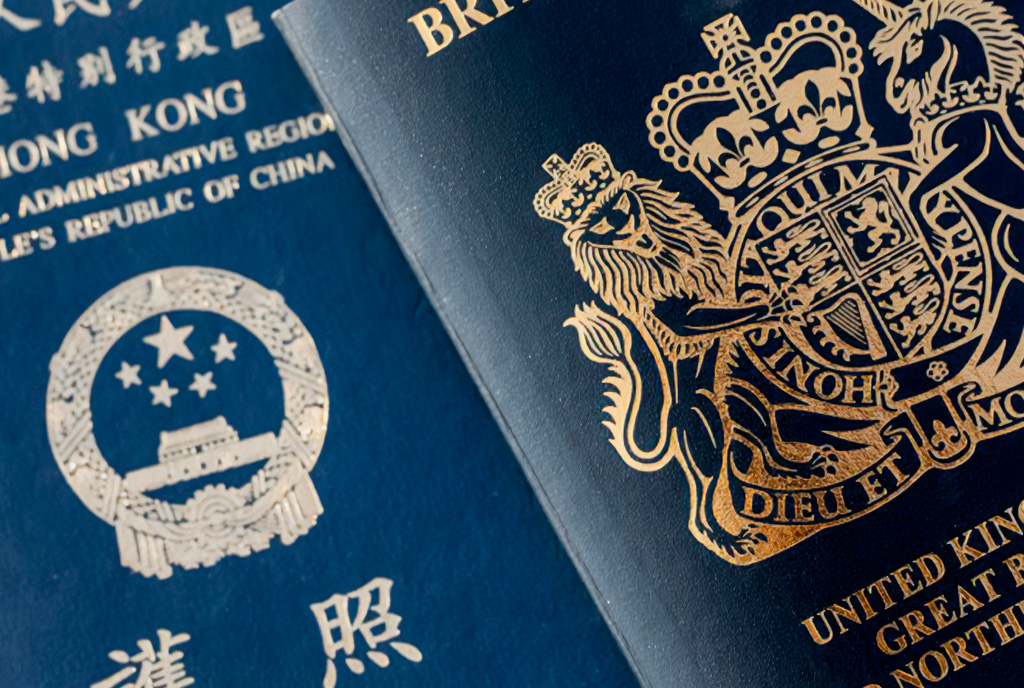
And some Asian countries are tightening their immigration laws. Japan reaffirmed its strict stance in January, when a court upheld the country's ban on dual citizenship, rejecting a lawsuit filed by Japanese nationals living in Europe. Hong Kong took a harder line in February, barring dual nationals from receiving consular protection, a move never made before in the Chinese city, where dual citizenship is not legally permitted but had been tolerated.
"Dual nationality is not recognized under China's Nationality Law," Hong Kong leader Carrie Lam said in February. "This is very clear. We strictly adhere to, or implement, this particular policy."
There are a number of reasons the region is so resistant to dual citizenship, including a history of conflict and colonialism. But in some countries, critics say, the ban on dual citizenship also reflects a lean toward nationalism, and a desire to preserve a mono-ethnic, monocultural identity.
Loyalty and Nationalism
In the Asia-Pacific, only a handful of places accept dual citizenship without conditions, including Cambodia, Timor-Leste, Australia, New Zealand and Fiji.
Most countries are against it, though some prefer not to enforce their policy strictly, allowing people to hold multiple passports as long as they simply do not declare them. Others allow dual citizenship in limited forms: the Philippines permits it for those born as Filipino citizens but not for naturalized Filipinos. South Korea lets children born to its citizens abroad hold a passport from both their country of birth and their parents.
One reason many Asian countries oppose dual citizenship is the belief that it can create divided loyalty among citizens, said Jelena Dzankic, co-director of the Global Citizenship Observatory (GLOBALCIT), an international research network on citizenship. "The reason why, historically and traditionally, countries did not allow dual citizenship is, who are you going to protect if our two countries go to war?" she said.
Japan drew up its current citizenship laws soon after World War II, when many Japanese Americans were placed in internment camps in the US; other dual nationals renounced their loyalty to the Japanese emperor for their own safety, said Atsushi Kondo, a law professor at Japan's Meijo University.
In one well-known case, a US-born Japanese American dual national worked in Japan for a company that oversaw American prisoners of war. After returning to the US following the war, he was sentenced to death on charges of treason. He was eventually pardoned and deported to Japan, but for decades afterward Japanese lawmakers pointed to his case as an example of the conflicting obligations that came with dual citizenship.

"During wartime, dual citizenship revealed a drawback," Kondo said. "But in peacetime, dual nationals have many advantages," including visa-free travel to more countries, wider international job opportunities, potentially cheaper university education and much more. There are modern drawbacks too. For example, American dual nationals have to deal with double taxation, but that does not apply to most countries.
The international context has now shifted, and "Japan's beliefs are a little outdated," he added, but the government is reluctant to reopen its immigration laws and risk upsetting conservative voters.
China's ban on dual citizenship also ensures that its citizens "give only undivided loyalty to the government," said Low Choo Chin, a history lecturer at Universiti Sains Malaysia. During the Cold War, China's efforts to normalize relations with neighboring countries and end its international isolation were complicated because "overseas Chinese were associated with revolutionary activities" and communist insurgencies, Low wrote in a 2016 paper. So the communist government shaped the current citizenship law in 1980 to address "diplomatic friction" and "end the divided loyalty among overseas Chinese."
Under Chinese President Xi Jinping, the government has tightened its measures against dual nationals, encouraging the public to report people who secretly hold two passports. Those who are caught may find their access to public services restricted.
The tougher measures are part of the government's anti-corruption drive against "dual nationals who exploit gray areas in the law and try to escape legal sanctions with their foreign citizenship status... who flee abroad and move their assets," said Low, pointing to estimates from China's central bank that 18,000 corrupt officials may have fled the country with 800 billion yuan ($122 billion) between the mid-1990s and 2008.
The question of citizenship was pushed to the forefront during the Covid-19 pandemic. At the height of a crisis that crossed national borders, governments suddenly faced questions such as: Which citizens do we consider our own? Who are we responsible for? Who do we protect?
Because China does not recognize dual citizenship, many Chinese nationals were barred from evacuating back to their country of second nationality, even if it was their place of birth or main residence.
There were cases where families were separated; one British woman was told she could not evacuate with her 3-year-old son because he held a Chinese passport, even though he is also a British citizen with a British passport. Under pressure from the international community, the government eventually relented.
Ethnicity and Blood
The idea of loyalty to a single country and culture, especially in East Asia, can also "imply a desire to maintain a cohesive ethnocultural identity," said Dzankic of GLOBALCIT. Several countries that do not allow dual citizenship are also highly homogeneous; for example, 92% of China is Han Chinese, according to the CIA World Factbook.
And one of the simplest ways for a country to control its ethnic makeup is through the type of citizenship it chooses to recognize.
There are several ways to obtain a first or second citizenship, including marriage, adoption and naturalization. But the most common are citizenship by birthright (jus soli), which means children automatically gain citizenship of the country in which they are born, and citizenship through parentage (jus sanguinis), where children automatically inherit their parents' citizenship.
In Asia, the vast majority of countries today do not recognize birthright citizenship, one of the fastest ways for a country's ethnically foreign or minority population to grow.
Or if they do, it comes with certain conditions, according to GLOBALCIT. South Korea, for instance, applies birthright citizenship only to children whose parents are unknown or stateless, so if a child born on Korean soil was abandoned, or their parents are stateless, they would receive Korean citizenship.
"A shift from jus soli to jus sanguinis was seen across Asia over the twentieth century," wrote Olivier Vonk of the Maastricht Centre in a 2017 paper. Bangladesh, Indonesia and India are among the countries that moved toward recognizing citizenship primarily by descent.
The type of citizenship a country recognizes and the strictness of its restrictions shape how diverse or homogeneous its population can be, Kondo said.
"South Korea was also a mono-ethnic country in the old days," he said. "But they changed their policy, so now they are more relaxed about dual nationals... And now they are considered multiethnic, or a multicultural country," Kondo added.
South Korea liberalized its citizenship law through sweeping amendments in 2010, which for the first time allowed permanent dual citizenship for its nationals (though under certain circumstances); dual nationals who did not fall under those circumstances were given more time to choose; and a special naturalization path was created for talented individuals.
Japan remains strict in its citizenship laws and ethnically homogeneous, Kondo said, although government statistics do not include an ethnic breakdown.
"Ordinary Japanese people may regard ethnicity and citizenship as equal... That traditional feeling is strong among ordinary Japanese people," he said. Even some current politicians believe Japan "should be a mono-ethnic country," he said.
Even the term jus sanguinis, citizenship by descent, implies ethnicity, said Anna, who now lives in the United Kingdom and declined to reveal her current citizenship status. The Latin translates as "right of blood," and Japanese citizenship is built on that idea, so "the notion of blood is very strong in their understanding of citizenship."
If a naturalized Japanese citizen who is not ethnically Japanese has a child, that child automatically becomes a Japanese citizen, but social relationships and norms continue to draw lines around ethnicity, she said. In schools, bullying and a sense of social isolation persist for biracial or mixed Japanese people.
"It's this idea of blood purity... that's why, even though I have Japanese citizenship, I'm not accepted as a Japanese citizen most of the time, because I'm not 'purely' Japanese, as they say... because I don't look like them," she said. "A lot of it is xenophobia. A lot of it is racism."
Looking Ahead
Recent moves in China, Japan and Hong Kong suggest that parts of Asia are pulling away from dual citizenship, even as other parts of the world embrace it. Malawi, which previously banned dual citizenship, changed its laws to allow it in 2019. Russia and Norway followed suit in 2020.
In Hong Kong, the future of dual citizenship is unclear. Although the government has insisted it is taking a tougher stance on enforcement, it has not provided information on what measures will be taken or how the city's thousands of dual nationals will be affected.
"Maybe 70% of my friends hold another passport," said Janice Tam, a Hong Kong resident who also holds a British passport. She is not especially worried by the government's recent rhetoric, but "it depends on whether they make you choose one," she said. "What are the consequences of that? If you chose your foreign passport, what do you still get if you stay in Hong Kong?"
Ella Wong, who holds Canadian and Hong Kong passports, is also "optimistic" that dual nationals may not be affected in their day-to-day lives. Her only concern is if Hong Kong keeps changing its immigration laws to resemble mainland China, or adopts the mainland's laws altogether.
"With a Hong Kong passport, you don't know what it will turn into," she said. "Could it become a Chinese passport, and then what does that mean in terms of travel, work and life?"

More broadly, across Asia, most countries are unlikely to liberalize their laws anytime soon, Low said. The West "prioritizes liberalism, individual rights to (dual) citizenship," she said. "(But) in many Asian constitutions, access to citizenship is very difficult for migrant communities, because governments believe that the right to citizenship is a privilege, not a right. In this context, it is quite hard to imagine Asian governments allowing dual citizenship."
Even so, experts and dual nationals remain hopeful that change will inevitably come as global migration grows. It takes time, said Vink, the Maastricht University professor.
And while they remain in the minority, a few Asian countries have introduced new rules that allow more flexible citizenship arrangements. India, for example, created a new category of permanent residence in 2005 that allowed people of Indian origin to live and work in the country.
It is still not dual citizenship, but it marked "a way of acknowledging the realities of a globalized world and adapting to them step by step," Dzankic said. "Although countries are generally restricting dual citizenship, one might wonder whether these in-between statuses could be a step, or a move, toward more liberal policies."
"I hope the world will change," she added. "What I think is important, or what will be important, is a move toward dual citizenship, not as a mechanism of connection with the state, but also as a mechanism of protecting people, giving them greater life opportunities in the future."