

Wellington, New Zealand -
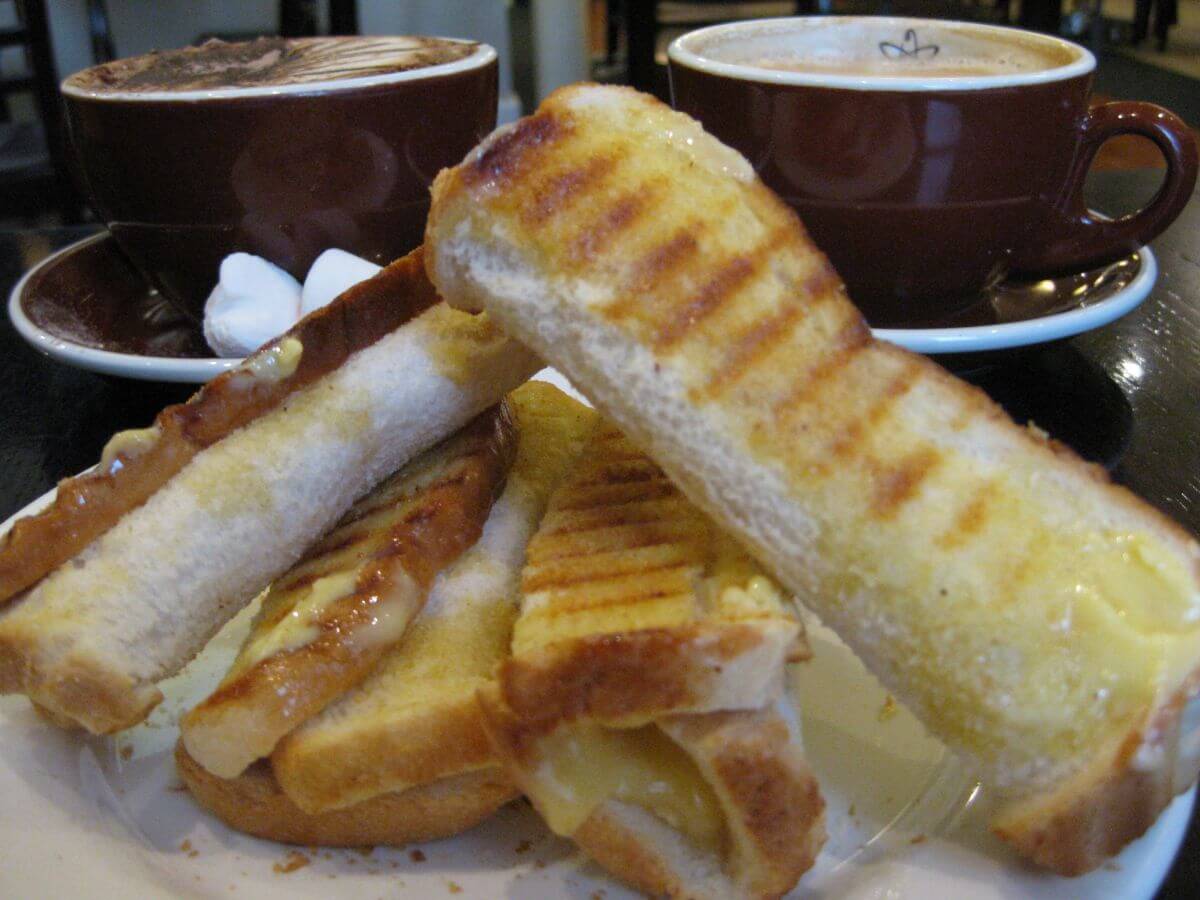
A cheese roll might seem simple: essentially a slice of bread with a cheesy filling, rolled up and toasted until lightly crisp.
Yet these humble snacks hold a special place in the hearts of many people on the South Island, the more southerly of New Zealand's two main islands, or the "deep South" as the region is sometimes called, sitting closer to Antarctica than to the equator.
Partner links: booking through them supports the blog at no extra cost to you.
Margaret Peck remembers her first cheese roll. She was a teenager on a beach near Invercargill, almost at the very tip of the South Island and the country's southernmost city, which is also home to the world's southernmost Starbucks and McDonald's.
Her husband Mark Peck remembers his first time too. It happened after he arrived as a child from Kentucky.
"I'd never tasted them before. And, ooooohhh, they were delicious! I was hooked, truly hooked!"
Decades later, it's no accident that their memories are so easy to relate to.
"A cheese roll means holidays, events, gatherings, class reunions, fundraisers," explains Donna Hamilton, who makes cheese rolls at The Batch in Invercargill, which she co-owns with her husband Gareth.
"It means people, family and laughter. It's the ultimate comfort food."
Immigration and identity
Pastures full of grazing cows are a familiar sight among the green hills of Southland, the southern part of the Deep South. Milk and cheese are plentiful here. But while cows are a fixture of New Zealand, cheese rolls were developed largely by European immigrants and their descendants.
According to Emeritus Professor Helen Leach, a food anthropology specialist at the University of Otago in Dunedin (the South's largest city), the first cheese roll recipes appeared in South Island cookbooks in the 1930s.
They gained popularity in the 1950s and 60s, when sliced bread became more common in New Zealand, and they became a staple of school fundraisers.
But cheese rolls are clearly a regional dish. Leach's research found that the first recipe for a "proper" cheese roll with a pre-cooked cheese filling appeared in a cookbook on the densely populated North Island only in 1979. Even now, cheese rolls are rarely found in North Island cafes.
Even so, the Pecks wanted to offer them in the capital when they opened Little Peckish in Wellington, at the bottom of the North Island, in 2009, after Mark Peck wrapped up a career in parliament; his electorate had been Invercargill.
"I'm a Southland girl," explains Margaret Peck, who grew up north of Invercargill, near the town of Winton. "I wanted to have something that's part of my identity."
Admittedly, some adjusting was needed: at first, customers ate their cheese rolls with a knife and fork. She insists cheese rolls are eaten with your hands.
West of Invercargill lies Riverton, a small town set along an estuary formed by the meandering Aparima and Pourakino rivers.
This is where Kazna Gilder makes cheese rolls at The Crib restaurant. She says "southern sushi", as cheese rolls are sometimes called because they are "as popular as sushi", is synonymous with regional identity.
"A cheese roll is honest," she explains. "There's no pretension to it. I think that's because we're so down to earth."
More than meets the eye
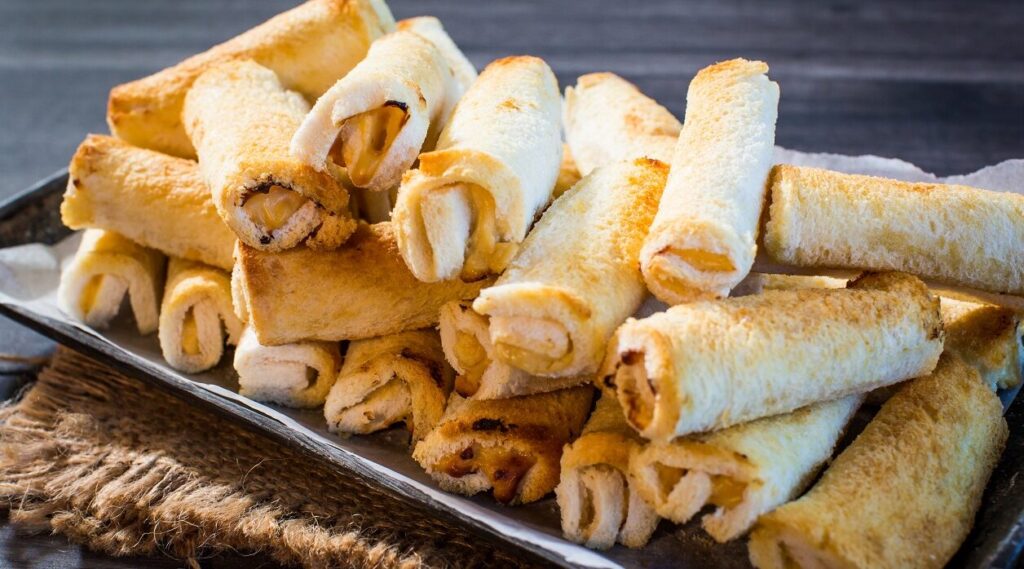
There are countless variations on the cheese roll.
"Traditions are passed down from generation to generation," says Hamilton. "Kids living overseas ask home for the proper recipe so they can make it for their flatmates in London, to ease their homesickness."
Mark Heffer, who makes cheese rolls at his cafe "Industry" in Invercargill, says a "proper" cheese roll needs a few things: "[The bread] has to be rolled, not folded, plenty of cheese and fresh red onion, something like mayonnaise for a creamy flavour, and we like to add a bit of sour cream and chopped parsley. Toasted, but not too much, it should be golden brown and brushed with butter on top."
"Once you've eaten a proper cheese roll, you'll definitely need to wash your hands and face," he adds.
Some, however, take a slightly different view.
One example is the Rātā restaurant north of Southland, beneath the snow-capped peaks of The Remarkables. Their cheese rolls are topped with tinned apricots, hazelnuts, truffle oil and honey from the southern rātā tree that grows on the west coast of the South Island. Fleur Caulton, the restaurant's founder, says it's a popular dish at the Queenstown eatery.
"Everyone has their own version of a hot dish. We have our own version of the cheese roll."
Rolling on
As bucolic as the area might seem, where neighbours can leave their doors unlocked and penguins visit the beaches, life is changing here as everywhere. For instance, the planned 2024 closure of the aluminium smelter south of Invercargill at Tiwai Point, Southland's biggest employer, could mean the loss of hundreds of jobs.
Other changes are on the horizon too. New Zealand's border closures during the coronavirus pandemic led to a rise in domestic tourism, but there are fears that the absence of foreign visitors could shape the future. Much of central Invercargill has also been demolished. On the site of the ruins, a business and retail complex worth 165 million New Zealand dollars (around 120 million US dollars) will be built.
But cheese rolls continue to play an important part in the story of the deep South. Caulton of Rātā says that last year, for example, "1,800 dozen" cheese rolls were made for a fundraiser at Wakatipu High School in Queenstown.