

Ask people to name the most beautiful castles in Europe and Neuschwanstein comes up first, which is fair enough: it literally inspired the Disney castle. But a list with nothing but that Bavarian fairy tale is missing half the point. Portugal's Pena looks like a pink-and-yellow dessert, Romania's Bran was sold to tourists on a Dracula legend, and Scotland's Eilean Donan sits on its own little island. Here are eight places worth seeing in person, each with an honest catch attached.
Quick table: what, where, and why it earns its spot
| Castle | Country | What makes it special |
|---|---|---|
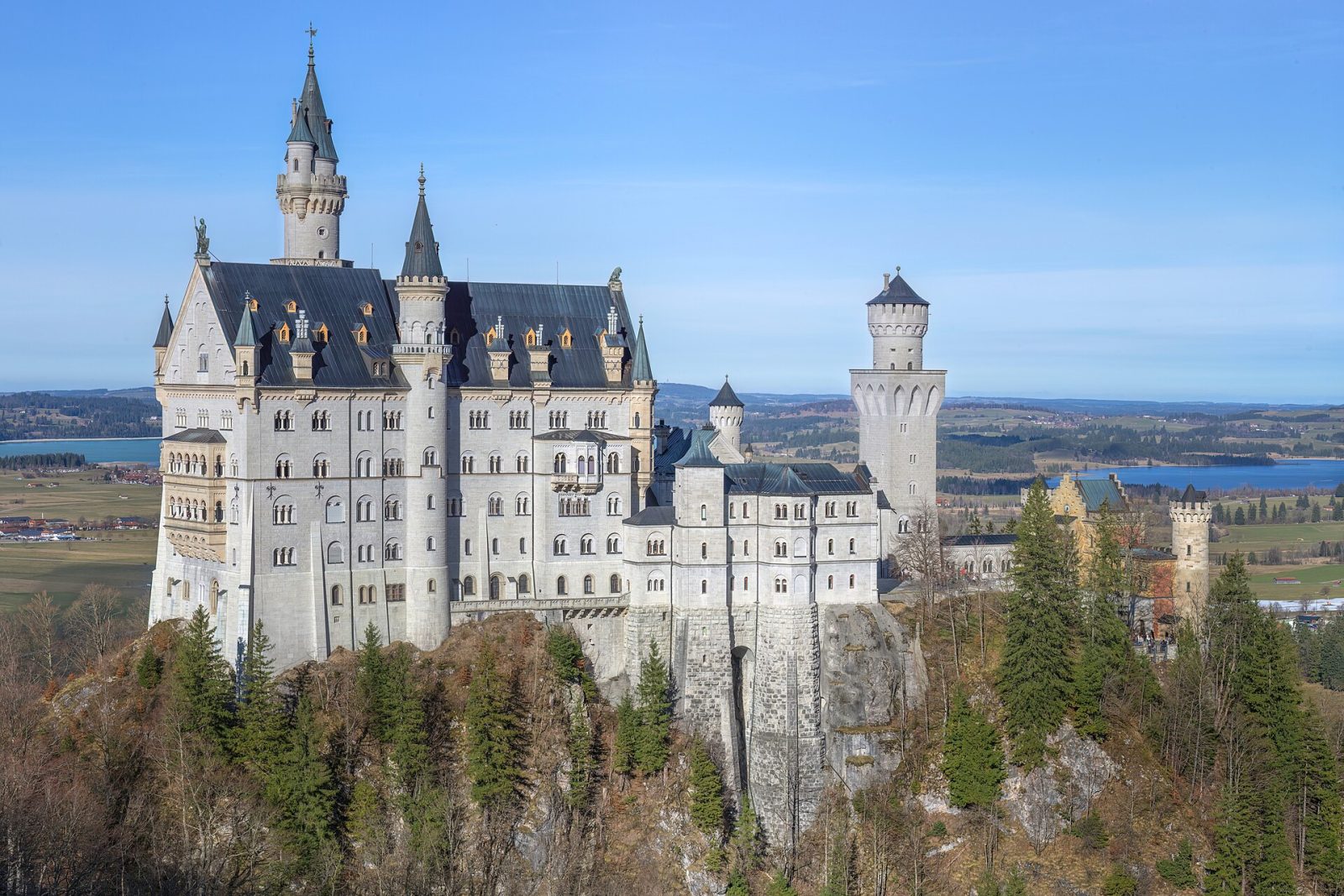
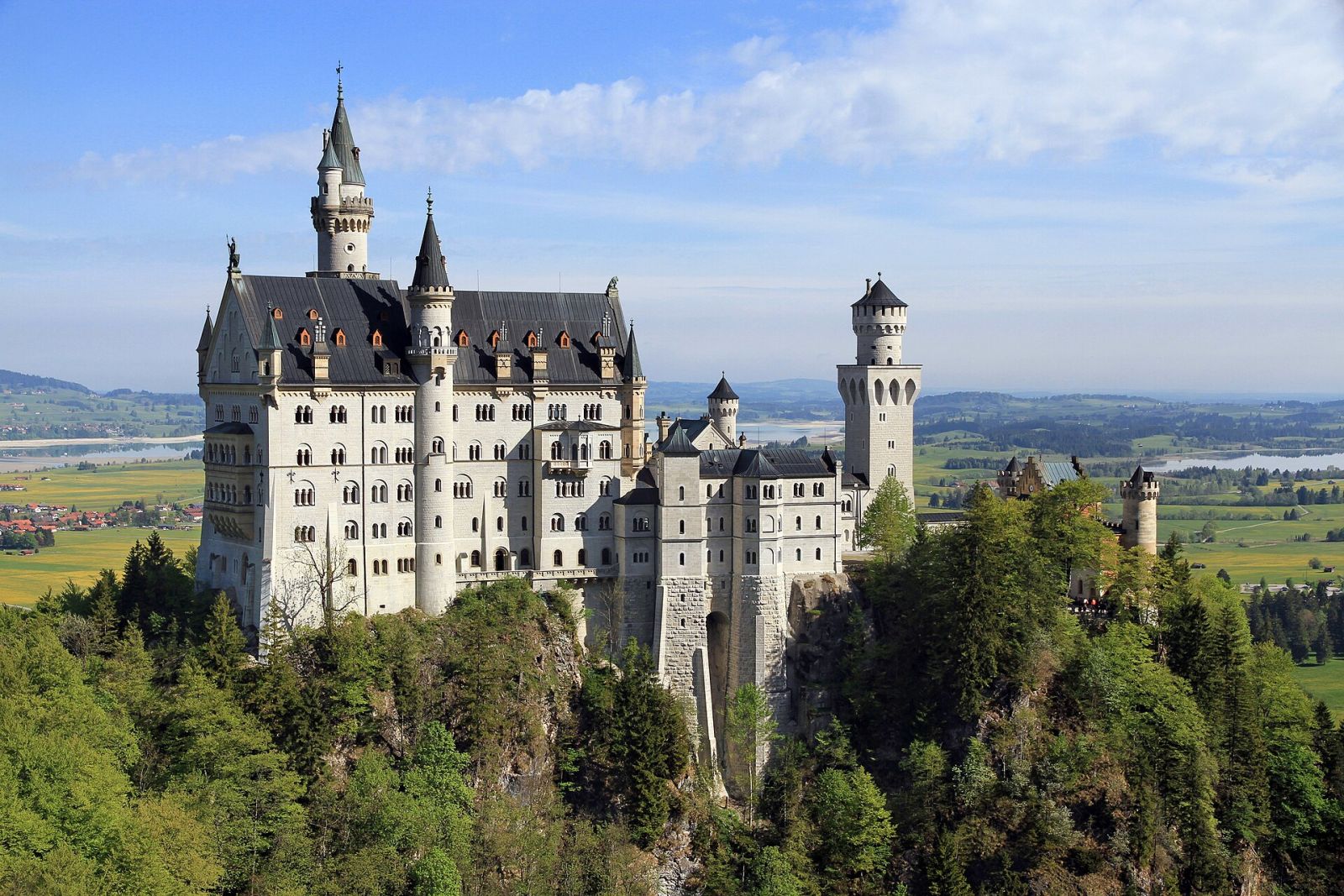
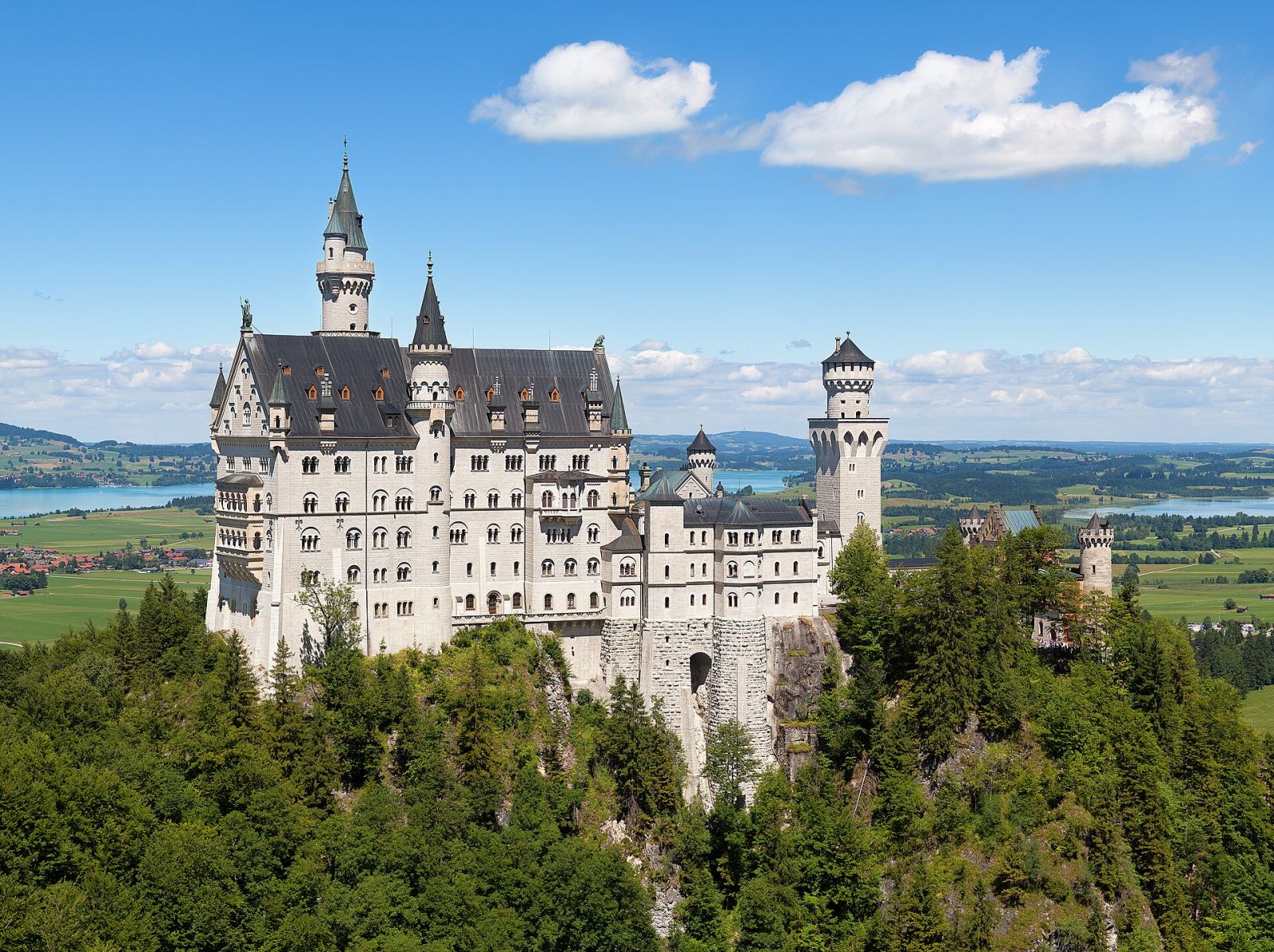
| Neuschwanstein | Germany | The model for the Disney castle, Alpine backdrop |
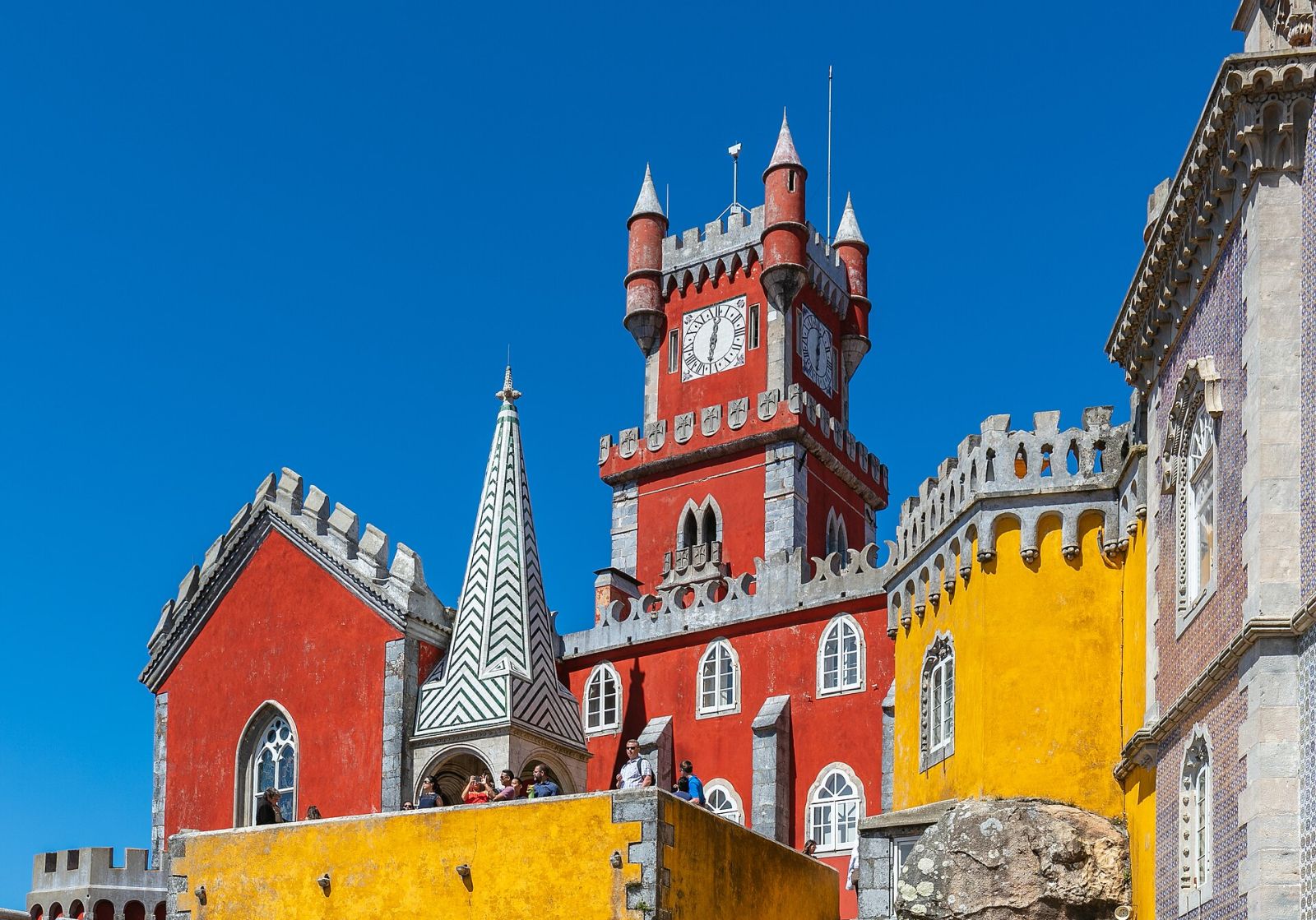
| Pena Palace | Portugal | Bold romantic colours above Sintra |
| Bran Castle | Romania | The «Dracula castle» on a Carpathian pass |
| Eilean Donan | Scotland | Island fortress reached by a stone bridge |
| Hohensalzburg | Austria | One of Europe's largest surviving fortresses |
| Chambord | France | Loire Renaissance, double-helix staircase |
| Prague Castle | Czechia | The largest castle complex in the world by area |
| Hohenzollern | Germany | A castle on a lone hill, often above the mist |
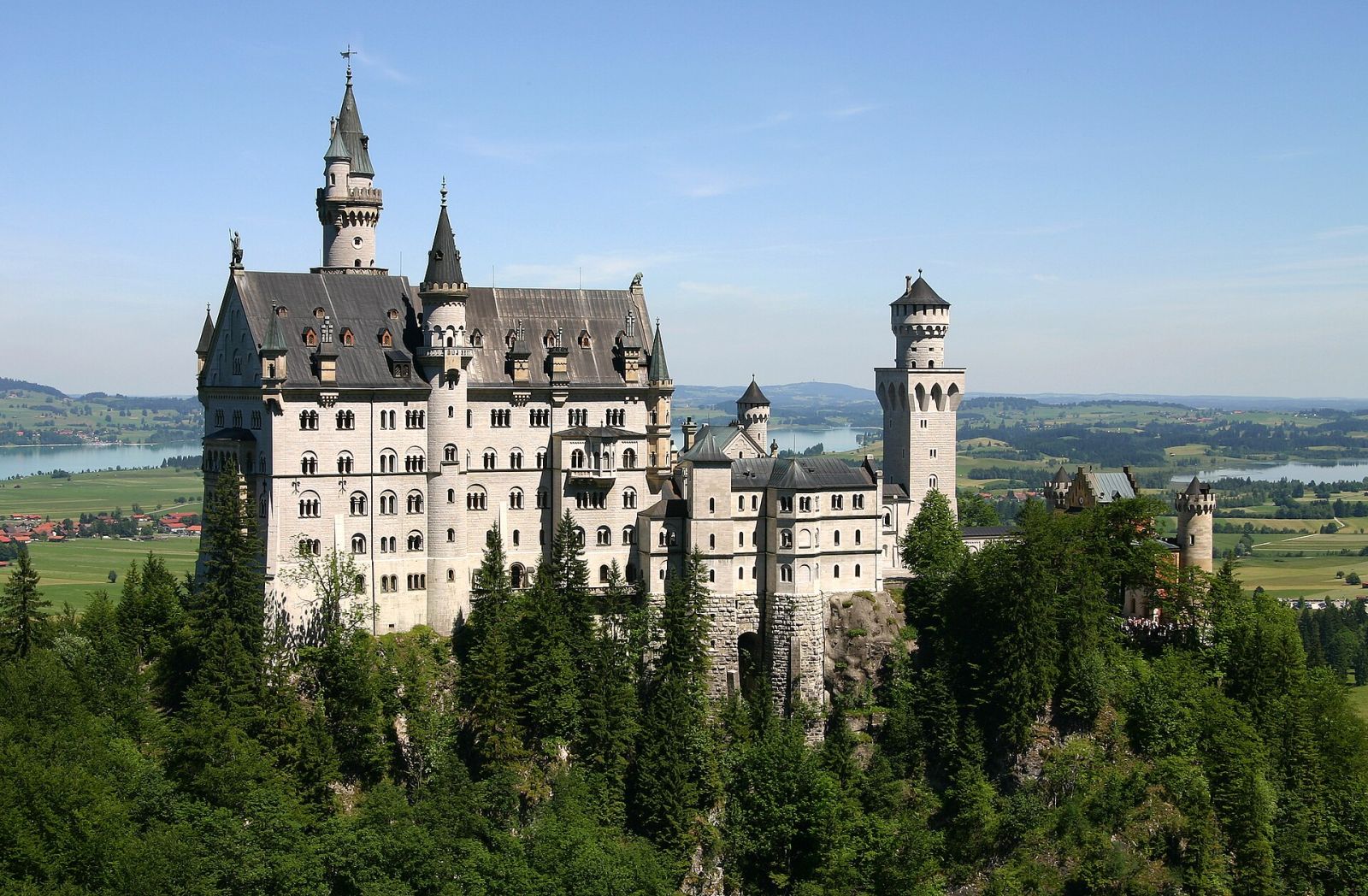
Neuschwanstein, Germany
Bavaria, near the village of Hohenschwangau. Ludwig II built it in the late 19th century as a tribute to Wagner's operas, so inside there is more theatrical fantasy than real medieval defence. The best shot isn't from the courtyard but from the Marienbrücke bridge across the gorge, where the castle floats against the mountains. Autumn and winter give the most dramatic view, summer packs the place solid.
The honest downside: timed tickets sell out well ahead, and you can only go inside on a guided tour, no wandering on your own. Book online and don't count on just showing up.
Pena Palace, Portugal
Above the town of Sintra, an hour from Lisbon. This is no grim fortress but a romantic 19th-century palace painted yellow, red and lilac so boldly that from a distance it looks like a toy. It blends neo-Gothic, Moorish motifs and Renaissance into something loud yet oddly harmonious. Around it spreads a park of sequoias and hidden trails where half a day disappears easily.
What spoils it: Sintra is one of the most tourist-clogged spots in Portugal. Go on early tickets or late in the day, otherwise you'll spend your time queuing instead of looking.
Bran Castle, Romania
Transylvania, on the pass between Brașov and Wallachia. It's forever pitched as «Dracula's castle», though its actual link to the historical Vlad the Impaler is thin, the legend was bolted on for visitors. Even so the castle is real and atmospheric: narrow stairs, an inner courtyard, dark-timber rooms perched on a rock above the road. In autumn, when the Carpathians turn yellow, it looks exactly like the Gothic story in your head.
The honest catch: inside there's a lot of vampire-themed souvenir kitsch. If you expect sombre historical truth, expect mild disappointment too, treat it more as an attraction with a great view.
Eilean Donan, Scotland
The western Highlands, where three sea lochs meet, on the road to the Isle of Skye. The stone fortress sits on a tiny island joined to the shore by a curved bridge, and that exact image ended up on countless postcards and in films. The original was destroyed in the 18th century, so what you see now is a careful early-20th-century rebuild. It's best on a still day, when the castle mirrors in the water.
The weak spot: the weather. The Highlands can wrap everything in mist and rain within half an hour, so leave yourself a time buffer and don't bet everything on one clear morning.
Hohensalzburg, Austria
Above Salzburg, on a hill right in the city centre. It's one of the largest surviving medieval fortresses in Europe, and crucially it was almost never taken by force, which is why it reaches us in such good shape. A funicular runs to the top, or a footpath if you don't mind the climb. From up there the whole old town spreads out with its domes and river, and in winter, with Christmas markets below, the view turns especially warm.
Worth knowing: in high season the funicular gathers a queue, and some of the interior exhibits are fairly modest. Come for the panorama and the walls themselves rather than the museum rooms.
Chambord, France
The Loire Valley, the heart of the French Renaissance. Chambord was meant as a hunting lodge for Francis I, and what came out was less a castle than a statement: 440 rooms, a forest of chimneys on the roof, and the famous double-helix staircase widely thought to carry Leonardo da Vinci's hand. Two people can go up and down it without ever meeting. A huge walled park with deer surrounds the whole thing.
Honestly about the flaw: inside it's fairly bare, most of the original furniture was hauled off long ago. Chambord impresses through scale and architecture, not cosy interiors, so keep that in mind.
Prague Castle, Czechia
Right above central Prague, on the hill over the Vltava. Technically it's not a single castle but a vast complex, often called the largest castle grounds in the world by area: palaces, courtyards, lanes and St Vitus Cathedral with its sharp spires inside the walls. Czech kings ruled from here for centuries, and now it's the president's seat. Best time, early morning before the coaches arrive, or evening when it's lit up.
The weak spot: by day it gets genuinely crowded, and there's a security check with queues at the entrance. The cathedral also closes for services now and then, so check the schedule ahead.
Hohenzollern, Germany
Baden-Württemberg, roughly an hour from Stuttgart. The ancestral seat of the Hohenzollern dynasty stands on a lone conical hill, and on a clear day it seems to drift above the forests, while in fog it surfaces from the clouds by the tips of its towers. The present building is 19th-century neo-Gothic, but done with enough taste to look whole and grand. Inside they show the crown of the Prussian kings and the family's personal belongings.
The downside: to get that «castle above the clouds» effect you have to catch the weather, on a flat grey day it simply vanishes. And the walk up from the car park isn't the shortest, so save some energy.
When to go and how not to ruin it
The most rewarding seasons for most of these places are late spring and golden autumn: fewer crowds than summer, and flattering light for photos. Winter works too, especially in Germany and Austria with Christmas markets under the walls, but some castles cut their hours or close in winter, so check the current schedule before you travel.
- For the popular ones (Neuschwanstein, Pena, Prague Castle) book timed tickets online.
- Arrive at opening or in the last hours, midday is the busiest everywhere.
- Weather-dependent views (Eilean Donan, Hohenzollern) shouldn't ride on a single day, give yourself slack.
- Comfortable shoes beat pretty ones: nearly everywhere means climbs, cobbles and uneven stairs.
No ranking will crown one single most beautiful castle, because fairy-tale Pena, the stern Scottish fortress and Renaissance Chambord are simply about different things. Pick the mood that speaks to you and build the route around it, not the other way round.