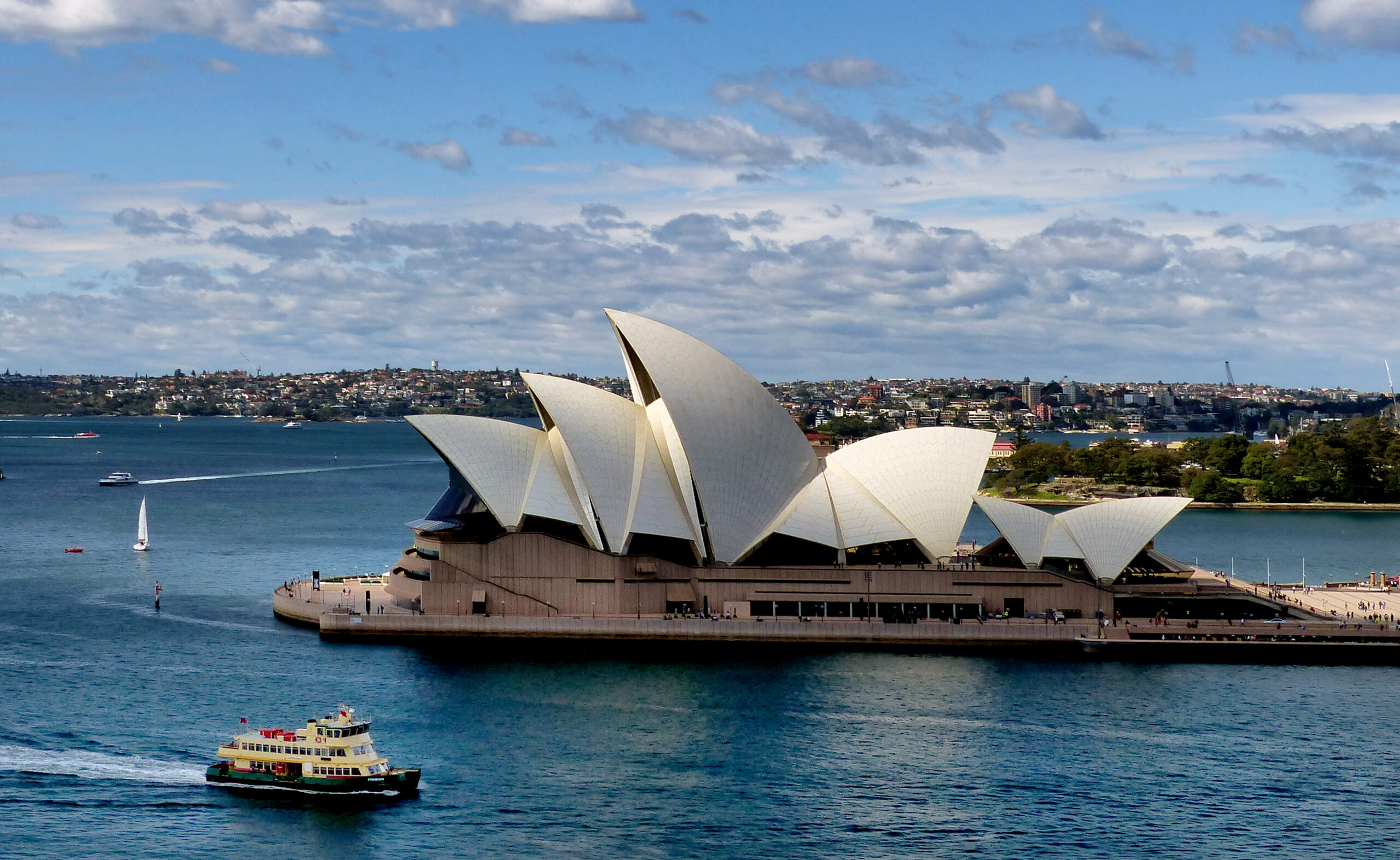


Since it opened on 20 October 1973, the Sydney Opera House has been the centrepiece of Sydney Harbour, drawing millions of visitors every year.
But there is far more to Australia's leading tourist attraction than its striking facade.
This UNESCO World Heritage site is full of surprises, from its intricate design to its popular bars and restaurants.
Partner links: booking through them supports the blog at no extra cost to you.
Before you visit the city, get to know the fascinating story behind it and everything worth doing here:
Creativity and struggle
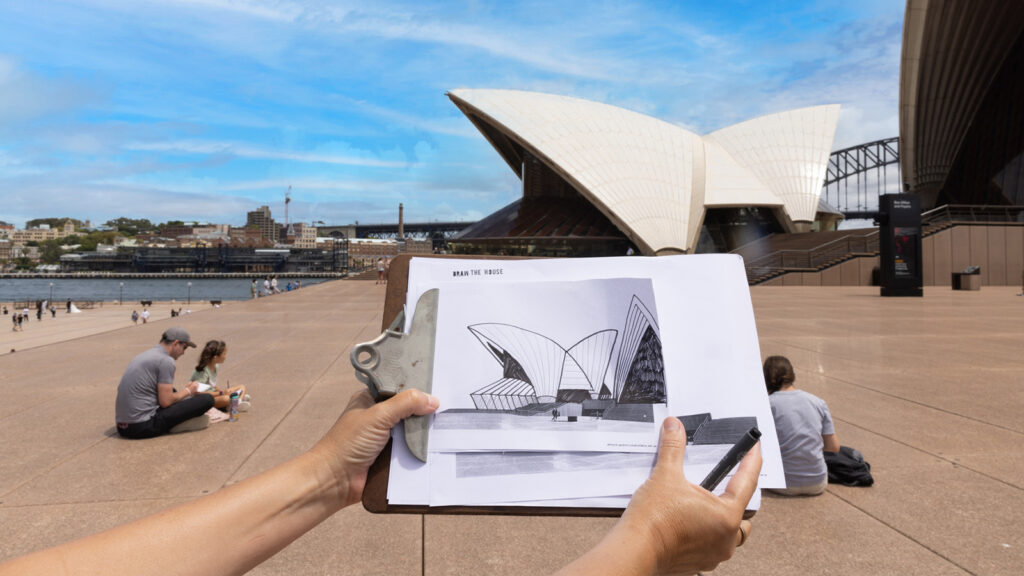
Set on Bennelong Point in the Circular Quay area, the Sydney Opera House was always meant to be a national landmark, as the international competition to create it made clear.
"In the 20th century, Sydney was often described as a kind of 'Manchester by the sea', because it was a slightly backwater international city," says Bruce Barnett, a Sydney Opera House guide.
"So it was important that this building embodied a new Australia, a country looking outward to the world and moving forward."
Of the 233 entries, it was the design by an unknown Danish architect, Utzon, that captured the judges' imagination.
Instead of the boxy buildings common at the time, Utzon's concept stood out for its graceful curves and unique silhouette: a series of vaulted forms that call to mind billowing white sails or stacked shells.
For all its beauty, the design proved extraordinarily difficult to build, since nothing like it had ever been attempted.
Instead of the projected four years and 7 million Australian dollars (5 million US dollars), the project took 14 years and 102 million Australian dollars to complete.
Amid the delays, the mounting costs and the strained relationship between Utzon and the engineers, he was forced to resign midway through construction.
He never returned to Australia to see the finished building in person, though in 2003 he received the Pritzker Prize for his achievement. The architect went on to draw up a conservation plan for the Opera House.
"The building was so important that people spoke of it as the building that changed a nation," Barnett says.
"Suddenly Australia was on the map of the world. We didn't just eat pies, go to the beach, surf and drink beer, we had culture too."
Now that you know a little of the backstory, here are a few things worth doing:
Grab tickets to a show
Despite its name, the building hosts more than 2,000 performances a year, and only around 15% of them are operas.
There's stand-up comedy, indie rock, orchestras, ballet, talks on art and culture, theatre, dance and international concerts.
"When we do rock and pop, it tends to be indie rock, we've carved out a niche for that kind of music," Barnett says.
"As for the international concerts, you need to book those well in advance."
Take a backstage tour
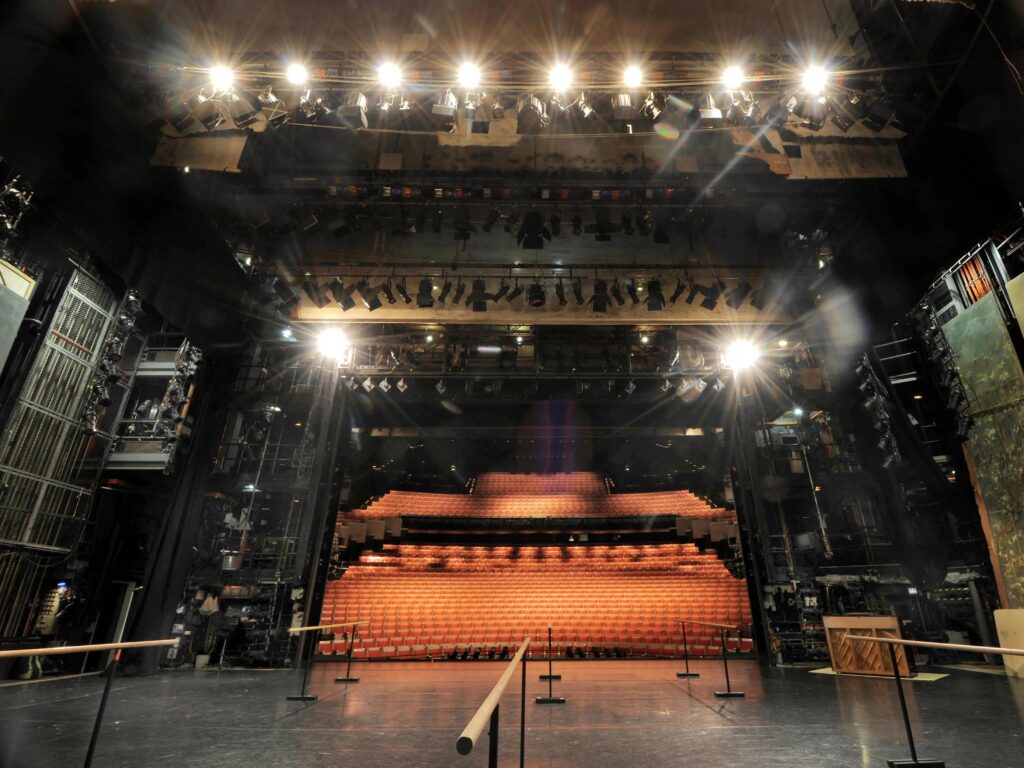
Once you step inside, you quickly realise just how vast the building is. There are six indoor venues (plus one outdoors), more than 1,000 rooms and six restaurants.
To explore the opera house freely before rehearsals begin, a 2.5-hour backstage tour runs every morning at 7am.
The tour takes you through the stages, dressing rooms, orchestra pits and rehearsal halls, offering a look at everything it takes to bring a performance to life.
"From the audience's point of view, it all looks glamorous: the make-up, the costumes, the props. But from the performance side there are mechanisms, cables and motors, it's a very mechanised backstage."
The morning wraps up with an a la carte breakfast in the Green Room, a space normally reserved for the stars.
Meet Sydney's seal
It isn't only tourists who love visiting the Sydney Opera House.
All year round, a New Zealand fur seal named Benny can be spotted by those who catch him playing in the water or basking in the sun on the Opera House's northern walkway.
An unofficial mascot, the wild seal comes and goes as he pleases.
In 2016 a second seal joined Benny, thought to be a pup, though this year it hasn't been seen so far.
Watch the sunset
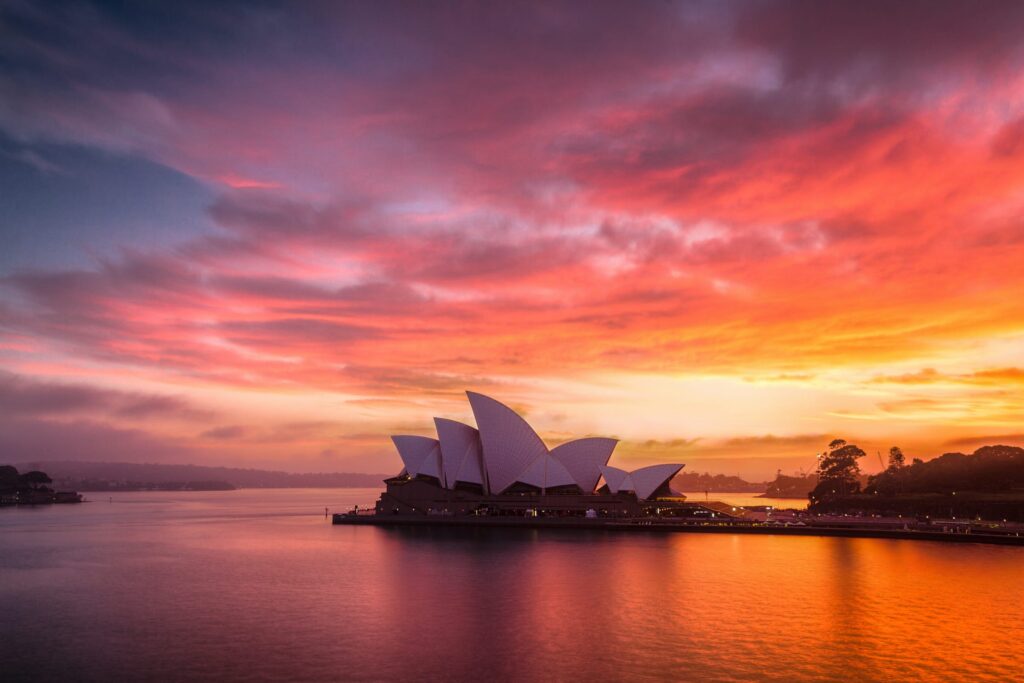
Ask most travellers about the colour of the opera house and they'll confidently say it's white or beige.
But the roof is clad with more than 1 million Swedish tiles, and they really do shift colour through the day, reflecting the shade of the sky.
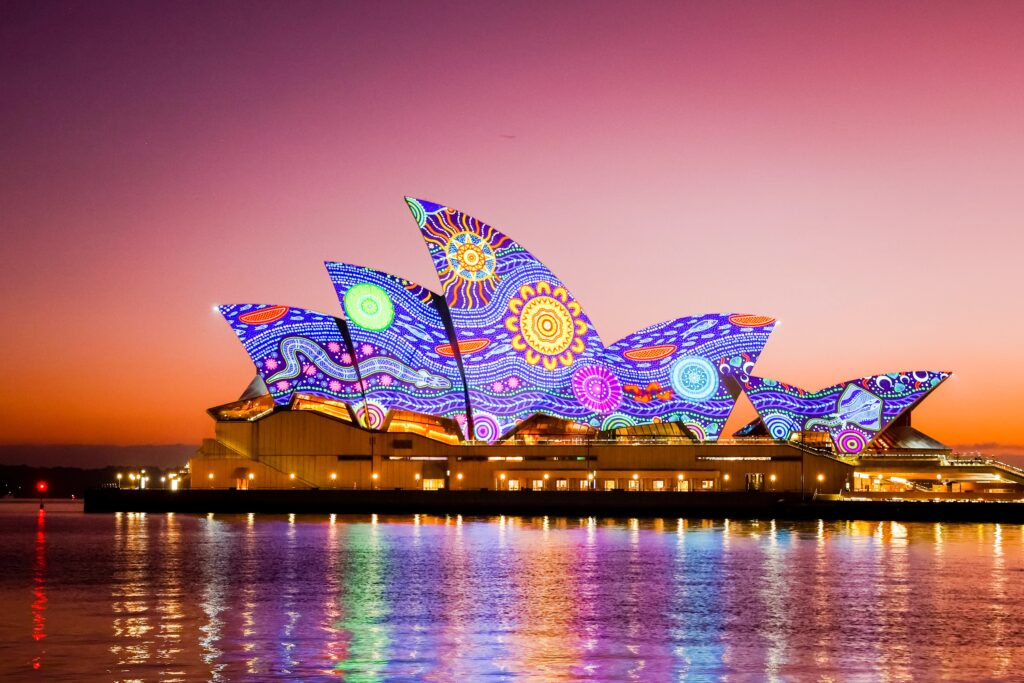
In the evening the opera house transforms, seeming to soak up the pink and orange tones of the sky.
"Many people think the roof is covered in cement, but they don't realise it's actually tile that reflects the light," Barnett says. "At night it looks as though it's glowing. It's genuinely beautiful."
Enjoy a drink on the waterfront
For the best view of the sunset, visitors should drop by the Opera Bar.
It's popular with locals and tourists alike, thanks to its waterfront setting, laid-back atmosphere, snacks, wine list and live music playing almost every night of the week.
The Opera Bar and Opera Kitchen have become the place Sydneysiders head to after work, Barnett says.
"On weekends you can barely squeeze in, but you always have a great time there."
To have your pick of a sunset spot, Barnett suggests arriving on weekdays before 5pm, which is when people finish work and set off to catch the sunset.
Although the bar is known for its lively evenings, it's well worth a visit for breakfast or brunch too.
Dine like a star
Bennelong, the fine-dining restaurant built inside one of the sails, takes its name from Woollarawarre Bennelong, an Aboriginal elder who served as a statesman and interpreter when the British settled in Australia in the 18th century. The opera house stands on the peninsula where he once lived.
Led by award-winning chef Peter Gilmore, the restaurant has a dramatic feel with its ribbed ceilings and stunning harbour views. It serves Australian cuisine, from Tasmanian truffles to milk-fed suckling pig from the Macleay Valley, north of Sydney.
Designed to be visited before or after a show, the restaurant offers a tasting menu as well as a la carte dishes for those who'd rather grab a bite in a more relaxed setting.
"Bennelong is all about Australian produce and wine. The menu showcases the very best of Australian cooking," Barnett says.
"There's also a fantastic dessert you simply have to try, a pavlova shaped like the House."
When to go
Each day the Sydney Opera House welcomes around 1,200 visitors, some on their own, others as part of large groups.
Barnett recommends visiting early in the morning or late in the evening to avoid the crowds, though most tours are planned to keep things flowing smoothly.
"I think 9am on a Sunday is the best time to visit. Generally speaking, we get wonderful access to all the theatres, and I think it's a really peaceful time to come."
At other times, such as the January school holidays, hot summer days or a rainy afternoon, visitors turn up in droves.
"It doesn't rain that often here, but when it does, it comes down hard and pours in buckets," Barnett says. "All of a sudden it's a rainy day, and people decide the Opera House is a great way to spend it."