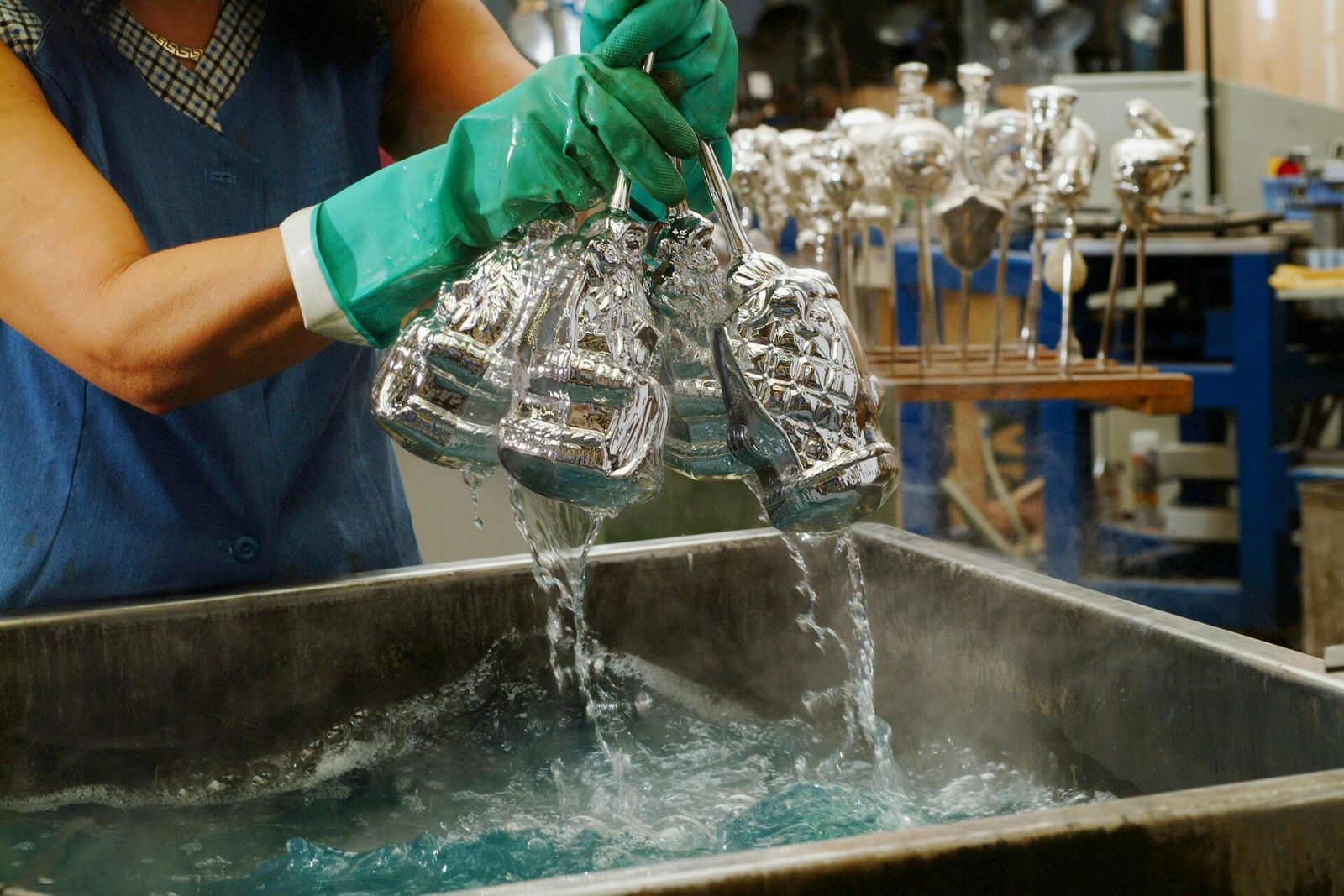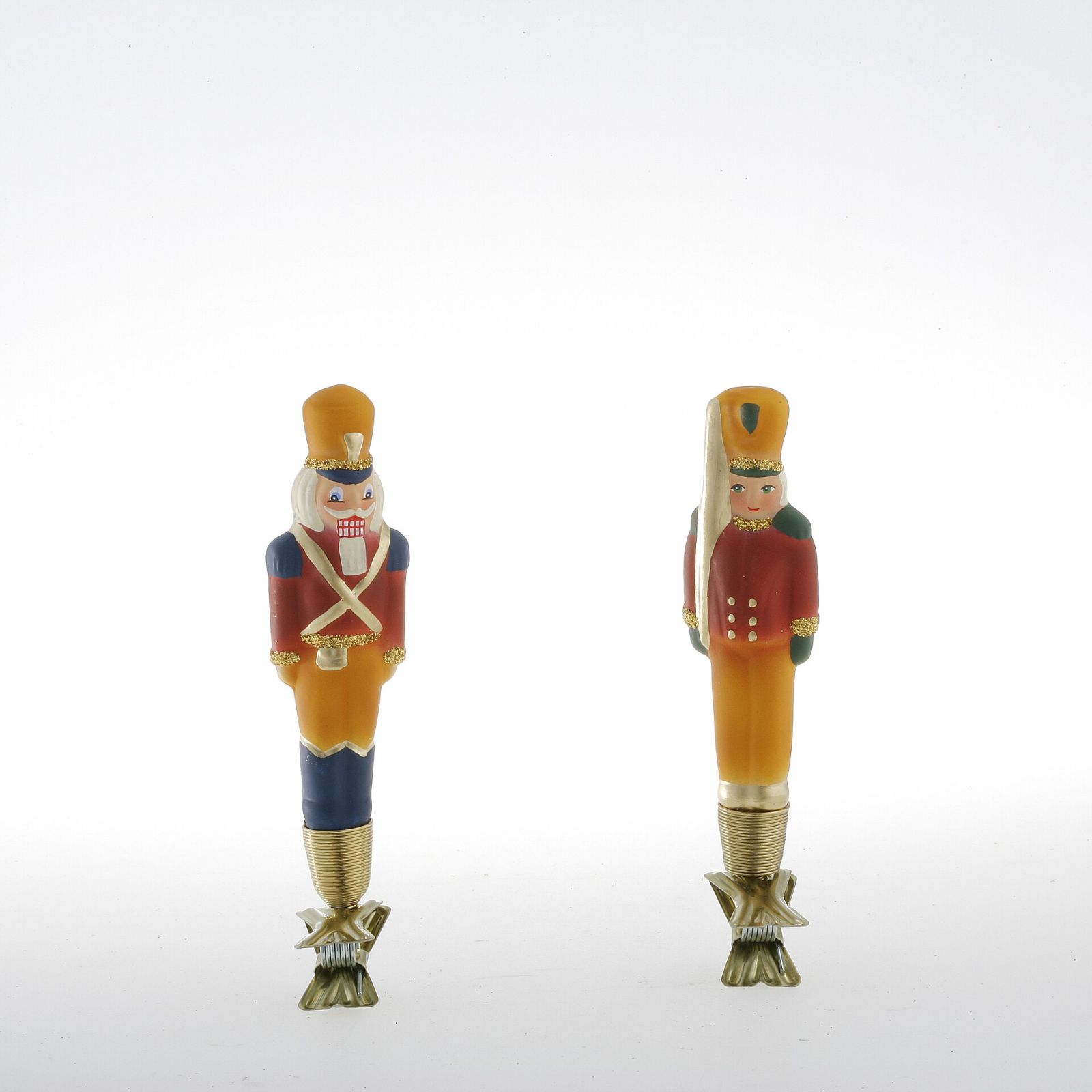


A hand-blown glass bauble from Lauscha in Thuringia weighs a few grams, and its walls are so thin that they glow against a lamp like eggshell. The town has made Christmas tree ornaments since the mid-nineteenth century, and local legend says a poor glassblower blew the first nuts and apples out of glass because he could not afford real ones. So when you are deciding what to buy at Christmas markets, it pays to learn first how to tell a bauble like that from the plastic copy for a few euros sold in the next hut.
Glass ornaments: Lauscha, Poniklá and Polish bombki
Genuine Lauscha glass Christbaumschmuck is sold at Thuringian markets and in Lauscha itself, which has a glass museum and workshops with shops. A good handmade bauble costs from a few euros for a plain one to several dozen for a figurative, hand-painted piece. The signs of the real thing: almost weightless, slightly uneven in shape, a cap and clip that do not sit perfectly, and the workshop's name on the box.
Czechia has its own treasure. In the village of Poniklá in the Krkonoše foothills, ornaments are made from blown glass beads threaded on wire: stars, snowflakes, little figures. In 2020 the craft was added to UNESCO's intangible heritage list, and today a single company, Rautis, keeps it going, as described on the official Czech tourism portal. A real bead star is easy to spot by its shine: every bead is blown separately and silvered inside. Polish bombki, painted glass baubles, are sold at the Kraków and Wrocław markets, and there too cheap plastic sits right next to real glass, so pick a bauble up before you buy.
The Ore Mountains: nutcrackers, smokers and pyramids
The Erzgebirge, the Ore Mountains on the border of Saxony and Czechia, became the wooden capital of Christmas when the silver mines declined and miners started turning toys on lathes. The heart of the craft is the village of Seiffen, with dozens of workshops and a toy museum, and at Christmas the village glows with wooden candle arches, Schwibbögen, in its windows. The main buys:
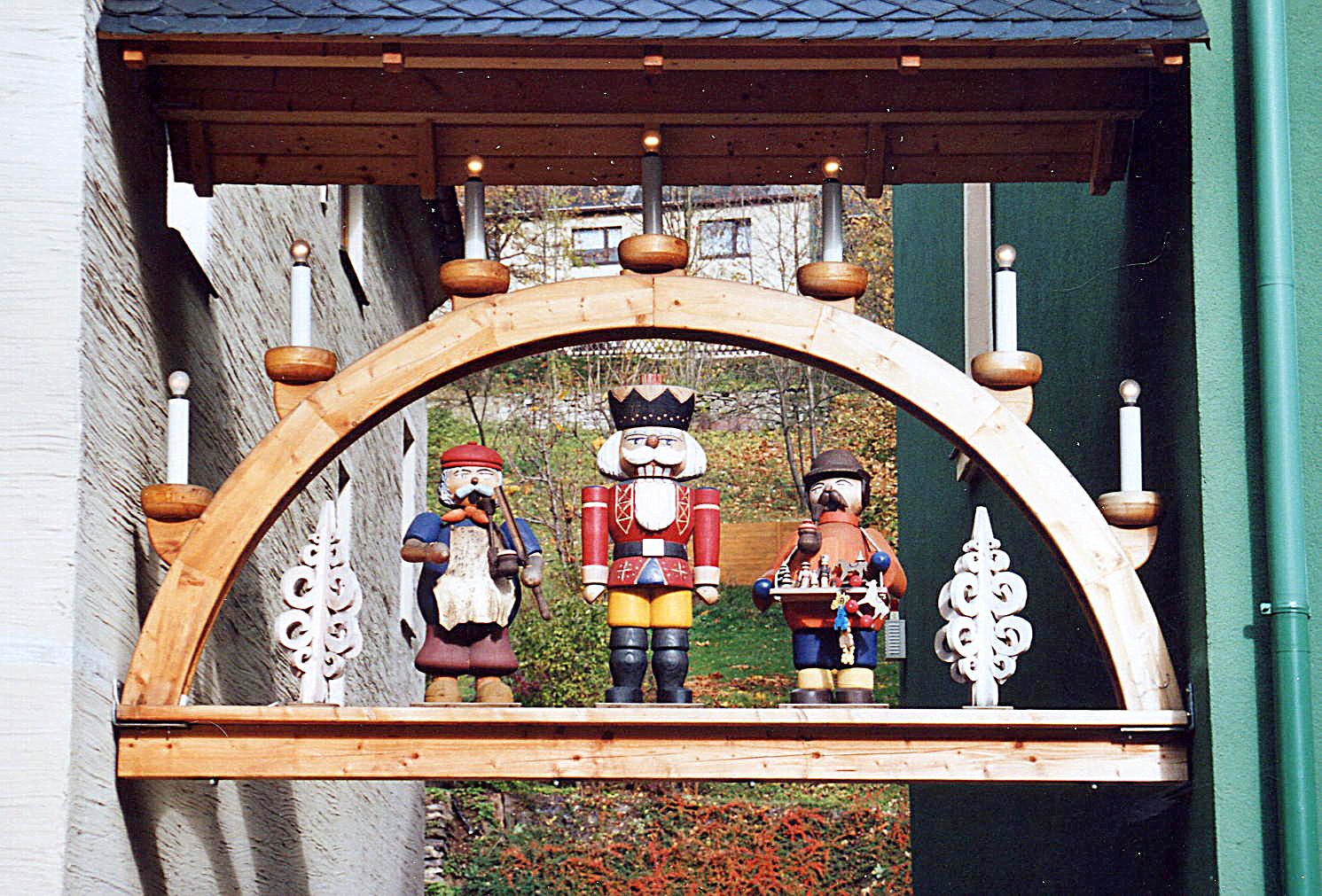
- A nutcracker shaped as a king, soldier or gendarme. A real one has turned details, a moving jaw and a signature or workshop stamp on the base, and costs anything from a few dozen to several hundred euros.
- A smoker, a little wooden man who puffs smoke from an incense cone burning inside him. Buy a stock of cones while you are at it.
- A pyramid with a propeller turned by the heat of candles, and a Schwibbogen arch for the window.
To avoid an Asian copy, look for the "Echt Erzgebirge" mark of the Ore Mountain craftsmen's association and the maker's name on the base. A 15-euro nutcracker with no marking at all, at a market anywhere in Europe, has almost certainly travelled a long way.
The Herrnhut star: 25 points and not one more
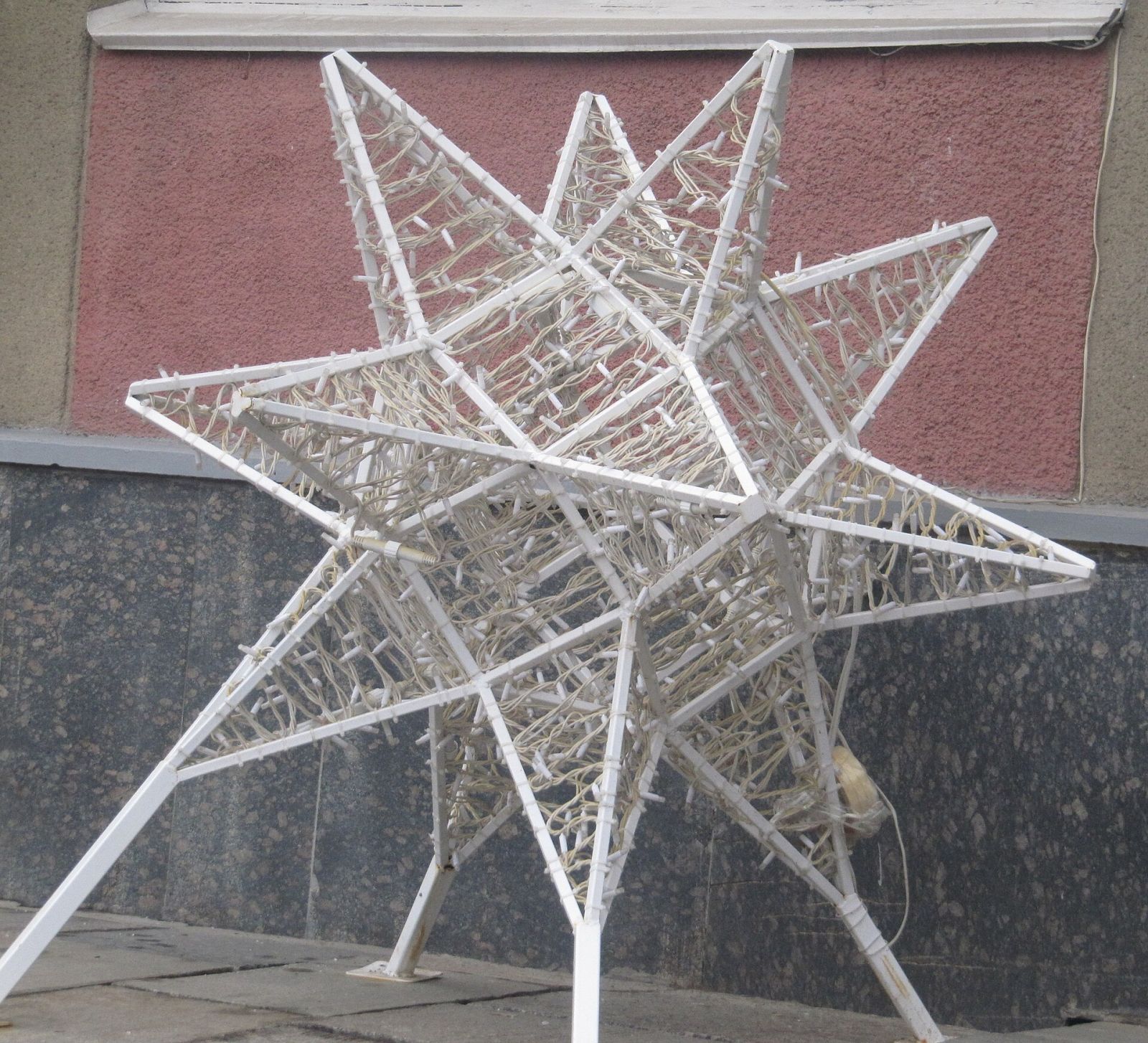
The three-dimensional paper star was devised in the nineteenth century in Moravian Church schools as a geometry lesson, and in Saxon Herrnhut, the community's home, it is still assembled by hand. A genuine Herrnhut star has 25 points: 17 square and 8 triangular, with the mounting where the twenty-sixth would be. It is sold flat, in an envelope, and takes a few minutes to put together at home. A paper star for indoors costs a few dozen euros; the plastic outdoor version costs more. There are plenty of copies, and the simplest test is to count the points.
Gingerbread: Nuremberg Lebkuchen and Toruń pierniki
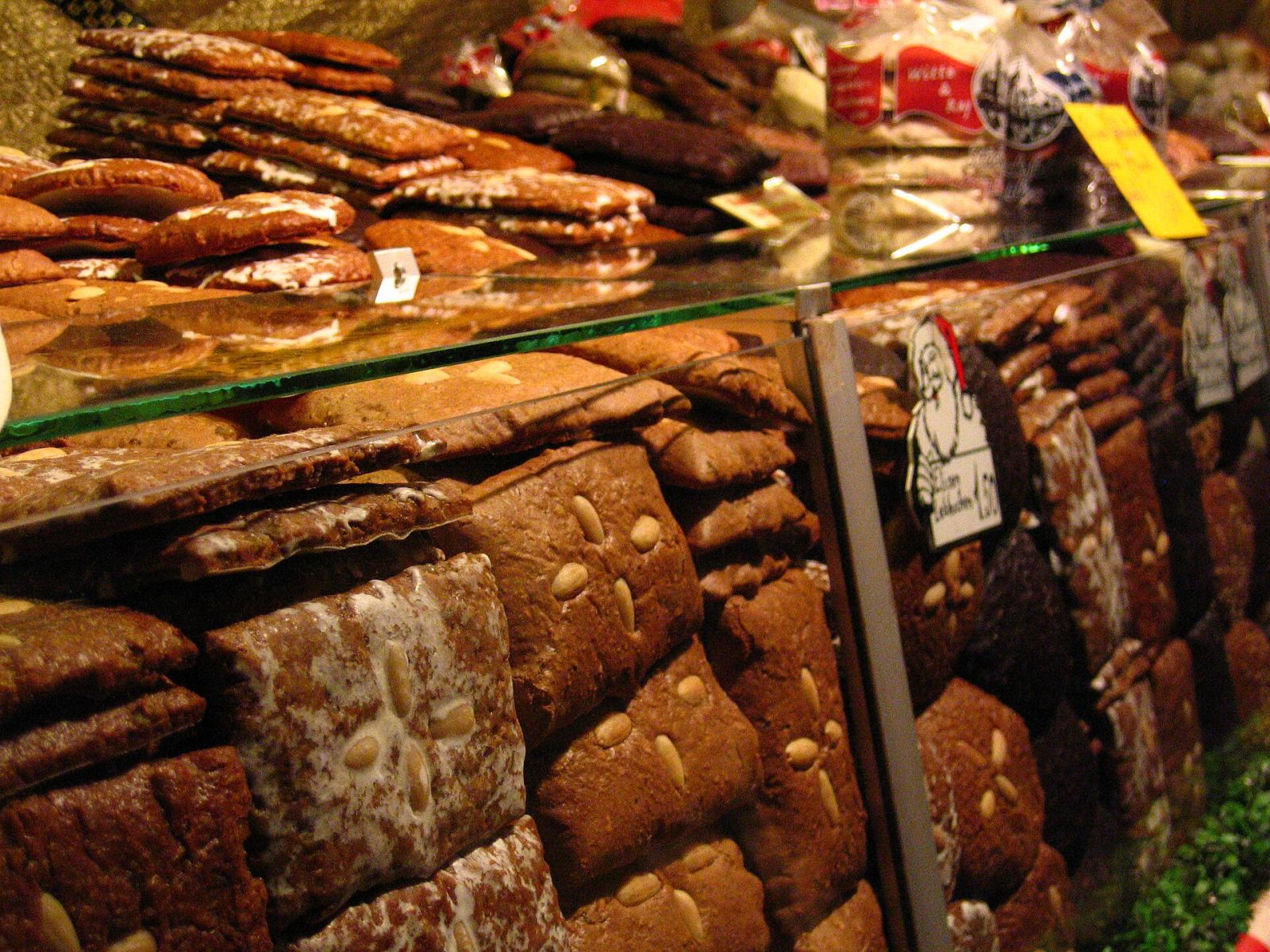
Nuremberg Lebkuchen carry a protected name and can only be made within the city. The finest grade, Elisenlebkuchen, is baked on a thin wafer with hardly any flour and a large share of nuts, which keeps it soft and moist. At the market they come in painted tins, and the tin often becomes a souvenir in its own right. Gingerbread travels well and stays fresh for weeks.
In the Polish city of Toruń gingerbread has been baked since the Middle Ages, and the city has a gingerbread museum where you can shape your own in old wooden moulds. Iced figurative pierniki from Toruń confectioners are also sold at the markets in Gdańsk and Warsaw.
The mulled wine mug: how to take it home legitimately
At most German, Austrian and Tyrolean markets mulled wine is served in a mug with this year's design, and a deposit of a few euros is added to the price of the drink. Do not return the mug and it is yours; nobody has broken any rule. If the mug is sticky after your drink, the stall will usually happily give you a clean one or wrap yours in paper. Deposits vary between markets, so ask before you order. Collectors bring a mug home from every town, but ceramics are heavy, and five mugs add noticeable weight to your luggage.
Straw and nativity scenes: Scandinavia, Naples and Kraków
Scandinavian markets sell straw decorations: the Swedish Christmas goat, the julbock, from tree-sized to half a metre tall, and the Finnish himmeli, a hanging geometric mobile made of straws. They are light and almost indestructible in a suitcase.
Nativity scenes are a story of their own. In Naples, on Via San Gregorio Armeno, presepe figures are sold all year, and among the traditional shepherds you will find caricatures of footballers and politicians. The Kraków szopka, a brightly coloured model bristling with church towers, has been on the UNESCO list since 2018. On the first Thursday of December a szopka competition is held by the Mickiewicz monument on the Main Square, and small souvenir versions are sold at the market next to it.
How to get glass home, and are there customs limits?
- Carry glass baubles in your hand luggage, in a rigid shop box or wrapped in socks and jumpers. In checked baggage they most often break during transfers.
- Ask at the hut for the original box with foam. Workshops in Lauscha and Poniklá sell ornaments ready-packed.
- Keep a nutcracker in its box: thin parts such as the sword or crown break first.
- Edible souvenirs, meaning gingerbread, Stollen and chocolate in factory packaging, rarely cause problems at the border.
For entry into Ukraine, the Customs Code allows goods for personal use worth up to 500 euros and weighing up to 50 kilograms to be brought in duty-free through land crossings; through airport checkpoints the threshold is higher, 1,000 euros. These limits are given as of autumn 2026, so check them on the State Customs Service of Ukraine site before your return. Christmas souvenirs rarely come close to these sums, unless you are bringing home several large pyramids.
| Souvenir | Where from | Rough price | How to spot the real thing | How to carry it |
|---|---|---|---|---|
| glass baubles | Lauscha, Thuringia | from a few to dozens of euros | thin glass, uneven shape, workshop on the box | hand luggage, rigid box |
| bead stars | Poniklá, Czechia | a few dozen euros per set | blown silvered beads, Rautis brand | hand luggage |
| bombki | Poland | from a few dozen zloty | glass, hand-painted | hand luggage |
| nutcracker, smoker | Erzgebirge, Seiffen | from a few dozen to hundreds of euros | Echt Erzgebirge mark, stamp on the base | in its box |
| Herrnhut star | Herrnhut, Saxony | a few dozen euros | 25 points | flat, in an envelope |
| Lebkuchen | Nuremberg | a few euros and up per box | protected name, made in Nuremberg | any luggage |
| Toruń gingerbread | Toruń | a few zloty each | Toruń confectioners | any luggage |
| mug | markets in Germany, Austria, Tyrol | the deposit | this year's design | wrapped in paper |
| straw decorations | Sweden, Finland | from a few euros | natural straw | any way you like |
| szopka, presepe figures | Kraków, Naples | from a few dozen | handmade, named workshop | in a box |
Most of these things are sold at the big markets gathered in our guide to Christmas markets in Europe, and the Austrian versions with their own mugs feature in our piece on the Vienna markets. The best souvenir is still the one that will hang on the tree for years, so one genuine glass bauble from a workshop is worth more than a bag of cheap ones.