

Serbian food rests on three pillars: grilled meat, homemade dairy, and rakija, and the portions are generous enough that most first dinners end in surrender. This is hearty Balkan cooking with Turkish, Hungarian, and Austrian roots, and its natural habitat is not a restaurant but a kafana, a traditional tavern with live music. Here is what to try, roughly what it costs, and how to pick the right place.
Pljeskavica: the national burger
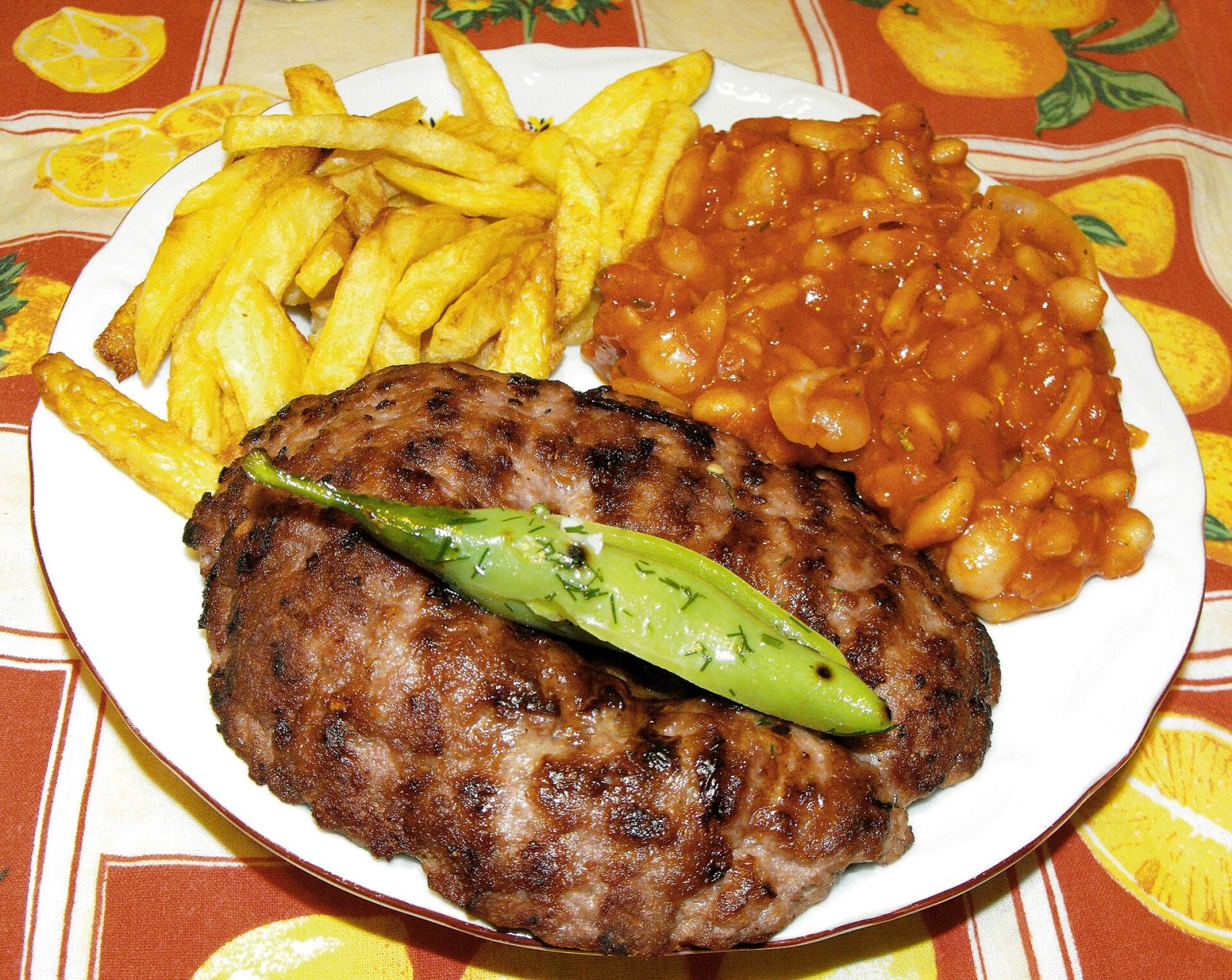
If Serbia has a signature street food, it is pljeskavica: a flat patty of minced meat, usually beef mixed with pork, seared on the grill and served in a fluffy somun flatbread or on a plate with sides. Go for the punjena version, stuffed with kajmak or cheese that melts inside; it is a different experience altogether. Standard portions are honestly intimidating, starting at 200 grams of meat, so one from a street kiosk easily replaces lunch. Kiosk prices hover around 350-500 dinars, kafana versions with sides cost more, and everything creeps upward, so check current menus on the spot.
Cevapi: small, and never enough
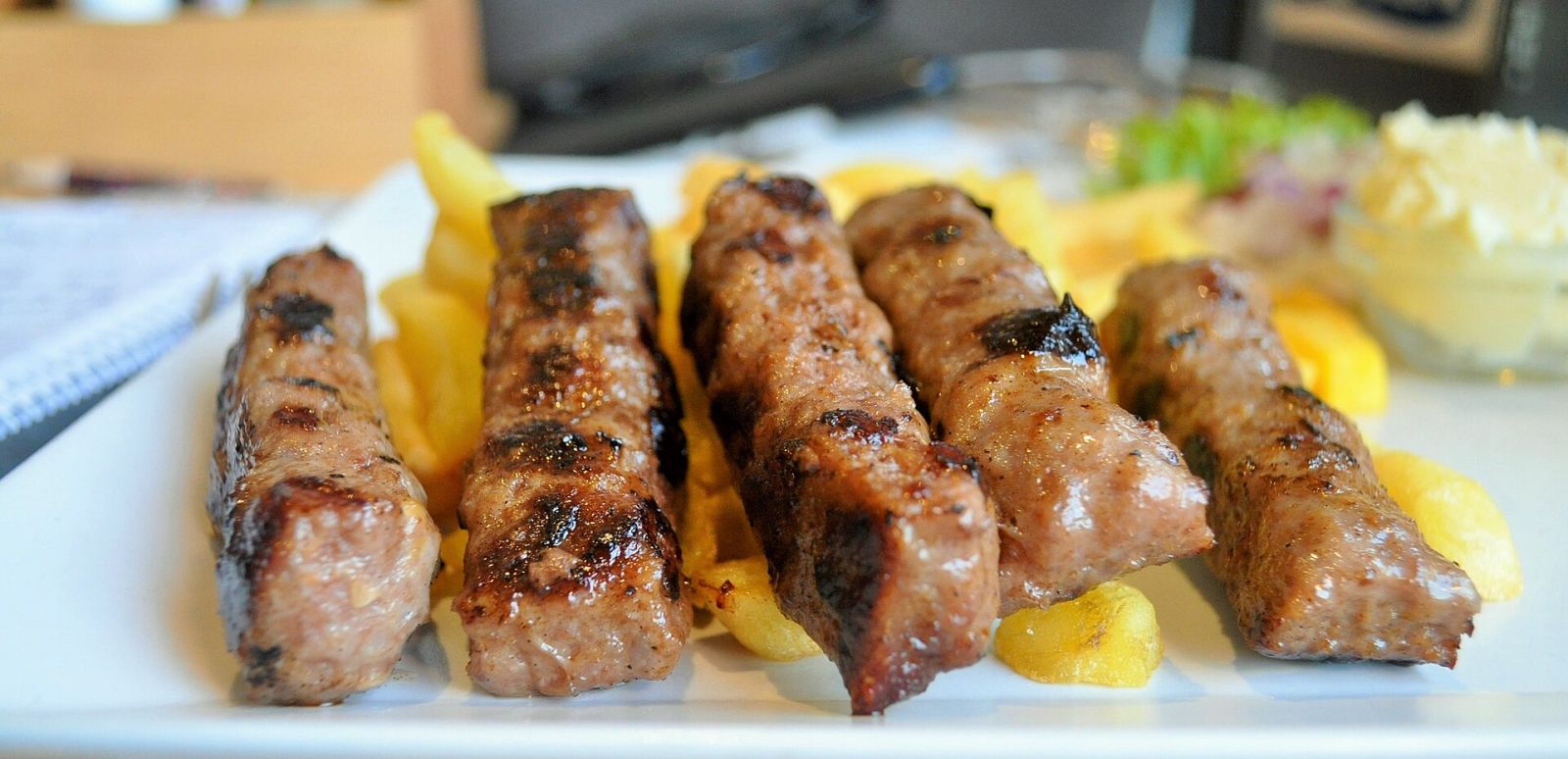
The second grill icon, cevapi, are skinless finger sized rolls of minced meat, ordered by fives or tens. They arrive with raw onion, kajmak, and that same somun bread soaked in grill juices. Skip the tourist strips and look for the place with a lunchtime queue of locals at the grill. One detail worth knowing: Serbian cevapi differ from Bosnian ones, as the meat here often includes pork, while the Sarajevo canon is strictly beef. Arguing with locals about whose version is better is a lost cause; just try both schools if your Balkan trip continues.
Kajmak and ajvar: two spreads worth a trip on their own
This is where the real Serbian magic starts. Kajmak is cream skimmed from scalded milk and lightly fermented: something between butter, sour cream, and young cheese, faintly salty and impossibly rich. It goes on bread, on meat, inside pljeskavica, and the benchmark versions come from Cacak and Zlatibor. Supermarket kajmak carries half the flavor at best; hunt for the homemade kind at farmers' markets.
Ajvar, the other point of pride, is a roasted red pepper relish, sometimes with eggplant: sweetish, smoky, and every autumn families jar it by the crate while the smell of roasting peppers hangs over entire neighborhoods. September and October, fresh ajvar season, is the tastiest time for a food focused trip. A market jar of homemade ajvar makes the best edible souvenir Serbia offers, just pack it carefully.
Sarma and the rest of the grandmother's repertoire
Serbia is not all grill. Sarma, sour cabbage rolls filled with meat and rice, simmers for hours in a pot; it anchors every winter holiday table, and it famously improves with age, with the reheated second day version considered the ideal. Also seek out prebranac, thick baked beans with onion; gibanica, a flaky cheese pie; and Karadjordjeva schnitzel, a rolled veal cutlet stuffed with kajmak, invented in Belgrade in 1959. For breakfast, grab burek from a bakery, a rich layered pie with meat or cheese, paired with drinkable yogurt the way locals do. That combination outperforms any coffee.
Rakija: how to drink it and survive
Rakija in Serbia is less a drink than a social ritual: it greets guests, seals agreements, and supposedly cures everything, or so you will be told. The classic is sljivovica made from plums, but try kajsijevaca from apricots, viljamovka from pears, and dunjevaca from quince, the most aromatic of the lot. Strength usually runs 40-50 percent, and homemade batches can be meaner. Rakija is sipped slowly from a small glass called a cokanjcic, often before the meal, and never downed in one go; shooting it reads as barbarism here. A sensible rookie tactic is one glass per evening with plenty of water alongside.
The kafana: not a venue, a way of life
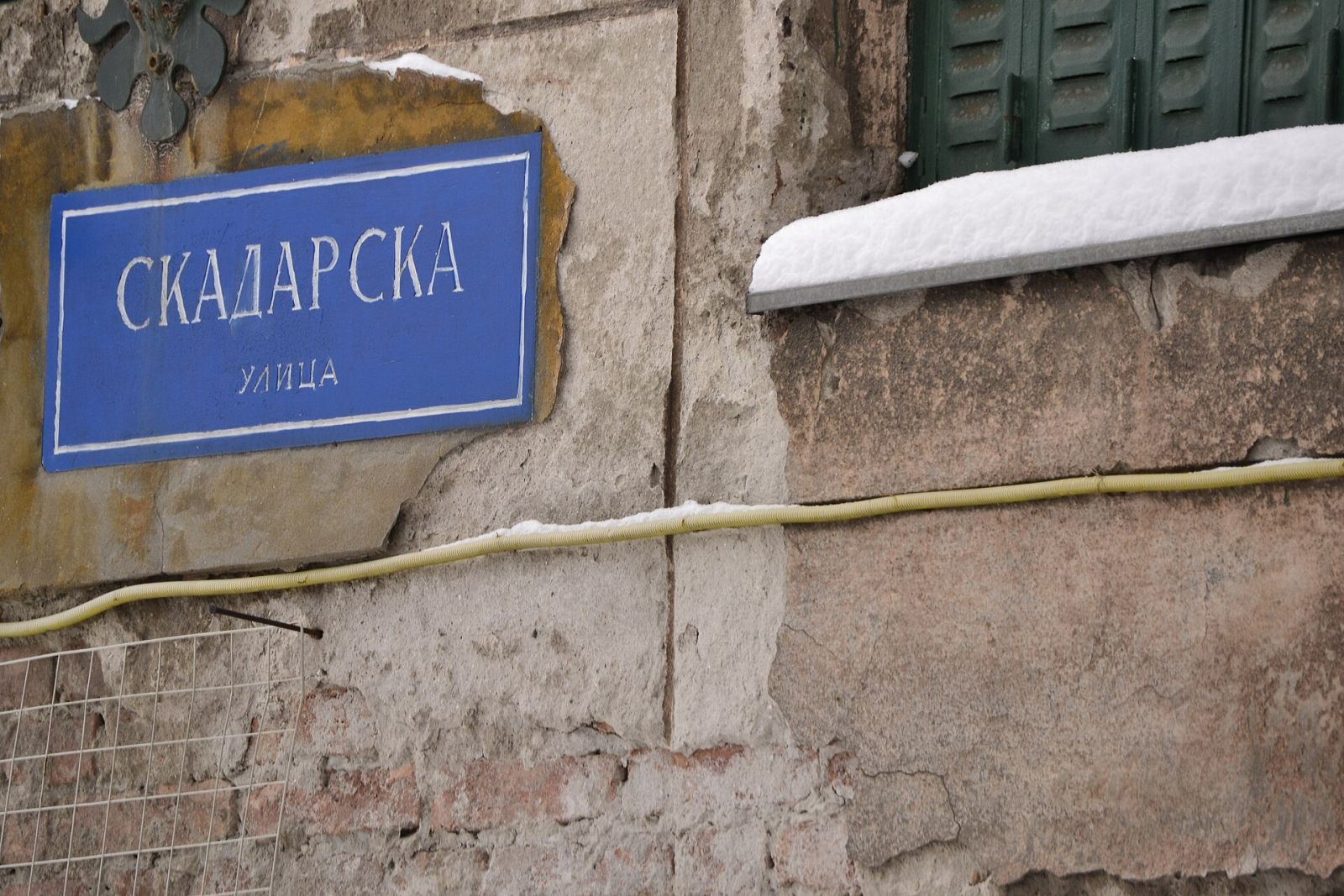
You cannot understand Serbian food without the kafana. It is a traditional tavern with checkered tablecloths, simple generous cooking, flowing wine, and, as the night deepens, musicians with violins and accordions playing old town songs right at your table. Requesting a song is perfectly normal; the custom is to hand the band a few hundred dinars. Belgrade's most famous kafana row is Skadarlija street, touristy but atmospheric; for something more local, dive into the side streets of Dorcol or Zemun, where the singing is for regulars. Book ahead for Friday and Saturday nights, everything fills up. And respect the tempo: a kafana dinner runs three to four hours, and hurrying is simply not done.
How much does eating in Serbia cost?
| Dish or drink | Where to get it | Approximate price |
|---|---|---|
| Pljeskavica in somun bread | street kiosk | 350-500 dinars |
| Cevapi, 10 pieces with sides | kafana, grill bar | 700-1100 dinars |
| Sarma, one portion | kafana, home style eatery | 500-800 dinars |
| Cheese burek + yogurt | bakery | 250-400 dinars |
| Glass of rakija | kafana | 150-350 dinars |
| Dinner for two with wine | mid range kafana | 4000-7000 dinars |
Exchange rates and menus drift, so verify before you travel, but the big picture holds: Serbia remains noticeably cheaper than most of the EU, and at a mid range kafana two people eat themselves helpless for the price of a single pizza in Vienna.
Practical tips before you go
- Vegetarians will struggle but survive: prebranac, gibanica, ajvar, roasted peppers, and salads carry you through. The menu word "posno" marks Lenten dishes free of meat and dairy.
- Portions are huge, so order less than you think you need: one pljeskavica plus a salad between two people is a perfectly sound start.
- Tipping in kafanas runs about a tenth of the bill; cards are not accepted everywhere, so cash is safer.
- Order a shopska salad with grated white cheese alongside any meat; nothing cuts through the richness better.
- The strongest food regions beyond Belgrade are Zlatibor and Cacak (kajmak, prsut ham) and Vojvodina (Hungarian influence, fish stew, Fruska Gora wines).
Serbian cuisine is not about plating aesthetics; it is about generosity and flavors you remember years later. Arrive hungry, plan for long dinners, and above all, do not attempt to taste everything in a single evening. Nobody has ever won that marathon.