


They say that in Rome some things never change. Right now, though, the Colosseum has proven that theory wrong by opening its underground levels to the public.
This is not only the first time in 2,000 years that this area, described as the "heart" of the building, has been opened; because the underground levels, or "hypogeum," were where gladiators and animals waited before heading out to fight, it is the first time in the monument's history that the public has been allowed to set foot inside at all.
Now visitors can walk the passageways on a wooden platform and take in the corridors and arches that once connected the hypogeum between the rooms where gladiators and animals waited before stepping into the lifts that catapulted them up onto the arena.
Partner links: booking through them supports the blog at no extra cost to you.
Back then, the hypogeum was lit by candlelight. But since the arena's original ground level was destroyed long ago, the space is now visible from the upper levels of the Colosseum, and sunlight reaches down into its depths.
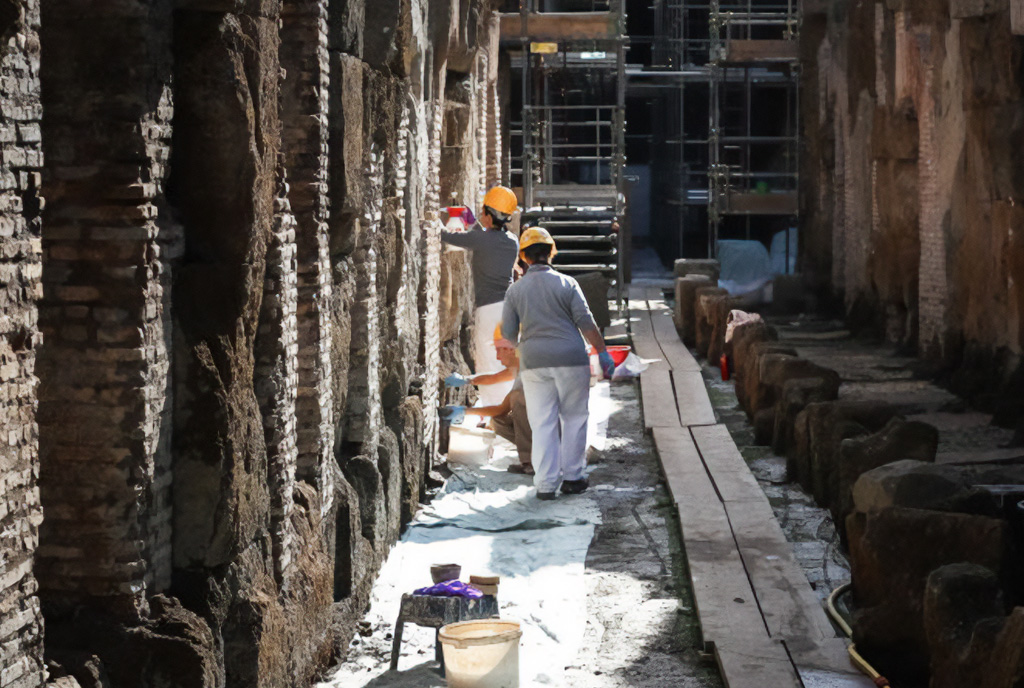
Italy's Ministry of Culture unveiled the sweeping restoration of the vaults and passages where fighters once waited to go into battle. The work was a joint project with the Italian fashion brand Tod's, and the company's CEO, Diego Della Valle, attended the opening ceremony.
Speaking at the event, Alfonsina Russo, director of the Colosseum Archaeological Park, said the work would allow people to better understand how the Colosseum operated.
"This restoration is absolutely essential for archaeological research, because it lets us reconstruct its history," she said.
"This was the backstage of the shows that took place in this area. [It's the place for] all the preparation, even the technology: they raised props, people and animals up onto the arena using a series of lifts and cargo hoists."
Made Possible by Fashion
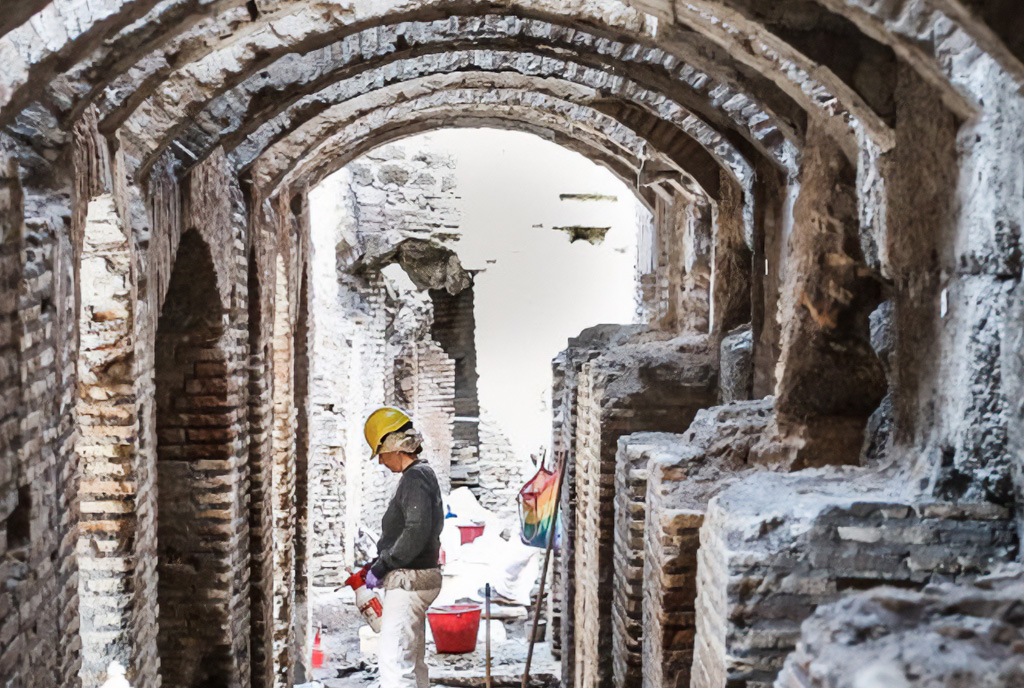
The restoration project, which has seen the entire Colosseum renewed over the past decade, was launched by Tod's CEO Diego Della Valle and Rome's Department of Archaeological Heritage in 2011. The fashion house contributed 25 million euros (30 million dollars) to carry out the work.
The restoration was done in three main phases, starting with a careful cleaning of the monument's facade and then moving on to the underground areas. A small part of the hypogeum was opened to the public in 2016.
The main restoration work on the hypogeum began in 2018, though it was delayed by the pandemic.
Archaeologists, restorers, engineers and architects were among the experts who worked to bring the monument as close to its former glory as possible. The team used photographic surveys, surface mapping, and slow, painstaking work to wash away centuries of grime, deposits and microorganisms such as algae and lichen.
In some parts, they had to remove traces of earlier restorations that had deteriorated over time, replacing them with what they describe as more authentic materials.
The restorers also installed a system to reduce water seeping into the stonework, one of the main causes of decay.
A Global, Bloody Icon
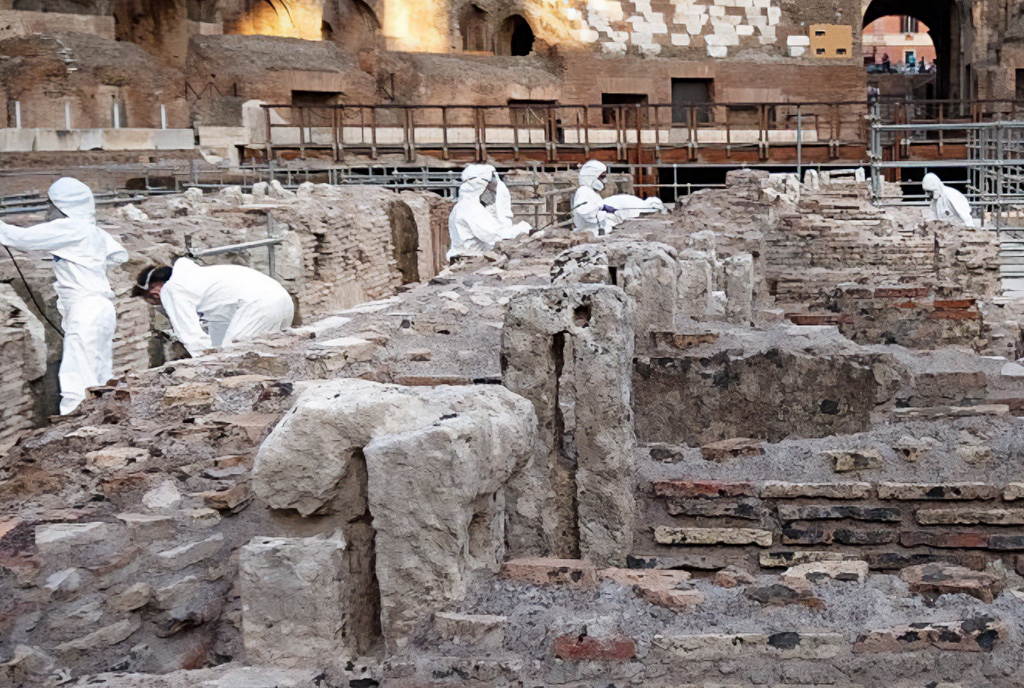
The Colosseum was built by the emperor Vespasian, with construction starting in 72 BC and finishing eight years later.
His son, Titus, opened the Colosseum with 100 days of games that included mock naval battles, the execution of animals and gladiatorial fights. According to the ancient historian Eutropius, 5,000 animals were killed during those inaugural games.
In its heyday, the amphitheater could hold between 50,000 and 70,000 spectators. After the fall of the Roman Empire, it was used as housing and as a source of materials for other building projects across the city. Now, having become one of the most famous landmarks in the world, it drew 5 million visitors a year before the pandemic.
During the ceremony, Della Valle spoke briefly about the COVID-19 pandemic and the impact it had on the country, which was the first in Europe to be hit, describing it as a "tragedy."
"Now is the time for a restart, to move forward, because there is a lot of work ahead," Della Valle said at the opening ceremony, urging other businesses to invest in restoring Italy's heritage.
"When private companies work well with the public artistic heritage, things happen," he added.
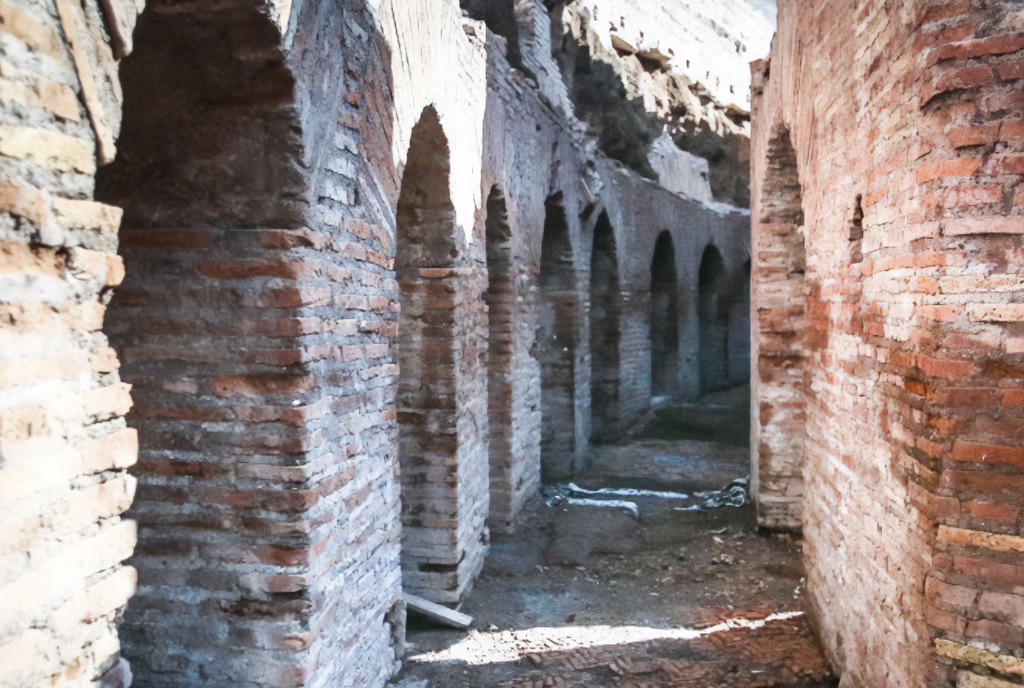
Opening the underground section marks the end of Tod's restoration project, but it is not the end of the work at the Colosseum.
Last month, the Ministry of Culture announced plans to build a wooden arena that will cover the hypogeum, giving a sense of how the Colosseum once looked. The new arena will host concerts and other kinds of cultural events.