

Zhenetskyy Huk is a 15-metre waterfall on the Zhenets stream in Carpathian National Nature Park, between the villages of Mykulychyn and Tatariv in the Ivano-Frankivsk region, and you can reach it in roughly 40 to 60 minutes along an easy trail from the car park. The key to a great visit here is simple: you want to catch the water at full flow, because in dry weather the Huk turns from a roaring cascade into a quiet trickle.
What follows is the practical detail with no gloss: where to start, how much the entrance costs, when to go for the loud water, and what to fit in around it in a single day.
What is Zhenetskyy Huk and where is it really located?
The name throws newcomers off. "Huk" is not a surname or a proper name but a Hutsul word meaning the roar of water over rapids. So Zhenetskyy Huk literally translates as "the roar of the Zhenets stream". Locals often spell it with a Ґ, as "Guk", and it is the very same spot on the map.
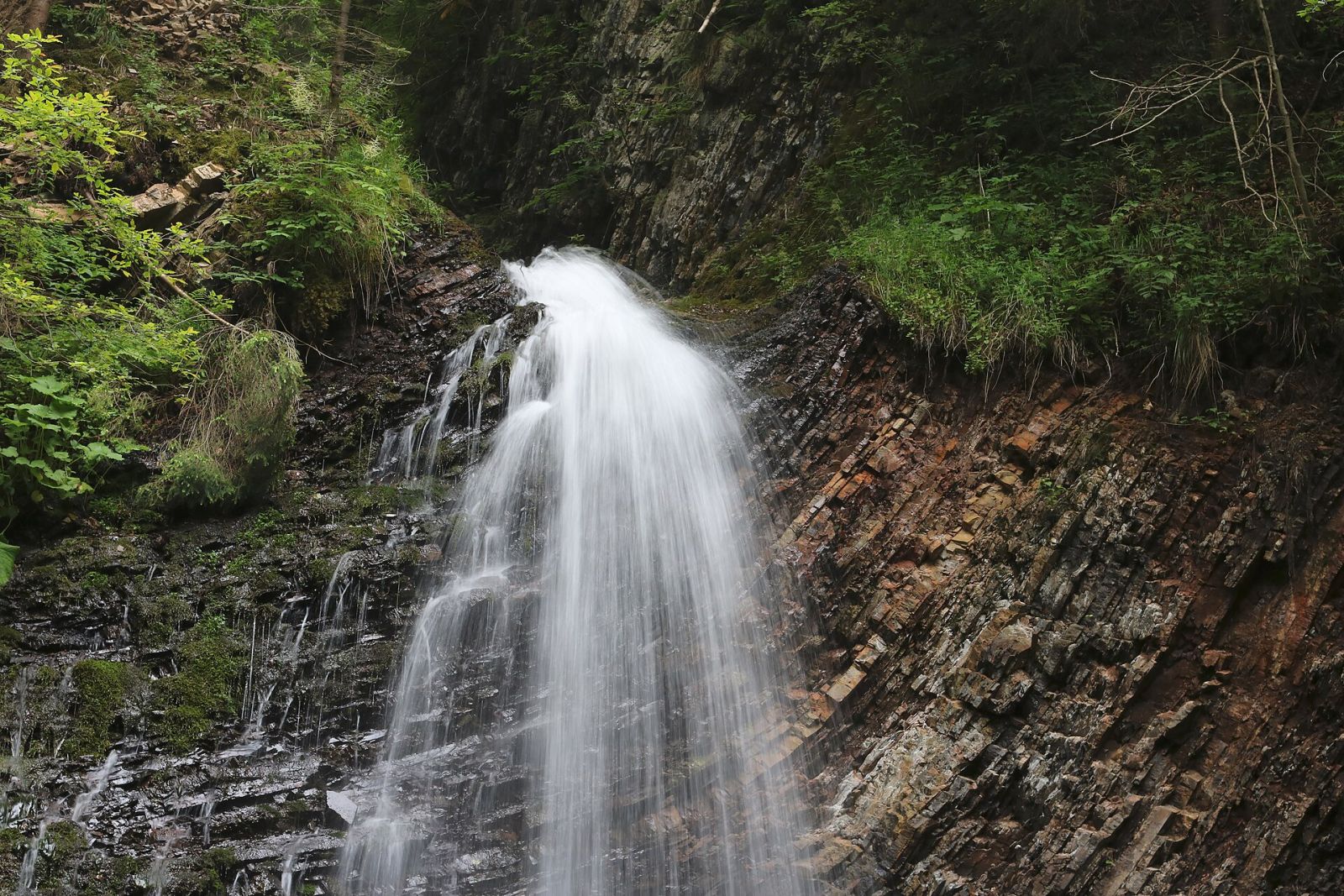
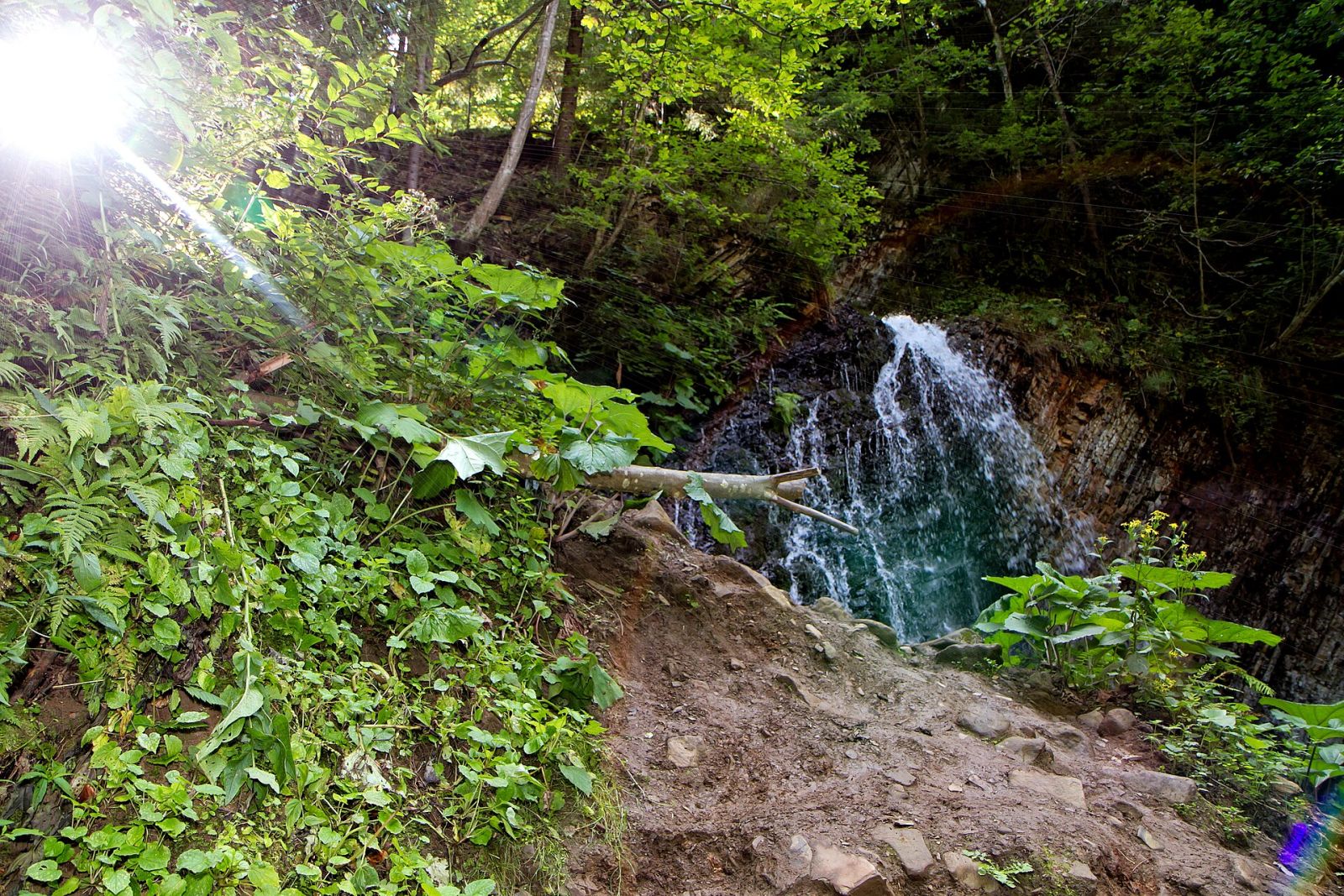
The water drops about 15 metres over several ledges of mossy rock, rather than in a single sheer plunge. The site itself sits at roughly 900 metres above sea level, on the Zhenets stream, which flows into the Prut a little further down. Administratively this is the Nadvirna district of the Ivano-Frankivsk region, part of Carpathian National Nature Park, between the Khomiak and Yavirnyk massifs.
The confusion over which village it belongs to arises because the waterfall stands almost midway between Mykulychyn and Tatariv, and you can genuinely reach it from either side. The most popular and shortest route leads in from the Mykulychyn side, from a hamlet above the Zhenets stream, where there is a car park and the start of the eco-trail.
How do you get to Zhenetskyy Huk from the car park?
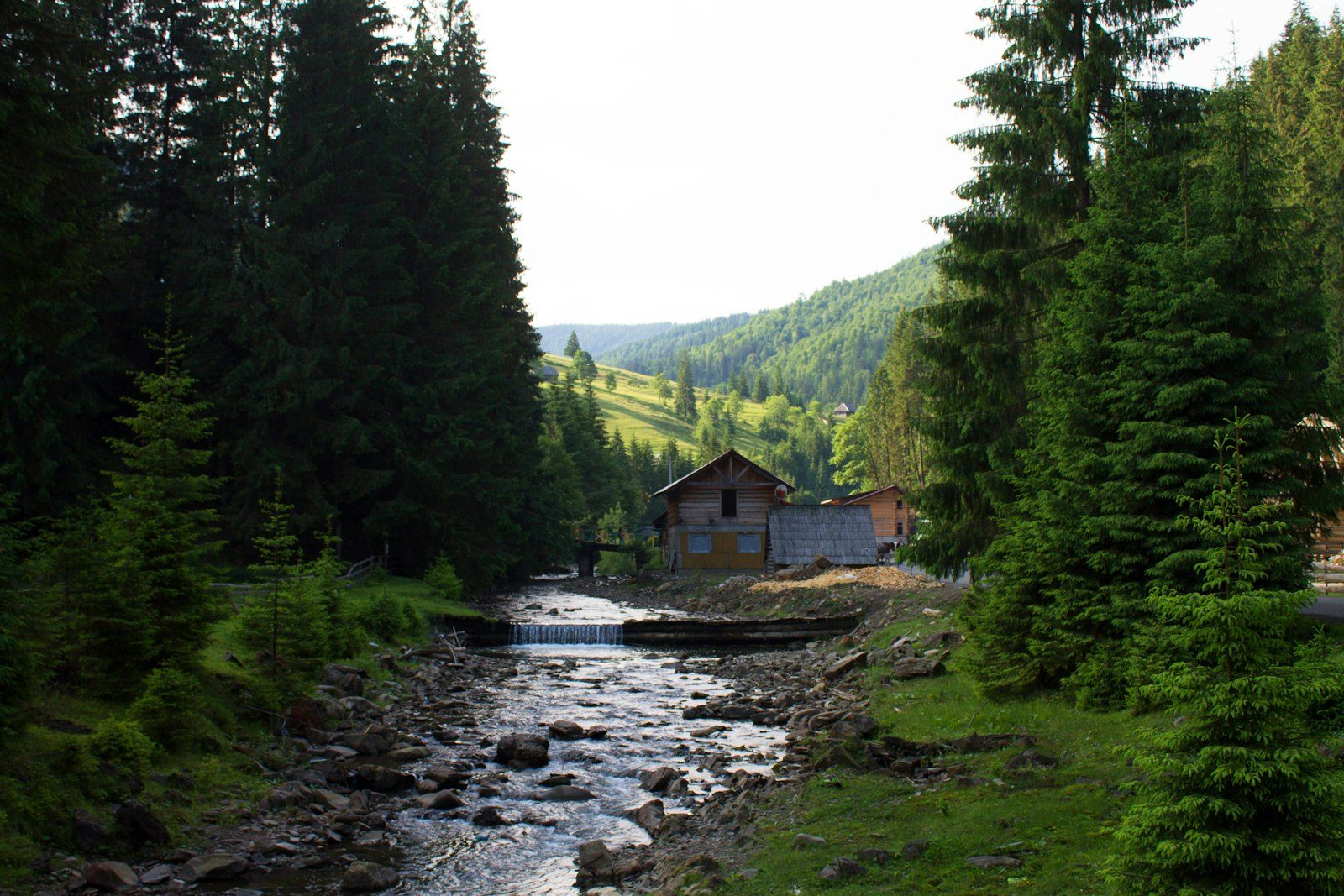
The trail here is the kind that needs neither gear nor experience. From the barrier and car park to the waterfall it is about 4 to 5 kilometres one way, a gentle, wide and well-trodden path that runs the whole time alongside the stream through spruce forest. The average visitor covers this stretch in about an hour, a bit longer with children and photo stops.
The elevation gain is soft, so families with little ones and even cyclists take the route. Bring closed shoes all the same: after rain the roots and stones on the eco-trail get slippery, and trainers with a smooth sole turn the descent to the lower viewpoint into a minor adventure.
There are longer options too, for anyone who finds the waterfall alone not enough. The full ecological and educational loop, "Zhenets-Huk", runs to 7 kilometres, and from the Huk trails climb up toward Mount Khomiak and on to the ridge, which already take half a day and call for reasonable fitness.
| Starting point | Distance to the waterfall | Time on foot | Who it suits |
|---|---|---|---|
| Car park on the Mykulychyn side | about 4-5 km | 40-60 min | Families, beginners, the shortest way |
| Tatariv village | a longer approach through the forest | 1.5-2 hrs | Those wanting more forest and fewer people |
| Full "Zhenets-Huk" loop | about 7 km as a circuit | 3-4 hrs | Active visitors with time to spare |
| Huk plus Mount Khomiak | a climb up the ridge | half a day and more | The well-prepared, in good weather |
You cannot drive right up to the water, and that is deliberate: to protect the forest, everyone walks the last few kilometres. Anyone who physically cannot manage the distance sometimes arranges a lift by horse cart or off-road vehicle from the barrier, but it is not something to count on as a guarantee.
How much is the entrance and what about parking?
Entry to the area is paid, because this is a national park. The recreation fee is nominal: around 20 hryvnias per adult and about 10 hryvnias per child aged six and up, with a separate charge for parking a car. The amounts shift a little from year to year, so check the current rate at the ticket booth on the way in, and it helps to have small change in cash.
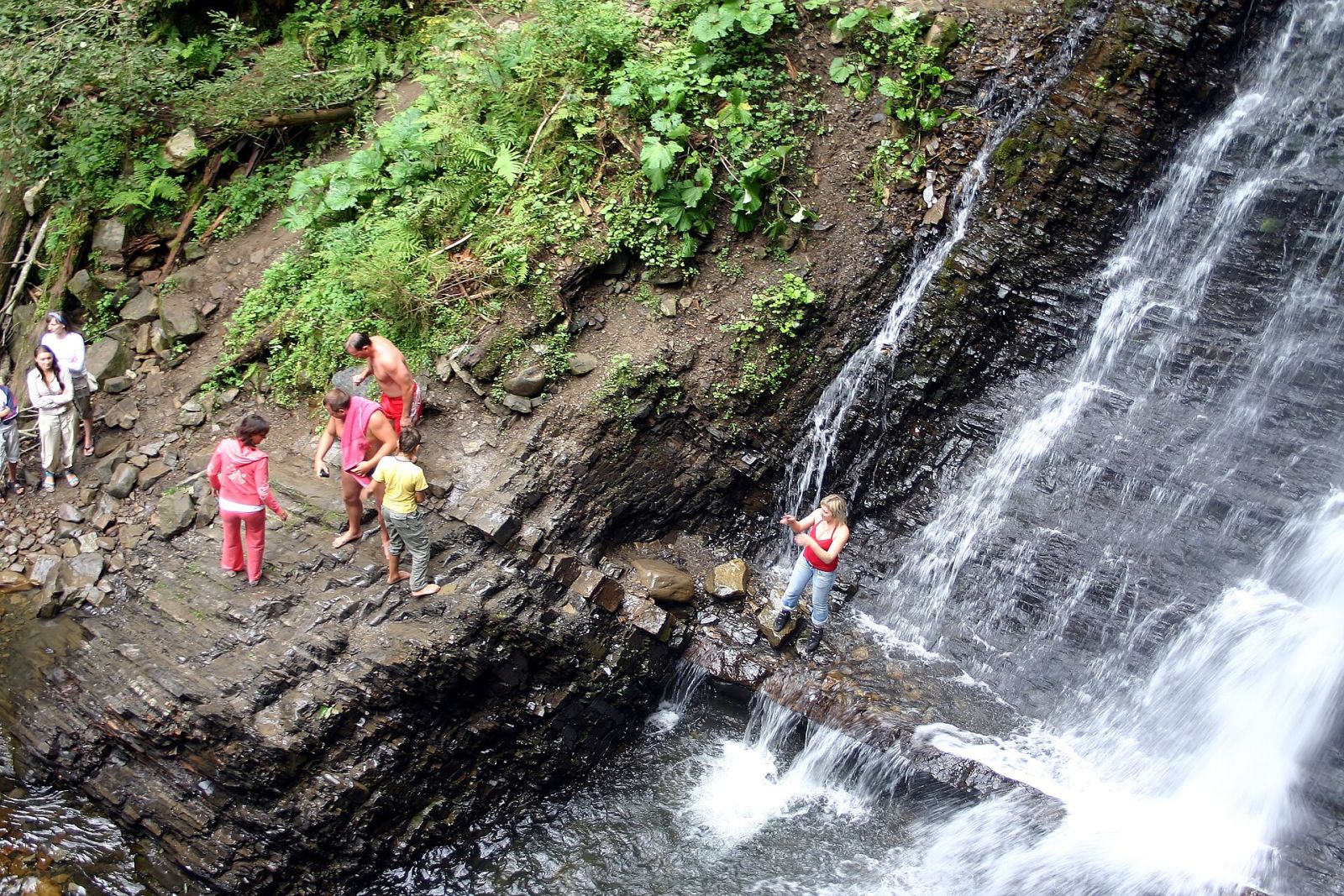
For that money you get a well-kept eco-trail with footbridges, handrails on the steep sections and bins, which the wild Carpathian streams usually lack. This is a case where you can see the fee in the state of the route.
When is the best time to visit Zhenetskyy Huk?
Here is the main catch that the glossy photos keep quiet about. The Zhenets is not a mighty river but a mountain stream, so how spectacular the Huk looks depends directly on how much water it holds at that moment. Arriving in the dry, hot middle of summer means finding a sluggish trickle instead of the roaring cascade from the name.
The loudest water comes in spring, when the snow melts in the mountains, and after heavy rain in summer and autumn, when the stream gathers force within a day. Autumn adds a golden forest all around to the roar, and it is probably the most photogenic season. In winter the cascade partly freezes and grows icicles, the trail turns slippery, but the picture is fairy-tale like and there are noticeably fewer people.
| Season | The water | The honest downside |
|---|---|---|
| April to May | Fullest flow, snowmelt | Mud and melting snow in places on the trail |
| June to August | Depends on the rain, weaker in the heat | The most people, the car park is packed |
| September to October | Strong after rain, plus a golden forest | Changeable weather, bring a raincoat |
| December to February | Partly frozen, icicles and ice | Slippery, winter footwear needed |
The practical takeaway: do not fix on a particular date, check the forecast instead. One good rain a day or two before your trip will do more for the spectacle than any "perfect month".
What can you see nearby in a single day?
Zhenetskyy Huk is rarely visited on its own, and that is one of its great advantages. It lies at the heart of the tourist triangle of Yaremche, Mykulychyn and Bukovel, so it easily becomes one stop in a busy day.
Bukovel is about 13 to 15 kilometres from here, some twenty minutes by car, so the waterfall is often taken as a morning outing before the ski lifts or slopes. In the other direction, a couple of dozen minutes away, lies Yaremche with its market of Hutsul souvenirs and the Probiy waterfall right in the centre of the town. For anyone in good shape, a trail leads from the Huk itself up Khomiak, one of the most popular summits for a one-day ascent in this area.
It is this combination that makes the Zhenets valley such a convenient base: in a single daylight day you can realistically pair a calm forest walk to the water, the Hutsul colour of Yaremche and lively Bukovel, without racking up hundreds of kilometres.
If it is your first visit and you have children, keep it short: the car park on the Mykulychyn side, 40 minutes to the water, coffee on the way back. If you have already seen the Huk in dry weather and came away disappointed, return in spring or a day after heavy rain, and it will be a different waterfall. And when you want not just to look but to conquer something, save the Huk as a warm-up before the climb up Khomiak and set off early, before the ridge is wrapped in cloud.