

India is a country that loves its food, and street food is no exception. With such a diverse population, it is no surprise that the street food on offer changes at every turn.
So if you are wondering whether you can eat street food in India and still escape the infamous "Delhi belly," the answer is a firm "yes," and there is (almost) nothing to fear.
Before you dig into that chaat, read our guide on the dos and don'ts of Indian street food so you can steer clear of any stomach trouble.
Partner links: booking through them supports the blog at no extra cost to you.
Do: Anything fried or baked

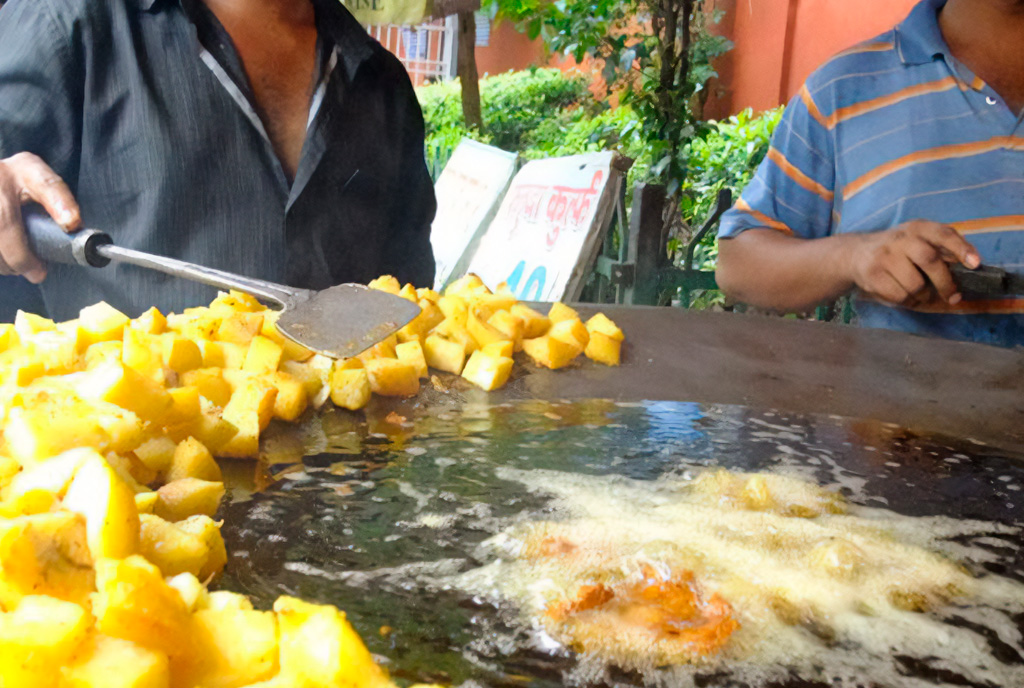
Samosas, aloo tikki (fried potato patties), dosas, jalebi (sugar-soaked, funnel-shaped fritters), and freshly roasted nuts are all safe choices.
Why? Because they have been cooked in hot oil or slowly baked, which kills off any bacteria.
Other safe options include toasted Bombay sandwiches, grilled corn (bhutta), pakoras, and veg puffs, which are cooked vegetables wrapped in flaky pastry.
It is also worth noting that in India, quick-serve items are usually half-cooked or half-fried and then fully fried right before they are sold, so they come to you hot and inviting.
Don't: Yogurt-based dishes, especially during monsoon
Yogurt spoils easily in the heat.
And if a street vendor is serving it from under an umbrella, chances are it is floating in a big vat of murky water and melting ice.
Add the humidity of the monsoon to that, and you have a recipe for illness.
This also means you should avoid yogurt-based dishes such as dahi puri.
If you simply must try something like this, head to fast-food chains such as Haldirams or Bikanerwala to satisfy your curiosity.
Do: Check the source of the water
It is well known that water in India is best consumed from a bottle, but most guidebooks and locals will tell you that gol gappe or pani puri (crisp, hollow shells filled with spicy water) are an absolute must-try. And they are.
The catch here is that you often have no idea where the vendor gets their water.
If you can find a vendor who uses bottled water to make their spicy water, go for it. If not, choose a well-known spot that specializes in fast food. And if you are after paan (a kind of digestive wrapped in a betel leaf), make sure your paanwala rinses the leaf with bottled drinking water.
As for anything ice-based, such as gola (sweet shaved ice), it is better to avoid it altogether.
The same goes for ice-cream trucks and vendors on bicycles. Even though the products are well packaged and clean, the sellers often switch off their freezers to save battery (or electricity, in the case of standalone stalls), which in turn causes the treats to thaw and refreeze several times before they ever reach you.
Don't: Fresh chutneys and sauces

As with the previous point, chutneys, including the bright green and white coriander and coconut chutneys, are best left off your plate.
The reason is that, although most of them are spices blended with fresh herbs, fruits, or vegetables, the water used to wash and/or thin them out is always a concern.
The one thing that can safely go with your street-side samosa is a packet of ketchup.
Do: Hot and cooked sauces
If you are in northern or northeastern India, momos (steamed and fried dumplings) are a must.
The sauces that come with them are fully cooked, thickened with sugar, spices, cornflour, and garlic.
In other words, they are safe to eat. The same goes for tamarind chutneys in northern cuisine, which have been simmered for hours into thick, dark, sweet condiments.
Don't: Sliced fruit
Some fruits look gorgeous once they have been sliced.
A row of watermelons laid out on a cart is tempting, especially on a hot day.
But to keep that fruit looking fresh and juicy, vendors douse it in water again and again. And not the bottled kind.
Do: Fruit with a peel

Mangoes are synonymous with the Indian summer, and it is almost sacrilege to visit India in the summer and not indulge in a few.
If the mangoes still have their peel on, they are perfectly safe to eat, even if they have been sitting in tap water, because quite a few varieties let you push the skin aside and eat the fruit directly.
The same goes for oranges and bananas.
Don't: Street meat
This is always a no.
Beyond the fact that you do not know where the meat is from, and sometimes not even what it is, everything from the chilling to the marinating at ambient temperature (in the company of flies) can spoil the meat.
The only exceptions here are momos (steamed and fried dumplings) from high-turnover outlets, and the hundreds of seafood stalls you will find in the south that specialize in delicious fried food.
Do: Know your spice level
Depending on which part of India you are visiting, the heat of the food varies dramatically.
If you are not used to spicy food, be sure to let your vendor know. It is best to build up your spice tolerance in the first few days of your trip before heading out to eat street food.
Don't: Be put off by recycled-paper packaging

Many travelers ask whether it is safe to eat peanut chaat that comes wrapped in recycled paper (or repurposed bread wrappers and chip bags).
While it is not ideal, street food is a one-off treat, so chances are you will be just fine.
If you can, avoid both recycled white paper and newspaper wherever possible by carrying a stash of napkins or your own food container.
Do: Tea and coffee
Tea and coffee (in southern India) are almost always safe to drink.
Thanks to the high turnover, the milk is always fresh, boiled, and served piping hot.
Be warned, though, tea in India is always sweeter than you expect, so if you are not a big fan of sugar, ask the vendor to leave it out.
Do: Eat where the locals eat
If two identical street-food stalls are standing side by side, always pick the one with the long line.
Crowds are excellent indicators of good food, of course, but they are also good indicators of quick turnover, so you are guaranteed fresh food, and if the locals are eating it, that means the food is good too.