

Here is the short version: Lithuania packs a full European trip into three or four days on a modest budget, and the highlights line up in one neat loop: Vilnius, Trakai, Kaunas, the Curonian Spit, and Siauliai. Distances are tiny, the capital sits roughly 300 kilometers from the sea, so the country fits perfectly into a short road trip or a chain of LTG Link trains. Below is a practical guide to the best things to see in Lithuania and why each stop earns its place on the route.
Vilnius: baroque churches, hidden courtyards, an artists' republic
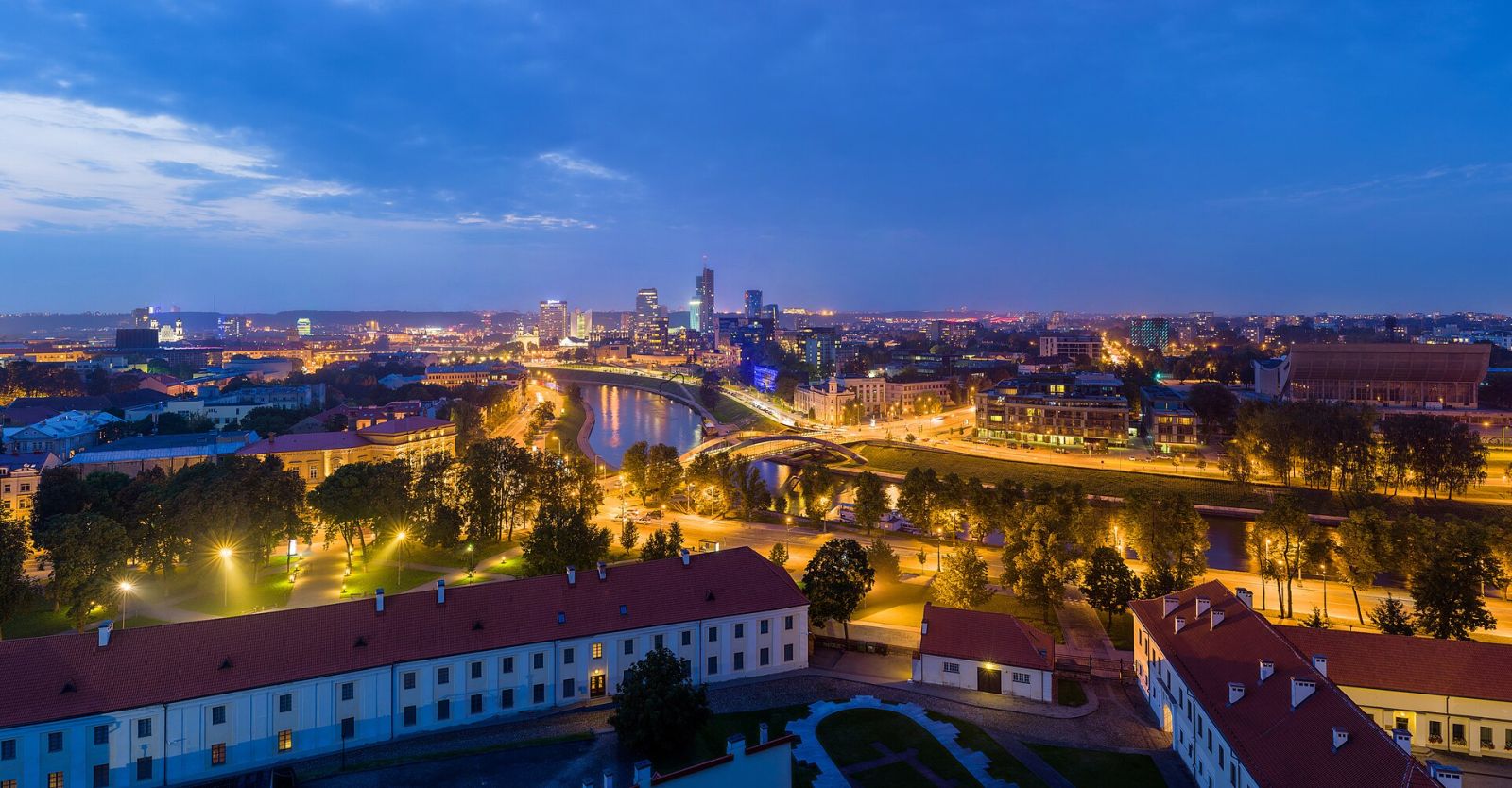
The Old Town of Vilnius is UNESCO-listed, and for once the badge feels fully deserved. This is one of the largest surviving medieval town cores in Eastern Europe: narrow lanes, a church on nearly every corner, and inner courtyards you should wander into without hesitation, because that is where the best bits hide. The essential checklist runs like this: Cathedral Square with its freestanding bell tower, Gediminas Tower with a panorama of red rooftops, the Gate of Dawn with a miraculous icon that draws pilgrims from across the country, and Pilies Street for souvenirs and Baltic amber.
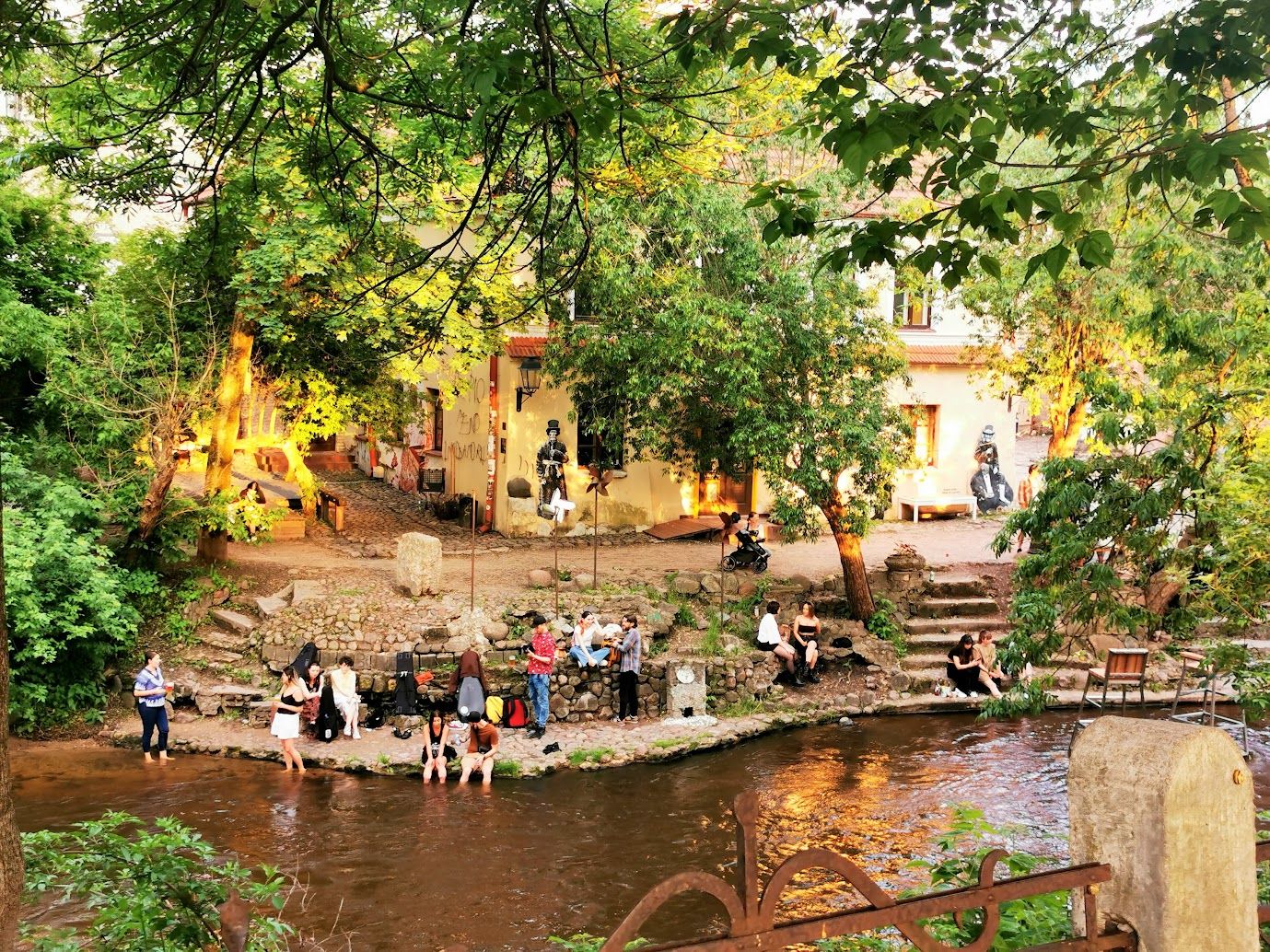
Then there is Uzupis, a self-declared "republic" across the little Vilnia river. Once a derelict district locals avoided, it is now an artists' quarter with its own constitution, an "army" of about a dozen people, and an independence day on April 1. The Uzupis Constitution has been translated into dozens of languages and hangs on plaques along Paupio Street. Articles like "Everyone has the right to be happy" and "Everyone has the right to be unhappy" sound naive, yet they capture the mood of the place precisely. Honest downside: Uzupis has become fashionable and pricey, and its cafes cost noticeably more than the rest of the city.
Trakai: the island castle everyone photographs
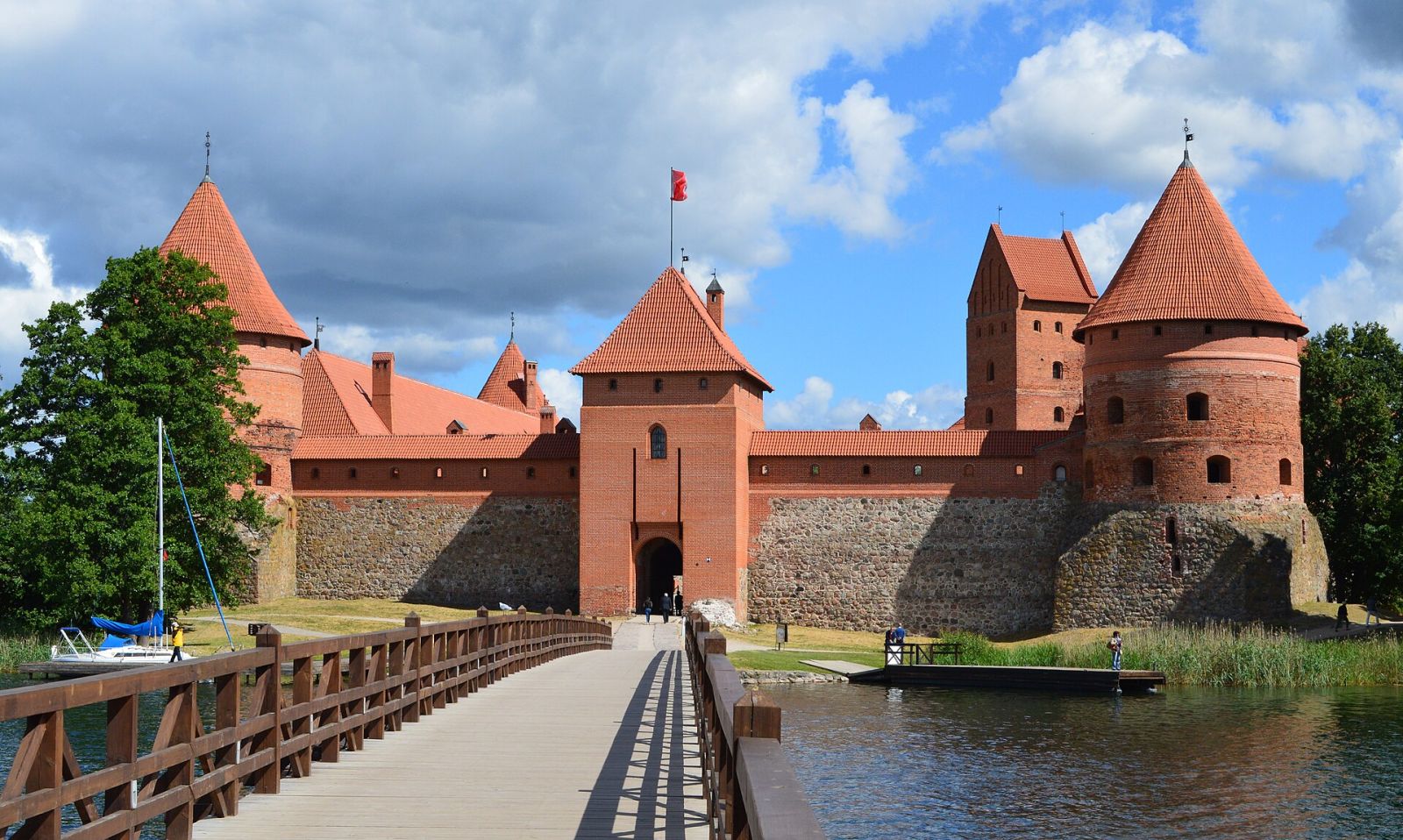
Trakai Island Castle, 28 kilometers from Vilnius, is the country's signature postcard and the most obvious half-day trip from the capital. The red-brick fifteenth-century fortress stands on an island in Lake Galve, reached by wooden footbridges, and the whole scene looks almost suspiciously photogenic. Inside is a museum on the Grand Duchy of Lithuania, but half the pleasure is simply strolling the shoreline or renting one of the rowboats moored by the bridges in summer.
Trakai has another layer: the Karaims, a small Turkic people whom Grand Duke Vytautas resettled here from Crimea more than six hundred years ago. Their heritage is very much alive, from the three-windowed wooden cottages along the main street to kibinai, hand-sized pastries stuffed with chopped meat that seem to be baked in every second house. Visiting Trakai without eating a kibin is like going to Naples and skipping the pizza. Getting there is easy, buses and trains leave Vilnius every thirty to sixty minutes and take under 40 minutes. Check castle hours and tickets on the official museum site trakaimuziejus.lt.
Kaunas: the interwar capital with attitude
Travelers often skip Kaunas, which is a mistake. Lithuania's second city served as the temporary capital between the world wars, and that era left it a whole layer of modernist architecture that earned Kaunas the title of European Capital of Culture in 2022. The route is straightforward: the Old Town with a town hall nicknamed the "white swan", Kaunas Castle at the confluence of the Nemunas and Neris rivers, then Laisves Aleja, a pedestrian avenue running almost two kilometers without a single car.
For something offbeat, try the Devils' Museum, which holds several thousand devil figurines from around the world, and the two funiculars from the 1930s that still haul passengers up the Zaliakalnis and Aleksotas hills. The Aleksotas viewpoint offers the best panorama of old Kaunas, especially at sunset. The honest minus: next to Vilnius the city feels quieter and the nightlife is modest, so give Kaunas a day, or a day with one overnight at most.
The Curonian Spit and Nida: dunes that actually move
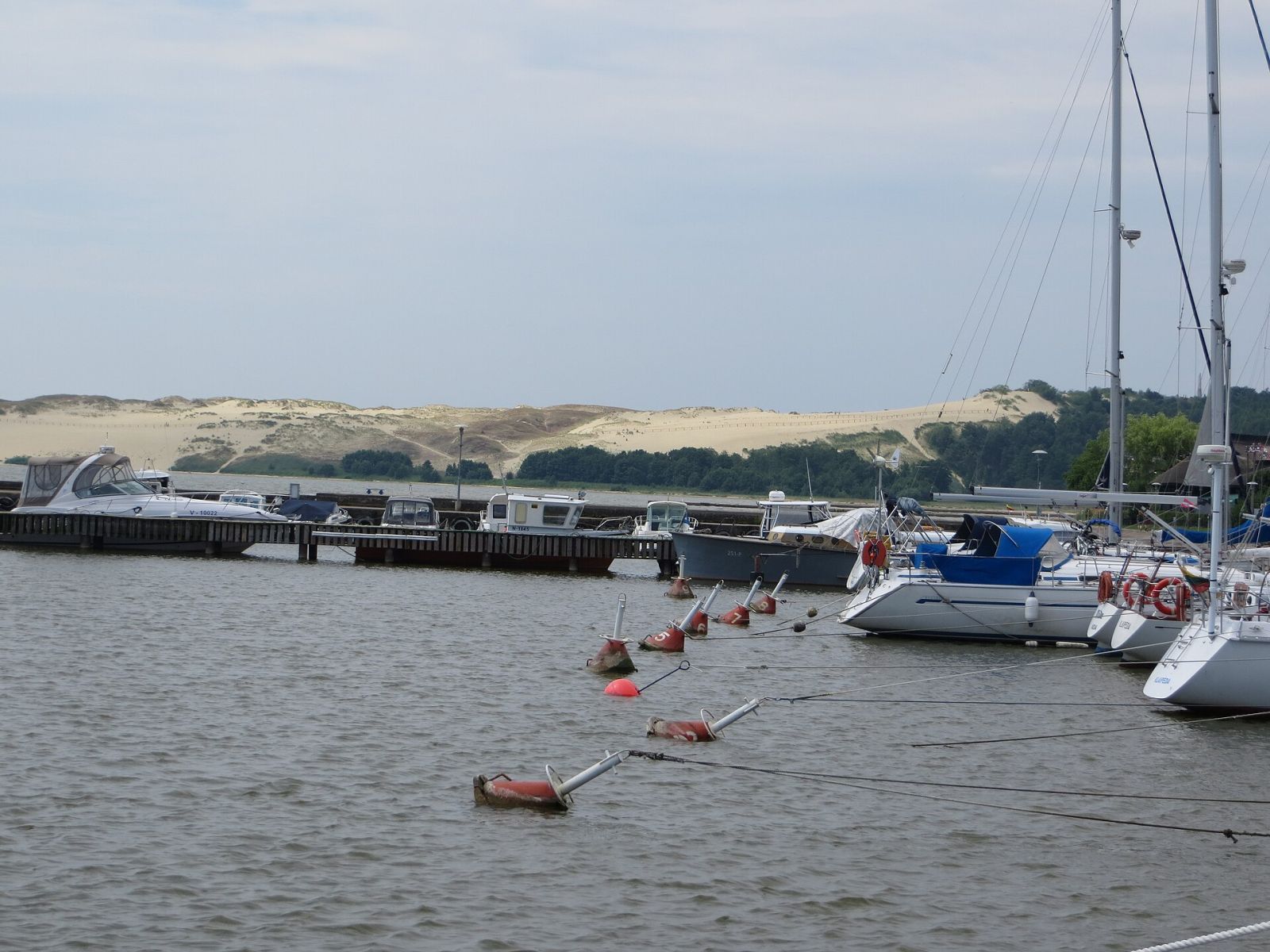
The Curonian Spit is a narrow ribbon of sand stretching nearly a hundred kilometers between the Baltic Sea and the Curonian Lagoon, split down the middle between Lithuania and Russia's Kaliningrad region. The Lithuanian half is a national park and a UNESCO site. You arrive by ferry from Klaipeda, a crossing of about five minutes, and then a single road runs through pine forest to Nida near the border.
Nida is a former fishing village turned the coziest resort in the country: wooden houses with carved weathervanes, smoked fish sold along the promenade, cycling paths threading the forest. The headline sight is the Parnidis Dune, over 50 meters high, topped with a sundial and offering views of the sea, the lagoon, and sands rolling toward Russian territory all at once. These dunes genuinely wander, wind shifts them several meters a year, which is why walking is allowed only on marked trails and rangers fine anyone who steps off. One more thing: driving onto the spit costs money, an environmental fee is collected at the ferry, so check current rates on the national park site nerija.lrv.lt before you go.
The Hill of Crosses: a place that stays with you
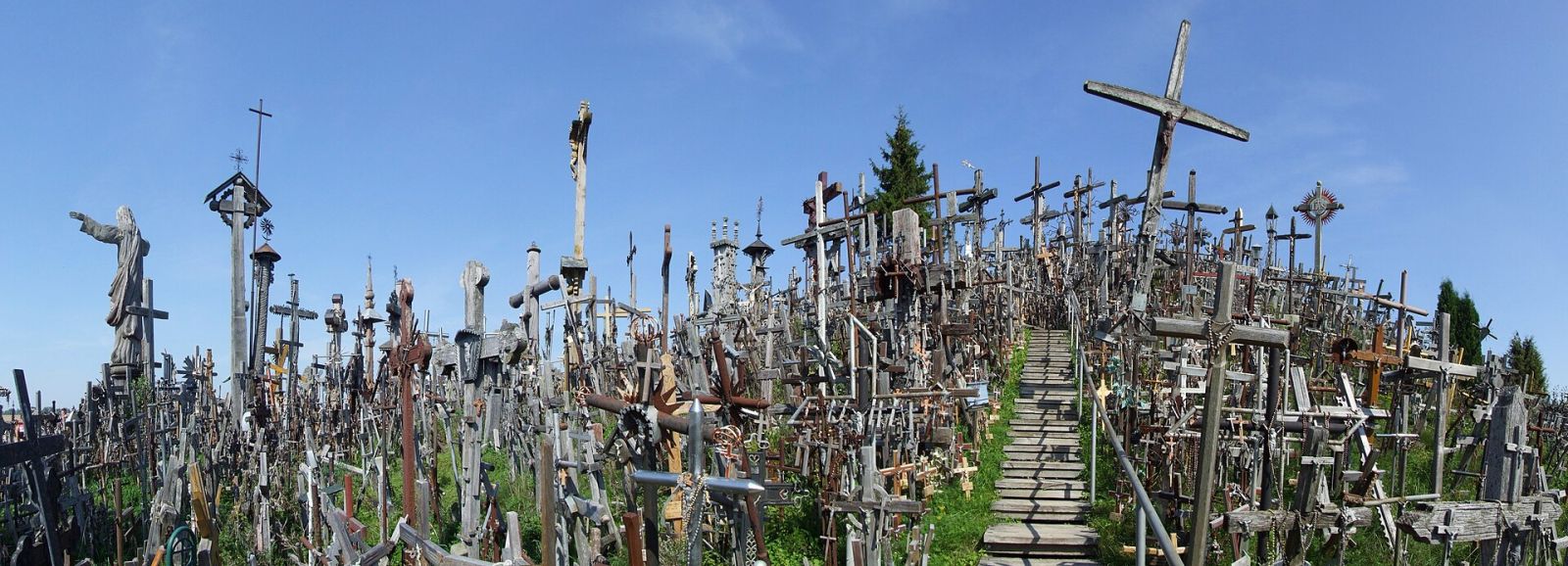
Twelve kilometers from Siauliai, a small mound rises out of flat farmland, covered entirely in crosses. Estimates put their number above two hundred thousand, from towering wooden crucifixes to tiny rosaries hung in clusters. The tradition dates back to the nineteenth century, and in Soviet times the hill was bulldozed three separate times, only for people to carry crosses back under cover of night, bans or no bans. That stubborn history is what makes the site more powerful than any cathedral.
Pope John Paul II visited in 1993, and pilgrim numbers multiplied afterward. Entry is free, anyone may leave a cross, and a small shop by the parking lot sells them. A practical note: public transport is awkward here, the bus from Siauliai stops at the Domantai turnoff, leaving a two-kilometer walk. The easiest option is to fold the Hill of Crosses into a drive between Riga and Vilnius or Kaunas, since it sits almost on the highway.
How to build the route and how much time to allow
| Place | Time needed | How to get there |
|---|---|---|
| Vilnius + Uzupis | 2 days | route base, direct buses from Warsaw and Kyiv |
| Trakai | half a day | train or bus from Vilnius, under 40 min |
| Kaunas | 1 day | LTG Link train from Vilnius, about an hour |
| Klaipeda + Curonian Spit | 1-2 days | train or bus to Klaipeda, then ferry and bus to Nida |
| Hill of Crosses | 1-2 hours | easiest by car, en route to Riga |
The sweet spot for all of it is five to six days at an easy pace, or four days if you keep moving. Public transport covers everything except the Hill of Crosses, where a car saves you a walk. Best season: May through September, when the spit ferries run at full capacity and darkness does not fall at four in the afternoon. Winter has its own charm, Christmas-season Vilnius traditionally puts up one of Europe's prettiest trees, but save the sea and the dunes for warm weather.
The bottom line is simple. Lithuania is that rare country where one short trip covers baroque old towns, an island castle, wandering dunes, and a hill of crosses that gives you goosebumps. As a first taste of the Baltics, there is no better start.