Here is the short version of what to see in Krakow: Wawel Castle and its cathedral on the hill above the Vistula, the vast Main Market Square with the Cloth Hall and St. Mary's Basilica, whose hourly bugle call breaks off mid-note, the old Jewish quarter of Kazimierz, and the Wieliczka Salt Mine just outside town. Give the city itself two days, and set aside a separate one if you plan to visit Auschwitz. One thing to grasp right away: Krakow's centre is compact and almost entirely walkable, so a metro map is useless here, mostly because the city has no metro at all.
Krakow is Poland's former capital, and that history is a big part of its charm. Unlike many cities in the region, it came through the Second World War almost untouched, so the Old Town here is the real thing rather than a postwar reconstruction. For Ukrainian travellers the city is also genuinely close: the trip from Lviv is shorter than the one from Kyiv to Odesa. That closeness is why Krakow has become one of the most popular choices for a first trip abroad. Let's start with what people come here for, and finish with how to get here and when to go.
Wawel: castle, cathedral and a dragon at the foot of the hill
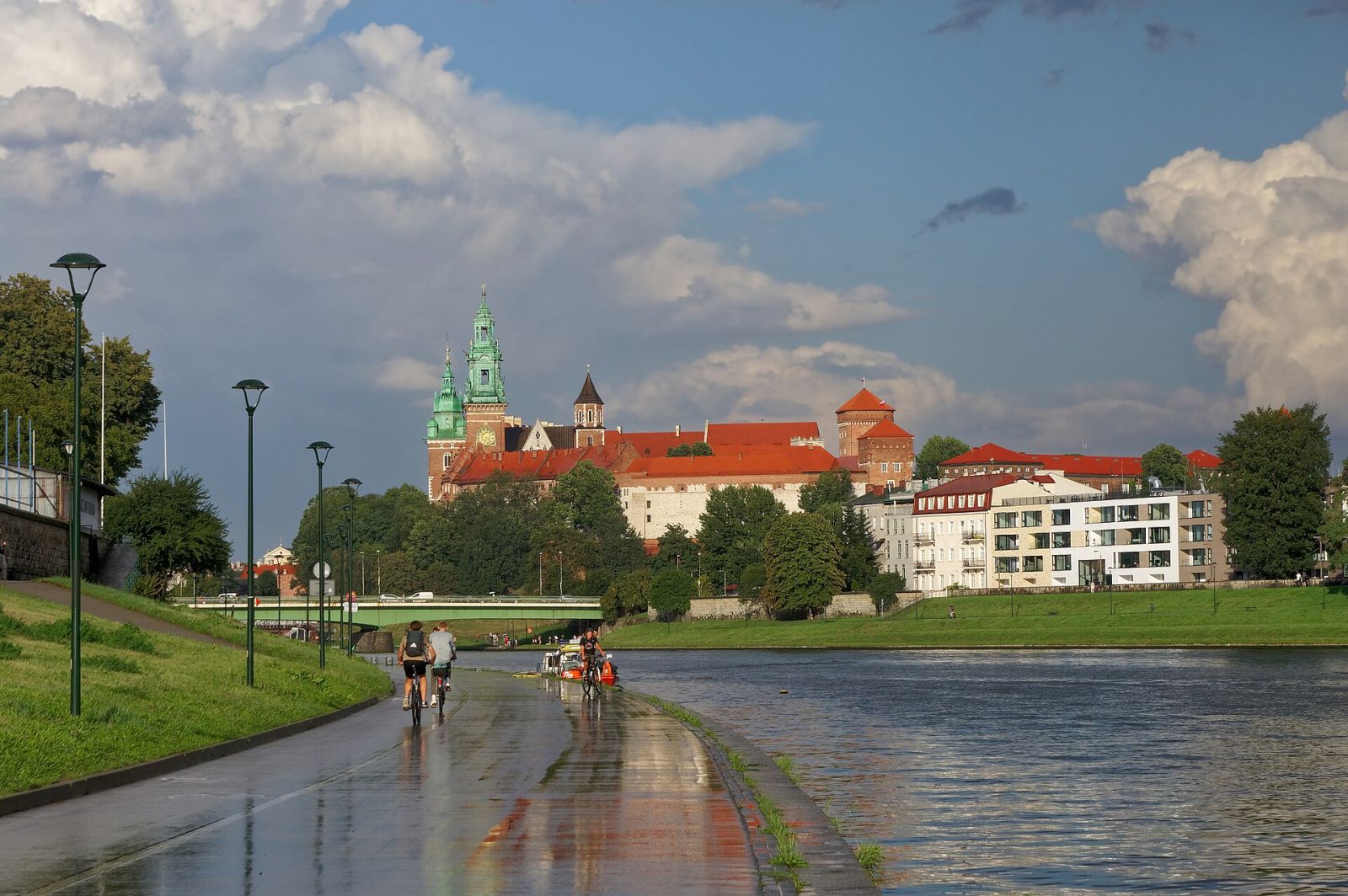
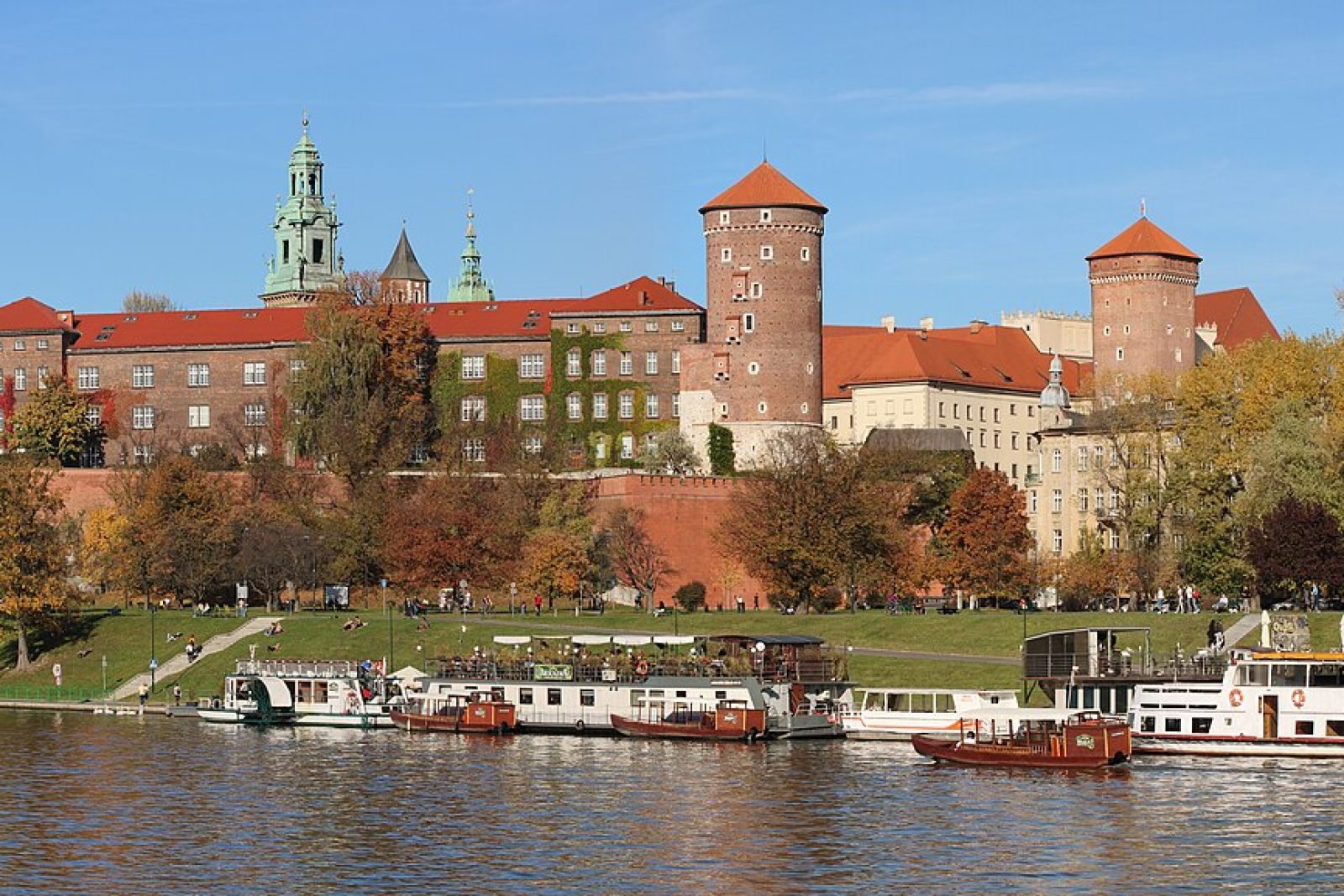
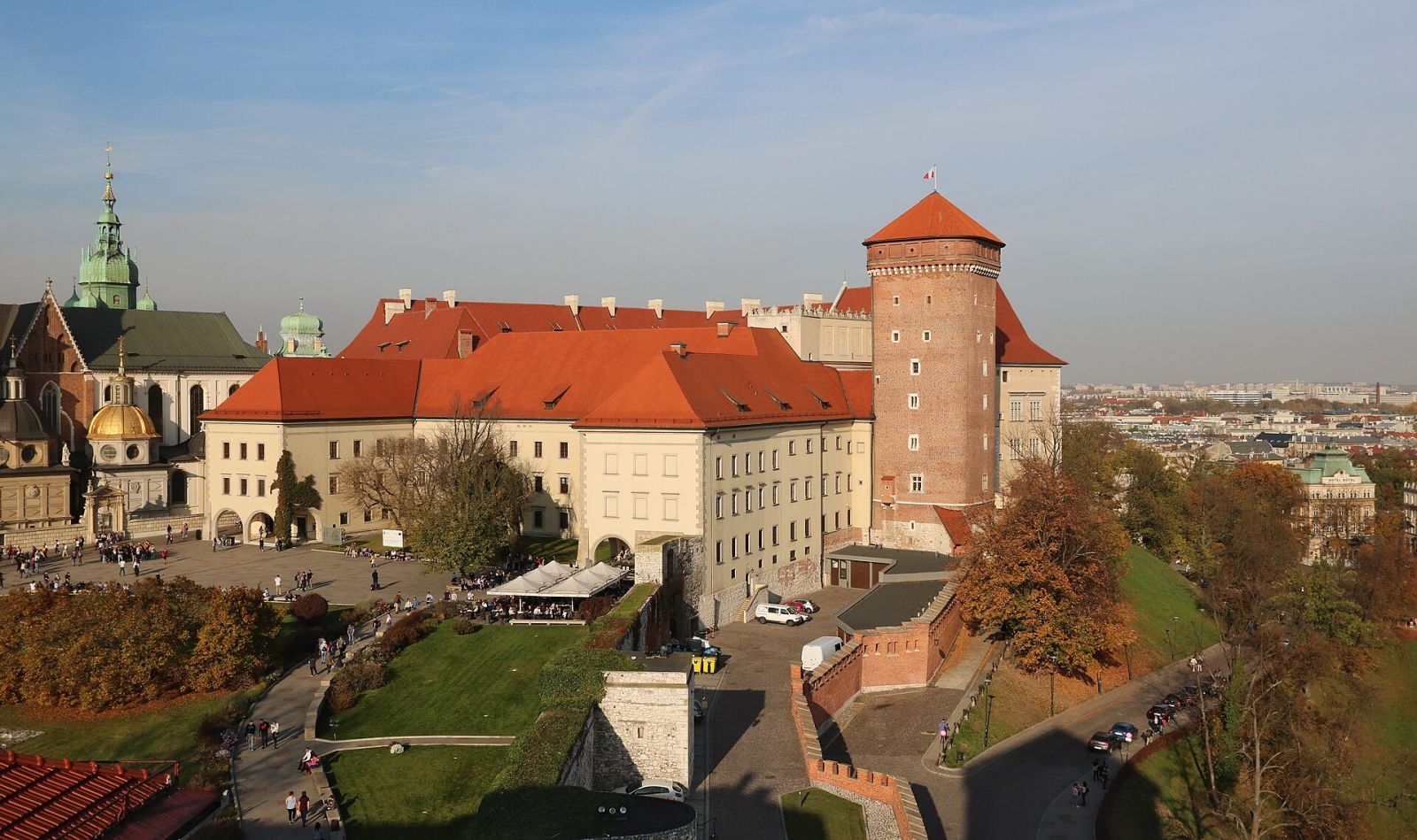
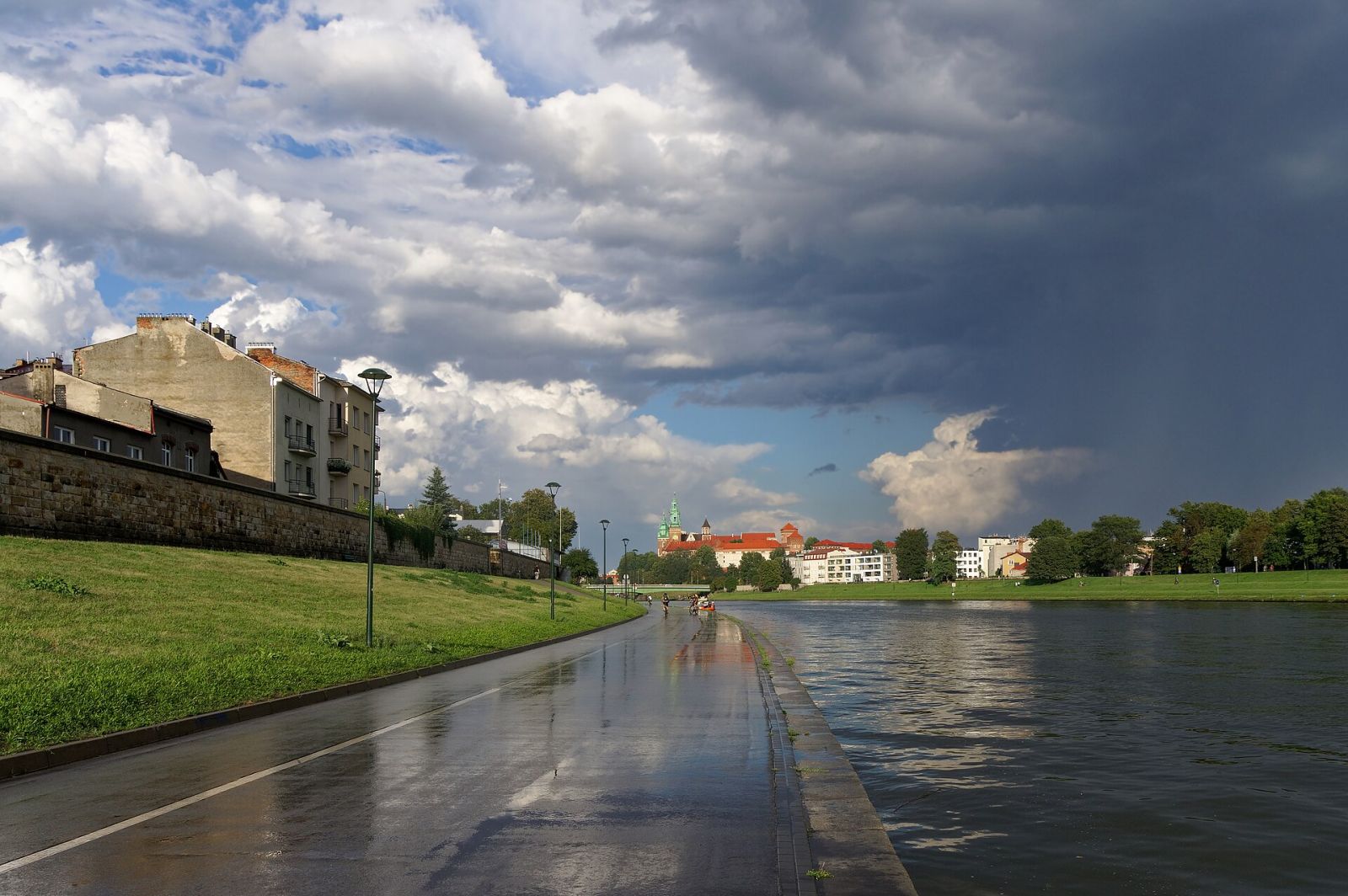
Wawel is the heart of Polish history and the first thing worth seeing. On a limestone hill above the Vistula sits a whole complex: a Renaissance royal castle with an arcaded courtyard and the Gothic Wawel Cathedral beside it. Polish kings were crowned and buried here, and the cathedral crypts hold national heroes from Kościuszko to Piłsudski. Climbing the hill and walking its terraces is free, and even without a ticket the view over the river earns the walk.
Getting inside, though, is a series of separate tickets: the royal apartments, the treasury with the coronation sword, the bell tower with the giant Sigismund Bell and its queue. Daily tickets to each section are limited and sell out by morning in high season, so arrive early or book online ahead. Down at the base of the hill by the water stands a metal dragon that breathes real fire every few minutes. Kids love it more than any crown, so don't miss it on your way down to the Vistula.
The Main Market Square: what matters here?
Krakow's Main Market Square is one of the largest medieval squares in Europe, and the whole city drains toward it. The order of a visit is simple, because everything sits right there, a few steps from one another.
- The Cloth Hall (Sukiennice). A long Renaissance gallery running down the middle of the square, once a covered cloth market and now rows of stalls selling amber, leather and souvenirs. Upstairs on the second floor is a branch of the National Museum with 19th-century Polish painting.
- St. Mary's Basilica. A brick Gothic church with two towers of unequal height and its main treasure inside, the carved altarpiece by Veit Stoss. It is the largest Gothic altarpiece in the world, and worth stepping in to see.
- The Town Hall Tower. All that remains of the old town hall, and you can climb it for a view over the square.
The hejnal deserves its own paragraph, because it is easy to walk past without realising what just happened. Every hour, from the taller tower of St. Mary's, a trumpeter plays a short tune to all four points of the compass, and each time it cuts off abruptly, mid-note. Legend explains it this way: in the Middle Ages a watchman sounded the alarm of an attack, and a Tatar arrow cut him off on that very note. Now the broken melody rings out over the whole city, and at noon Polish radio broadcasts it live. Stop, listen, and wave up at the trumpeter in his little window; he sometimes waves back.
Kazimierz: the old Jewish quarter
Kazimierz was once a separate town, and for centuries the heart of Krakow's Jewish community. Today it is the city's most atmospheric district. There is none of the polish of the Main Square here; instead you get weathered facades, old synagogues, quiet courtyards and the best nightlife in town, all bars and live music. Walk the main sights by day, then simply stay for dinner in the evening.
Make sure to see Szeroka Square with the Old Synagogue, the oldest in Poland, the Remuh Synagogue with its ancient Jewish cemetery beside it, and Józefa Street with its murals. Many people come because of the film Schindler's List, which was shot right here, and across the river in the Podgórze district you'll find Oskar Schindler's factory, now a powerful museum about the occupation of Krakow. Nearby stand a surviving fragment of the ghetto wall and a square filled with empty chairs, a memorial to those who were deported. Kazimierz can be both playful and deeply sombre, sometimes within a single block, and that is exactly why it deserves a slow visit.
The Wieliczka Salt Mine: worth it or not?
Twenty minutes from Krakow, in the town of Wieliczka, hides one of the region's most astonishing sights: a salt mine worked for seven hundred years that made the very first UNESCO list back in 1978. These are not dim tunnels with head-lamps but a whole underground world of salt lakes, chapels, statues and chandeliers, all carved from salt by the miners themselves. The centrepiece is the underground Chapel of St. Kinga, an enormous hall of salt deep below ground where concerts and even weddings are held.
A few honest caveats. The tourist route is guided and runs on a timetable, so book your ticket ahead, especially in summer. You go down on foot, nearly four hundred steps, but a lift brings you back up. It stays around fourteen degrees underground all year, so pack a sweater even in July heat. And budget half a day including the trip out. Yes, it is touristy and crowded, but the spectacle really is one of a kind, and even sceptics usually come out impressed.
Auschwitz-Birkenau: an important trip you should prepare for
A little over an hour from Krakow, near the town of Oświęcim, lies the Auschwitz-Birkenau memorial, the former Nazi concentration camp where more than a million people, most of them Jews, were murdered. This is not a tourist attraction in the usual sense but a place of memory and mourning, and you should go in that frame of mind. Many travellers consider it the most important thing to see near Krakow, and at the same time the hardest.
The practical things to know in advance. Entry is free, but in high season, roughly spring through autumn, you can only enter during daytime hours with a licensed guide, so book a ticket ahead on the memorial's official site, because they sell out weeks in advance. Seeing both sites, Auschwitz I and the vast Birkenau, takes at least half a day. It is an emotionally heavy visit, and it is best not to pair it with anything lighthearted on the same day. Young children are not advised. And one simple request from the memorial itself: keep quiet and respectful, because this is first and foremost a cemetery in the open air.
How to get there from Ukraine, and when to go?
Krakow's biggest advantage for Ukrainians is how close it is. The easiest way is by bus or train from Lviv; the journey runs roughly eight to ten hours including the border, and tickets are cheap. There is a direct rail connection as well as dozens of daily coach services from various operators. Krakow's own Balice airport takes low-cost flights from across Europe, so the city works both as a destination in itself and as a launch point for going further. As for documents, a biometric passport is enough, since Poland is in the Schengen area and no separate visa is required.
| Season | Weather and mood | Best for |
|---|---|---|
| April, May | Warm, everything in bloom, crowds still moderate | The best balance of weather and calm |
| June, August | Peak tourists, heat, queues for everything | Only for the long, bright evenings |
| September, October | Mild, golden autumn, noticeably fewer people | Those who value quiet and crowd-free photos |
| December | Christmas market on the Square, mulled wine | Those coming for the holiday atmosphere |
December is its own story: the Christmas market right on the Main Market Square, with a tall tree, mulled wine and rows of wooden stalls, turns the centre into a postcard. Lovely, but crowded, and accommodation prices jump. In summer, meanwhile, Krakow's main drawback, like any hit destination, is the crowds: the Square, the Wawel queue and the Wieliczka tours are packed solid. So the smartest move is to go in May or September, when it's warm and the crowds thin out. Prices, timetables and opening hours change, so check the current details before you travel, especially tickets for Wawel, Wieliczka and Auschwitz, which are worth booking online ahead.
One last word on pace. Krakow tempts you to tick everything off in a weekend, but that's a mistake: the city opens up best when you're not rushing. Set aside an evening just to sit on the Square with a coffee, catch the hejnal, then wander into Kazimierz for dinner in an old courtyard with music playing. The big sights aren't going anywhere; the feeling of the place is born precisely in those unhurried hours in between.