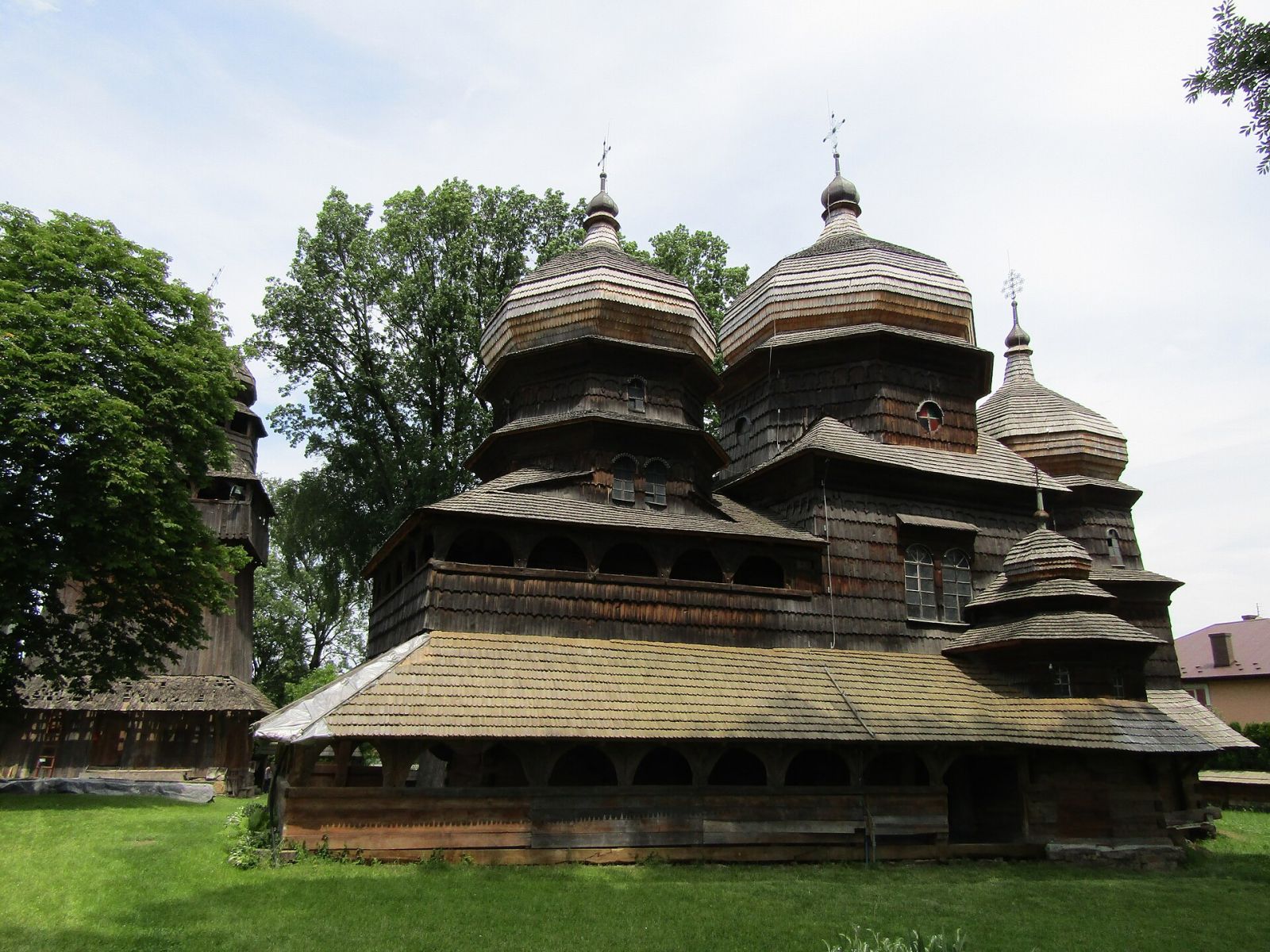
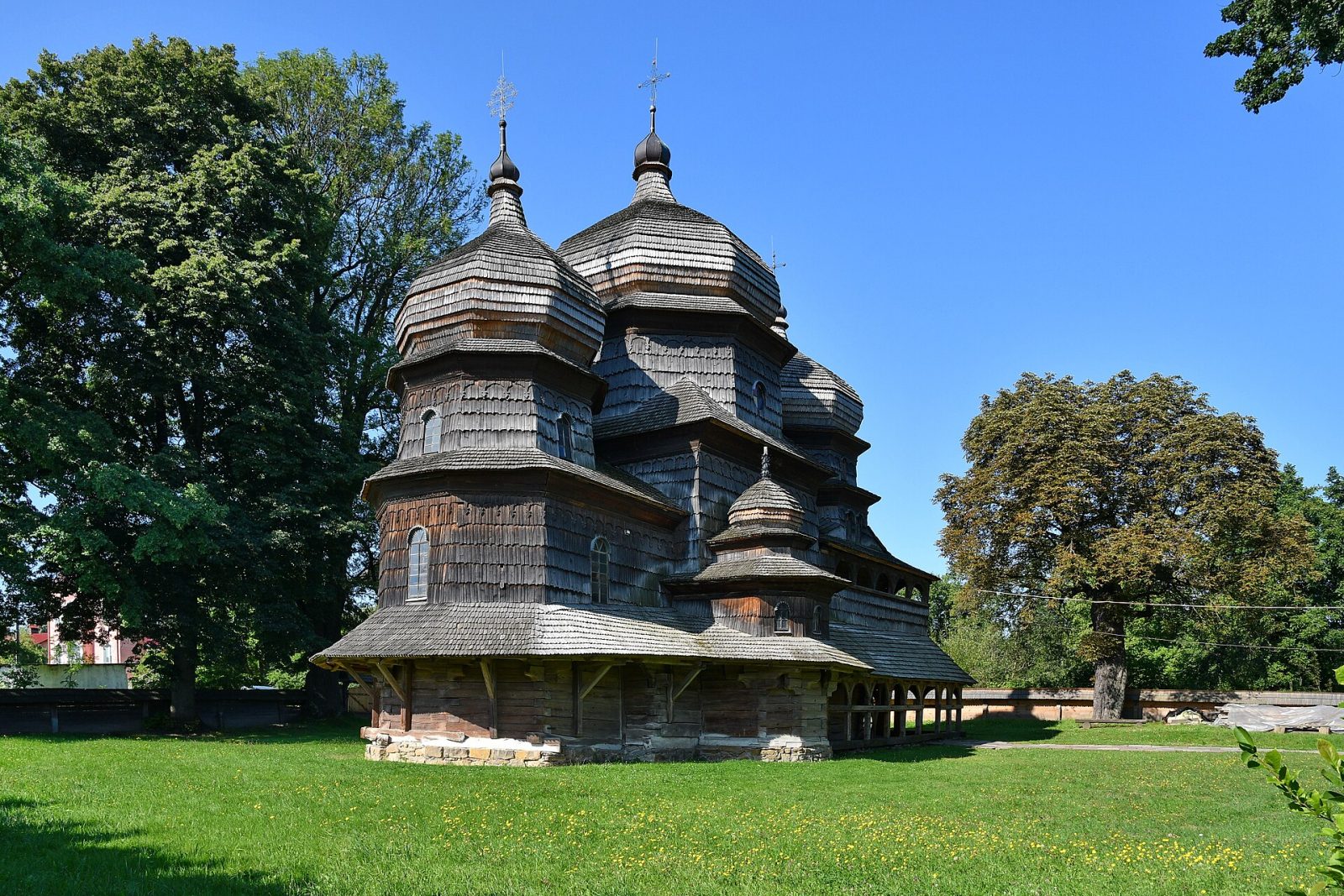
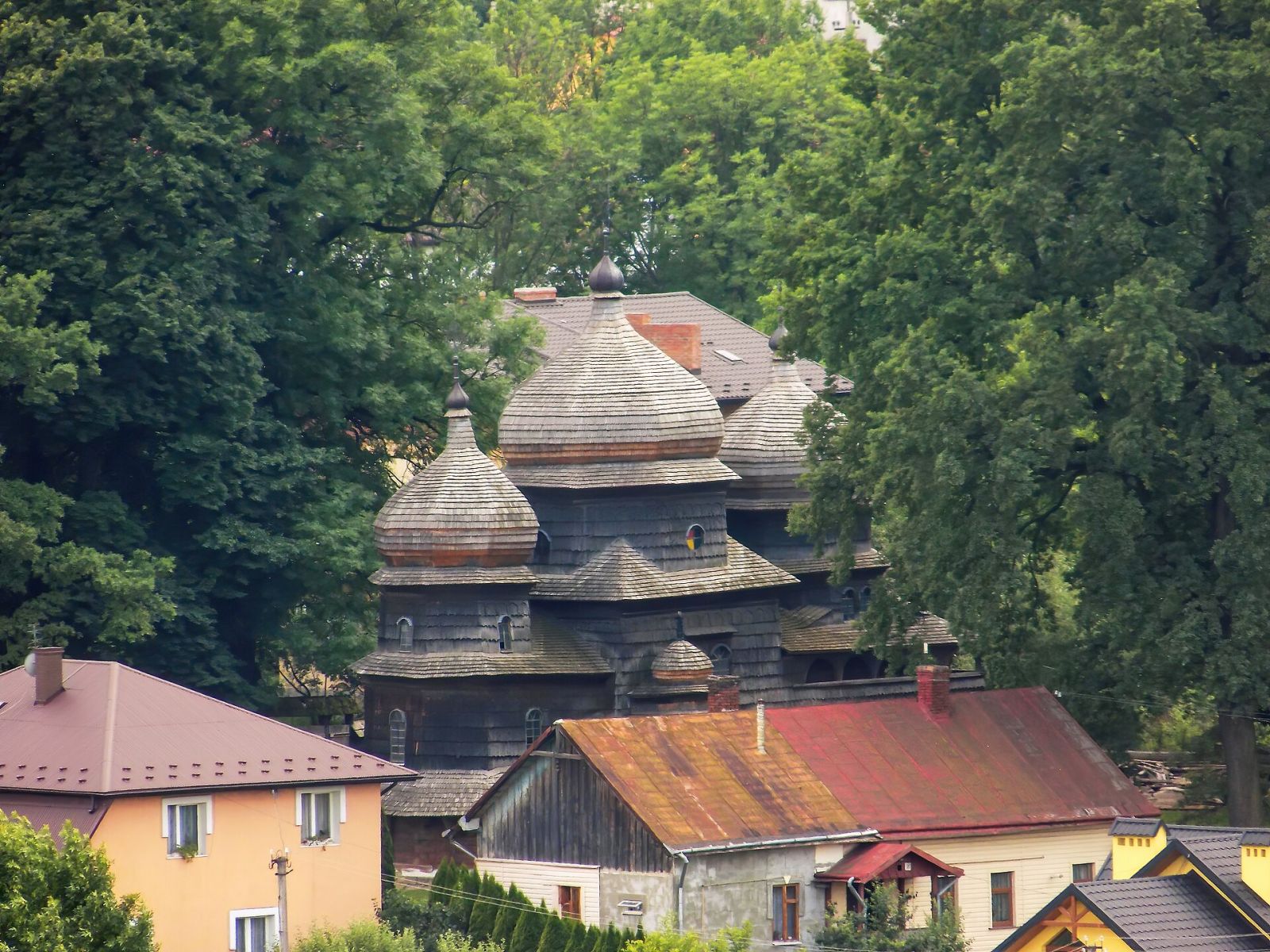
The main reason to come here is tucked away on the edge of town, among ordinary residential blocks: the wooden Church of St. George, a UNESCO World Heritage Site, raised without a single nail back at the turn of the 15th and 16th centuries. If you are deciding what to see in Drohobych in a single day, keep two anchors in mind: this church on its hill and the central square with the town hall and the Catholic church, and scattered almost invisibly between them, the legacy of the writer Bruno Schulz.
Drohobych is compact and underrated. Most people pass straight through on their way to neighbouring Truskavets, which is a shame, because half a day here holds a medieval temple on a par with the wooden churches of the Carpathians, a Gothic church, a thousand years of salt history, and a whole quarter tied to one of the most important European prose writers of the 20th century. Below is the practical part: what is essential, how long to allow, and how to get there.
The Church of St. George: the reason to make the trip
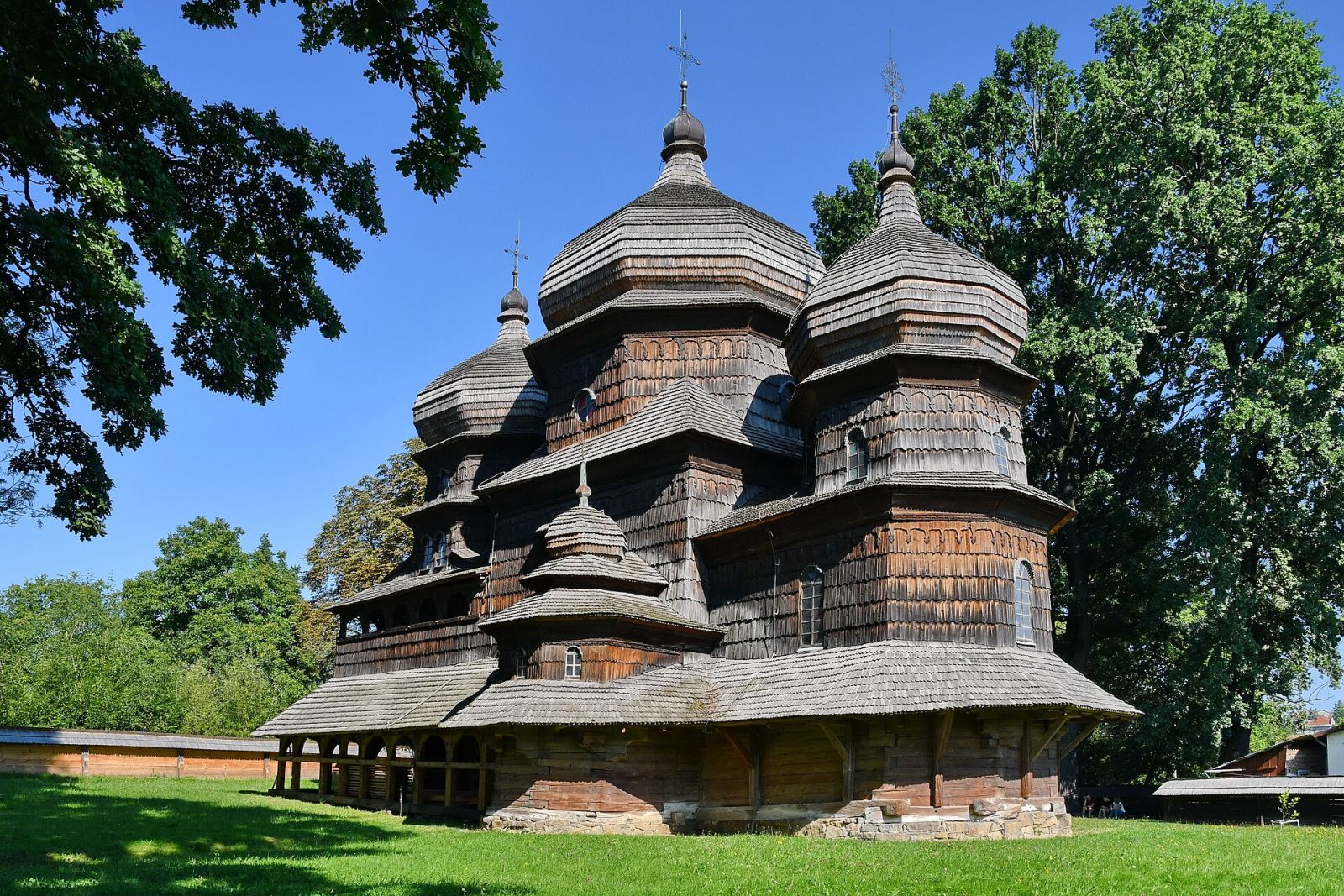
This is the kind of sight worth planning a trip around, not visiting "if there is time." The Church of St. George was moved to Drohobych from the village of Nadiiv in the early 17th century, and its oldest parts date to the late 15th and early 16th centuries. In 2013 it joined the UNESCO list together with seven other wooden churches of the Carpathian region of Ukraine and Poland. It was built from timber in the traditional Boyko technique, with no metal in the structure, and that is precisely why it is so valued.
What impresses most inside is not the walls themselves but what covers them. The church is painted from floor to vaults: scenes of the Last Judgement, biblical stories, saints framed by ornament. It is a rare case where almost continuous 17th and 18th century painting survives on wood rather than stone, and has lasted to our day. You should walk slowly here, head tilted back, because the best of it is often above you, not in front of your eyes.
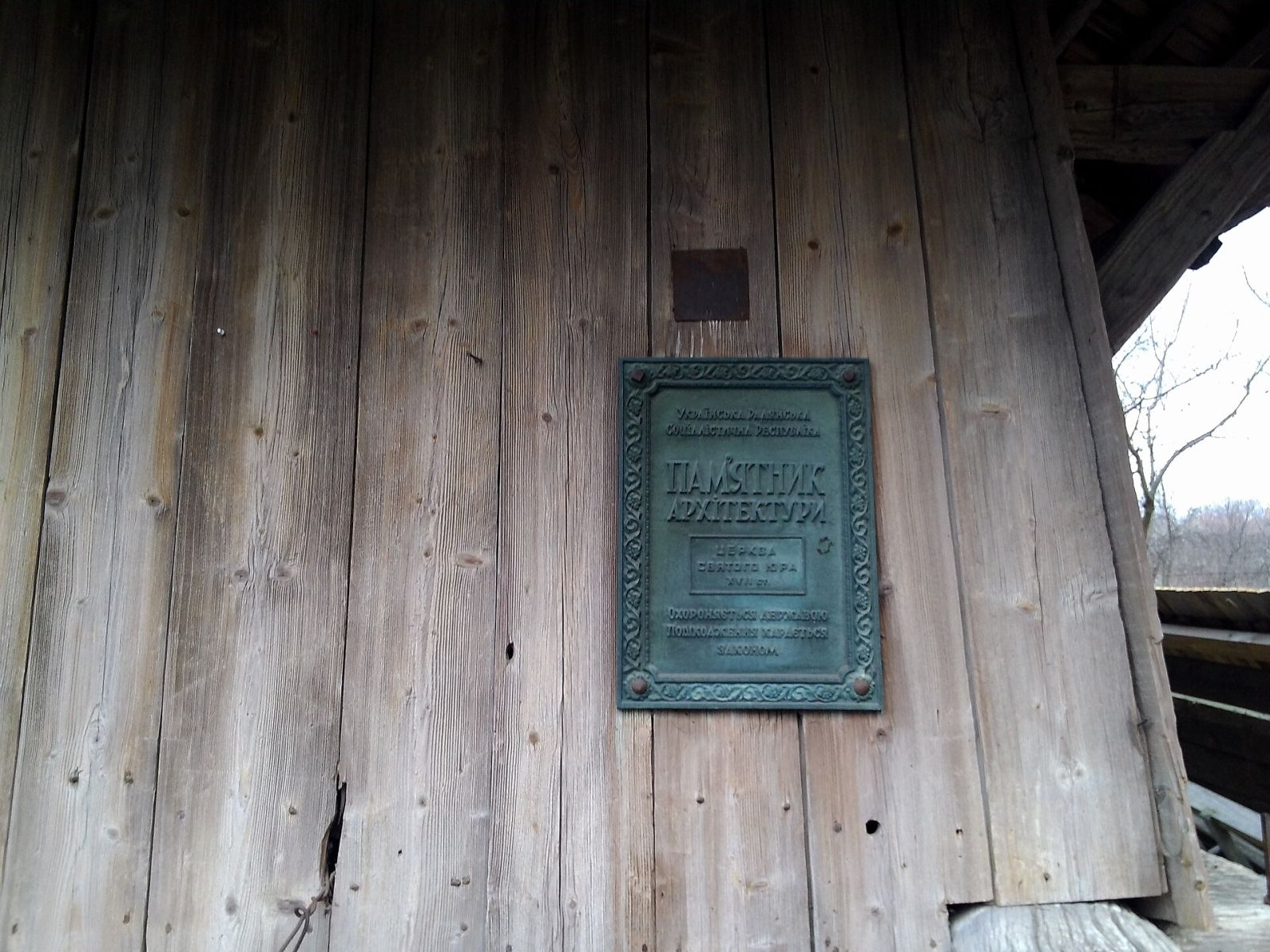
An honest caveat: the church works as a museum, so you cannot always walk in "off the street." Opening hours float with the season and the caretaker, so check the current schedule before your trip at the local history museum it belongs to. Allow at least an hour, and more if you are lucky enough to catch the caretaker's account of the place.
Rynok Square, the town hall and the Church of St. Bartholomew
The heart of the city is Rynok Square with the town hall in the middle. The present building with its tall tower is relatively young, built in the first half of the 20th century on the site of older halls, but it does its job as the main landmark honestly: from here it is easiest to fan out across the town. When it is open, you can climb the tower for a panorama of the old centre and its tiled roofs.
Beside it stands the main historic landmark, the Church of St. Bartholomew. This is a Gothic temple of the mid 14th and 15th centuries, one of the oldest in the Subcarpathian region, with a distinctive pointed silhouette and a tall bell tower added later. Inside, the carved altar is worth attention, as is the overall sense of real Gothic that has not been restored "for tourists." The church is active, so it is better to visit outside services, and you should check the schedule before your trip.
Rynok Square itself and the lanes around it are a case where you do not need a specific "box to tick." Walk slowly, taking in the facades of the old townhouses, and you will feel the city better than by dashing through particular doorways.
Who was Bruno Schulz and why do people look for him on the walls of Drohobych?
Bruno Schulz was a writer and artist who was born, lived almost his entire life, and died right here in Drohobych. His prose, above all the collections "The Cinnamon Shops" and "Sanatorium Under the Sign of the Hourglass," has long been part of the canon of 20th century world literature, and Drohobych itself is transformed in these texts into a mythical, almost fairy-tale space. For many travellers this is the real hidden reason to come: to walk a real city that became literature.
There are several Schulz traces in town, and they are best gathered as a route rather than one by one:
- Murals and memorial signs. Drohobych has wall images and plaques dedicated to Schulz scattered around the centre. This is not one official open-air museum but rather traces of memory you have to hunt for a little, and half the pleasure is in the hunt.
- Places from his biography. The gymnasium where he taught drawing, the streets of his childhood, his family home. Not all of them are equally well marked, so a local tour or a map of Schulz sites will help you find your bearings.
- The story of the frescoes. A separate dramatic thread: wall paintings Schulz made on commission in the last months of his life were partly taken abroad in 2001, and the dispute around them still goes on. It is worth knowing this to understand why the Schulz theme in Drohobych is so raw and alive.
If literature does not grab you in general, you can move through this layer quickly. But even then it is worth knowing that these ordinary-looking streets have a double bottom here, and the city remembers it.
The salt story: why Drohobych exists at all
The town did not appear by chance. Drohobych grew on salt: its saltworks are mentioned as far back as the times of Kyivan Rus, and salt fed the town for centuries and gave it weight among its neighbours. The local saltworks is considered one of the oldest in Ukraine still working on the principle of boiling down brine, and this is not a museum reconstruction but a living continuity of the craft.
For a traveller this is more of an informative than a "spectacular" stop. There will be no striking shots as at the wooden church, but there will be an understanding of where the town came from and why it is so old. The chance to look in on production and see the process depends on arrangement, so check the details before your trip. For anyone who loves industrial history, this fills in an important piece.
| Place | What makes it worth it | Time to allow |
|---|---|---|
| Church of St. George | Wooden UNESCO temple, 17th, 18th c. paintings | 1 hour or more |
| Rynok Square and town hall | Historic core, tower panorama | 30–40 minutes |
| Church of St. Bartholomew | 14th, 15th c. Gothic, carved altar | 30 minutes |
| Bruno Schulz sites | Murals, gymnasium, literary trail | An hour or more with a tour |
| Saltworks | Oldest salt extraction, living craft | Briefly or by arrangement |
How to get to Drohobych?
The town lies in Lviv region, south of Lviv, and that is its main logistical convenience: you almost always come here via the regional capital. Check current transport timetables before your trip, they change.
- From Lviv. The simplest option. Regular buses and minibuses, along with trains and local electric trains, reach Drohobych in roughly an hour and a half to two hours. That makes the town easy as a day trip from Lviv.
- Via Truskavets. The famous spa resort sits right next door, a few kilometres away, so many people stay in Truskavets for the waters and pop over to Drohobych for half a day to see the church and the centre. Regular transport runs between the towns and the ride takes only minutes.
- By car. On the road from Lviv towards the Carpathians, Drohobych slots naturally into a route together with Truskavets, and from there you can drive deeper into the mountains.
A half-day route you can actually manage
The logic is simple: one far point plus a compact centre. Start with the Church of St. George while you have time and daylight, because it is the main impression of the day and not something to leave to chance. Then head to Rynok Square, look over the town hall and the Church of St. Bartholomew, and between them catch the Schulz traces on the walls and facades. Add the salt story if you have the time and an arrangement in place, as it is more for those curious about "how it all began."
What to cut if you are really short on time: stick to the pairing of church plus centre, which captures the essence of Drohobych without any fuss. And the other way round, if you are based in Truskavets for a few days, it makes sense to come here unhurried, take a tour of the Schulz sites, and keep an evening for a slow walk through the old lanes, because that is where the town opens up most warmly, not at the headline sights.