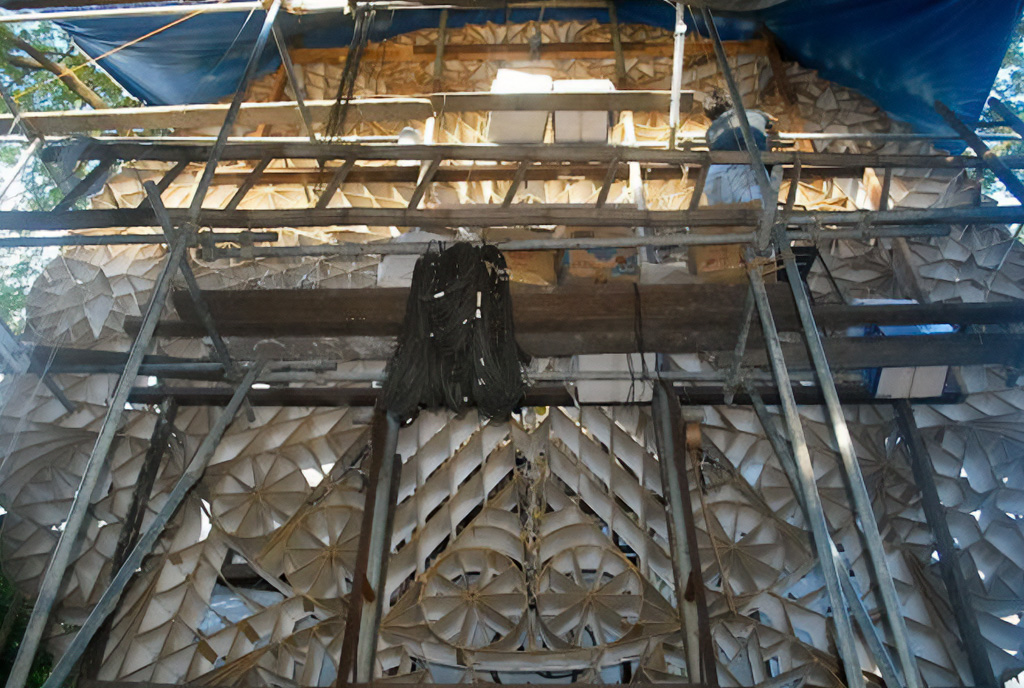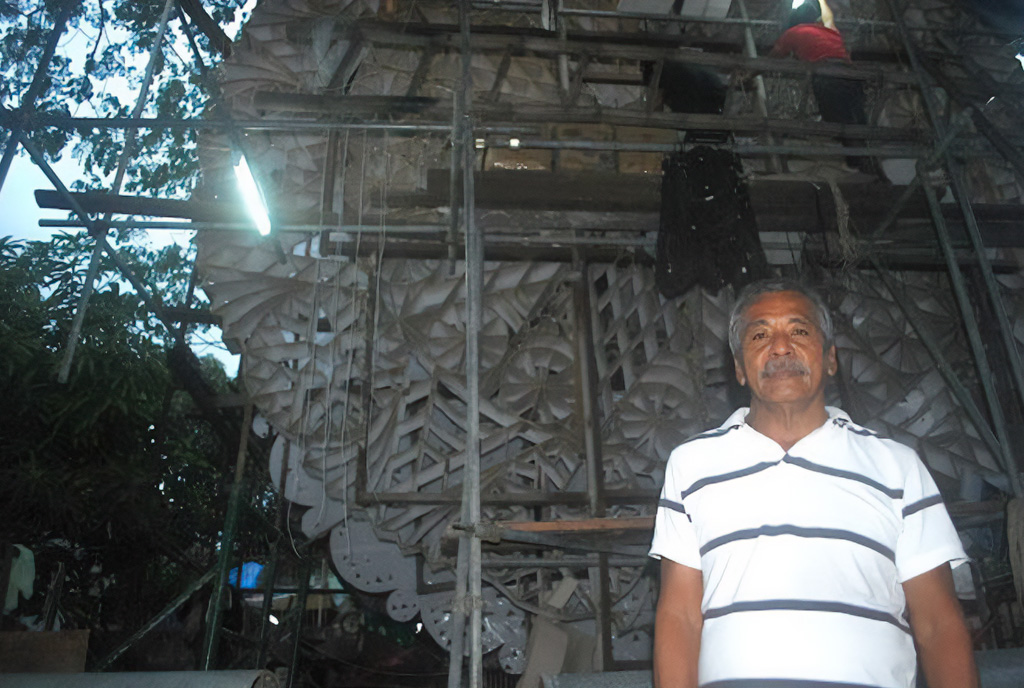


In skeletal form, they look like giant honeycombs towering 20 feet into the air.
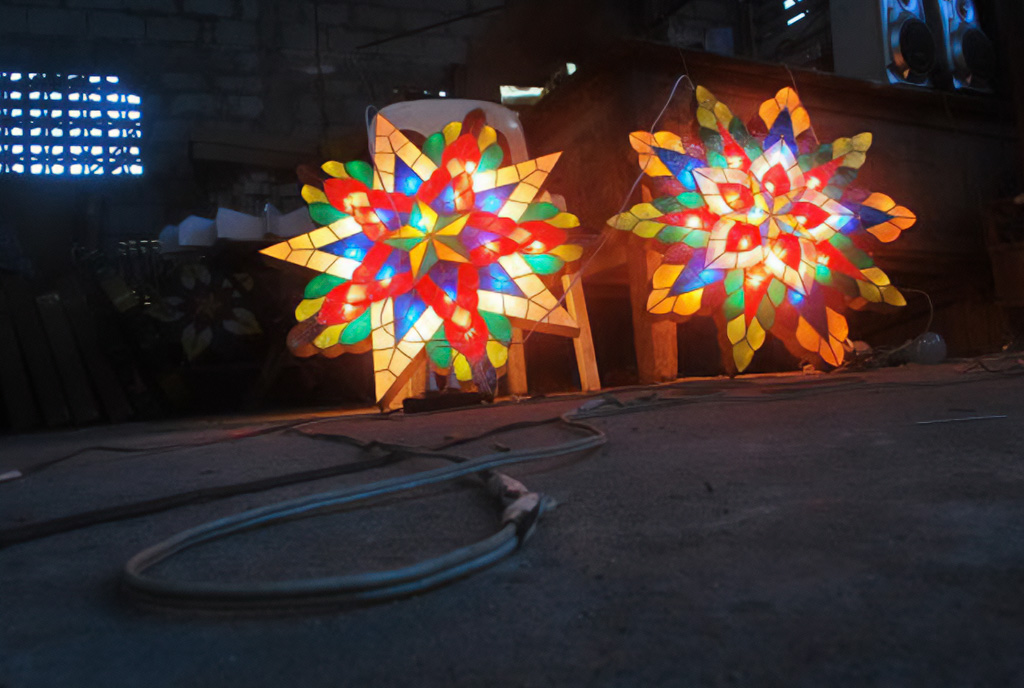
These are the largest versions of the Filipino parol, a brilliant electric Christmas lantern that stands for the Star of Bethlehem.
Switched on, they are a genuinely breathtaking sight. Each giant parol carries thousands of spinning lights synchronized by seven big steel drums known as rotors. As the parol turns, the rotor strikes a row of pins, sending electricity through the bulbs.
Partner links: booking through them supports the blog at no extra cost to you.
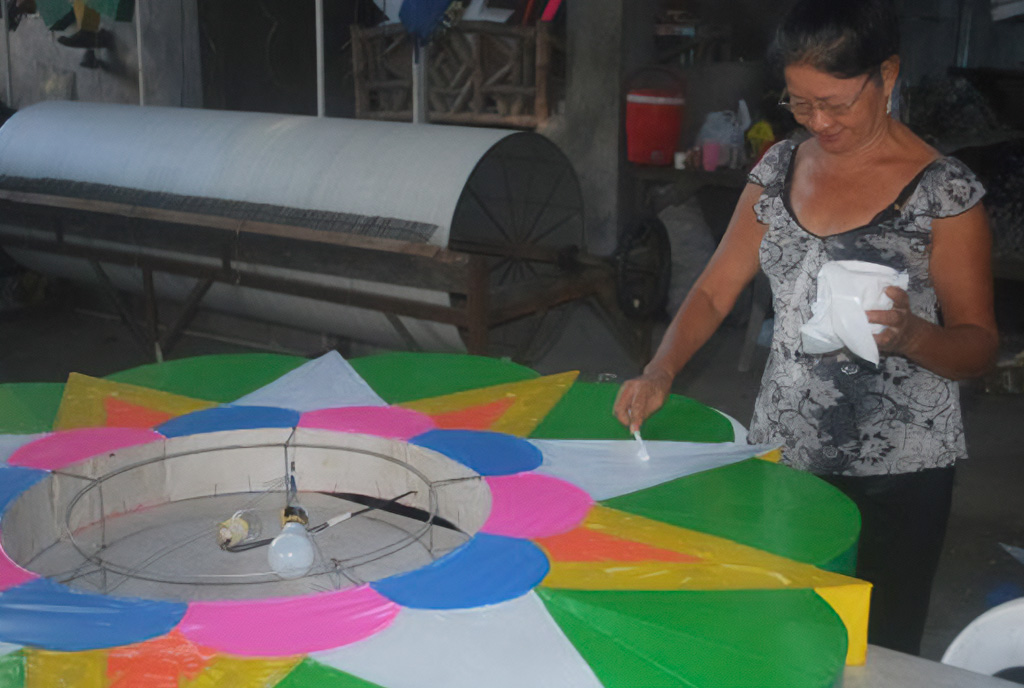
While smaller parol lanterns made for the home have more freedom in their covering, with options such as capiz shells and fiberglass, the giant lanterns are usually built from polyvinyl plastic.
Only about 10 giant parol lanterns are produced each year to compete in the Ligligan Parul, or Giant Lantern Festival, in San Fernando. It has been held every December for more than 80 years in the province of Pampanga, a spot roughly 75 kilometers from Manila.
It is this Christmas devotion to the nation's beloved electric star that has earned San Fernando the title of "Christmas Capital of the Philippines." And, quite possibly, of Asia too.
Five generations of parol makers
When you arrive in the barangay (village) of Santa Lucia in San Fernando, the "home of the giant lanterns," it is no surprise to see a giant parol under construction right by the roadside at any time of year.
The legend behind some of the biggest and best parol lanterns to appear in Santa Lucia in recent years is 66-year-old Ernesto "Erning" David Quiwa. Quiwa is the great-grandson of the first known maker of the famous parol, Francisco Estanislao.
During a recent visit to Quiwa's workshop, the parol master was busy overseeing the production of two giant lanterns. A worker was climbing the scaffolding to set up the 5,250 bulbs of a 16-foot lantern.
Quiwa learned the craft from his uncles, one of whom introduced the first parol rotor back in 1957.
All five of Quiwa's children went into the parol business.
"I never taught my children," Quiwa says. "They learned on their own. Maybe it's in the blood."
An expensive hobby

A single giant parol costs about 500,000 to 700,000 Philippine pesos (11,300 to 15,820 US dollars) to build. The city government subsidizes every barangay that builds a lantern for the competition with 150,000 pesos (3,390 US dollars).
Some barangays cover the rest of the cost fairly quickly with the help of wealthy residents and local businesses.
Others have to negotiate with the lantern makers. Quiwa, for instance, gives a break to barangay leaders he considers close, on the condition that he is allowed to rent out their creations after the Giant Lantern Festival to recoup his losses.
Staging the festival is an expense in itself. The San Fernando government seeks sponsorship from the private sector to the tune of 3 million pesos (67,760 US dollars). That figure does not include grassroots costs, let alone the work of volunteers, some of whom run large companies or travel in from Manila, an hour's drive away.
For these people, the sight of a finished giant parol is reward enough, though taking first place and the 120,000-peso prize (2,720 US dollars) is always welcome.
At this year's Giant Lantern Festival, held on December 14, Quiwa's team finished in second place.
A colorful history
In a country with dozens of festivals dedicated to one local product or another, San Fernando stands out, says Maria Lourdes Pangilinan-Gonzalez, a tourism and investment promotion officer with the San Fernando city government.
"Here, the festival came before the industry," she says.
"Nobody makes Christmas lanterns the way we do."
The lantern-making tradition in San Fernando dates back to the late 18th century, when Spanish colonists in Bacolor, San Fernando's mother town and a former capital of the country, encouraged people to hold lantern processions in honor of Our Lady of La Naval, the Blessed Virgin Mary.
These are thought to be the forerunners of the Lubenas, nightly parol processions held in the provinces of Pampanga and Tarlac in the run-up to Christmas.
Out of this grew the first parol lantern festival in 1930, around the time electricity arrived in San Fernando. At first the festival showed off the ability of the newborn parol bulbs to burn all night without going out, hence the name Ligligan Parul, or "lantern contest."
In the late 1950s, San Fernando's parol lanterns began to move beyond the classic five-pointed star design made of bamboo and papel de Japon (Japanese rice paper), which is still favored today by prisoners and students for their Christmas projects.
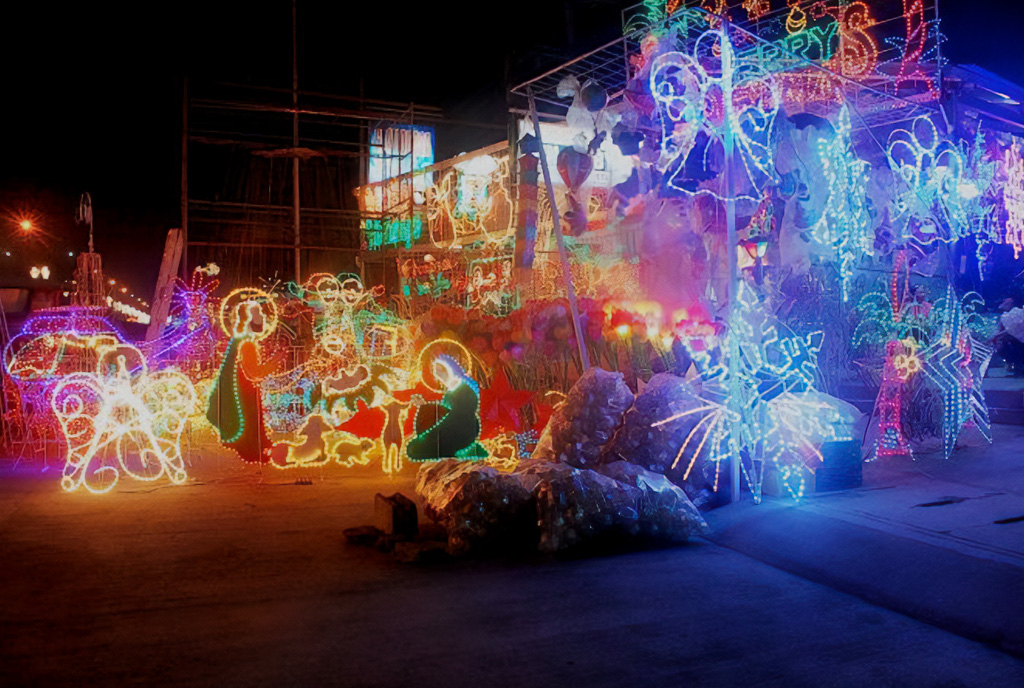
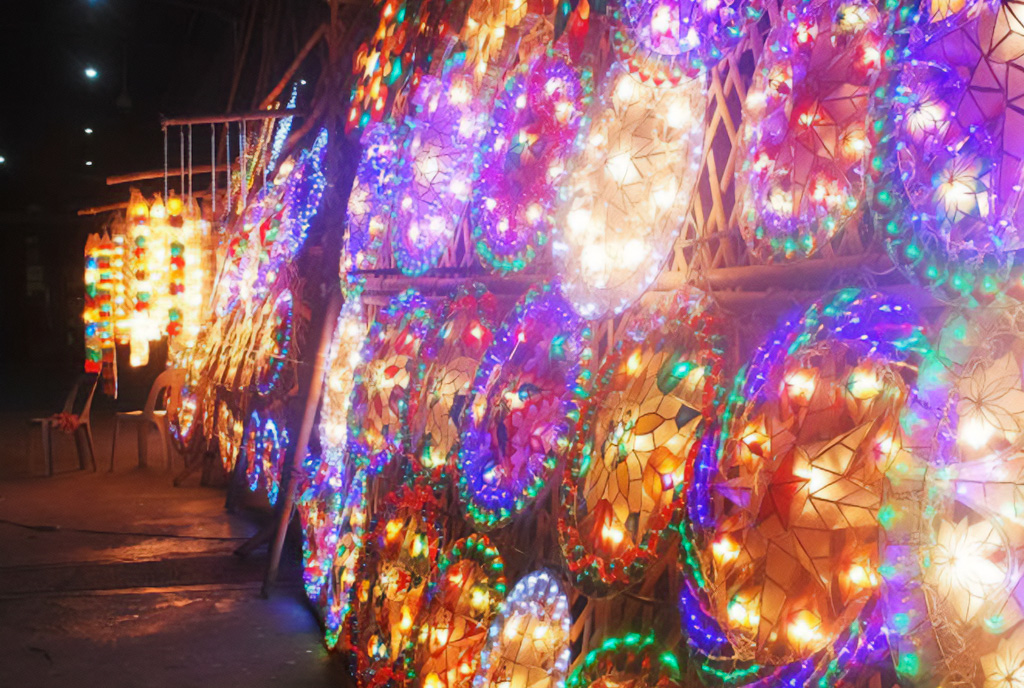
San Fernando's parol lanterns, by comparison, now resemble psychedelic kaleidoscopes, vivid stained-glass windows, prismatic pinwheels, enormous snowflakes or batik fabrics. They even go by a different name: parul sampernandu.
The parul sampernandu rose to the status of a cottage industry in the 1960s. In 1964, Quiwa began selling them at gas stations, delicatessens and restaurants in Manila.
Mass-produced parul sampernandu, which can be found in homes across the country during the Christmas season, currently sell for anywhere between 800 and 4,000 pesos (20 to 90 US dollars) and range from 20 inches to 4 feet in diameter.
Arnel Cayanan, 30, says he earns about 15,000 pesos (340 US dollars) a night selling parol lanterns by the road in San Fernando. On one occasion, he says, a Swedish customer spent 20,000 pesos (450 US dollars) on his wares.
"Even the Muslims here buy parol lanterns, probably in secret," Cayanan says.
These handmade pieces remain commercially viable well after Christmas, appearing at events as varied as Earth Hour and the Santacruzan.
Parol lanterns are also best-sellers for craftsman Quiwa during Holy Week, when San Fernando gives tourists a lesson in extreme Catholic guilt: live crucifixions. The hotel trade keeps demand for the lanterns going all year round too.
The plight of Paskuhan
Though nearly every Filipino associates San Fernando with Christmas decorations, not every Christmas venture in the city has fared so well.
Case in point: Paskuhan Village, built in 1990. Conceived as a life-size Christmas park in the tropics, Paskuhan hosted the Ligligan Parul for almost a decade afterward. The site itself was even designed to look like a parol from the air.
These days the 9.3-hectare complex stands like a neglected ghost of Christmas past, in need of visitors. Monthly subsidies from the Tourism Infrastructure and Enterprise Zone Authority (TIEZA) largely keep it running.
Marketing officer Hiyasmin Viray, who has worked at the park since it opened, feels the ache of the past tense.
"I love, love this place," she says through tears. "Sometimes I feel like I'm the only one who cares."
There is hope for a revival.
Pangilinan-Gonzalez reveals that local business leaders may make use of Paskuhan, now also known as Hilaga Park, as part of a plan for San Fernando to host an international lantern festival during the 2015 APEC summit.
Decking the world's halls with parol lanterns
It would not be the first time a Filipino parol has shone on the world stage.
In 1993, an island-shaped float bearing a 10-foot parol lantern by master craftsman Quiwa won a Christmas parade in Hollywood. A year earlier, at the World's Fair in Spain, the Philippines showcased four giant parols, delighting crowds that included former Philippine president Corazon Aquino.
"She told me, 'If I hadn't come to Spain, I would never have seen the magnificent parol lanterns of Pampanga,'" Quiwa says.
Parul sampernandu have adorned Philippine embassies and consulates in Canada, China, Malaysia, Poland, Russia, Thailand and the United States, among others.
They have also graced Austrian landmarks such as the Rathausplatz and the Museum of Ethnology in Vienna, as well as the Stadtturm in Innsbruck.
These beacons have likewise shimmered at the Mansion House in Dublin and the Cathedral of the Good Shepherd in Singapore.
For Filipinos back home, the parol's electromagnetic message of triumph over adversity shines brightest of all. In 1995, Typhoon Sibyl (Mameng) brought mudslides from Mount Pinatubo down onto San Fernando.
Even so, the Ligligan Parul went ahead that year.
Prone to typhoons and volcanoes, Filipinos know where to look for a spark of hope when the stars go dark.