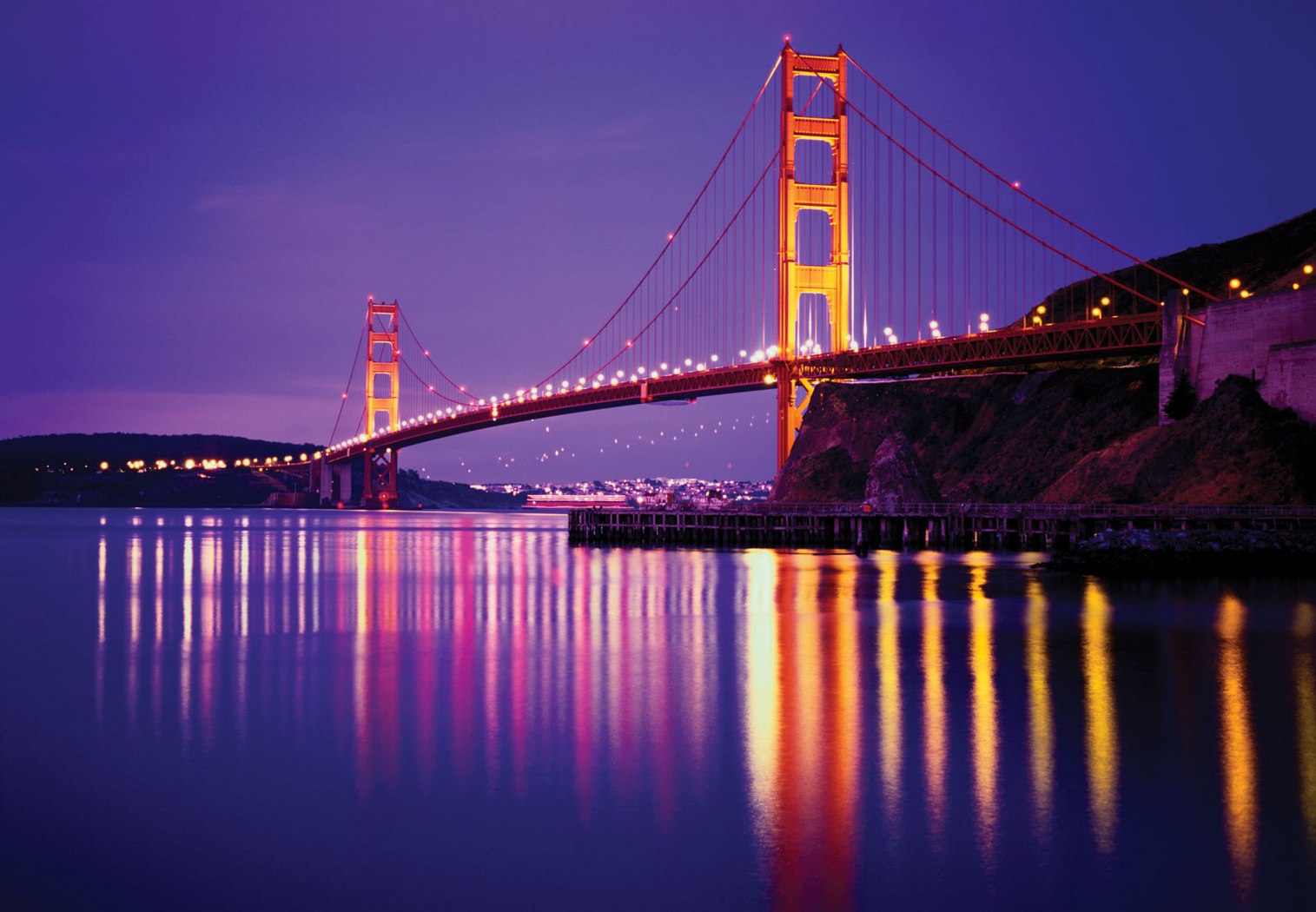


The Golden Gate Bridge is a Bay Area icon, and it's far more than just a way for drivers to cross the line between the city of San Francisco and Marin County to the north.
Since it opened in 1937 after four years of construction and a price tag of $27 million, the bridge has become a symbol of California. It has appeared on screen ("The Maltese Falcon" and "Invasion of the Body Snatchers") and in poetry ("A World Rewound" by Beat poet Lawrence Ferlinghetti), and it has woven itself into local lore.
And yet it's also a working bridge: roughly 200 employees keep it running around the clock for the more than 100,000 vehicles that cross every day, along with the pedestrians, cyclists, and people traveling by ferry and bus.
Partner links: booking through them supports the blog at no extra cost to you.
From the engineers, laborers, and electricians who maintain it to the painters who coat it in International Orange, life buzzes beneath and around the bridge just as it does across the top.
"There are these beautiful days when it's 75 degrees and clear, and you can see the Farallon Islands, Alcatraz, the whole city," says painter Brian Russell. "If we've got work out on the cables, you can walk the cables and say, 'You know, I've got a pretty cool job.'"
Ironworker Darren McVay loves watching the bridge as the sun rises or sets. "When the moon dips behind the bridge in the morning, it's really pretty, and it's this truly calm, clear sky. It's just a nice, beautiful sight," he said. "What I love most is telling people I work on the Golden Gate Bridge. I love this place."
Why is it called the Golden Gate Bridge? It isn't gold.
The Golden Gate Bridge got its name because it spans a body of water known as the Golden Gate Strait, said Paolo Cosulich-Schwartz, a spokesperson for the Golden Gate Bridge, Highway and Transportation District, which runs the bridge.
It's a stretch of water three miles long and one mile wide that connects the Pacific Ocean to San Francisco Bay.
"The idea for the bridge dates back to the mid-19th century, but people thought it couldn't be built. The waters were too rough and too deep."
What color is the bridge? It looks red.
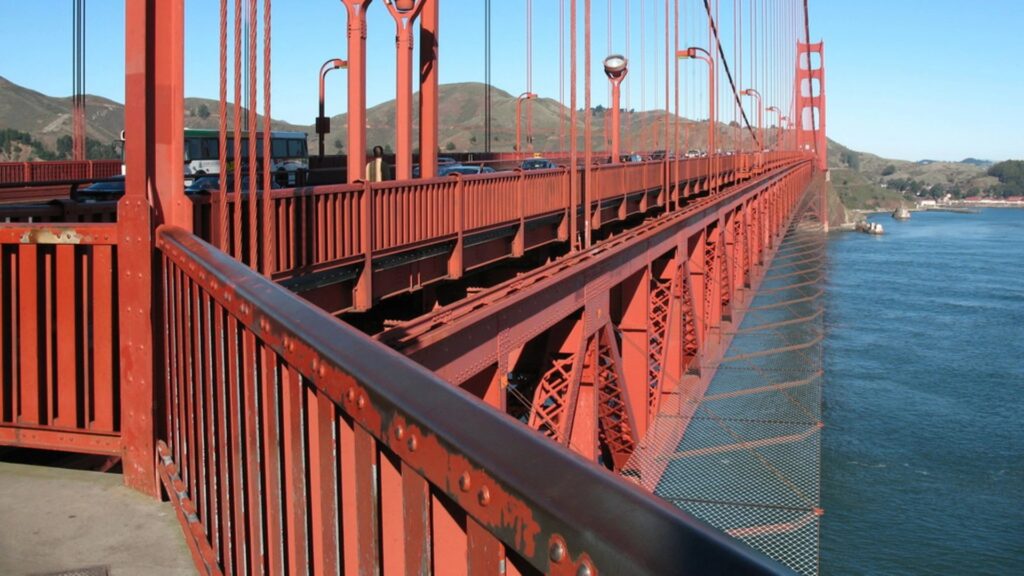
It's not red, though you're not crazy for thinking so. Visitors "all call it red," Russell says.
At one point the U.S. Navy, which was then part of the War Department, controlled the waterways and wanted the bridge painted black and yellow so it would stand out like a bumblebee, says painter Jarrod Bauer.
When the bridge went up in the 1930s, the steel brought in to build it was coated in red lead primer. According to Bauer, the architecture team, husband and wife Irving and Gertrude Morrow, loved how that color looked against the local landscape.
As a result, they mixed paints to create International Orange, which resembles the shade of red lead, he said.
"When we're working on this side, people ask us to paint their shoes or their jackets," Russell said. They all ask, "Can you get a little paint on me?"
Can I paint my house the same color?
Do you really want to? We can't predict how your family will react to International Orange, never mind the neighbors, but yes, you can. Copy the paint formula listed on the bridge's website, it's free, and take it to your local paint store.
"Download the color matrix or chart, then head to the paint store and ask them to mix it for you," says Cosulich-Schwartz. "You can paint anything you like in International Orange."
Is the whole bridge repainted every year?
No, and there's no need to.
It's true that over time the top coat was completely redone with a new, environmentally improved International Orange top coat.
Even so, there are sections that haven't been stripped to bare metal and fully repainted, Bauer says.
What gets painted?
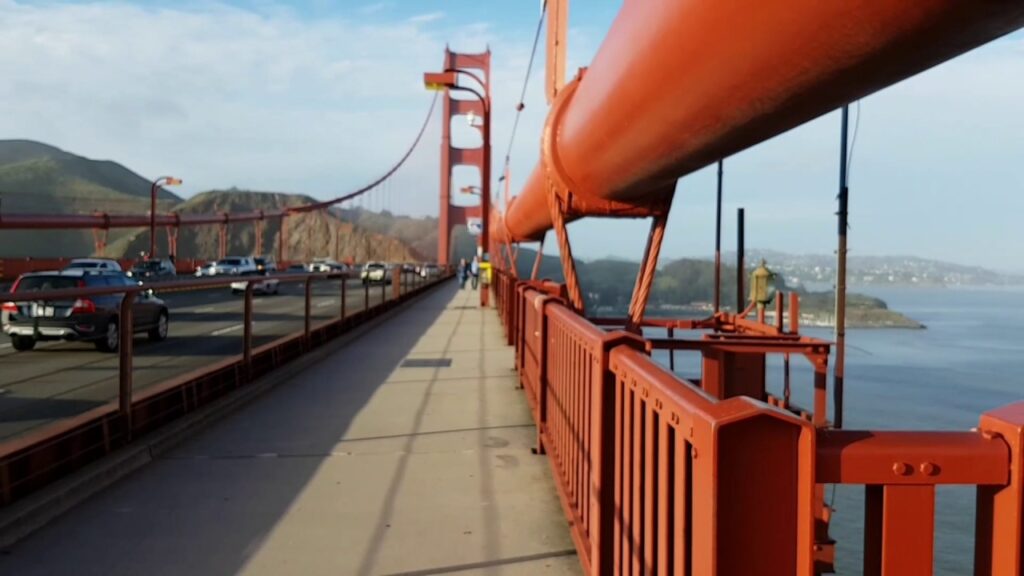
Every two years, the bridge's engineers inspect every inch of it, Cosulich-Schwartz says. "The result is a painting work plan" and a list of other jobs needed to keep the bridge in good working order.
Once the work plan is drawn up from those inspections, the painters know where they'll be painting next. Then the bridge's sheet metal workers set up scaffolding to create a work platform. They build containment zones for the painters, where they can change clothes and remove their protective gear. These zones also keep contaminants from escaping to the people who sometimes pass just a few feet from the work site.
At that point, the painters begin sandblasting the section being painted to remove all the old paint. Then they prime the area to a thickness of 10 milliliters, after which they apply an intermediate coat and two top coats. (This can take several months, depending on the size of the section.)
How long does the paint last?
"Mostly we hope the paint lasts 25 to 30 years," Bauer said.
It depends on which part of the bridge is being painted and how exposed it is to the elements. "There are some parts of the bridge that still have the lead paint on them, and they don't need to be painted yet," Bauer said. "Lead paint was a good paint in terms of its integrity."
What's that sound I hear on a foggy day?
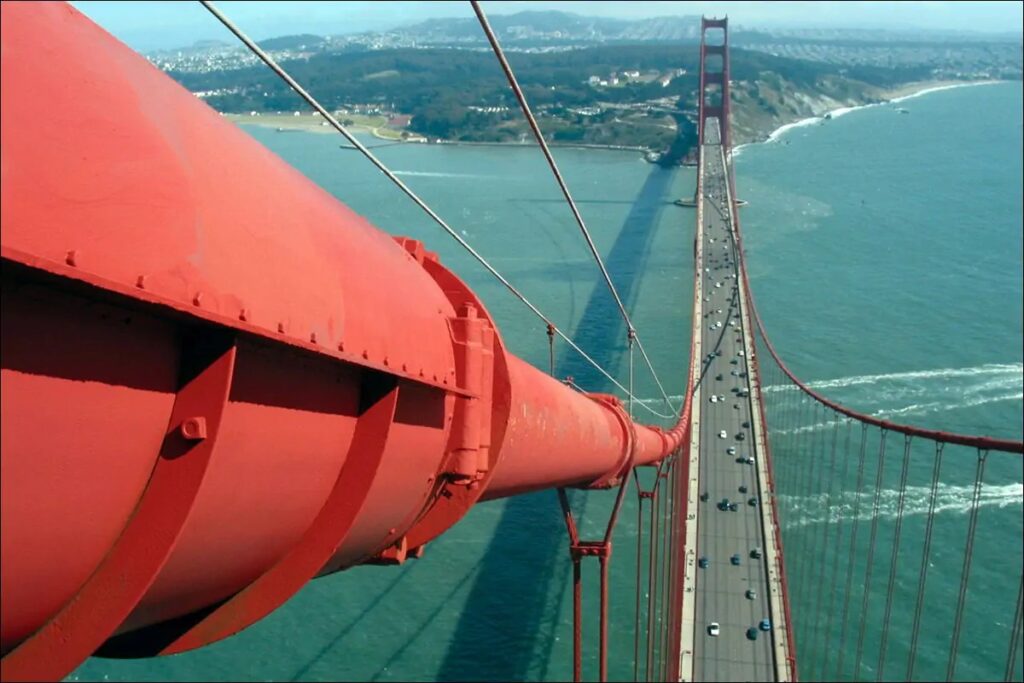
It's the bridge's distinctive call, produced by four foghorns that use 80 pounds of air pressure to put out 165 decibels of sound. With a range of up to six miles, it kicks in when the fog is too thick for ship crews to see the bridge.
Of course, it's a backup: ships have their own GPS systems, and specially trained local pilots guide large container ships through the strait. But nobody wants to take the risk, since big vessels could damage the bridge.
"The fog here can get so thick that you might not be able to see 15 feet in front of you," says Aaron Kozlowski, the bridge's chief operating engineer. "The foghorn stays on during that time, until we make the call, until one of the staff notices and says, 'Hey, the fog has lifted.'"
Bridge staff have tried using automated systems to switch the foghorns on, but the salt air damaged the equipment.
Who carries out rescues on the bridge?
McVay and his fellow ironworkers, known as "sky cowboys," take on that responsibility. McVay has lost count of the troubled souls he's had to rescue over the past 17 years.
When people won't listen to the police, they send in the ironworkers to climb over the rails and bring them back. "We rig up a high line, tie off, climb over the railing, and then just start slowly moving toward them and begin talking with them ourselves, trying to coax them back over the railing."
McVay will soon have some help.
In September 2018, construction began on the bridge for a suicide deterrent system, also known as a safety net, to keep people from jumping off the Golden Gate Bridge. Although it's designed to catch people who try to jump, its very existence becomes a deterrent, bridge officials said.
Does the bridge really have a poem?
In fact, there are two, both written by Joseph B. Strauss, who presented the preliminary sketches of the Golden Gate Bridge in 1921 and served as chief engineer during construction. He was present at the bridge's official opening to vehicle traffic on May 28, 1937, but died in May of the following year of coronary thrombosis in Los Angeles.
After the bridge was completed, he wrote the poems "The Mighty Task Is Done" and "The Golden Gate Bridge."