

Quick question: what is the largest living thing on Earth? And no, we're not counting organisms like that 2-mile fungal colony in eastern Oregon.
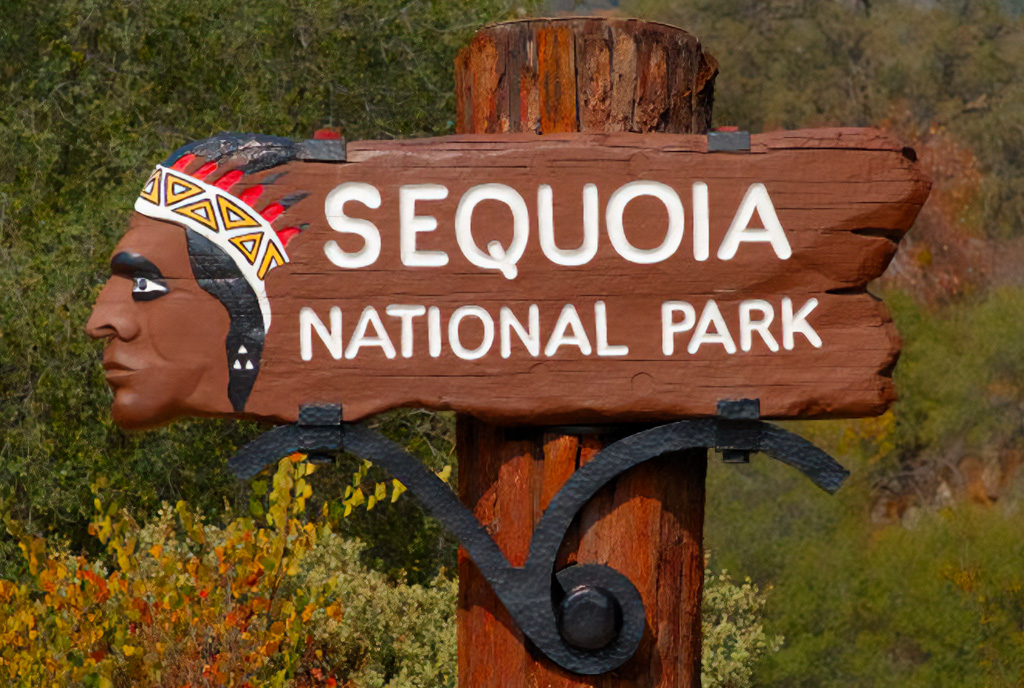
That honor belongs to the giant sequoia, the "god of the forest" in the words of conservationist John Muir, and the best place to see one is Sequoia National Park, high in California's rugged Sierra Nevada.
Set about 225 miles (362 km) north of Los Angeles, the park sprawls across 631 square miles of jagged peaks, meadows strewn with colorful wildflowers, canyons that plunge thousands of feet, and marble caves. But the park's most famous feature is the giant sequoia, a staggeringly massive species that grows in the wild only on the moist, western slope of the Sierra Nevada above 5,000 feet.
Partner links: booking through them supports the blog at no extra cost to you.
Related article: America's Most Popular National Parks this ...
In sheer height, the slimmer coast redwood leaves the giant sequoia in the shade; the former can reach 360 feet, while the latter rarely tops 300 feet.
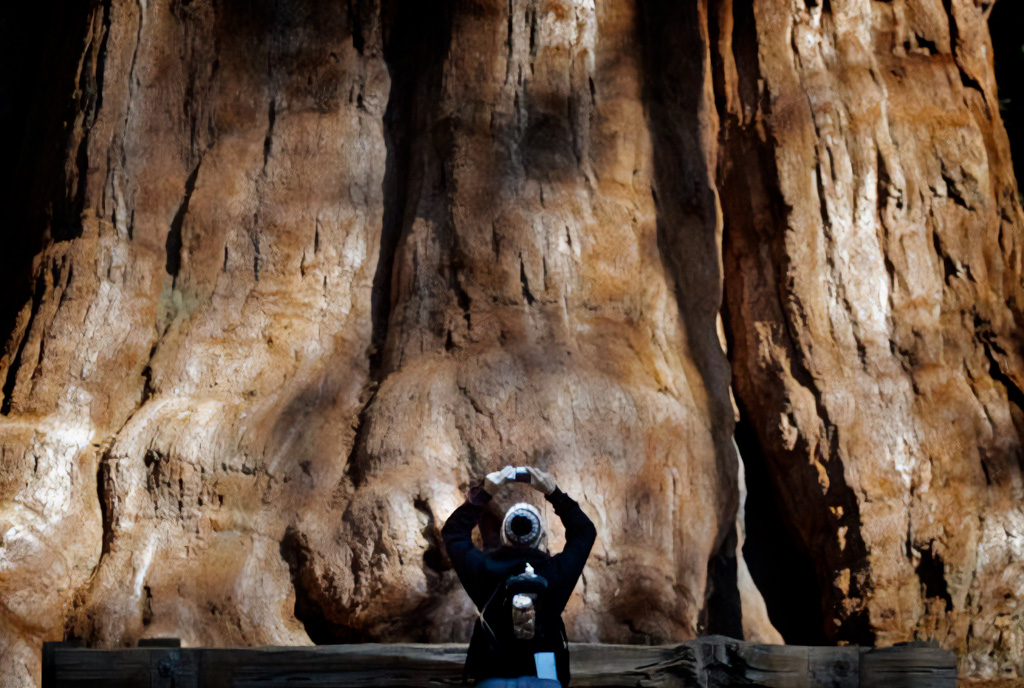
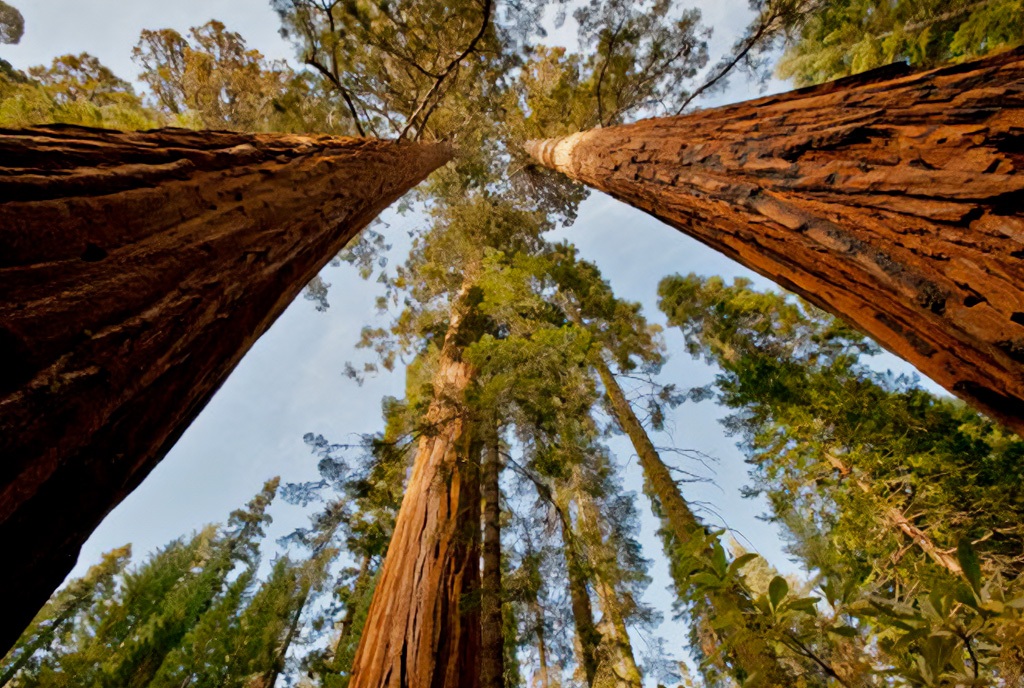
By total volume, though, Sequoiadendron giganteum has no rival. It can be wider than a city street and hold enough wood to build 35 houses. A single branch can grow 50 feet long. Some of the giant sequoias standing today were tiny saplings back in 1000 BC.
To the fortune seekers who descended on these wooded slopes in the 19th century, the giant sequoia was timber ready to be cut. (Among them was a colony of utopian socialists from San Francisco, who christened an exceptionally large sequoia the "Karl Marx Tree.") Many trees were turned into fence posts, shingles, and matchsticks.
An Overview of the Area
To protect the unrivaled monarch of the forest, President Benjamin Harrison declared Sequoia the country's second national park after Yellowstone in 1890. That put an end to the logging, not to mention the socialists' utopian experiment, and today Sequoia National Park is densely packed with thousands of magnificent specimens to admire as you travel through.
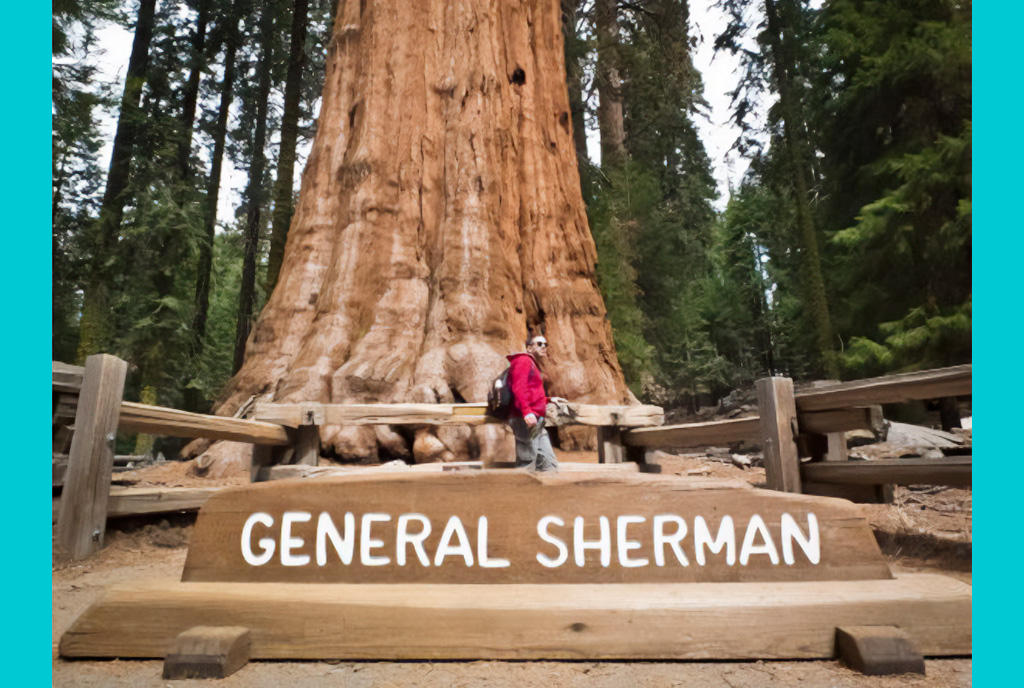
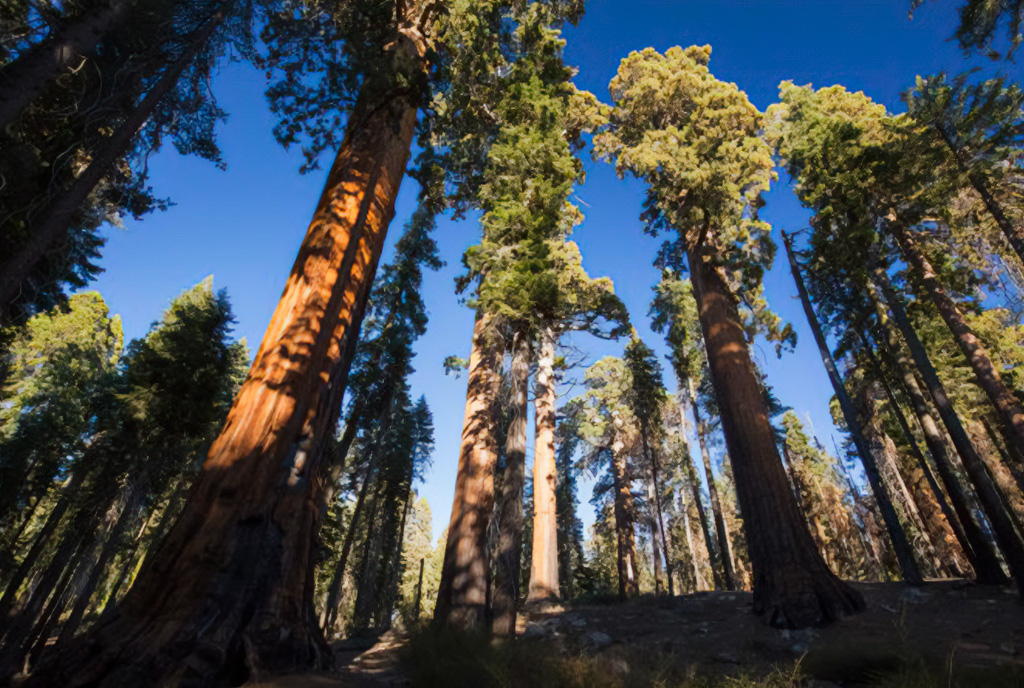
Marvel at these sky-high giants in a grove called the Giant Forest, home to three of the five largest giant sequoias on Earth. The biggest of the big is the former Karl Marx Tree, renamed the General Sherman Tree in honor of the Civil War commander. This largest of all living trees stands 275 feet tall with a circumference at the ground of nearly 103 feet.
Related article: Ken Burns on the Best Presidents for the National Parks
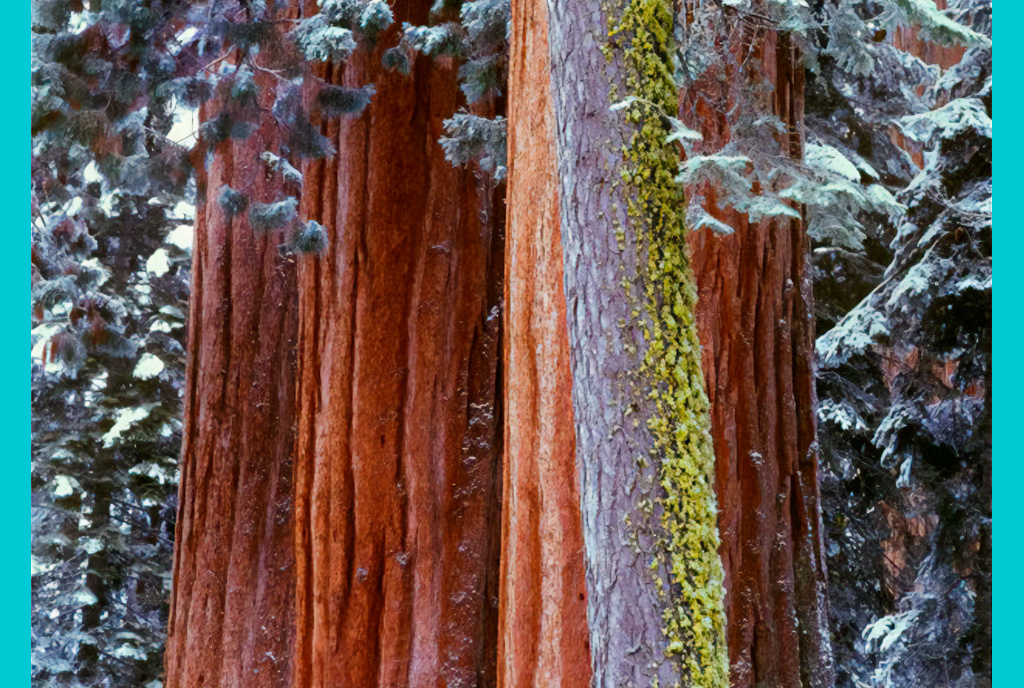
The Giant Forest has a museum and a network of trails that wind past enormous stands of cinnamon-colored bark, arranged like the colonnades of a temple.
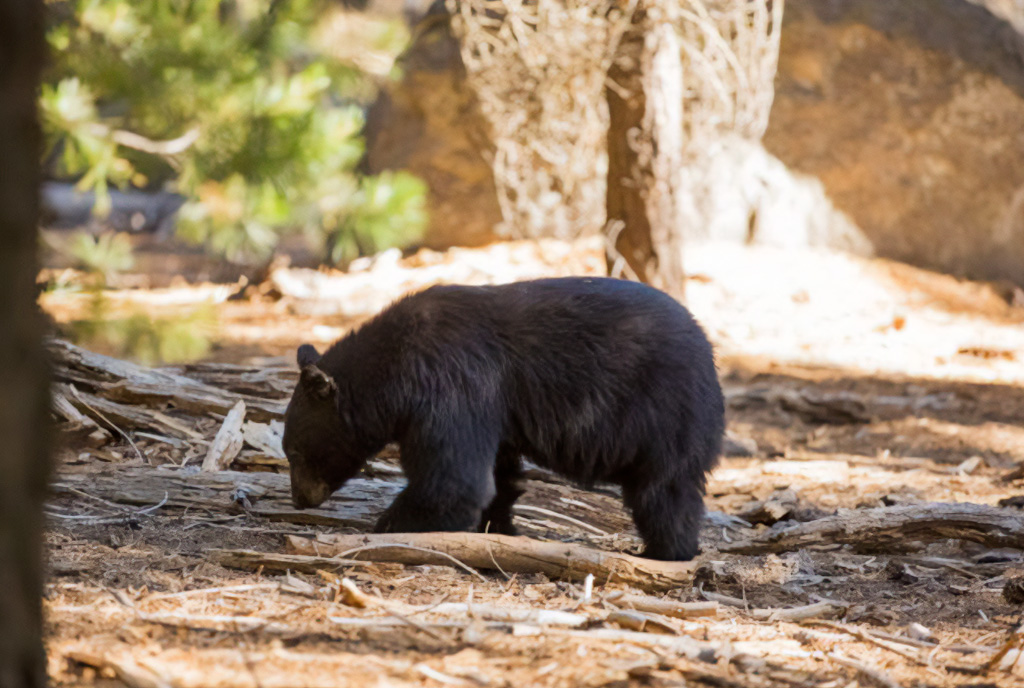
The popular Big Trees Trail is a 1-mile loop with exhibits along the way, circling lush Round Meadow. Keep your eyes peeled here for a large, long-snouted bundle of fur, perhaps feasting on dandelions. Sequoia is black bear country, and encounters are common. Attacks on people are rare, but if a bear huffs at you, make yourself big and shout loudly. Whatever you do, don't turn and run. You'll look like lunch.

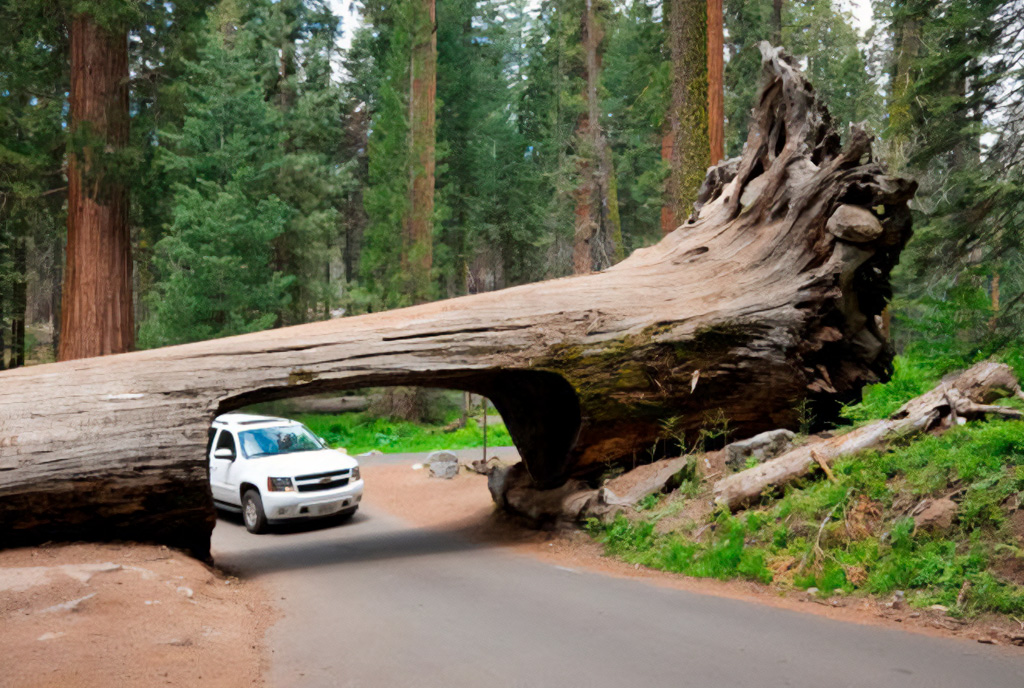
Try as it might, the park just can't shake the persistent myth of a tree you can drive through. (Yosemite had one, but it fell in 1969.)
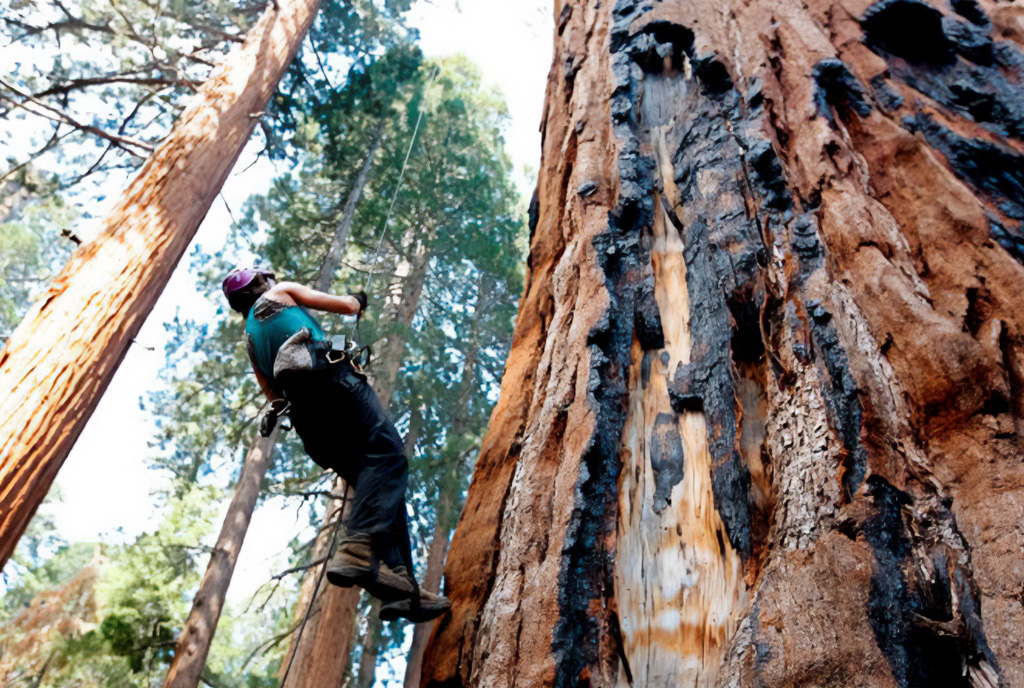
Driving through a fallen tree is possible. You'll find the Tunnel Log on Crescent Meadow Road in the Giant Forest. There are also a few trees you can walk through, among them the fire-scarred but still-standing Black Arch Tree on the Round Meadow trail.
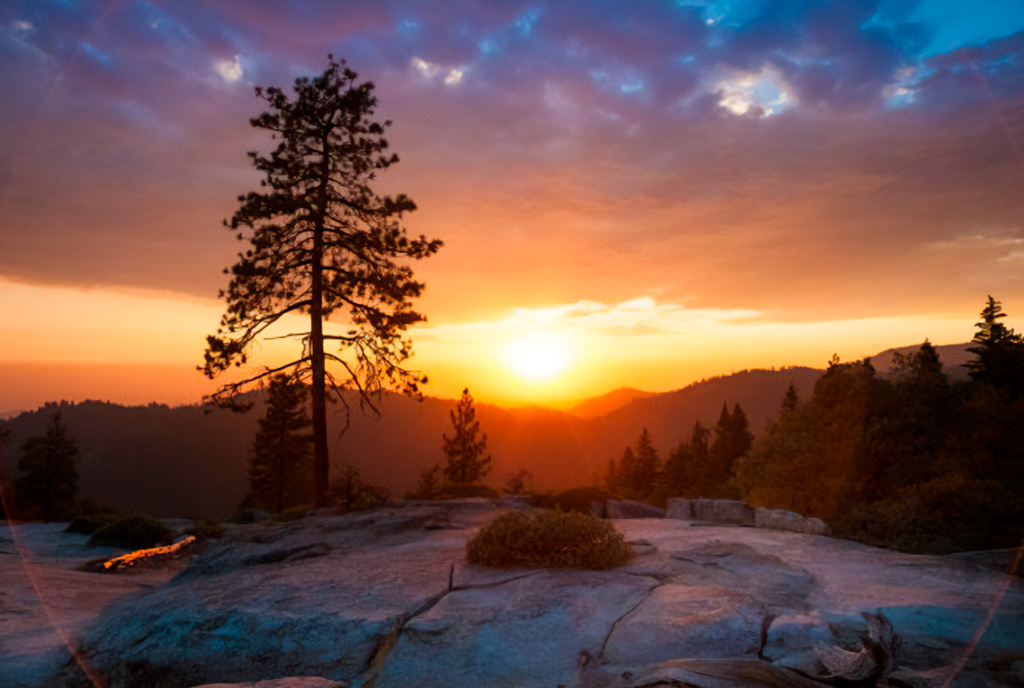
At the southern edge of the Giant Forest, you can climb a massive granite dome called Moro Rock via a concrete staircase of 350 steps with handrails. The climb to 6,725 feet takes effort, but it rewards you with a classic high Sierra view of the Great Western Divide and its jagged wall of sometimes snow-capped peaks. (If it weren't for those peaks, you'd be able to see the highest point in the lower 48 states, the 14,494-foot Mount Whitney, on the park's eastern edge.)
Beyond (and Below) the Trees
What lies beneath this majestic landscape? Marble caves: more than 250 of them. Only one is open to the public.
Crystal Cave sits at the end of a side road off the Generals Highway, not far from the Giant Forest. On the 50-minute tour, you'll see curtains of icicle-like stalactites and mounds of stalagmites, along with marble walls polished smooth by an underground stream.
The Sequoia Parks Conservancy offers tours from late May through September. Tickets must be bought in advance at recreation.gov or on-site at the Foothills or Lodgepole visitor centers. The tour requires a strenuous half-mile hike from the parking lot. Bat sightings are a rare treat.
From late May to early September, the park offers free ranger-led programs, such as wildlife talks and moonlight walks. The Sequoia Parks Conservancy runs year-round tours, too, including stargazing, snowshoe walks, and history talks that dig into the park's fascinating early years.

The park's first rangers turned heads wherever they went, not because of their horses or their smart jackets with shiny buttons, but because of the color of their skin.
Before the creation of the National Park Service, U.S. Army regiments served as park caretakers. At Sequoia, that job fell to the Buffalo Soldiers, all-African American regiments formed after the Civil War. These descendants of enslaved people built wagon roads, put out fires, and kept poachers and timber thieves at bay, a tough assignment, especially in an era of deeply rooted racism.
Many visitors pair a trip to Sequoia with a visit to neighboring Kings Canyon National Park, whose most famous resident is a 267-foot sequoia named the General Grant.
Related article: The 30 Best National Parks in the World
With a circumference at the ground of 107.5 feet, the General Grant holds a double distinction: it is the second-largest tree in the world and, by order of President Coolidge in 1926, the "nation's Christmas tree." (The evergreen the U.S. president lights each year is the national tree, got it?)
The Chamber of Commerce in the tiny town of Sanger, west of the park, hosts an annual "Trek to the Tree" on the second Sunday of December. Entry to the park is free that day. The program begins at 2:30 p.m. and features singing, a bugler, and the laying of a wreath.
Planning Your Visit
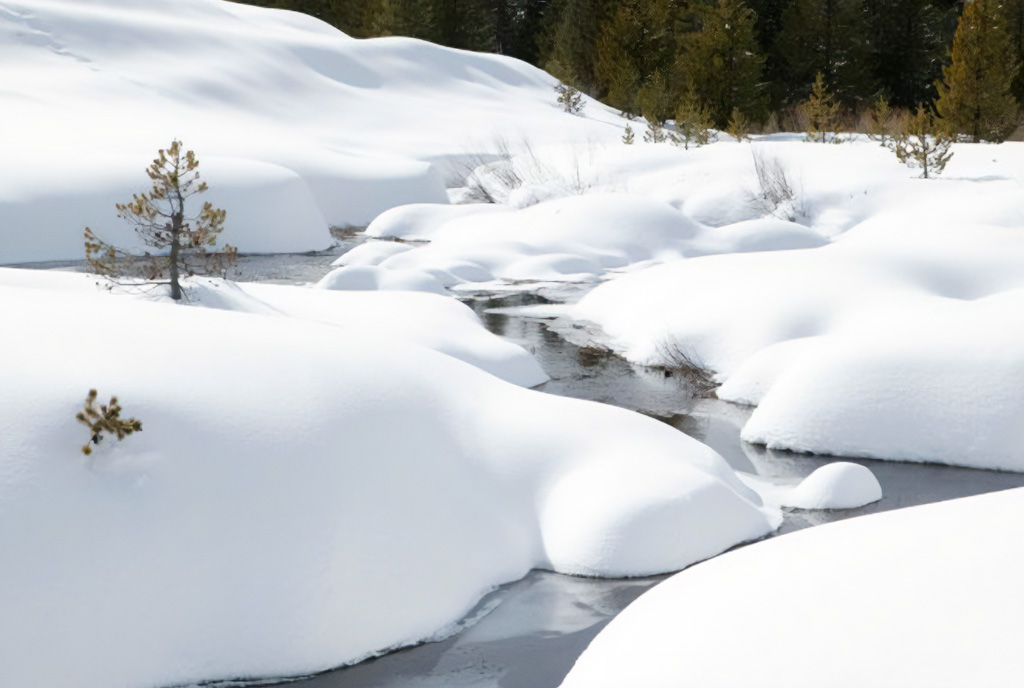
The park is open year-round, but winter can bring road closures and chain requirements. The entrance fee is $30 per vehicle, valid for seven days.
The nearest commercial airports are Fresno Yosemite International Airport and Visalia Municipal Airport. Most of the park's 1.3 million annual visitors arrive by car. In summer especially, parking can be a major headache.
Related article: National Parks in the Movies: 'Star Wars,' 'E.T.' and Beyond
From late May through the end of summer, take advantage of the Sequoia Shuttle from the nearby towns of Visalia and Three Rivers. The cost is $15 round-trip. A free shuttle runs inside the park from late May to mid-September, and occasionally during the winter holidays as well.
Sequoia and Kings Canyon National Parks have several lodging and dining options. Just outside the park, in Sequoia National Forest, you can stay at the Montecito Sequoia Lodge or the Stony Creek Lodge. More visitor lodging and restaurants can be found in Visalia and Three Rivers, west of the park.
Sanger Chamber of Commerce, 1789 Jensen Ave., Suite B, Sanger, CA 93657, +1 (559) 875-4575.
Fresno Yosemite International Airport, 5175 E Clinton Way, Fresno, CA 93727, +1 (559) 621-4500
Visalia Municipal Airport, 9501 Airport Dr., Visalia, CA 93277, +1 (559) 713-4201
Montecito Sequoia Lodge, 63410 Generals Highway, Kings Canyon National Park, CA 93633, +1 (800) 227-9900
Stony Creek Lodge, 65569 Generals Highway, Kings Canyon National Park, CA 93262, +1 (877) 828-1440