

The short version of what to see in Portugal: Lisbon with its yellow trams and the Belem waterfront, the port wine cellars of Porto above the Douro, the fairytale Pena Palace in Sintra, the rust-coloured cliffs of the Algarve with Benagil sea cave, and, if you can spare a flight, the green volcanic island of Madeira. A week is the bare minimum for a first trip. Give it ten days if you would rather not sprint. The country is small, the distances are short, and one trip really can cover the capital, the ocean and the mountains.
The classic rookie trap is trying to cram in everything at once. Portugal fools you with its size. On the map it looks tiny, yet there is plenty of road, and the cities differ so much in temperament that you will want to stop three more times between Lisbon and Porto. So let us start with the things you should not skip.
Lisbon: where to begin?
The capital sprawls across seven hills, and your legs will feel it on day one. The old centre splits into several districts, each with its own face, so it is smarter to take them one at a time than to scatter yourself thin.
Partner links: booking through them supports the blog at no extra cost to you.
Belem and tram 28
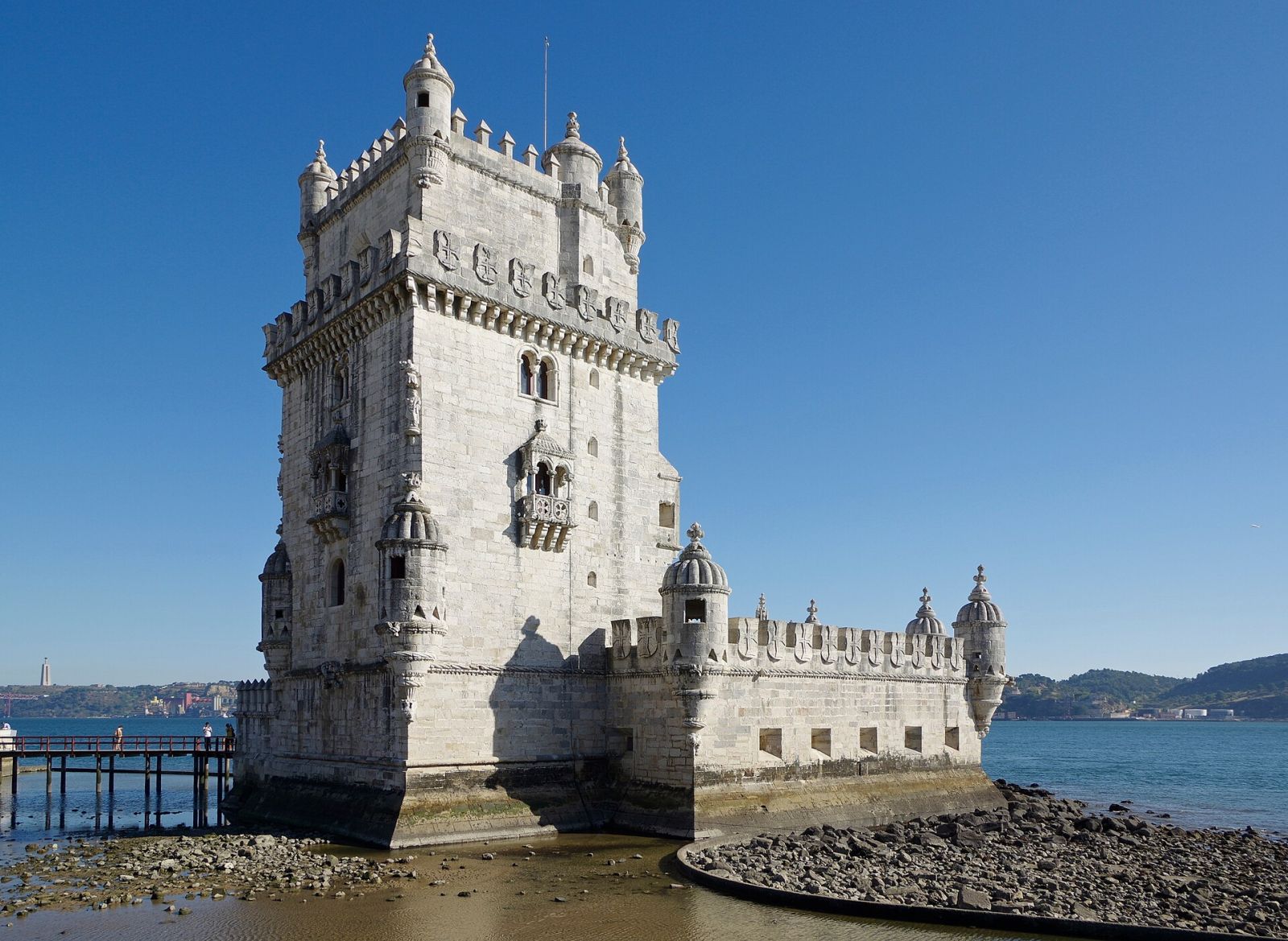
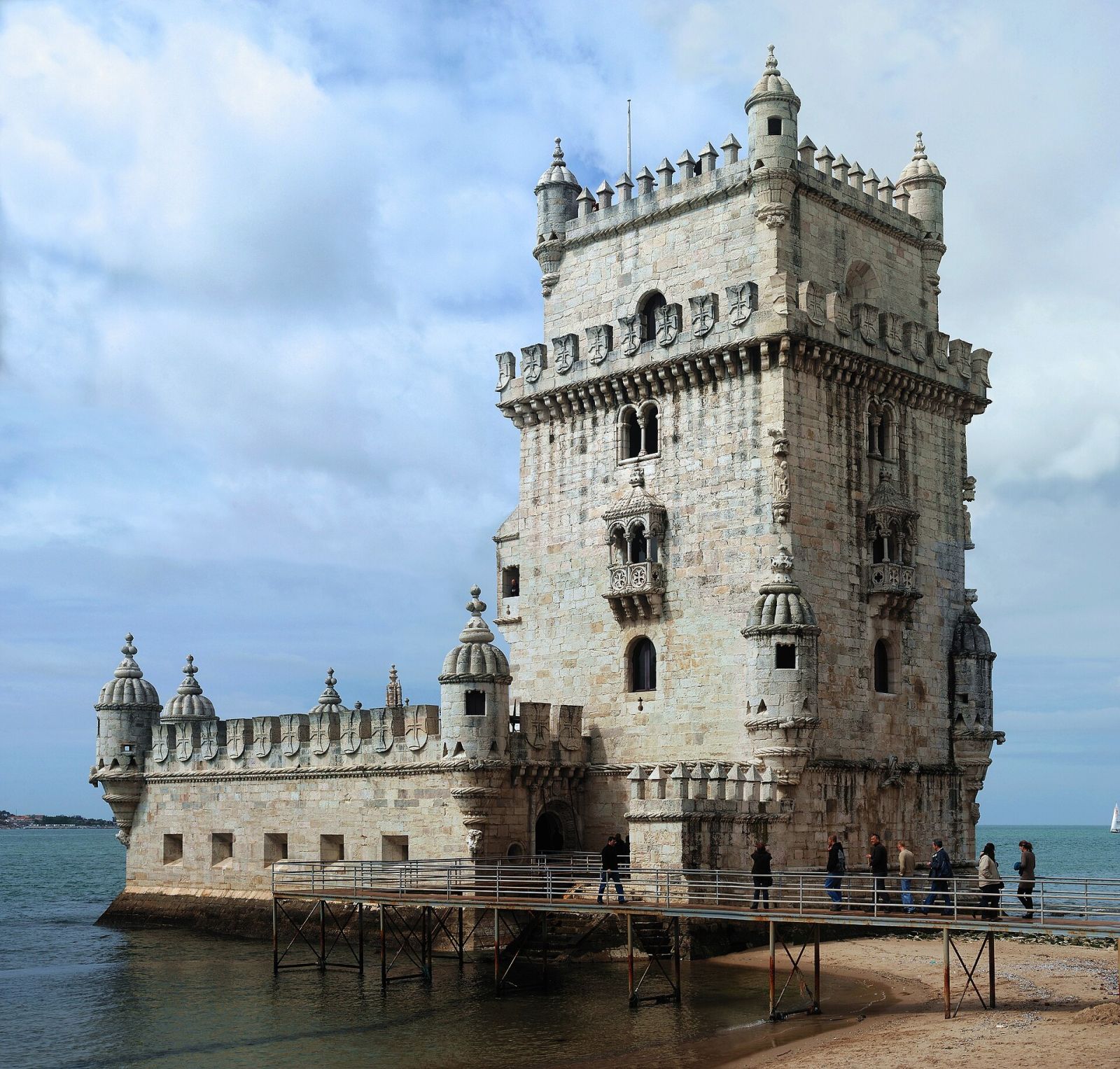
Belem is the district of the great discoveries, the point from which caravels sailed for India. Here stands the Jeronimos Monastery, a snow-white Manueline masterpiece carved with stone that mimics twisted ship rope, and the Belem Tower right in the water of the Tagus, once a lighthouse and customs post. Nearby rises the Monument to the Discoveries, shaped like a ship's prow. And in the bakery next door they still make the original pastel de nata, custard tarts baked to a monastery recipe. The queue can be long, but this is no tourist trap, it is genuinely worth it.
A Lisbon ritual in its own right is tram 28. The old wooden car rattles through the narrow lanes of Alfama, Graca and Baixa, past the cathedral and the viewpoints. Yes, it is packed with tourists and pickpockets, so keep your bag in front of you. Still, ride it at least once, ideally early in the morning while the city sleeps and the car is half empty.
Alfama and fado
Alfama is the oldest quarter, the one that survived the 1755 earthquake. A maze of stairways, laundry strung between balconies, azulejo tiles on the facades and sudden terraces the locals call miradouro. It is in Alfama that fado comes alive at night, the melancholy Portuguese singing about the sea, longing and fate, backed by guitar. Skip the tourist restaurant with its fixed menu and find a small family place where they sing between the tables instead. Ask locals where their own people go.
Porto: how does it differ from the capital?
Porto is more northern, greyer, sterner, and plenty of travellers fall for it above all. The city tumbles down to the Douro in steep lanes, and on the far bank, in Vila Nova de Gaia, sit the lodges where port wine ages. A tasting tour here is close to compulsory: they explain the difference between tawny and ruby, pour you a few styles, and port stops being just sweet wine in your head.
The heart of Porto is the Ribeira waterfront, a row of colourful houses over the water, narrow alleys and restaurants facing the Dom Luis I bridge. The double-deck iron bridge was designed by a pupil of Eiffel; the metro runs along the top deck, cars and pedestrians below. Walk the upper level for the panorama. Two more must-sees: the Lello bookshop with its sculpted staircase, often linked to Rowling's inspiration, and Sao Bento station, whose walls are entirely tiled in blue azulejos depicting historic scenes.
Sintra and the Algarve: what about the surroundings?
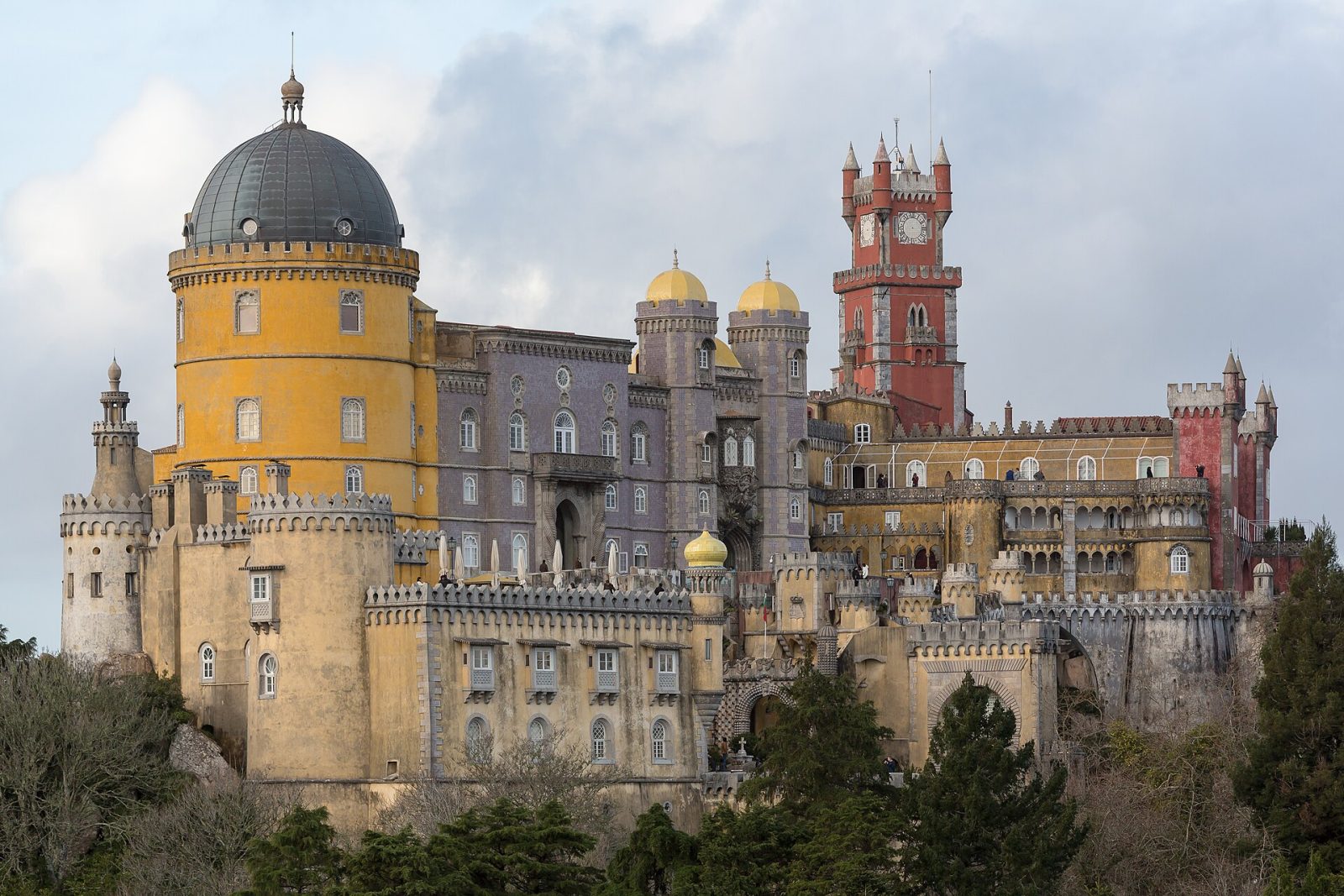
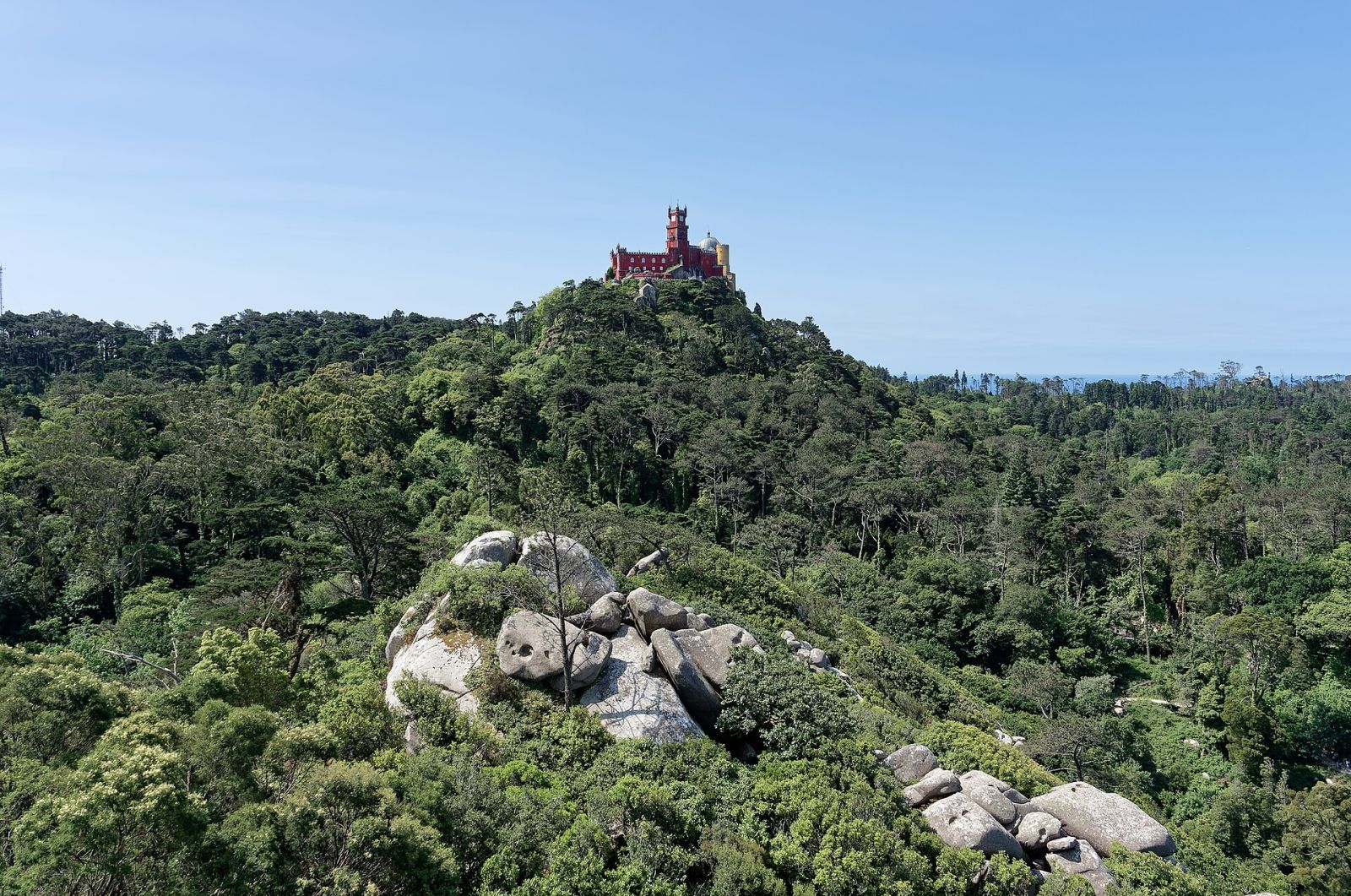
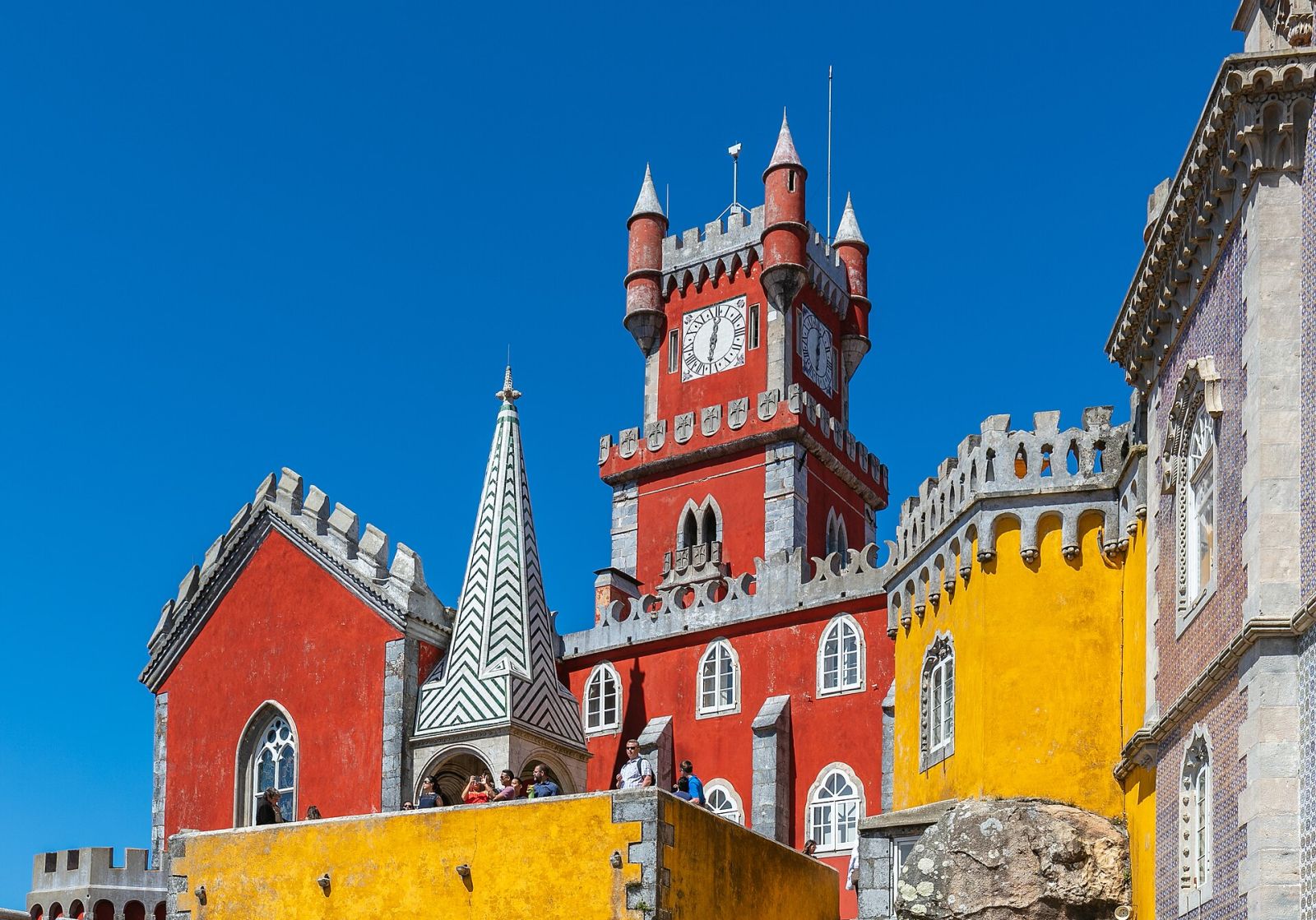
Half an hour by train from Lisbon lies Sintra, a green hilly town where Portuguese kings fled the summer heat. The headline act is Pena Palace, a riot of colour that looks assembled from a child's building set: yellow towers, red terraces, Moorish arches. Nearby stand the Moorish castle on its ridge and the Quinta da Regaleira estate with its mystical initiation well, a spiral staircase winding down underground. Sintra is steep and the buses fill up fast, so arrive early and set aside a full day.
The south of the country is the Algarve, a region of golden beaches and rust-coloured cliffs riddled with grottoes. Its icon is the Benagil sea cave, with a hole in the roof through which light pours down. You can only reach it from the water: by kayak, paddleboard or boat from the nearby beaches. The swimming season runs longer here than almost anywhere else, since the south is warmer, though the Atlantic still bites even in summer.
Madeira: worth the flight?
Madeira is an island in the ocean, a separate flight of roughly two hours from the mainland, and the decision comes down purely to time. If you only have a week, save it for next time. With ten days or more it feels like a different Portugal: eternal spring, volcanic peaks in the clouds, levada trails that follow old irrigation channels, and the capital Funchal with its botanical garden. Proper beaches are almost absent, but the nature is exactly what draws people to fly out here.
When to go?
Portugal welcomes visitors all year, yet the experience swings hard with the season. Summer in the south is hot and crowded, winter in the north is wet. The sweet spot is spring and early autumn.
| Season | Weather and mood | Best for |
|---|---|---|
| April, May | Warm, everything in bloom, moderate crowds | The best balance for cities and Sintra |
| June to August | Heat, peak prices, packed Algarve beaches | Those coming mainly to swim |
| September, October | Ocean still warm, the crowds thinned out | Ideal for mixing beach and cities |
| November to March | Cool, rain in the north, cheaper | Budget travellers who like the quiet |
Exact prices and timetables shift, so check the current details before you travel, especially for summer dates, when coastal accommodation books out months ahead. In the low season it flips: much of it gets far cheaper, but some Algarve restaurants and boat operators simply close.
How to fit it all into one trip?
The most logical first-timer route is the Lisbon, Sintra, Porto chain, with an optional tail down south. The country is long and thin, and the big cities connect neatly by high-speed train.
- Lisbon and Sintra. Three to four days for the capital plus a day trip to Sintra on the commuter train. That covers Belem, Alfama, the tram and Pena Palace.
- Porto. Two to three days. The fast train from Lisbon gets you there in about three hours, so there is no need to rush.
- Algarve. Another two or three days if you want ocean and cliffs. A train runs south from Lisbon too, but a rental car makes the region far easier to explore.
- Madeira. A separate flight and at least four days, which is why people take it either instead of the Algarve or on a longer holiday.
Public transport within the cities is decent, but the Algarve and the countryside are awkward without a car. An international licence and a careful hand on Madeira's narrow switchbacks will serve you well. And one last thing: do not rush. Portugal rewards the traveller who sits down with a coffee by the ocean and goes nowhere, not the one ticking off every tower. The capital, the port wine and the cliffs are not going anywhere, but the feeling of the unhurried south is easy to miss while chasing a list.