

What makes a city "cool"?
If it means being packed with atmosphere, charm, great food and nightlife while still flying under the radar for most travelers, then Lisbon deserves a serious look as the coolest capital in Europe.
Here are seven reasons why:
Nightlife that can outdo Madrid
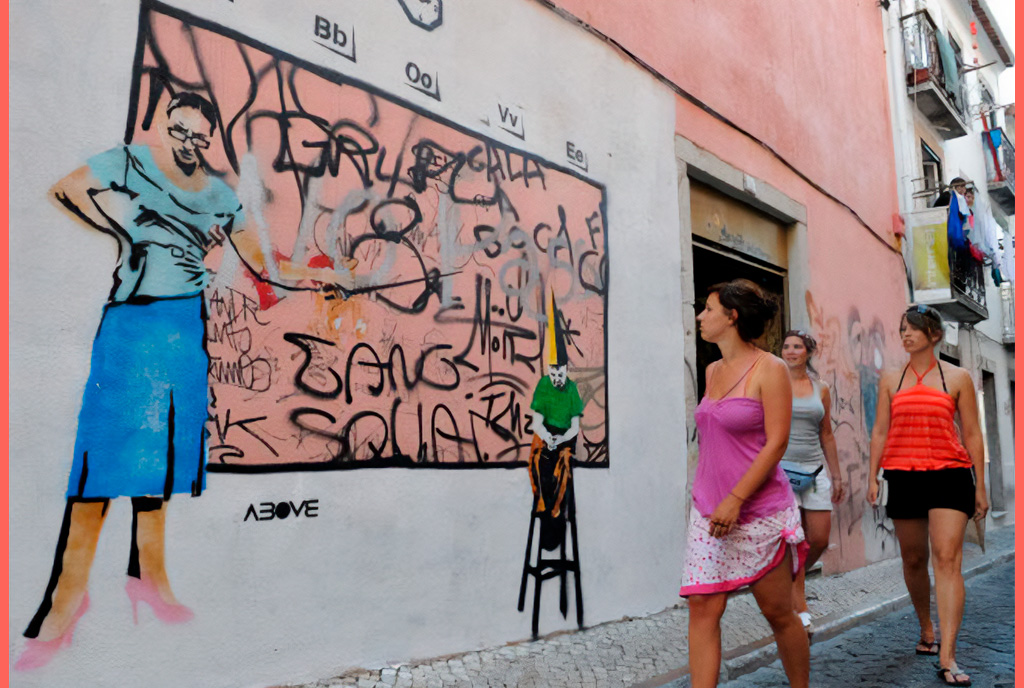
If you think Madrid stays up late, try spending a night in Lisbon. The city leans less on packed clubs and more on a roaming, drifting night scene that ends (maybe) when dawn breaks over the River Tagus. The main action unfolds in Bairro Alto, where more than 250 inviting bars line a web of streets between graffiti-covered walls. Next comes the waterfront, in the trendy district around the Cais do Sodre train station.
Partner links: booking through them supports the blog at no extra cost to you.
A perfect example of the offbeat local color here is the converted brothel Pensão Amor (Rua do Alecrim 19, +351 21 314 3399), where excellent cocktails come with a side of erotica and DJ sets.
A Lisbon night winds down with the pre-dawn crush at the Santa Apolónia docks, driven by the popularity of Lux, the king of Lisbon's superclubs (Cais da Pedra +351 21 882 0890).
Experimental cuisine
Once known mostly for bacalhau (dried cod), colorful old cafes and dubious taverns, the Portuguese capital now boasts a wealth of restaurants. Seafood remains the staple, but the trend is tilting toward cooking that is modern, refined and affordable.
The bar is set high by wunderkind chef José Avillez at his Michelin-starred Belcanto (Largo de Sao Carlos 10, +351 21 342 0607) or at the more casual bistro Cantinho (Rua dos Duques de Bragança 7, +351 211 992369).
Avant-garde European and Portuguese cooking defines Avillez's menu, which ranges from sea bass with seaweed to lamb with vegetable purée.
Lower down the scale, locals love juicy bifanas (pork rolls) at hole-in-the-wall snack bars. No visitor to Lisbon should miss the famous egg tarts (pasteis de nata).
These little swirls of caramelized custard in flaky pastry are eaten with gusto at the original tiled cafe, Antiga Confeitaria de Belem (Rua Belém 84-92, +351 21 363 7423).
Irony
You might think Lisboetas would brag about their achievements: the first global empire, the world's finest custard tarts, sea bass with seaweed that genuinely tastes wonderful. Instead, like the rest of the nation, they excel at that age-old literary device and defense mechanism: irony.
As the Portuguese writer Fernando Pessoa once eloquently summed up the prevailing national outlook: "I woke early and took my time getting ready to exist."
That old, captivating melancholy has resurfaced with a vengeance in recent years, helping Lisboetas stay (almost) content and forever witty, even in hard times.
Beaches and castles
Lisbon is a place to breathe in the salty Atlantic air, soak up the sun and ride the waves. Dolphins surf and ferries cross the River Tagus. Half an hour away by train lie the beaches and lavish casino of Estoril. A little farther on, Cascais is a treat for foodies, with plenty of grilled fish and stewed seafood served in the domed dishes of the cataplana.
Another great day trip is to Sintra. Forty minutes from Lisbon's main station (Rossio), this town frozen in time sits in lush, wooded hills dotted with whimsical palaces and estates that embody centuries of aristocratic splendor.
Stunning design
Wherever you look in Lisbon, sharp contemporary design is a defining feature.
Stylish leather goods, bold wine labels, interiors that blend vintage with the latest designer pieces, striking buildings: this is a city that loves to look good. Pritzker Prize-winning architect Álvaro Siza Vieira set the modernist tone with his gravity-defying pavilion for Expo 98.
Lisboetas gather to appreciate good design at MUDE (Rua Augusta 24, +351 21 888 6117), their mutant museum of fashion and design, where stark low-tech style meets baroque frills.
Great art
Major European capitals like London, Paris, Berlin and Madrid may have blockbuster art collections, but Lisbon's half a million residents have access to a rare panorama of their own.

A classic is the Gulbenkian Foundation (Av. de Berna 45A, +351 21 782 3000), where superb Eastern and Western art fills a spacious 1960s building and landscaped gardens.
In Belém, the Museu Berardo (Praça do Império, +351 21 361 2878) focuses on the big names of 20th and 21st century art, from Picasso to Jeff Koons.
The Museu de Arte Antiga (Rua Janelas Verdes, +351 21 391 2800) is a 17th-century mansion packed with 500-year-old artworks that reflect Portugal's global history.
Lisbon's latest exclusive is the impressive Museu do Oriente (Avenida de Brasília, Doca de Alcântara, +351 21 358 5244), a beautifully converted salt cod warehouse full of Asian exhibits, where you can book a nighttime visit followed by dinner at the waterfront restaurant.
Captivating streets
In Lisbon it is impossible to get bored while walking, thanks to the intricately patterned cobblestones underfoot: a point of civic pride that blossomed after the Lisbon earthquake of 1755 and continues today. Even Lisbon's walls demand attention, thanks to an obsession with azulejos (ceramic tiles).
The finest examples can be found in the Museu Nacional do Azulejo (Rua da Madre de Deus 4, +351 218 100 340), while the peeling facades of the Alfama and Mouraria districts show off dozens of variations.