

It is four in the morning on a Sunday when a trail of figures dressed in white emerges from the deep darkness. Summoned quietly, the crowd makes its way toward a cluster of ancient buildings to the slow beat of traditional leather drums.
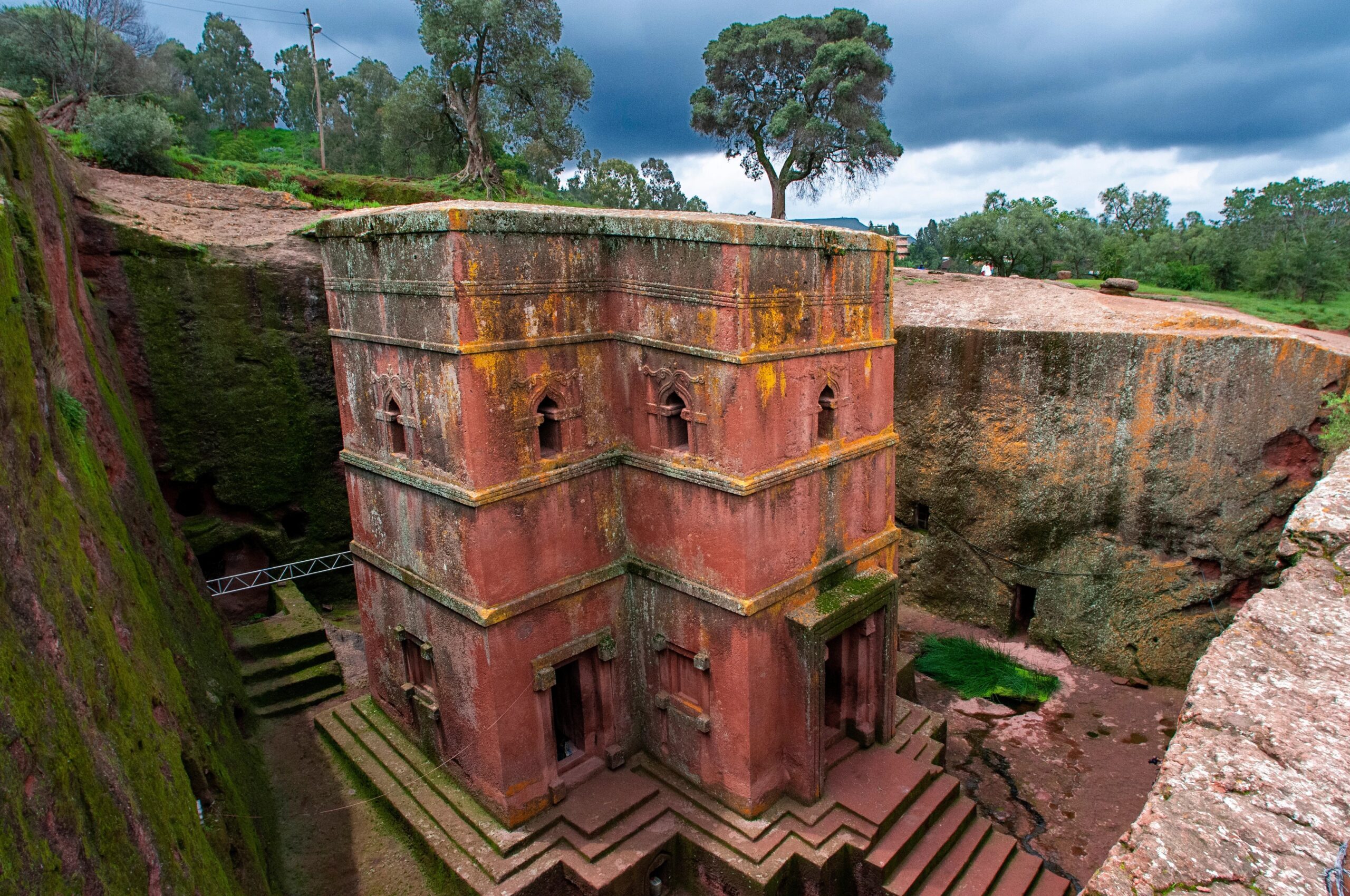
It is an ordinary scene in Lalibela, a small town in northern Ethiopia that is home to 11 striking churches, carved both inside and out from a single rock roughly 900 years ago. These hewn wonders turned the mountain town into a place of pride and pilgrimage for followers of the Ethiopian Orthodox Church, drawing between 80,000 and 100,000 visitors every year.
"This is one of the truly important places for the people of the Ethiopian Orthodox Church," says local guide Fikru Woldegiorgis, who has spent most of his life here. "There is a belief that pilgrims in Lalibela receive the same blessing as pilgrims in Jerusalem," he explains. "They should come at least once in their lifetime."
Partner links: booking through them supports the blog at no extra cost to you.
And come they do, from every corner.
Even though Lalibela sits in a remote corner of Ethiopia, the faithful travel here for days, sometimes weeks, and many of them cross the rugged mountains barefoot. Among them are blind men and women, along with people living with disabilities, who also join the pilgrimage, making their way along Lalibela's winding, hilly roads to reach the sacred site.
"What makes the churches of Lalibela so important is that they are still in use," says Woldegiorgis. "This is not a museum; it is a living heritage. Every day, every morning, a service is held in all the churches."
Steeped in Spirituality
Ethiopia is home to one of the oldest Christian churches in the world, dating back to the early fourth century. The Ethiopian Orthodox Church was once part of the Coptic Church of Egypt, but in 1959 the country gained its own patriarch. Today nearly two-thirds of the East African nation's population is Christian, with most belonging to the Orthodox Church.
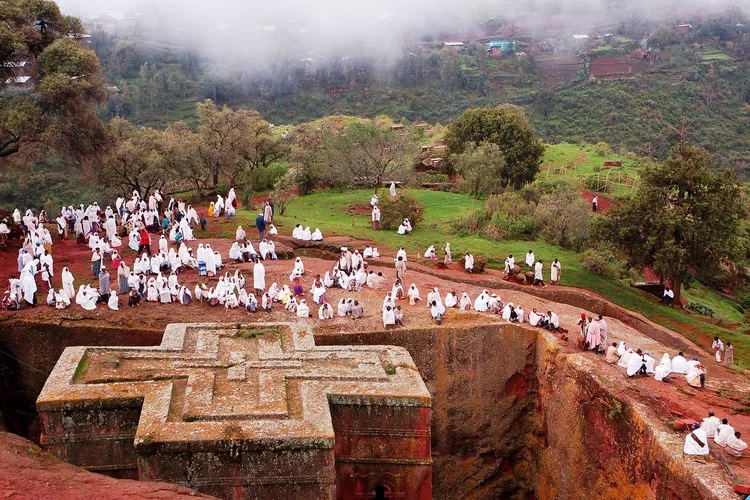
Nowhere does the spirituality of this church's followers ring out as loudly as in Lalibela. The town is filled with devotion; across the church grounds you can find believers pressing themselves against the buildings, kissing the centuries-old stone walls, quietly praying or reading religious texts.
"They come early to receive a blessing, because it is such a great occasion, every inch of the place is packed," says Aba Gebreyesus, the priest who leads all the churches in Lalibela. "People are so overjoyed by the blessing they receive here that they come without any prompting and spend nights and days in the church."
Remarkable Monuments
The medieval structures were built at the command of King Lalibela, a member of the Zagwe dynasty that ruled much of the country in the 12th century.
Several stories surround the creation of the churches, one of which holds that people worked by day while angels sped the construction along by night. Some historians claim the work was completed at an astonishing pace and took around 23 years.
Carved from volcanic tuff, the famous churches were built in a variety of styles. Some are hewn into the rock, while others stand as separate blocks, such as the iconic Church of Saint George, built in the shape of a cross. An intricate and extensive system of drainage ditches, tunnels and underground passages connects the subterranean structures.
Alebachew Retta, an 86-year-old scholar of the churches who studied in some of Ethiopia's holiest cities, explains what makes these churches so distinctive. "They are different because they were built from the top down," he says. "Everywhere else in the world, structures are built from the ground up," he adds. "There is nothing comparable anywhere in the world."
A Living Legacy
Thanks to their remarkable architecture and profound influence on Ethiopian Christianity, the churches have been a UNESCO World Heritage Site since 1978. Five years ago, UNESCO decided to erect protective canopies to shelter four of the churches from the elements. The canopies may not be attractive, but experts say they are essential to preserving the integrity of the churches.
In recent years, deliberate efforts to develop Lalibela's infrastructure have also drawn attention to this remote place, bringing in even greater numbers of pilgrims and tourists.
Retta says that over the years he has seen positive change in Lalibela. He says he is especially pleased with how it has become a global tourist hub.
"First, because the country's culture deserves to be shown, and second, because many poor people in this area are given help," he says. "Everyone earns a living through the tourism business. It is wonderful; without tourists there is no income for anyone. If the tourists stop coming, everything grinds to a halt."
But that is unlikely, as visitors keep coming to the churches of Lalibela. And while these sacred places serve as a steadfast anchor for the faithful, it is the followers themselves who, in the end, have breathed life into these ancient rock walls.