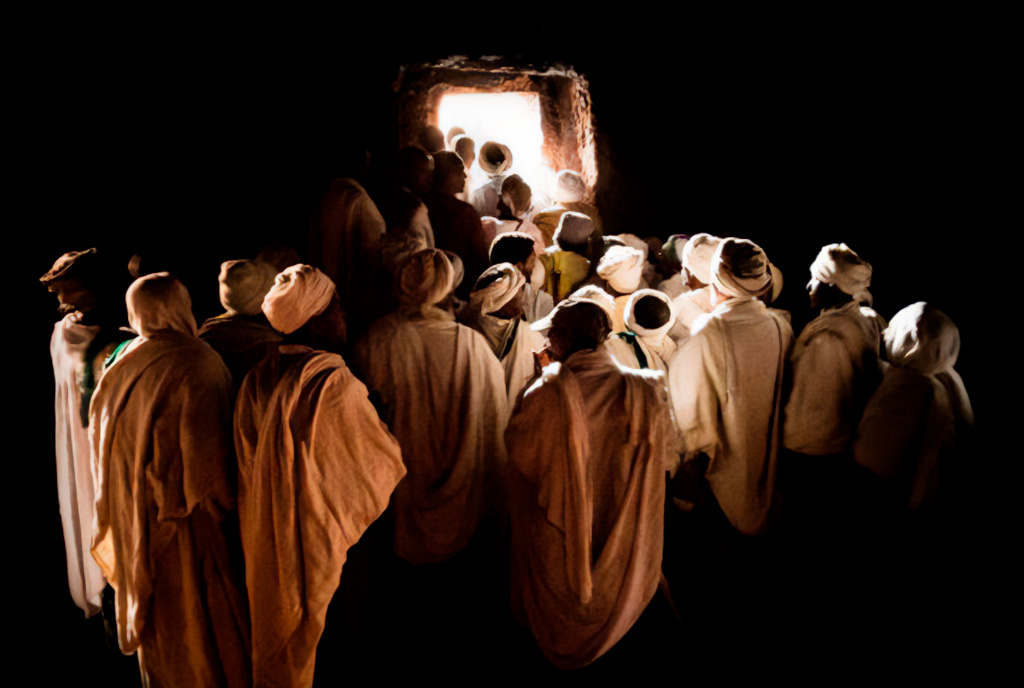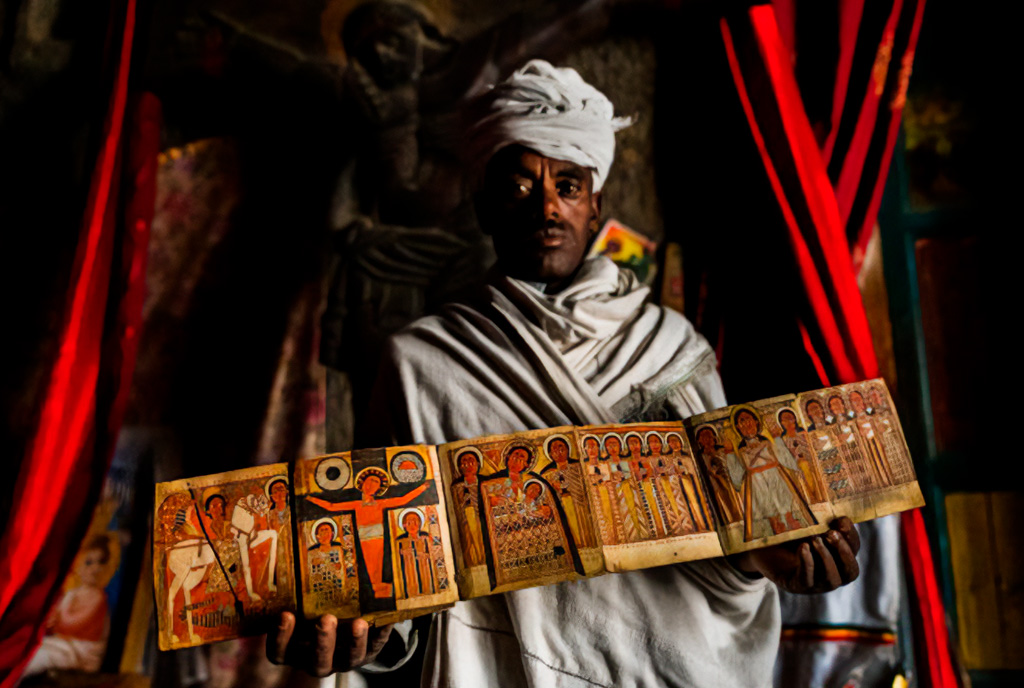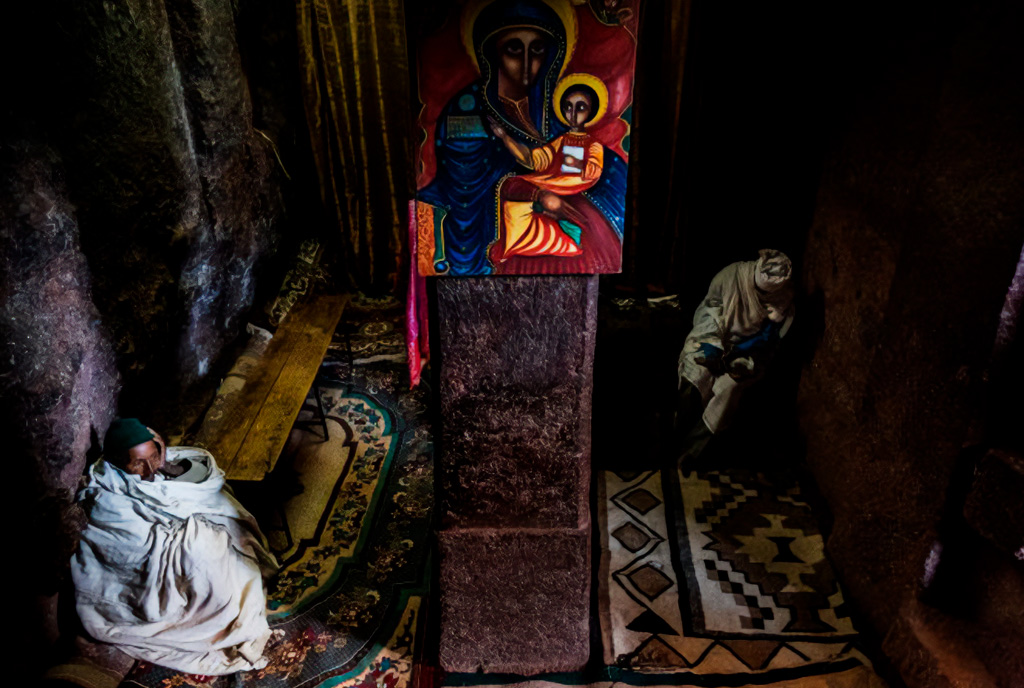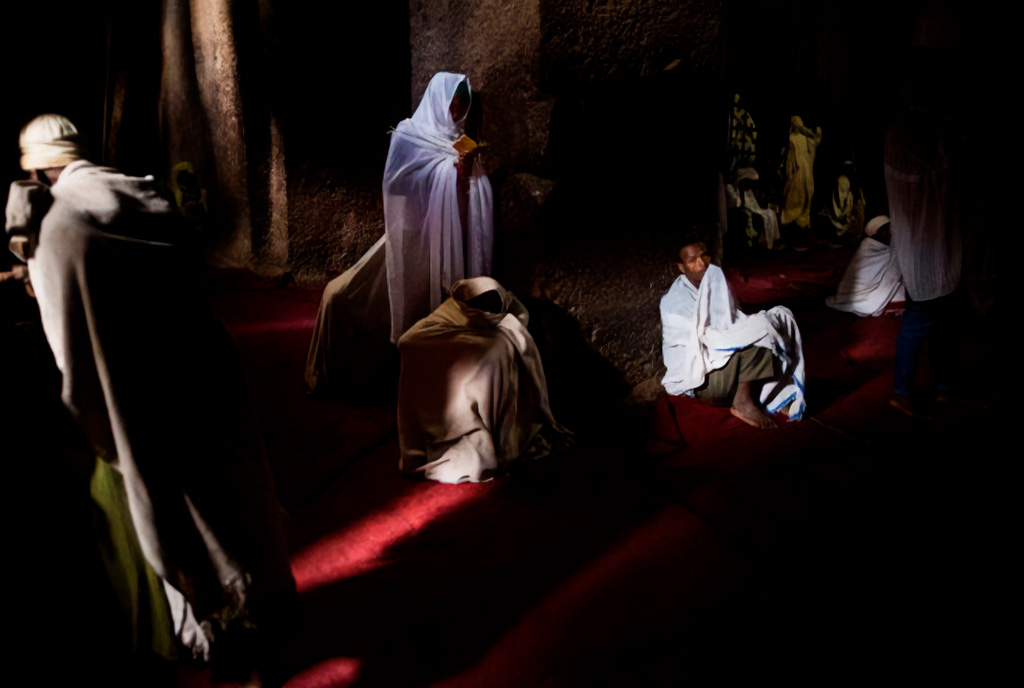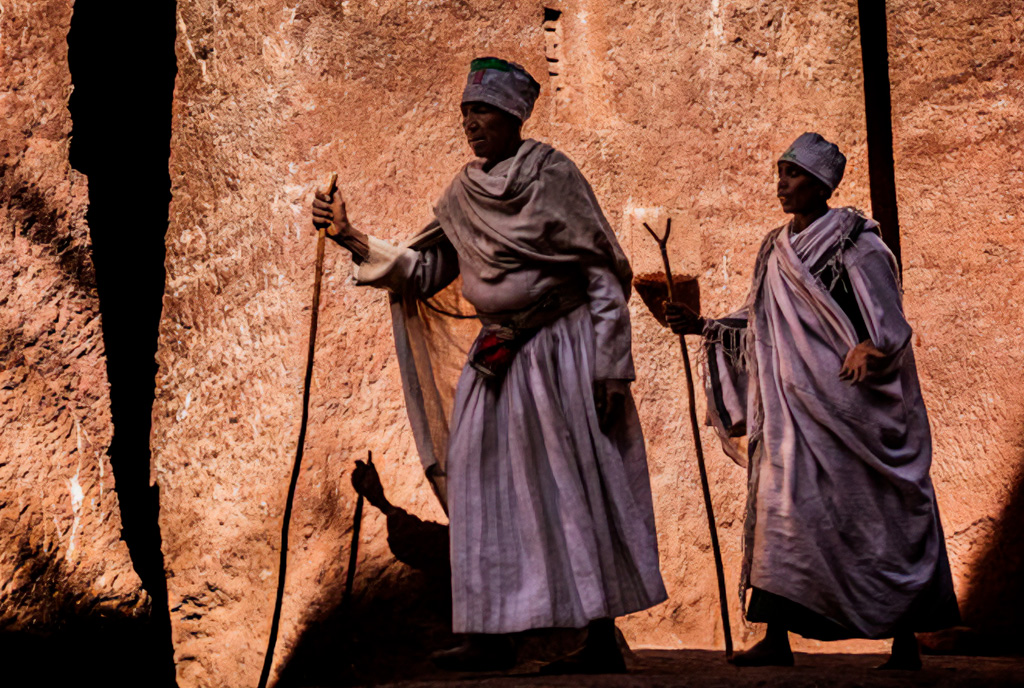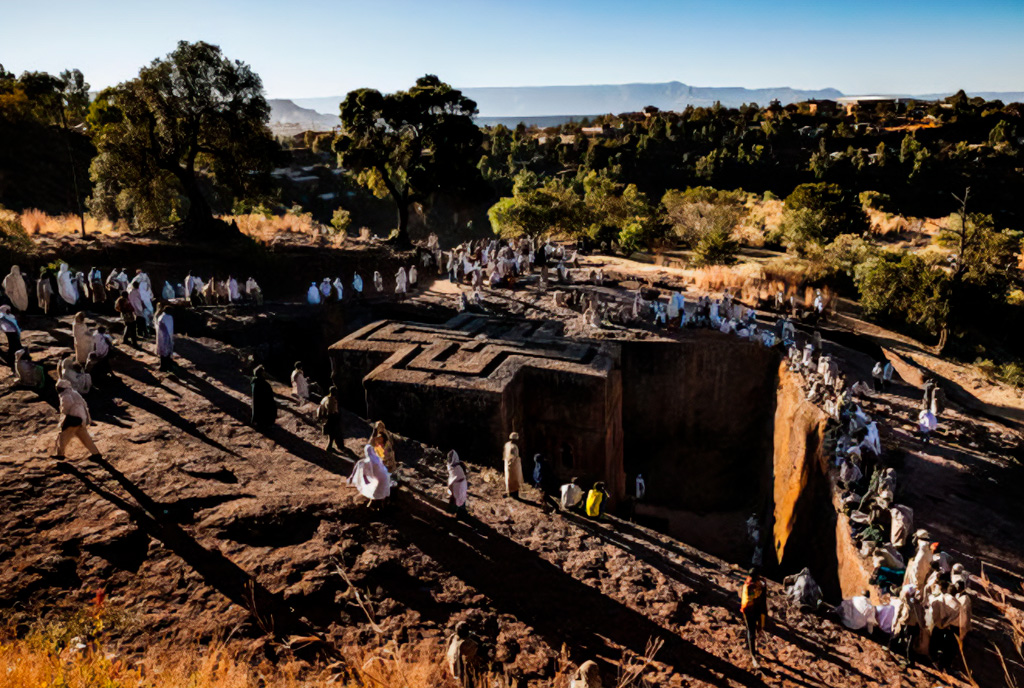


From every corner of the country they come, often walking hundreds of miles barefoot: Ethiopian Orthodox Christians on a once-in-a-lifetime journey.
Their destination is Lalibela, in northern Ethiopia. A town of roughly 20,000 people, Lalibela sees its population swell fivefold in the first days of January, when pilgrims gather to celebrate Genna (or Ledet), Christmas on the Ethiopian calendar.
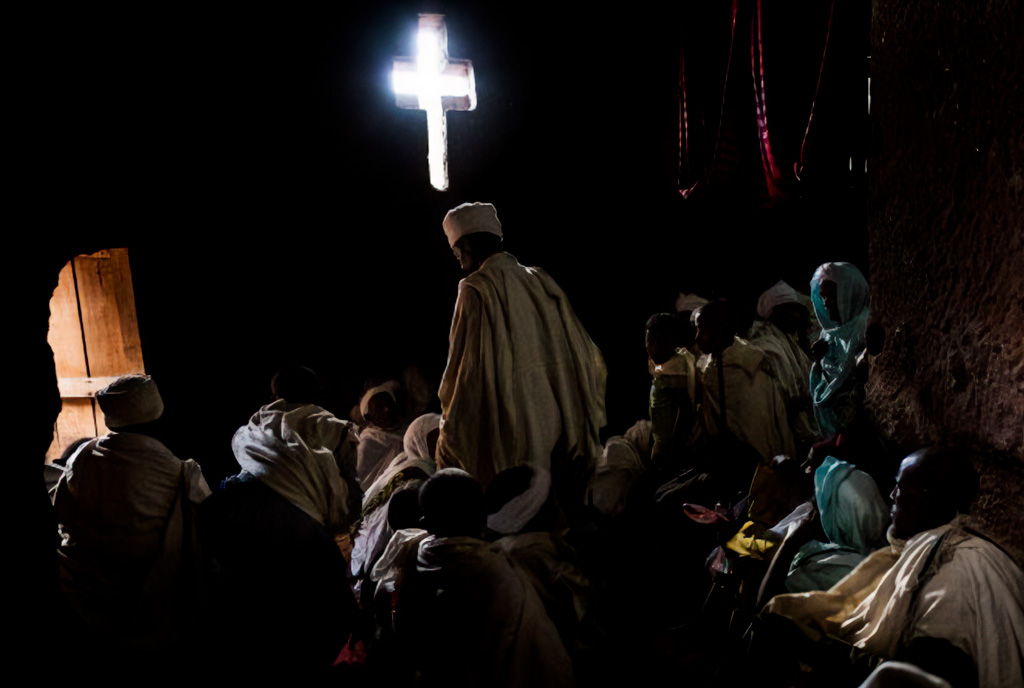
What draws them here is the passage from darkness into light; 800 years of history and an entryway into a "New Jerusalem" that is tangible, permanent, and a UNESCO World Heritage Site.
Partner links: booking through them supports the blog at no extra cost to you.
But above all, they are here for God.
Step Into the 'New Jerusalem'
In the 12th century AD, King Lalibela, an Ethiopian ruler and Christian, ordered the building of a second Jerusalem after the original was captured by Muslims in 1187 AD. The result was 11 interconnected churches, carved into the mountain by hand. What makes them so unusual is that the churches of Lalibela were dug straight down into the earth. Hewn from a single block of solid rock, the most famous is perhaps the Church of Saint George, shaped like a Greek Orthodox cross.

Almost impossible to spot from a distance, this striking feat, completed in 23 years, gave Christians a safe place to pray, hidden from the Muslim invaders pressing in from the north.
A hidden treasure on the Horn of Africa, photographer Tariq Zaidi turned his camera on the pilgrim trail in and around Lalibela earlier this year.
"I'm amazed that not everyone knows about this place," he says, recalling that among the crowds there were perhaps 100 foreigners. "It's a gem that's still hidden for now."
He remembers the grandeur of the architecture and the beauty of the region, but above all its people.
"They're very poor, very humble," he says. "They come on pilgrimage hoping to make it at least once in their lives, if they can afford it. Many people had walked across the whole country with almost nothing to their name."

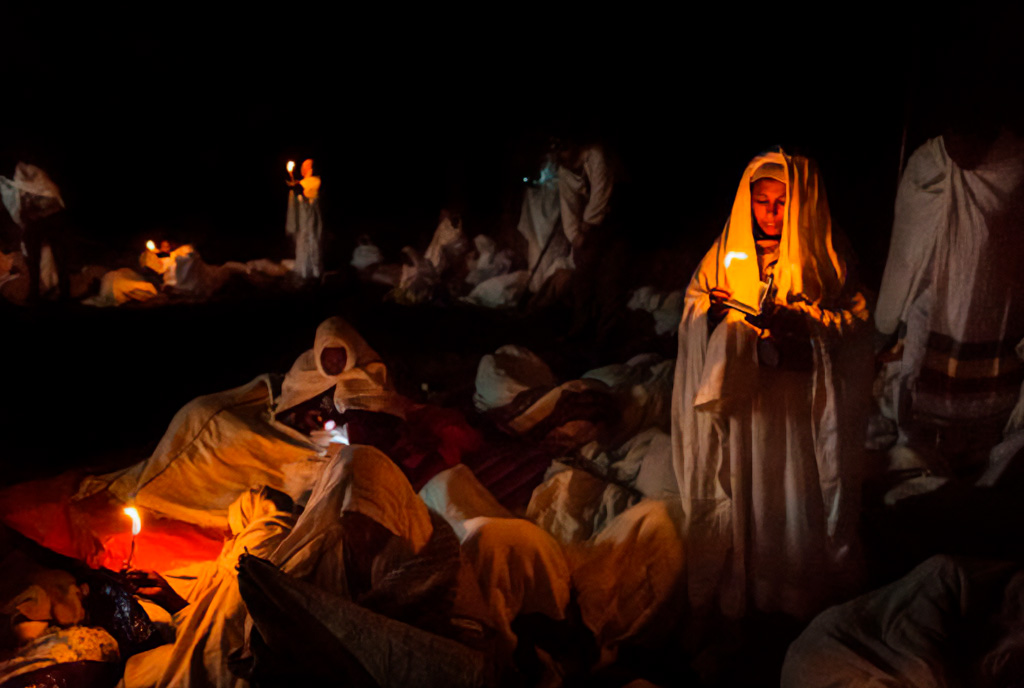
On the eve of Genna, pilgrims, both men and women, sleep on plastic mats in one part of the town.
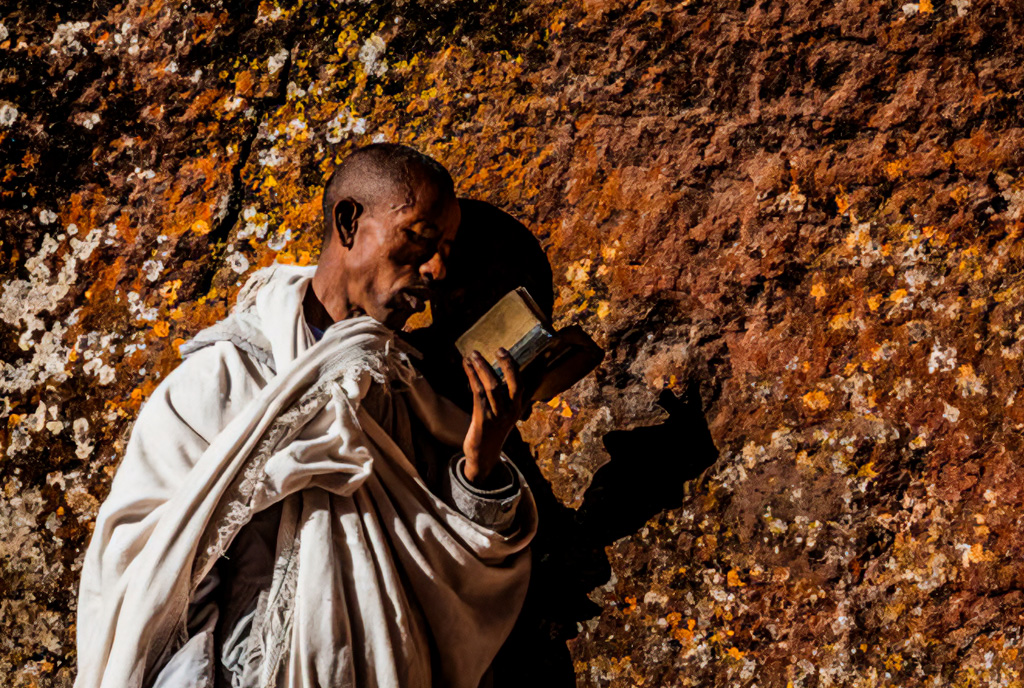
"Thousands of people just lying there," Zaidi says. "But it isn't like a refugee camp; the atmosphere is incredible. They sing and dance, they read their bibles and prayer books. They're so happy, ecstatic, to be there and to be part of this unique celebration."
Zaidi describes how the local community comes out to help the pilgrims, feeding them and even helping to wash their weary feet. As the sun goes down, thousands of candles are lit, and the prayers carry on.
"It's beautiful, poetic, even romantic, in a way that very few things in our world are," Zaidi says. "They all support one another."
'I Was Moved to Tears'
The events on the eve of Genna begin at five in the morning. Dressed in white, the pilgrims make their way to the 13 churches, moving between them through interconnected tunnels 40 feet below ground.
There is symbolism at work here, the photographer explains: "There's one particular passage in the network that's very long. I have no idea how long it is, I'd guess 300 meters, and it's pitch black."
"There's only one way in and one way out. There's no going back, and when you emerge, you literally come out right by the door of the church. I was told this corridor, like many others, symbolizes the passage through darkness into light, an exit into Paradise, essentially."

Mingling with the pilgrims and the priests, who stay in each church and are the only people wearing colorful robes, Zaidi says the experience was "like traveling back in time;" a place and a tradition untouched by the modern world.
"At some ceremonies you're standing in a space 12 inches by 12 inches," he recalls. "You can't move in any direction. You're there until it's over, even if you faint, you won't fall down."
When night falls, the pilgrims pray en masse by the light of candles and stars. Most keep celebrating until dawn.
"That night was one of the most magical things I've ever seen in my life," Zaidi says. "I'm not a religious person at all... but I was moved to tears watching these ceremonies."
The next day the pilgrims leave the town, and Lalibela shrinks back down again. Until the following year, it remains a relatively little-known heritage site. The memory, however, lingers.
"If you want to be moved by humanity, moved by religion, go there," the photographer urges. "If you aren't moved to tears by the devotion, the spirituality, and the kindness of these people, then nothing will move you. It's a truly wonderful experience."