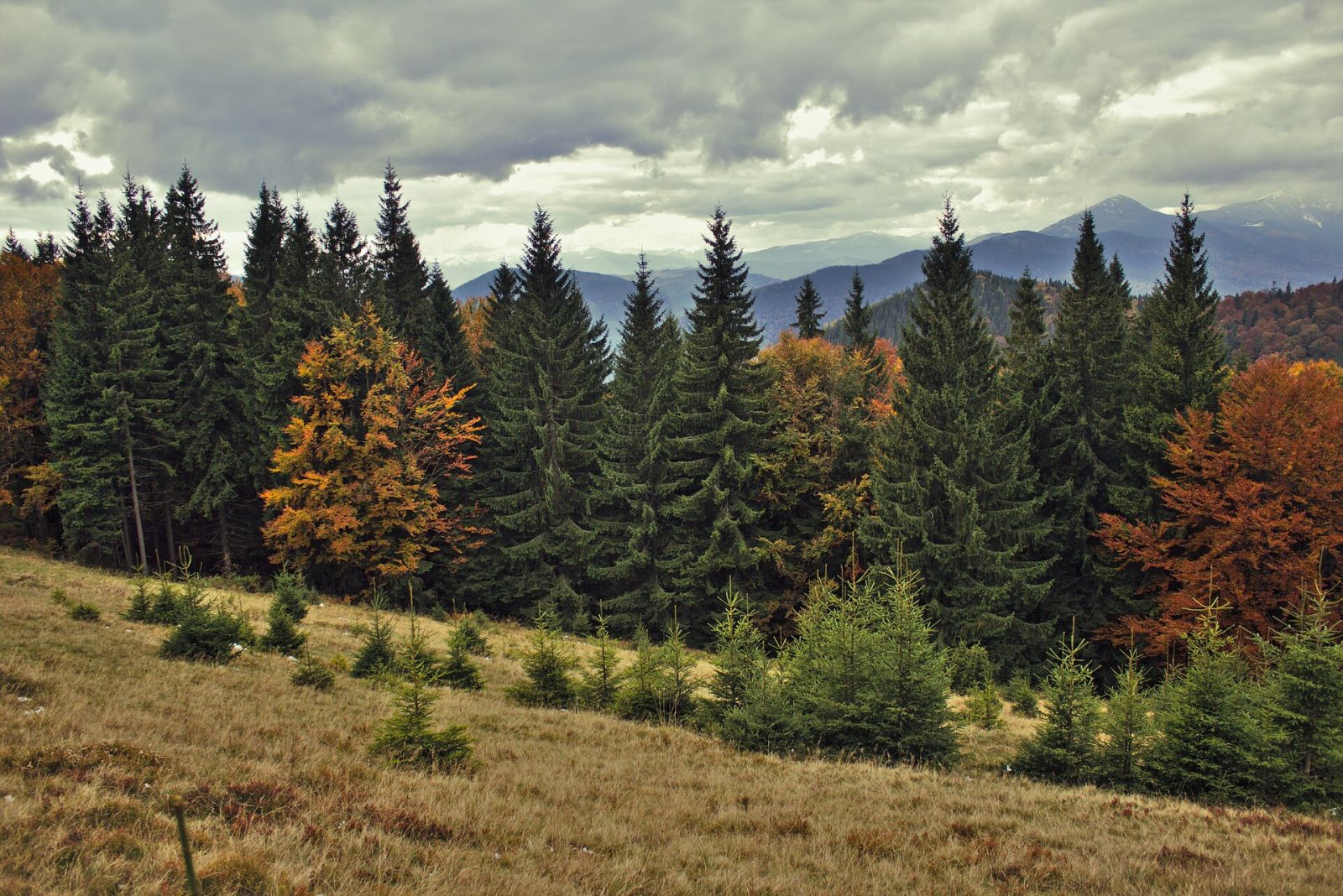
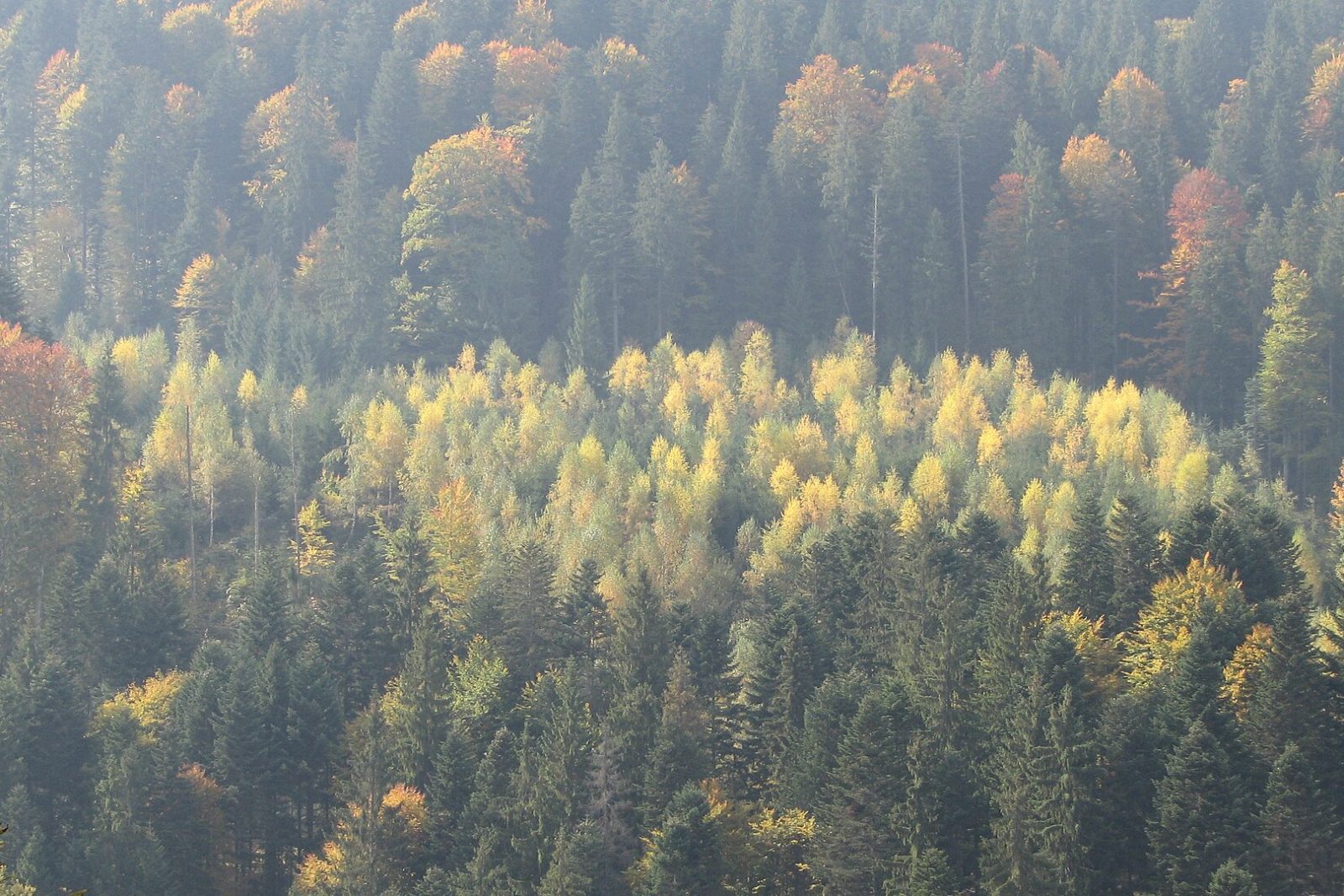
Autumn in the Carpathians is that rare case where it pays to plan your trip around a specific two or three weeks. The peak of golden color lands roughly in the second half of September and October, and in the mountains it slides from top to bottom: first the high meadows and summits flare up, and a couple of weeks later the beech forests down in the valleys turn yellow. So there is no single "right" date. There is an elevation where it looks best right now, and that is what you should chase.
The main draw of the season here is the beech forest. Ukraine's Carpathian beech woods go copper and see-through in autumn, with dry leaves rustling ankle-deep underfoot. Add high meadows the color of old straw, the dark green of spruce between them, and the milky morning fog that pools in the valleys, and your reason to come now instead of in summer is already made.
When does the golden peak hit?
The calendar is useful, but mountains run on altitude, not on dates. The rough but reliable rule is simple: the higher you go, the earlier it "burns." One more variable is the year itself. A warm, dry autumn holds the color longer, while the first wet storm with wind can strip a forest bare in a couple of days. So treat the dates below as approximate, and check the forecast and recent photos a week before you leave.
| Period | Where it looks best | Weather notes |
|---|---|---|
| Late September | High meadows and summits, blueberry and cowberry reddening | Still warm by day, clear mornings, cold nights already |
| Early October | Beech forests of the middle belt, classic golden autumn | Peak color, best balance of beauty and weather |
| Late October | Valleys, villages, lower forests near Synevyr | More rain and fog, shorter days |
| Early November | The lowest spots, last of the leaves | Bare summits, first snow possible up high |
If you get to choose, aim for the first or second week of October. That is the sweet spot, when the beech slopes are already in full color and the weather has not turned for good yet. Later it becomes beautiful in a different, more melancholy way, but the risk of spending a whole day inside a cloud rises noticeably too.
Where to go: spots that deliver in autumn
The Carpathians are big, and "going to the mountains in autumn" can mean very different things. Below are a few proven directions, each with its own character and an honest downside, so you can pick by what suits you rather than by a postcard.
Lake Synevyr
The country's most famous mountain lake puts on a special show in autumn: dark water ringed by a wall of rust-colored forest on the slopes. Getting here is relatively easy, the road is paved, so it works even for people who have no appetite for a multi-day trek. And that is exactly where the honest downside sits: Synevyr is popular, and on a fine October weekend the lakeside gets crowded and tightly parked. Come early.
Bukovyna and Transcarpathian beech forests
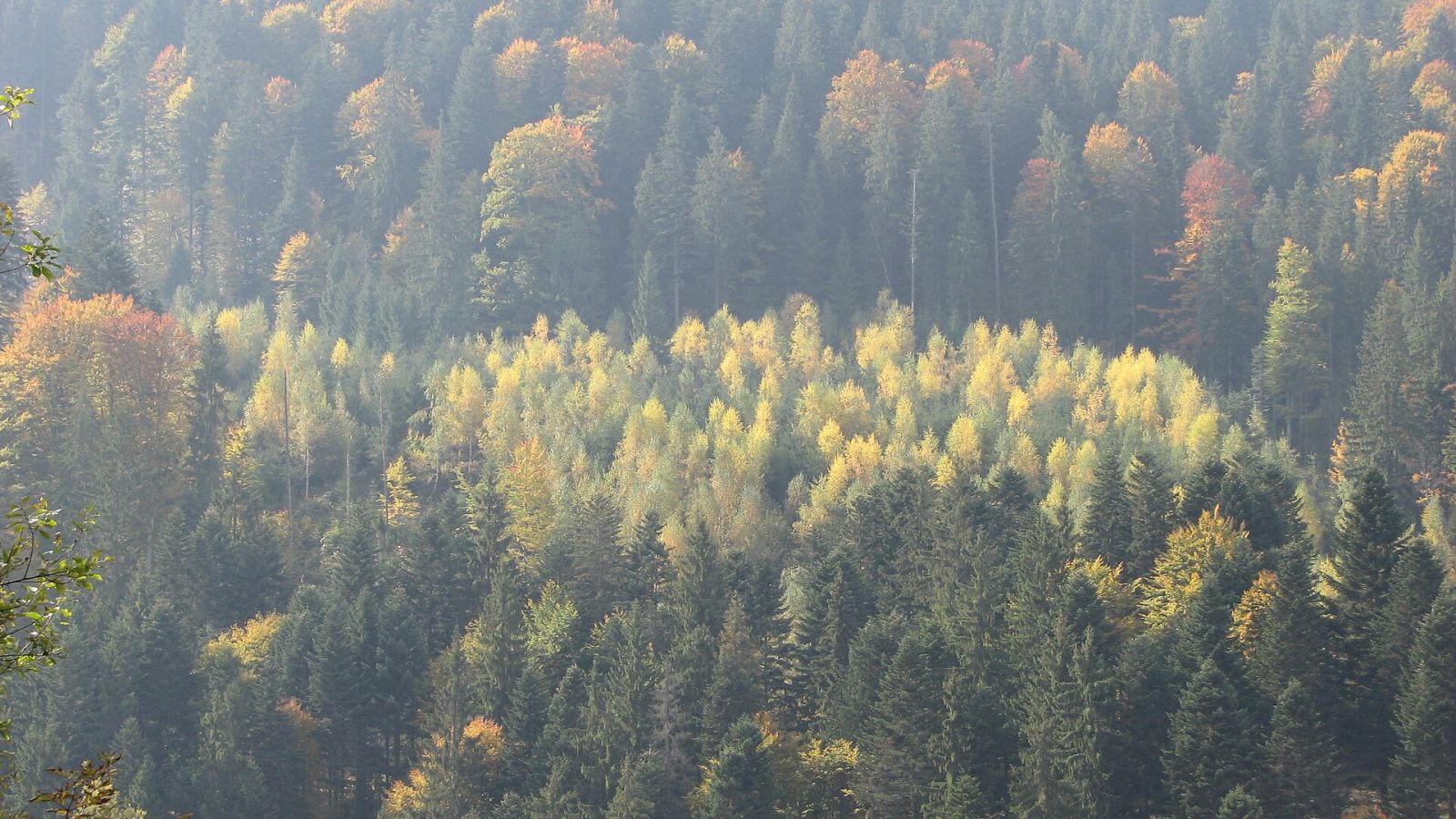
For pure "gold," head where beech grows in solid stands. The slopes of Chornohora, the surroundings of Yasinia, and the Bukovyna foothills of the Putyla area turn into one continuous copper canvas in autumn. There are not always big attractions here, and that is the point: you come not for an "object" but for the forest itself, for the color and the quiet.
The high meadows (polonyny)
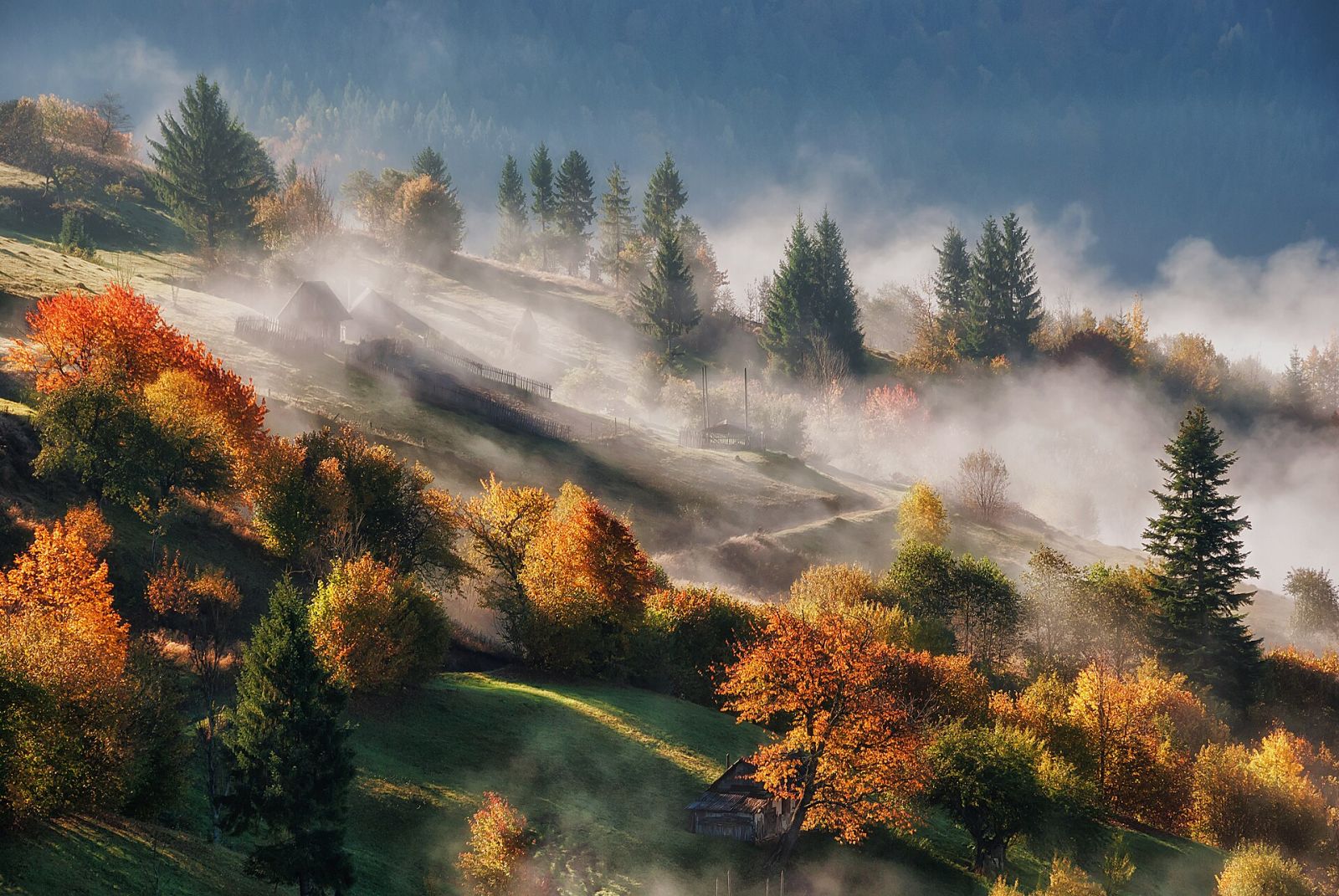
The treeless upland pastures shift to a burnt golden-brown in autumn, and they offer the farthest panoramas because leaves no longer block the view. A classic pick for an easy hike is the meadows of the Borzhava or Krasiia ranges. The honest downside: it is cold and windy up there, and the weather changes fast, so the high meadows are a slightly more serious commitment than a stroll by the lake.
The Carpathian Tram and the old narrow-gauge line
A separate autumn pleasure is the narrow-gauge railways. The best-known tourist ride is the so-called Carpathian Tram near Vyhoda in the Ivano-Frankivsk region: a small train runs along a mountain river through forests that stand rust-red on both sides of the track. It is an unathletic, almost contemplative format: you sit and watch the golden forest drift past. Ideal for families with kids and for anyone who struggles with long climbs. The timetable is seasonal and runs thin out in autumn, so book ahead and check the current schedule before you go.
What to do besides taking photos
- Mushroom picking. September and October mean mushrooms: porcini, birch boletes, chanterelles. The iron rule is: if you are not sure, do not take it. And remember that some forests are protected park territory with their own restrictions.
- Thermal baths after a hike. Transcarpathia is rich in hot mineral pools. After a day in cold, wet mountains, sinking into warm water is an almost otherworldly feeling. Kosyno, Berehove, Veliatyno and Shaian are the best-known names, so always pack a swimsuit.
- Food. Autumn is the season of fresh young wine, bograch stew, banosh with cracklings and brynza cheese, and roasted mushrooms. Hutsul and Transcarpathian cooking is at its best in autumn.
- Easy out-and-back walks. You do not have to storm Mount Hoverla. Short routes to waterfalls (Shypit, Probiy, Huk) are less crowded and very photogenic in autumn.
The best photo spots
If you are largely here for the shots, keep a couple of foolproof scenarios in your pocket. Morning fog in the valleys is the main autumn trophy: climb any viewpoint before sunrise and a sea of clouds will spread out below you. Beech slopes are best shot in the side light of early morning or evening, when the sun shines through the leaves and they glow. And Synevyr in autumn asks for a still, windless morning, when a mirror reflection of the rust-colored slopes appears on the water.
How to get there
The two natural bases for a Carpathian autumn are Ivano-Frankivsk, and Transcarpathia with Uzhhorod and Mukachevo. Both are reachable by train and bus from major cities, and from there it is either a rental car or local transport out to specific villages. Frankly, a car in the mountains in autumn is a big convenience: many of the most beautiful spots sit off the public-transport routes, and the short daylight does not forgive long transfers.
| Where | Convenient base | Autumn caveat |
|---|---|---|
| Synevyr | Mizhhiria, Khust | Paved road, but crowded on weekends |
| Carpathian Tram (Vyhoda) | Ivano-Frankivsk, Dolyna | Seasonal schedule, booking required |
| Borzhava / Krasiia meadows | Volovets, Pylypets | Cold and windy up top, trails can be wet |
| Transcarpathian thermal baths | Berehove, Mukachevo | Open year-round, especially welcome in autumn |
What to wear
The golden rule of the autumn Carpathians is layers. Around freezing in the morning, warm enough for a t-shirt in the midday sun, and then the wind on a high meadow drives you back into a jacket. So the base kit is this: thermal underwear or a long-sleeve shirt, a fleece, and a wind- and waterproof jacket on top. Waterproof trekking boots with grippy soles are a must, because wet leaves on a slope are outrageously slick. A hat, gloves and a spare pair of dry socks in your pack save the day more often than you would expect. And a headlamp: October gets dark fast, and on the trail that matters.
The honest downside: what to expect
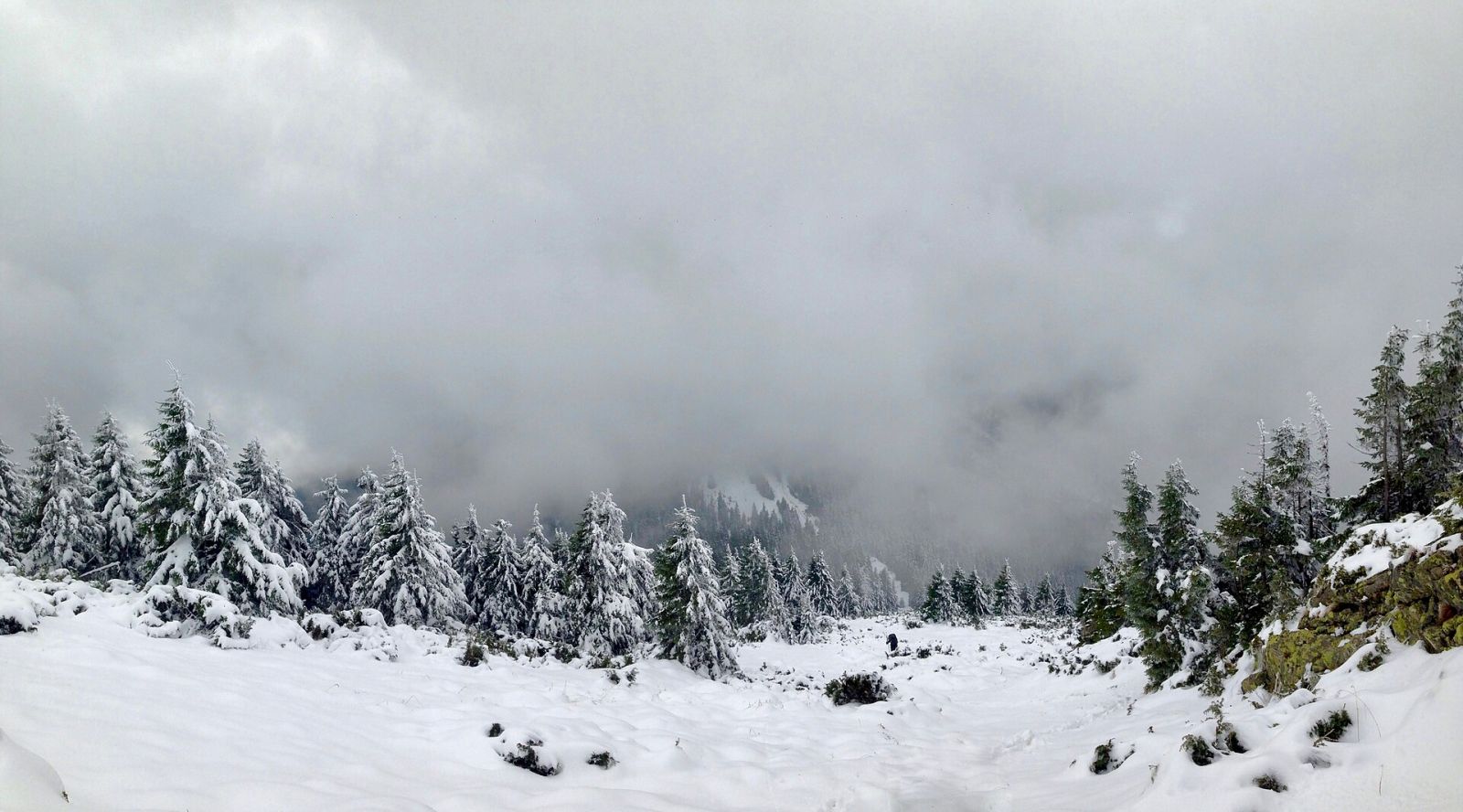
It would be dishonest to paint only the golden fairy tale. The autumn Carpathians can be grim. Rain gets more frequent, and it can pour for several days straight with no break. Fog, so lovely in photos, means zero visibility and vanished panoramas on an actual hike. Daylight shrinks fast: by the second half of October it is dark by six in the evening, and long routes need a generous safety margin. The upper roads turn to mush after rain, and at altitude the first wet snow is already possible.
The takeaway is simple, and it should reassure rather than scare. Build a weather buffer into the trip, keep a rainy-day backup plan (thermal baths, a museum, the narrow-gauge line, a café in Uzhhorod), and do not lock yourself onto a single summit. Do that, and autumn in the Carpathians repays you with exactly what people come for: copper forests, fog-filled valleys, and a quiet you never get in the city.