Turkey's beaches split into two worlds: the calm coves of the Aegean coast near Marmaris and Fethiye, where the water is shallow and warms up earlier, and the open sandy expanses of the Mediterranean from Patara to Alanya, where the waves are livelier and the season is longer. If you are travelling with children, choose the sheltered bays (Oludeniz, Icmeler). If you want the shot and the turquoise, your direction is Kaputas and Patara. Swimming is comfortable from May through October, with the warmest water in July and August.
Below are five beaches that cover different needs: from a family holiday to photogenic wild nature. Each has its own character, its own resort nearby and its own downside, which we will honestly point out.
What is the sea like in Turkey and when should you go swimming?
The swimming season on the southern and south-western coast runs from May through October. In May the sea warms up to about 20 °C, in August it reaches 26-28 °C, so the peak of swimming is July and August. Along with the warm water, the peak brings the strongest heat, the densest crowds and the highest accommodation prices.
A smarter option for those not tied to school holidays is late May, June or the second half of September. The water is already (or still) warm, the sun does not scorch, and prices and crowds are noticeably lower. October does not suit everyone for swimming: the sea still holds its warmth, but the air is cool in the evenings.
| Beach | Resort nearby | Beach type | Water and entry | Best for |
|---|---|---|---|---|
| Oludeniz | Fethiye (15 km) | Pebbles plus sandy spit, lagoon | Calm, shallow in the lagoon | Families, paragliders |
| Cleopatra | Alanya | Golden coarse sand | Clear, gentle entry | City plus beach in one |
| Patara | Kas, Kalkan | Wild sand, 18 km of dunes | Open sea, some waves | Space, history, solitude |
| Icmeler | Marmaris (8 km) | Sand, long bay | Shallow, calm | Families with small children |
| Kaputas | Kas, Kalkan | Sand with fine pebbles | Bright turquoise, deep | Photos, a short stop |
Oludeniz: the lagoon paragliders fly in to reach
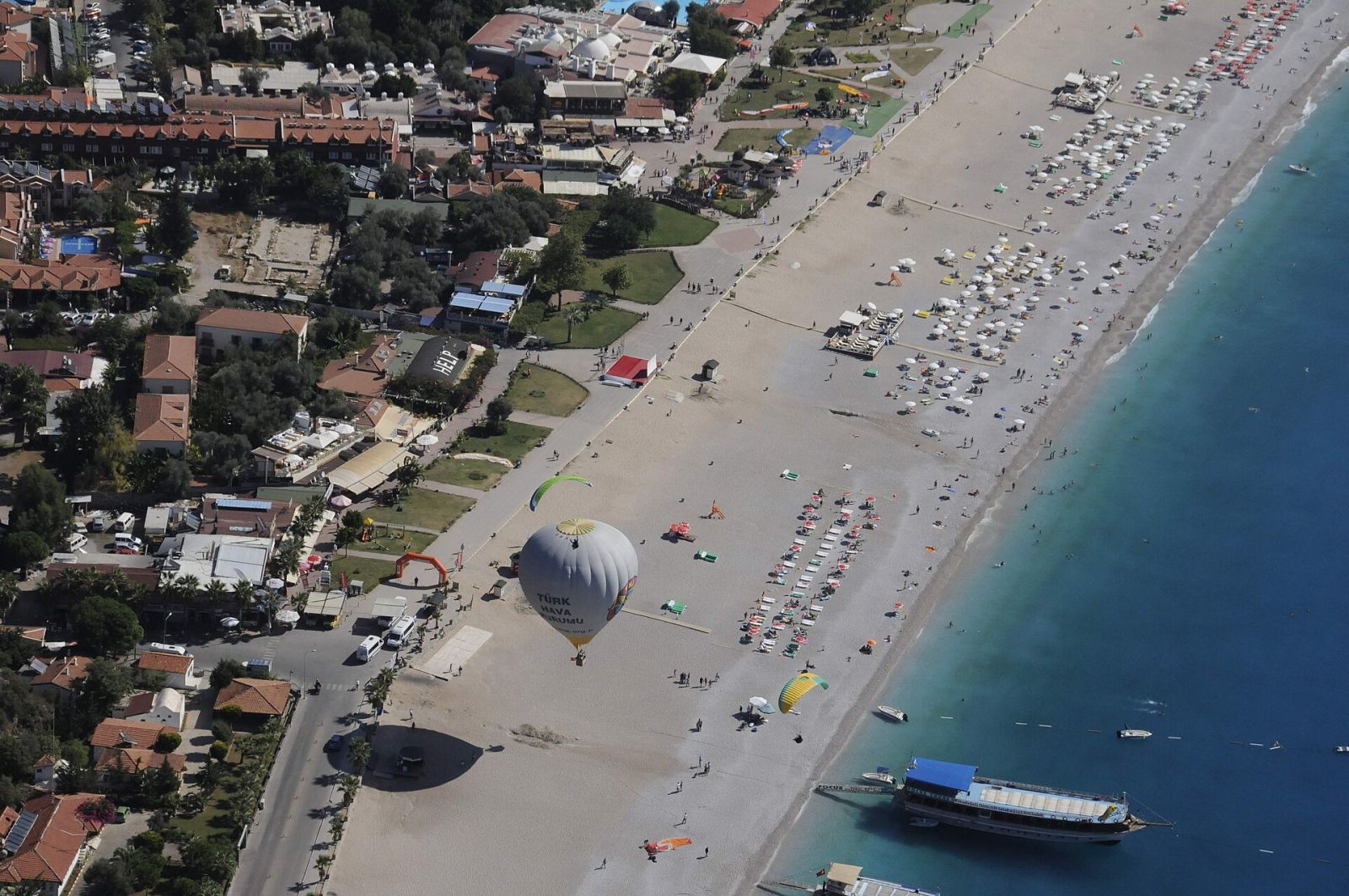
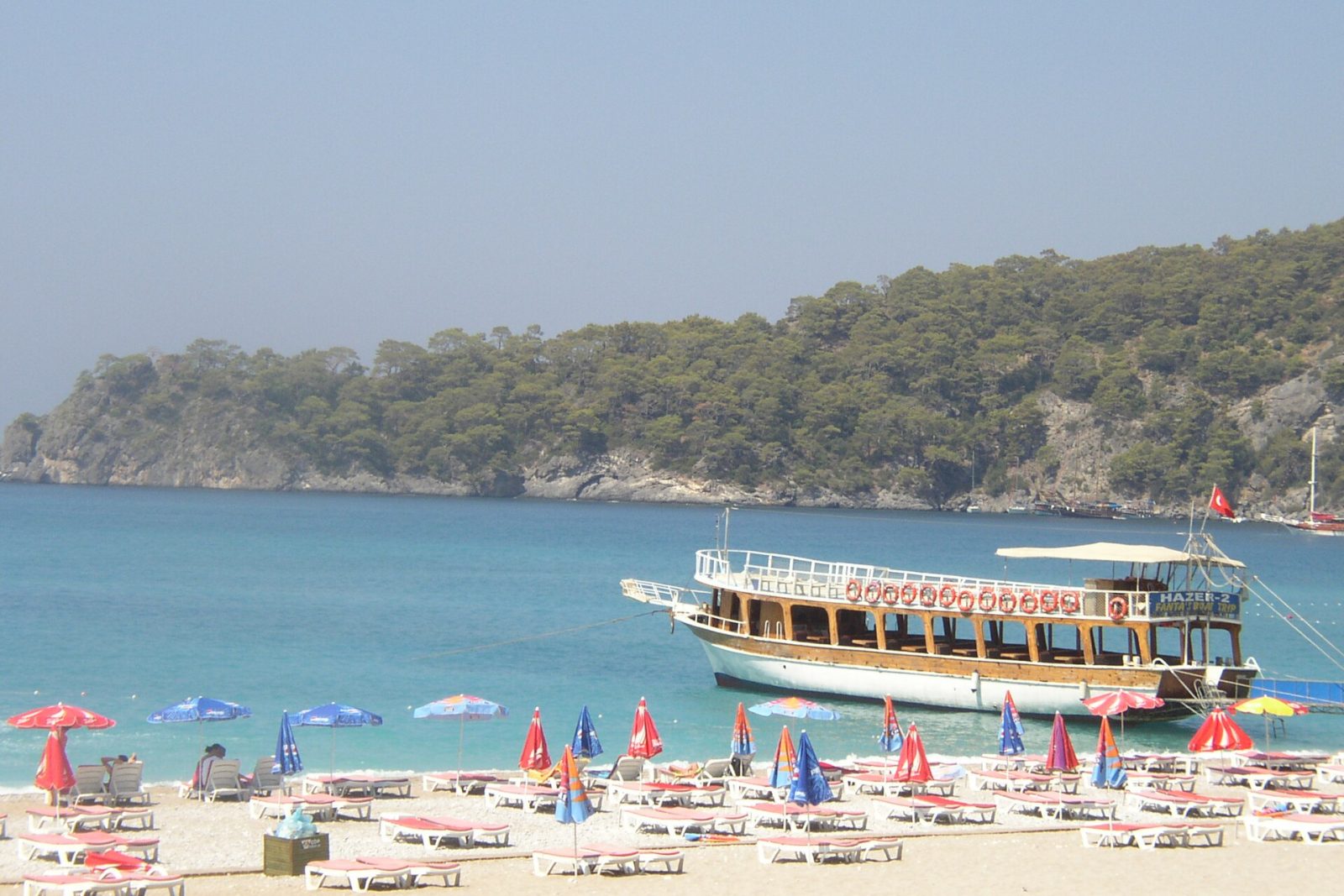
Oludeniz lies 15 kilometres south of Fethiye, about twenty minutes by car. Its main draw is the Blue Lagoon: a bay closed off by a sandy spit with still turquoise water that sea currents never disturb. The name translates as dead sea, and it refers not to lifelessness but precisely to this motionless calm of the water.
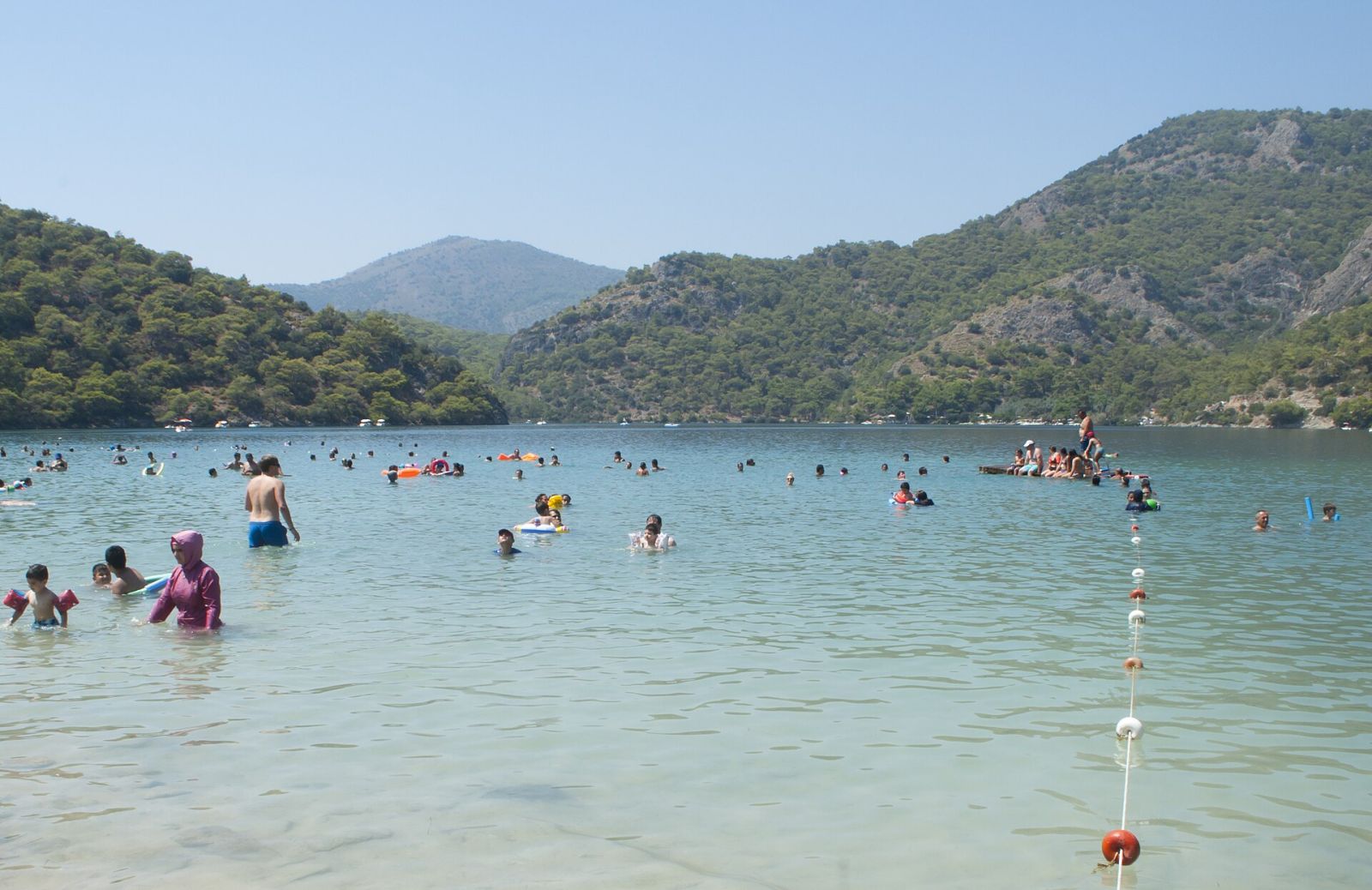
The lagoon is a protected area with a separate entrance for a symbolic fee (check the amount before your trip, it changes every season). The water here is shallow and quiet, which makes the spot ideal for families with children. Beyond the spit begins an open beach of fine pebbles, where the waves are already noticeable.
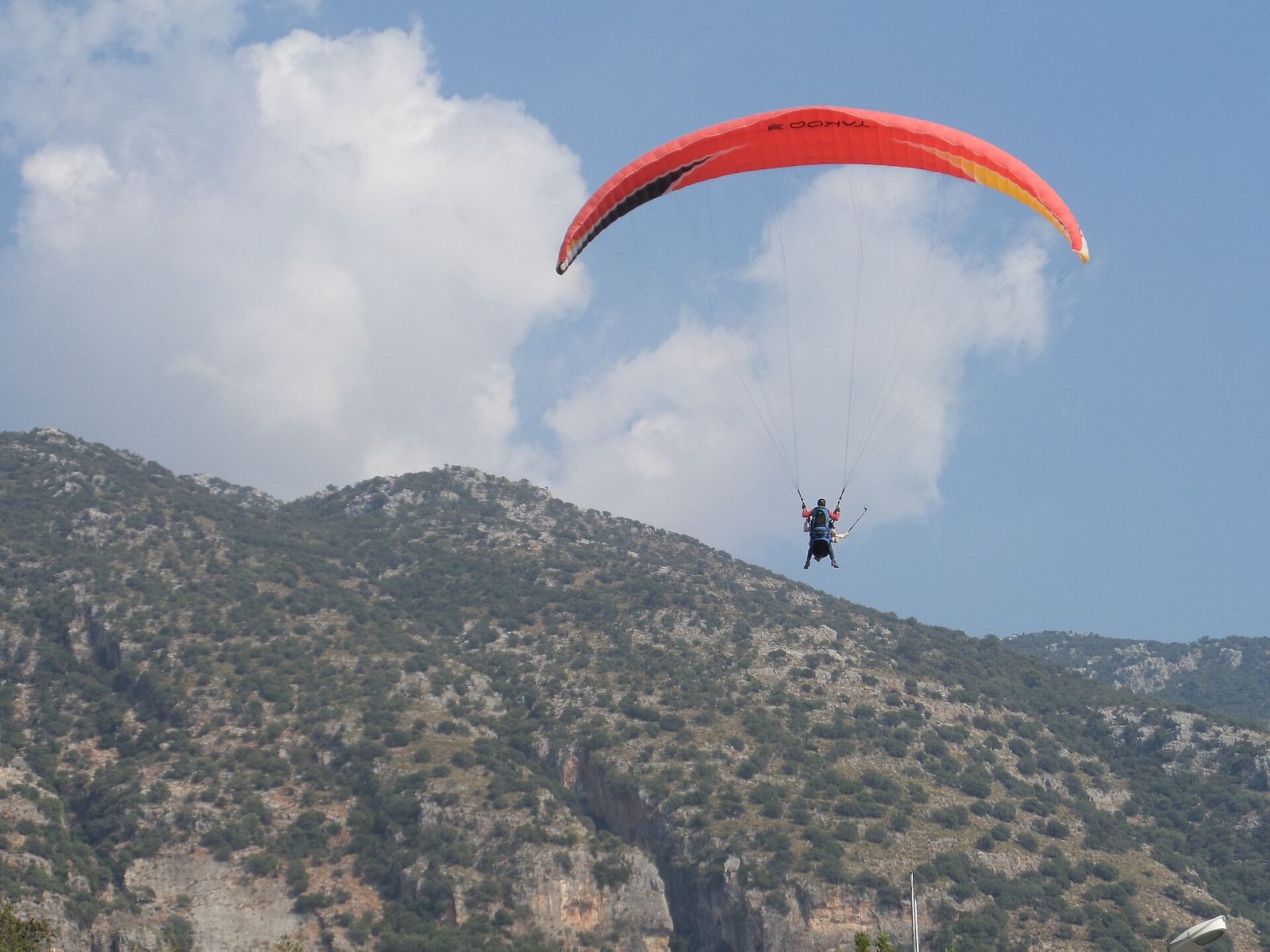
Above the beach rises Mount Babadag, 1969 metres high, and that is exactly why Oludeniz ranks among the world's best-known spots for paragliding. Take-off is from the top, landing is right on the beach, a tandem flight with an instructor lasts 25-35 minutes and requires no experience. The flying season runs roughly from April through November, weather permitting. The downside of the place is obvious: at peak it is overcrowded, and in summer the narrow spit looks like a carpet of towels.
Cleopatra in Alanya: sand that does not stick to your skin
Cleopatra is that rare case where a full-fledged sea beach lies within a busy city. A strip of golden sand stretches about two kilometres along Alanya, right beside the peninsula with its fortress. The beach holds a Blue Flag, meaning it meets standards of cleanliness and infrastructure.
The local specialty is the sand itself: it is coarse-grained, barely clouds the water near the shore and, by holidaymakers' accounts, does not stick to the skin. Legend links the beach to Cleopatra, but it is worth coming here not for the tale but for the combination: swimming in the morning, then a climb to the fortress and the old town in the afternoon without any transfers.
Alanya's honest trade-off is that it is a loud resort with dense development and club life. Anyone seeking quiet and wild nature will be disappointed. Anyone wanting everything at hand (cafes, shops, excursions, nightlife) will get the most out of it.
Patara: 18 kilometres of sand and the town where Saint Nicholas was born
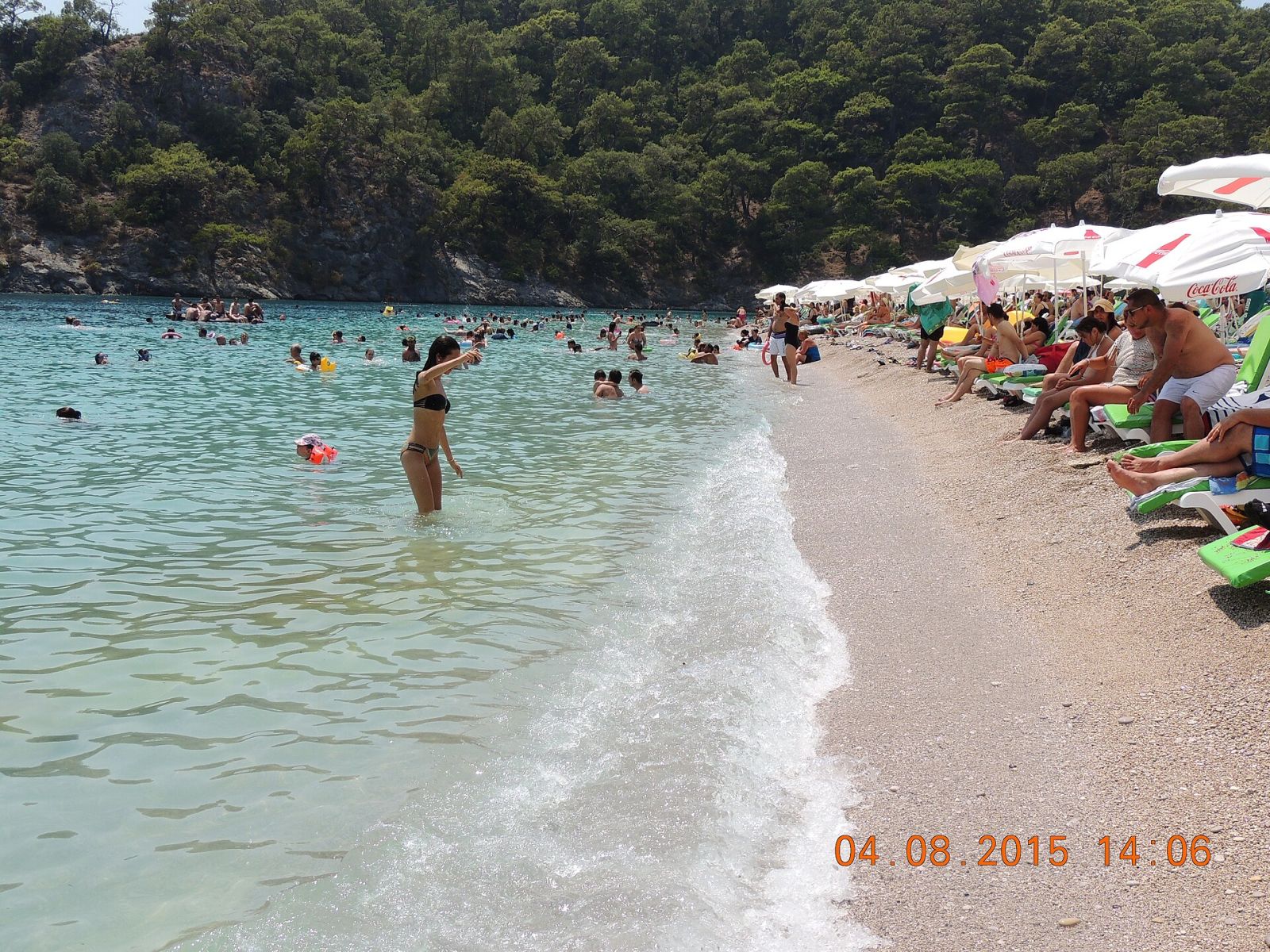
Patara is Turkey's longest beach, almost 18 kilometres of sand and dunes without a single hotel development along the shore. This is the open Mediterranean, so there are waves and wind here, but there is so much space that even at peak you will find a deserted stretch of coast.
Behind the beach hide the ruins of ancient Patara, an important Lycian port and the birthplace of Saint Nicholas, the very prototype of Santa Claus. A ticket to the archaeological zone also grants access to the beach; check the price before your trip. Here too are a Roman theatre and one of the oldest parliament-style buildings.
Patara is a protected nesting area for caretta caretta turtles. From May through October they lay their eggs in the sand, so during the season the beach is closed at night and part of the dunes is fenced off. This is not a whim but the reason the shore is still wild. The downside: there is almost no infrastructure, little shade, so bring water and an umbrella with you or rent them on site.
Icmeler: a quiet Aegean bay for families
Icmeler sits in a cosy bay eight kilometres from noisy Marmaris, on the Aegean coast. The bay is surrounded on three sides by pine-covered mountains, so the water here is calm and the bay itself is sheltered from strong waves.
The beach is a long strip of golden sand with a gentle, shallow entry into the water, and that is exactly why families with little ones love Icmeler so much. A child can wade dozens of metres into the sea while the depth is still only waist-high. The resort is compact, green and noticeably calmer than neighbouring Marmaris, though for nightlife and partying it is enough to hop on a dolmus or a water taxi and be in the centre within half an hour.
Kaputas: a turquoise slit between the cliffs
Kaputas is a small beach at the mouth of a canyon between the towns of Kas and Kalkan. A freshwater stream flowing from the gorge into the sea gives that same incredibly bright turquoise that people come here for from all along the coast. Below is sand with fine pebbles, above is the road with its famous viewpoint.
To get down to the water, you have to tackle a steep staircase (by various accounts from 180 to about 300 steps), and you will have to walk the same path back up under the sun. The beach is tiny, at peak there is not enough room, and you rent an umbrella and a sunbed near the municipal kiosk. The water deepens quickly near the shore, so the spot is awkward for very young children.
Kaputas is more a place for a short stop and photos than a base for the whole day. It is best to come in the morning, before the crowd and the sun reach their peak.
Do Ukrainians need a visa for a beach holiday?
No. Citizens of Ukraine may stay in Turkey for up to 90 days within every 180 without a visa. Entry requires a valid international passport; the Turkish side advises that it be valid for at least 150 days from the date of entry, while Ukraine's Ministry of Foreign Affairs recommends a six-month margin. You can even fly on an ID card. The rules change from time to time, so before your trip check the current conditions from official sources.
Where to go, specifically for you
If this is your first trip with children, choose Icmeler or the Oludeniz lagoon: shallow, calm, everything nearby. If you want the city and the sea at once, your choice is Alanya with Cleopatra. And if you are tired of hotel walls and looking for space and wild nature, head to Patara, and on the way turn off to Kaputas for that same turquoise. The main thing is not to fix on August alone: June and September will give you the same sea without the heat and the queues.