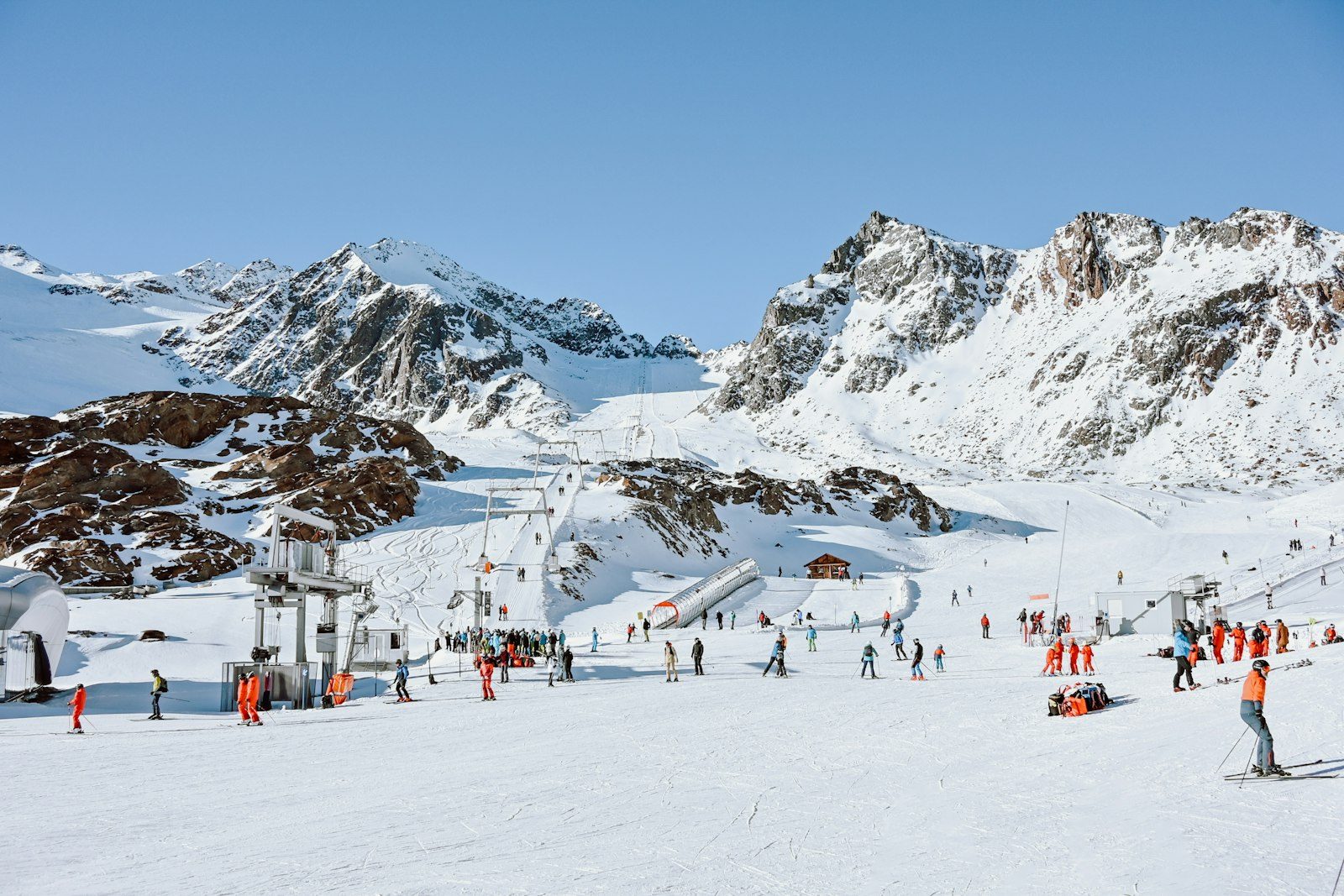


You can ski in Europe for $25 a day or for 85 euros: the difference isn't the quality of the snow, it's what you're paying extra for. Europe's ski resorts split less into "expensive and cheap" and more into different missions. Some people want hundreds of kilometres of piste on a single ski pass, others want a gentle slope with no crowds, and others want off-piste thrills at a price that doesn't swallow the whole holiday.
The short answer to "where should I go skiing": if you're stepping onto a board or skis for the first time, look at Slovenia and the Italian Dolomites; if you ski confidently and want space, that's France and Austria; if what matters most is budget and off-piste adrenaline, that's Georgia's Gudauri.
Below is a breakdown of five destinations that cover almost everything Ukrainian skiers are looking for: Austria, France, Italy, Slovenia and Georgia. Prices are given as a guide for the 2025/2026 season, so double-check them on the resort's official website before you travel.
Partner links: booking through them supports the blog at no extra cost to you.
How much does a day on the slopes in Europe cost?
A day ski pass for an adult in peak season ranges from 24 euros in Gudauri to 85 euros in France's Three Valleys. Cheaper doesn't always mean worse: in Slovenia costs are lower because the ski areas are smaller, not because the pistes are poor.
| Country | Example resorts | Who it suits | Day ski pass (guide) | Season |
|---|---|---|---|---|
| Austria | Ischgl, Solden, St. Anton, Saalbach | confident skiers, apres-ski | 60-80 € | December to April, glaciers from November |
| France | Three Valleys, Tignes, Val d'Isere | huge areas, any level | 60-85 € | December to April, high altitude into May |
| Italy | Dolomiti Superski, Val Gardena, Sestriere | families, cruising pistes | 55-83 € | December to April |
| Slovenia | Kranjska Gora, Vogel, Krvavec | beginners, a short budget trip | 30-46 € | December to March |
| Georgia (Gudauri) | Gudauri | off-piste, price, no visa | around 70 GEL (24 € / $26) | late December to April |
Austria: infrastructure that runs like clockwork
The Austrian Alps are a dense network of linked villages, fast lifts and well-groomed pistes. People come here for predictability: if snow is in the forecast, the resort is almost certainly ready to handle it.
Ischgl, with its Silvretta Arena area, offers around 240 km of piste and a duty-free crossing into Swiss Samnaun. Solden sits on a glacier, has two lifts above three thousand metres and opens as early as November, when the rest of the Alps is still waiting for snow. St. Anton in the Arlberg region is a classic for strong skiers: steep slopes, legendary off-piste terrain and a reputation as a place where beginners will struggle. Saalbach-Hinterglemm, by contrast, delivers long, pleasant descents and one of the largest connected areas in the country.
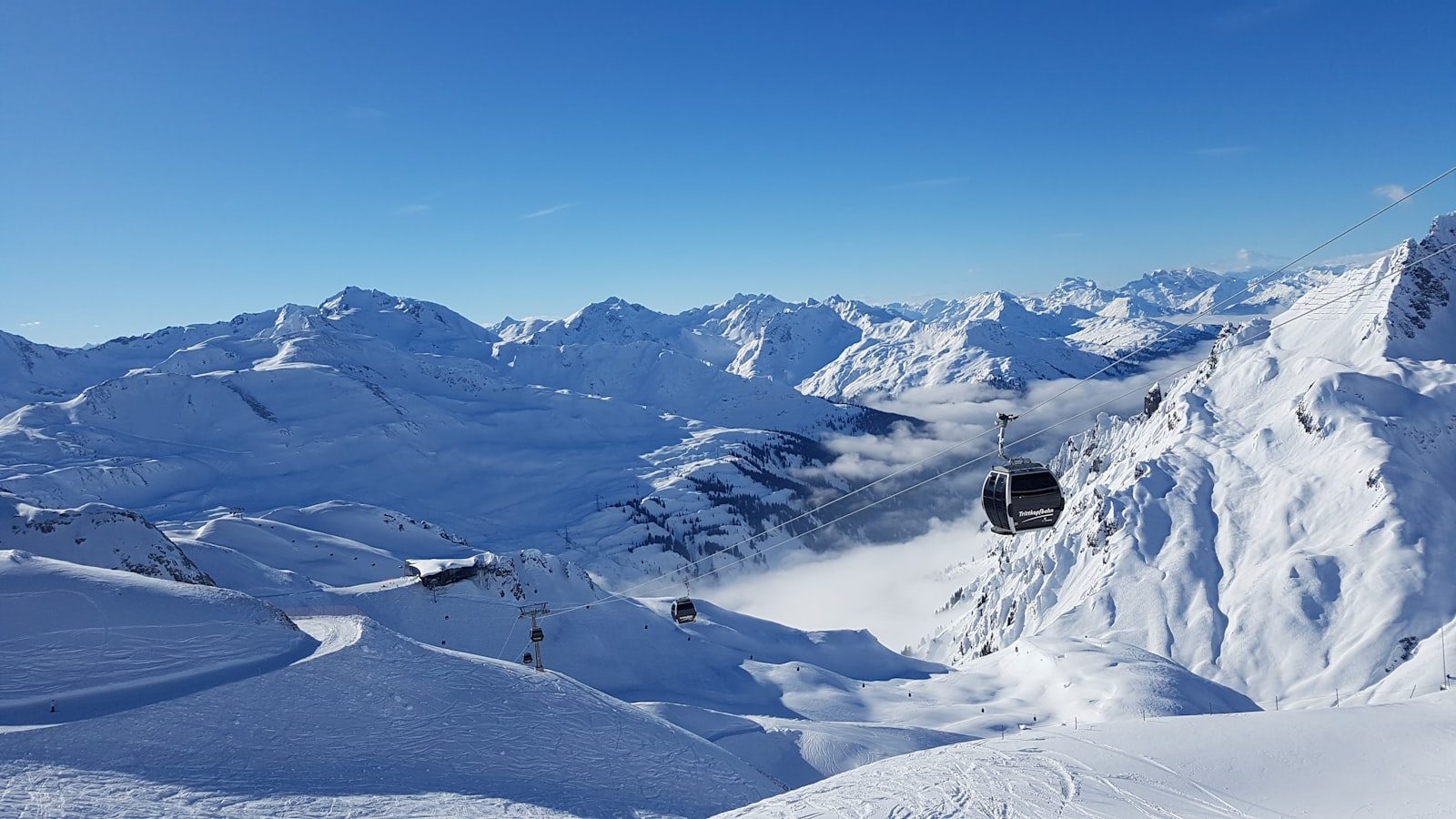
The honest downside: Austrian apres-ski is one of the priciest in the Alps, lift queues build up during school holidays, and strong winds regularly shut down the high-altitude lifts.
France holds the continent's biggest ski areas
If your goal is to ski as many different pistes as possible in a week, France is in a class of its own. The Three Valleys (Courchevel, Meribel and Val Thorens) is around 600 km of connected piste on a single ski pass, one of the largest unified ski areas in the world. Val Thorens is also the highest ski resort in Europe, with a base at roughly 2,300 metres, so the snow here is reliable even in mild winters.
Other giants operate nearby: Paradiski (Les Arcs and La Plagne), Espace Killy with its glacier (Tignes and Val d'Isere), while Chamonix beneath Mont Blanc remains a mecca for off-piste skiing.
The downside of French resorts is the day-to-day living. Accommodation is often self-catered apartments rather than half-board hotels, eating cheaply up on the mountain is tricky, and the ski pass plus lodging combined hit your wallet harder than it seems at the planning stage.
Italy: one ski pass for 1,200 kilometres
Italy's trump card is Dolomiti Superski, a pass that ties together 12 ski areas and more than 1,200 km of piste, one of the biggest ski passes in the world. The iconic Sella Ronda route carries you in a loop around the Sella massif, returning you to the same spot by evening.
Val Gardena and Alta Badia offer gentle, scenic pistes that are comfortable for intermediates and families. Cortina d'Ampezzo hosted events at the Milan-Cortina 2026 Winter Olympics and upgraded its infrastructure. If you're watching your budget, the west of the country is a better fit: Sestriere and the Via Lattea area on the French border are noticeably cheaper than the Dolomites.
Italy's weak spot is its lower stations. In mild winters they rely on artificial snow, and during the Italian holidays (early January and February) the popular pistes get crowded.
Slovenia: the Alps for those who've only just started skiing
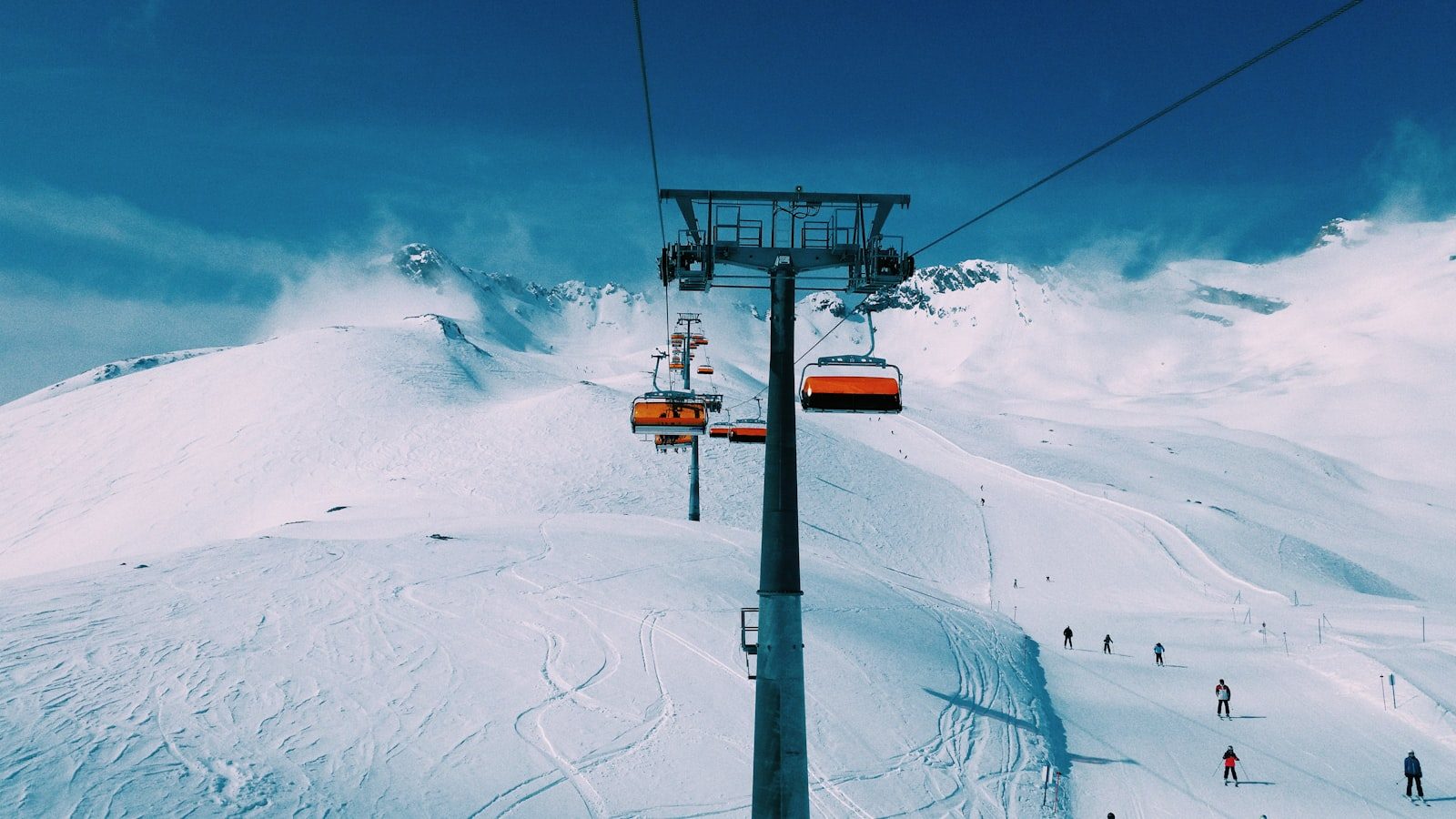
Slovenia rarely makes the loud rankings, and that's a shame: it's the cheapest way to find yourself in the real Alps while you're still unsure of yourself on the slope.
Kranjska Gora, near where the borders with Austria and Italy meet, has wide, gentle pistes and hosts a World Cup round every year. Vogel rises above Lake Bohinj and delivers some of the finest views of the Julian Alps. Krvavec is handy for its closeness to Ljubljana airport, while Maribor Pohorje is known for its night skiing.
The price of that accessibility is scale. The altitudes are lower than in the Alps proper, in warm years the snow is less reliable, and the ski areas are small. An experienced skier looking for several full days back to back will start to feel boxed in.
Georgia and Gudauri: off-piste for the price of a city weekend
Gudauri sits at around 2,000 metres, with its top point reaching about 3,300. The slopes here are wide and treeless, which makes it a genuine playground for off-piste skiing and heli-skiing. The resort has around two dozen pistes and 15 to 17 lifts (check the exact figures on the resort's website), and a day ski pass costs roughly 70 GEL, about $25. Among the affordable ski resorts in Europe, Gudauri is one of the cheapest for the decent vertical drop it offers.
For Ukrainians there's a further big plus: you don't need a visa for Georgia, and the journey is shorter and cheaper than flying to the Alps. The season runs from late December to April.
But let's be clear-eyed about the risks. The weather is changeable, the upper lifts close in strong wind and snowfall, and avalanche danger off-piste is very real, so hire a local guide for the backcountry. Service and signage are simpler than in the Alps. For relaxed family skiing, neighbouring Bakuriani, with its gentler slopes, is a better choice.
Do Ukrainians need a visa for European resorts?
As of 2026, you don't need a visa for a short ski trip, either to the Schengen area or to Georgia. Ukrainian citizens with a biometric international passport enter the Schengen zone (Austria, France, Italy, Slovenia) visa-free for up to 90 days within any 180-day period for tourism. Georgia also has visa-free entry, and the permitted stay there is considerably longer.
A few things to keep in mind. For visa-free trips to Schengen there are plans to introduce an electronic authorisation system, ETIAS, an inexpensive online registration you complete before travelling. At the time of writing it wasn't yet in force, and the launch date has been pushed back several times, so before you leave, check the current requirements on the official EU visa portal and on the website of Ukraine's Ministry of Foreign Affairs. Separately, take out insurance that covers winter sports: basic policies often don't cover injuries on the slope.
When to go skiing: the season month by month
The best snow doesn't line up with the cheapest dates: the peak conditions usually fall in the priciest weeks.
| Month | Snow and weather | Prices and crowds |
|---|---|---|
| November | skiing only on high-altitude glaciers (Solden, Hintertux, Tignes) | low prices, almost deserted |
| December | the season gets going, snow lower down is unstable until the 20th | a sharp price jump over Christmas and New Year |
| January | reliable snow, cold and often clear | after 7 January, some of the lowest prices of the season |
| February | peak season, the best conditions on the pistes | most expensive, European school holidays, queues |
| March | plenty of snow up top, warmer and sunnier | prices drop, longer daylight |
| April | high-altitude and glacier resorts keep the skiing going | spring discounts, already melting lower down |
So where should you actually go?
If this is your first ski trip, go for Slovenia or the gentle sectors of the Dolomites: short distances, calm pistes, less risk of spending money for nothing. If you ski confidently and want a week without repeating a single piste, look at the French Three Valleys or the Austrian Arlberg.
And if you're counting every hryvnia and love the backcountry, Gudauri covers Europe's ski resorts on the cheap, and you don't even need a visa to get there. Every option has its price: sometimes it's money, sometimes it's snow reliability, sometimes it's a longer journey. Choose for your own level and budget, not for someone else's ranking.