

In short, here is what to see in Morocco: the imperial cities, the blue mountain town of Chefchaouen, the Sahara dunes at Merzouga and the Atlantic port of Essaouira. Distances here are deceptive, and a single week is never enough for everything, so the classic trip either loops around Marrakesh and the desert or heads north through Fes and Chefchaouen. Most European, US and UK passport holders get 90 visa-free days, and budget flights land in Marrakesh from half of Europe.
Marrakesh: Jemaa el-Fnaa and the gardens
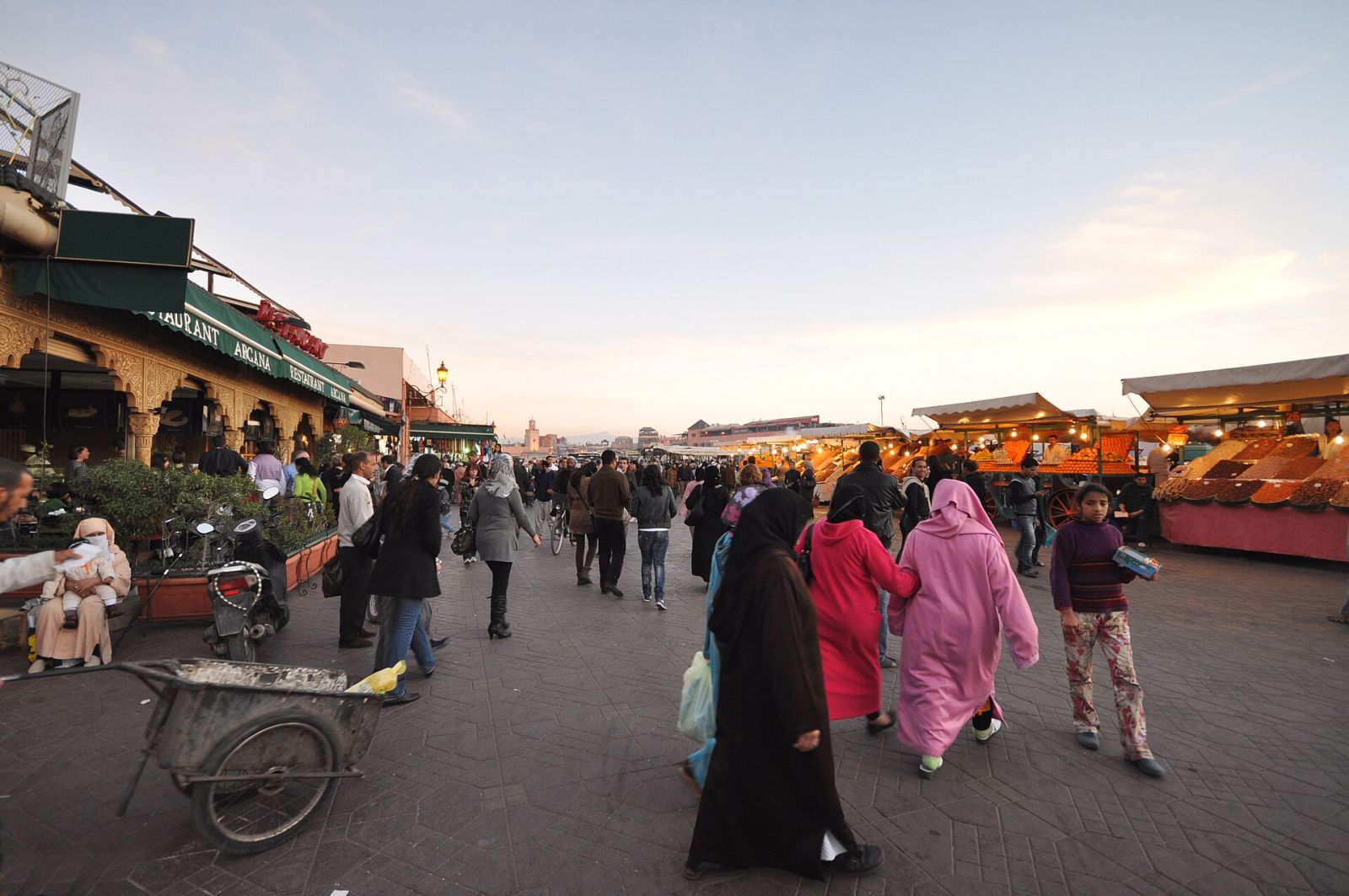
Almost everyone starts in Marrakesh, and for good reason: it has the most flight connections and the highest density of sights per square kilometer in the country. The heart of it all, Jemaa el-Fnaa square, looks like an ordinary market by day, juice stalls and snake charmers, then flips after sunset into a giant open-air food court wrapped in grill smoke, drums and storytellers. UNESCO listed it as intangible heritage precisely for this nightly performance, which has been running for centuries.
Beyond the square, keep three names on your list: the 77-meter Koutoubia minaret (non-Muslims cannot enter, but it is the city's main landmark), the Bahia Palace with its carved ceilings and quiet courtyards, and the Ben Youssef Madrasa, the most photogenic Islamic school in Morocco. The Majorelle Garden is a separate story: a cobalt-blue villa among cacti, famously restored by Yves Saint Laurent. The queues are real, so book a morning slot online. Give Marrakesh two full days; a third goes nicely on a hammam or a day trip into the Atlas mountains.
Fes: a medieval medina with no cars
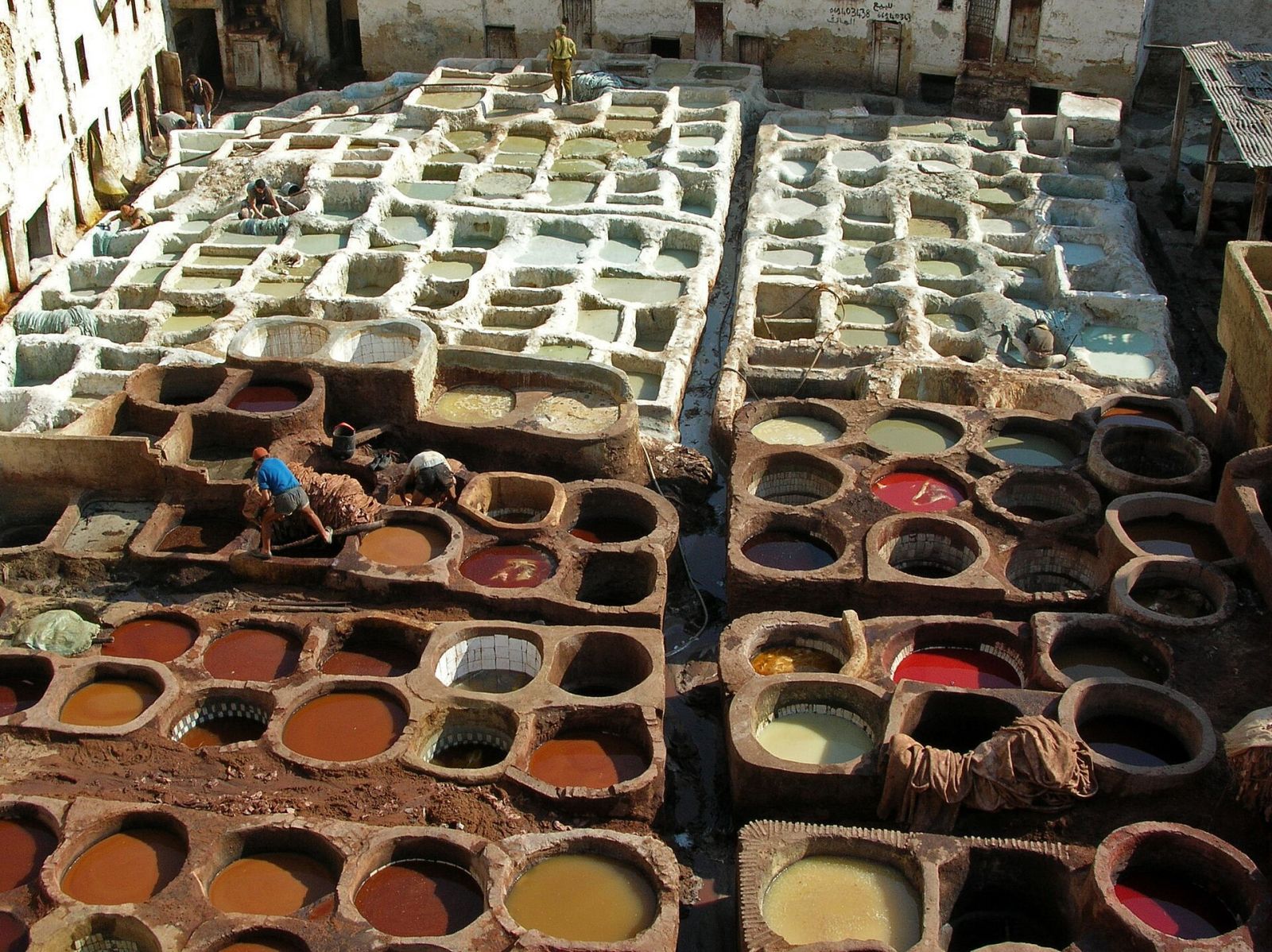
Fes honestly loses to Marrakesh on convenience and wins on authenticity. The old medina, Fes el-Bali, is a maze of roughly nine thousand lanes where no car can enter: donkeys still haul the freight. It holds al-Qarawiyyin, founded in 859 and often called the world's oldest continuously operating university, and the Chouara tanneries, where hundreds of stone dye vats look from above like a giant's paint palette. The smell matches the spectacle; the sprig of mint they hand you at the entrance is not a souvenir but survival gear.
Getting lost in the Fes medina is not a risk, it is a guarantee. Hire a licensed guide through your riad or the official bureau for day one, then wander on your own on day two. Two days cover the city well.
Chefchaouen: why the blue town is worth the detour
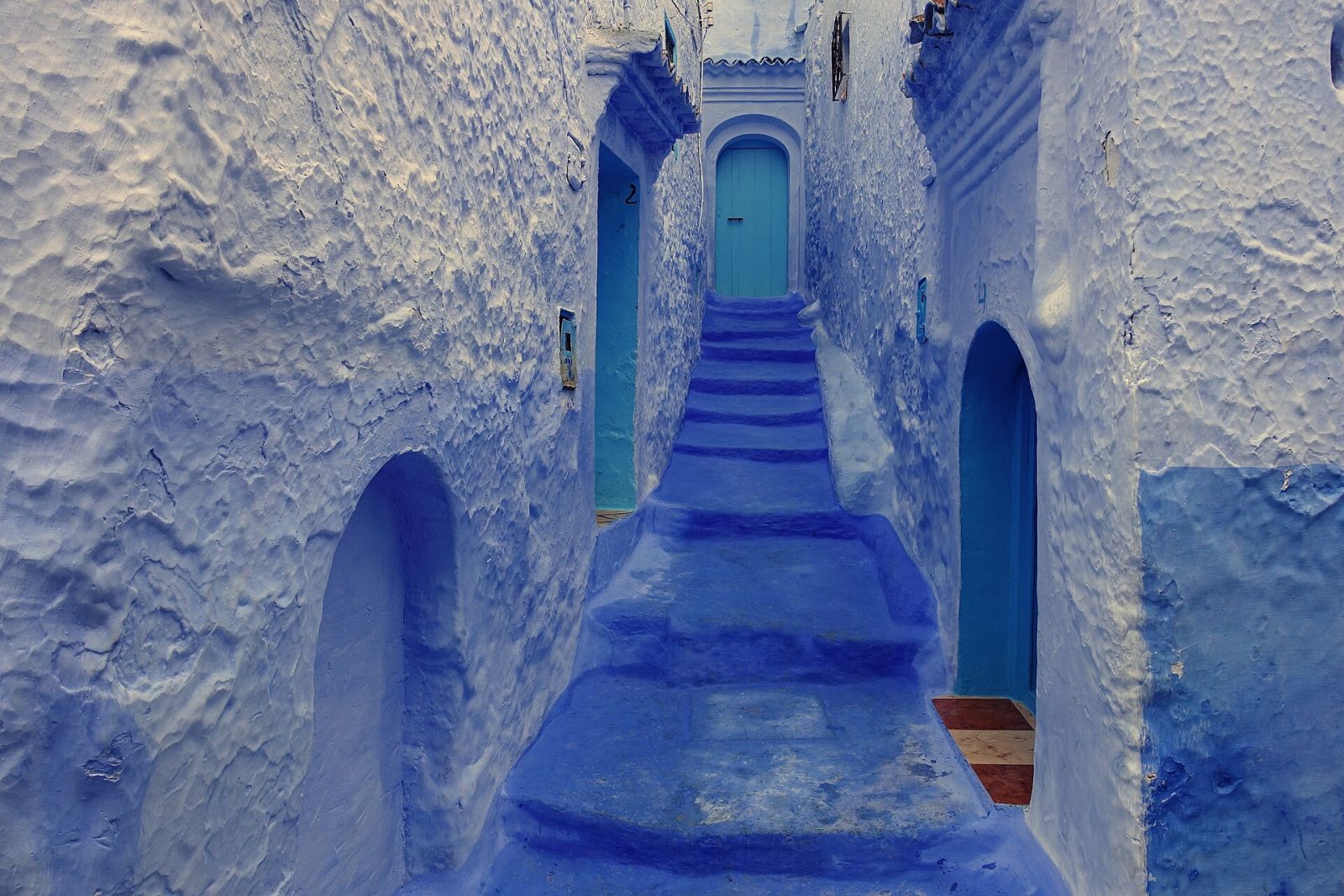
Chefchaouen, up in the Rif mountains, is painted in every shade of blue: walls, stairways, doors, flower pots. There are several theories about where the tradition came from, Andalusian refugees or insect control among them, and none is proven. The town is heavily touristed by now. Before nine in the morning the streets are empty and dreamlike; by noon there is a photo queue on the famous stairways. Actual sights number exactly two: the kasbah museum on the main square and the restored Spanish mosque on the hill, where people climb at sunset to see the town from above.
Stay overnight. All of Chefchaouen's magic lives in the early and late hours, after the day-trip buses leave. The drive from Fes takes about four hours, slightly less from Tangier.
The Sahara: Merzouga and a night in a desert camp
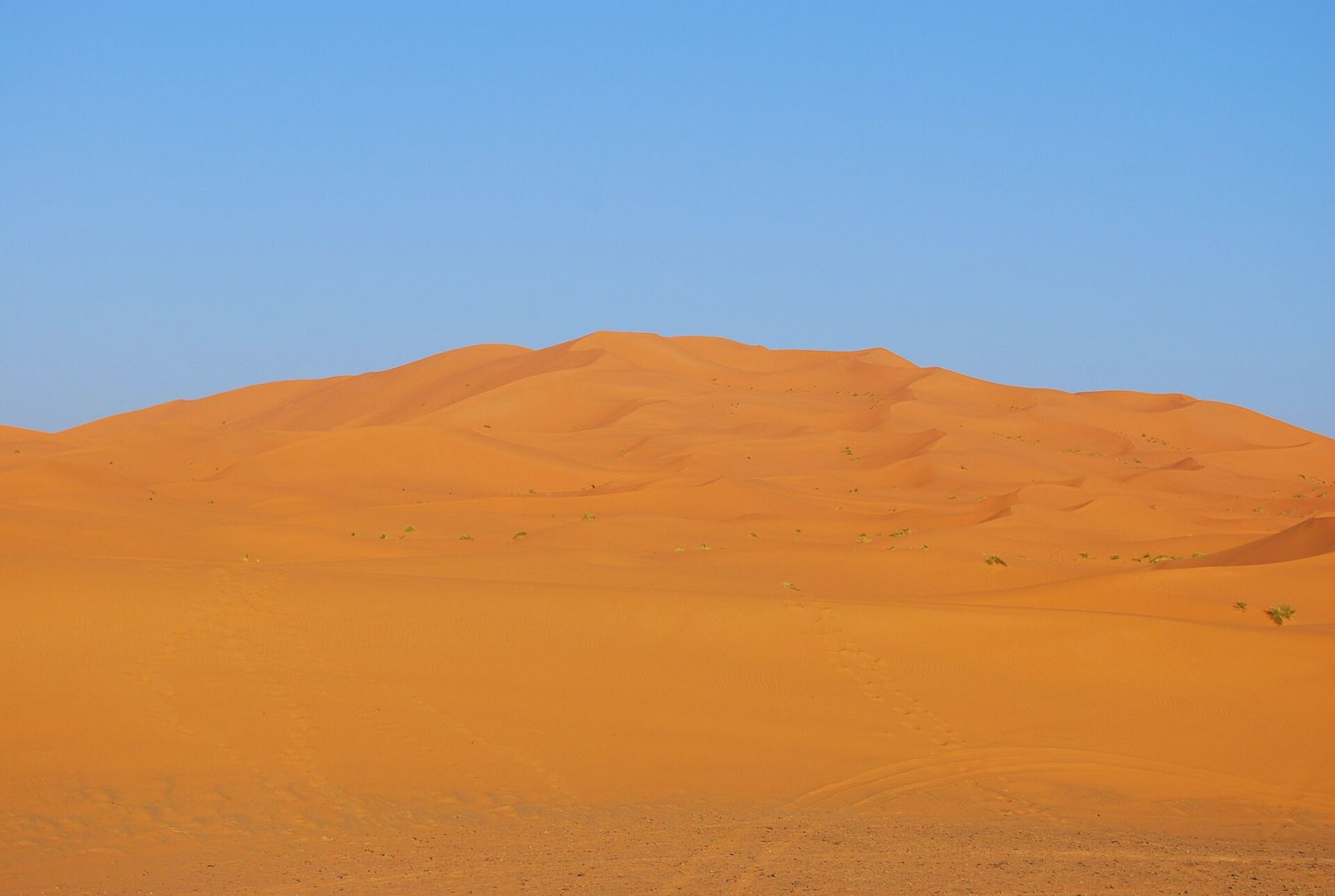
The Erg Chebbi dunes near the village of Merzouga are the postcard Sahara, orange sand rising up to 150 meters. The standard program: arrive before evening, ride a camel caravan into the dunes, watch the sunset from a crest, eat dinner to drum music and sleep in a tented camp, anything from simple mattresses to en-suite luxury. The night sky here is among the clearest you will ever see without a telescope. In winter, though, temperatures drop close to zero after dark, so pack warm layers.
One honest warning: Marrakesh to Merzouga is a 9-10 hour mountain drive. Two-day desert tours become one long transfer, so take three days minimum, or break the journey at Ait Ben Haddou (a UNESCO-listed mud-brick ksar that has served as a film set for half of Hollywood) and the Todra Gorge.
Essaouira and Casablanca: the Atlantic and the country's great mosque
Essaouira, three hours from Marrakesh, works as the perfect exhale after the noisy medinas: white walls, blue boats, harbor gulls, fresh fish grilled right by the pier. The constant wind makes it a kite and surf hub, though it also makes swimming chilly even in summer. A day and a half is plenty.
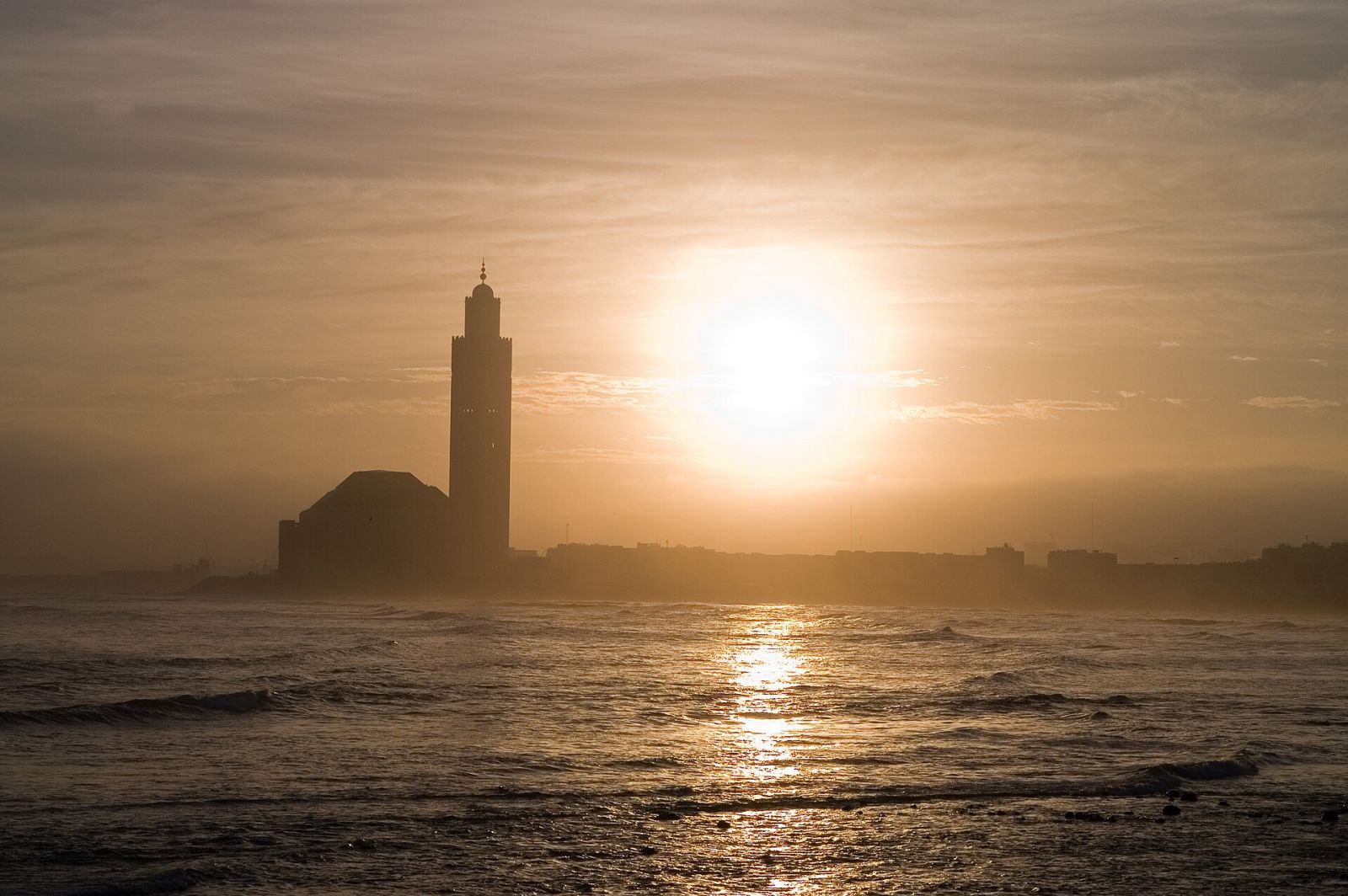
Casablanca is a business city, and the one reason to stay longer than half a day is the Hassan II Mosque, the third largest in the world, with a 210-meter minaret and a hall for 25,000 worshippers, built partly over the ocean. It is one of the few mosques in Morocco open to non-Muslims, on guided tours at set hours only; check times and tickets on the mosque foundation's official site before you go.
How to build the route: three options that work
| Route | Days | Logic |
|---|---|---|
| Southern loop: Marrakesh, Ait Ben Haddou, Merzouga, Essaouira | 7-8 | Maximum contrast: city, mountains, desert, ocean. Skips Fes and Chefchaouen |
| Grand circle: Marrakesh, Merzouga, Fes, Chefchaouen, Casablanca | 10-14 | All the classics in one trip; the Merzouga-Fes leg alone takes about 7 hours |
| The north: Tangier, Chefchaouen, Fes (+Rabat) | 5-6 | Compact, no marathon drives, well connected by train |
Comfortable ONCF trains link the big cities, but south of Marrakesh you are down to buses (Supratours, CTM) or a rental car. A car buys the most freedom, and the roads are decent, though the Atlas switchbacks demand steady nerves.
When to visit Morocco
The best windows are March to May and September to November: warm without the furnace effect, and comfortable in the desert. In summer Marrakesh and Fes regularly hit +40 and beyond. You can survive it; enjoying it is another matter. The Atlantic coast, Essaouira and Agadir, is in peak season at exactly that time. Winter days are a pleasant +18-20, but nights get cold and most riads have no heating, so a sweater earns its place even in March. One more nuance: during Ramadan the country runs on a different rhythm, many cafes close in daytime, and the evenings become especially atmospheric.
The bottom line is simple. The minimum one-week program: Marrakesh, the desert, then Essaouira or Fes. The full circle needs ten days and comfortably fills two weeks. Morocco is a country where transfers take longer than the map suggests, so fewer stops with more time in each beats a gallop through all of them.