

No visa needed: a Ukrainian citizen with a biometric international passport enters Romania visa-free and can stay for up to 90 days within any 180. That is the main thing that clears the whole "will they even let me in" worry, and what is left is the fun part: deciding what to see in Romania when you have a week, or at least a long weekend, to spare.
Most routes through the country are built around Transylvania, and not because of Dracula. Packed into one small patch you get medieval towns under UNESCO protection, a genuine castle with towers, and one of the most spectacular mountain roads in Europe. Plus a capital with a character all its own. Below are the specifics: what is a must, how much time to set aside for each thing, and where it is easy to overestimate your own stamina.
Do Ukrainian citizens need a visa for Romania in 2026?
No. With a biometric passport no visa is required, and the stay limit is 90 days within a rolling 180-day window. The count is not calendar-based: if you left on 1 March, the next 180 days are counted from exactly that date, so frequent visitors should keep track of their days themselves.
Partner links: booking through them supports the blog at no extra cost to you.
As of 1 January 2025 Romania became a full member of the Schengen area, land borders included. In practice this means no passport control when entering from other Schengen countries, and the single Entry/Exit System (EES) at work, recording crossings biometrically instead of stamping passports. A separate online authorization, ETIAS, for visa-free trips has been announced, but its launch has been pushed back several times, so when you plan your trip double-check before you go on the official EU portal and the website of Ukraine's Ministry of Foreign Affairs for its conditions and start date.
| Question | Answer for 2026 |
|---|---|
| Visa for Ukrainian citizens | Not required with a biometric passport |
| How long you can stay | Up to 90 days in any 180-day period |
| Country status | Full Schengen member since 1 January 2025 |
| Border control | Biometric EES system instead of stamps |
| ETIAS | Announced, date pushed back, verify before you go |
One honest caveat: the passport has to be biometric and valid. An old-style passport without a chip does not qualify for visa-free travel, and that is the most common reason for trouble at the border, not any special Romanian requirements.
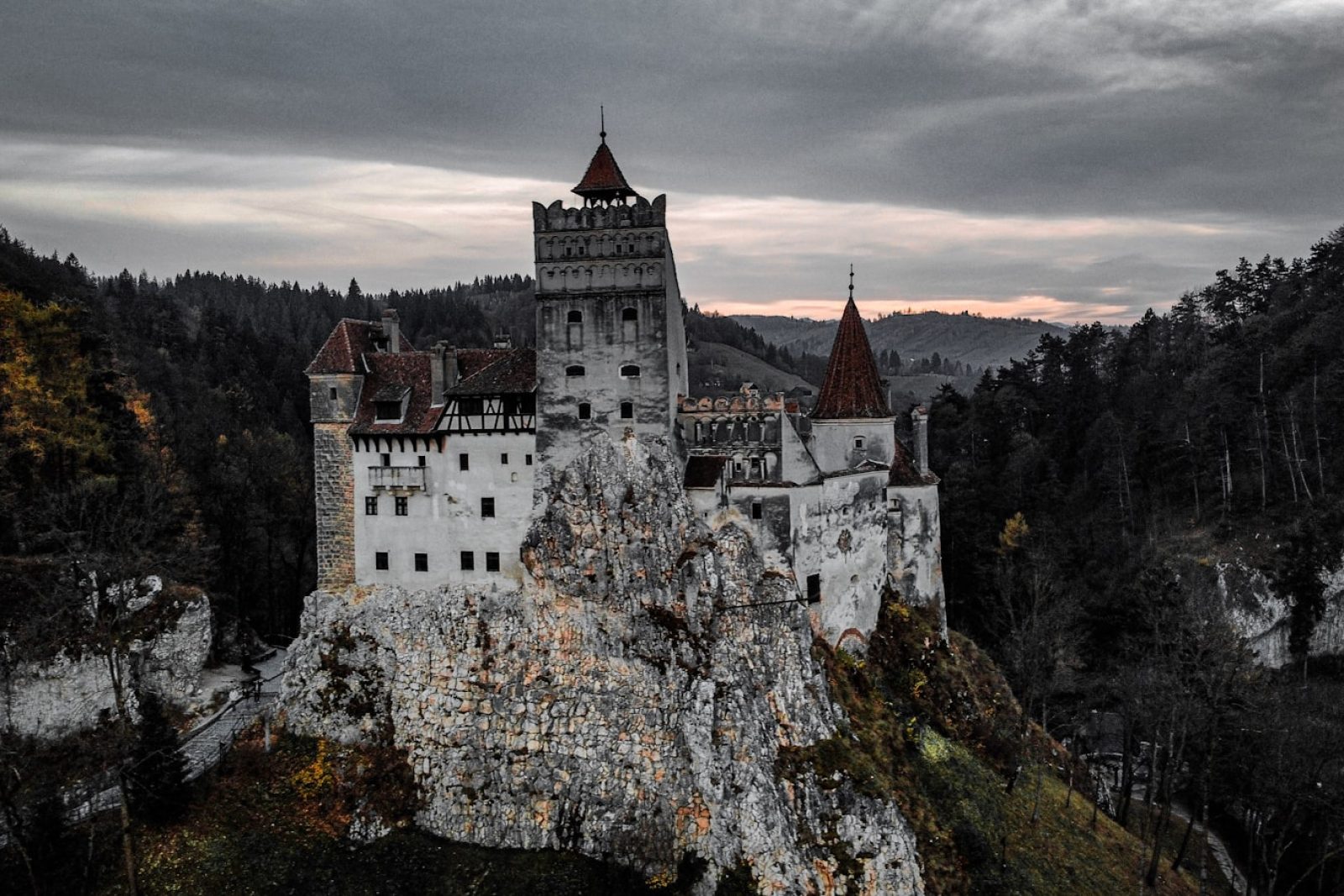
Bran Castle: the famous "Dracula's castle", minus Dracula
Bran sits on a rock between Brasov and Campulung, and it is the country's most famous landmark. It is sold as "Dracula's castle", although the historical Vlad the Impaler almost certainly never lived here, and the legend itself is tied to Bram Stoker's novel, and Stoker never once set foot in Romania. What is genuinely there: narrow staircases, wooden galleries above the inner courtyard, and a collection linked to Queen Marie, who truly did love the place.
An adult ticket costs about 100 lei (roughly 20 euros), with discounts for students and pensioners and free entry for children under 5; access to the so-called "time tunnel" is sold separately. Prices and opening hours double-check before you go on the castle's official website, since they shift with the season. In summer the ticket office is open roughly from 9:00 to 19:30, and shorter hours apply in winter.
Bran's main drawback is known in advance: queues and crowds. At peak season and on weekends it is cramped inside, and not much of the Gothic-castle romance survives. Come at opening time or toward evening, buy your ticket online, and budget an hour and a half to two hours for the visit. Who will definitely be let down: anyone expecting a gloomy vampire's lair, because what stands here is a bright manor house with mountain views.
Brasov and Sighisoara: the two towns people come to Transylvania for
If you are wondering what to see in Romania beyond the castles, the answer is its medieval towns. Two of them cover almost the entire program.
Brasov as a base for the whole region
Brasov is convenient because from it you can easily reach both Bran and the mountains. In the town itself, the main sights cluster around the Council Square (Piata Sfatului) with its town hall and the Black Church, the country's largest Gothic temple, whose walls, as the popular legend goes, darkened after the fire of 1689, though modern researchers put it down more to later pollution. From the center a cable car or a footpath leads up Mount Tampa, from where the town lies spread out below like the palm of your hand. One narrow lane, Strada Sforii, locals love to point out as one of the narrowest in Europe, and this is a rare case where the tourist cliche does not lie about the scale.
Set aside a full day for Brasov, or better still, stay two or three nights and take day trips out from here. Hotels and cafes here run pricier than the national average; that is the price of being a tourist hub.
Sighisoara, a living medieval citadel
Sighisoara is not a stage set but a living fortress town, added to the UNESCO list back in 1999. The main landmark, the 14th-century Clock Tower, is visible from almost everywhere; climb inside and you get a museum and a viewing platform. Covered wooden stairs lead up to the church on the hill, and on the main square stands a house pointed out as the birthplace of Vlad the Impaler.
An honest nuance: the citadel is small, you can walk around it in half a day, and the prices in the cafes inside are noticeably higher than down below at the foot of the walls. This is the "arrive, stroll, soak up the atmosphere" format, not a three-day town. Many people take Sighisoara as a day trip from Brasov.
When the Transfagarasan road is open, and whether to build it into your route
The Transfagarasan is a high-altitude road through the Southern Carpathians, with hairpin bends, a tunnel, and the icy Balea Lake up top. It regularly turns up among the most spectacular roads in the world, and this is a rare case where the loud label lives up to the experience.
The main limitation is practical: the road is not open all year. Because of snow at altitude, the upper stretch between Balea Cascada in the north and Piscu Negru in the south works roughly from late June or early July to the end of October. The exact dates depend on the weather each year and are announced a day or two ahead, so double-check before you go for the current status. Planning to drive it in May or November is risky: the top will almost certainly be closed off.
The second pitfall is time. On the map the road looks short, but the hairpins, the photo stops, and the tourist traffic at peak stretch the drive out to several hours. Do not try to squeeze the Transfagarasan and a proper town into a single day. Who it will not suit: anyone who gets carsick on mountain roads, and anyone traveling without a time buffer for the jams near the lake.
Bucharest and Sinaia: what to fit in along the way
Bucharest is often skipped through in transit, and that is a mistake. The Palace of the Parliament here is the third-largest administrative building in the world by area, after the Pentagon and Thailand's Sappaya-Sapasathan, and at the same time the heaviest building in the world, so heavy that the city beneath it is slowly sinking; you can only go inside on a guided tour and with your passport. Nearby survive the old town of Lipscani with its bars, the Athenaeum, and several Orthodox churches wedged between socialist-era blocks. The capital is full of contrasts and not cheap for central lodging, but a day or two here is worthwhile.
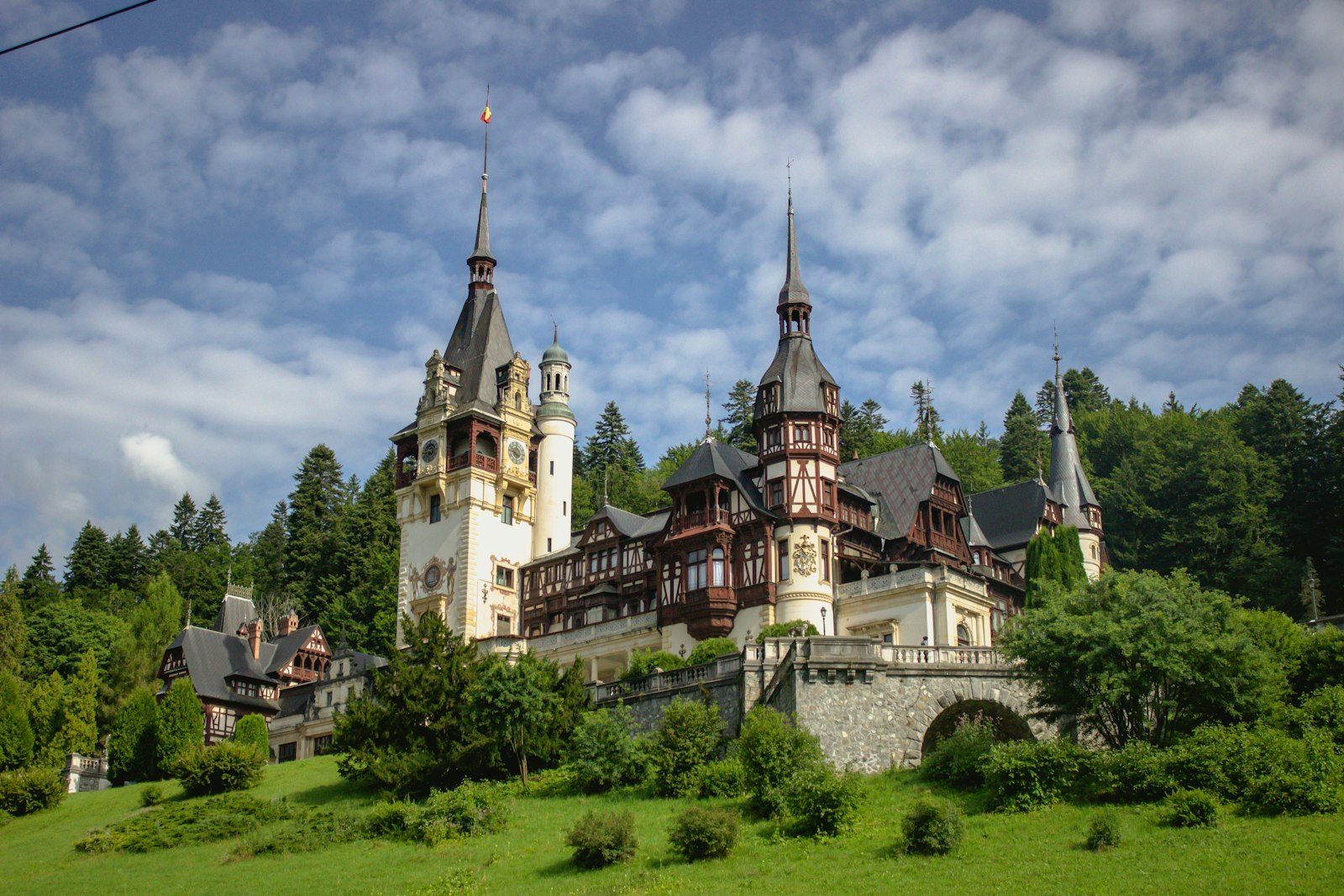
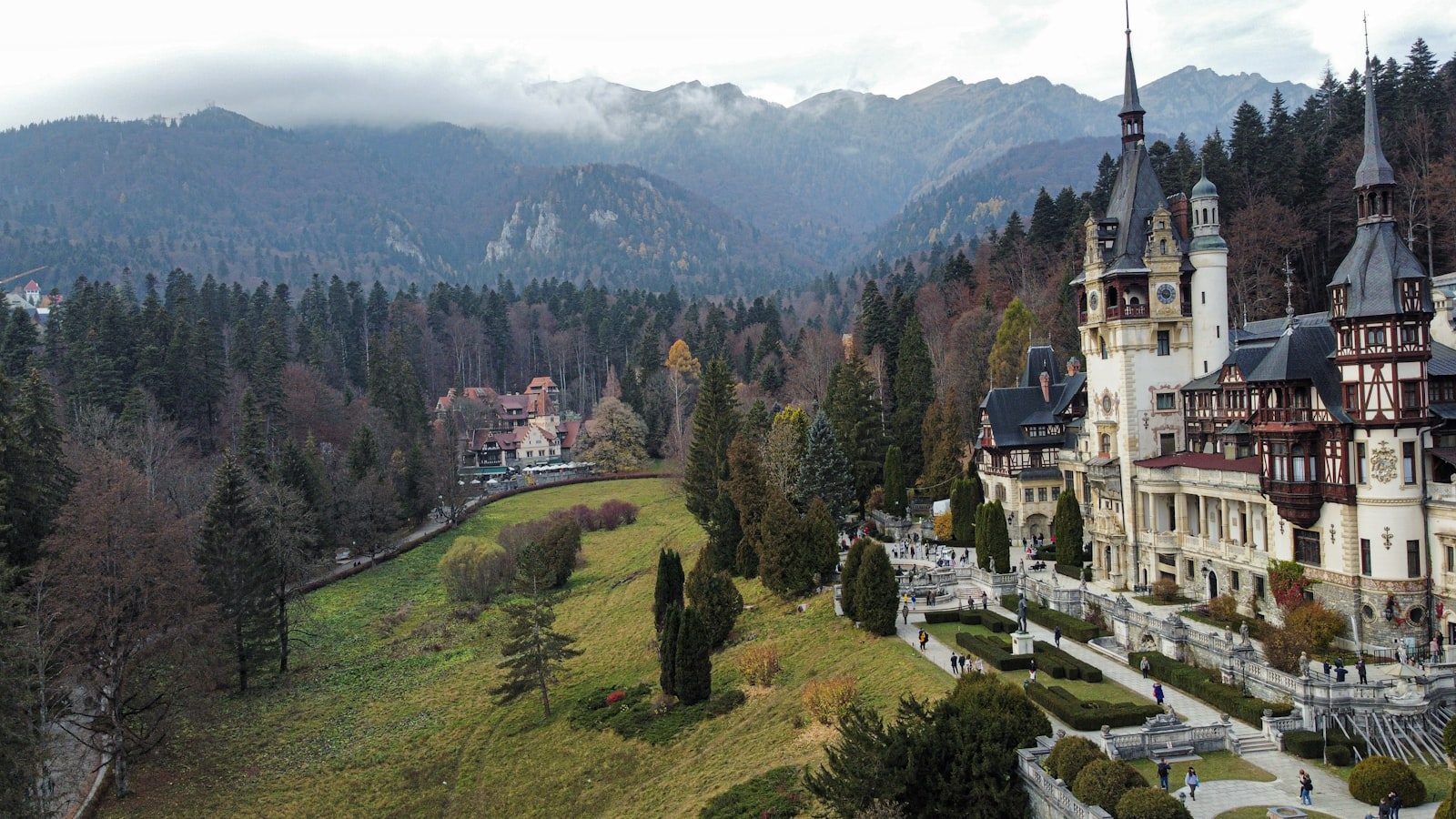
On the road between Bucharest and Brasov lies Sinaia with Peles Castle, a 19th-century royal residence in the Neo-Renaissance style, with carved wood and well over a hundred rooms. Many consider it prettier than Bran, and it is hard to argue. An important detail: Peles is usually closed on Mondays, and part of the off-season it shuts for maintenance, so double-check the schedule before you go.
The logistics here are friendly to a traveler without a car. Trains from Bucharest's Gara de Nord station to Sinaia take about an hour and a half, and from Sinaia to Brasov another hour or so. In other words, Bucharest, Peles and Brasov thread onto a single railway line, and there is no need to rent a car, except perhaps for the Transfagarasan.
| Place | Why it is worth it | How much time to allow |
|---|---|---|
| Bran Castle | The famous "Dracula's castle", galleries, Queen Marie's collection | 1.5-2 hours |
| Brasov | Regional base, the Black Church, Mount Tampa | 1 day, stay 2-3 nights |
| Sighisoara | Living UNESCO citadel, the Clock Tower | Half a day |
| Transfagarasan | Mountain switchbacks, Balea Lake (summer only) | Half a day to a day |
| Peles Castle (Sinaia) | Royal residence, interiors | 2-3 hours |
| Bucharest | Palace of the Parliament, the Lipscani old town | 1-2 days |
A ready-made 5 to 7 day route with no needless rushing
The classic loop looks like this. Day one and two: Bucharest, the Palace of the Parliament, the old town. Then a train north with a stop in Sinaia for Peles, and an overnight in Brasov. Two days for Brasov with day trips out: one to Bran, the other to Sighisoara. If you are traveling in summer and renting a car, slot in a separate day for the Transfagarasan, starting early. On the way back, you return to Bucharest along the same line.
What to drop if time is tight: in three or four days you can realistically take in Bucharest, Peles and Brasov with Bran, and leave Sighisoara and the mountain road for next time. Do not try to do it all in a weekend; the beginners' main mistake in Romania is underestimating the distances and the mountain traffic.
A quick word on the season. The most comfortable months are May, June and September: warm, but without the July-August crush and peak-season prices. Winter is beautiful in the Carpathians and the ski resorts around Sinaia are running, but the Transfagarasan is closed and some castles cut back their hours. The worst combination for the drive through the mountains is early spring and late autumn, when the top is either still, or already, under snow.
If you are going for the first time, take the basic loop, Bucharest plus Brasov with Bran and Peles, which captures the essence of Transylvania without any rush. If you have already been to Romania and want something less obvious, aim for Sighisoara, the fortified Saxon villages around Brasov, and a summer drive over the Transfagarasan, the very thing many people come back separately for.